![Magyarbusz [Info]](https://magyarbusz.info/wp-content/uploads/2025/04/cropped-mbi_sby_v1.png)

The article is also available in the following languages:
More than five years ago, ArrivaBus launched its Zero Emission Vehicle (ZEV) program, becoming one of the first domestic service providers to do so. Since then, the company has tested numerous alternative-powered bus types: various Mercedes-Benz eCitaro models, electric versions of the MAN Lion’s City series, hydrogen-powered Solaris Urbino buses, and even electric buses from Ikarus. However, the procurement process concluded last year ultimately favored BYD – the Chinese manufacturer will deliver a total of 82 electric buses to Budapest, with the first units expected to arrive this fall. Such a large-scale transition is preceded by years of preparatory work, testing, experience gathering, infrastructure development, and a series of strategic decisions. We spoke with Anikó Körmendi, CEO of Arriva Hungary, about the introduction of electric public transport, its challenges, and the future directions.
For the new service period, ArrivaBus is acquiring 58 solo BYD eBus B12 and 24 articulated BYD eBus B19 electric buses. What were the reasons for choosing this manufacturer?
For ArrivaBus, achieving sustainable transportation in Budapest is a strategic goal. Even in our previous procurements, we strived to ensure that the new buses would represent green investments – and the same principle guided us now. We are delighted to have found a manufacturer through the capital’s tender whose vehicles not only represent the most modern technologies but are also shaping the future of urban transport worldwide. The tender was multi-staged for both vehicles and charging technology, preceded by several years of preparatory work, research, and information gathering both domestically and internationally. Ultimately, BYD’s offer proved the most favorable overall.
Our solo buses will be the three-door BYD B12E03 type, featuring a 491 kWh battery capacity partially integrated into the floor – improving weight distribution and space utilization. The articulated B19E01 models come with a 563 kWh battery pack, and each vehicle was ordered with two charging points to best fit our new depot system under development.
What challenges does the introduction of electric buses, so far unknown to the ArrivaBus fleet, present both technically and organizationally?
We are playing a pioneering role in allowing Budapest’s passengers to experience the benefits of sustainable public transport firsthand. By 2026, a total of 82 electric buses – both solo and articulated – will be introduced in multiple phases, including reserve vehicles. This volume is unprecedented not only domestically but also regionally. The biggest challenge is undoubtedly the complete reconstruction of our Andor Street depot to accommodate electric buses. Planning has been underway for over two years, with colleagues visiting several European depots, such as Wiesbaden and Hamburg, to gain experience. The investment includes installing a world-class charging system, with an infrastructure capable of 15 megawatts of power uptake – a rarity even by international standards.
We are proud that this will be the first domestic bus depot built in compliance with the Fire Safety Technical Guidelines effective from February 2025 – including fire-resistant walls and new transformers. We are also advancing on the software side, optimizing charging and dispatch with a new DMS system. Additionally, we had to develop new competencies, implement new maintenance protocols, and, naturally, train our drivers through our own educational system, Buszjogsi.
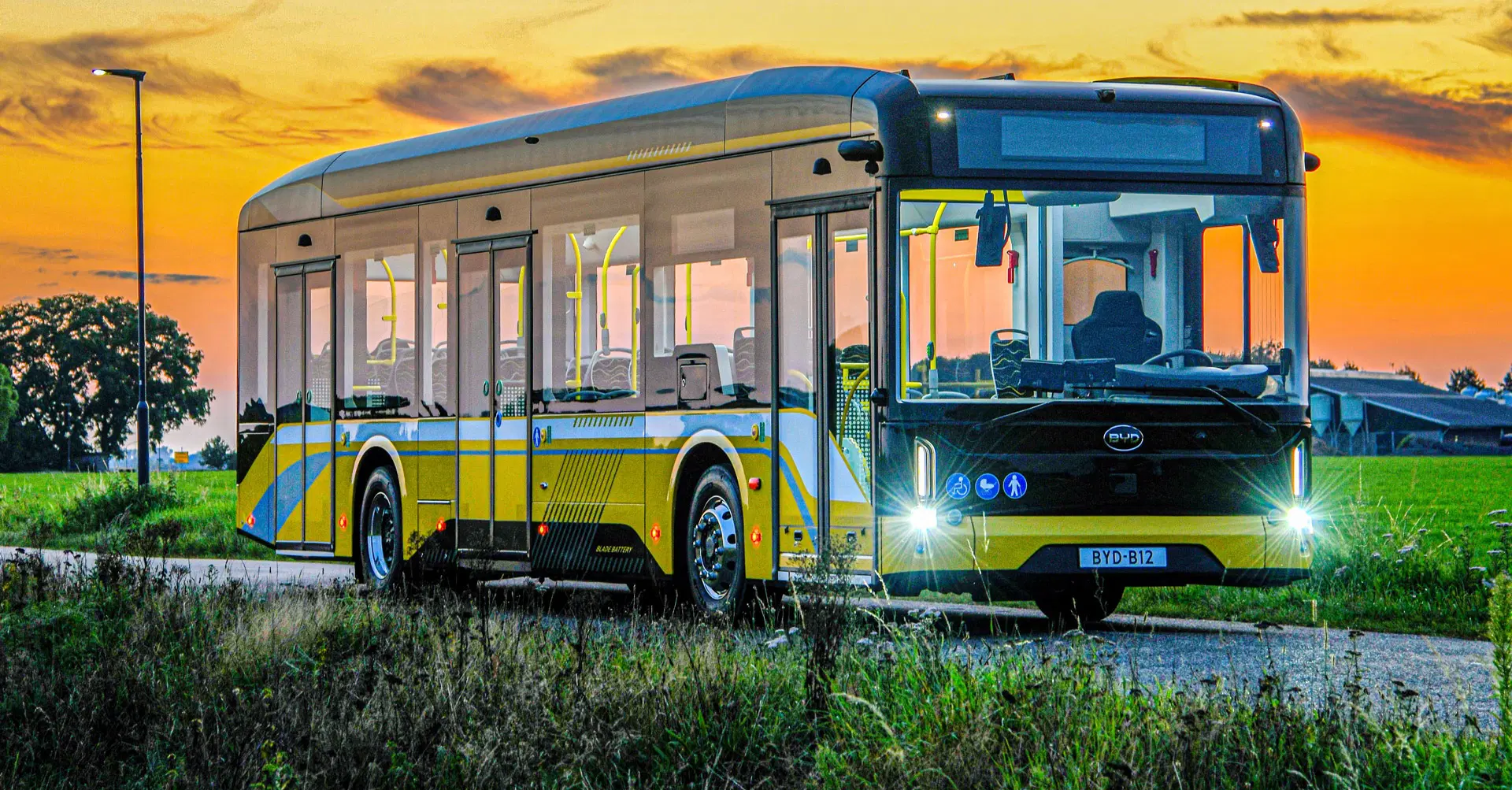
The first solo buses equipped with BYD’s new Blade batteries will arrive at ArrivaBus later this year
What kind of electric infrastructure are you building at the Andor Street depot? Is the work proceeding according to plan?
The development work is proceeding entirely on schedule, and we are pleased that the procurement process for the charging infrastructure has successfully concluded. Out of five applicants, Tech-mobile Ltd., representing the Finnish Kempower brand in Hungary, was selected – providing technological and operational security. The Kempower charging devices will be satellite-based, enabling flexible installation and dynamic charging control. Solo buses will receive a minimum of 75 kW charging, and articulated buses a minimum of 150 kW. These levels were determined considering daily mileage, maintenance cycles, and overnight cleaning times. We are also paying special attention to pre-conditioning the passenger compartment, ensuring buses are heated or cooled before dispatch, applying a system based on the German VDV 261 protocol – reportedly the first of its kind in Hungary.
Why concentrate charging infrastructure solely at the Andor Street depot? Do you see a realistic chance for the future appearance of electric bus types optimized for daytime rapid charging in Budapest?
Operating such an electric bus fleet requires a significant energy supply, which was available and developable at the Andor Street depot. It allows simultaneous 15 MW energy uptake and enables full charging in approximately five hours for solo buses and four and a half hours for articulated buses. In practice, each bus is charged based on the mileage required for the next day. Maximizing range was a key priority during vehicle design, so no additional daytime charging is necessary during operation.
When specifying the vehicles and technical infrastructure, did you consider the experiences of Arriva’s foreign subsidiaries?
Yes, of course, we built upon the international experience of the group. We shared technical and operational know-how regularly with our Czech, Spanish, and Dutch colleagues, gaining valuable insights into charging systems, vehicle dispatching, and driver training. However, it is important to stress that the Budapest fleet is entirely unique – not only due to the city’s specific characteristics but also because of the specifications set by BKK. Therefore, we developed a technical specification specifically tailored to Budapest’s transport needs, exceeding many aspects of the group’s previous implementations. Even within the Arriva Group, the investment volume and depth required for introducing electric buses in Hungary is considered outstanding.

Anikó Körmendi: building zero-emission public transport tailored to Budapest’s needs based on international experience
On which routes and according to what schedule will the new BYD electric buses enter service?
The procurement tender already specified the operational areas and routes associated with the vehicles, but finalization is still ongoing in consultation with BKK. However, it is certain that the first electric buses will appear on Budapest’s streets at the beginning of 2026, with a gradual roll-in. The tender allows for early deployment, so service could begin earlier than planned. After the first deployed buses, another twenty vehicles will follow, with five more joining in April 2026 and fifteen more in May. The complete deployment will likely conclude by August 31, 2027. Primarily, passengers will encounter the new electric vehicles on routes crossing the city center.
According to your calculations, how many electric buses are needed to replace diesel buses and maintain identical service levels?
Our soon-to-be-operational electric buses can fully replace their diesel predecessors on a one-to-one basis. This means neither timetables nor service frequencies need modification due to the electric transition. Both solo and articulated buses were selected to fully meet contractual service obligations. Based on specifications, battery capacities, and operational experiences, we can confidently state that no additional vehicles are required.
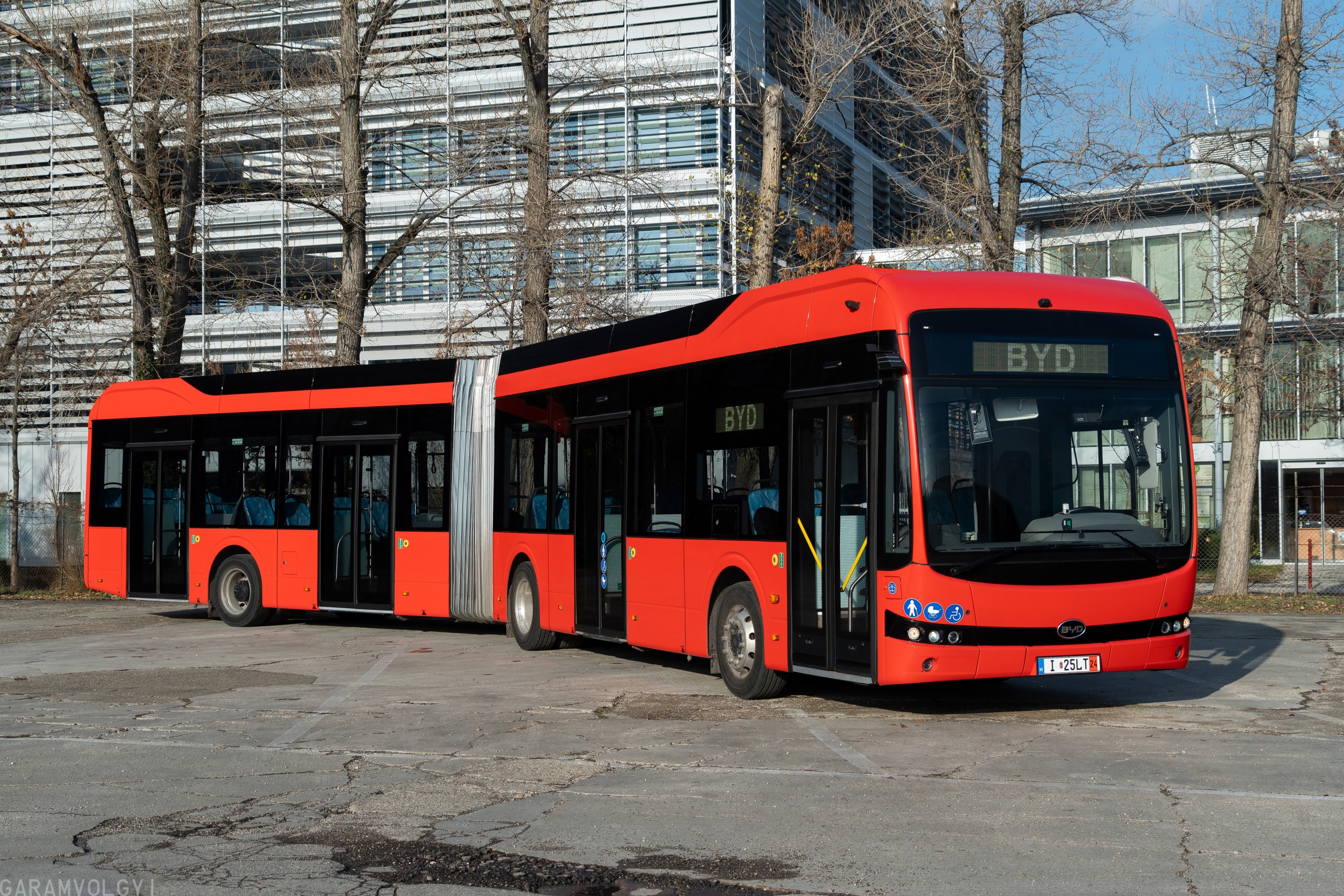
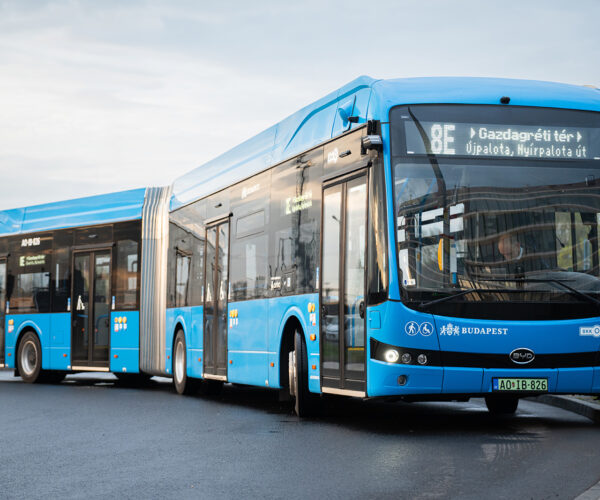
The BYD articulated electric bus will debut permanently in Hungary’s ArrivaBus fleet
What environmental benefits do you expect from introducing locally zero-emission vehicles into Budapest’s transport network?
Aligned with the EU’s ambitious climate goals, the Arriva Group follows a clear sustainability strategy: increasing the proportion of zero-emission vehicles in our fleet. We are not only addressing vehicle replacement but also redesigning our entire operational structure. The incoming electric bus fleet for Budapest will be locally zero-emission, meaning they emit no pollutants during operation. This results in exactly the CO₂ savings that our diesel vehicles used to produce – bringing cleaner air, less noise pollution, and a more livable urban environment for residents.
Stricter regulations present not only obligations but also opportunities, encouraging manufacturers and operators alike to adopt innovative, sustainable long-term solutions. We see this not as a challenge, but as an opportunity – and are proud to be a driving force for change in Budapest.
Thank you for the interview, and we wish you continued success!
 3 kép -
 Kapcsolódó cikkek