![Magyarbusz [Info]](/mbi/header-logo.png)
IMC technology has brought a rethink of the trolleybus
 Ludányi József
The history of trolleybuses goes back more than a century, but the technological innovations of the past two decades have given them new relevance in modern urban transport. While electric buses have become fashionable, the trolleybus – the quiet pioneer of electromobility – has been pushed into the background. At the same time, the development of vehicles powered from overhead lines, especially through drive systems combined with batteries and so-called in-motion charging (IMC) technology, has gained new momentum.
One of the biggest challenges in the electrification of public transport is battery technology, particularly in terms of its cost, weight, service life and the associated operational constraints. The charging solutions currently in use – overnight charging and fast charging – fundamentally require fixed charging infrastructure, forcing operators into a range of operational compromises. Depending on the city and operating strategy, these systems often use large batteries with capacities of 300–800 kWh and weights of 2–4 tonnes in order to meet daily energy requirements. All this can come with longer charging times, downtime, the need to maintain more spare vehicles, and high infrastructure and investment costs. Moreover, in the case of a fully electric bus, the battery pack can account for as much as 40% of the vehicle’s total purchase price, making its service life and eventual replacement one of the most decisive cost factors.

By contrast, the IMC system offers an effective answer to easing these problems, as it can ensure reliable operation with a smaller battery, typically with a capacity of 40–100 kWh, while the vehicle charges itself on the move under the overhead wires.
The smaller energy storage unit makes in-motion charging systems not only more economical but also more environmentally friendly, reducing the burdens associated with manufacturing and waste management, while the optimisation of energy use lowers the overall environmental footprint of the system. In addition, this solution requires a shorter and less complex overhead-line network, further reducing the cost of building and maintaining the infrastructure. What is more, IMC systems allow battery capacity to be matched to actual needs, unlike electric buses, where charging-time constraints often require oversized energy storage units – resulting not only in extra cost, but also in greater vehicle weight and more wasteful operation. This kind of flexibility enables IMC-based solutions to provide a competitive option with only moderate intervention, adapted to the specific conditions of the urban environment.
Looking at the development of the technology, it can be seen that it has not progressed continuously, but in phases, always linked to the emergence of new technologies in a given era that made it possible to improve operating parameters.

One of the biggest disadvantages of traditional trolleybuses was their constant dependence on the overhead-line network. This rigidity deterred many cities from introducing them, or encouraged them to abandon existing systems, while the intermediate solution of an auxiliary diesel-generator drive significantly undermined the environmentally friendly character of trolleybuses. The breakthrough began in the mid-2000s, when the first trolleybuses equipped with onboard batteries appeared. At that time, NiMH (nickel-metal hydride) or nickel-cadmium batteries were still used, allowing only minimal off-wire operation of a few kilometres, primarily for emergency use. During this period, several articulated Trollino trolleybuses were built in cooperation between Ganz and Solaris and delivered to the city of Rome; these vehicles were among the first to use traction batteries for regular, independent off-wire running in passenger service. Due to the limitations of NiMH technology at the time, however, the range in wire-free operation was limited to only around two kilometres.

The next milestone came in 2013, when the first true in-motion charging system was implemented in Landskrona, Sweden. As part of the Slide-In project, a trolleybus was tested that charged its 54 kWh lithium-ion battery (NMC technology) while running under the overhead line, enabling it to cover 70% of the route without overhead wires. The project used a Solaris Trollino 12 solo trolleybus, equipped with a Škoda traction system – including a 160 kW asynchronous electric motor and the associated electronics. Energy was supplied by a 450 V battery pack from Altair Nano, providing an autonomous range of up to 20 kilometres.

The essence of IMC technology, then, is that the trolleybus does not operate only under the overhead line, but can also run on its battery – the difference being that the battery is charged not while stationary, but while the vehicle is moving under the wires. This represents a significant advantage over electric buses, which often have to stand for hours in order to charge. Experience gained in real traffic conditions confirms that in-motion charging provides guaranteed charging time, unlike opportunity charging for electric buses, where congestion directly reduces the time available for charging.
The technological development of IMC has been largely determined by the types of batteries used. After NMC batteries, lithium-titanate-oxide (LTO) technologies appeared, enabling high-power, rapid charging – even at charging currents above 1C. As a result, the length of the overhead-line sections used could be significantly reduced. Experience shows that on a 10–15 km urban route, overhead-line coverage of 25–35% may already be sufficient for full operation, provided that the charging power, typically 150–200 kW, is appropriately dimensioned. Based on operating experience, LTO technology is the most reliable in the long term, as with a suitable charging protocol it can provide a service life of up to 15 years, avoiding the cost of battery replacement. By contrast, calendar ageing poses a challenge for NMC batteries, whose replacement may become necessary every 6–8 years. Even under optimal conditions, their service life is difficult to extend beyond 10 years.

Between 2017 and 2020, in cities such as Esslingen, Solingen and Freiburg, it was already sufficient to provide overhead wires on only 25–30% of the route; the remaining sections were covered entirely in battery mode by the trolleybuses. These projects used Solaris Trollino third-generation articulated vehicles and Swiss Hess lighTram models – the former in Esslingen and Solingen, the latter in Freiburg. The Solaris trolleybuses were equipped with Kiepe Electric’s IMC® 500 traction system, while the Hess vehicles, already based on an e-bus architecture (discussed in detail below), were fitted with ABB DC-DC converters. They operated, and continue to operate today, with LTO-chemistry battery packs with capacities of 46, 46 and 66 kWh respectively.

Another important trend has been the emergence of lithium iron phosphate (LFP) batteries, which, thanks to their higher capacity, longer service life and more favourable price, offer an attractive alternative even for cities with tighter budgets. These so-called “budget IMC” solutions make it possible to minimise infrastructure investment while retaining the basic advantages of battery operation. However, LFP technology tolerates only limited charging power, so it provides an acceptable ageing profile at levels below 150–200 kW. At lower charging levels, its service life can be put at 7–8 years.

Meanwhile, technological development has had a significant impact not only on the charging architecture, but also on the structure of the vehicle’s electrical system. Two different technical approaches have emerged in the development of IMC trolleybuses. One solution was based on the electrical system of classic trolleybuses, supplemented with battery energy storage and a charging converter. In these designs, the entire 600/750 V DC traction system must be separated from the vehicle body by double electrical insulation in order to meet touch-protection requirements – because trolleybuses run on rubber tyres, they are not earthed, so double insulation is generally required to prevent electric shocks caused by body faults. Although this approach is widely used in traditional trolleybuses, it involves considerable implementation complexity, limits the range of selectable components, particularly in the electric driveline, and increases manufacturing costs. With this solution, the battery takes part in the energy supply only in autonomous mode, on sections without overhead wires.

In recent years, in parallel with the spread of electric bus technology, IMC systems have increasingly adopted the structural layout of e-buses. In these newer systems, energy from the overhead line reaches the traction system and onboard systems through a central, galvanically isolated DC-DC converter, which creates a safe connection between the current collector and the bus’s electrical system. In this architecture, double insulation is required only at the current collector and the converter, making it possible to install single-insulated equipment used in electric buses, which otherwise could not be integrated directly into traditional trolleybuses.

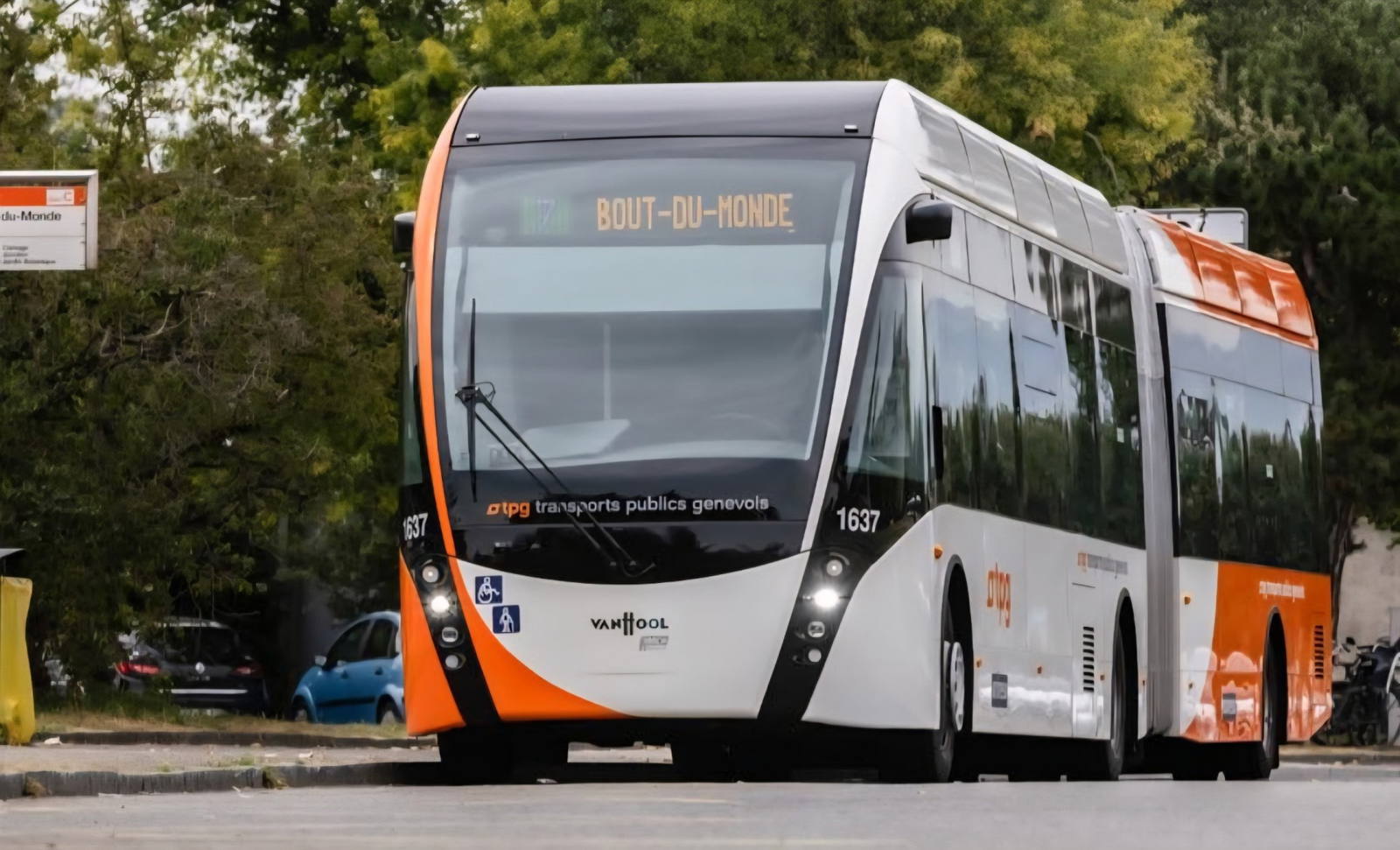
In essence, therefore, these vehicles operate as electric buses, with the only difference being the presence of the current collector and the DC-DC converter – in other words, practically any electric bus could be converted into a trolleybus using this type of system. Accordingly, the main energy source in this design is the traction battery, which is charged on the move by the converter. The advantages of the solution are a more unified system architecture, better parts interchangeability and lower maintenance costs. Its disadvantage, however, is that the battery is actively involved in the energy supply in every operating mode – even under the overhead wires – meaning the vehicle spends its entire operating time in battery operation. In the long term, this may have an unfavourable effect on battery service life and operational reliability. The first such European solution appeared as part of the Swiss Trolley Plus project, which ran from May 2015 to December 2019 in cooperation between Hess and ABB. Since then, Hess trolleybuses of this type have entered service in several cities, primarily in Switzerland – Bern, Biel, Fribourg, Lausanne, Lucerne, Neuchâtel and La Chaux-de-Fonds, Winterthur and Zurich – as well as in Austria, in Salzburg, and in France, in Lyon and Nancy. Besides Hess, the concept is also used by Yutong, while Solaris has also incorporated it into the Trollino 12 electric model, of which 12 units are currently operating in Poland: six in Gdynia, and the remaining six in the city of Tychy

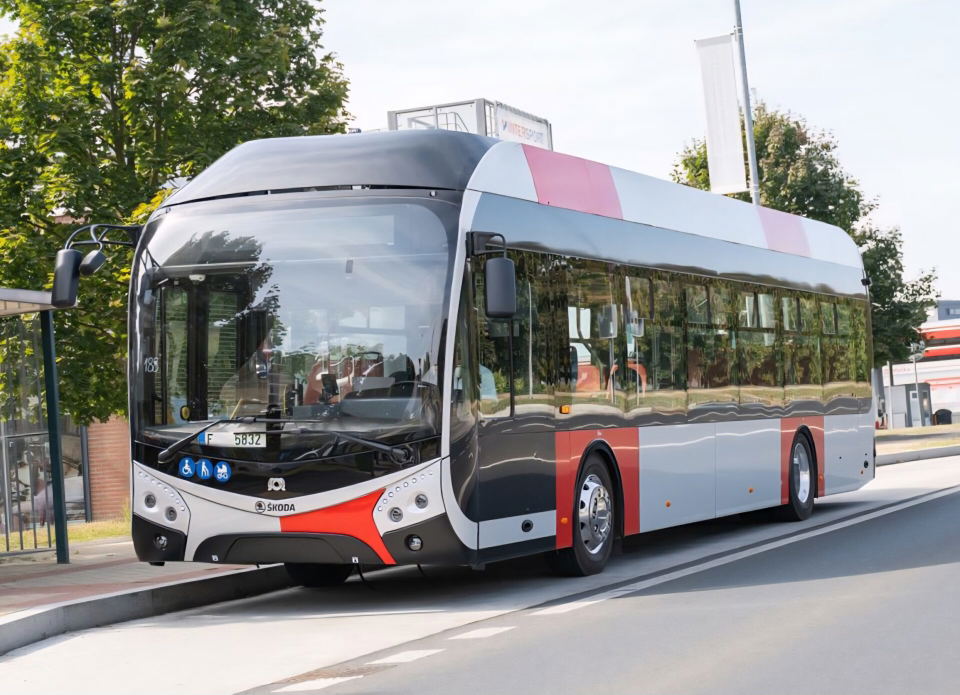
Although it is not a trolleybus, the Škoda E’City electric bus, codenamed 36BB, operates on a similar principle. The vehicle is equipped with a two-pole current collector, which allows its onboard charging equipment to draw energy from the overhead line of an existing trolleybus or tram network. Here too, the energy flow takes place through a galvanically isolated DC-DC converter. On these buses, however, the batteries can only be charged while stationary; in-motion charging is not possible.

From an economic perspective, the whole-life costs of an IMC system – including the construction and maintenance of the overhead-line network – can in many cases be more favourable than those of electric buses charged only while stationary. This is especially true where a trolleybus network already exists and can be reused after modernisation, for example by replacing section isolators and expanding power feeds, thereby saving significant investment costs. A further advantage of IMC systems is that, thanks to in-motion charging, longer downtimes can be avoided, so vehicles can be kept in continuous service, contributing to a faster return on investment and more efficient fleet utilisation.

Battery-electric buses and IMC systems offer different advantages. The completely wire-free operation of e-buses gives greater freedom in route planning, but they typically require larger and more expensive batteries and longer charging times. IMC technology, by contrast, provides reliable operation even with a smaller battery, because the vehicle can charge while moving – a particularly useful feature on busy, high-frequency routes. Overall, then, there is no single solution that fits every situation. In the electrification of urban transport, it is always the characteristics of the individual city, traffic conditions and economic possibilities that determine which technology is the best choice. Within this diverse range of options, IMC systems can represent a stable, reliable and long-term sustainable alternative alongside electric buses.

At the same time, the spread of IMC technology represents not only technological progress, but has also given trolleybuses a new position in sustainable transport. Systems that were previously tied exclusively to overhead wires proved inflexible amid the constant transformation of urban networks. Trolleybuses with autonomous off-wire capability, however, have enabled cities to rediscover this environmentally friendly mode of transport and even to offer a viable alternative in places where earlier networks had already been partly or entirely dismantled. This solution not only makes it possible to modernise existing systems, but has also helped the trolleybus become once again a competitive and attractive player in the spectrum of zero-emission urban transport.

As a result, the European trolleybus market has also regained strength. In terms of trolleybus deliveries, last year was a record year: European manufacturers delivered a total of around 420 vehicles, 99% of which were battery-equipped models using IMC technology. Sales in 2025 also look promising, especially in light of the fact that several manufacturers – including Škoda, Solaris, Hess and Bozankaya – are working on, or completing, sizeable orders during this period.