![Magyarbusz [Info]](/mbi/header-logo.png)
A new bus model is taking shape in Skopje – what is VDL planning at Van Hool’s former factory?
 Ludányi József
Just a few weeks after the Van Hool name was also dropped from the former VDL Van Hool Macedonia designation, further important changes are taking shape around the Dutch VDL Groep’s bus plant in North Macedonia. The development of the Skopje facility, now operating as VDL Bus Macedonia, would hardly be surprising in itself: VDL had already earmarked a strategic role for the site, which has considerable spare capacity and operates at a much lower cost level than Western European plants. However, the newly announced investment includes a far more intriguing element. The company is preparing to produce a new bus model in Skopje, although no details have yet been disclosed about its identity. The development, worth more than €5 million, is also expected to create 150 new jobs, so all signs suggest that preparations are already under way around the plant for another programme that could also play an important role in the future product strategy of the VDL Bus Group.
The Skopje plant came into VDL’s ownership through the 2024 acquisition of Van Hool’s bus business, and was probably one of the most valuable parts of the transaction. The site had already played a key role under its former Belgian owner: the ramp-up of production in North Macedonia in the mid-2010s significantly improved Van Hool’s profitability, and for many years this factory essentially provided the cost advantage and profit that helped the company avoid the financial collapse that was already threatening it at the time.
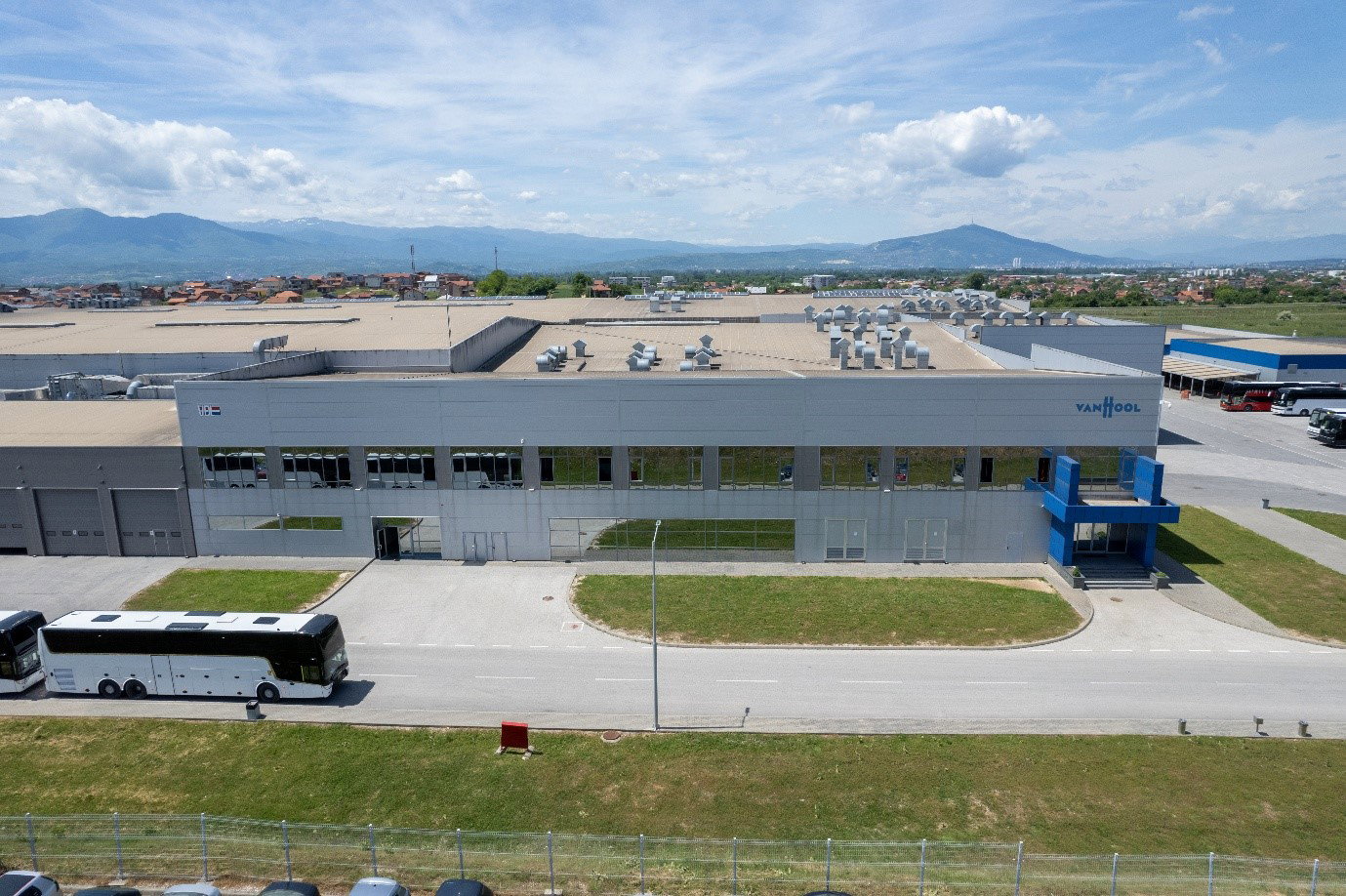
The Skopje plant, covering around 78,000 square metres, is capable of producing 900–1000 buses a year, meaning its capacity exceeds that of VDL’s recently opened, ultra-modern Roeselare factory by at least one hundred vehicles. The roles of the two sites, however, are fundamentally different: while Roeselare produces only the VDL Citea city bus family, Skopje is one of the group’s key bases for intercity bus and coach production, supplying vehicles under the Van Hool brand to both European and North American markets. The importance of the factory is also illustrated by the fact that the company is among North Macedonia’s largest exporters.
Following the acquisition of Van Hool, VDL not only retained the Skopje plant but also held out the prospect of further development. The next step in this process is the third phase of investment now being prepared, worth more than €5 million. As part of the development, 150 new highly skilled jobs are planned, while its most interesting element would be the launch of production of a new bus model in Skopje.
No details have yet been released about the precise technical content of the investment, but VDL Bus Macedonia’s recruitment activity adds some nuance to the picture. In recent months, the company has been seeking, among others, welders, bodywork specialists and fitters, electricians, painters, HVAC technicians, maintenance staff and quality inspectors. The expansion is also not limited to direct production: mechanical and electrical engineers, as well as design and engineering specialists, are also being recruited. Job advertisements alone, of course, do not prove that all positions are directly linked to the new model, but their timing and breadth fit well with the significant workforce expansion announced for the third phase of investment. In effect, the recruitment covers all key areas of the complete bus manufacturing process, from design and body production through electrical installation to final inspection.
The much more exciting question, however, is what kind of new bus VDL is preparing to build in Skopje. The July announcement is strikingly terse in this respect: it mentions only the launch of production of a “new bus model”, without naming a type, vehicle category or propulsion system. This is particularly interesting because the current Skopje product range essentially covers Van Hool’s intercity bus and coach line-up currently in production, while VDL’s own Futura 3 family is built in the Netherlands and the Citea city bus range in Belgium.
It seems unlikely that the announcement refers to the revival of a former Van Hool type or of certain members of discontinued model families, as that would be difficult to interpret as a new bus model. Nor are there currently any industry reports suggesting an imminent launch of an entirely new Van Hool development. At the same time, VDL has previously made it clear that Skopje will remain the production base for Van Hool intercity buses, but given the site’s significant capacity and, above all, its cost advantage, it would be logical for it to take on a larger role in the production of the group’s own products over the longer term.
There have, moreover, already been signs pointing in this direction. In recent years, VDL has significantly reorganised its bus manufacturing operations: it has ended production of public-transport models in the Netherlands and concentrated production of the new-generation Citea entirely in Roeselare, Belgium. As a result, the Valkenswaard plant now focuses exclusively on assembling Futura intercity buses and coaches. The decision was driven by persistent cost pressure and loss-making operations in the bus manufacturing business, which is why VDL is gradually seeking to eliminate or reorganise less competitive production activities.
Even at the time of the Dutch restructuring, however, questions were raised about the long-term future of the Valkenswaard bus plant. With the end of public-transport bus production, essentially only the Futura remained at the site, while VDL had acquired a factory in Skopje specialising specifically in intercity buses and coaches and operating at a significantly lower cost level. It would therefore not be inconceivable that the newly announced Skopje model is in fact linked to one of VDL’s own types, and that the company could in future transfer part of Futura production from the Netherlands to North Macedonia.
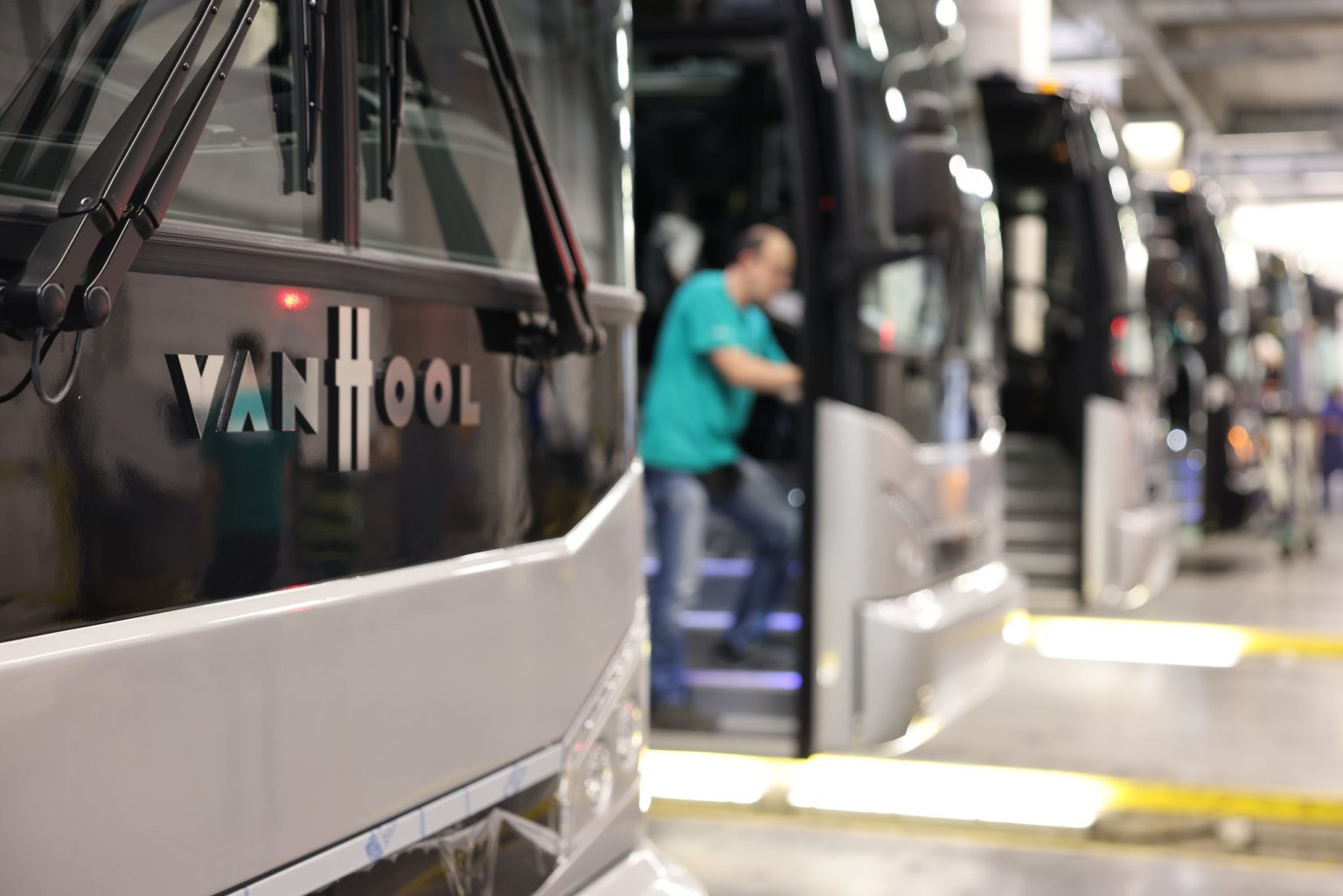
At present, no official statement confirms this, so for now it should be treated only as a possible scenario. The business logic, however, would be obvious: through the acquisition of Van Hool, VDL inherited a production base that had been created specifically for the high-volume, cost-efficient manufacture of European and North American intercity coaches. The question, therefore, is no longer necessarily only what new Van Hool might be built in Skopje, but also whether that particular new model will definitely be a Van Hool at all.
The investment of more than €5 million, meanwhile, appears a truly significant sum only at first glance: by the standards of the bus industry, it is closer to small change. By comparison, Daimler Buses spent several hundred million euros on developing the eCitaro family and its various versions. But not only the development of an entirely new design, but also putting it into series production, procuring the necessary production equipment and tooling, and setting up a complete manufacturing process can easily require an investment far greater than €5 million. All this may further strengthen the assumption that Skopje is not being equipped with an entirely new production background for a brand-new design, but that the existing plant is being prepared to produce a type that is new to the site. Whether this is really the case will become clear in time – and, of course, it cannot be ruled out that VDL will ultimately spring a surprise by taking a completely different direction.
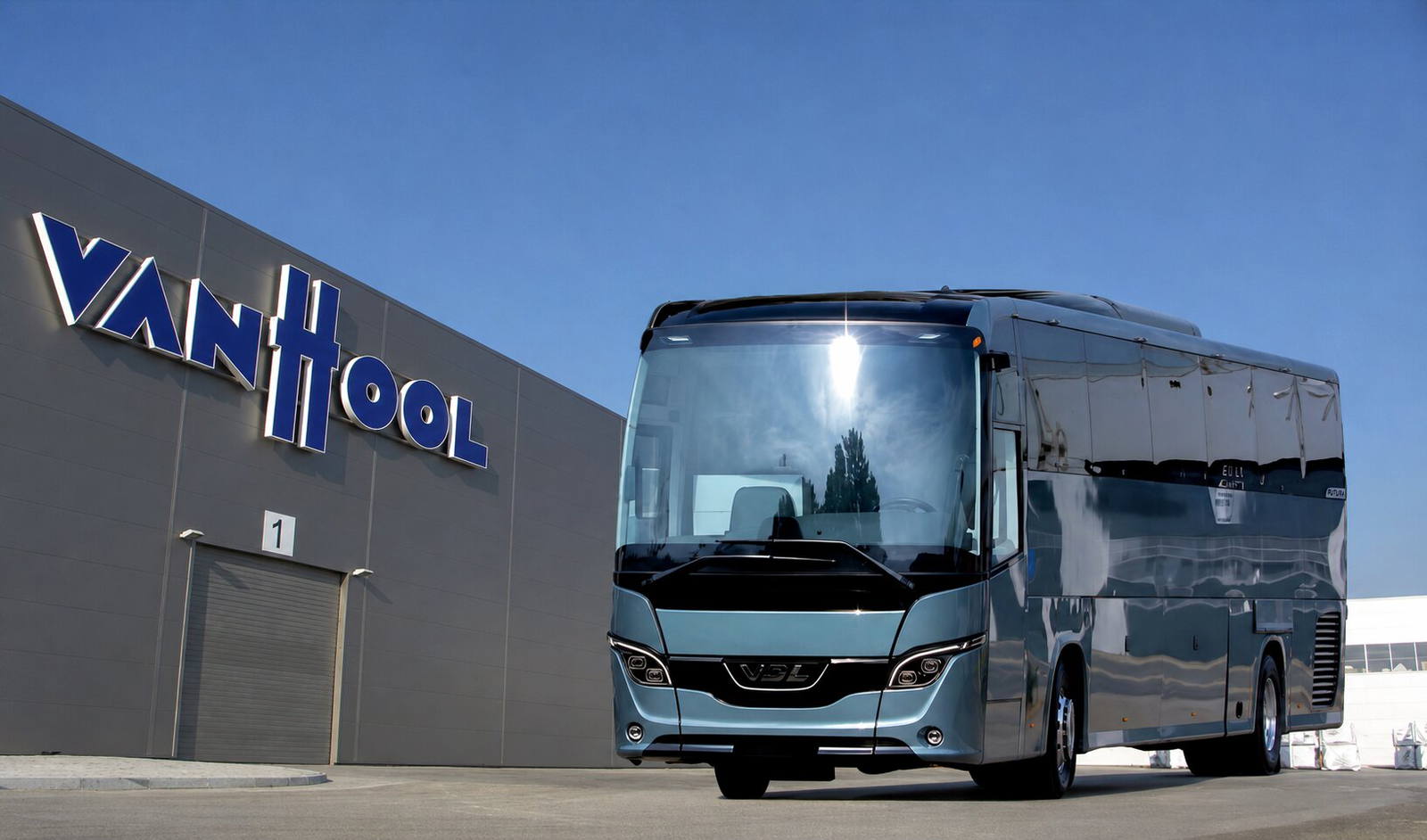
The cover image is an illustration.