![Magyarbusz [Info]](/mbi/header-logo.png)
Ankai unveils newly developed highway minibus
 Patthy Gellért
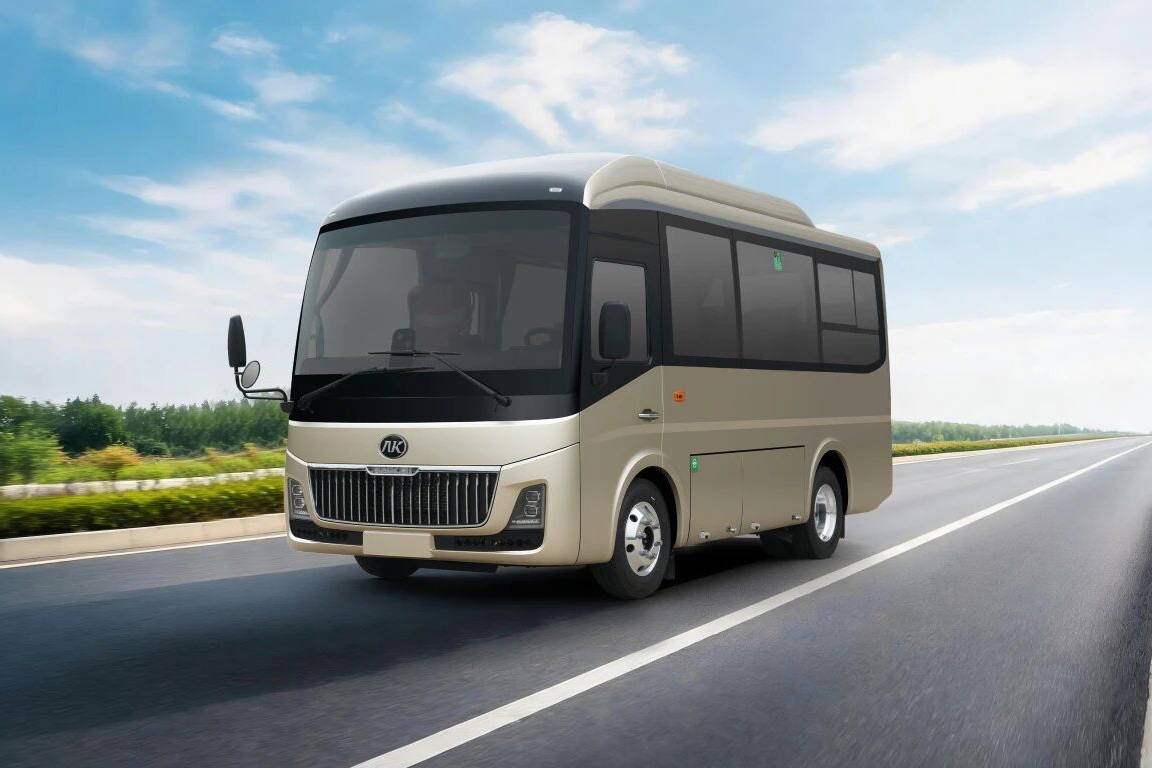
Ankai has expanded its already fairly comprehensive and wide-ranging portfolio with an elegant, multipurpose minibus designed for intercity operations. The new K60, a compact model measuring just under six metres in length, was already shown to the local trade press on 26 June alongside five other new Ankai developments at a press event held at the company’s Hefei headquarters to mark the brand’s 60th anniversary. However, the Chinese manufacturer has only now released details of the model to the wider public.
Front-engine minibuses with a 0-1-0 door layout, reminiscent of oversized vans, are highly popular in the Far East, Australia, and in numerous African and South American countries, and such compact vehicles can be found in the ranges of leading Chinese and Japanese manufacturers alike. Joining this segment is the new Ankai K60 (HFF6600K8D6Z), intended to be a versatile model with a strong price-to-value ratio, recommended for transporting employees and smaller tourist groups, as well as for business trips and shuttle services. The Chinese manufacturer already has a minibus with this type designation in its product line-up, and at first glance the new version appears more like a model update, but in reality it is a substantial technical reworking of the original, chassis-based, leaf-sprung design. A longer, 7.5-metre version of the new generation, capable of carrying 30 passengers, will also be produced under the K75E name with fully electric drive and a traction battery pack with a total capacity of 165 kWh.
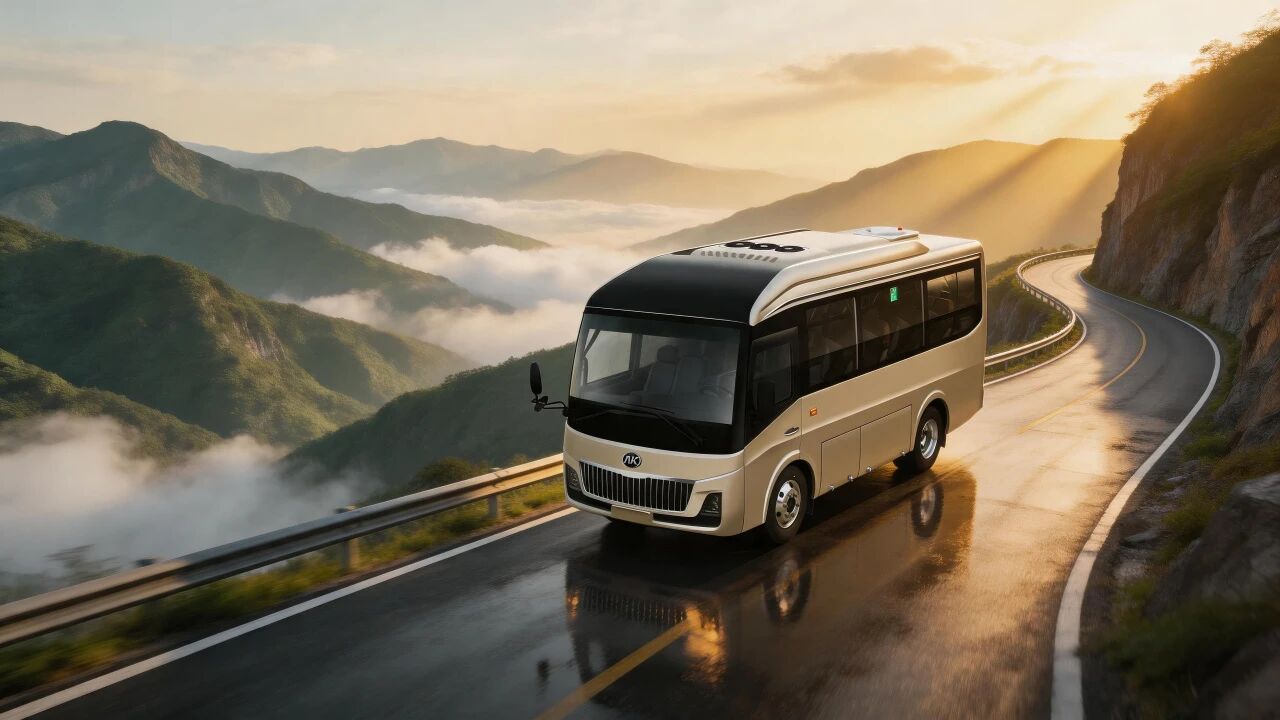
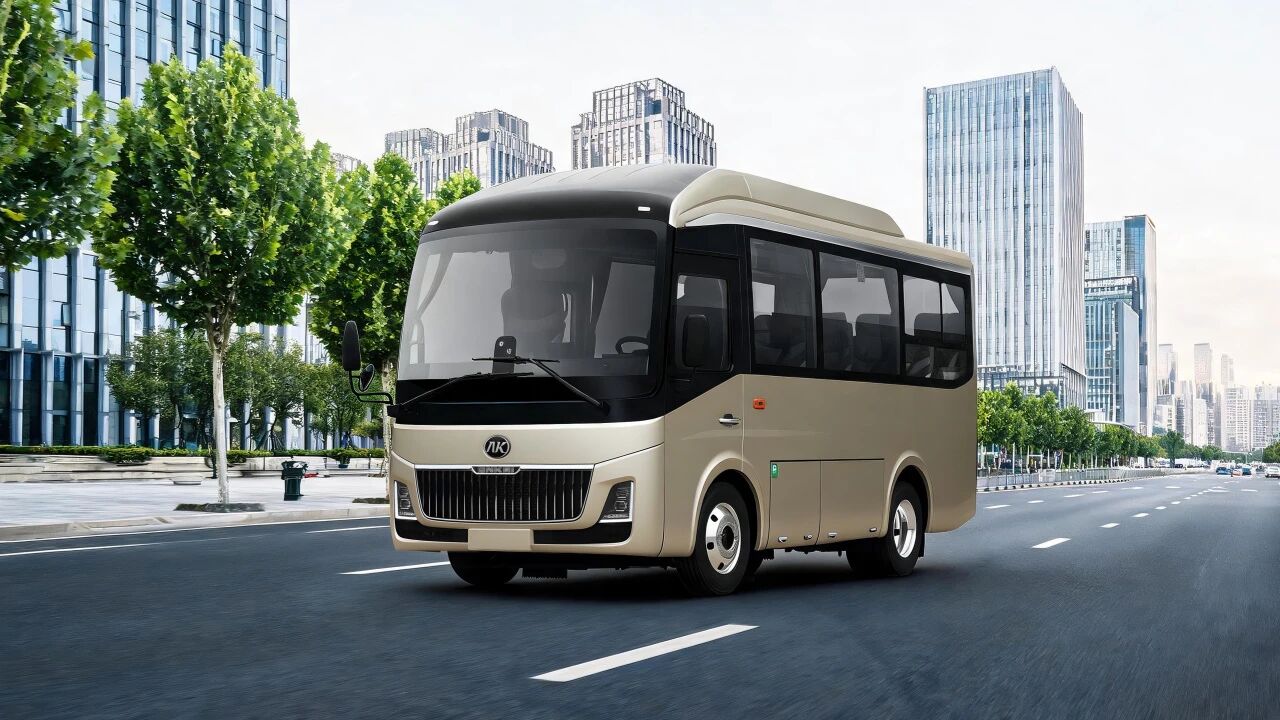
The 5990 mm long, 2250 mm wide and 2995 mm high K60 minibus features a self-supporting body structure — a novelty in the category — made up of more than 80% high-strength steel with a yield strength of over 700 MPa, significantly improving crash safety. Building on Chinese aesthetics, the design language seeks to appeal to both Far Eastern and global tastes. According to Ankai, the aim was to create a confident, modern, clean and refined style. The new K60’s premium-looking exterior was inspired by MPVs, with a U-shaped front fascia incorporating vertically oriented LED headlights and a waterfall-effect grille. The streamlined body design, which also includes the housing of the roof-mounted air-conditioning unit, reduces aerodynamic drag and, in turn, fuel consumption.
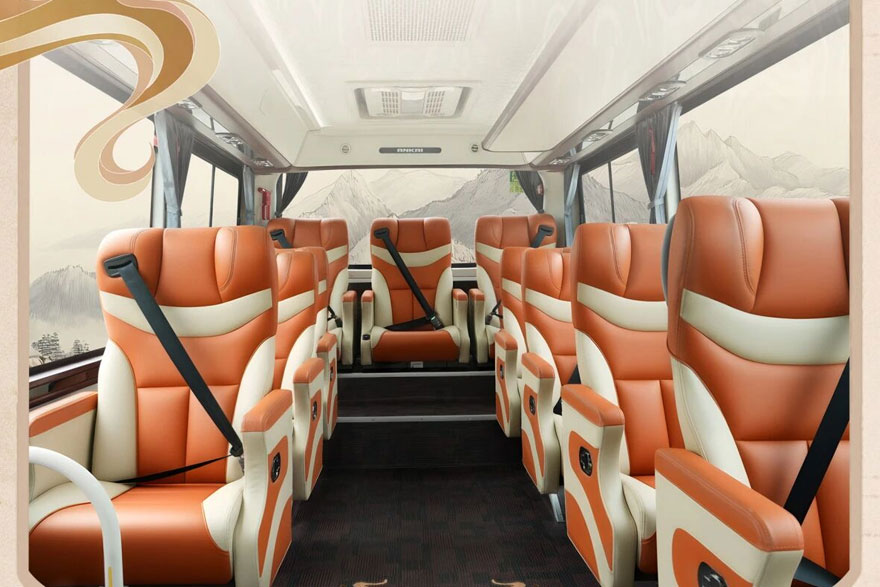
As we have recently seen on much larger luxury touring coaches, the designers responsible for the passenger compartment have once again drawn on traditional Chinese motifs. These include crabapple blossoms and square interlocking patterns, enhanced by striking features such as a cloud-effect ceiling and multicolour ambient lighting. The maximum number of seats is 19, with layouts ranging from 2+2, better suited to staff transport, and the more usual 2+1 arrangement for the category, to a regal 1+1 configuration. Business-class passenger seats are also available as an option, allowing Ankai’s minibus to meet quite different operator requirements.
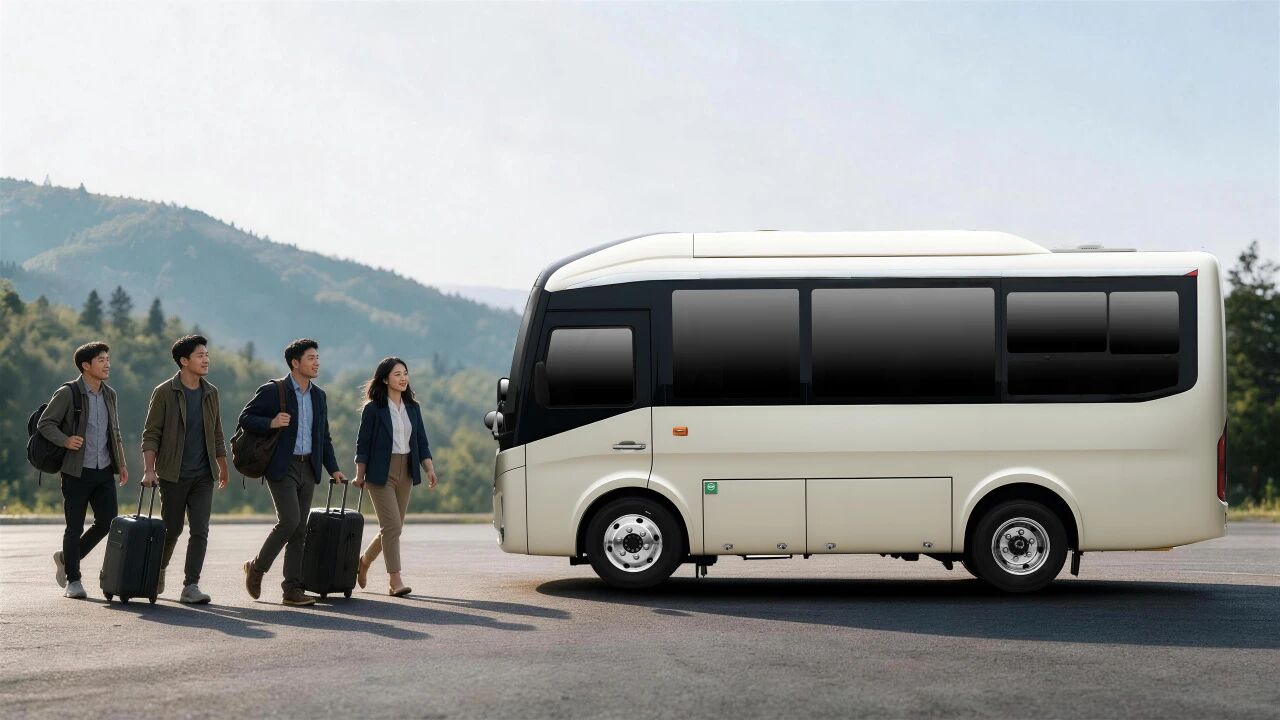
At the rear of the front-engine minibus there is a 1.7 m³ luggage compartment, with a door that opens upward parallel to the rear wall to save space. Although the vehicle’s aisle is positioned relatively low — which is in fact beneficial in terms of the centre of gravity and accessibility on board — there are also luggage compartments on both sides below floor level, although their capacity has not been disclosed.
The link between the bus driver, seated behind the new-generation intelligent dashboard, and the vehicle’s onboard systems is provided by a 10.3-inch full-LCD digital instrument cluster and a 12.8-inch high-resolution control screen. In line with current trends, both interfaces are styled like tablets. Another feature familiar from modern passenger cars is the system’s voice-control capability. The driver’s work is further eased by keyless start, traction control, and an electronic parking brake with rollback prevention and hill-start assist functions — all of which are included as standard.
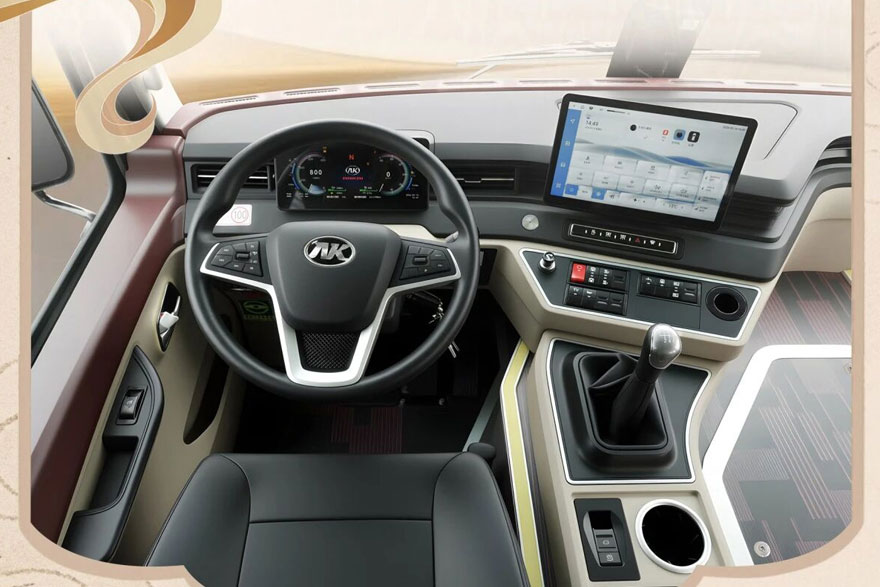
The bus is powered by Chinese manufacturer Yuchai’s second-generation four-cylinder, 3.0-litre diesel engine, the 170 hp (125 kW) YCY30170-66, paired with a 6+1-speed manual transmission, which Ankai says is more than sufficient for high-speed highway running as well as mixed urban and interurban use. The front axle has independent suspension and air springs, promising a more comfortable ride and more agile handling, improving both the driving and travel experience. The rear axle is also equipped with air suspension.
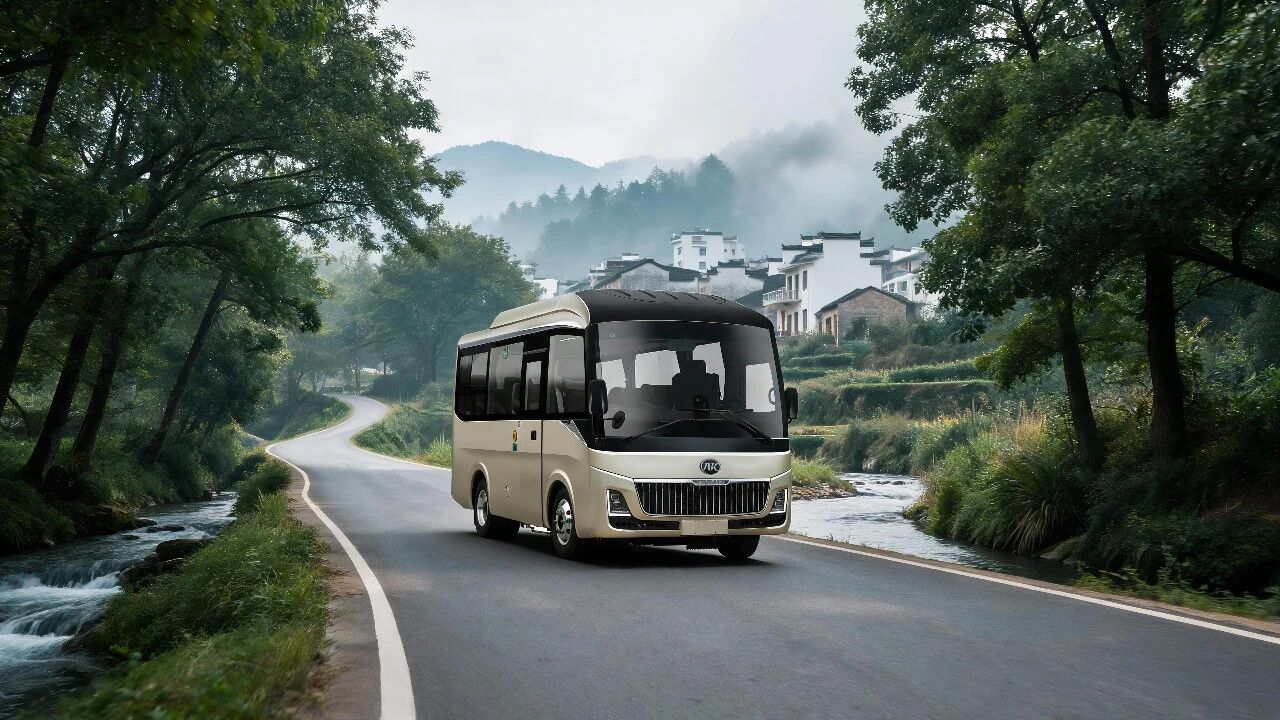
There is currently no word on European distribution of the new Ankai K60 — or its stretched electric sibling, the K75E — so, like its predecessor, its main market is expected to be China, with possible exports to neighbouring Asian countries.
Photos: Ankai Bus