![Magyarbusz [Info]](/mbi/header-logo.png)
Norway moves to curb the rise of Chinese buses – diesel could also return to public tenders
 Ludányi József
The rise of Chinese buses in Norway is no longer merely the subject of political or professional debate: the Norwegian government wants to use specific public-procurement and legislative changes to reduce the country’s dependence on suppliers backed by states that do not have security-policy cooperation with Norway. In practice, the issue primarily concerns China and the Chinese bus fleet that has grown extremely rapidly in recent years. Under a proposal put out for public consultation on August 19 by the Samferdselsdepartementet, Norway’s Ministry of Transport, exemptions from the current zero-emission requirement could in future be granted on security and preparedness grounds, which in certain cases would once again make it possible to procure diesel-powered city and suburban buses.
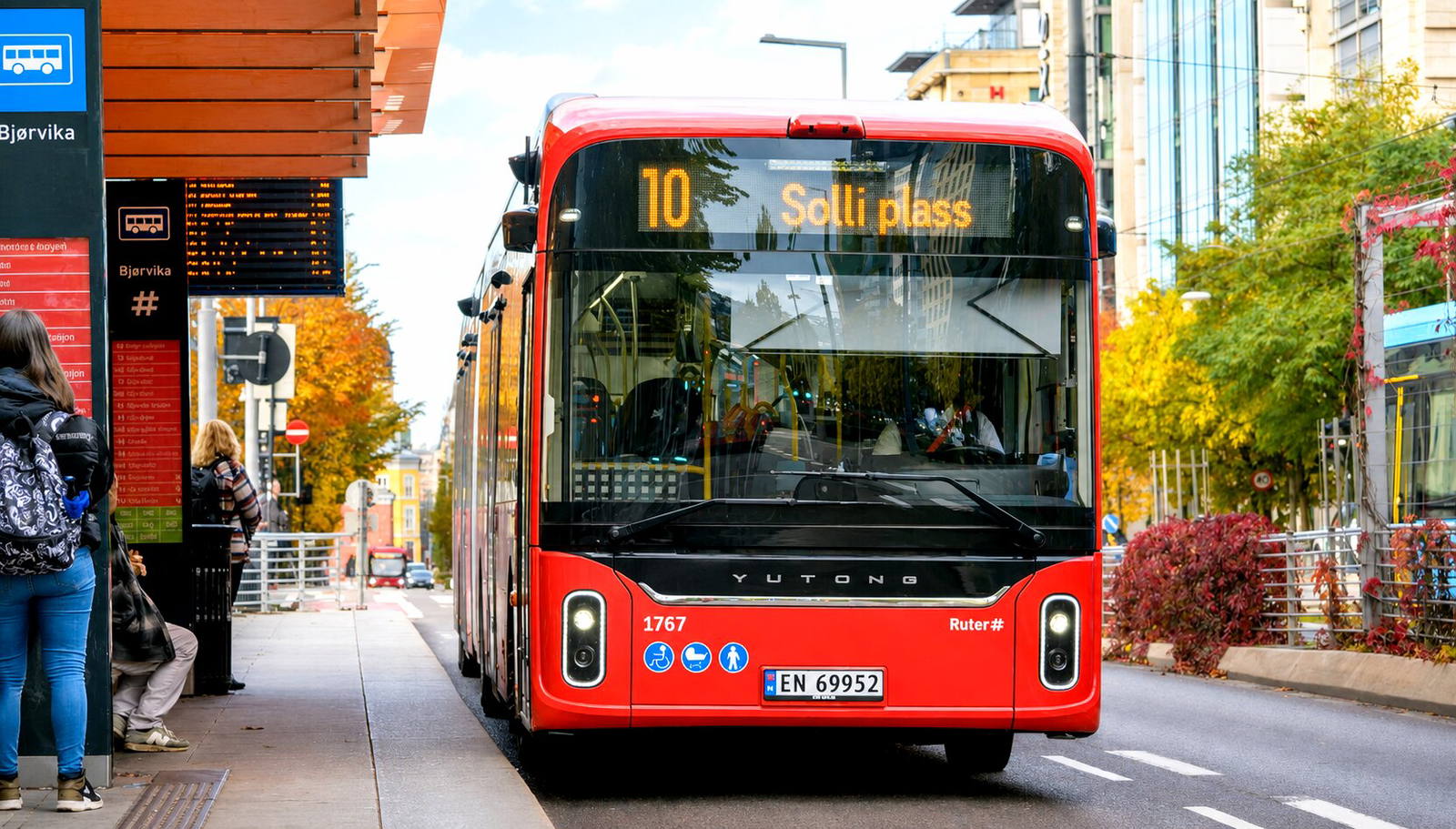
The latest move is particularly interesting in light of the fact that barely a year ago, a debate of an entirely different nature put Chinese buses in Norway in the spotlight. An electronics test carried out by Ruter using a Yutong IC12E and an older VDL Citea quickly became an international political issue after much of the press interpreted the results as proof that Chinese electric buses could be shut down remotely. At the time, our publication explained in detail that the situation was far more nuanced than that: Ruter was essentially seeking to map the digital dependencies of modern, connected vehicles, and the test did not prove any actual Chinese cyberattack or malicious remote intervention.
From this perspective, the Norwegian government document now made public is noteworthy because it itself nuances the picture that emerged at the time. The ministry’s risk assessment explicitly states that the vulnerabilities associated with data collection, data storage, network connections, and remote diagnostics and OTA software-update capabilities in modern vehicles are generally characteristic of contemporary buses. They therefore do not affect only buses manufactured in countries with which Norway has no security-policy cooperation, and they are not even exclusive to electrically powered vehicles.
This is an important difference compared with last year’s political and media communication. The Norwegian government is not now claiming that a Chinese electric bus is dangerous in itself because it is Chinese or because it is electric. Rather, it sees the risk in the possibility that the vehicle fleet of a strategically important transport system may become overly dependent on a single country, a small number of manufacturers, and the digital and physical supply chains linked to them.
At the same time, the document openly states an even more important connection: Norway’s own zero-emission policy has contributed to the situation that has developed. The ministry stresses that it does not wish to lower the level of ambition behind the zero-emission transition, but acknowledges that the strict environmental requirements of recent years have contributed to an increase in the share of buses manufactured in countries that do not have security-policy cooperation with Norway. In other words, the very regulatory system that accelerated the advance of Chinese manufacturers in Norway is now set to be modified on security-policy grounds.
The weight of the issue is illustrated by the changes seen in the Norwegian bus market over the past few years. According to ministry data, in 2018 virtually no new buses manufactured in countries without security-policy cooperation with Norway entered service. Their share was already 15 percent in 2020, 20 percent in 2022, 24 percent in 2023, 41 percent in 2024 and 65 percent in 2025. Around 19 percent of the 12,603 buses currently registered in Norway come from such countries. According to the government’s calculations, a continuation of this trend would fundamentally change the structure of the Norwegian bus market. Statens vegvesen, the Norwegian Public Roads Administration, estimates that without intervention, by 2033 around 60 percent of Norway’s total bus fleet could originate from countries with which Norway has no security-policy cooperation.
It is worth noting that up to this point the Norwegian government document deliberately does not speak of China, but consistently uses the wording “countries with which Norway does not have security-policy cooperation”. Later in the risk assessment, however, it specifically cites China as an example and goes into greater detail on dependencies related to the country. According to the ministry, China has now gained a dominant position in several strategically important value chains, while in the production of battery-electric vehicles it has capacity that European manufacturers currently find difficult to compete with. The Norwegian National Security Authority, the NSM, sees significant dependence on China particularly in batteries, semiconductors and rare-earth elements. A potential trade conflict or export restriction could therefore affect not only the operation of Chinese buses, but much broader European industrial supply chains as well.
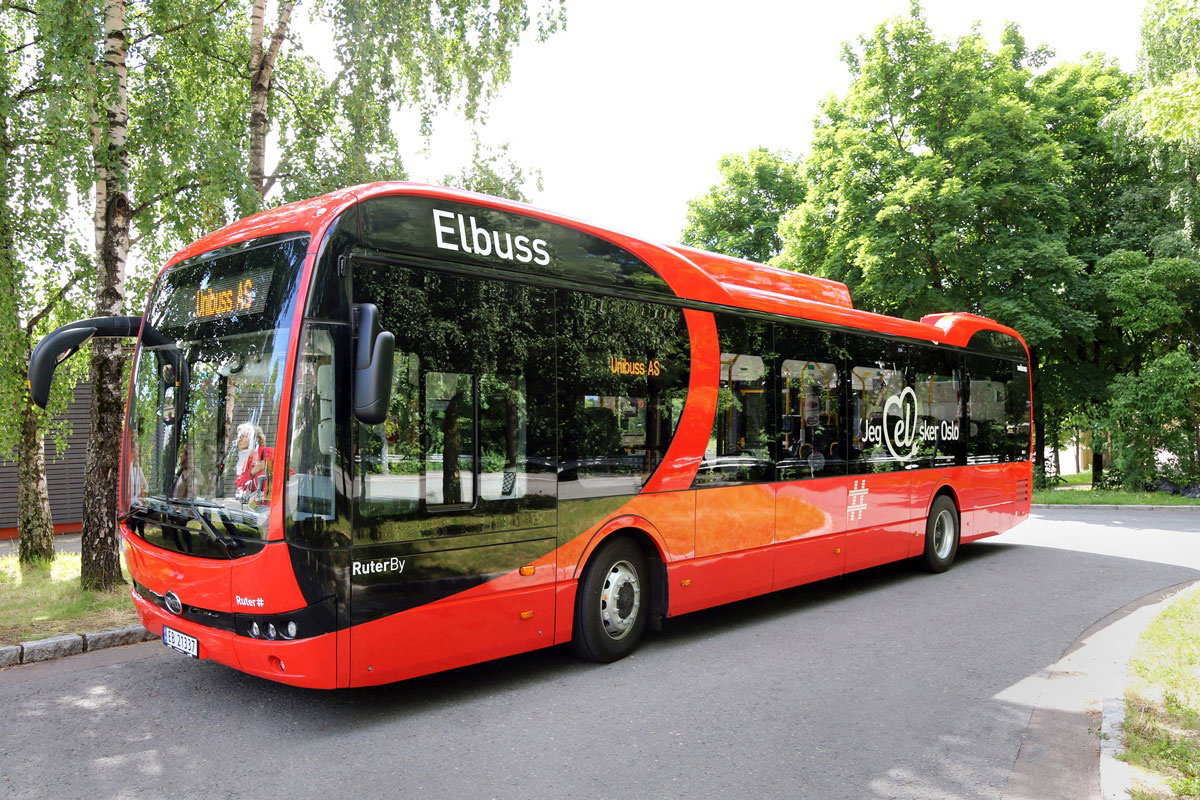
That is why one of the central elements of the Norwegian approach is concentration risk. If a substantial share of a transport operator’s vehicle fleet comes from a single manufacturer, or from a single country, then a disruption in spare-parts supply, a restriction of services or even a successful cyberattack could affect a large part of the fleet at once. According to the ministry, this is no longer a simple operational matter, as buses are important assets in Norway’s civil transport preparedness and, in a crisis or war, may be needed to evacuate civilians and even transport military personnel.
At the same time, it is interesting that the Norwegian authorities’ own threat assessment does not support the simplistic narrative that spread after last year’s Ruter case. According to the PST’s 2026 assessment, although the cyber-operational capabilities of Chinese security and intelligence services have increased, it is still considered unlikely that Chinese actors would carry out a direct cyberattack against vehicle brands manufactured by China itself. The government is therefore not responding to a Chinese intervention that has already been proven, but is trying to reduce a potential future dependency and its consequences.
The proposal would therefore primarily reshape the public-procurement system. The ministry plans to issue guidance for Norwegian counties and other public-transport contracting authorities encouraging them to ensure that a meaningful share of their fleets comes from countries that have security-policy cooperation with Norway. They would also have to take into account the risk of dependence on one or a few manufacturers, as well as the availability of spare parts and access to critical components.
There is, however, a serious practical obstacle to this. In recent years, Norway has introduced one of Europe’s strictest zero-emission bus policies. When procuring M3 class I and II buses, the general rule currently requires carbon-dioxide emissions of 0 g/km. The system has visibly achieved its environmental-policy objective: in 2025, 96.2 percent of Norwegian city buses registered for the first time were gas-powered or zero-emission vehicles, and zero-emission technology now practically dominates among new city buses.
The problem is that the government now also acknowledges that these strict environmental requirements are precisely what contributed to the rapid rise in the share of buses coming from countries without security-policy cooperation with Norway. This is essentially the same contradiction we pointed out last year in connection with the Ruter case: while at the political level there is growing demand to reduce dependence on Chinese technology, the extremely rapid zero-emission transition and price-sensitive public tenders have opened the market to the very Chinese manufacturers that had the production capacity and competitive prices needed to meet demand.
To solve the problem, the Norwegian government would now be willing to partly loosen its own zero-emission rules. The proposal would add a new exemption to the relevant regulation: in the case of M3 class I and II buses, it would be possible to deviate from the zero-emission requirement if this is essential in order to meet necessary security and preparedness considerations.
This does not, however, mean a general return to diesel buses. The ministry would set the threshold for applying the exemption deliberately high. If the share of buses from countries without security-policy cooperation with Norway were too high in a given region, the first step would still be to look for electric buses from countries that do cooperate with Norway. Another drivetrain could only be considered if procuring such an electric bus were technically unfeasible or would involve significant additional cost. In that case, the vehicle with the lowest possible carbon-dioxide emissions would have to be chosen, and the use of biogas would also have to be considered.
At this point, the document makes another important observation: procuring a Chinese diesel bus instead of a Chinese electric bus would not solve the problem. According to the ministry, the identified vulnerabilities do not stem from electric propulsion, but from the digitalisation of modern buses in general and from supply chains. Choosing a different drivetrain therefore does not in itself constitute a security solution if the vehicle still comes from a country with which Norway has no security-policy cooperation.
The government has not yet decided exactly what proportion of Chinese buses – or, more broadly, buses from such countries – would be acceptable. As part of the public consultation, stakeholders are being specifically asked to comment on whether a concrete upper limit is needed and, if so, where it should be set. They are also examining whether different restrictions by region would be justified.
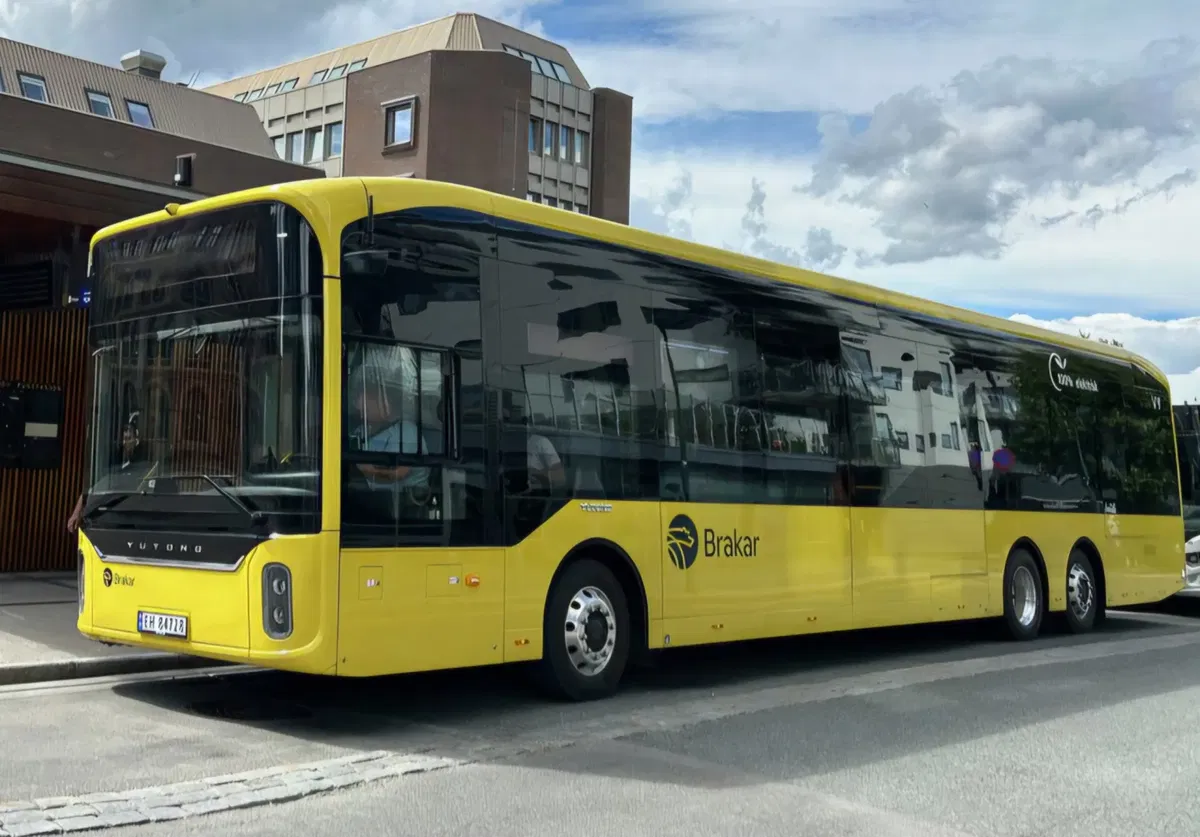
Legally, however, the picture is even more complex than that. Under the planned guidance, certain countries that do not formally have security-policy cooperation with Norway should nevertheless be treated in the same way as cooperating states if they have a trade agreement with Norway that also covers the public procurement of buses, or if they are parties to the WTO Agreement on Government Procurement and Norway has a relevant obligation towards the state concerned. The final regulation would therefore not function as a simple “ban on Chinese buses”.
Meanwhile, the Norwegian government is continuing to examine the issue from a technical perspective as well. With the involvement of the NSM, Ruter, Kollektivtrafikkforeningen, NHO Transport, Vy Buss and other industry stakeholders, Statens vegvesen intends to map in greater detail what information leaves modern buses, what data is transmitted to external systems, and what technical measures could be used to limit the possibility of unwanted external intervention. The ministry itself also acknowledges that there is not yet sufficient knowledge to assess what vehicle-technology measures would be genuinely effective and proportionate.
This also casts last year’s Ruter–Yutong case in a new light. The Norwegian state is no longer simply asking whether “a Chinese electric bus is safe”, but what level of external dependence can be considered acceptable in the case of a modern, digitalised bus fleet built on international supplier chains. For now, the answer is not the exclusion of a specific manufacturer or technology, but the diversification of suppliers, better control of digital access and – if necessary – even a partial review of zero-emission policy.
All of this is particularly interesting because Norway is one of Europe’s frontrunners in zero-emission bus transport. In essence, it is now seeking a solution to one of the unintended consequences of its own earlier policy: rapid electrification has succeeded, but in the process a degree of supplier concentration has begun to emerge that the government now treats not simply as a market issue, but as a matter of national security.
The piquancy of the situation is that the ministry itself does not know for certain whether enough electric buses from manufacturers in countries that do have security-policy cooperation with Norway will be available in the short term. According to the document, the competitive position of these manufacturers is uncertain in the short term, as is whether the counties will be able to meet the requirements exclusively with electric buses from them. The government is therefore asking consultation participants for specific input not only on production capacity, but also on prices. This clearly shows the essence of the problem: politically, it is relatively easy to set the reduction of dependence on China as an objective, but ensuring alternative vehicles in the necessary quantities, at the right price and with timely delivery is a much more difficult task.
During the public consultation, therefore, the question is not whether Norway will return to diesel buses. Rather, it is how far it is willing to go in enforcing zero-emission targets when they conflict with the country’s security and security-of-supply interests. According to the ministry’s own expectations, the emissions impact of the change will be low, while in the longer term it still expects electric buses to become more competitive and the fleet to become zero-emission.
After last year’s loud debate, a much less spectacular but considerably more serious process has now begun in Norway. From the issue of “Chinese buses that can be shut down remotely”, the debate has reached the real strategic problem of public transport: who manufactures the buses, where the critical components come from, who has access to the vehicles’ digital systems, and whether the fleet will remain operational even if the geopolitical or trade environment changes overnight.