![Magyarbusz [Info]](/mbi/header-logo.png)
The weight of electric buses is now putting Norway’s road network to the test
 Ludányi József
While Norway is one of Europe’s most advanced countries in the electrification of road transport, the local press drew attention in June to a problem that clearly shows that the success of the zero-emission transition is not determined solely by the maturity of vehicles, batteries or charging networks. In some areas, the road network itself may not necessarily be suitable for accommodating heavy battery-electric buses. According to Norwegian reports, the main issue is not that electric buses are “destroying the roads”, but rather that certain local roads, bridges and smaller engineering structures were not originally designed for the regular operation of vehicles of this weight.
One of the most frequently cited examples of the problem is the Hadeland region in eastern Norway, where, according to an assessment by public transport authority Ruter, more than 40% of the local road network is currently unsuitable for the operation of heavier battery-electric buses. In the region, diesel vehicles were originally planned to be replaced by 2028, but as things stand, this may have to be postponed until 2031. The main reason is that many local routes are subject to load-bearing restrictions under which the axle loads of today’s electric buses could already pose a problem.
According to figures cited in the Norwegian press, many local roads still permit a maximum axle load of only 8 tonnes. At first glance, this may not seem a particularly strict limit, but in the case of modern electric buses it can easily become a bottleneck. Battery-electric buses are already significantly heavier than their diesel counterparts in their own right, primarily because of their large battery packs, which can weigh as much as 3-4 tonnes. Moreover, under current European regulations, the maximum permitted gross weight of zero-emission three-axle solo buses can be up to 28 tonnes, while articulated versions can be as heavy as 30 tonnes. At the same time, the problem does not stem solely from the overall weight, but also from the fact that this mass is not distributed evenly along the full length of the vehicle. While the load on the front axle might in some cases still fall within a local 8-tonne limit, the load borne by the driven rear axle is in a completely different category: under current European rules, a driven axle may be loaded with up to 11.5 tonnes, which is well above the level acceptable for weaker local roads, smaller bridges or structures with lower load-bearing capacity. European commercial vehicle manufacturers, meanwhile, are seeking to have this limit raised to 12.5 tonnes for zero-emission vehicles, which, in light of the current Norwegian examples, could place an even greater burden on local infrastructure that is already limited in its load-bearing capacity.
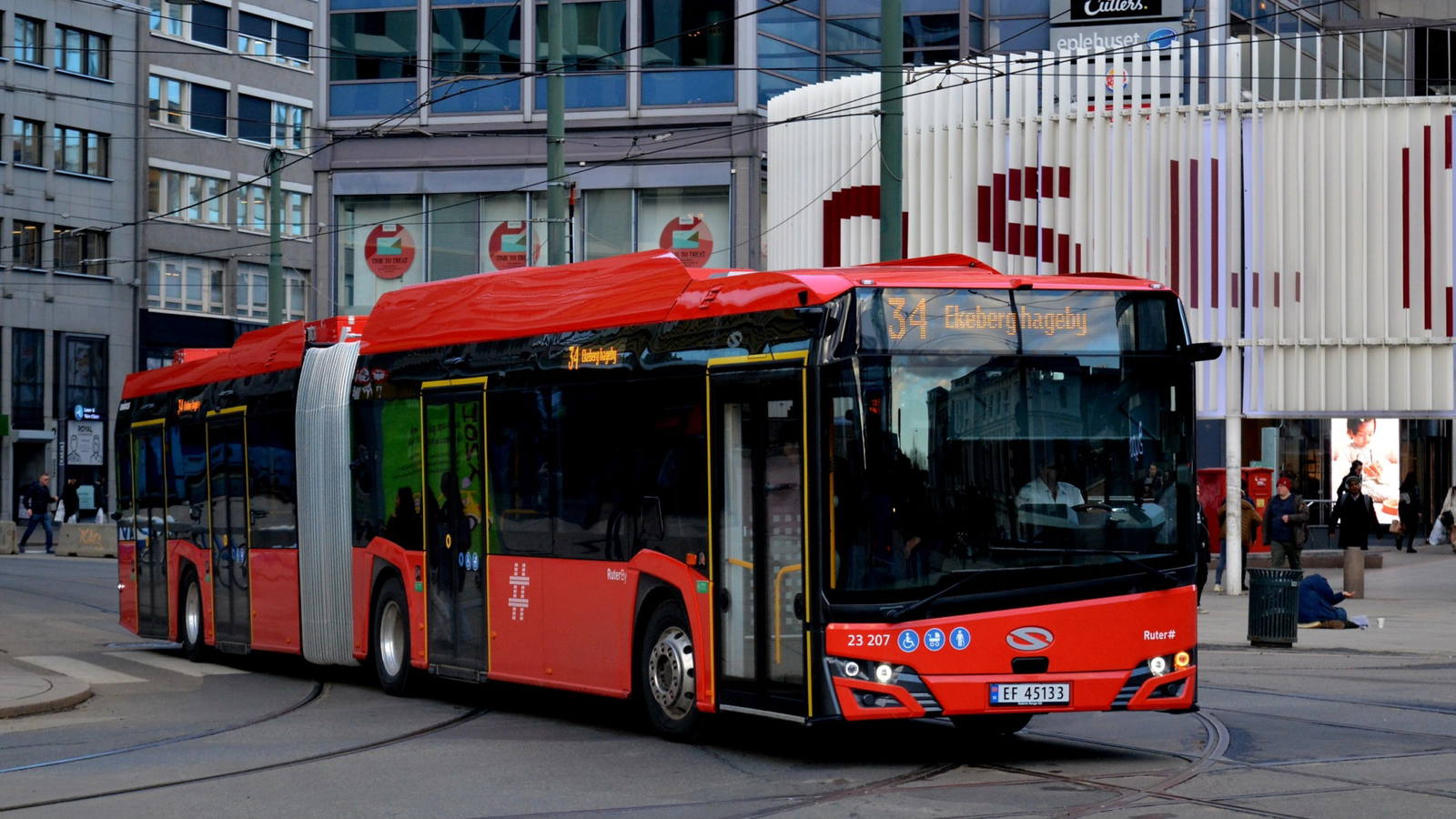
The situation is further complicated by the fact that the weight of electric buses is not only a challenge from an infrastructure perspective, but also has a direct impact on passenger capacity. In vehicles fitted with ever larger batteries, the higher unladen weight often reduces, on paper, the number of passengers that can be carried. In the case of an articulated electric bus, it can therefore easily happen that, on the basis of type approval or axle-load calculations, the vehicle is officially suitable for carrying only around 100 passengers, even though in everyday operation neither passengers nor the driver, and in many cases not even the operator itself, can or wants to monitor this so strictly. In practice, such vehicles can therefore easily run overloaded, especially during peak periods. In many cases the running gear itself would be able to tolerate this — the ZF driven rear portal axles widely used in city buses are technically capable of withstanding loads of up to 13 tonnes — but this does not change the fact that, in legal terms, the permitted limit has already been exceeded, while the infrastructure is also being subjected to greater loads than originally planned.

The Norwegian example therefore primarily highlights that the transition to zero-emission bus transport cannot be treated solely as a matter of vehicle procurement. It is not enough to determine what range, battery size or charging strategy would make a vehicle suitable for a given route; it must also be examined whether the physical infrastructure of that route — the load-bearing capacity of the roadway, the condition of bridges, culverts and other engineering structures, as well as the permitted axle-load limits — is capable of accommodating these buses. If electrification takes place in a network environment where buses with substantially higher unladen weights and different weight distribution compared with the previous diesel vehicles are introduced, then the transition is no longer merely an energy or climate-protection issue, but also an infrastructure development task.
The Hadeland case clearly shows that the problems arising from the weight and axle loads of electric buses do not necessarily appear most acutely on major urban trunk routes, but rather on regional and suburban networks where services rely on local roads with lower load-bearing capacity and smaller engineering structures. In such an environment, electrification is no longer merely a question of vehicles and charging technology, but also depends directly on the condition and load-bearing capacity of the infrastructure.
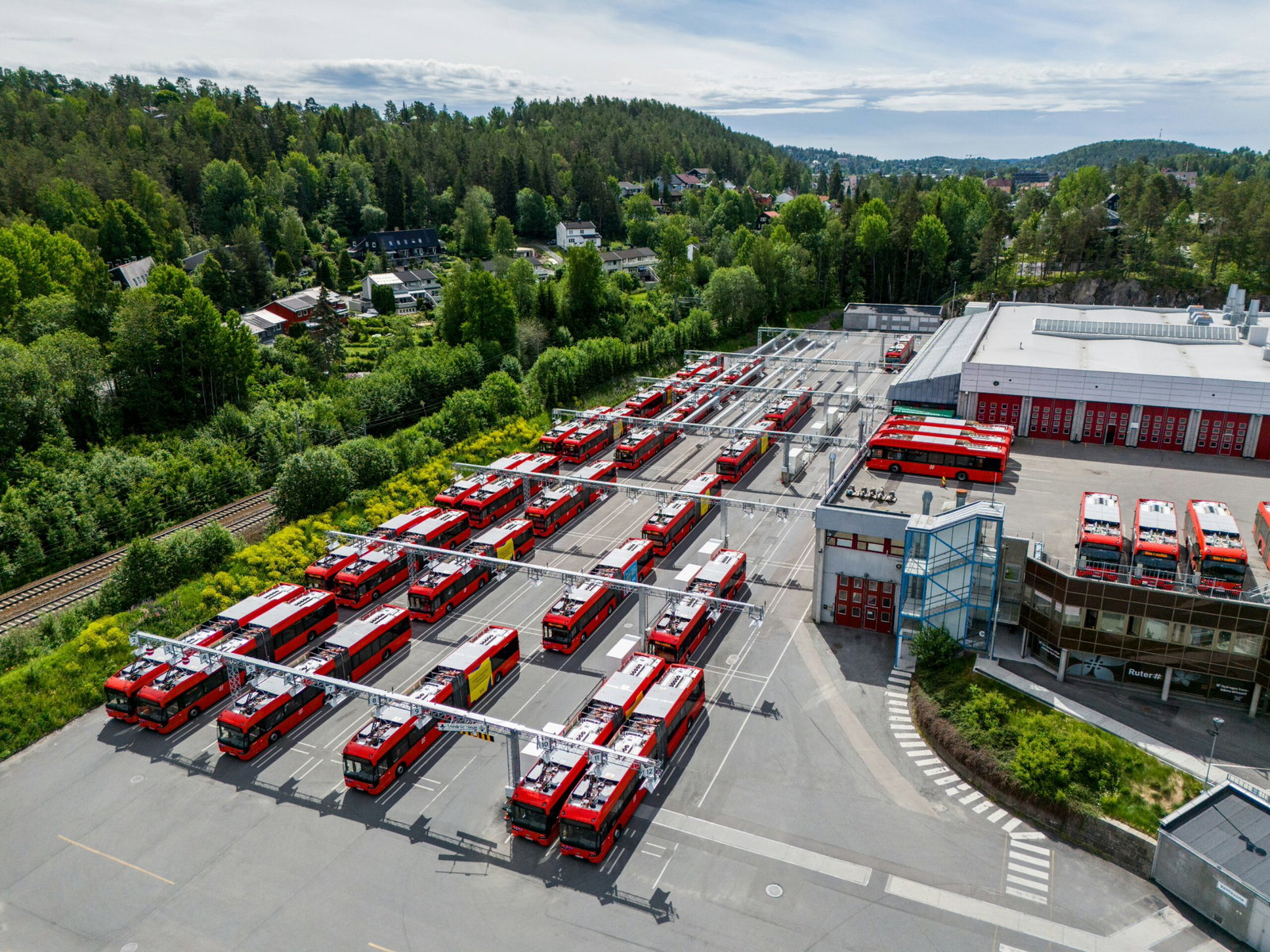
For this reason, the issue of infrastructure modernisation is becoming increasingly prominent in the Norwegian debate. According to officials quoted in the press, Akershus county needs more time to prepare the affected road sections for the heavier electric buses. In its revised budget, the county would allocate NOK 150 million for further road maintenance and development work. This suggests that the delay in electrification is not necessarily due to a lack of suitable vehicles, but rather to the fact that the transport infrastructure itself first has to be adapted to the changed technical conditions.
Moreover, the situation in Hadeland is not an isolated case. According to the Norwegian press, the postponement of electrification for certain bus contracts has also been raised in other parts of Akershus, for example around Romerike and Asker. Similar challenges have also been reported in western Norway: in the new public service contracts being prepared by Skyss, the public transport authority in Vestland county, for the Sogn, Sunnfjord and Sunnhordland areas, electric buses will play a significant role, but diesel vehicles cannot be fully replaced everywhere. According to reports, in the new contract for the Indre Sogn area, electric buses would account for around 60% of service output, while in Sunnfjord and Sunnhordland the share could be around 80%, meaning that full electrification is being held back there as well by infrastructure constraints.
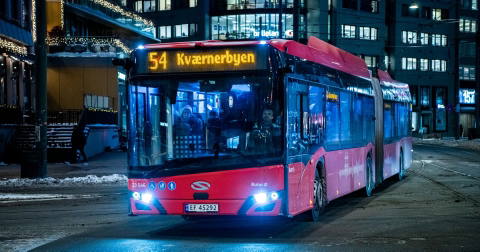
All this is particularly noteworthy because the Oslo and Akershus region already operates one of Europe’s largest electric bus fleets. According to information provided by Ruter in response to our enquiry, around 1,390 buses currently operate in scheduled service in the region, 687 of which are battery-electric. In the city of Oslo, electrification has effectively already been completed: alongside 477 electric buses, only 23 diesel buses remain in the local bus fleet, meaning that the capital’s services are almost entirely based on zero-emission vehicles. In the surrounding Akershus area, a still sizeable diesel fleet of 652 vehicles continues to operate alongside 210 electric buses, but the aim here too is full electrification in the coming years. It is therefore especially telling that while Oslo and its surroundings have already previously experienced difficulties related to the winter operation, charging and availability of electric buses, another, far more prosaic limitation has now become visible: rapid electrification is not only an energy and operational issue, but also a very tangible infrastructure question. If vehicle weight, axle loads and the load-bearing capacity of the local road network are not aligned, this can easily slow the pace of the transition.
Cover photo: Kim Løvenskjold