![Magyarbusz [Info]](/mbi/header-logo.png)
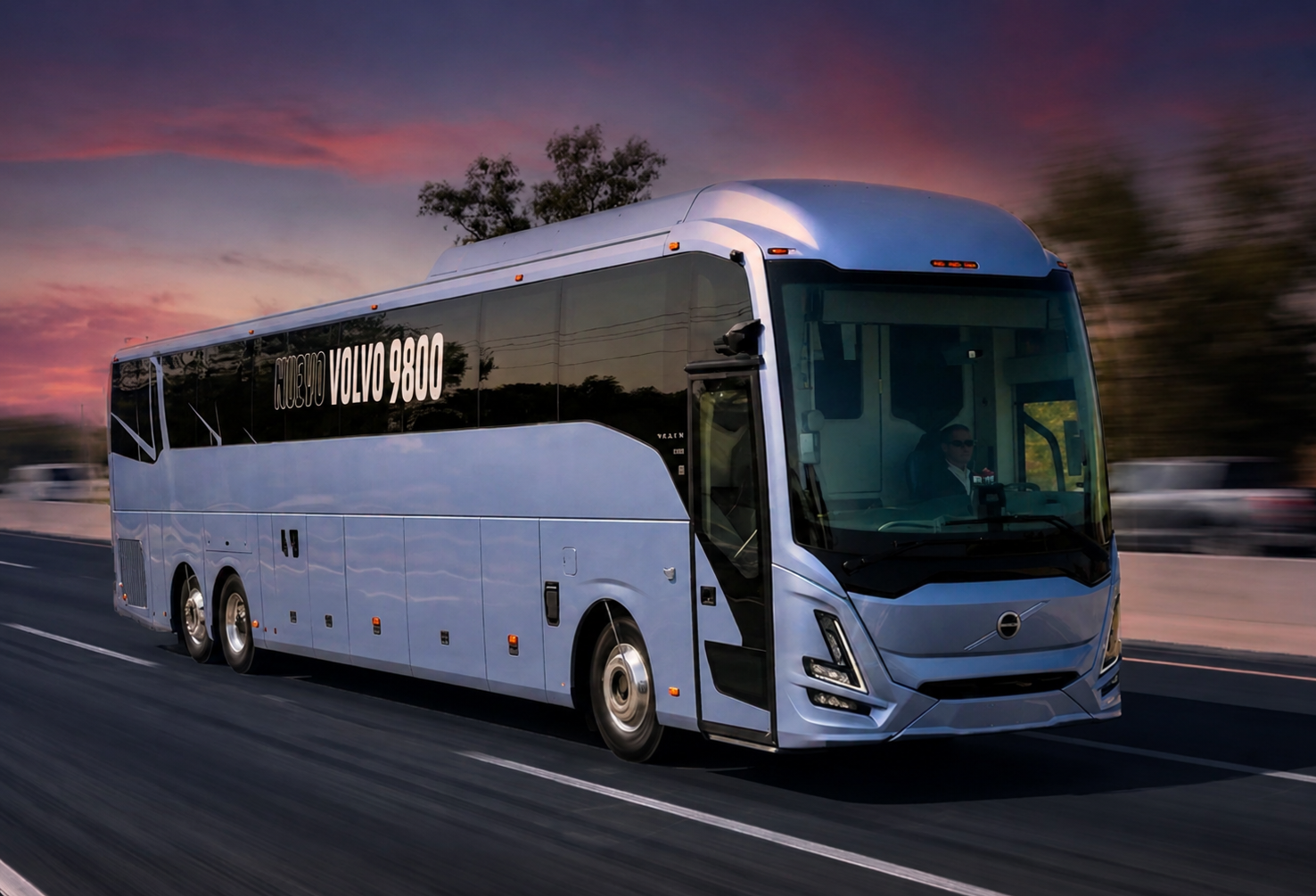
The new Volvo 9800 is ready for production and may also point to the future of Europe’s 9700
 Ludányi József
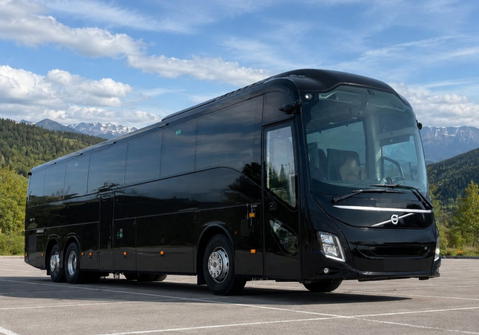
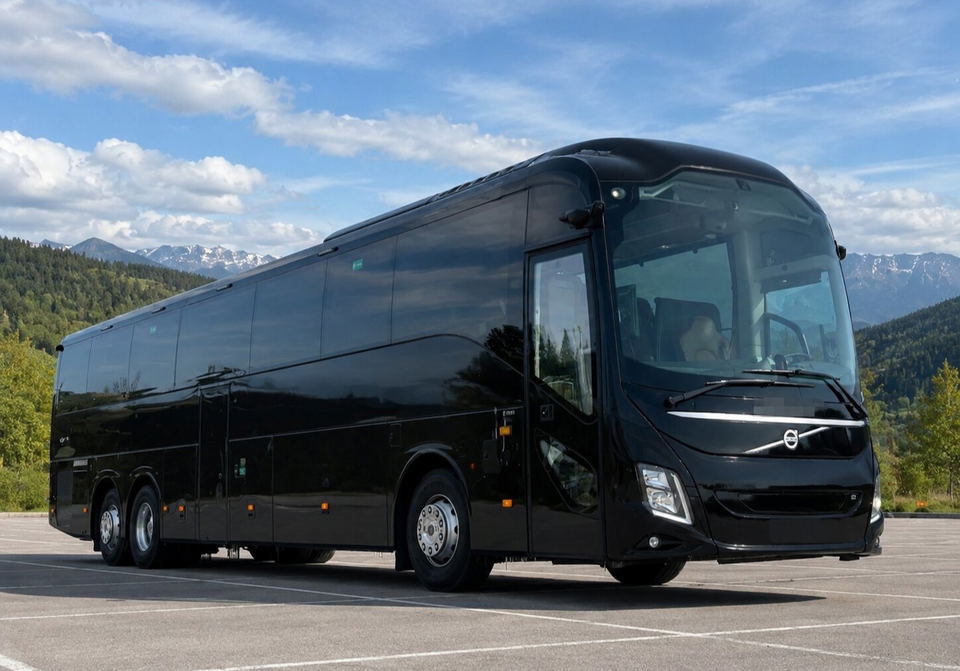
Volvo Buses’ plant in Tultitlán, Mexico, is now ready for series production of the new-generation Volvo 9800, with the coach production line having been adapted in recent months for the arrival of the new model. Although the type was developed primarily to meet the needs of the Mexican and Latin American markets, the generational change is also noteworthy from a European perspective. The Volvo 9700, which is returning to our continent, is a close relative of the 9800: the two models are based on the same technical foundations, so it is easy to imagine that the European version may later adopt some of the styling solutions now introduced on the 9800. There has already been a precedent for this: the appearance of the third-generation 9700 intended for Europe also drew on the design language of its then Latin American sister model from the previous generation. It may therefore well be that the styling of the newly updated 9800 also foreshadows the direction in which the appearance of the European 9700 could evolve in the coming years.
The first-generation Volvo 9800 was unveiled on 18 November 2015 in Guadalajara, Mexico, at the Expo Transporte ANPACT exhibition, with series production starting in 2016. Interestingly, while the type specifically tailored to the Mexican market is only now entering its second generation, the current, third-generation European 9700 was developed as a close technical relative of the first-generation 9800. In any case, the 9800 has proved to be a genuine success story in its primary target market of Mexico: over a little more than a decade, nearly 5,000 units have been built to date, which is a respectable figure even considering that the coach segment has traditionally been strong in Mexico.
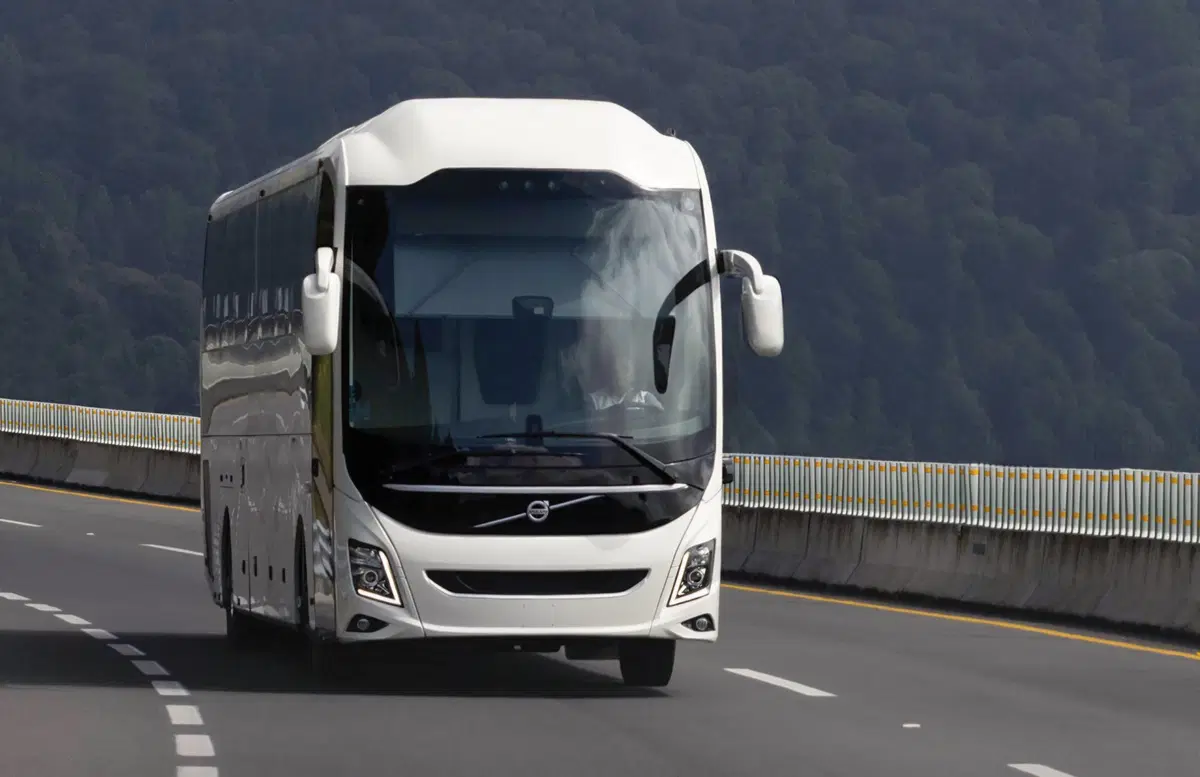
The relationship between the two models therefore goes far beyond similar styling. The construction of the third-generation 9700 differs fundamentally from that of the first and second generations built in Europe, as its technical architecture is largely based on the solutions used for the first-generation Mexican 9800. This particular construction also made the reorganisation of the model’s production more difficult after the closure of Volvo’s plant in Poland. In the case of Spain’s Sunsundegui, which had been selected to take over production, the necessary technology transfer ultimately fell through, among other reasons, because of its complexity and significant cost requirements. Volvo then decided to relocate production of the 9700 to Mexico, where, thanks to the 9800, substantial experience and an established manufacturing background already exist for producing buses with this type of architecture. As to exactly what is distinctive about this construction — which even Finland’s Carrus Delta, currently building the double-deck Volvo 9700 DD, declined to take on — we will ask Volvo’s specialists in person in Gothenburg in early October, when the manufacturer presents one of the prototypes of the Mexico-built 9700 in European specification.
On the threshold of series production, it is worth taking a closer look at what the second generation of the Volvo 9800 has to offer. The newcomer, presented in March at Expo Foro Movilidad 2026, is not simply a facelift, but a new generation that moves on from its predecessor in several technical and stylistic respects, while retaining the model’s basic concept and its character specifically tailored to the needs of the Mexican market.
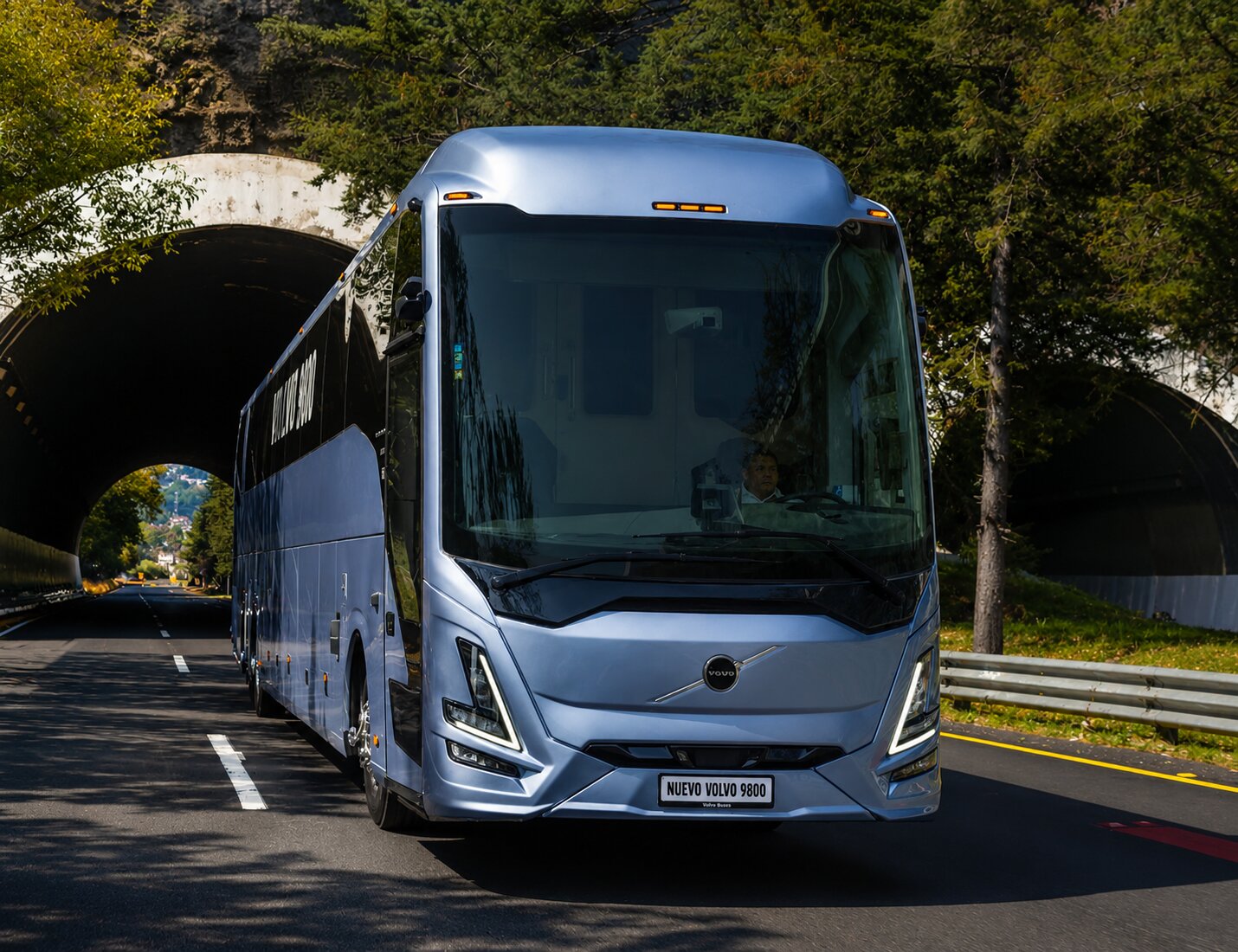
The new 9800 continues to be based on Volvo’s global B13R coach platform and will be produced in three length variants: 13.2, 14 and 15 metres, the latter two being three-axle versions. One of the most important technical achievements of the generational change is a significant reduction in weight: the new model’s kerb weight is around 650 kg lower than that of its predecessor. In the three-axle versions, an important role in this is played by the newly developed electrohydraulically steered tag axle, which, in addition to its simpler design, also improves maintainability.
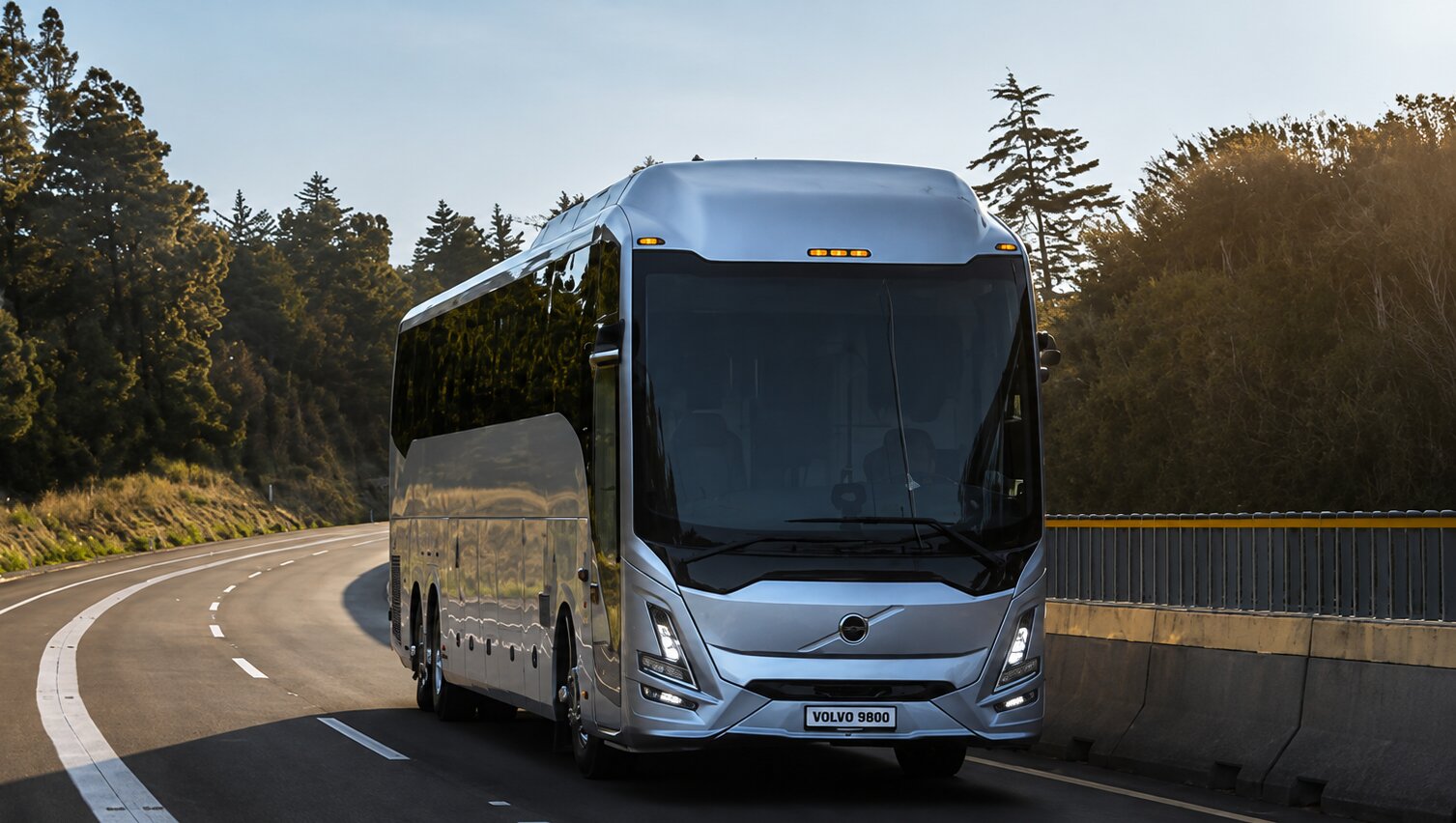
The engineers have also extensively reworked the aerodynamics. According to Volvo, the drag coefficient of the new body is 11% better than that of the previous generation, which, together with the lower kerb weight, could result in fuel savings of around 4%. Propulsion is still provided by Volvo’s 13-litre Euro VI diesel engine, with outputs of 460 or 500 hp (338–368 kW), paired with the Volvo I-Shift automated gearbox; the power unit is also suitable for use with hydrotreated vegetable oil (HVO) fuel.
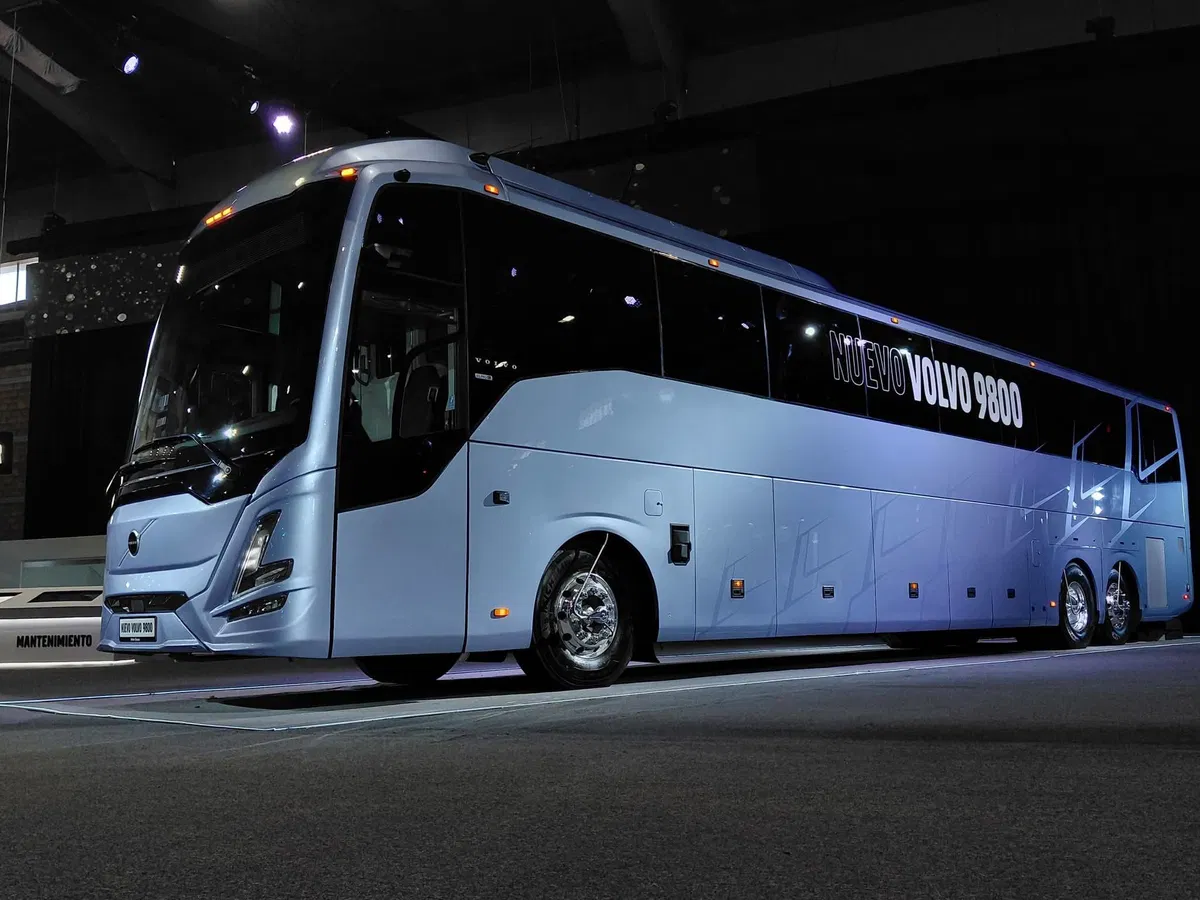
The most conspicuous change, however, is naturally the completely redesigned exterior. Considerably more angular and assertive than its predecessor, the new 9800 follows Volvo’s current design language, with LED headlamps on the front end framed by boomerang-shaped daytime running lights familiar from the brand’s latest heavy trucks. The side wall has retained the basic proportions of the previous generation, but the beltline, which once described a continuous arc, is now divided by more pronounced breaks. The biggest change has taken place at the rear, which has received a completely new, much more complex design, a large spoiler and distinctive LED light clusters. The new rear light clusters, designed specifically for this generation, may also be of interest from a European perspective. Developing such bespoke components requires significant investment, so it would not be surprising to see them later on Volvo’s renewed models intended for the European market as well.
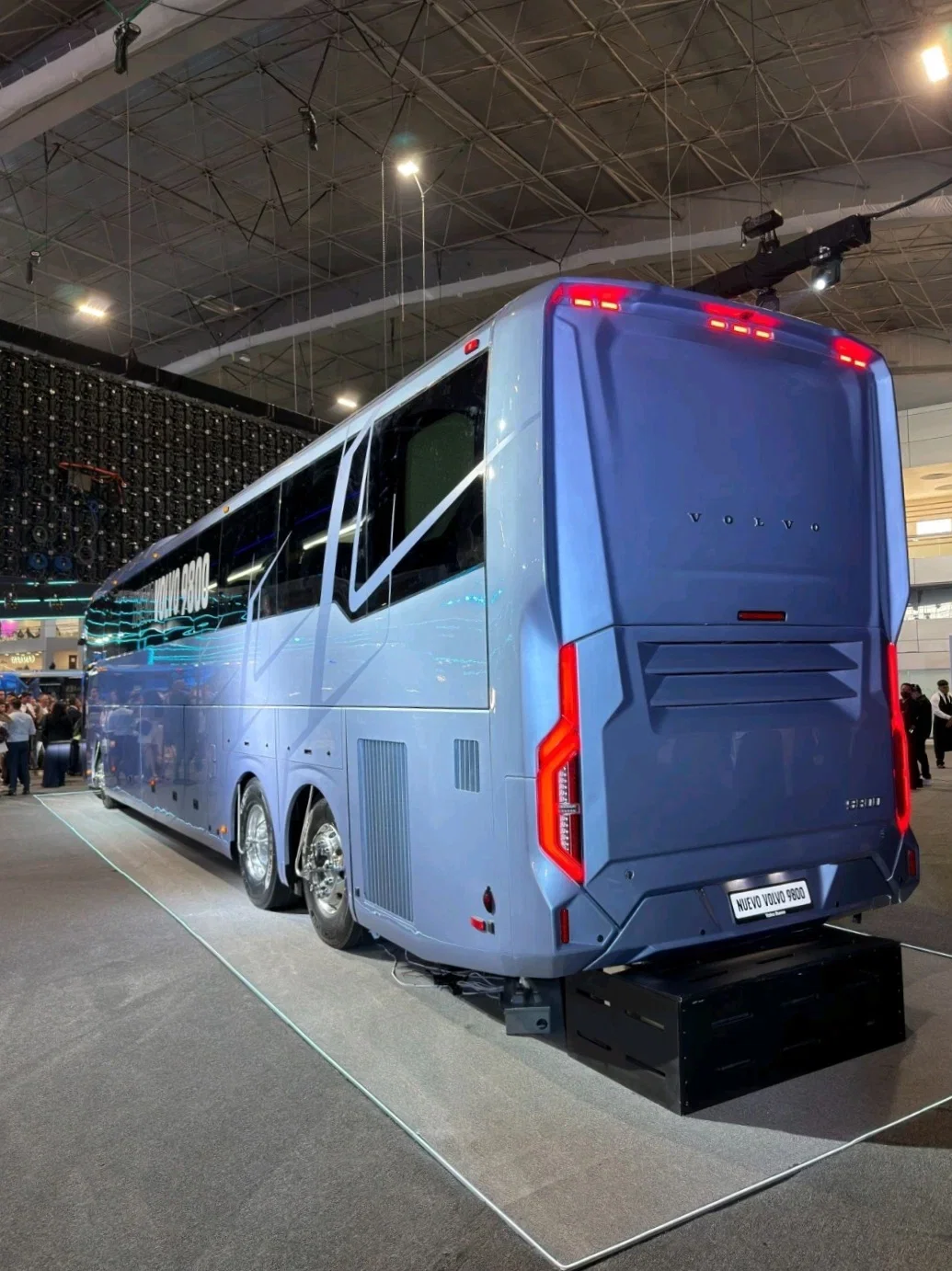
The redesigned rear end, with its wraparound rear spoiler extending all the way down to the beltline, is clearly intended to reduce fuel consumption: it reduces the size of the low-pressure area forming behind the bus and, with it, the force acting against and impeding the vehicle’s motion. Since the life cycle of a coach generation is typically a little over a decade, the career of the new 9800 now presented is expected to extend well into the period when electric drive may also play an increasingly important role in this vehicle category. It is therefore reasonable to assume that Volvo’s engineers already took a future fully electric version into account when designing the body. Optimised aerodynamics will, of course, be beneficial in that case as well, and could even translate into valuable extra kilometres of range, much like the solution used on MAN’s electric long-distance coach.