![Magyarbusz [Info]](/mbi/header-logo.png)
FIAA 2026: Solaris brings a three-axle interurban electric bus
 Patthy Gellért
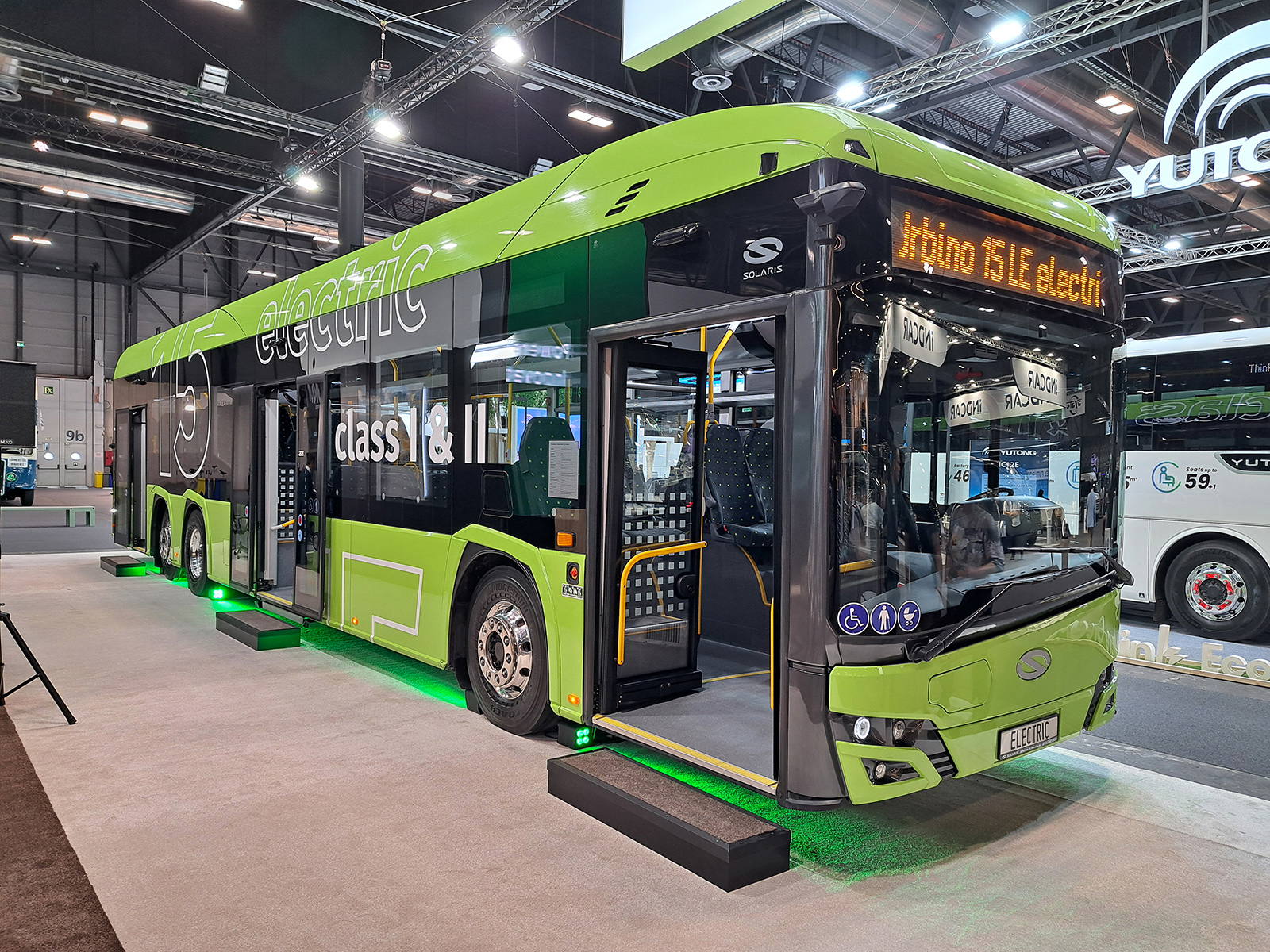
Solaris is putting the longest solo model in its current range in the spotlight at the FIAA 2026 trade fair, held between June 22 and 24, appearing at the Madrid event with an apple-green, three-axle Urbino 15 LE electric bus. The Polish bus manufacturer is celebrating its 30th anniversary this year and, as a major player in European electromobility, is entering its fourth decade with a clear development strategy.
The 14,890 mm-long, low-entry Urbino 15 LE electric model was originally developed by Solaris for the Scandinavian markets. Although sales got off to a somewhat slow start after its world premiere in 2020, they have now gained considerable momentum: the type’s total order book has reached 600 units, of which around 370 have so far been delivered to operators. Sweden is considered its primary market, but operators in the Netherlands, Poland, Norway, Italy and, of course, Spain have also already placed their trust in the three-axle electric bus. In the Mediterranean country, Solaris can in fact claim a particularly strong position: according to information presented at the exhibition, since entering the Spanish market in 2010 the Polish manufacturer has delivered more than 1,000 buses to nearly 40 different Spanish cities, 54% of them with alternative drivelines.
At the venue we also received a brief overview of Solaris’s current financial situation. The company closed last year with 1,631 buses delivered and revenue of €1.183 billion, while this year, after just the first six months, it had already reached 1,079 vehicles delivered (+41% compared with the same period a year earlier) and revenue of €824 million (+59%). As a result, the company expects both indicators to set records by the end of the year. Further grounds for optimism are provided by Solaris’s current order book, which is, incidentally, made up 93% of low- or zero-emission models and has a total value of €2.14 billion, meaning that the company’s expansion of production capacity is hardly unjustified.
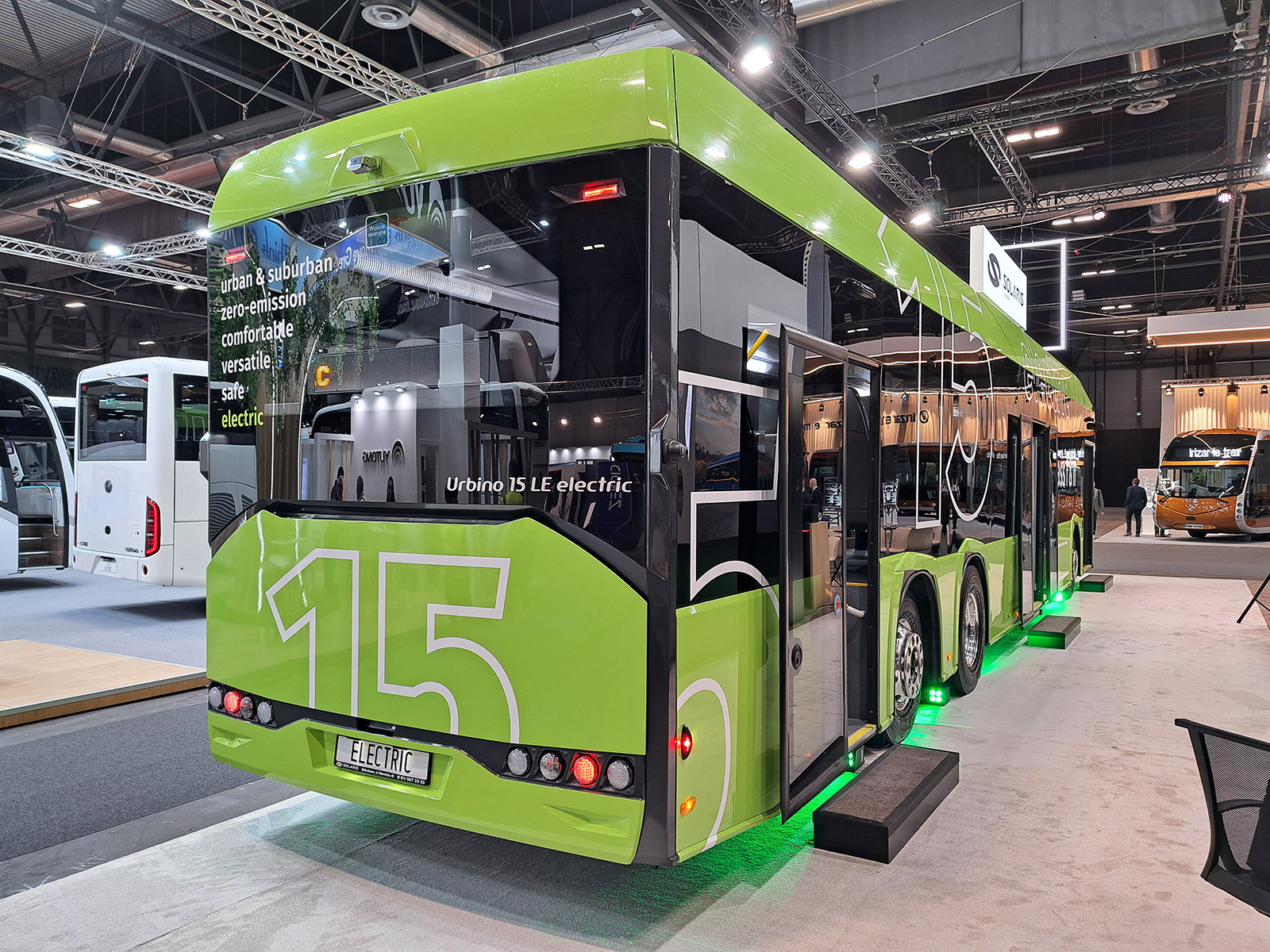
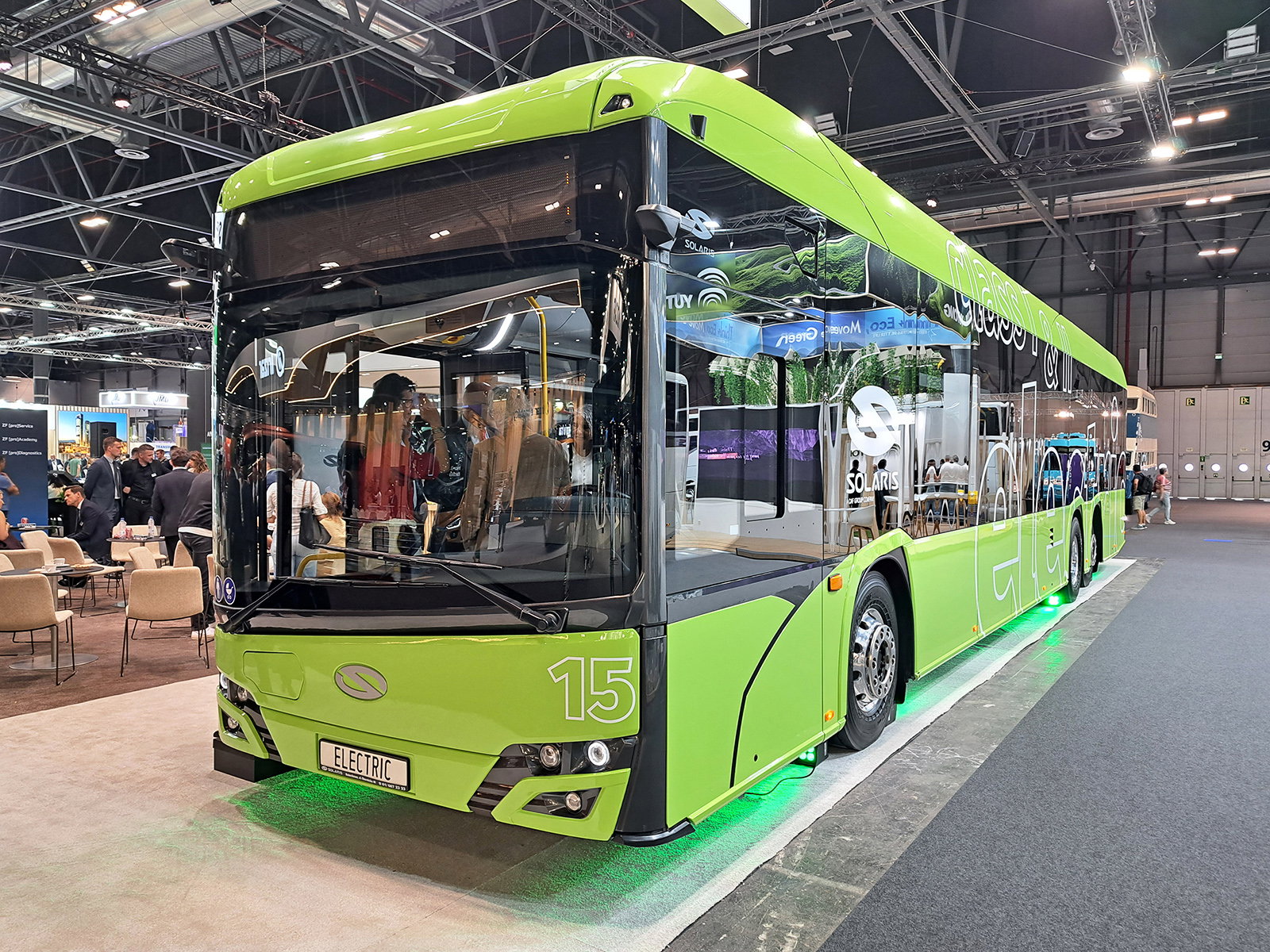
In Madrid, then, the manufacturer is represented this time by a three-axle Solaris Urbino 15 LE electric bus, sharing a joint stand with Lander, another CAF subsidiary specialising in simulator construction. The type, which can carry up to 100 passengers in total, has been brought by Solaris in an urban-style three-door configuration with a 2-2-1 door arrangement. We would have liked to ask a company representative whether this choice was driven by market considerations or whether this was simply the demo bus available, but after a long wait we eventually gave up. The two-door interurban version had previously visited Hungary, while this was the first opportunity for us to see the three-door version in person.
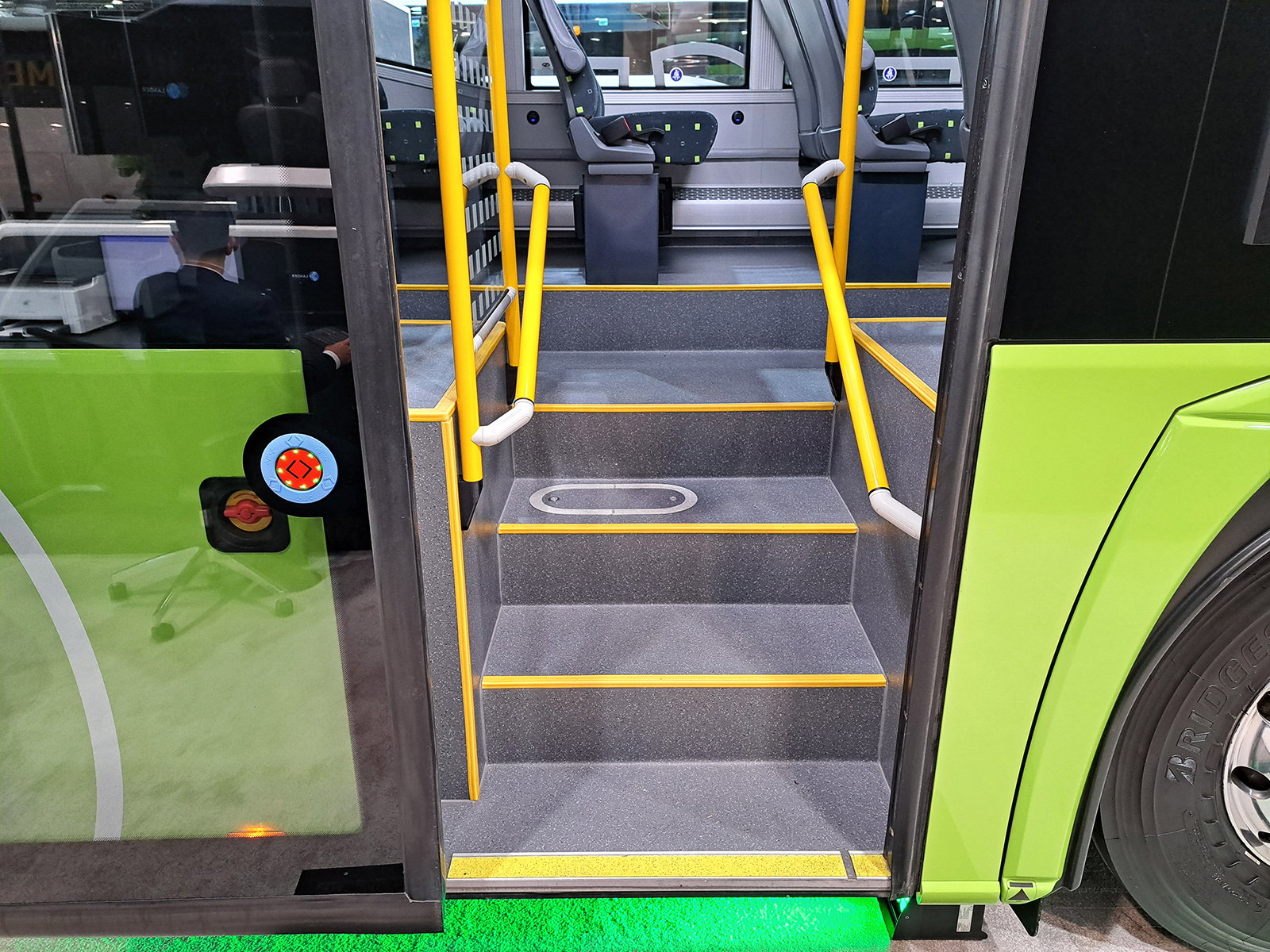
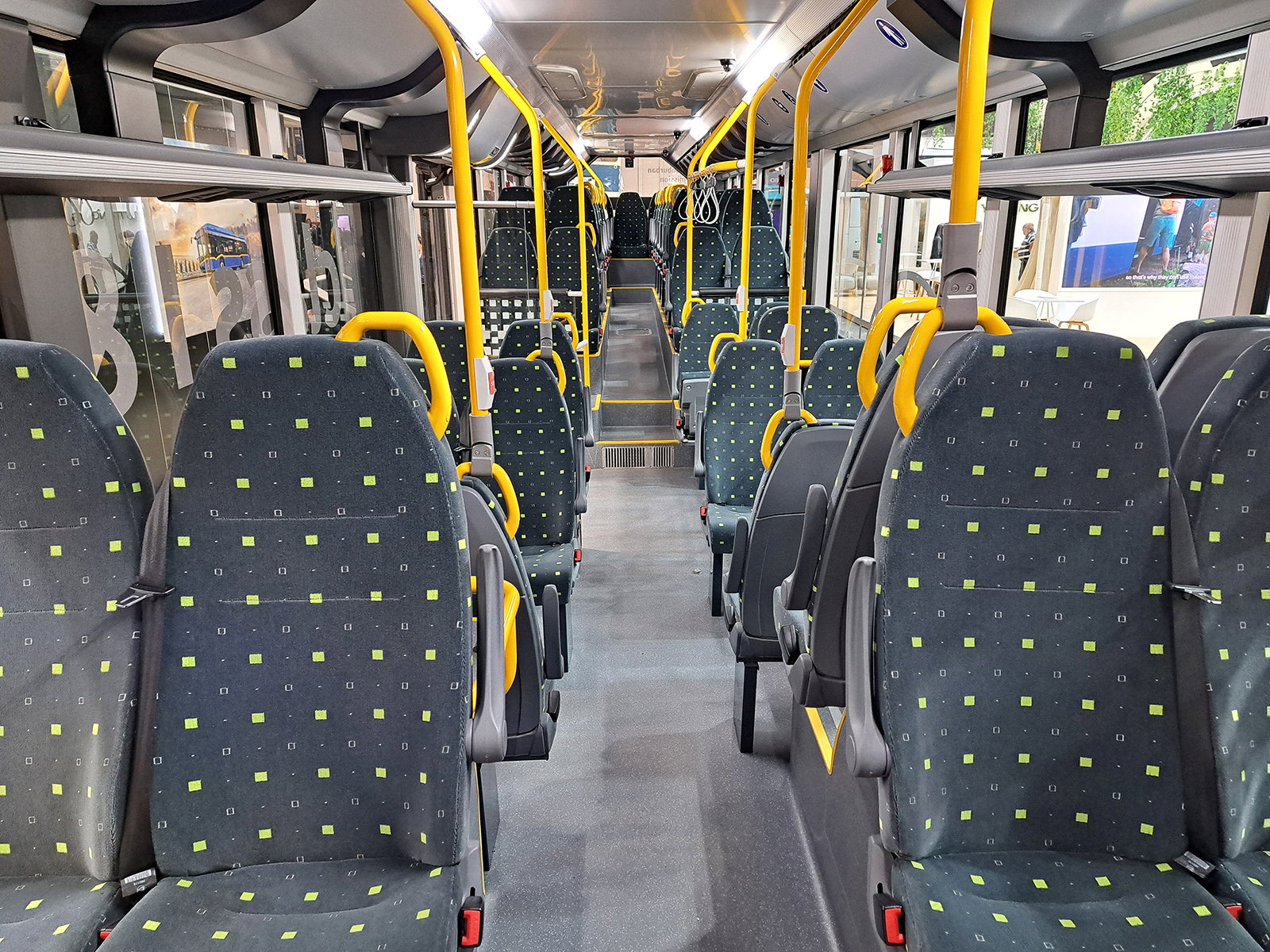
This demonstrator bus was also built as a suburban-interurban vehicle, that is, in M3/Class II vehicle category specification (the official description lists an M3/Class I urban specification as an option), although according to the manufacturer the type is excellently suited to serving routes running directly from the agglomeration into congested city centres. It is true that, with its 12-metre turning circle and steered C-axle, the bus should in principle manage without difficulty in urban operation as well, yet the high-back seats installed in a 2+2 layout throughout are better suited to routes with longer distances between stops. The exhibited vehicle has 51 fixed and two folding passenger seats (the type itself can be fitted with up to 65 seats), of which 10+2 seating positions can be reached without stepping up onto a platform. The rear section is accessed by two steps from the front of the passenger compartment, and by three steps when boarding through the single-leaf third door; headroom is satisfactory here as well. The choice of materials and the perceived quality are average, while in the high-floor section the stop-request buttons mounted directly on the air duct are easy to reach and sufficiently conspicuous, which is not a given in this category.
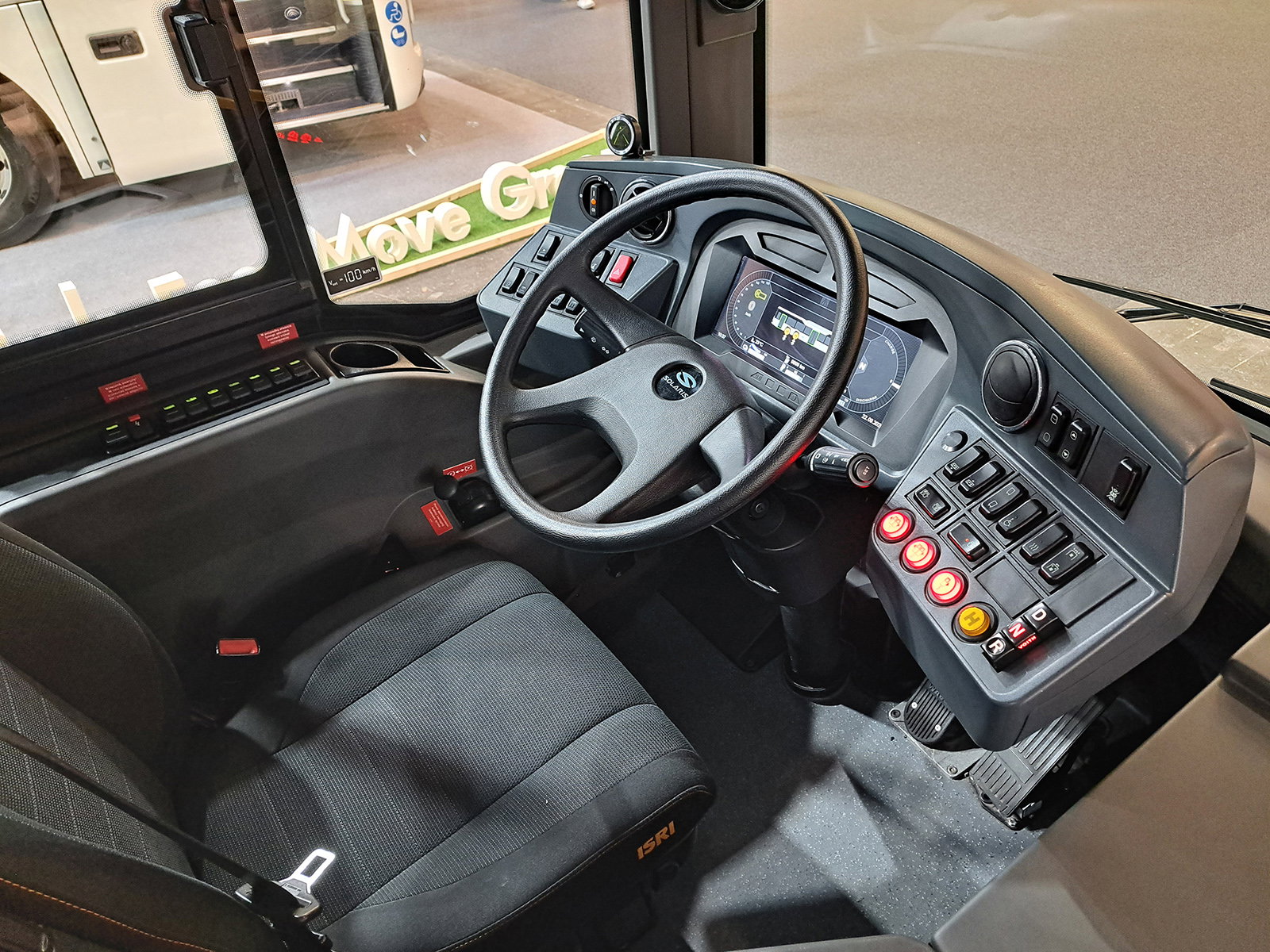
Propulsion is provided by a central electric motor with a continuous output of 240 kW and a peak output of 280 kW, while energy is supplied by the Solaris High Energy traction battery pack, in this case with a total capacity of 500 kWh, although a package of up to 700 kWh can also be specified. With the latter, depending on operating conditions, the type’s range on a single charge is around 600 kilometres, which may sound somewhat optimistic, but the manufacturer says it is also supported by practical experience. Charging is possible via two CCS Combo 2 standard connectors, as well as via a pantograph current collector. The safety equipment, fully compliant with the European Union’s revised General Safety Regulation (GSR 2), meets today’s expected standards, with the list including EBS, ASR, ESC, blind spot monitoring and a collision mitigation system (CMS), among other features. The Urbino 15 LE electric has a maximum permissible gross vehicle weight of 25,700 kg, so in principle there is still some margin compared with the European maximum applicable in the category. The type is naturally also compatible with the factory eSConnect fleet management system, which offers operators telematics and operational data analysis, as well as predictive diagnostics.
To mark the brand’s 30th anniversary, a small celebration was also held at the Solaris stand at the end of the exhibition’s first day. Over the past three decades, the Polish manufacturer has delivered around 30,000 buses to 900 European cities, and it has also recently begun handing over the trolleybuses ordered by Vancouver, Canada. In Solaris’s strategy, North America is set to play a significant role alongside Europe in the future, an important step in which will be the October 5 unveiling of the Urbino 40 electric bus developed for the United States market at the APTA TRANSform & EXPO in Chicago. Unlike the vehicles being built for the Canadian order, series production of this model will take place, due to Buy America requirements, at CAF’s existing plant in New York State, which has already been fully prepared for bus production. In parallel, major innovations are also coming to the European market: as things stand, the premiere of a brand-new interurban model family, to be built with low-entry and normal-floor bodies but exclusively with zero-emission drivetrains, is expected by mid-2027, with the range also planned to be presented in the autumn at Busworld Europe 2027 in Brussels. For now, what is known about the product line under development is that its members will be built in lengths of 10.8, 12.1 and 13.1 metres, with up to 63 seats and a 7 m³ luggage compartment, NMC and LFP battery packs with total capacities of 260-620 kWh, while the top version’s range could reach as much as 800 kilometres on a single charge.