![Magyarbusz [Info]](/mbi/header-logo.png)
FIAA 2026: Up close in Madrid – European Marcopolo Paradiso G8 ready for series production
 Ludányi József
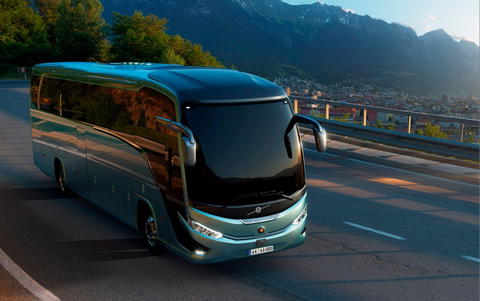
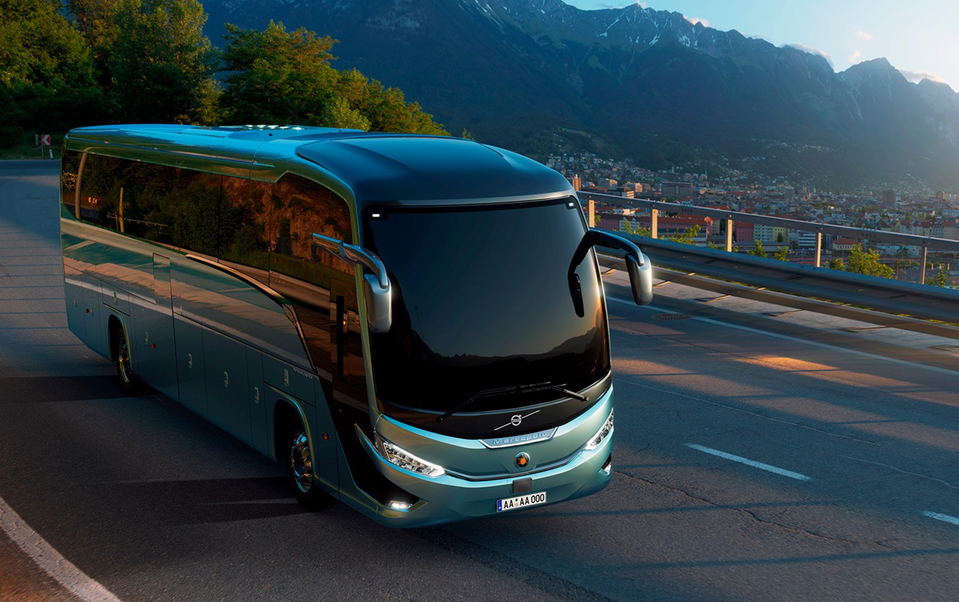
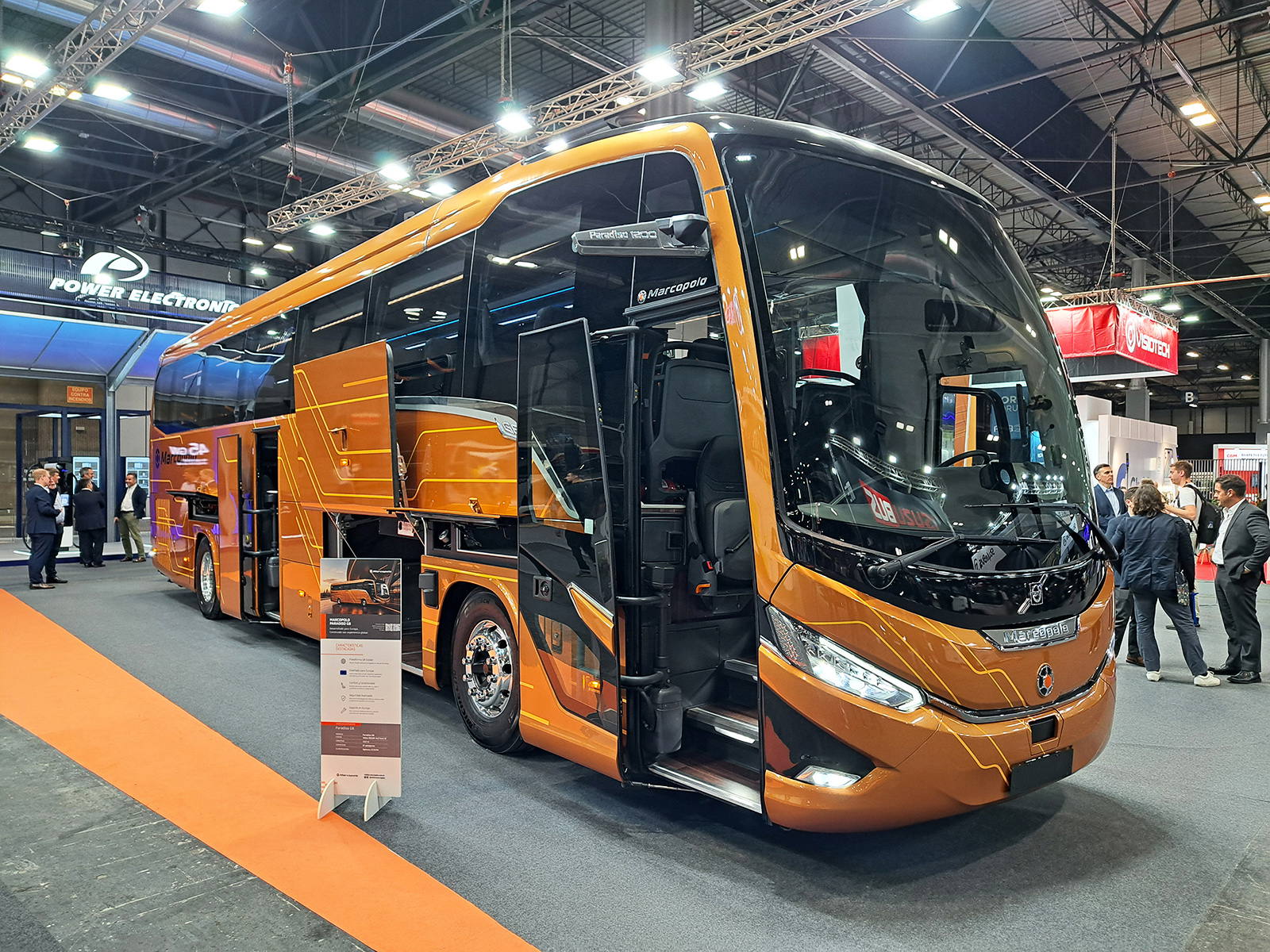
Over the past period, our portal has followed step by step the milestones of Marcopolo’s return to Europe, from the first plans for the Paradiso G8 intended for the continent and the cooperation established with Volvo to the technical reworking of the European version. The story has now reached another important milestone: at the FIAA trade fair in Madrid, our editorial team was able to inspect in person the series-production-ready version of the model, the first examples of which will be handed over to European customers in 2027. The 13.2-metre, two-axle vehicle on display is built on a Volvo B13R chassis, but it also became clear in Madrid that the Brazilian manufacturer’s plans go far beyond this single configuration.
The Madrid presentation represents a major step forward compared with the vehicle seen at last year’s Busworld Europe. The example shown in Brussels was primarily intended to gauge the market’s response to Marcopolo’s European concept, after which presentations were held in Italy, France and Portugal for potential operators. According to the manufacturer, the positive feedback received there also contributed to the continuation of the programme.
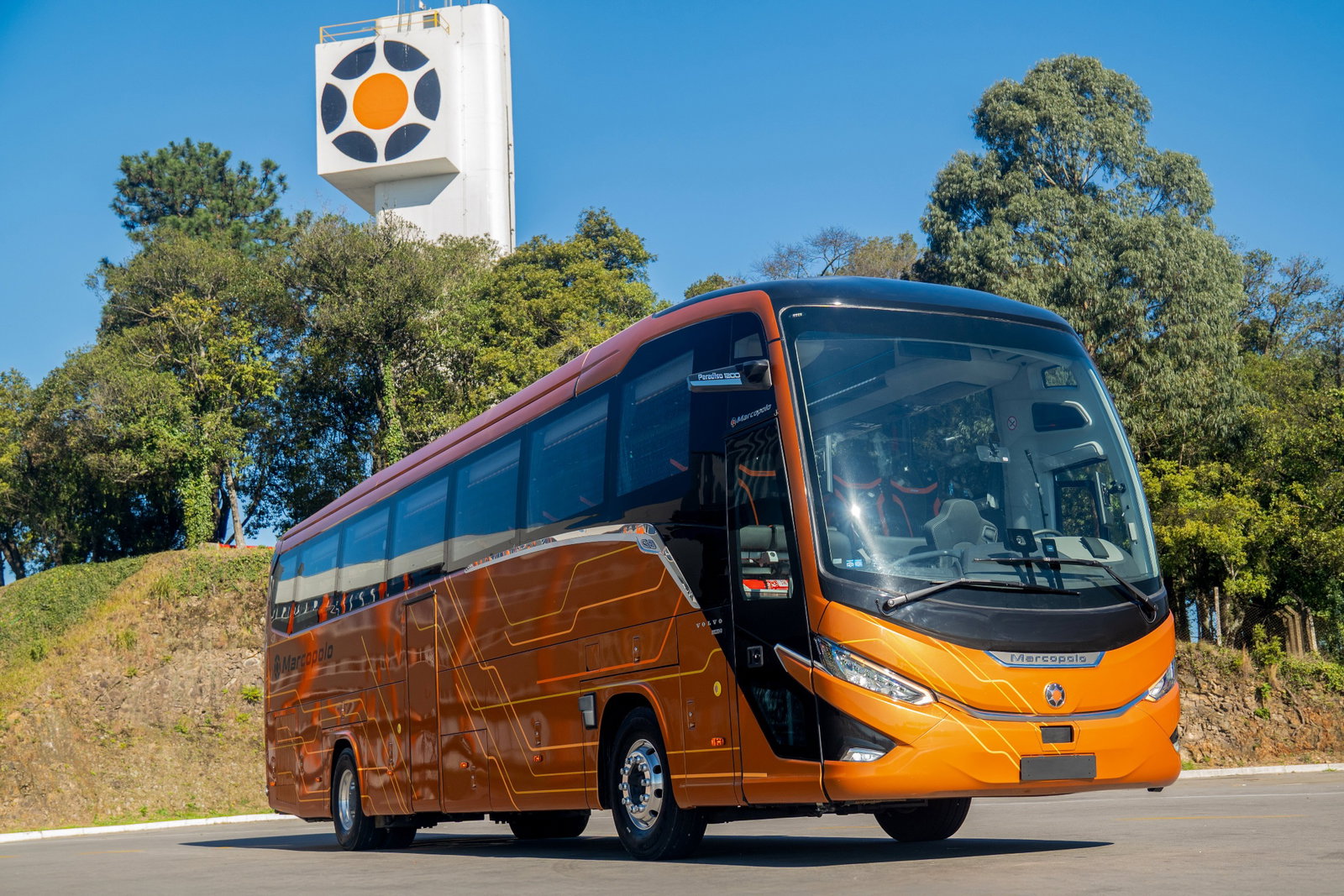
In the first phase, Marcopolo is focusing on four southern European markets: Spain, Italy, France and Portugal. According to information provided on site, however, the company is deliberately building up its European presence step by step. Drawing lessons from its earlier activities in Europe and its subsequent withdrawal, it is this time consciously keeping the pace of expansion in check: it does not intend to appear in too many countries at once, but will first assess the needs of individual markets and the reception of the model, then decide on further expansion based on these experiences. A longer-term European presence and gradual market expansion also feature prominently in the manufacturer’s official strategy.
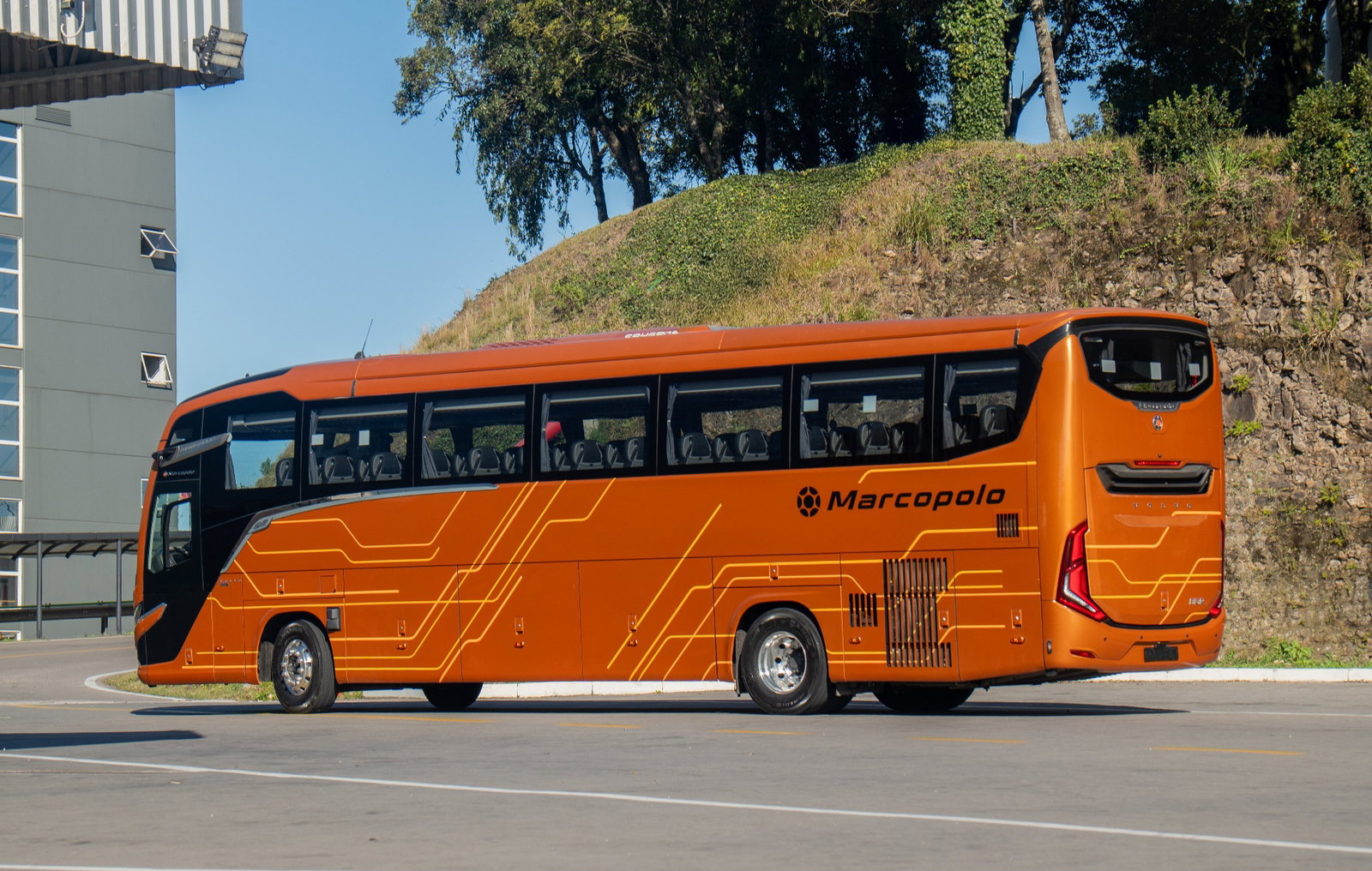
The latest premiere also made it clear that Marcopolo’s plans extend well beyond selling a single coach variant in Europe. The European Paradiso G8 will be available in five different two- and three-axle configurations, ranging from 12.39 to 15 metres in length. The entry-level version is 12,390 millimetres long, has a 4×2 axle configuration and a maximum capacity of 55 passengers. This is followed by two 13,200-millimetre versions: the same body length is available with both 4×2 and 6×2 axle layouts, in each case with up to 59 passenger seats. The 14-metre version is offered exclusively as a three-axle model, with a maximum capacity of 63 passengers, while the 15-metre, also 6×2, variant at the top of the range can accommodate up to 67 passengers. The interior layout can, of course, be modified according to the operator’s requirements, allowing various compromises to be made between seating capacity, luggage space and comfort level.
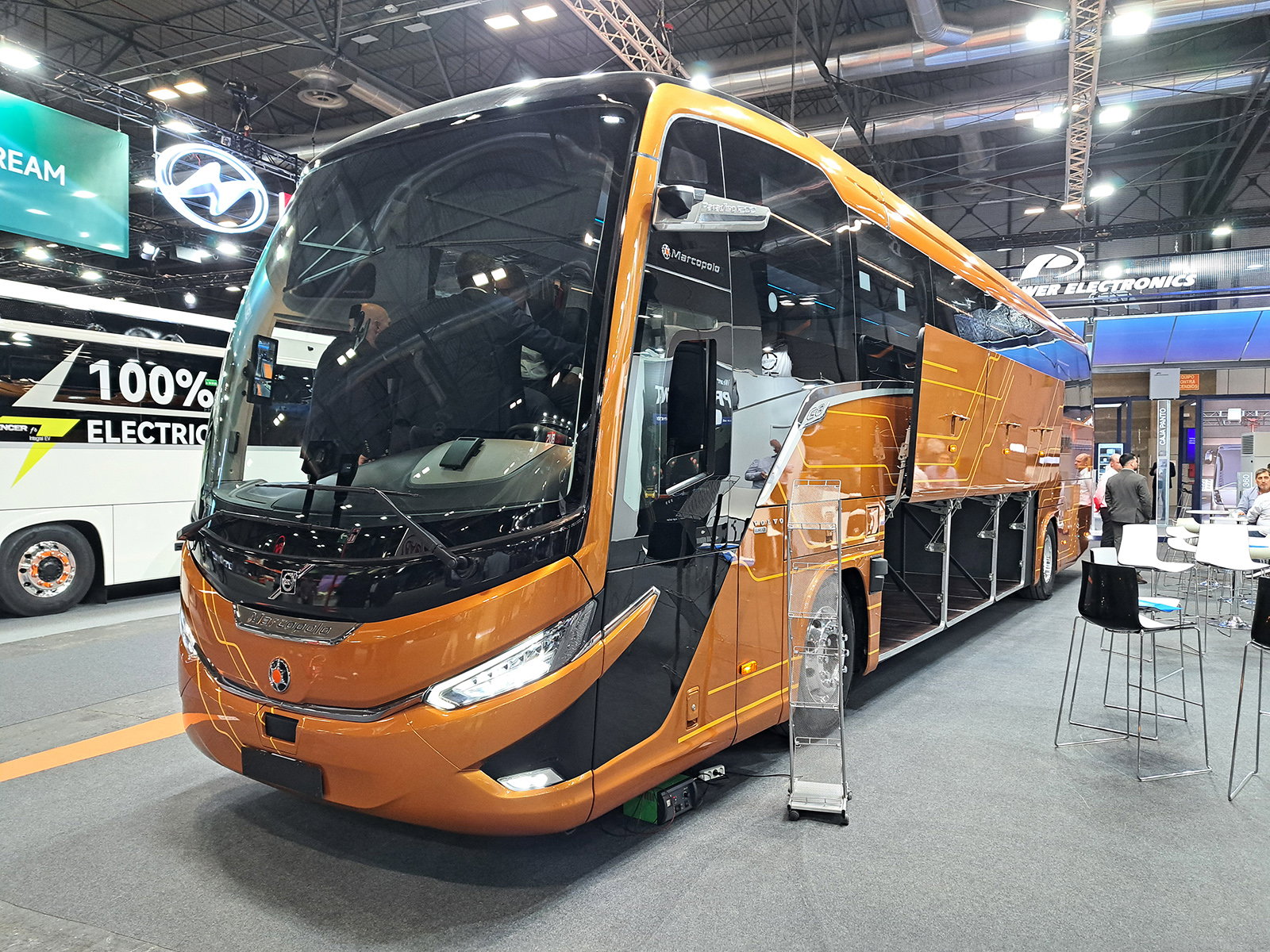
The vehicle exhibited in Madrid is the 13.2-metre, two-axle version, placing it in the middle of the planned European range in terms of size. It is based on Volvo’s B13R rear-engined coach chassis, equipped with a 12.8-litre inline six-cylinder D13K diesel engine coupled to a 12-speed I-Shift automated transmission. The coach on display already represents the configuration intended for series production, showing the form in which the first examples may reach European operators.
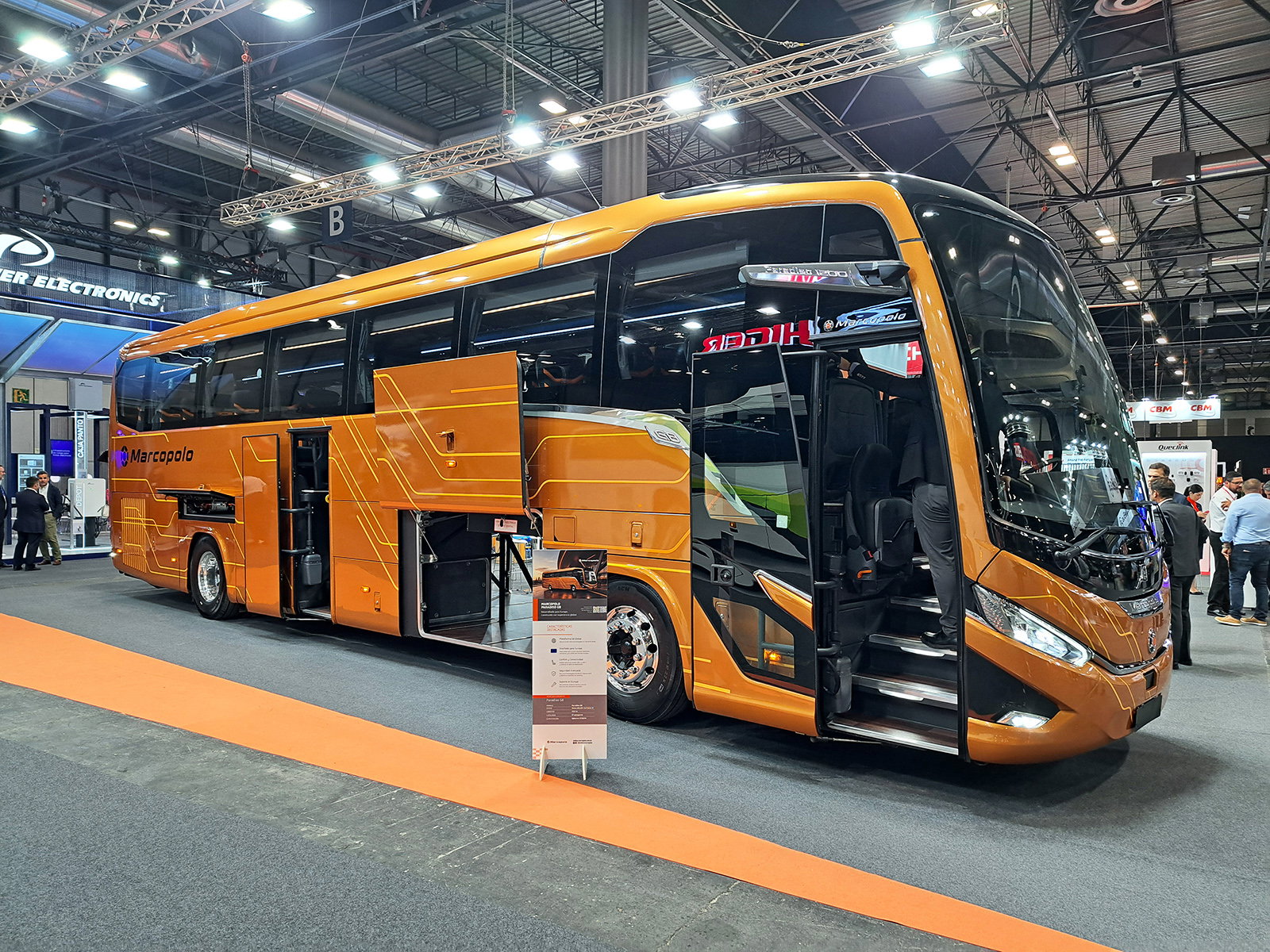
Volvo, however, will not be the exclusive chassis partner in every market. In France and Italy, sales of the complete Volvo B13R–Marcopolo Paradiso G8 will be handled through Volvo’s own dealer network, with technical and aftersales support provided by the Volvo Trucks and Buses network. In Spain and Portugal, by contrast, Marcopolo will offer the Paradiso G8 on both Volvo and Scania chassis, while carrying out sales through its own European commercial organisation as an independent bodybuilder. Aftersales support in these markets will be provided by specialist partners with regional coverage.
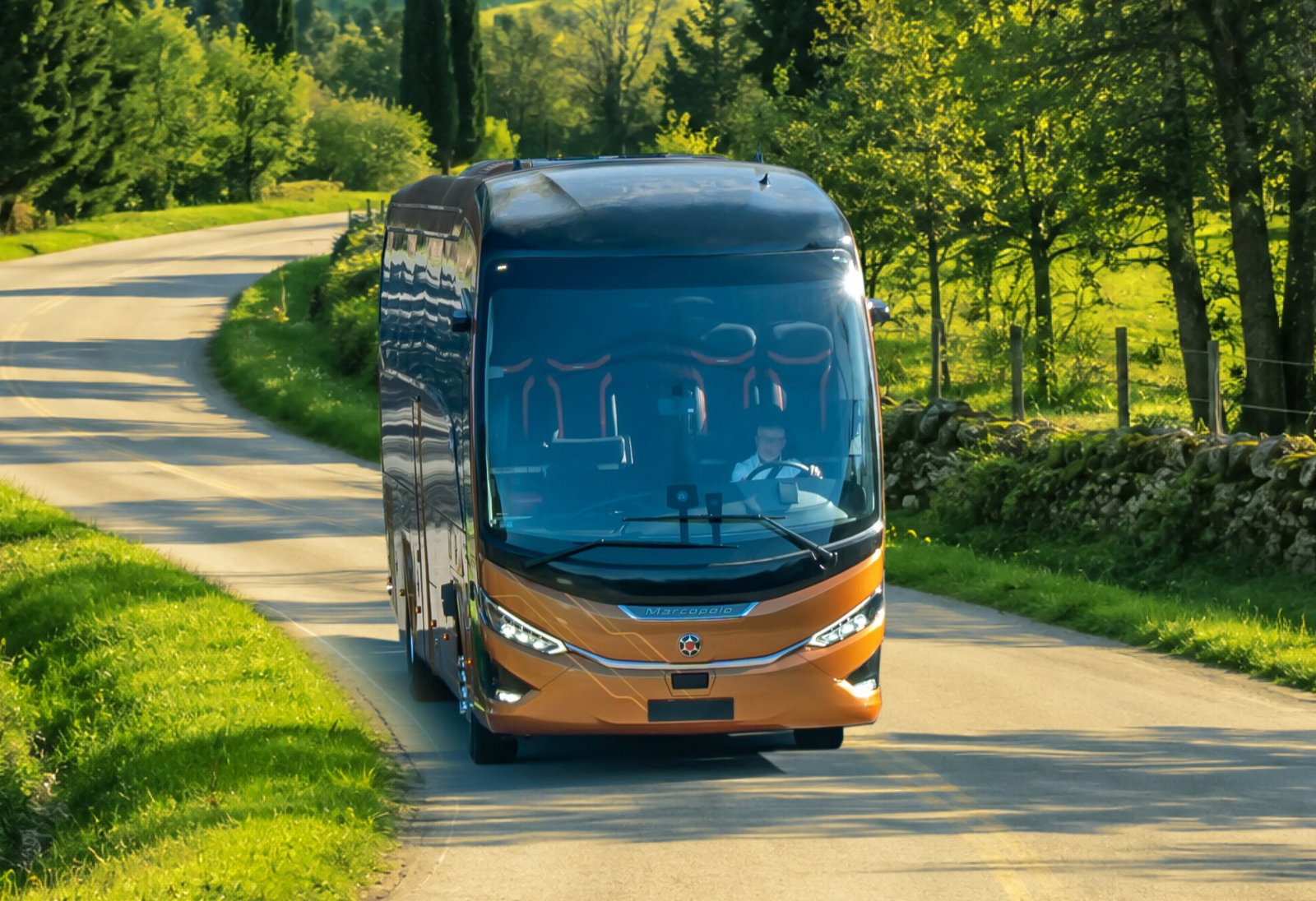
The European version of the Paradiso G8 is not simply an adaptation of the model that has been in production in South America for years to meet local regulations. Marcopolo’s engineers have reworked the body structure, aerodynamics, passenger compartment and numerous components. One of the central aims of the development was weight reduction; according to the manufacturer, a significant saving compared with the Brazilian version has been achieved through a lighter yet high-strength structure, aerodynamic improvements, and the use of components and interior trim from European suppliers. The exact weight difference has not yet been disclosed.
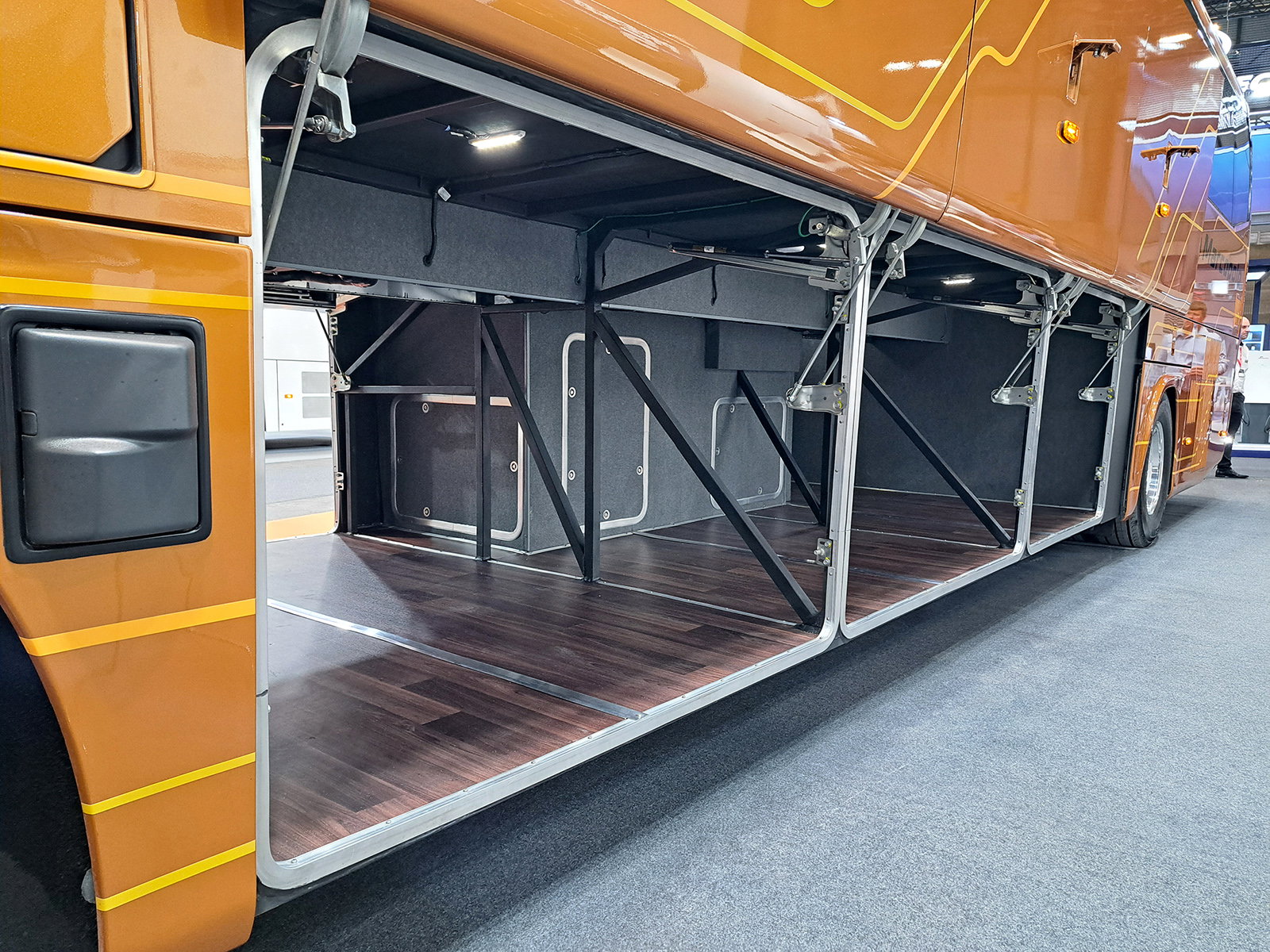
The model has a drag coefficient of 0.28, a noteworthy figure for a coach with such a large frontal area. As part of the weight optimisation, the exterior body panels are made of aluminium, as are the luggage compartment doors, while durability is supported by a galvanised steel structure.
The exterior dimensions of the body also had to be changed. Compared with the 2,600-millimetre width of the South American Paradiso G8, the European version has been redesigned to 2,550 millimetres. This did not merely mean narrowing the exterior panels, but also modifying the frame structure, glazing and related elements of the passenger compartment. The proportions of the front end have also been changed: a larger panoramic windscreen has been created, while improved visibility was also a key development priority for the driver’s environment in the European model.
Aerodynamic optimisation is important not only from the point of view of fuel consumption. According to Marcopolo, the entire development was coordinated to improve vehicle availability, operating cost per kilometre and energy efficiency. The company intends the favourable total cost of ownership to be one of the Paradiso G8’s most important sales arguments in Europe.
Another important area of the European reworking was safety. The body structure meets the requirements of UN ECE R66.02 rollover safety regulations, the engine compartment is equipped with a fire suppression system, and Full LED headlights and a rear-view camera are included as standard. The vehicle has also been prepared for the installation of an alcohol interlock, while the driver assistance systems come from the chassis manufacturer; a 360-degree camera system is also available as an option. In addition, the latest cybersecurity requirements were taken into account during development, so the model has also been adapted to European homologation rules in this area.
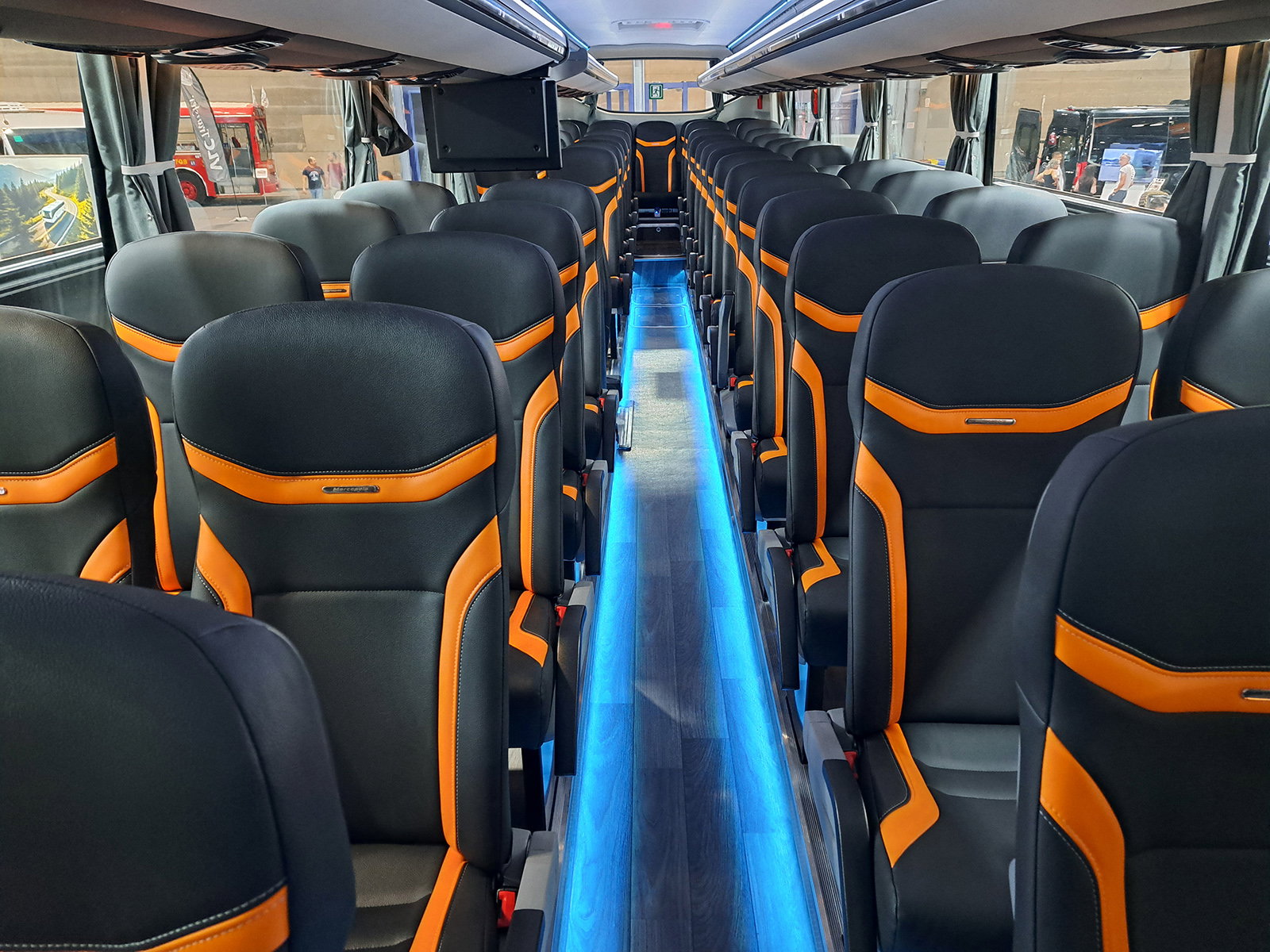
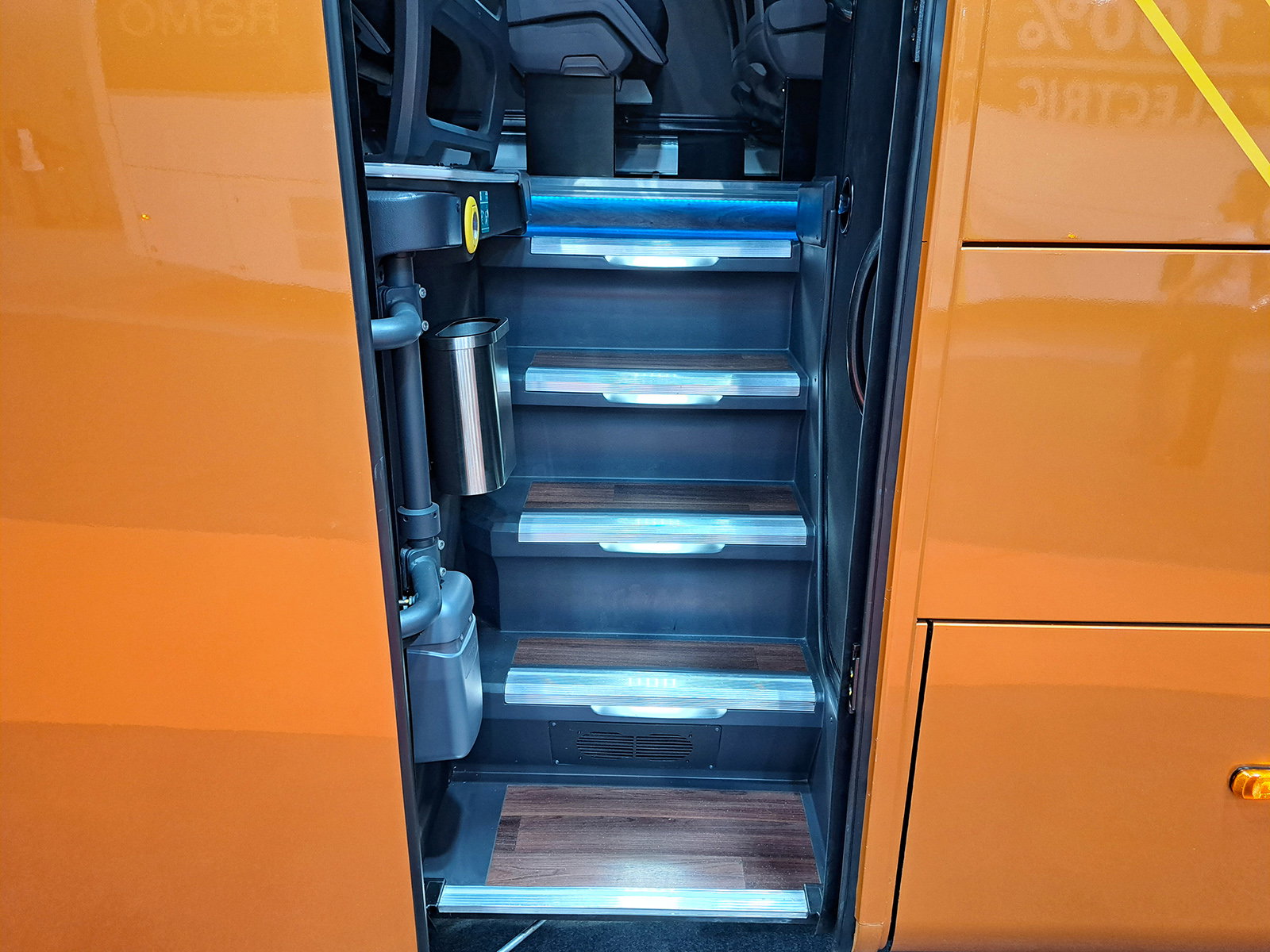
The passenger compartment has likewise undergone substantial reworking. Instead of the more eye-catching and bulkier seats familiar from South American versions, Marcopolo opted for the design commonly used in European coaches, while the position of the second passenger door was changed, making it necessary to relocate the toilet as well. Standard equipment includes laterally adjustable passenger seats, USB-A and USB-C charging sockets at every seat, air conditioning, bonded double side glazing, a refrigerator integrated into the dashboard, pre-heating, heating and 22-inch monitors.
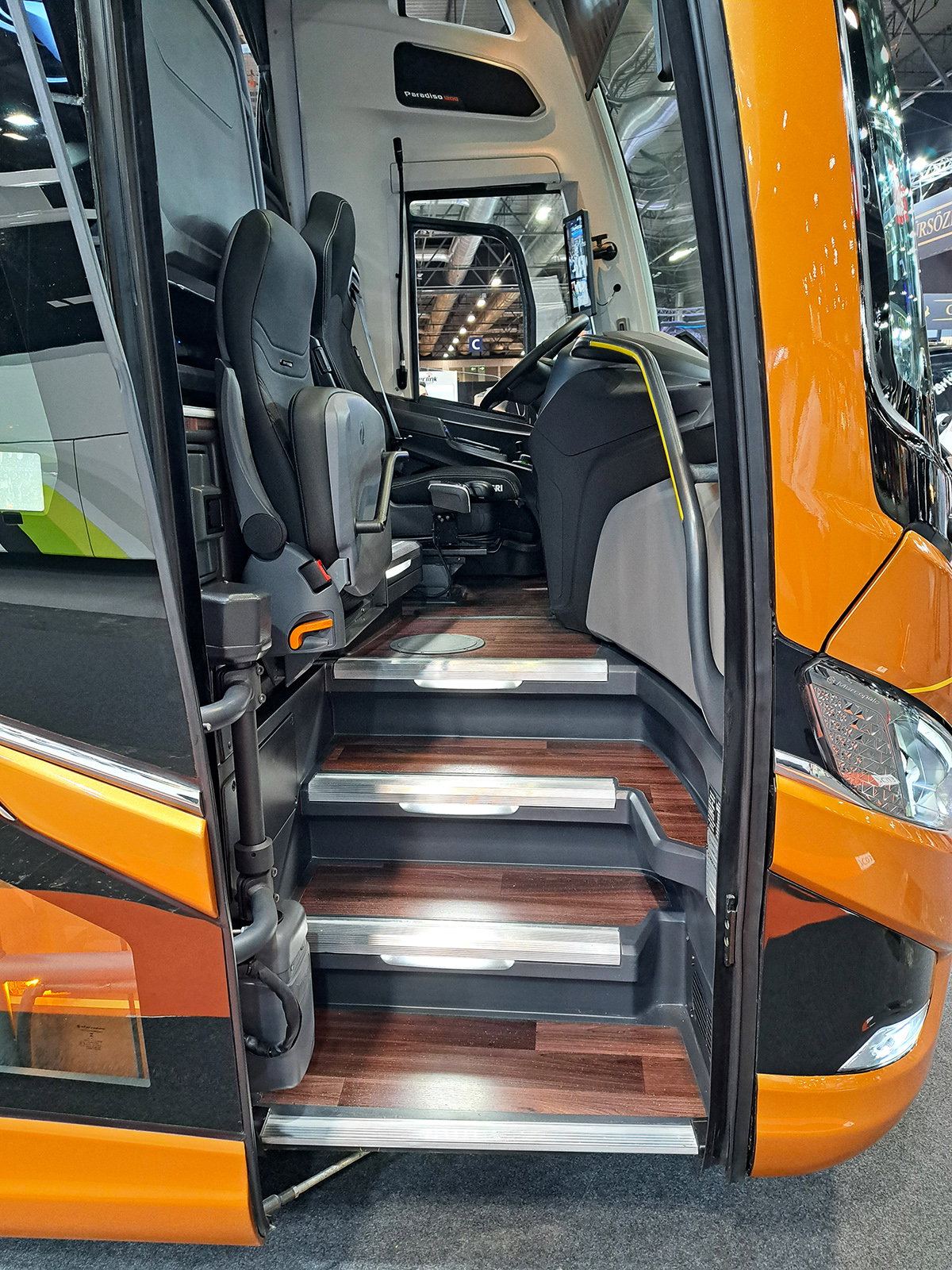
Operators requiring a higher level of comfort can also choose a dedicated premium package. This includes luxury passenger seats, a footrest, a separate leg support, a folding table, a centre armrest, a toilet and a 230-volt power socket. A 34-litre refrigerator, coffee-maker preparation and automatically operated luggage compartment doors can also be specified as options. A wheelchair lift platform can be ordered for passengers with reduced mobility.
The driver’s workplace has also been designed for long-distance use. Standard equipment includes a premium driver’s seat, electrically operated driver-side window and sunblind, and the Marcopolo Multiplex electrical and control system. A camera monitor system, or CMS, is also available to replace conventional mirrors.
Marcopolo, however, does not intend merely to export vehicles to Europe, but is also building the local background required to support them. The company is creating its own European commercial structure and aims to have its support network up and running before the first coaches are delivered. The goal is for technical support, aftersales services and spare parts supply to be available locally.
The industrial background required for this is already in place: Marcopolo currently has manufacturing operations in eight countries, its global capacity can reach 120 buses and coaches per day, and it employs more than 15,500 people. According to the company, it has delivered more than half a million vehicles to around 140 countries over its history. The G8 generation is a significant series in its own right: more than 10,000 examples of the platform’s various versions have already found buyers worldwide.
The manufacturer sees delivery time as another competitive advantage in its European expansion. This could be particularly important in the current European coach market, where the range on offer has narrowed in recent years, several manufacturers have reduced or reorganised their production capacity, and delivery times for certain models have lengthened significantly. Marcopolo sees an opportunity precisely here: according to the company, its global industrial background enables it to offer delivery times substantially shorter than those customary in Europe.
In any case, the first deals have already been concluded. Marcopolo has officially stated that vehicles have been sold in France, Italy and Portugal, with the first deliveries to begin in 2027. According to our information, a total of 21 Paradiso G8s have so far found buyers in the three countries.
Nor will FIAA mark the end of Marcopolo’s European presentation tour. The next stop will be Rimini, Italy, from 24 to 26 November, where the model will appear at IBE Intermobility & Bus Expo, followed by Autocar Expo in Lyon from 1 to 4 December.
The Madrid presentation thus opens a new chapter in Marcopolo’s return to Europe. The manufacturer, which last year was still testing the European market’s response, has now finalised the design, created the first model variants, begun building its own commercial and support infrastructure, and already has its first orders. The next step will be the start of series production and the entry into service of the first European vehicles, while Marcopolo will decide where to continue its European expansion based on the experience gained in the first four markets.