![Magyarbusz [Info]](/mbi/header-logo.png)
The Van Hool hydrogen buses’ run on Pau’s BRT line is coming to an end
 Ludányi József
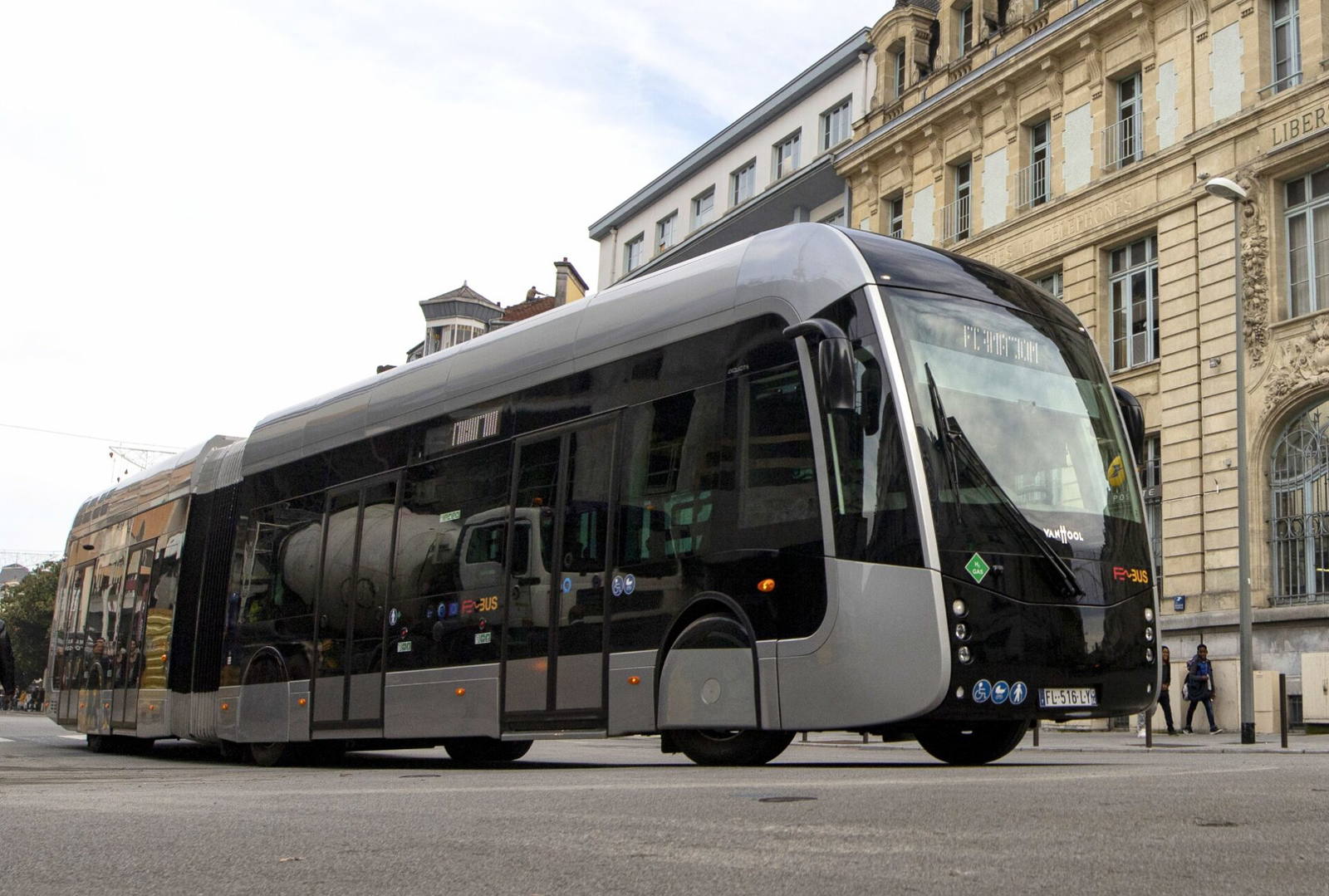
More than six years after entering service, Pau’s hydrogen bus programme in France may be reaching a major — and decidedly negative — turning point. The city authorities have confirmed that they have begun the gradual replacement of the world’s first hydrogen-powered BRT system and, in the medium term, are planning to procure buses with battery-electric and hybrid drivetrains. The decision is being driven by persistent problems with the hydrogen infrastructure, the bankruptcy of vehicle manufacturer Van Hool, and the high cost of operation.
The latest decision, however, does not come out of the blue. It had already become clear in 2023 that operating the hydrogen-powered BRT system was running into a number of unexpected difficulties. At the time, Pau’s leadership cited recurring technical problems at the hydrogen refuelling station, the sharply increased cost of producing green hydrogen, and the vehicles’ high operating expenses when it decided not to expand the hydrogen fleet any further. The annual operating cost of the fleet of eight articulated Van Hool Exqui.City 18 FC buses alone amounted to around €900,000, with a further €400,000 in hydrogen costs on top. In addition, producing the green hydrogen used to refuel the buses locally proved to be extremely energy-intensive. Although the city was still committed at that point to keeping the existing hydrogen buses in operation, it was already clear that the long-term sustainability of the technology raised serious questions.
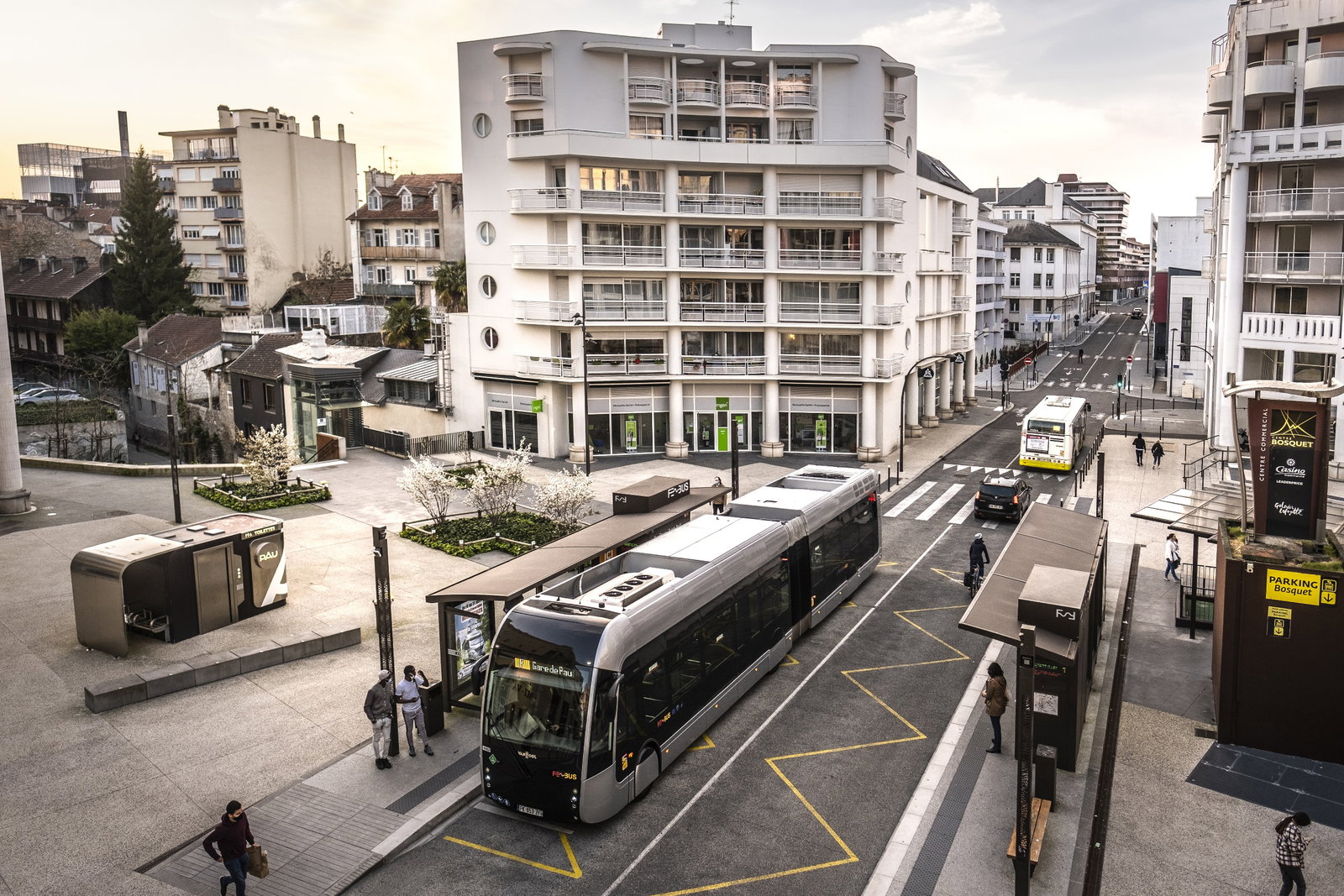
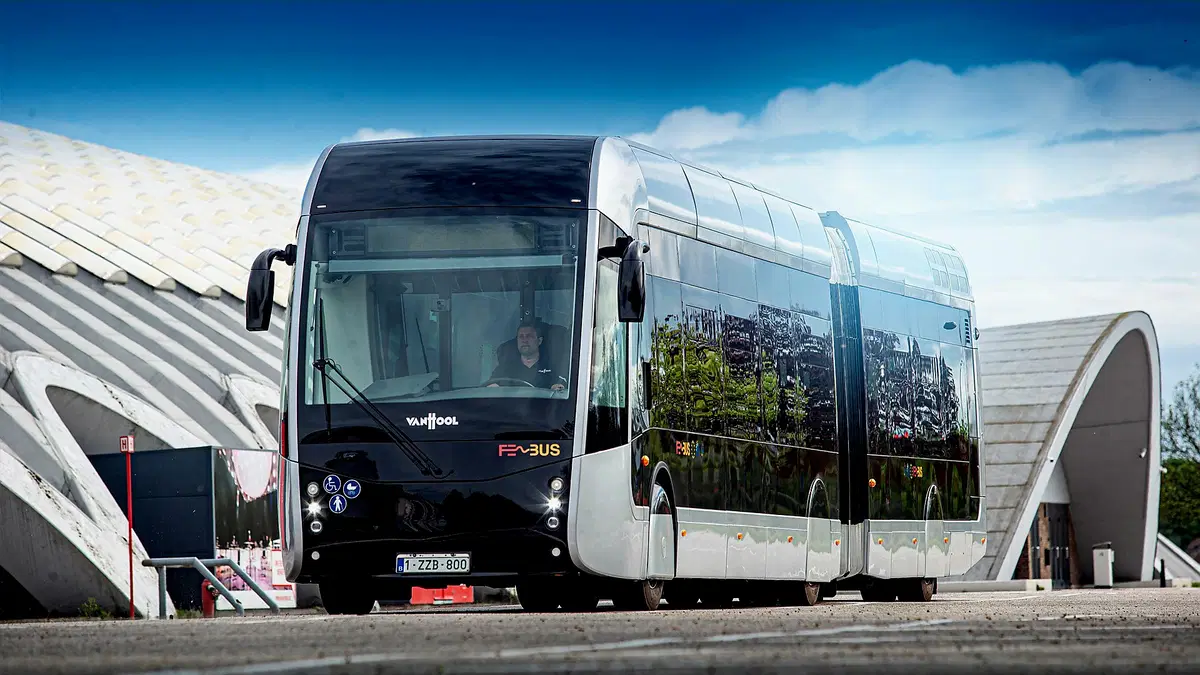
The line, known as Fébus, was launched in December 2019 and attracted considerable attention worldwide at the time. The high-quality BRT route linking Pau railway station with François-Mitterrand Hospital was inaugurated in person by French President Emmanuel Macron, and the project was presented as one of the showcase examples of hydrogen-based public transport. The system’s origins go back to 2017, when the southern French city and Van Hool signed an agreement for the purchase of eight articulated Van Hool Exqui.City 18 FC buses fitted with 100 kW Ballard FCveloCity-HD fuel cell modules. The deal was considered historic, as it not only brought France’s first hydrogen buses into regular public service, but also introduced the world’s first fuel cell BRT vehicles operating on bus lanes segregated from road traffic. The vehicles, which also attracted significant attention at the 2019 Busworld Europe trade fair, were delivered by Van Hool in 2019 to the Syndicat Mixte de Transports Urbains – Pau Portes des Pyrénées (SMTU-PPP) transport authority and the then operator, Société de Transport de l’Agglomération Paloise. To support the vehicles, the city also built its own hydrogen refuelling station: the 0.5 MW electrolyser supplied by ITM Power was capable of producing up to 268 kg of hydrogen per day using renewable electricity. Confidence in the technology was initially unshaken, and in 2021 the city authorities ordered a further four Van Hool A12 FC solo hydrogen buses, which had not even been officially unveiled at the time.
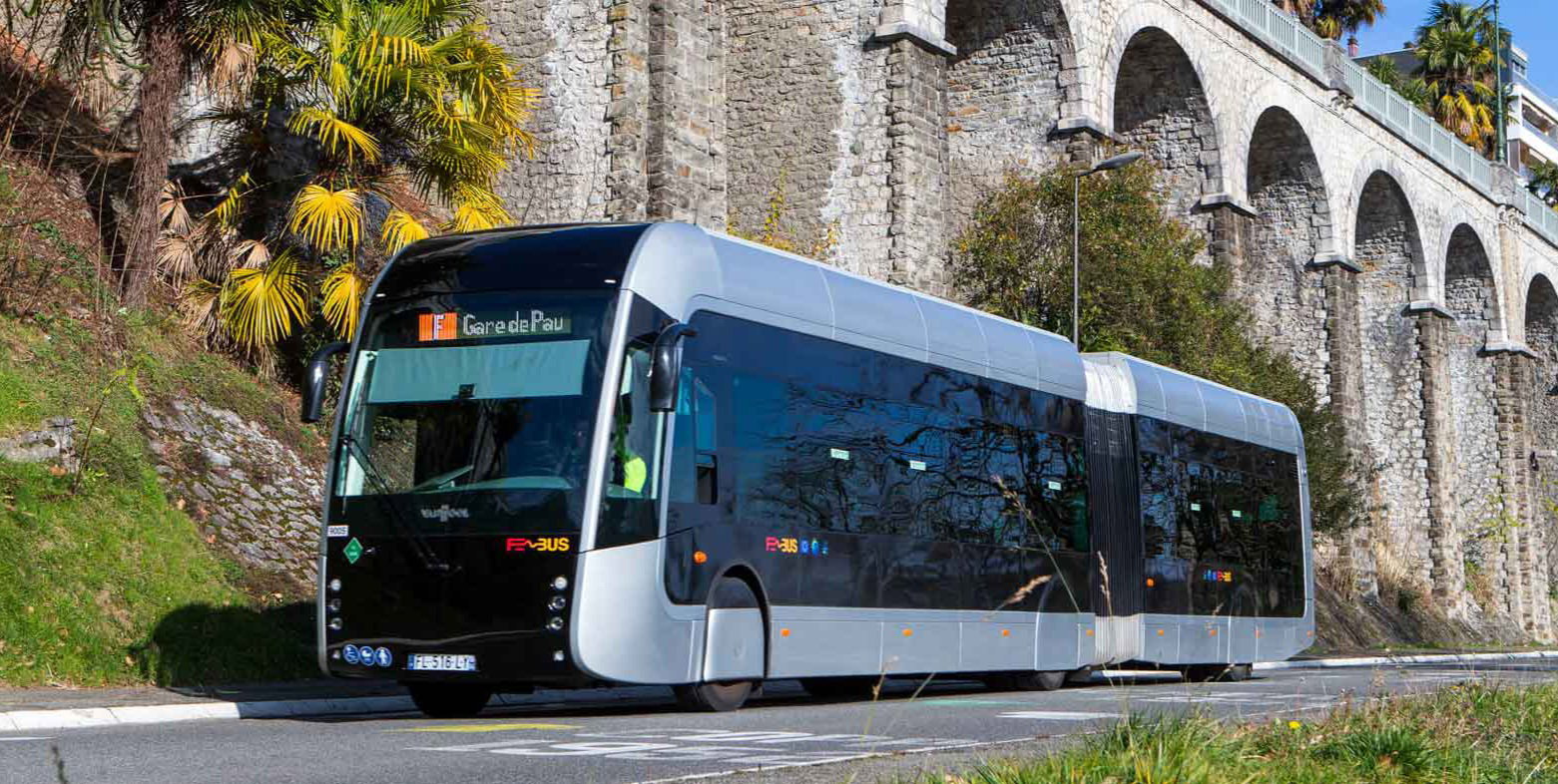
The scale and cost of the project also showed how high expectations were for the technology. The total investment value of the Fébus system reached €74 million. Of this, €55 million went on building the BRT line — including segregated bus lanes, stops, roadworks and other related infrastructure. A further €13 million was spent on the eight hydrogen-powered articulated buses and the hydrogen production and refuelling station, while the remaining roughly €6 million covered other associated investment costs. The development was financed from national, European Union and local sources.
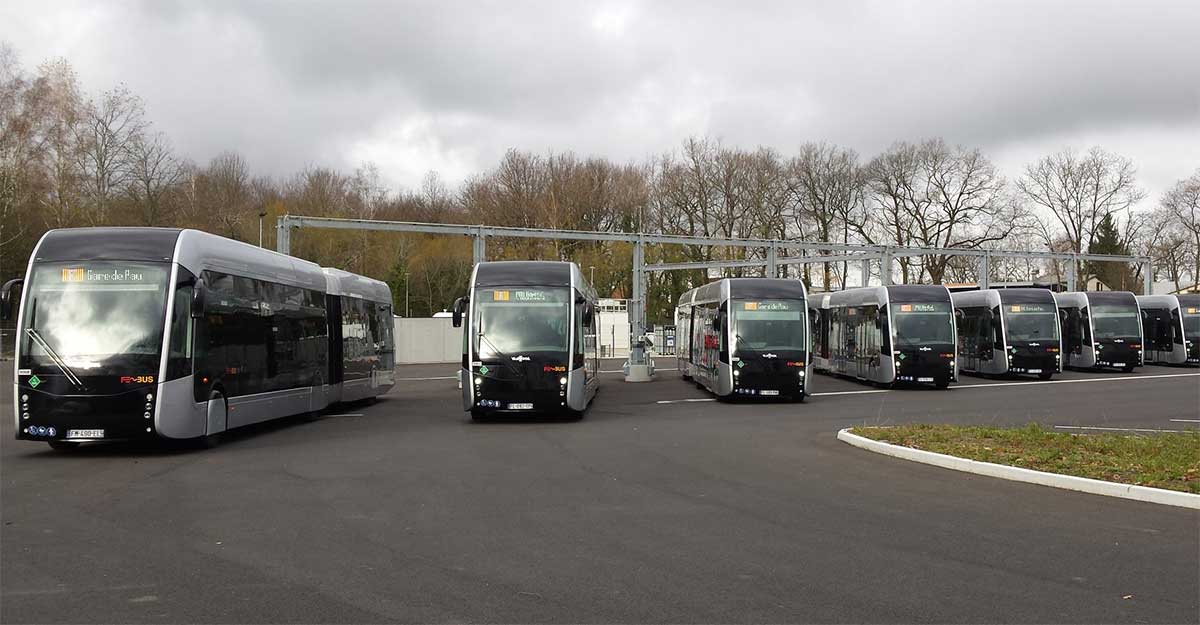
According to Arnaud Jacottin, president of Pau Béarn Pyrénées Mobilités, the project has since encountered several serious problems. The biggest issue is the refuelling station that produces the hydrogen gas. The service provider responsible for maintenance terminated its contract, arguing that the economic conditions had changed significantly and that it would only continue operating the facility for three to four times the previous fee. According to the transport authority, this has effectively pushed the hydrogen supply into a dead end.
Moreover, the refuelling station had already been suffering regular failures in recent years. On such occasions, the required hydrogen had to be transported to Pau by tanker from other parts of France, which not only generated significant extra costs but also substantially reduced the project’s environmental benefits. The situation was further complicated by Van Hool’s bankruptcy in 2024, after which the company completely withdrew from the urban and suburban market segment. Although the network’s current operator, Keolis Pau Pyrénées, had previously built up a substantial stock of spare parts, this is no longer sufficient. Of the eight Van Hool Exqui.City 18 FC buses, only six are currently operational, while the remaining two vehicles, despite their relatively young age, are effectively serving as parts donors to keep the fleet running.
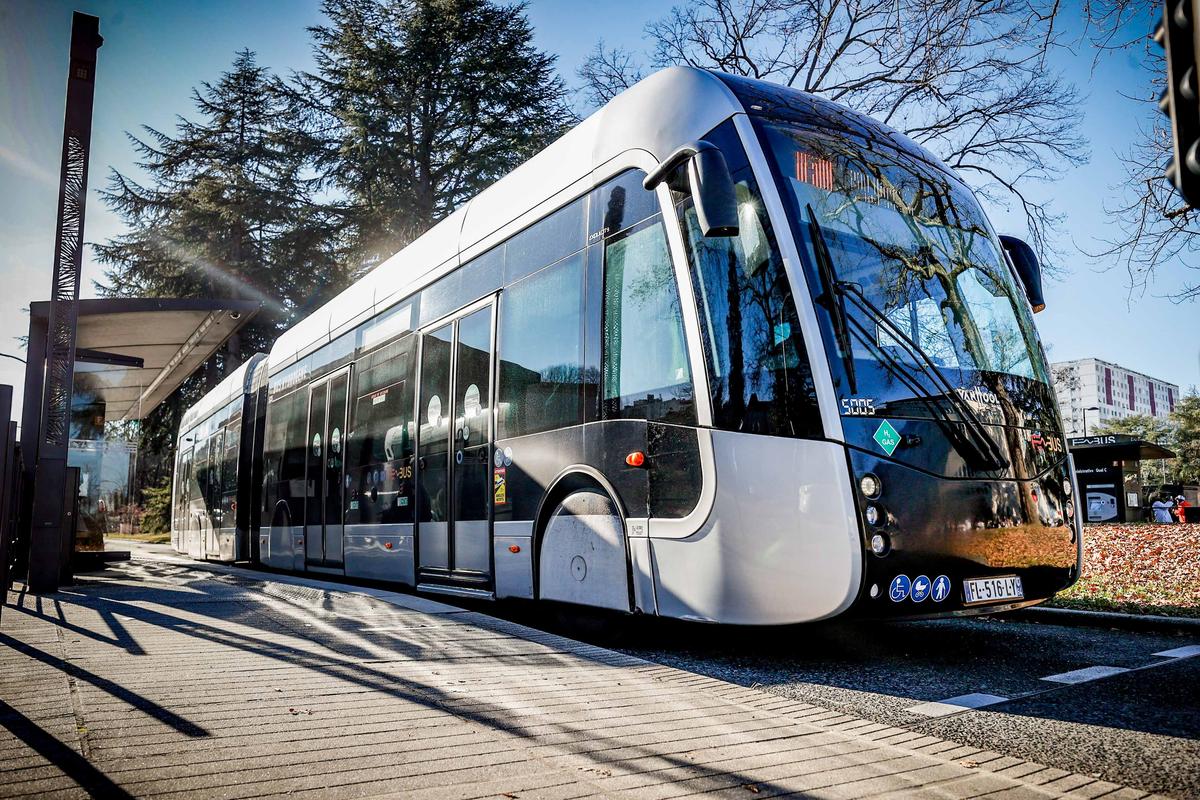
Together, the two problems are forcing the city to put the future of Fébus on a new footing. Although the line will remain in service and the hydrogen buses will not be withdrawn immediately, preparations have already begun for the procurement of replacement types. Under the current plans, the fuel cell vehicles could be replaced in the medium term by battery-electric and hybrid buses. The transport authority considers the necessary multi-million-euro investment unavoidable, as keeping the current fleet in operation over the long term poses an increasing risk.
Pau is not alone, however, in making this shift. In recent years, several European cities — including Montpellier in France, Wiesbaden in Germany, Aberdeen in Scotland, Liverpool in England and Sandviken in Sweden — as well as public transport operators have abandoned the use of hydrogen buses or significantly scaled back their plans in this area, opting instead mainly to procure battery-electric buses. None of this, of course, means that the future of hydrogen buses has been decided, but Pau’s case clearly highlights that modern vehicles alone are not enough for the technology to succeed: reliable and economically operable hydrogen infrastructure, long-term service support and a fleet of sufficient size are just as important. The latter is particularly crucial, since the infrastructure required to produce and supply hydrogen can only be operated truly cost-effectively with an adequate number of vehicles. Careful preparation and the long-term securing of the entire supply chain are also essential to the success of such projects.