![Magyarbusz [Info]](/mbi/header-logo.png)
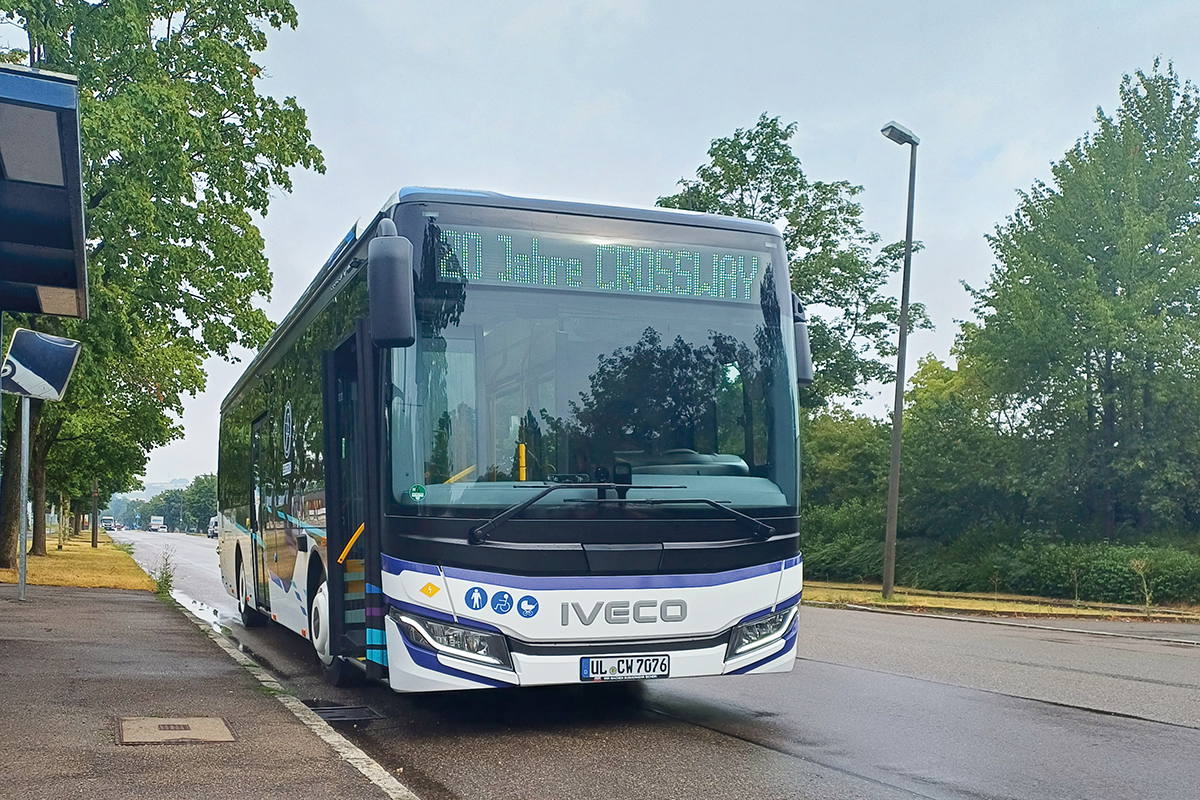
An Iveco Crossway Low Entry ELEC test bus covered more than 500 kilometres on a single charge
 Patthy Gellért
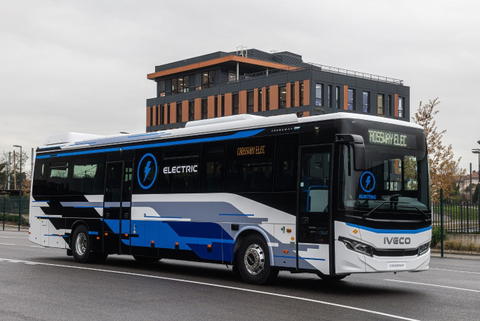
An Iveco Crossway Low Entry ELEC electric bus covered more than 500 kilometres on a single charge of its traction batteries during a test run organised by Nordhessischer Verkehrsverbund (NVV), the transport authority for the northern part of the German state of Hesse, the manufacturer’s press department informed our portal. During the four-month test period, the demo vehicle was operated by Frölich Linie.
As part of the project, which began at the end of April 2026 and ran until the end of August, test runs were carried out on scheduled bus services in five districts of northern Hesse with the participation of several transport companies and vehicle manufacturers. The initiative is intended to help NVV prepare for the gradual introduction of alternative-drive vehicles, above all electric buses, on its network of nearly 290 scheduled routes, which is currently served by more than 600 full-size buses and around 30 minibuses. The transport operators taking part in the programme can share their operational experience with NVV, helping to identify the most efficient solutions for the region.
The test runs of Iveco’s interurban electric bus were carried out by Frölich Linie as the operator on routes within the NVV network, specifically on regional services 200 and 290. The former connects the cities of Eschwege and Kassel with a daily mileage of more than 500 kilometres, while the latter also serves the Hohe Meißner area, characterised by demanding topography and significant changes in elevation. According to Iveco Bus, during the test run the vehicle, fitted with the largest battery pack currently available for the type, with a total capacity of 485 kWh, achieved a range of more than 500 kilometres on a single charge. This exceeded the operator’s initial expectations and, under certain operating conditions, even the figure stated by the manufacturer, despite the challenging terrain.
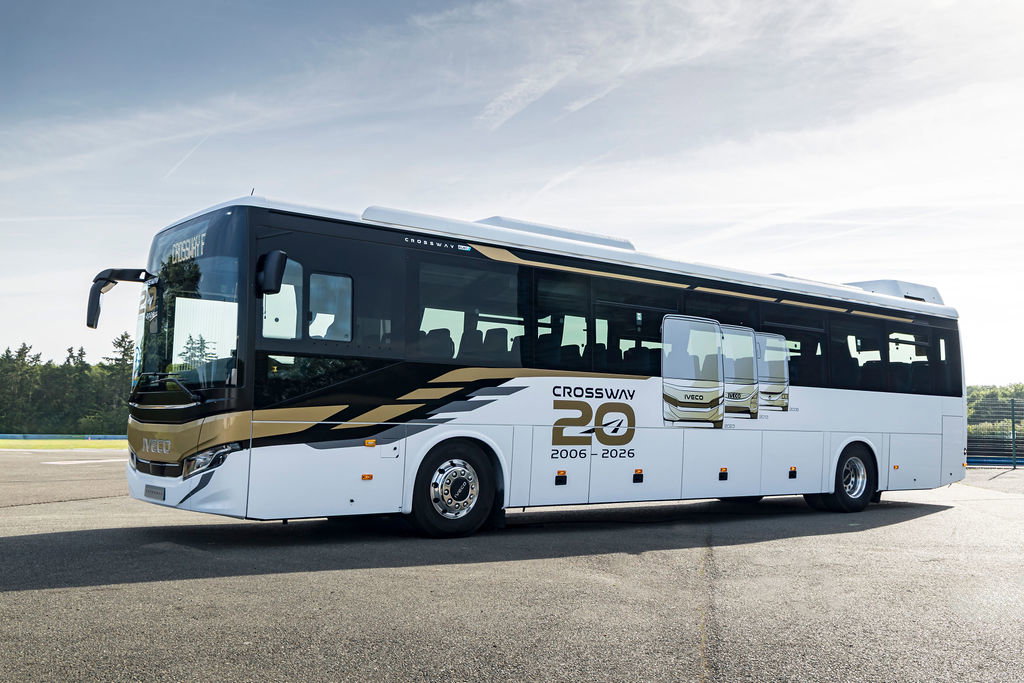
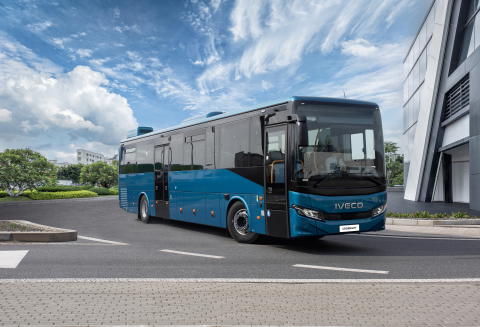
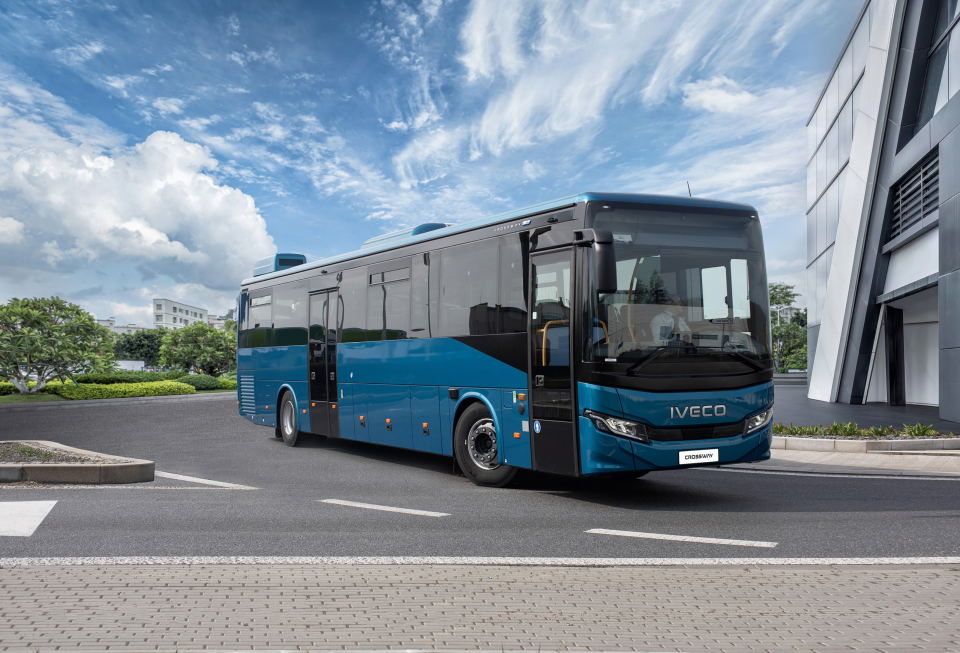
In addition to the low-entry version tested by Frölich Linie, the electric edition of the Iveco Crossway is also available in the normal-floor version shown in the picture
„These operational results clearly demonstrate that the Crossway LE ELEC can play a role in supporting the energy transition in regions beyond urban environments. Thanks to its combination of long range and passenger capacity, modular battery pack and reliability proven in real operating conditions, this vehicle offers public transport authorities and operators a flexible electric solution adapted to the constraints of daily operations” – commented Giorgio Zino, head of European commercial operations at Iveco Bus.
The low-entry Crossway Low Entry ELEC electric bus can be specified in both M3/I (urban) and M3/II (suburban-interurban) vehicle categories, but is primarily intended for suburban and interurban duties. To suit different customer requirements, it can be ordered with 5, 6 or 7 battery modules based on lithium nickel manganese cobalt oxide (NMC) chemistry, corresponding to installed total capacities of 346, 416 and 485 kWh respectively. The energy storage units are installed partly on the roof and partly at the rear of the body, below floor level. The low-entry version of the electric bus, based on the proven frame structure of the Crossway model family, which turns 20 this year, is produced in two length variants: the 12-metre base version can be fitted with 44 passenger seats, while the 13-metre extended-wheelbase version can accommodate 48 seats. The product range is completed by the normal-floor Crossway ELEC version, also offered in nominal lengths of 12 and 13 metres but designed to meet the requirements of the M3/II and M3/III vehicle classes, which Iveco Bus recommends not only for interurban duties but also for school bus applications.
Photos: Iveco Bus