![Magyarbusz [Info] International](https://bunny-wp-pullzone-9e1je37kud.b-cdn.net/wp-content/uploads/2025/06/cropped-cropped-mbi_sby_v1-scaled-1.png)

On September 16, the Egyptian company Manufacturing Commercial Vehicles (MCV) officially inaugurated a new production hall dedicated to the series production of Volvo Buses’ electric urban and suburban buses for the European market. The establishment of this new capacity is an integral part of Volvo Buses’ strategic shift announced in spring 2023, whereby the company ceased independent complete bus manufacturing in Europe, opting instead to rely on contract body-building partners.
In March 2023, Volvo announced the cessation of complete bus production at its Wrocław plant in Poland, relocating body-building activities to partners; urban and intercity types were transferred to Egyptian MCV, while Spanish Sunsundegui was initially designated as the partner for long-distance models. This latter collaboration ultimately did not materialize, and the production of long-distance models, specifically the Volvo 9700, was instead transferred to Volvo Buses’ Mexican plant. Following the last vehicles produced in Wrocław, the production equipment was dismantled and transported to Cairo, where a new 10,000 square meter production hall was set up for them at the MCV site in just 12 months. The total investment amounts to about 3 billion Egyptian pounds, equivalent to approximately 20.5 billion forints.

The relocation also provided an opportunity for the model refresh of the Volvo 7900 Electric, whose new generation is now assembled at the Egyptian plant. The redesign involved reworking the front panel, integrating sensors into the bumper, and incorporating the safety and driver assistance systems mandated by the European Union. This required the introduction of a new electronic architecture, which includes a digital dashboard.
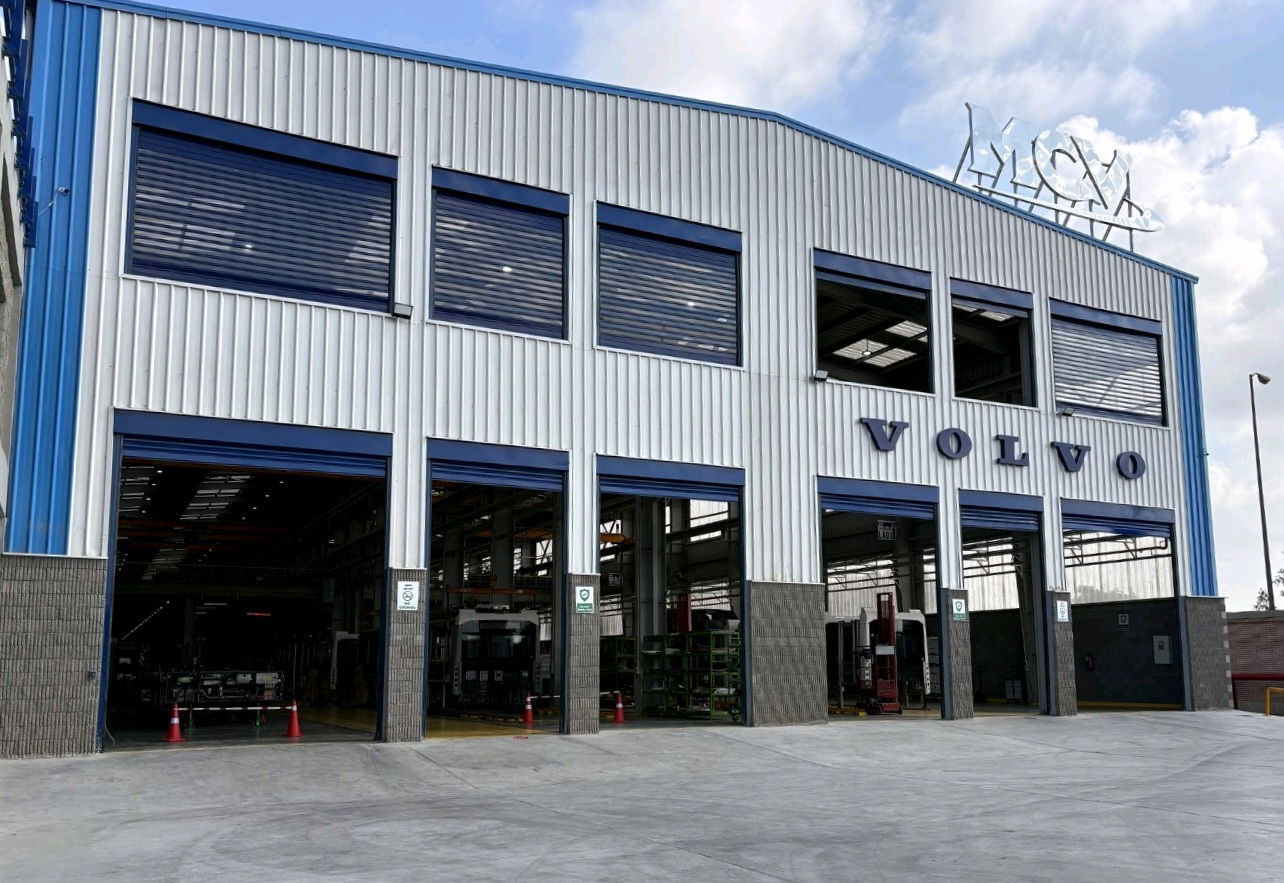
MCV manufactures the buses under a Volvo license, so the Egyptian manufacturer’s logo is not found on the finished vehicles. The only significant difference from the previous European manufacturing practice is that the complete buses are now produced in Cairo instead of Volvo’s own Wrocław plant, which has since been sold. The types are still developed by Volvo Buses, with the Swedish manufacturer determining the design and components, and responsible for sales and aftercare.

Since the completed vehicles are primarily destined for European markets, the entire production process must comply with EU type approval requirements. To this end, Volvo engineers provide continuous professional support and training to MCV employees, and production is closely monitored under the quality assurance framework defined by the Swedish manufacturer.
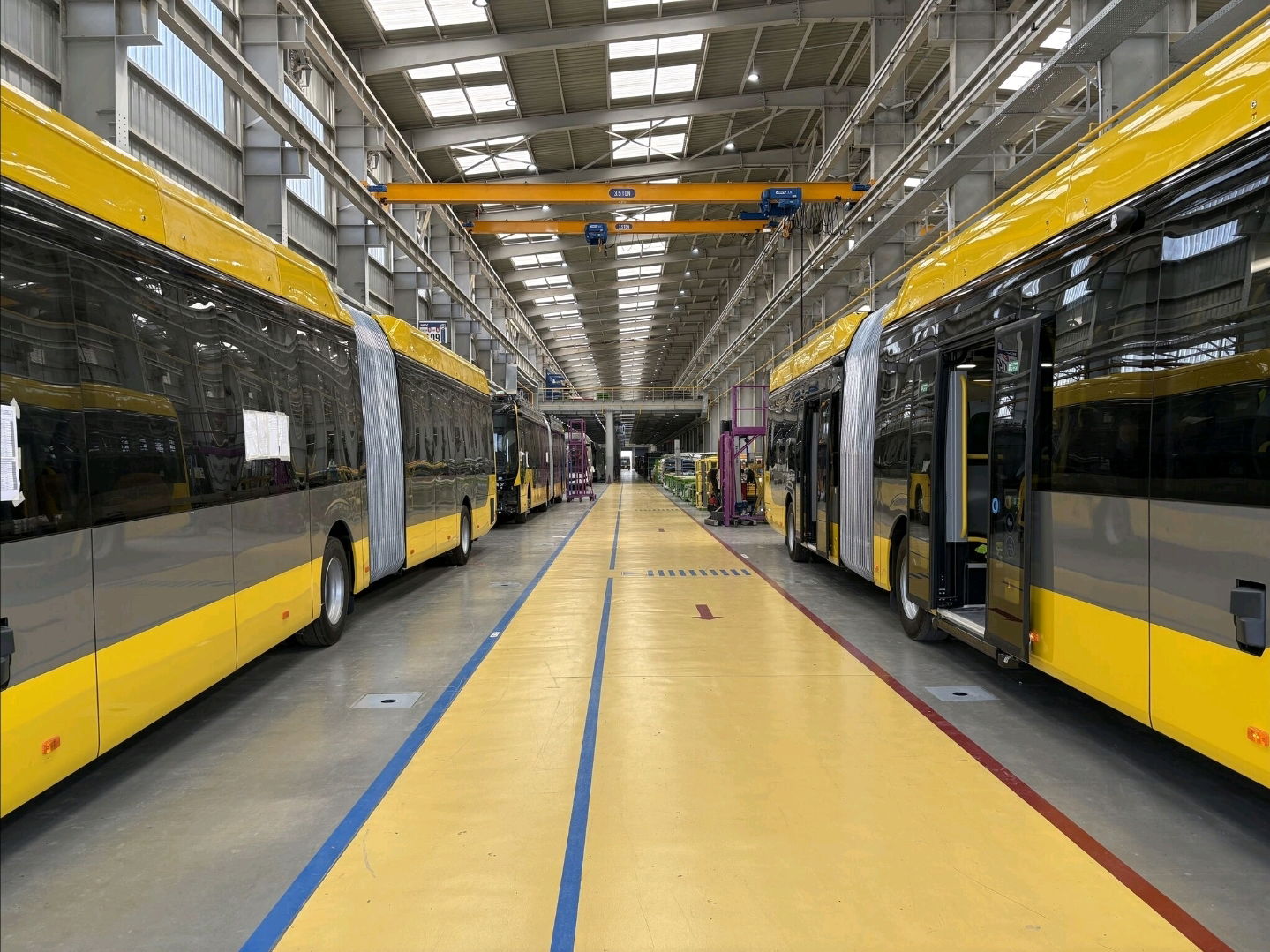
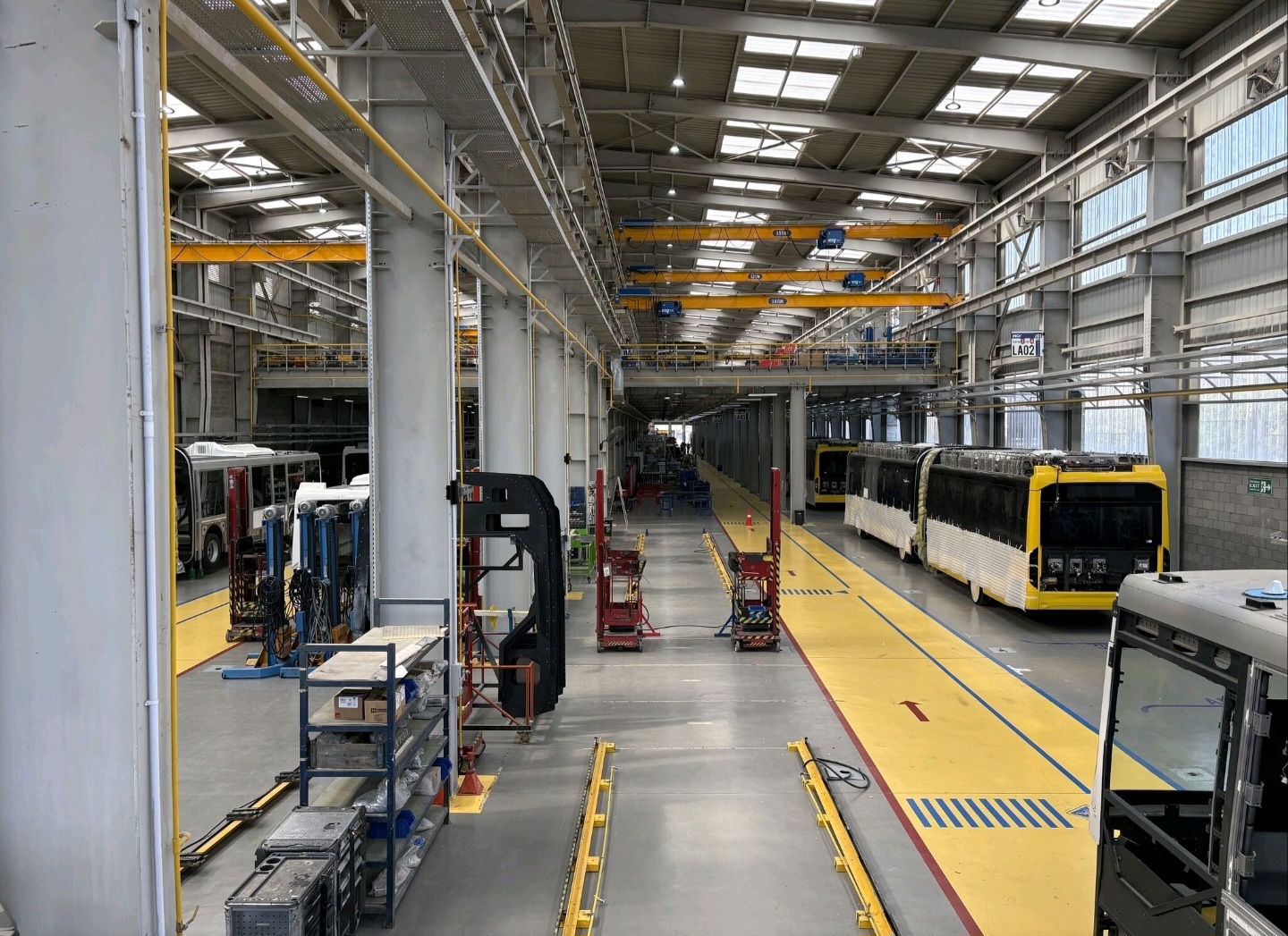
MCV’s new production line consists of two parallel assembly lines with ten workstations, complemented by a central supply corridor and gallery level. The chassis, drivetrain, driver’s cab, and braking system are manufactured in Borås, Sweden, and the completed main units are shipped to Egypt by sea. The first phase of assembly takes place at one of MCV’s preparatory plants, from where they are transferred to the new hall for the complete vehicle build. The officially announced annual capacity of the assembly line is 1,200 buses, although the company currently plans to produce about 700 vehicles annually, mainly the 12-meter Volvo 7900 Electric, the 18-meter articulated 7900 Electric Articulated, and the low-entry urban-suburban 8900 Electric, now only available with an electric drivetrain. The program has led to the hiring of approximately 300 new employees, who work exclusively on the Volvo project, out of the total workforce of about 2,000 at the Cairo industrial center.

MCV began assembling the first urban Volvo electric buses in 2024, even during the construction of the new plant, but actual series production started in early 2025. The first nearly one hundred – exactly 96 – Volvo 7900 Electric buses produced at the Cairo MCV plant are destined for the Benelux region. The first fifteen vehicles were taken over by Luxembourg’s Demy Schandeler, followed by ten buses built to the specifications of the Flemish transport company De Lijn. Currently, articulated 7900 Electric models are being produced for Transdev in the Netherlands, along with an additional 25 for the Hoeksche Waard–Goeree-Overflakkee region.
Anna Westerberg, President of Volvo Buses, highlighted the following at the plant’s inauguration:

The business model to collaborate with body builders for the bus body is well established in many key markets around the world. For example, in the UK, MCV has been a reliable partner for over 15 years, supplying bodies for various Volvo bus models.
The relationship between Volvo and MCV is not new; the Egyptian company has been one of Volvo’s most significant partners, with their collaboration spanning two decades. MCV became well-known in the United Kingdom with its Volvo-chassis buses, becoming a key player in both the urban and intercity-long-distance segments in recent years. However, this latest step elevates the cooperation to a new level, as MCV becomes Volvo’s exclusive European partner for the production of urban and suburban electric buses.
..
MCV was founded in 1995 by engineer Karim Ghabbour. The company’s headquarters are located in Obour City, with its main manufacturing base in El Salheya El Gedida, both in the Cairo metropolis area. Over the past three decades, MCV has grown into one of the largest bus body-building companies in the Middle East, supplying vehicles not only to local markets but also internationally, including Europe and the Asia-Pacific region.
Cover photo: Kyrillos Morcos, photos: Bas Dubois, Gilan Fahmy
 Related Articles


