![Magyarbusz [Info]](/mbi/header-logo.png)
Yutong officially unveils its articulated electric bus for BRT services
 Patthy Gellért
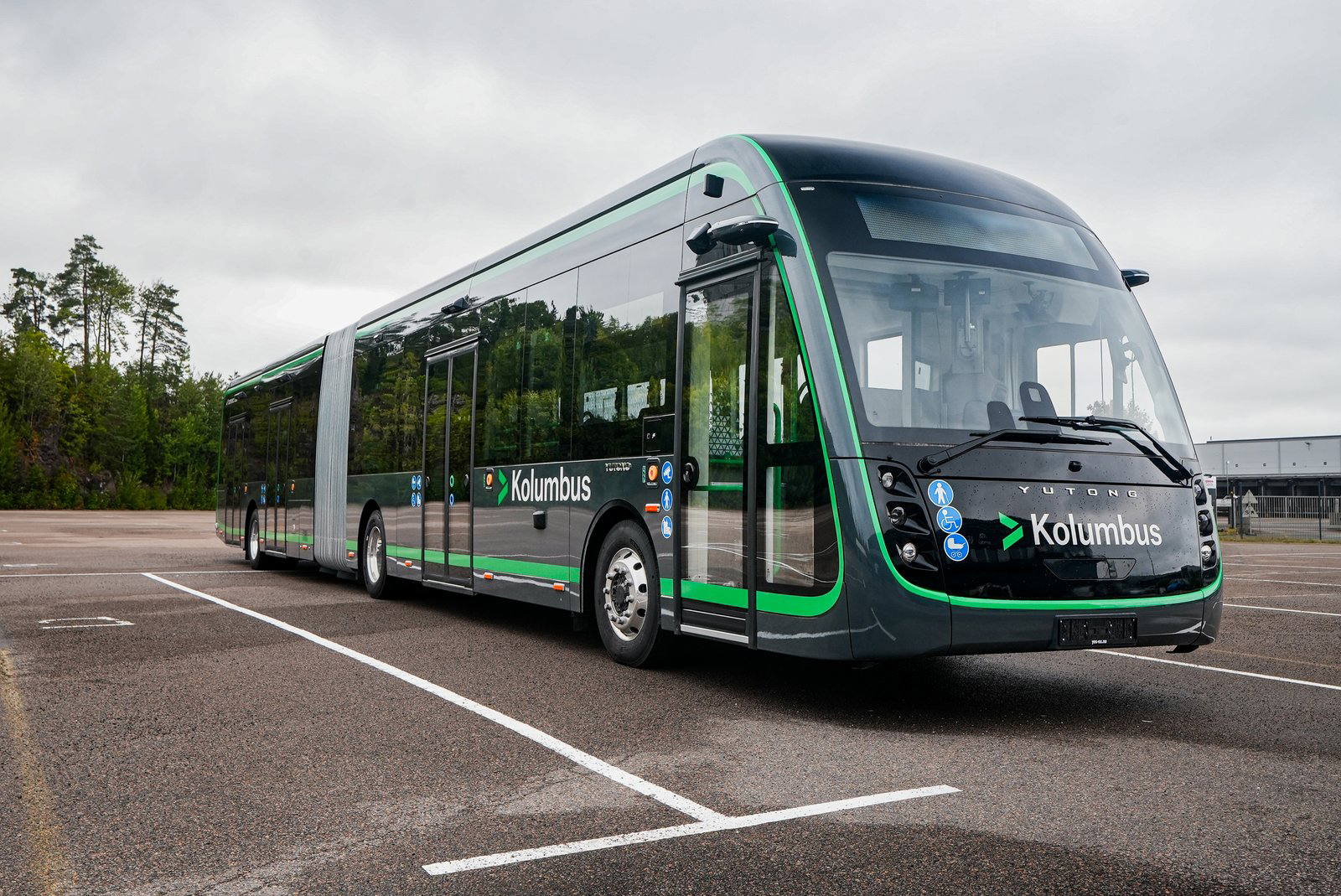
Yutong is expanding its European electric bus range with an articulated model designed for high-capacity BRT routes. According to the manufacturer, during the development of the new U18 BRT, Chinese engineers placed the emphasis on high passenger capacity and range, as well as efficient operation. The very first example, built for the Bussveien BRT corridor connecting the Norwegian cities of Stavanger, Sandnes and Forus, was officially presented to the public at the opening of Yutong’s new service centre in Norway. The 38,941 m² facility built in the municipality of Stokke will also serve as a warehouse and technical training centre in addition to repairing and testing vehicles.
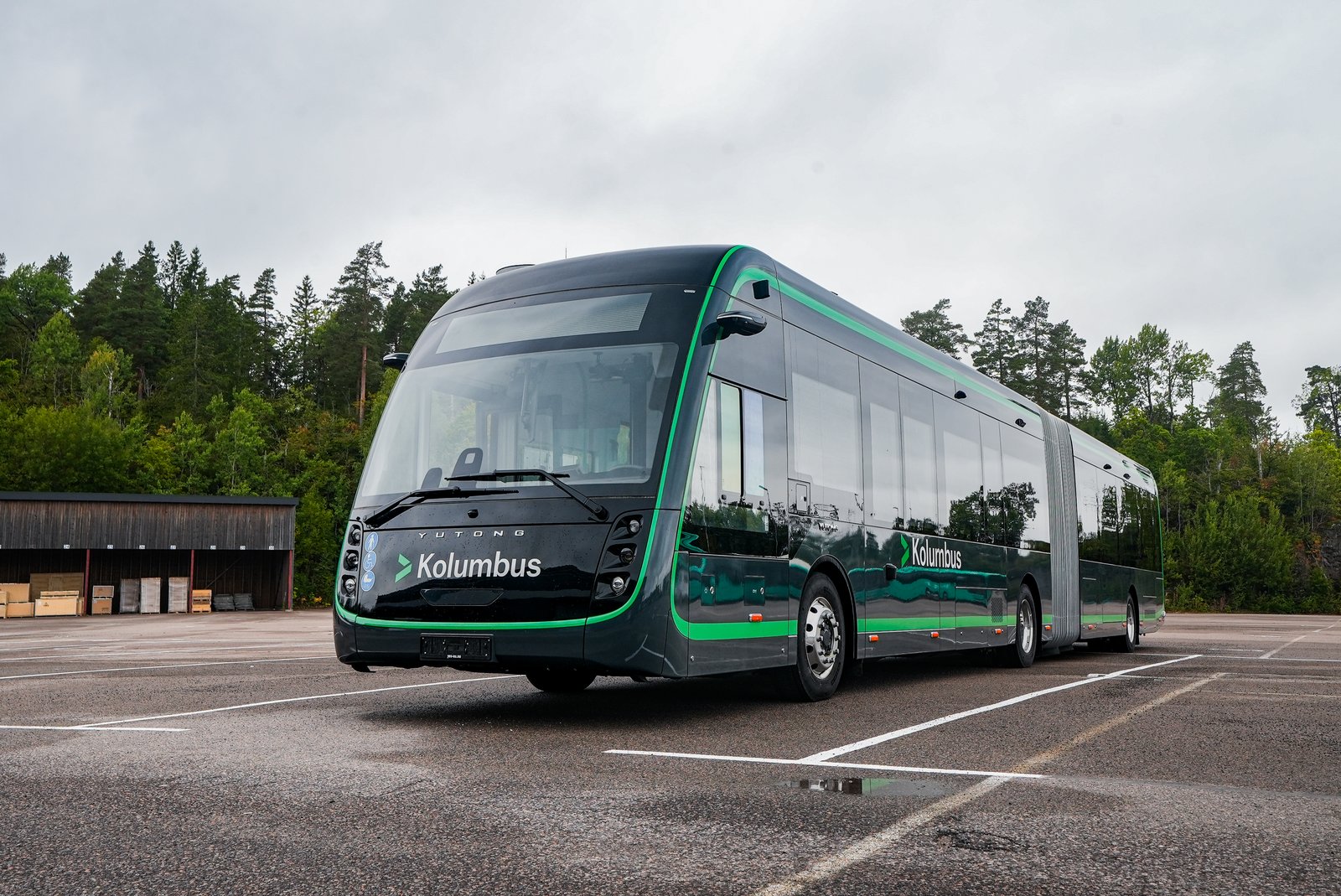
Although the first photos of the future Yutong electric buses for the Bussveien network had already appeared in the local press in the first days of January, the official presentation of the type – and consequently the disclosure of its technical details – had to wait until now. The new U18 BRT, essentially a version of the standard U18, already positioned as a premium product, enhanced with a decorative design package, clearly takes the role of Yutong’s urban flagship in its European portfolio. The newcomer can be classified among the types informally described as “showcase BRT” vehicles, as its 1-2-2-2 door layout sacrifices some of the rapid passenger exchange expected on high-traffic services in favour of style. The strongly raked front end, reminiscent of modern trams, may be familiar from several European competitors; because of the vertically arranged light clusters, it most closely resembles the front section of the Irizar ie tram, renewed this June, which is regarded as a design benchmark. In side view, the characteristic features of Yutong’s urban electric buses are still clearly recognisable, even though, to enhance the tram-like effect, the B and C axles are fully covered and the wheels on the A axle have been fitted with decorative wheel trims (the demonstration bus can still be seen without these in the images in this article). The rear end is identical to that of the conventional U18, whose shape was originally inspired by smartphones.
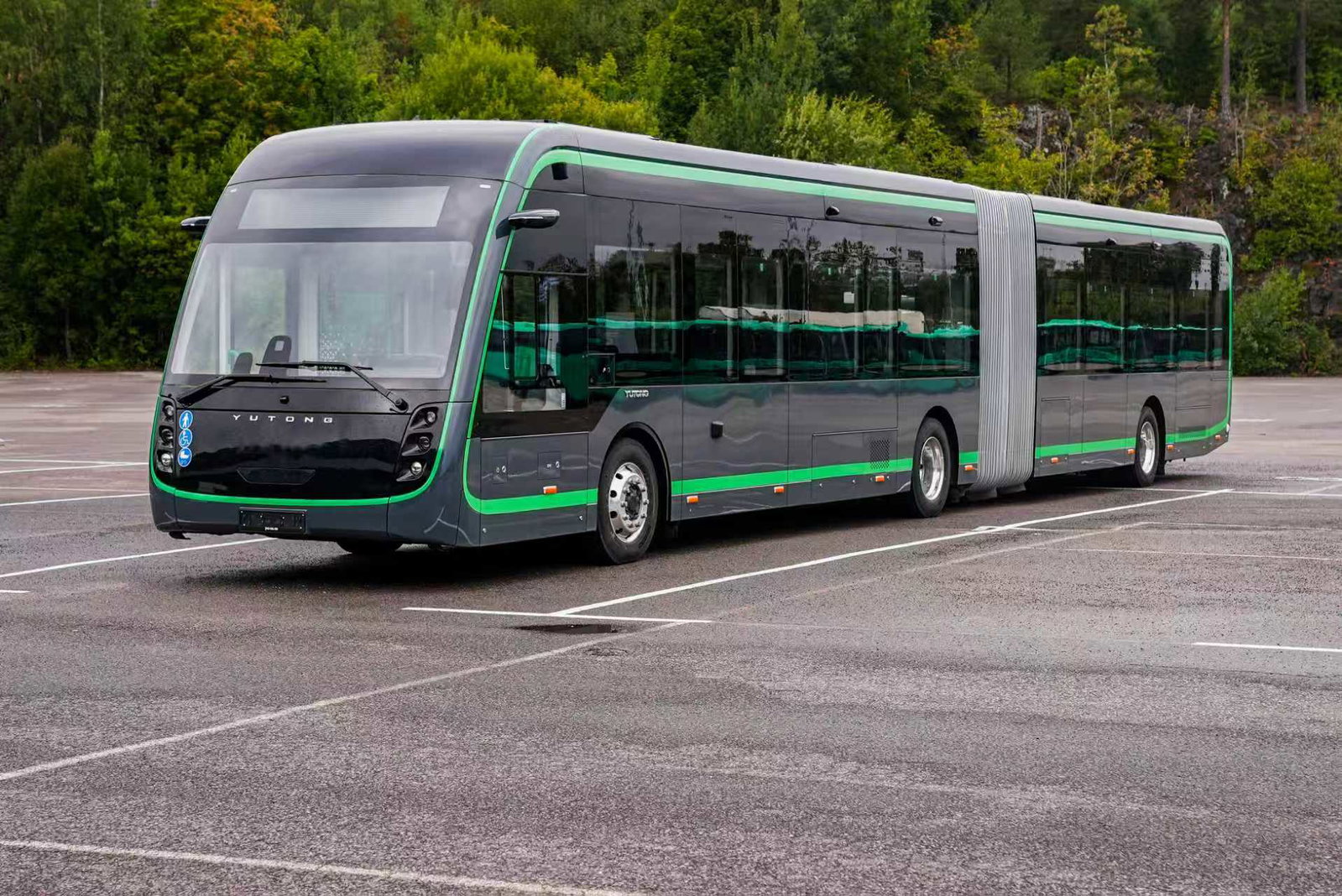
With a length of 18,720 mm, Yutong’s new model makes almost full use of the possibilities offered by the relevant European regulations. This is paired with a width of 2,550 mm and a height of 3,200 mm, the latter being notably modest among urban electric buses. On the one hand, this means a lower centre of gravity; on the other, it makes it easier for the vehicle to pass beneath critical infrastructure such as lower bridges and overpasses. The distance between the A and B axles is 5,900 mm, while the B-C wheelbase is 6,650 mm, with a front overhang of 2,740 mm and a rear overhang of 3,430 mm. The integral frame structure, with the closed-ring construction typical of buses, is made in the manner customary at Yutong from ultra-high-strength QStE 700 TM steel with a yield strength of over 700 MPa (its European-standard equivalent can be considered the S700 MC steel grade – ed.), significantly improving passive safety. The body also complies with requirements that are not mandatory for city buses, such as UN ECE R29 concerning driver protection, UN ECE R66 on roof strength and rollover protection, and UN ECE R93 covering front underrun protection. Corrosion protection is provided by a 15-step cathodic dip-coating process (KTL), which we were also able to observe during our 2024 visit to Yutong’s Zhengzhou plant. According to the manufacturer, the resulting five-layer coating provides protection against structural corrosion for 10 years.
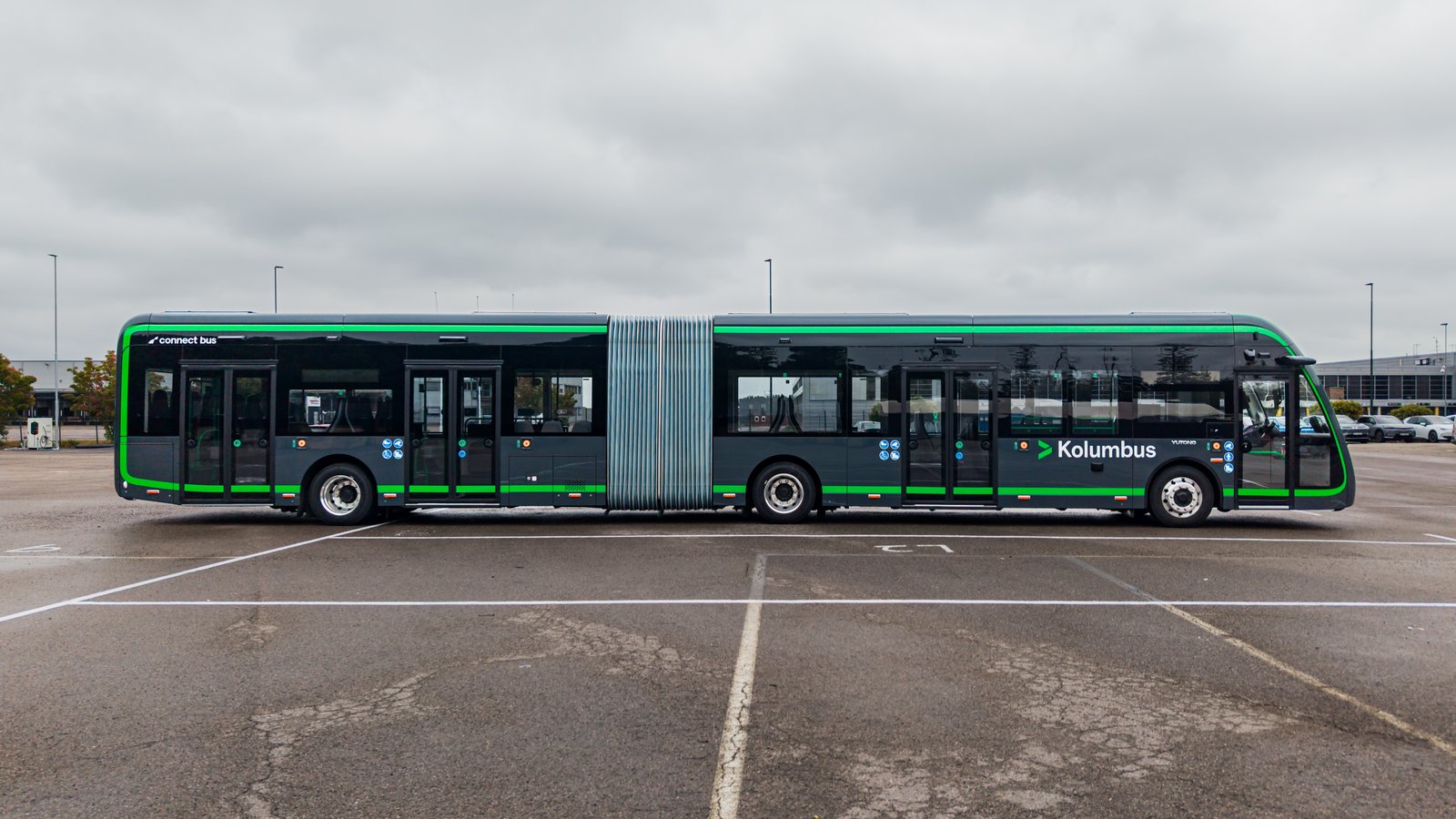
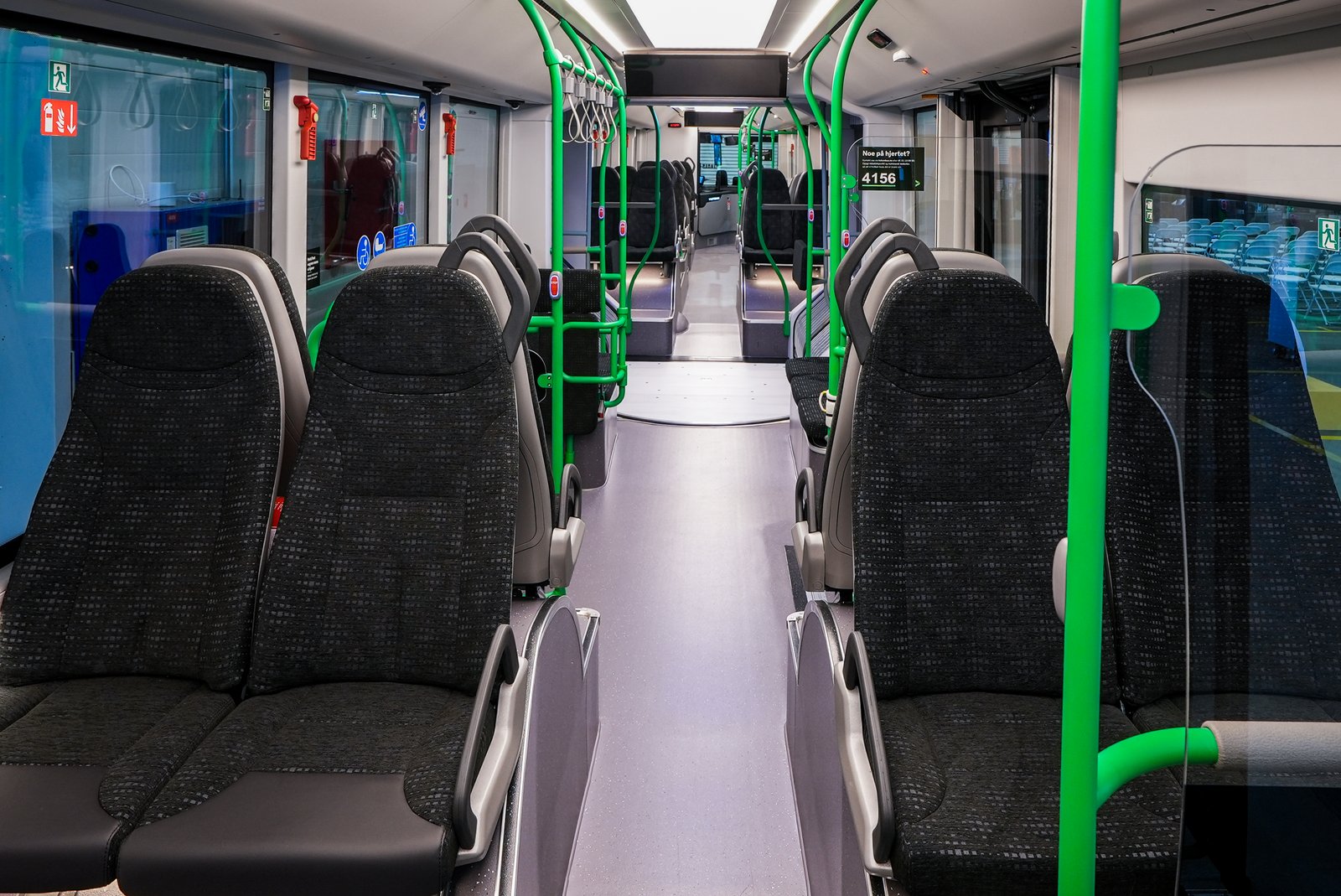
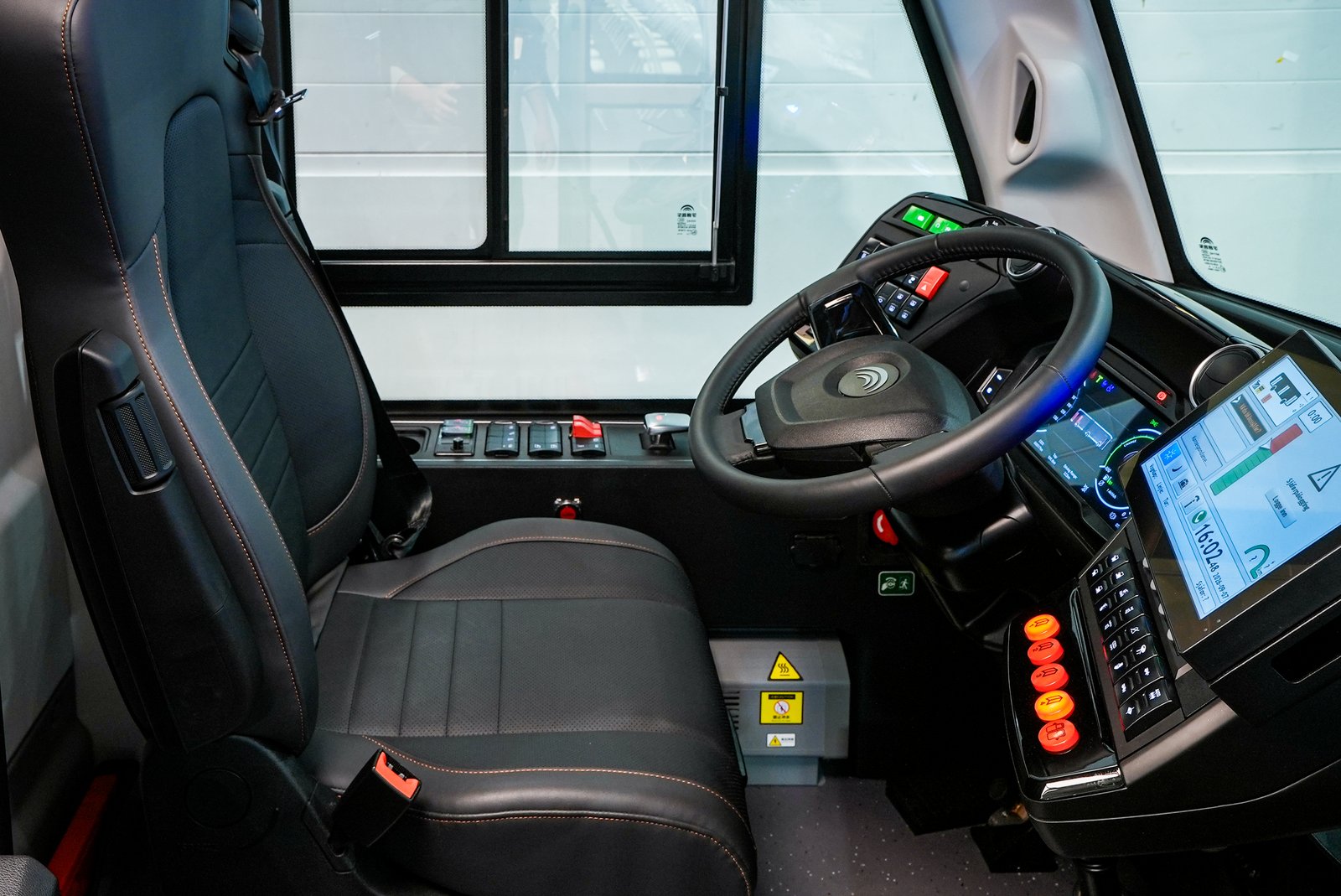
According to reports from the event, the U18 BRT can be fitted with up to 46 seats and carry a total of 125 passengers, calculated on the basis of the 30-tonne maximum permissible gross vehicle weight for zero-emission articulated buses. However, according to information Yutong sent to us, with a four-door layout and 42 passenger seats, total capacity ranges between 101 and 117 people depending on battery capacity. The fully low-floor passenger compartment has an interior height of 2,295 mm measured in the aisle, which promises a pleasant sense of space on paper. In the configuration selected by the Norwegian customer, manually operated wheelchair ramps are fitted at both the second and third passenger doors, while the interior is equipped with high-backed, suburban/interurban-style passenger seats, mostly in a 2+2 row arrangement. The exceptions are the platform areas before the second door and opposite the third door, as well as the area behind the articulation, where the seats have been installed perpendicular to the direction of travel, in folding and fixed versions respectively. The appearance of the passenger compartment is enhanced by eye-catching solutions such as an LED-lit ceiling and ambient lighting below the window line and seats, although the front wheel housings largely create dead space (based on the photos, electrical switch cabinets are probably located on the left-hand one). The driver sits in an air-suspended, heated and ventilated seat, which issues a warning if the driver leaves it without applying the parking brake. Vehicle information is displayed on a 10.25-inch digital instrument cluster, a 10.1-inch central control screen and an additional monitoring display of the same size. The passenger compartment and driver’s area form separate zones from the point of view of climate control; the passenger-area ventilation system, equipped with an air purifier, completely replaces the interior air every 5–10 minutes.
Yutong’s urban flagship is driven by two hairpin-wound electric motors, each delivering 150 kW of continuous output and 260 kW peak output (both the B and C axles are driven), whose service life the manufacturer gives as twenty years or two million kilometres. The axles are supplied by ZF: an RL 82 EC independent suspension unit is fitted at the front, while AV 133 driven axles are installed in the centre and rear positions. The vehicle’s turning circle diameter is 21.5 metres, and its top speed is limited to 80 km/h. An important component of the U18 BRT’s electrical architecture is the new-generation 7-in-1 controller using silicon carbide (SiC) semiconductor components, which, as a single integrated unit, is responsible among other things for controlling the traction motors, steering, DC-DC converter and charging. According to Yutong, its maximum efficiency reaches 99.8%, while the system weight is 25% lower and the vehicle’s energy consumption 10% lower than with the previous generation.
In terms of traction batteries, three packs are available, with total capacities of 579, 621 and 704 kWh. With the latter, Yutong promises an almost astonishing range of more than 700 kilometres on a single charge, calculated according to the UITP E-SORT 2 test cycle, which models a mix of urban and suburban operation. The lithium iron phosphate (LFP) energy storage systems, designed for use at ambient temperatures between -40°C and +55°C, comply with Yutong’s in-house safety standard known as YESS (Yutong Electric Safety Standard). This includes a multi-stage fire protection system which, in the event of thermal runaway, is intended on the one hand to suppress the combustion process inside the battery itself by introducing nitrogen gas (thereby displacing oxygen), and on the other hand, thanks to its sandwich-structure thermal insulation, to keep flames contained within the battery housing for at least two hours. Naturally, protection against impacts has also been considered: according to the manufacturer, the battery installation itself can withstand a lateral force of 2.7 tonnes and a rear impact force of 49 tonnes. The demonstration bus is capable of accepting two plug-in charging connectors at the same time and can be charged at up to 2 x 300 kW, meaning that charging from 12% to 100% takes only around 1.3 hours. According to Yutong, the liquid-cooled charging system operates at 500 A when one charging connector is used and at 1,000 A when both are in operation.
Among the active safety and driver assistance functions are an electronic braking system (EBS), ESC, hill-start assist with anti-rollback function, emergency brake assist, tyre-pressure monitoring and a lane-departure warning system. The operation of the collision mitigation system (CMS) and the advanced driver distraction warning system (ADDW) is supported by a forward-facing camera and a millimetre-wave radar. The exterior rear-view mirrors are replaced by digital cameras from Streamax. According to what was said at the presentation, the new Yutong U18 BRT will also be available in other European markets after its introduction in Norway. Standard versions of the U-series can now be found on the roads of many countries across the continent, including Norway, Denmark, Finland, the Netherlands, Poland and Romania – and the model family also appeared in Greece at the beginning of September – while feedback so far has been excellent, according to the manufacturer.
Photos: Yutong Bus & Coach