![Magyarbusz [Info]](/mbi/header-logo.png)
Bolloré to halt production of electric buses
 Ludányi József
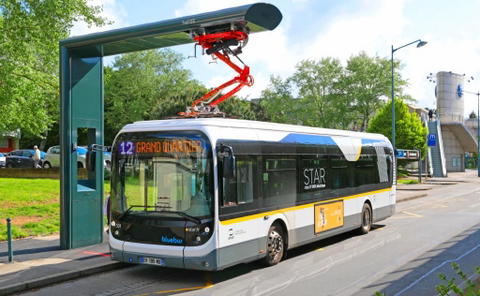
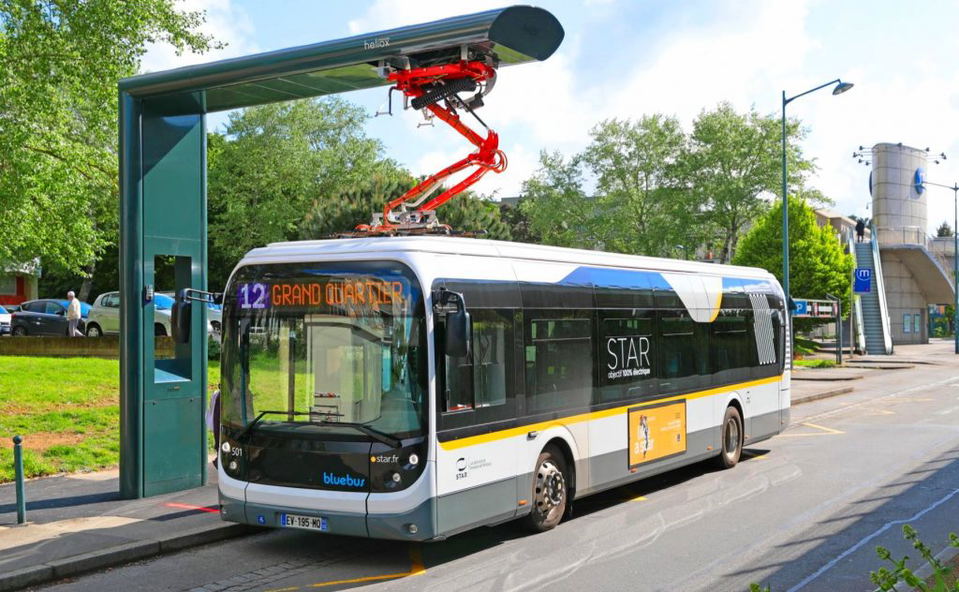
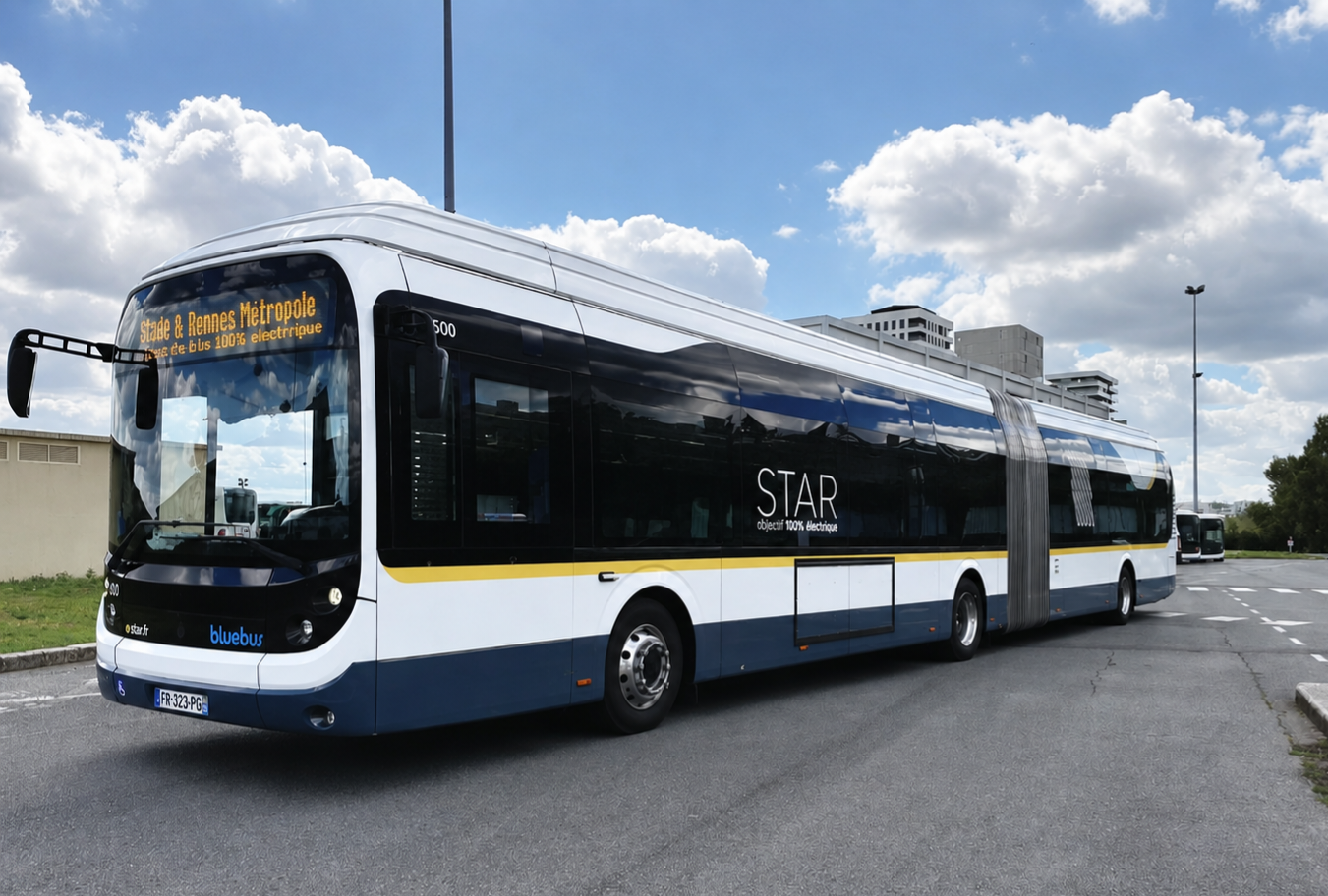
Another European bus manufacturer could disappear from the market: on 8 September, France’s Bolloré Group announced that it would permanently end production of its electric buses marketed under the Bluebus name. For the time being, the decision forms part of a restructuring plan, on which consultations with employee representatives have begun, but the company is already clearly working on the basis that production will cease for good. At the same time, talks are already under way with an unnamed European industrial player on the partial takeover of certain Bluebus assets and its research and development activities.
Bluebus, established in 2011 in Ergué-Gabéric in Brittany, was one of the early players in the European electric bus market. According to Bolloré, nearly 700 electric buses in 6-, 12- and 18-metre versions were put into service in France and other European countries during its existence. From the outset, the company’s distinguishing feature was that its vehicles used lithium-metal-polymer, or LMP, batteries developed in-house by BlueSolutions, part of the same group – although in its final period it also made more conventional lithium nickel manganese cobalt oxide (NMC) energy storage systems produced by fellow French company Forsee Power available as an option for its buses.
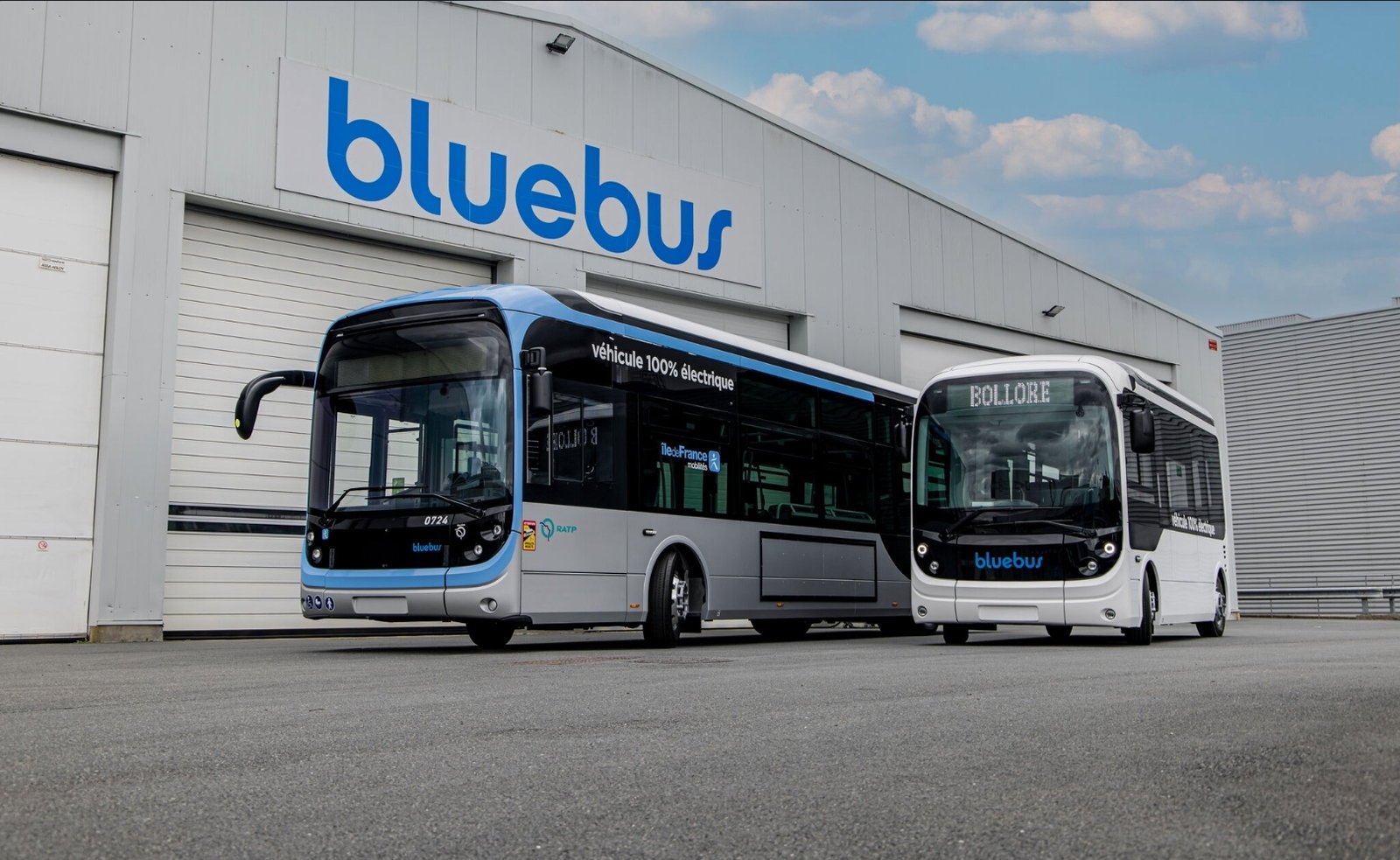
Bolloré is now citing primarily economic reasons for abandoning bus production. According to the company, the French electric bus market developed more slowly than expected, while competition and price pressure intensified significantly. Bluebus’s scale proved insufficient to compete with larger manufacturers while achieving the necessary economies of scale. The company says it had actively sought a solution in recent years to continue the activity on a sustainable basis, but ultimately concluded that the necessary conditions were no longer in place.
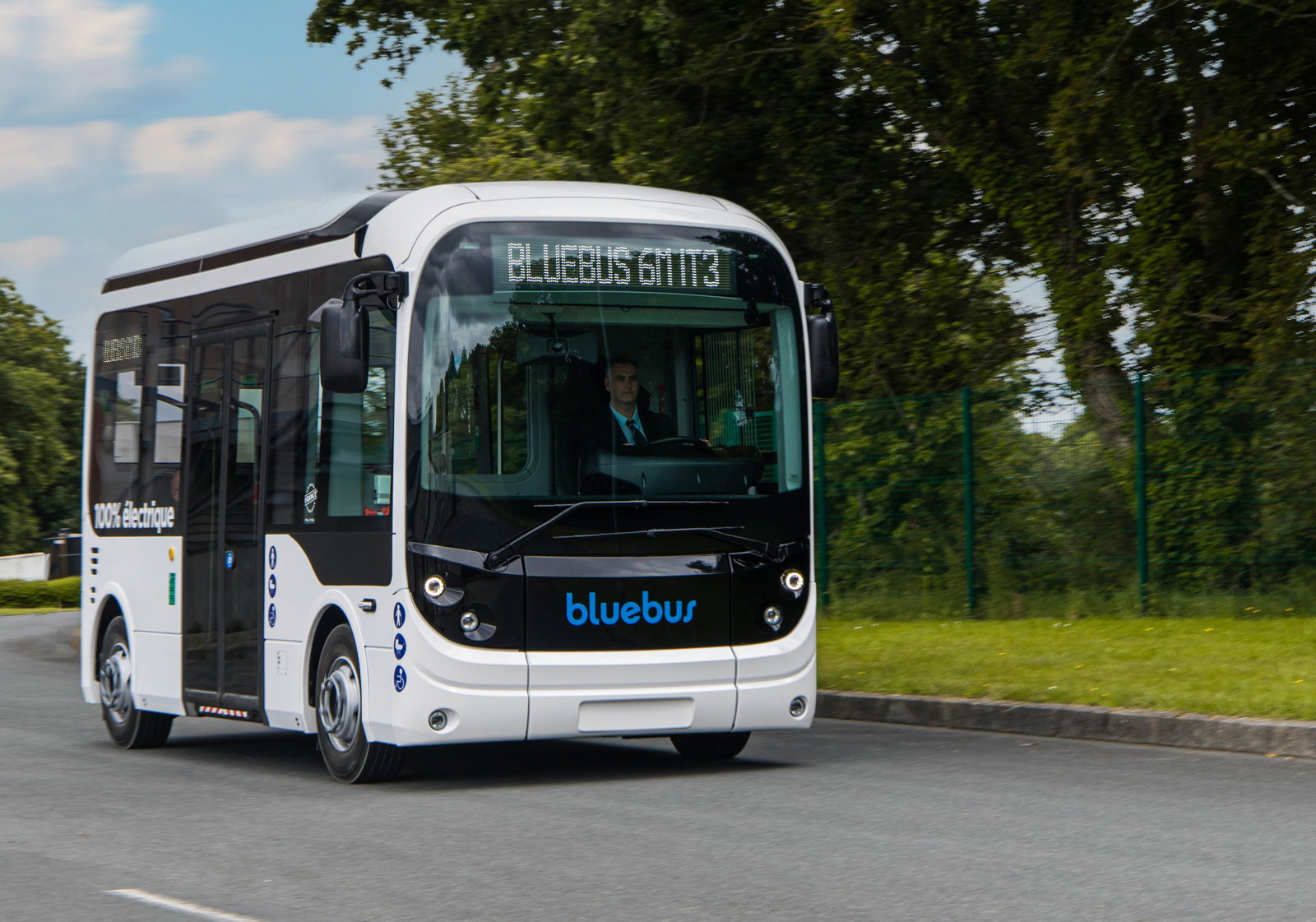
The planned restructuring could directly affect 74 Bluebus jobs. A smaller organisation would, however, continue to operate in order to ensure parts supply, servicing and fleet monitoring for vehicles already in service. In addition, a European industrial player with a long-standing presence in the public transport sector has made an offer to take over Bluebus’s research and development activities; if this goes ahead, 17 employees could transfer to the new owner.
The “solid-state battery” that also caused serious problems
The history of Bluebus cannot be separated from Bolloré’s unusual battery technology – nor from the problems that arose during its use. The manufacturer consistently presents BlueSolutions’ LMP energy storage systems as solid-state batteries: the cells contain no liquid electrolyte, they contain no nickel or cobalt, and they operate with a lithium-metal electrode. At the same time, the technology requires a high, constant operating temperature of around 80 °C, meaning the batteries have to be heated even when not in use.
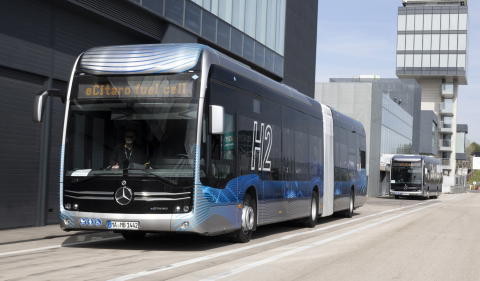
For a time, the LMP technology used in Bluebuses was also seen as a promising alternative by Daimler Buses. For certain versions of the Mercedes-Benz eCitaro and eCitaro G, it offered a battery pack built from BlueSolutions’ 63 kWh modules, with a total capacity of up to 441 kWh. Following the French supplier’s own communication, Daimler Buses introduced this into its range as a “solid-state battery”, although LMP technology in reality differs substantially from the genuine solid-state batteries still under development today and regarded as something of a Holy Grail of battery technology.
However, the use of LMP batteries did not prove problem-free at Daimler either. In 2021, the manufacturer recalled a total of 30 eCitaros fitted with these energy storage systems after an insulation fault was identified in the battery modules that could have led to a cell short circuit. The measure affected, among others, around 20 vehicles operated by ESWE Verkehr in Wiesbaden, as well as eCitaros running in Munich. The recall was preceded by a more serious incident: in February 2021, an eCitaro fitted with an LMP battery caught fire at Mercedes-Benz’s bus plant in Mannheim.
Two Bluebuses burned out completely in Paris
In 2022, the problem reached Bluebus directly. On 4 April, a 12-metre Bluebus operated by RATP caught fire on Boulevard Saint-Germain in Paris while carrying 14 passengers. Barely three and a half weeks later, on 29 April, a second vehicle of the same type caught fire at the Bibliothèque François Mitterrand terminus. No one was injured in either incident, but both buses were completely destroyed. RATP then effectively withdrew the entire affected series from service immediately. The case became particularly significant because France’s land transport accident investigation authority, the BEA-TT, later carried out a detailed technical investigation. According to the report published in autumn 2024, the most likely direct cause of the fires was a short circuit between battery cells, followed by the resulting thermal runaway.
The investigation went even further: it identified the problem not in the LMP cell chemistry itself, but in the manufacturing process. In some battery modules, the Mylar film providing electrical insulation between the cells had been incorrectly positioned. In-process inspection failed to detect this, leaving inadequate insulation between certain cells. This could have led to an inter-cell short circuit and then thermal runaway. In the two Paris fire cases, the investigation identified battery packs produced at BlueSolutions’ Canadian plant as the possible point of origin.
The story is also noteworthy because essentially the same insulation problem in the same battery generation had previously appeared in Daimler Buses vehicles as well. Bluebus and BlueSolutions eventually launched a recall on 24 May 2022 for IT3 batteries manufactured between 2020 and 2022, and for the vehicles fitted with them. At the same time, the two companies conspicuously refrained from publicly commenting on each other’s fire incidents.
The Gen4 is no longer the same battery
Abandoning bus production does not, however, mean the end of Bolloré’s battery developments. In the future, the group intends to focus on its new, fourth-generation solid-state technology, known as Gen4, which already differs fundamentally from the third-generation IT3 LMP batteries used in Bluebuses and the affected Mercedes-Benz eCitaros.
From an operational perspective, an extremely important difference is that while the earlier technology – as mentioned – required an operating temperature of around 80 °C, Gen4 is being developed with a polymer electrolyte that operates at room temperature, and targets a specific energy density of around 450 Wh/kg. However, development carried out with the involvement of the aforementioned Forsee Power is significantly behind the original plans: a few years ago, market launch was still being targeted around 2026, but the current timetable now puts the start of series production in 2030.
Bolloré would take Gen4 development all the way to industrialisation, but to do so it is seeking an external investment partner, while planning to cut a further 41 jobs at BlueSolutions. Thus, while the Bluebus brand is expected to disappear from the market, the group is shifting its focus from vehicle manufacturing to next-generation battery technology.