![Magyarbusz [Info]](/mbi/header-logo.png)
Liège’s new Mobi’Park opens – TEC’s bi-articulated buses will roll out from here in September
 Ludányi József
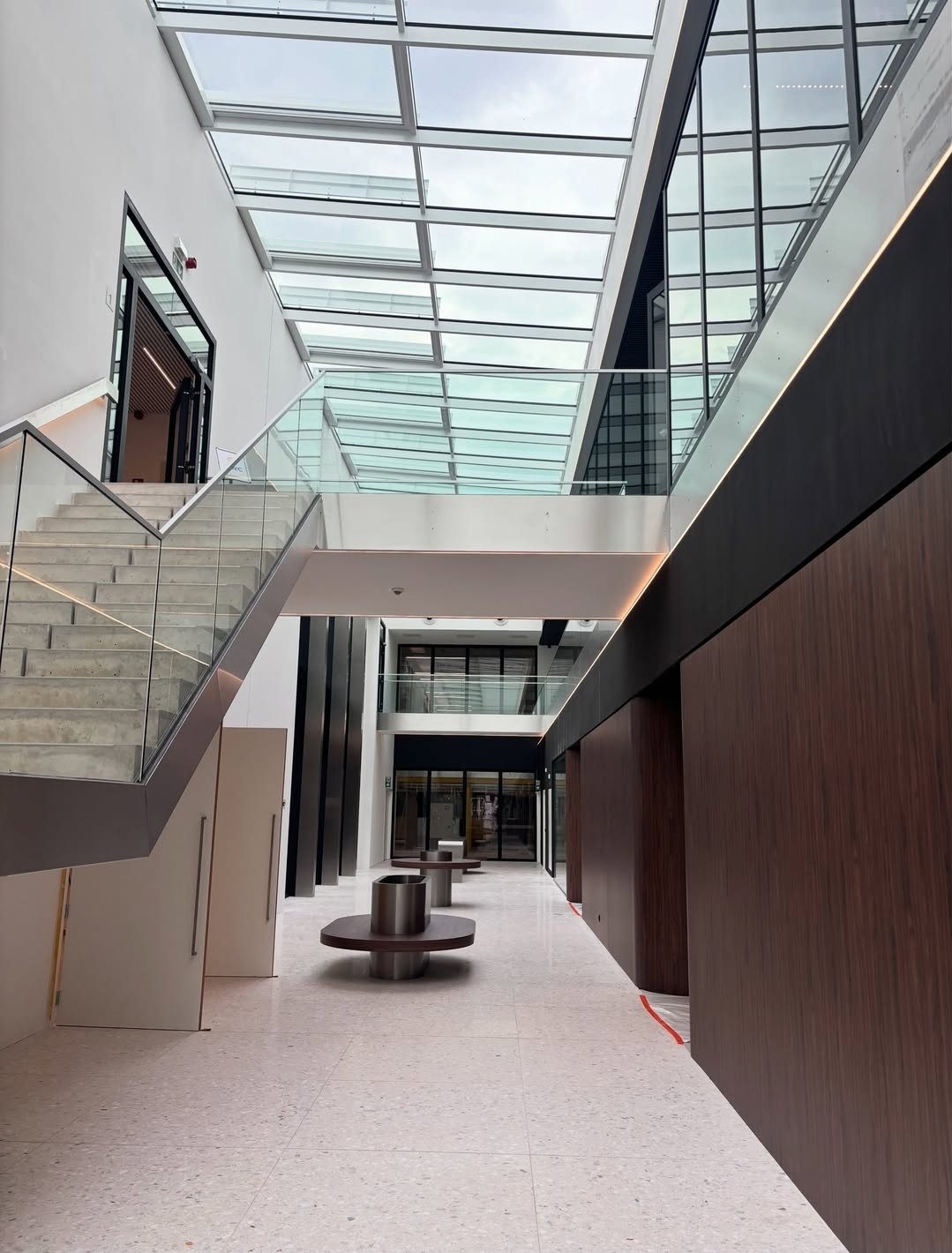
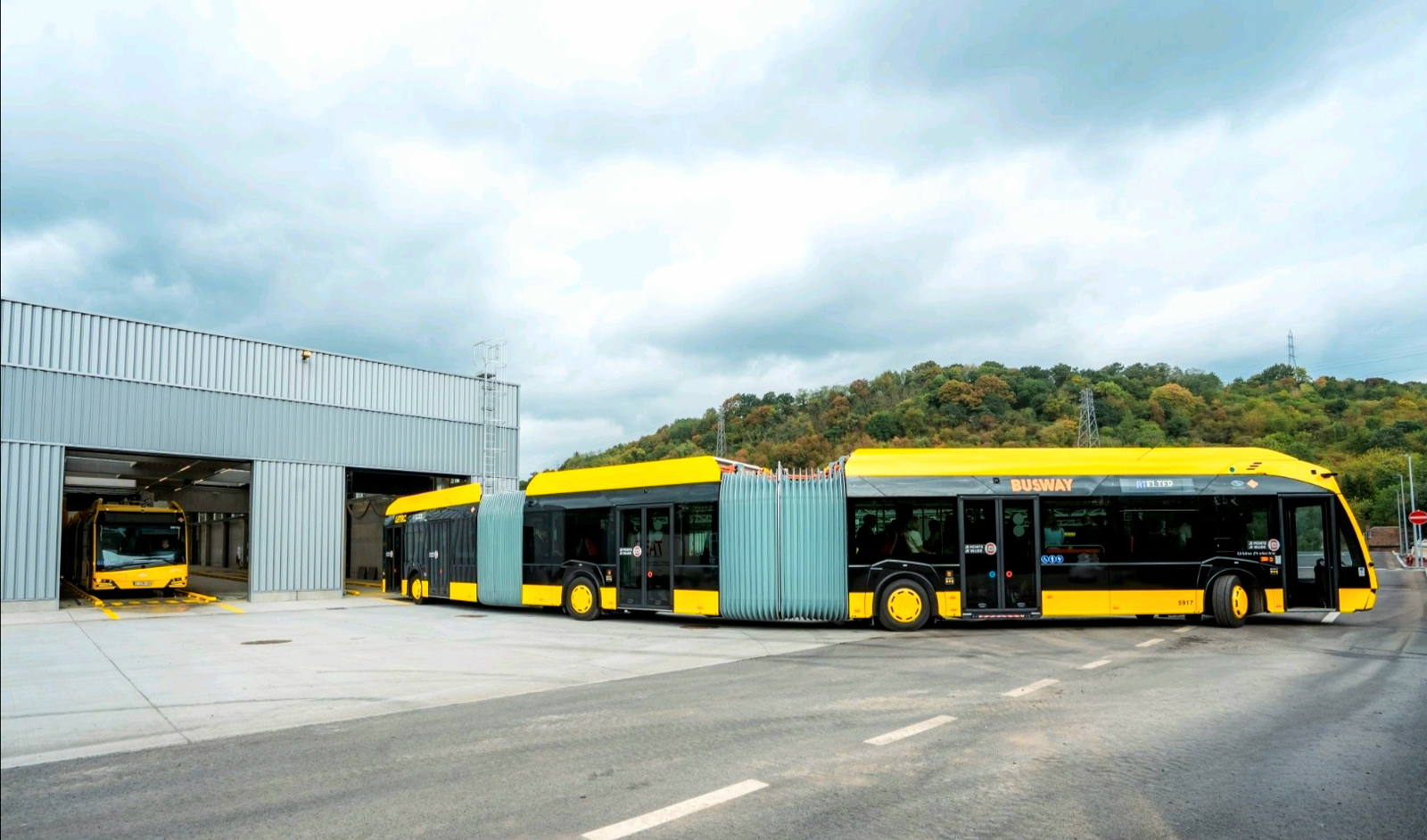
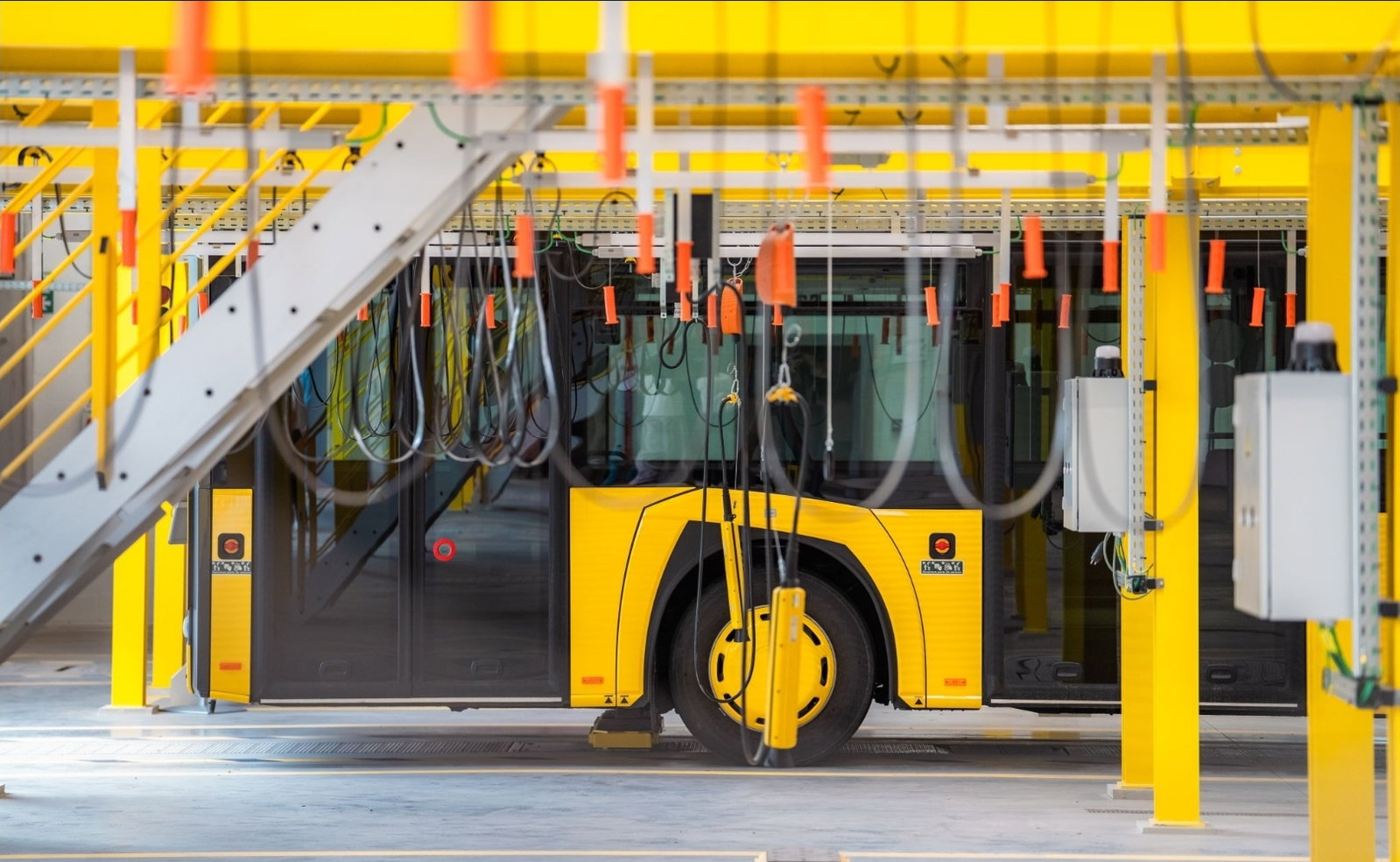
In Liège, the pieces are gradually falling into place for the scheduled operation of the city’s new, almost 25-metre bi-articulated electric buses to begin in September. While TEC has spent recent months testing the Solaris Urbino 24 electric vehicles and training drivers, the supporting infrastructure has now also been completed – without it, the long-term operation of such a large electric fleet would hardly be feasible. The Walloon transport operator presented the new Mobi’Park in Tilleur on 19 August. Built with an investment of €105 million, it will in the longer term become TEC’s first depot dedicated exclusively to battery-electric buses.
The importance of the facility, however, goes far beyond the 18 bi-articulated Solaris buses that will gradually enter service from 18 September. Mobi’Park is one of the key background investments in the ongoing transformation of public transport in Liège: last year’s launch of the tram, the associated restructuring of the bus network and the development of the new BUSWAY system – high-capacity bus rapid transit corridors operating partly on segregated infrastructure with traffic priority – all require operating infrastructure designed from the outset for the needs of the electrified fleet of the coming decades. The depot’s role will therefore not only be to store vehicles, but also to charge, maintain and inspect them, as well as to train the staff needed for operation.
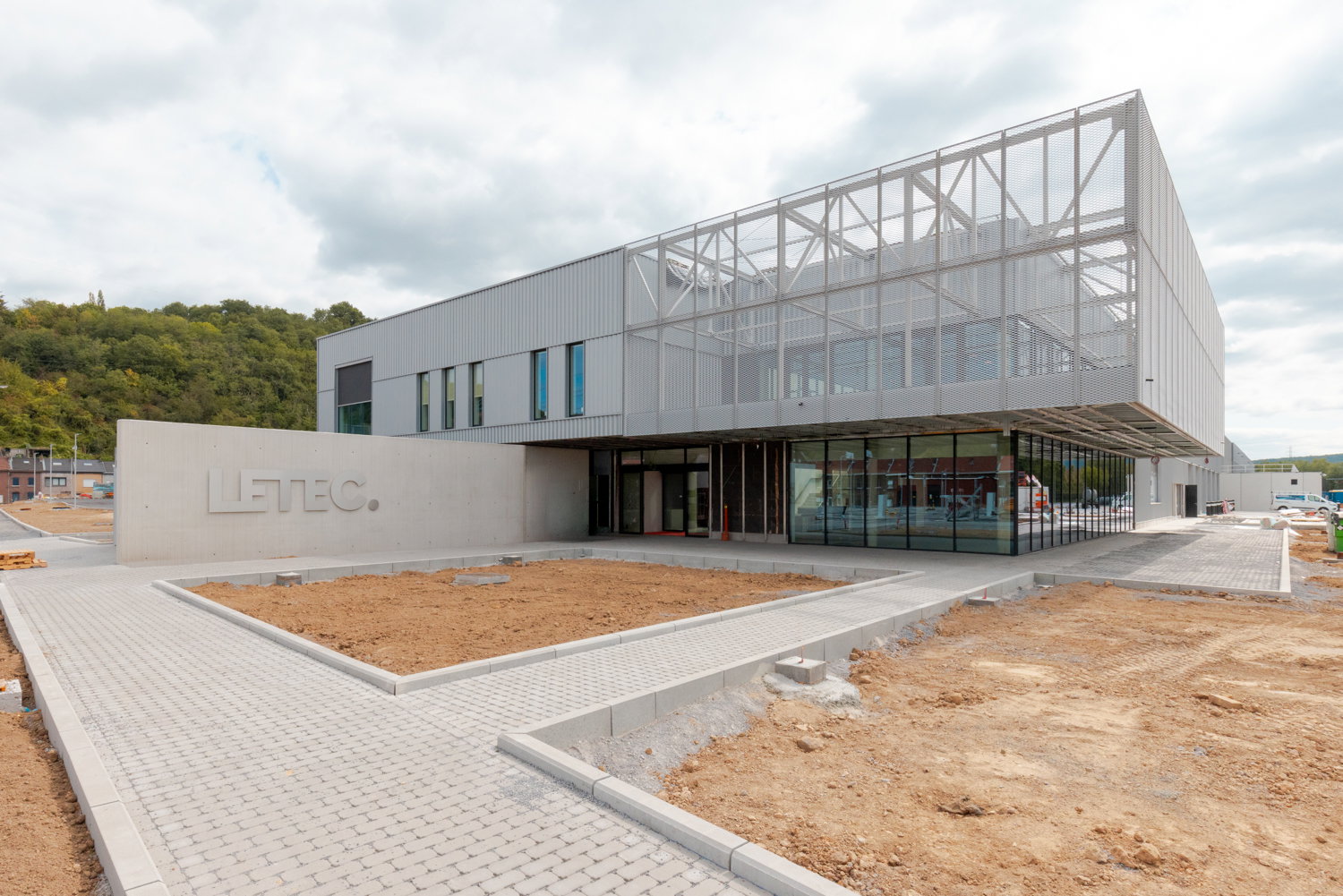
The Mobi’Park built in Tilleur was also created through the reuse of a former industrial site. The roughly 90,000-square-metre former Chimeuse industrial area had stood unused for a long time, while TEC’s nearby bus garage in Jemeppe-sur-Meuse was increasingly unable to meet the requirements of modern operation. The new depot will also replace that old garage, while becoming TEC’s second-largest bus operating site in Wallonia by size. Mobi’Park was designed from the outset for the large-scale servicing of battery-electric buses, and its charging, maintenance and energy infrastructure is accordingly based on the most advanced technological solutions currently available.
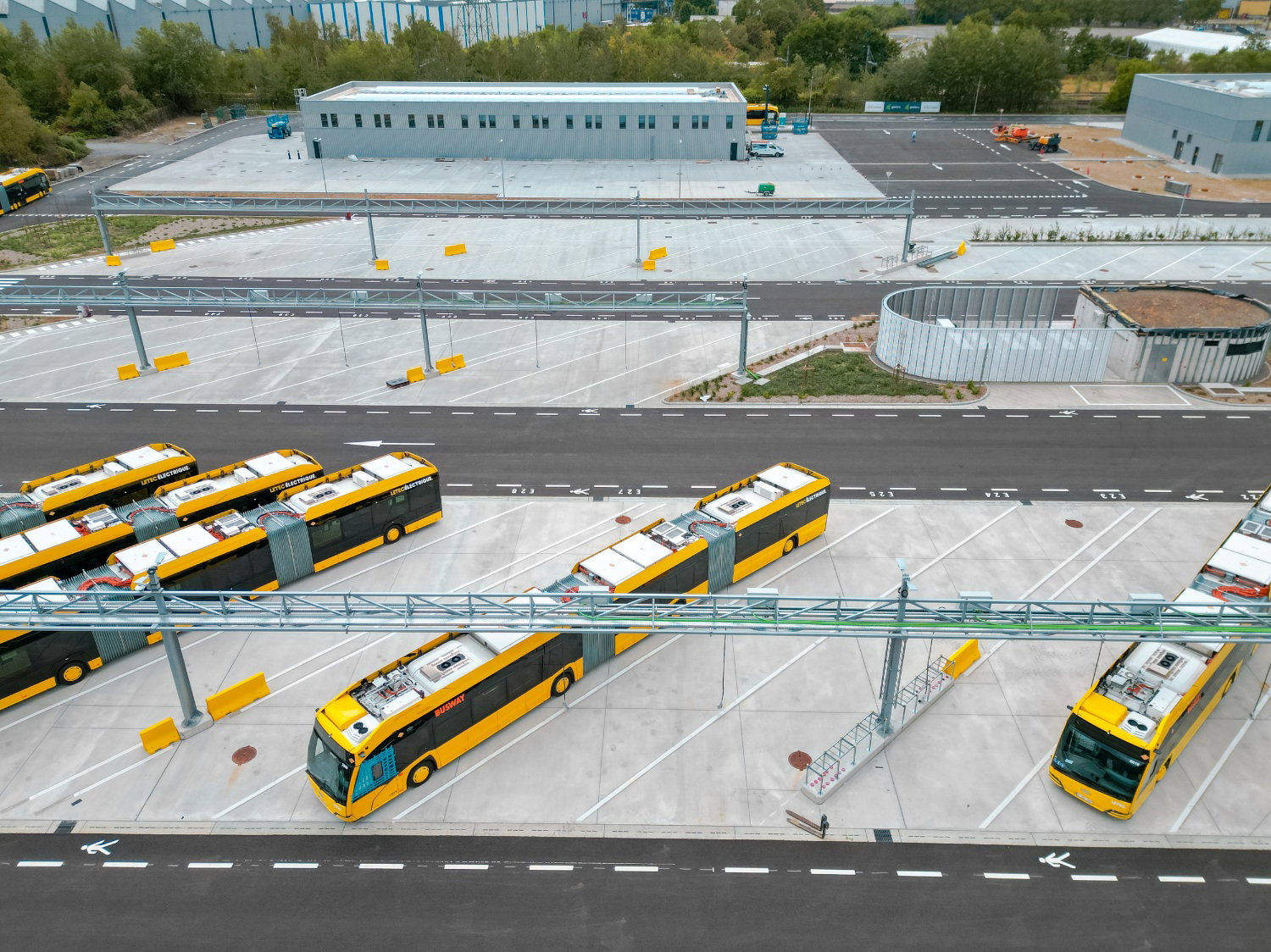
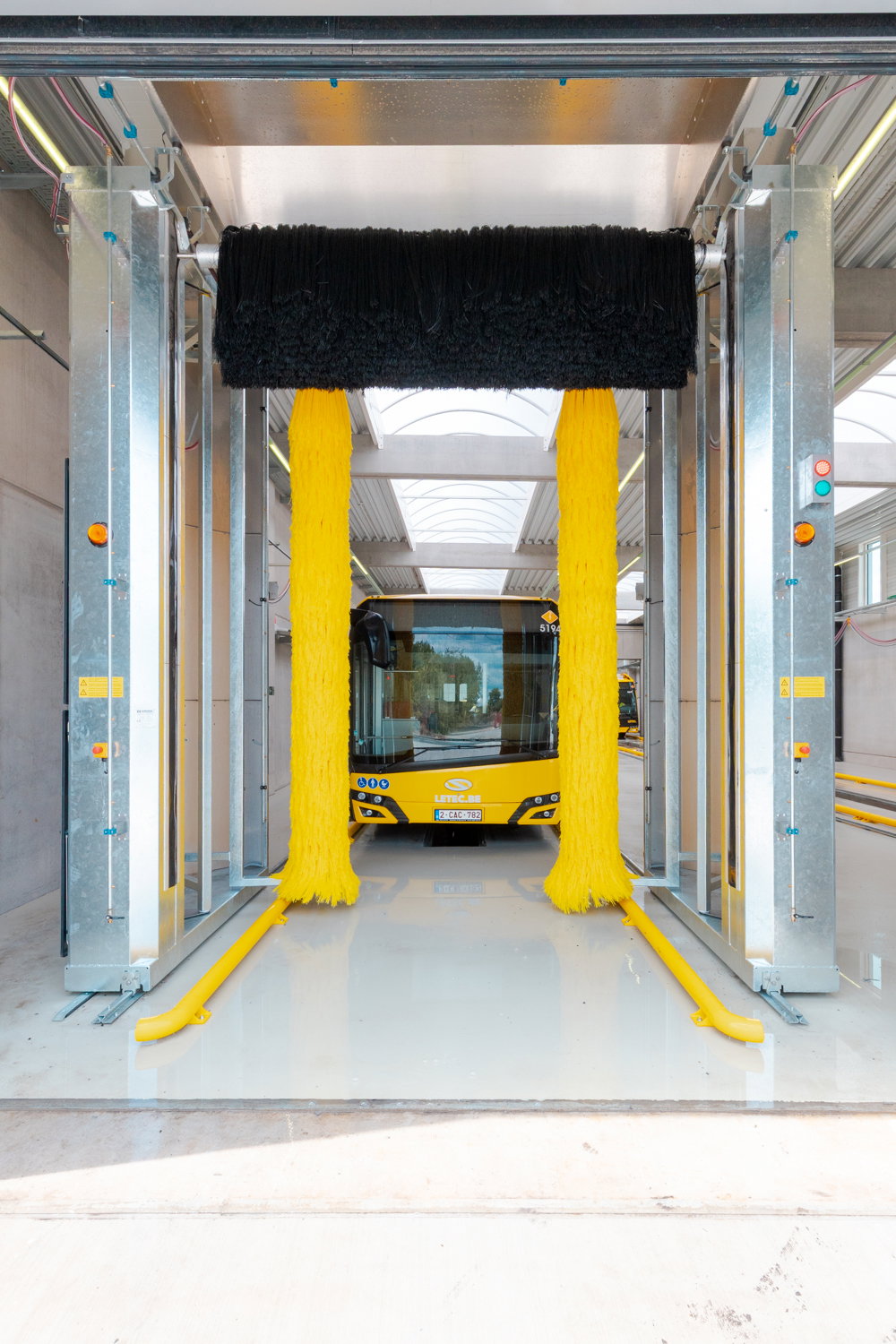
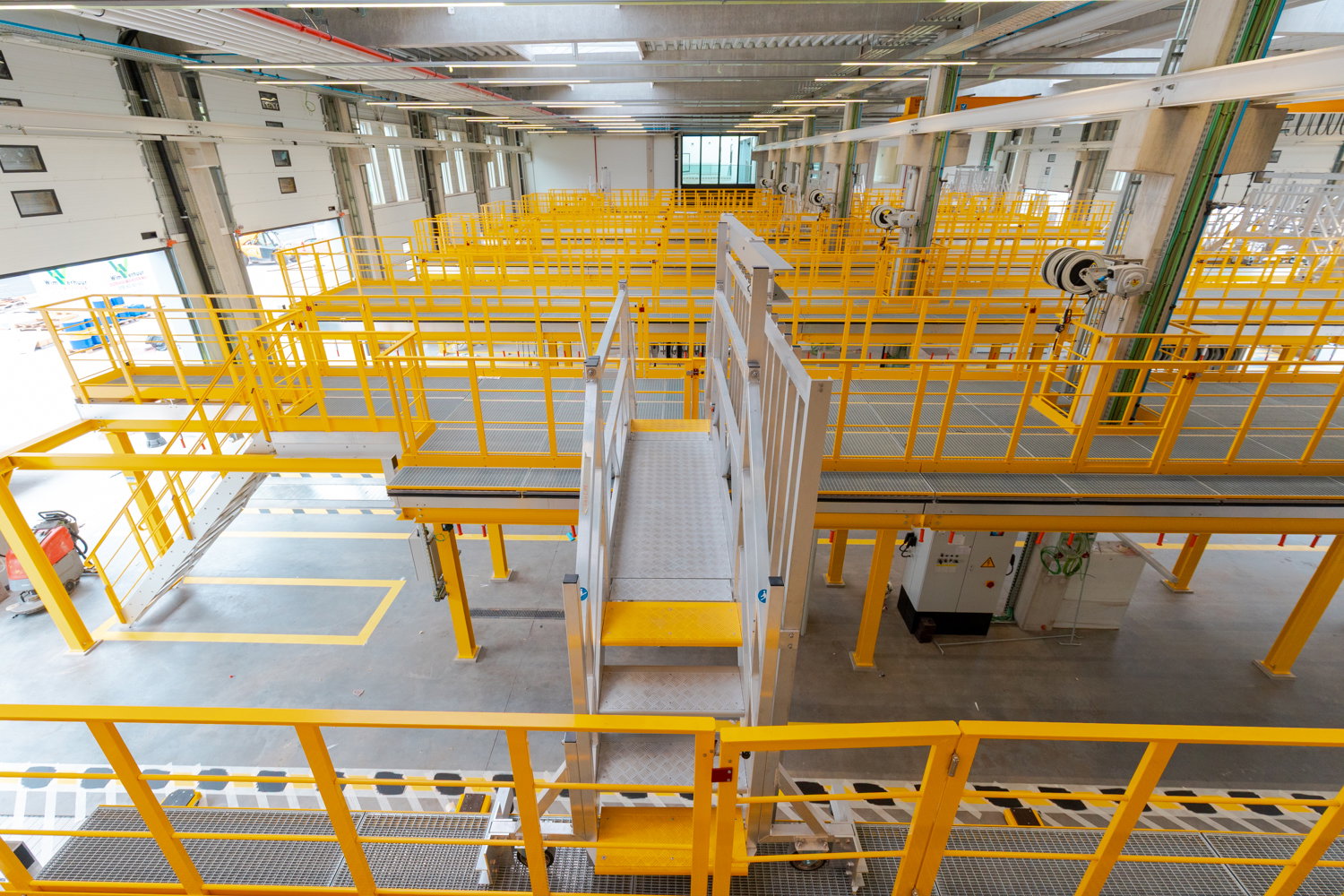
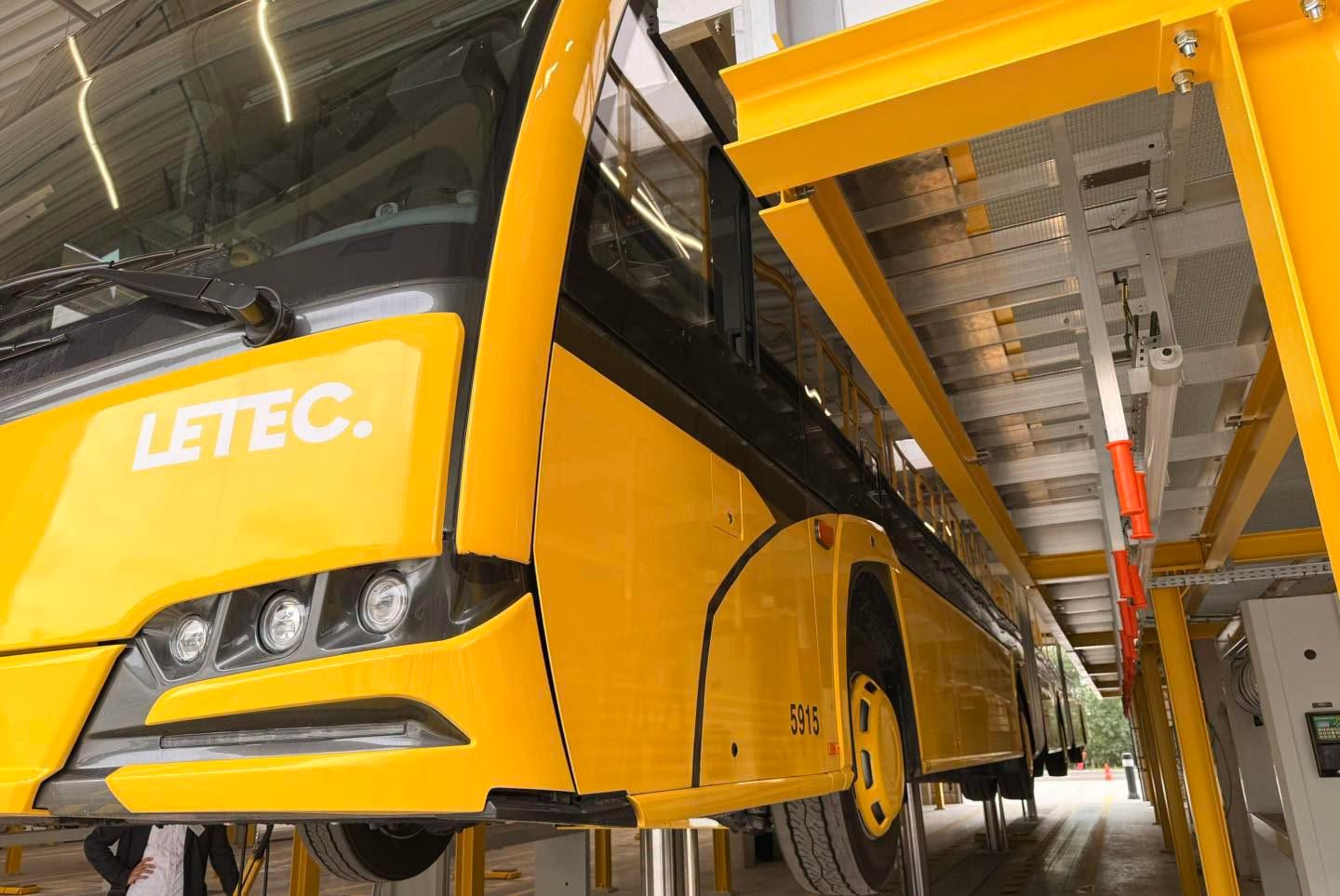
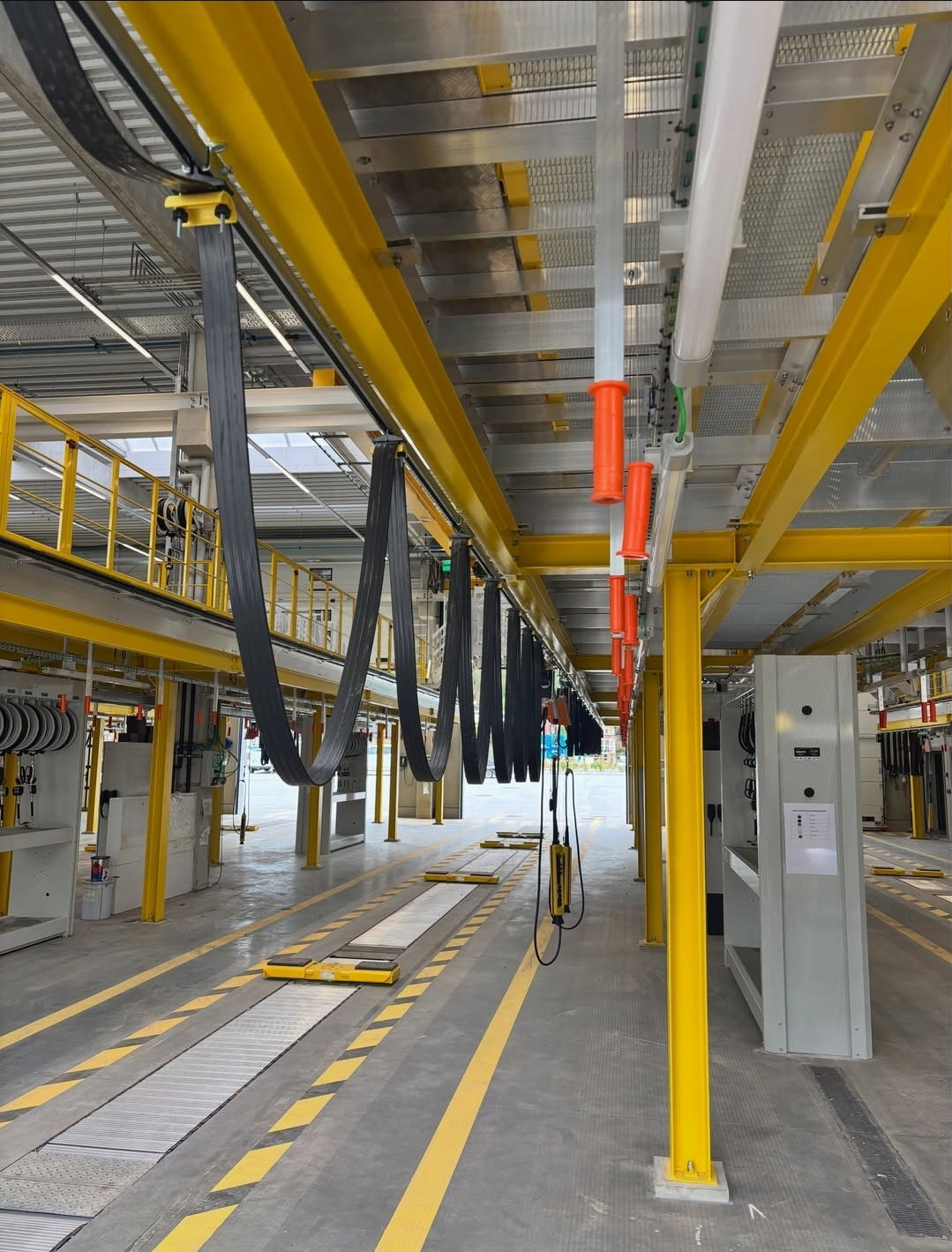
Construction began in early 2025 and has reached its current pre-commissioning stage in roughly a year and a half. As part of the project, six main buildings were created: separate operating and administrative buildings, a maintenance centre, a technical inspection and washing hall, two buildings specifically related to the energy supply of electric buses, and a central electrical facility needed to serve the high-capacity power network. The maintenance areas were designed from the outset so that vehicles considerably longer than conventional buses, and fitted with two articulation joints, can be moved and repaired safely.
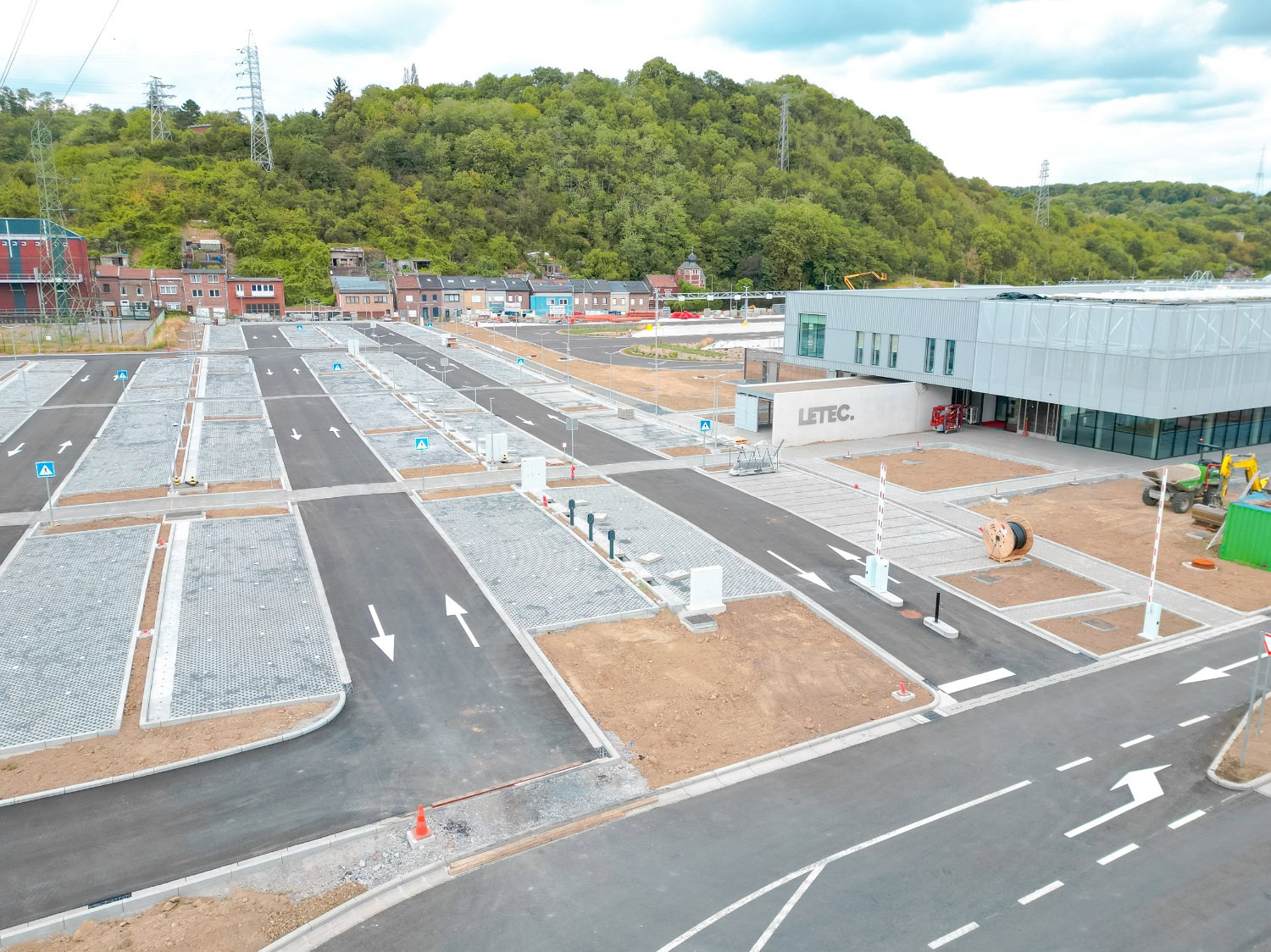
The scale of the electrical infrastructure clearly shows that this is not simply a conventional garage supplemented with a few charging points. Mobi’Park has received 38 bus chargers, supplied by five high-voltage switching stations. The depot’s total electrical capacity is 18 MVA, of which 15 MVA is available directly for charging electric vehicles. This is already an order of magnitude larger than the infrastructure required by a small electric trial fleet, and enables Mobi’Park to accommodate additional electric buses arriving in the coming years.
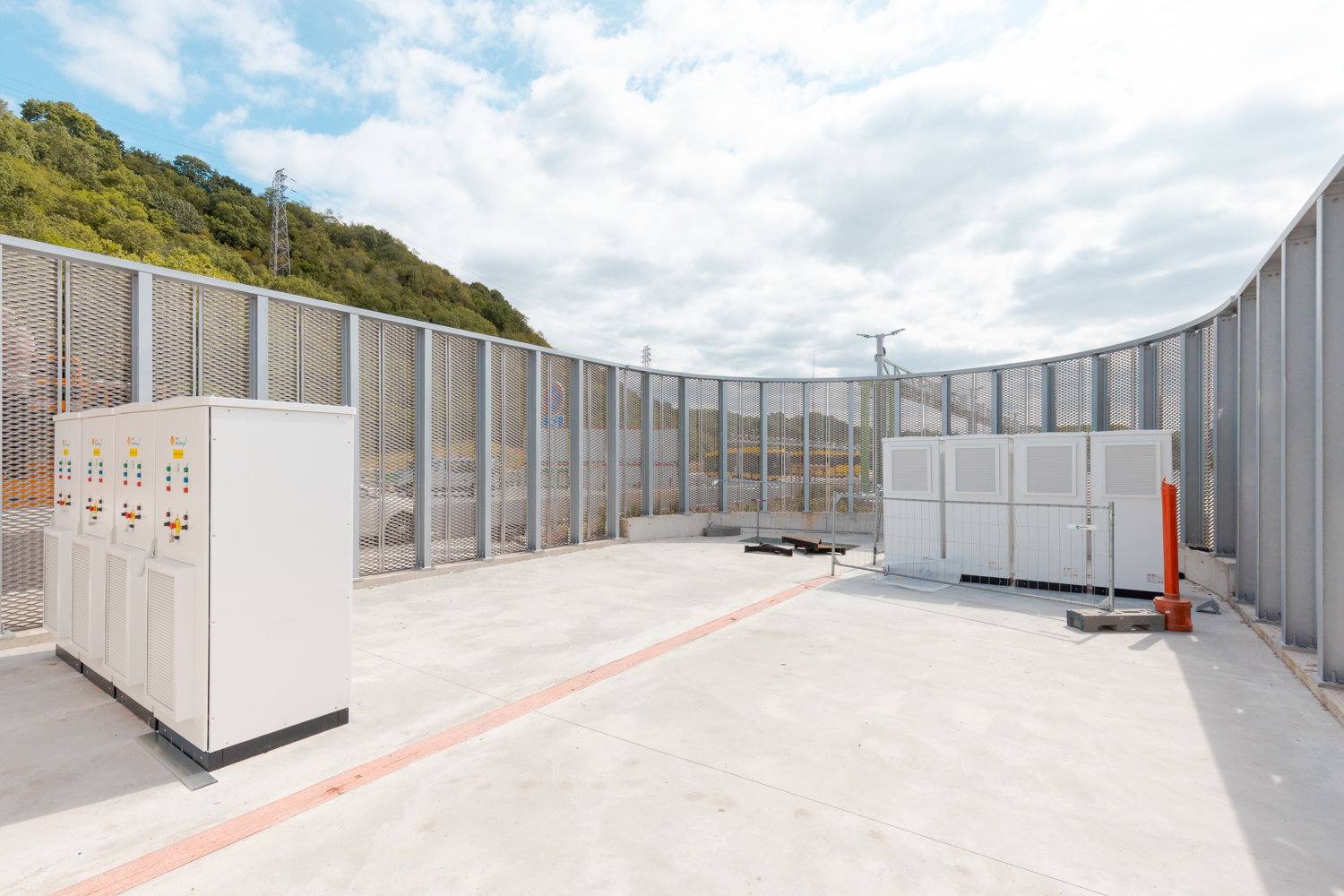
Part of the electricity demand will be generated on site. According to TEC, the photovoltaic system installed at the depot will produce nearly 570 MWh annually. Environmental considerations, however, do not stop at energy generation: a rainwater recovery system and four infiltration basins have also been built, while a landscaped surface car park was created instead of the multi-storey car park originally included in earlier plans. The transformation of the project’s surroundings also includes green spaces, pedestrian and cycling links, and a planned cycle expressway running alongside the railway. In the final design, 169 recommendations from the environmental impact study were taken into account, as were comments raised during public consultations.
Mobi’Park, however, is not solely a technical facility. On a daily basis it will be the workplace of nearly 500 employees – drivers, mechanics, vehicle preparation staff, instructors, traffic operations personnel and back-office staff. It is also home to TEC’s second-largest training centre in Wallonia, with two separate training areas. This is particularly significant because of the arrival of the bi-articulated vehicles: Tilleur is the site of the first driver training programme in Wallonia specifically preparing staff to drive the nearly 25-metre “tribus” buses.
Liège’s electric transition, however, did not begin with the bi-articulated Solaris buses. For the opening of BUSWAY B2 on 15 September 2025, TEC put 14 Mercedes-Benz eCitaro G articulated electric buses into service. The first unit arrived at the Robermont depot on 22 May 2025, and the full 14-vehicle batch was delivered before the launch of the new rapid bus line. Daimler Buses also supplied plug-in chargers, digital tools and technical support for the procurement.
The role of the eCitaro G buses was partly transitional from the outset. The B2 Guillemins–Sart-Tilman–CHU–Botanique route had already been designed for the higher-capacity bi-articulated vehicles due to arrive later, but until the Solaris buses – and, above all, the Mobi’Park needed to support them – were ready, battery-electric vehicles were required to launch the BUSWAY service in autumn 2025. The 14 eCitaro G buses therefore effectively preceded the intended final bi-articulated fleet by about a year. With the articulated Mercedes vehicles, the B2 currently offers 5–10-minute headways at peak times and operates from early morning until late evening; when the line opened, TEC expected around 8,000 passengers per day.
The arrival of the Solaris buses does not mean the barely one-year-old eCitaros will become surplus to requirements. As the Liège BUSWAY network is expanded further, these vehicles can continue their careers on other routes, while the 24.7-metre bi-articulated buses take over capacity on the B2. In other words, the purchase of the Mercedes buses was the first step in a broader fleet strategy: they made it possible to launch electric BUSWAY operation before the specialised bi-articulated vehicles and the new depot sized for them were available.
The 18 Solaris buses now moved to Tilleur represent only the first phase of the bi-articulated fleet. Mobi’Park was designed from the outset so that, in addition to the B2, the vehicles for the future B3 BUSWAY can also be operated from here; according to TEC’s earlier plans, this could eventually involve a total of 28 bi-articulated electric buses. Further vehicles may arrive as the network continues to expand, although the B1 line is expected to be based at another new depot. The framework contract signed with Solaris allows for the call-off of up to 45 Urbino 24 electric buses in total.
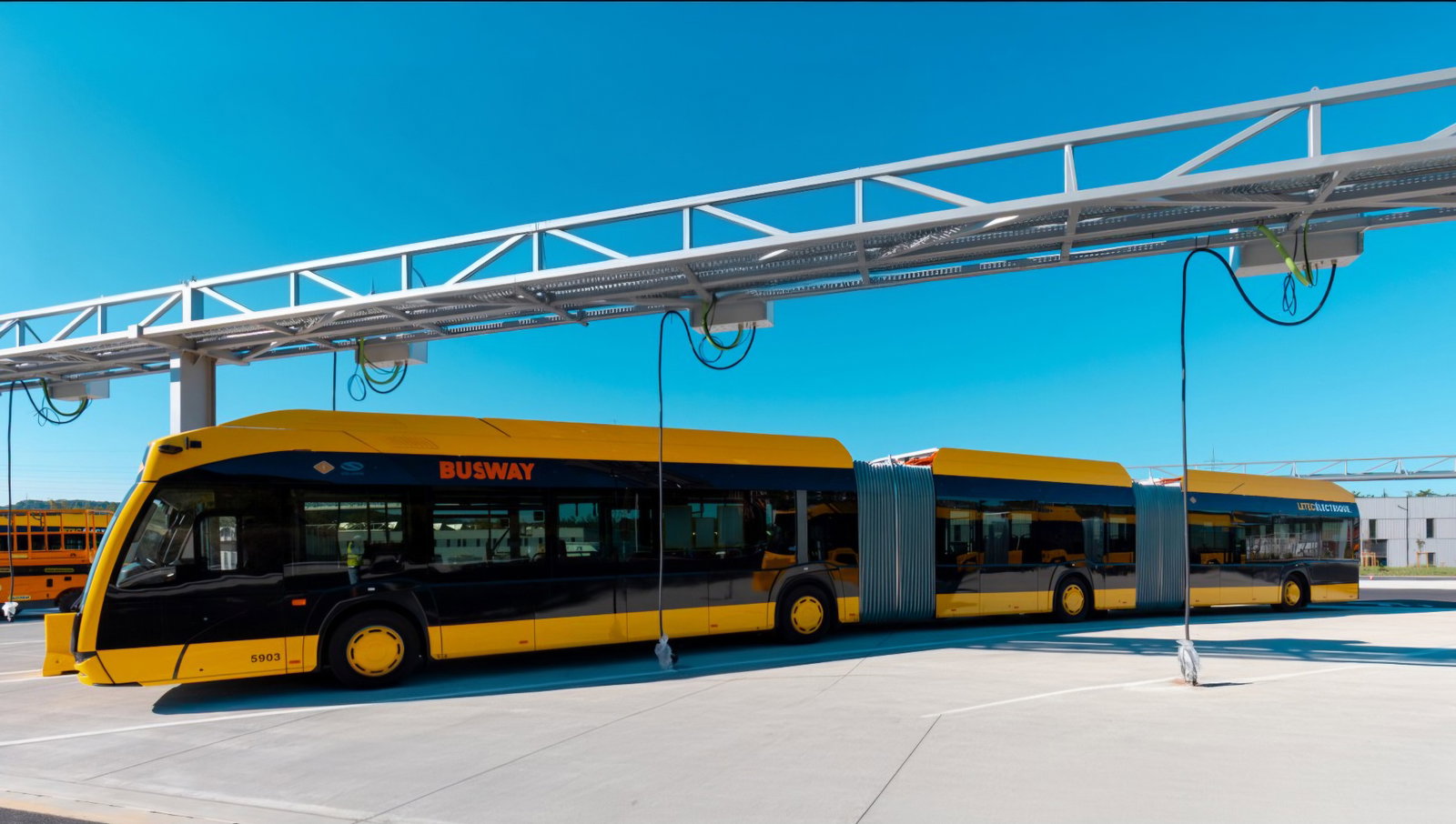
The 24.7-metre, five-door vehicles have an official capacity of up to 150 passengers, based on the passenger-capacity calculation standard used. Propulsion is provided by a total of four electric motors on two driven axles, with a combined rated output of 480 kW, while the energy storage system has a capacity of close to 800 kWh.
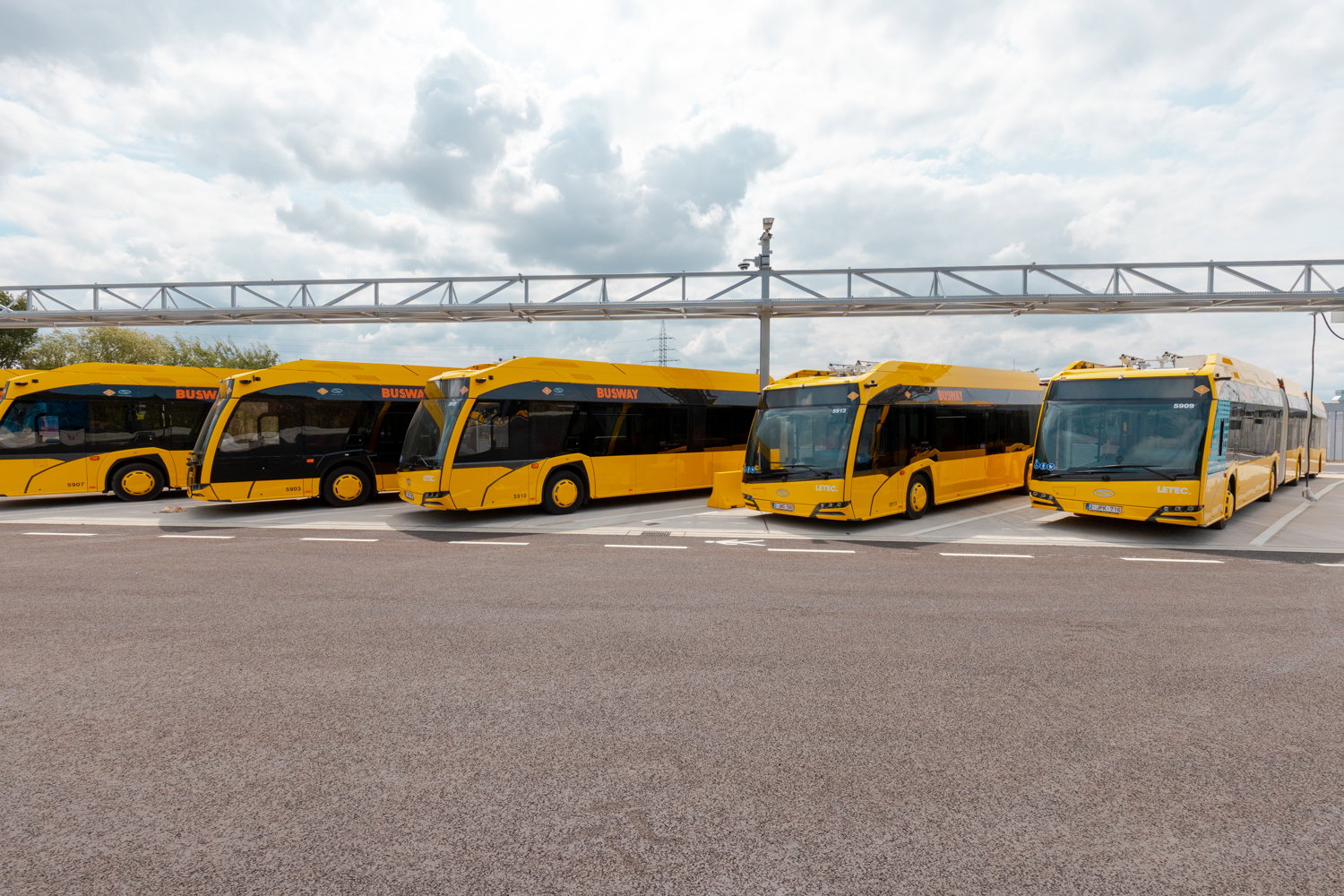
The completion of Mobi’Park’s construction work, however, does not mean the depot will operate at full capacity overnight. TEC is currently carrying out the so-called operationalisation phase: validation of the electrical and charging infrastructure is under way, operating processes are being fine-tuned, and drivers and technical staff are being trained. According to the company’s plans, Mobi’Park will reach full operating capacity by the autumn. The next truly visible step, however, could come as early as 18 September. That is when the gradual entry into service of the 18 bi-articulated Solaris buses in Liège will begin. The vehicles will take the leading role on BUSWAY B2, bringing together the three elements of the project that have so far been developed in parallel: the high-capacity electric vehicle fleet, the bus rapid transit infrastructure built for it, and the new Mobi’Park designed specifically for the requirements of the electric era.