![Magyarbusz [Info]](/mbi/header-logo.png)
Leipzig to double its electric bus fleet
 Ludányi József
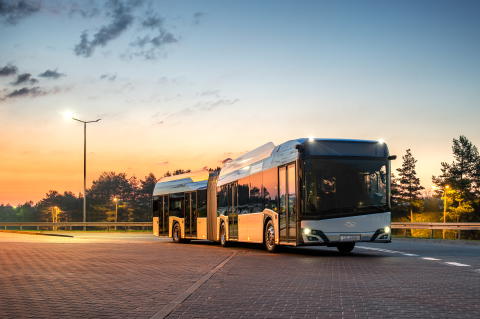
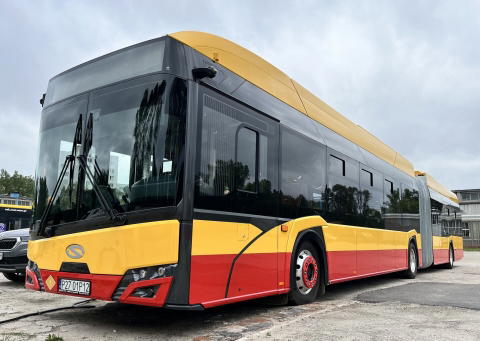
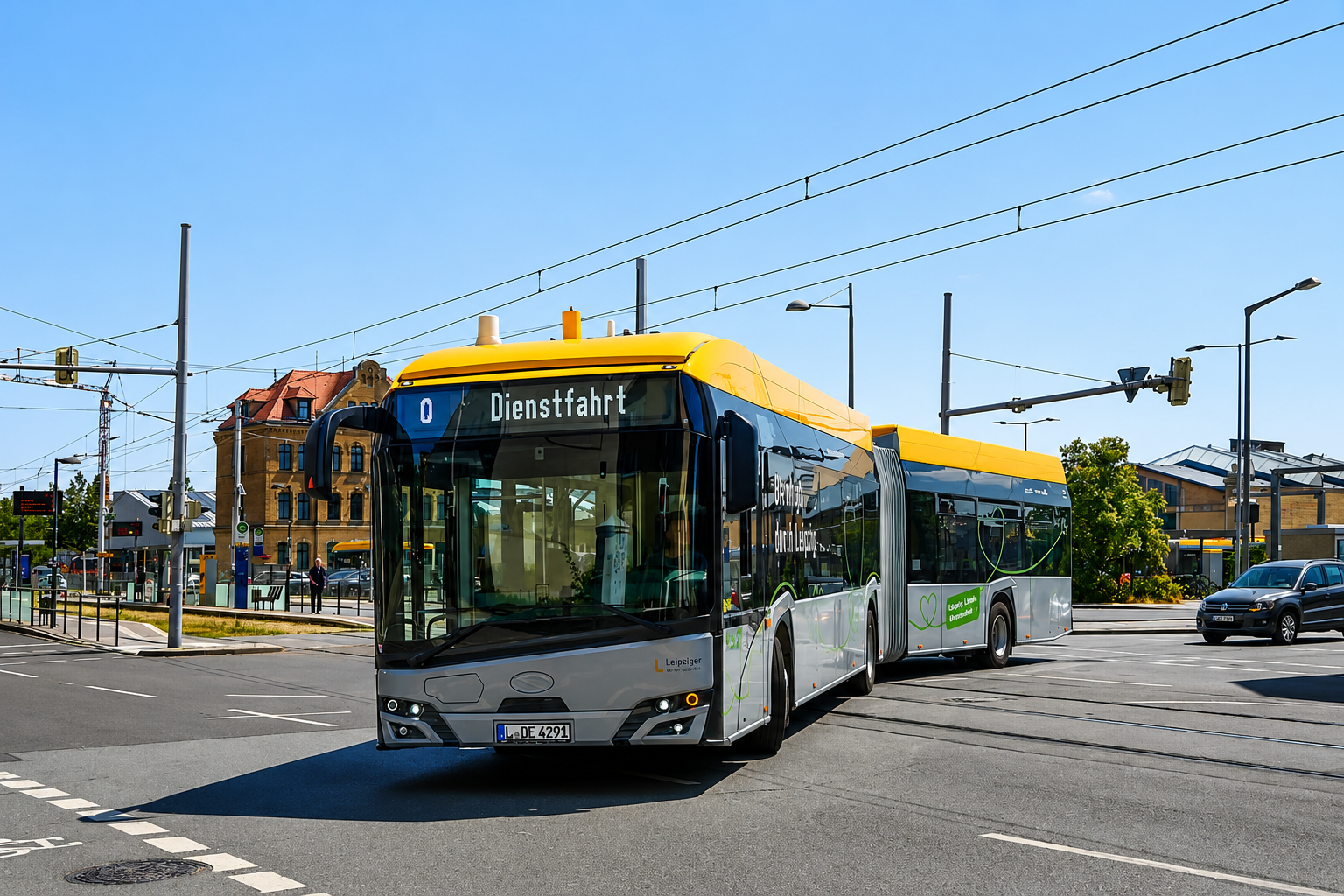
Leipziger Verkehrsbetriebe (LVB) has reached a significant milestone in its fleet electrification programme: the transport operator has taken delivery of the first Solaris Urbino 18 electric articulated bus from a 40-vehicle order that will increase the number of electric buses in the city from 38 to 78 in the near future, effectively doubling the fleet. As a result, the share of electric buses within the total bus fleet will rise from the current roughly 20% to more than 40%. The agreement with the Polish manufacturer also allows LVB to order a further 100 articulated electric buses as an option, which it can exercise until the end of 2029.
The city’s efforts to electrify public transport date back to the period between 2008 and 2013. At that time, Leipzig also examined the possibility of reintroducing trolleybus operation, primarily through the use of trolleybuses capable of off-wire running on bus route 60. LVB even launched an official campaign to support the project, but the ambitious plan ultimately failed to materialise, mainly due to a lack of the necessary financial resources. The transport operator subsequently first reduced emissions with hybrid buses, then from 2016 began in-service testing of battery-electric buses. Building on the experience gained, it launched its first large-scale electric bus tender in 2020, which — to the surprise of many — was won by the Dutch manufacturer VDL. As a result of the tender, a total of 21 12-metre Citea SLF-120 Electric buses and 17 articulated Citea SLFA-180 Electric buses entered service between December 2020 and August 2023; these still make up Leipzig’s entire 38-strong electric bus fleet today.
The next step is the procurement of 40 articulated Solaris Urbino 18 electric buses. For the project, Leipzig’s transport operator received almost €13.5 million in funding from the state of Saxony last year, after which Solaris Bus & Coach won the order following an EU-wide, multi-stage public procurement procedure. Six manufacturers — not publicly named — submitted bids for both lots of the tender, with Solaris offering the most advantageous proposal overall. The bids were assessed not only on purchase price and maintenance costs, but also on guaranteed range, maximum charging power, spare parts prices, the design of the air-conditioning and heating system, and the sustainable sourcing of the batteries. The value of the 40-vehicle base order is €32.3 million.
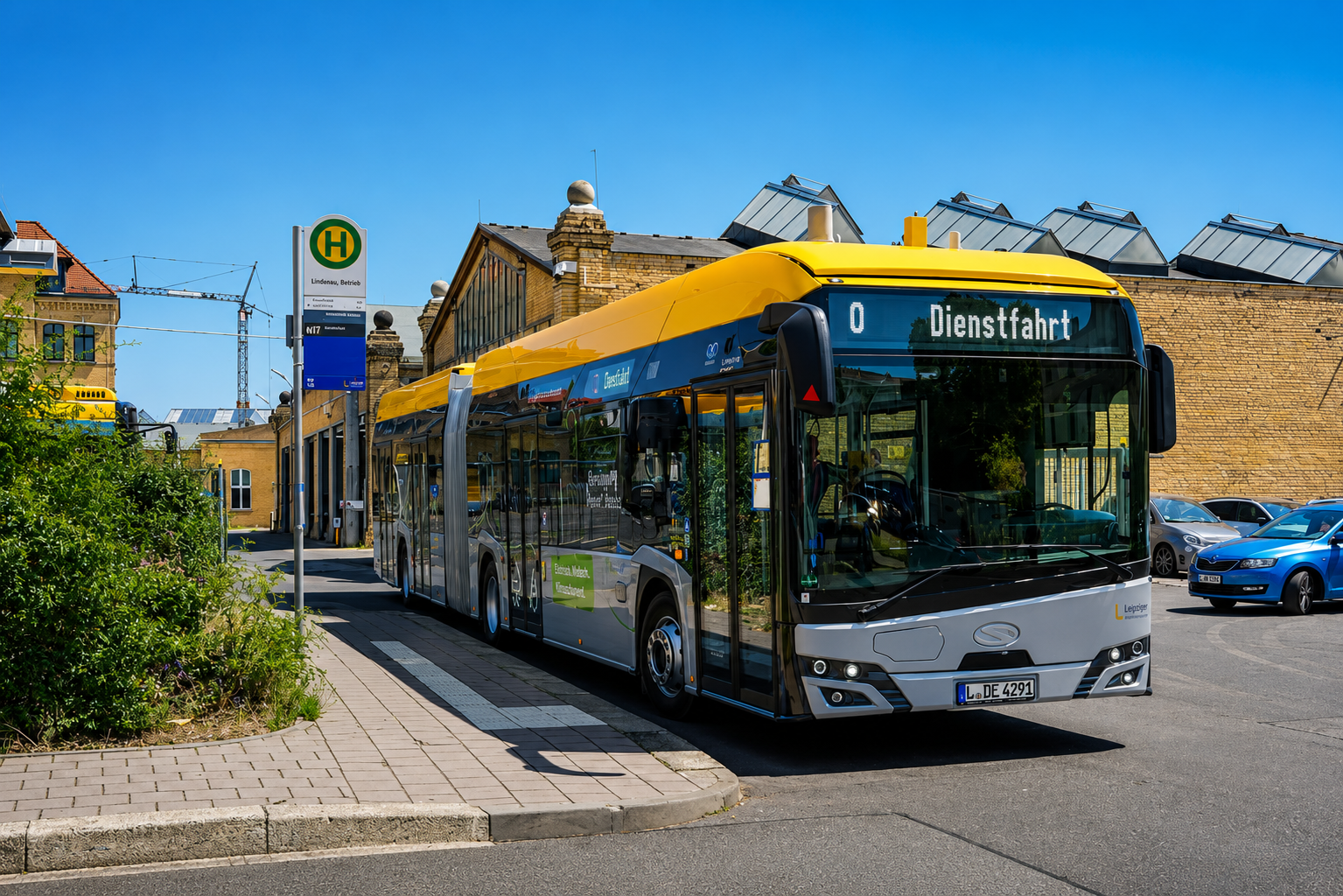
The contract is divided into two lots: the first covers the delivery of 15 articulated electric buses and the second 25, while both parts also allow for the call-off of a further 50 buses each until the end of 2029. The first Solaris Urbino 18 electric has meanwhile already arrived at LVB’s depot, where it will undergo the necessary technical acceptance procedures, commissioning processes and preparations related to staff training before entering service. Delivery of the first batch of 15 vehicles will take place in the second half of 2026, with the buses scheduled to enter service gradually from the November timetable change. Delivery of the remaining 25 buses is planned for mid-2027.
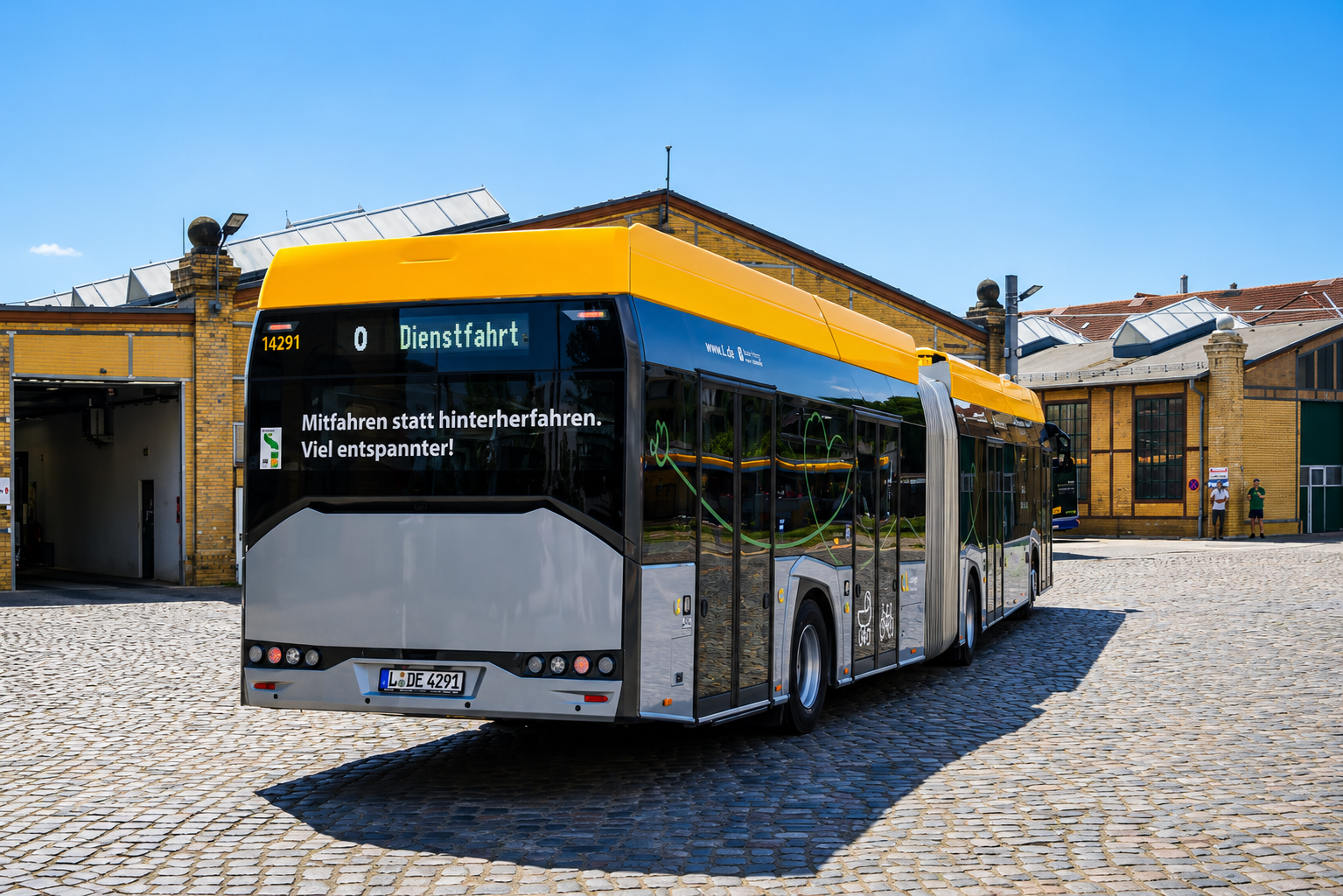
According to the transport operator’s latest statement, the buses, with an unladen weight of 20.8 tonnes, will be supplied by Solaris with a battery pack offering a total capacity of 640 kWh (previously communicated as 576 kWh), with a declared range of around 270 kilometres on a single charge. According to the manufacturer, this range can be maintained under the planned operating conditions, while fast opportunity charging en route will also be available during daily operation if required.
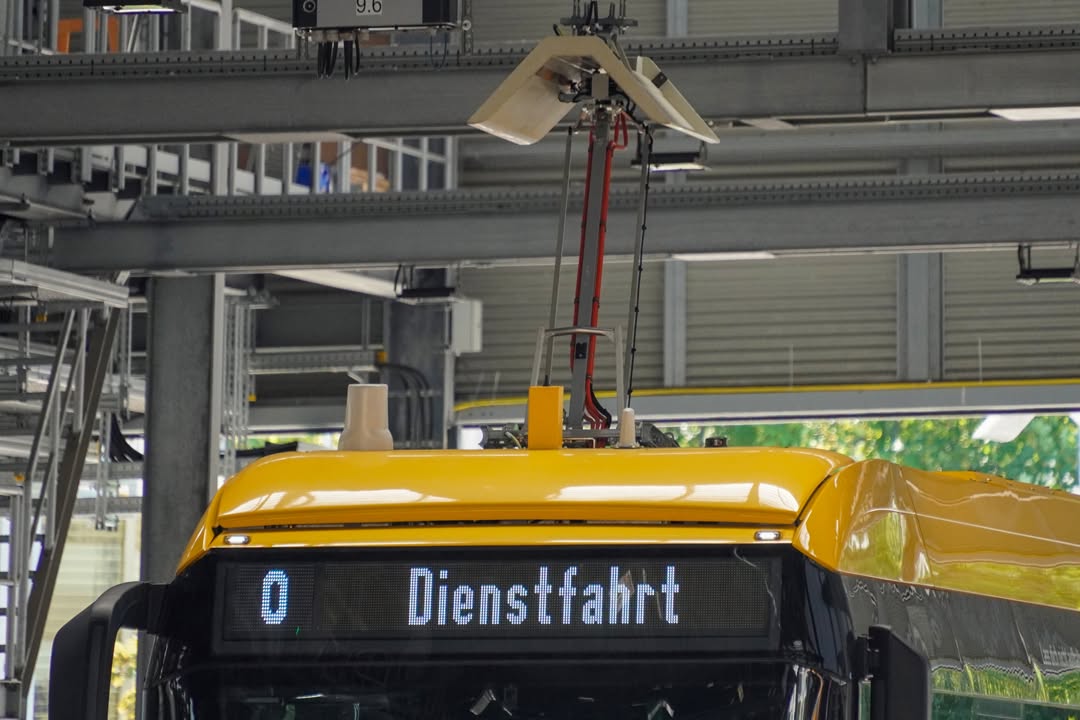
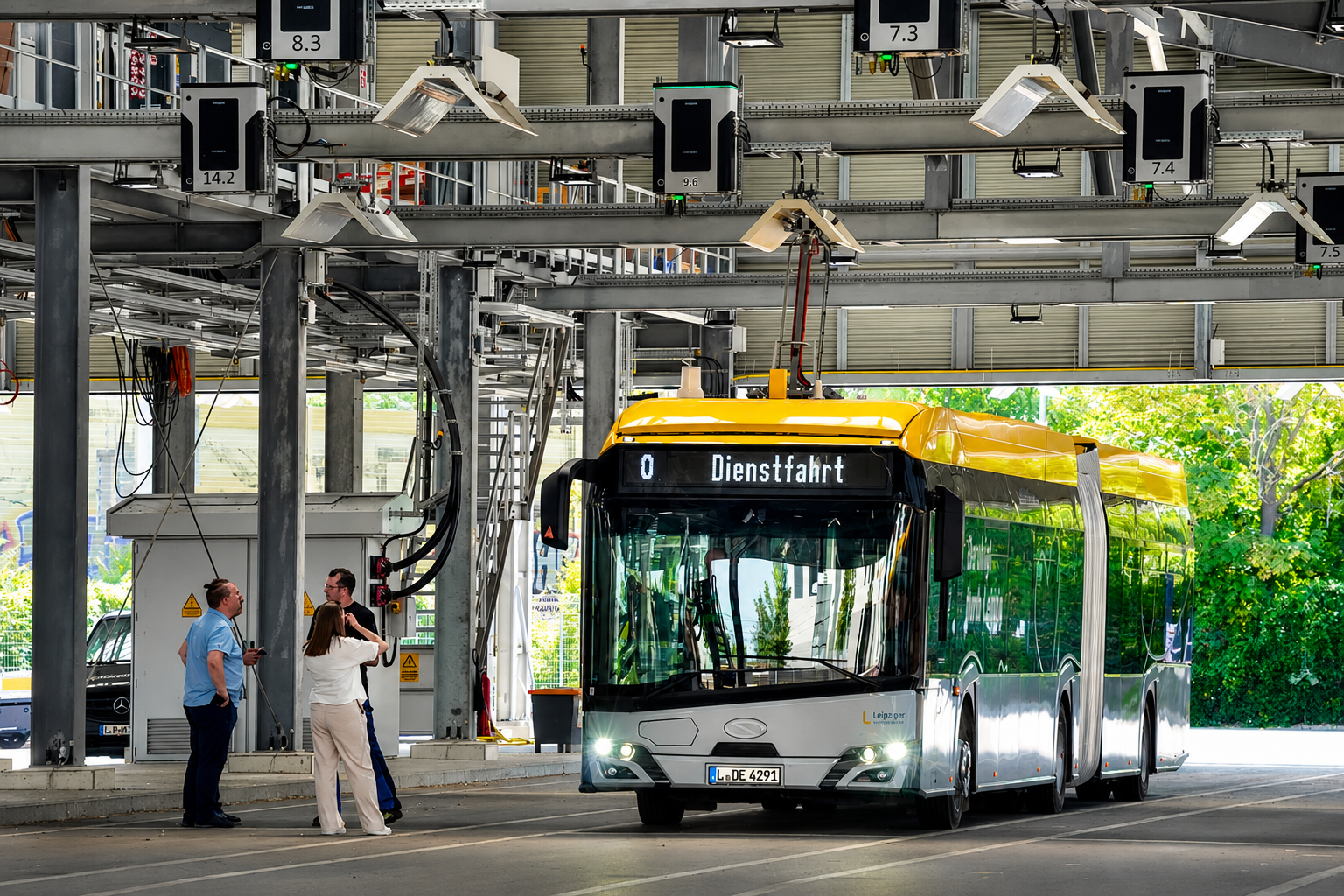
The vehicles will arrive with the four-pole roof-mounted pantograph fast-charging system already proven at Leipzig’s transport operator, while propulsion is provided by a 240 kW TSA central electric motor installed beneath the rear seats. The new Solaris buses will first replace the last diesel vehicles on bus routes 72 and 73. Regular passenger service is scheduled to begin with the November timetable change, after which the electric buses will also appear on routes 70, 79 and 80 as the charging infrastructure is expanded.
Photos: BimmelBus Leipzig