![Magyarbusz [Info]](/mbi/header-logo.png)
Ebusco could become insolvent without further financing
 Ludányi József
Although Ebusco significantly reduced its losses and costs in the first half of this year, its financial position remains extremely fragile. In its half-year report published on 14 August, the Dutch electric bus manufacturer itself warns that if it fails to secure the short-term liquidity needed for operations and longer-term working-capital financing, it could become insolvent. The situation is further complicated by the fact that, following the termination of the Potsdam transport operator’s contract for 23 buses, the company’s order book is no longer sufficient to fully cover its operating needs for the next twelve months.
Despite the improving financial indicators, there is still no clear sign that the turnaround effort, which has been dragging on for years, is nearing its end. In Ebusco’s bus business, there has so far been no meaningful breakthrough: in recent months, no new order of sufficient volume has arrived to offset the contracts lost, while several customers have cancelled previous orders in whole or in part. Yet only a few years ago, the company had a particularly strong order book: at the end of 2022, it had 1,474 buses on its books including options, and in the first half of 2024 the total already exceeded 1,600 electric buses. The production ramp-up expected at the time, however, failed to materialise, and severe delivery problems eventually pushed the company into a deep crisis. Since then, the order book has shrunk radically, to just 118 units including options, not primarily because vehicles were delivered, but largely because orders previously regarded as secured have been removed from it – the termination of the 23-bus contract in Potsdam is only the latest example. All this is happening while the company continues to depend on fresh external financing to maintain its operations and execute its turnaround.
According to the figures now published, Ebusco generated revenue of €22 million in the first six months of 2026, compared with €28.2 million a year earlier. The decline was primarily due to a drastic fall in bus deliveries: while 47 buses were delivered in the first half of 2025, only 16 were handed over this year. At the same time, however, gross profit turned from a €6.2 million loss last year into a €6.1 million profit, while the EBITDA loss narrowed from €36.2 million to €17.9 million. The net loss for the half-year came to €24.9 million, also a significant improvement compared with the €46.1 million loss recorded a year earlier.
The improved earnings figures are mainly the result of Ebusco’s radical restructuring. The company has essentially completed its transition from in-house manufacturing to a model based on external contract manufacturers, while continuing to cut costs and headcount. Operating expenses fell by 19.8 percent in the first half, from €34.4 million to €27.6 million, while the full-time workforce shrank from 282 at the end of last year to 248 by the end of June. Ebusco’s net debt – excluding lease liabilities – also decreased substantially, from €46.3 million at the end of June 2025 to €26.1 million.
The other side of the balance sheet, however, is far more worrying. Ebusco’s cash position fell from €7.4 million at the end of 2025 to just €2.1 million by the end of June, while over the same period its equity moved from a positive €3.3 million into negative territory at minus €14.8 million. The company therefore continues to operate under severe liquidity constraints.
Even the €27.4 million working-capital package announced in April has not been able to change this materially. Ebusco has now stated that the structure was largely non-cash in nature, while support expected from one of its Asian supply-chain partners has also been delayed. According to the company, the continuing working-capital shortfall was precisely what slowed production at its contract manufacturers, contributing to the low delivery volumes in the first half.
The company is now working with one of its Asian partners to establish a letter-of-credit facility of around €30 million to support supplier financing, backed by a corporate guarantee from Ebusco’s strategic shareholder, China’s Gotion. The agreement, however, has not yet been finalised, and its entry into force still depends on the completion of definitive documentation. In parallel, Ebusco is also negotiating with one of its shareholders on a short-term liquidity solution.
The detailed financial section of the half-year report is even more explicit. According to Ebusco, the continuation of the company’s operations still requires a short-term liquidity injection and sustainable, longer-term working-capital financing. If these cannot be secured, the group may face insolvency. The company therefore itself identifies a “material uncertainty” regarding its ability to continue as a going concern.
Overdue trade payables are a particularly sensitive issue. The company is currently trying to manage these through negotiations and scheduled payments, but according to its own statement, the amount of overdue supplier liabilities significantly exceeds the liquidity available to it. Ebusco also warns that, as a result, a supplier could even initiate bankruptcy proceedings against it, which could trigger an insolvency event.
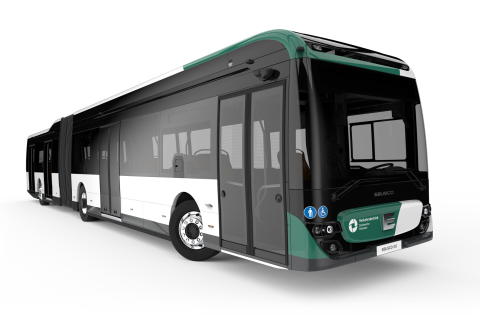
All this also casts the termination of the Potsdam contract in a particular light. ViP Verkehrsbetrieb Potsdam terminated its contract for the delivery of 23 Ebusco 3.0 buses – ten solo and thirteen articulated vehicles – after the handover of the buses suffered significant delays. Ebusco still does not accept the legality of the termination, but in its financial report it already calculates its order book without the Potsdam vehicles. Accordingly, of the 103 firm orders still recorded at the end of June, 80 remain; these are accompanied by a further 118 call-off orders. Of the remaining firm order book, nine are Ebusco 2.2 buses and 71 are Ebusco 3.0 vehicles.
Even more importantly, according to Ebusco’s own assessment, this firm order book of 80 units is no longer sufficient to fully cover the company’s operating needs for the next twelve months. The company therefore needs to secure new bus and energy orders in order to maintain the necessary production volume and generate sufficient operating cash flow. Ongoing tenders currently cover 173 buses, but the company itself emphasises that there is no guarantee these will turn into actual orders within the required timeframe.
Nevertheless, Ebusco still expects a significant ramp-up in the second half of the year. After 30 June, it delivered a further three buses, bringing this year’s deliveries to 19, and plans to deliver another 77 firmly ordered vehicles during the remainder of the year, mainly in the fourth quarter. Completion of the remaining order book will slip into the first quarter of 2027.
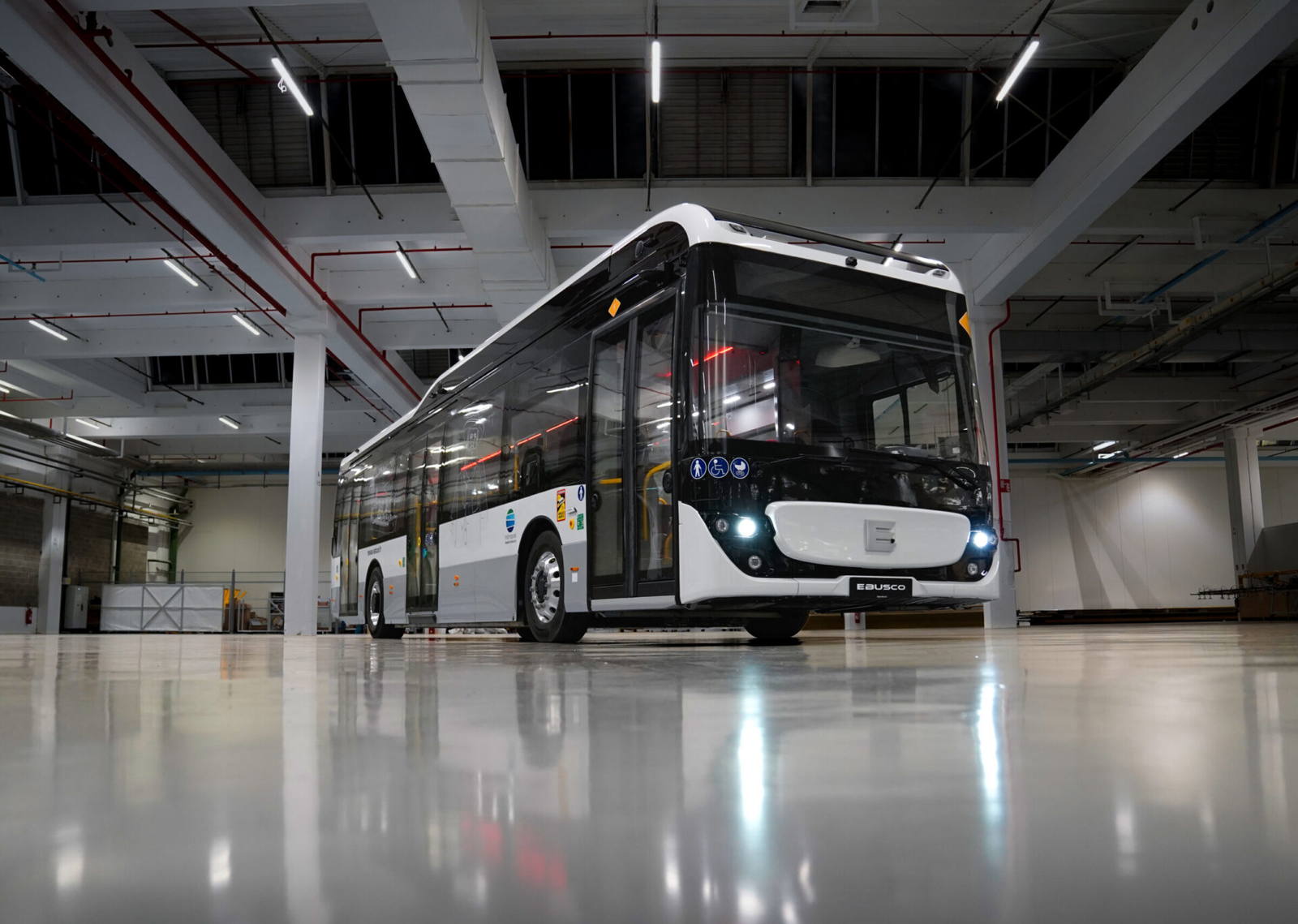
The first tangible result of the transformation of the production model became visible in July, when the first Ebusco 3.0 built at Golden Dragon’s Longhai plant in China was completed. The 18-metre articulated bus is part of a larger series being produced for a European customer. Final inspection of the vehicles and certain finishing work will continue to be carried out at Ebusco’s own sites in Deurne and Rouen.
Meanwhile, the Dutch company is also looking for opportunities in new markets: in August, it signed a local agency agreement in the United Arab Emirates, through which it may in future participate in local electric bus tenders. Ebusco refers to an initial market opportunity of around 230 vehicles, while stressing that there is no concrete order at this stage, and that participation will require prequalification and successful performance in public procurement procedures.
In addition to financial stabilisation, a change in the ownership structure of Ebusco’s bus business also remains on the agenda. The company is in talks with several strategic interested parties on a transaction under which an investor could acquire a controlling stake in the bus operations, while the creation of a joint venture is also on the table. The negotiations are still at a non-binding stage, so there is as yet no agreement on the structure, valuation or possible timing of any deal.
Ebusco has therefore visibly reduced its losses and cost base, while its shift to Chinese contract manufacturing is also intended to eliminate one of the biggest problems of its previous production model. At the same time, the latest half-year report makes clear that the company’s stabilisation is still far from complete. In the coming months, it must simultaneously accelerate bus deliveries significantly, win new orders, resolve its short-term liquidity position and finalise the roughly €30 million financing structure. Not only the pace of growth, but the company’s ability to continue operating now depends on the success of these efforts.