![Magyarbusz [Info] International](https://bunny-wp-pullzone-thjj7ocpga.b-cdn.net/wp-content/uploads/2025/06/cropped-cropped-mbi_sby_v1-scaled-1.png)

This article has been translated using AI-powered tools. While we strive for perfect accuracy, some nuances may differ from the original Hungarian version.
After maintaining a subdued presence in the European coach market since spring 2024, Volvo Buses is shifting up a gear again. The Swedish manufacturer has fundamentally reshaped its business model in the recent period: it ended the production of complete buses in Europe and focused its activities primarily on the development and manufacture of drivable chassis. The strategic transformation brought significant changes to the company’s operations and led to a temporary, or in some market segments even permanent, reduction in its presence. At the same time, market developments in recent years increasingly suggest that Volvo may once again have a favourable opportunity to partially regain its former positions.
The European intercity and coach market has also undergone a major transformation in recent years: while demand has gradually recovered after the pandemic, the supply side is still often unable to keep pace with it. Available manufacturing capacity is tight, partly because of the reduction in Volvo’s and Scania’s European bus production, and partly because several smaller industry players with stable customer bases have also disappeared from the market in the meantime. A good example is Sunsundegui, which, following Volvo’s restructuring, was supposed to play a key role in the licensed production of the Volvo 9700/9900 model pair. Instead, the Spanish bodybuilder’s financial difficulties and subsequent collapse further complicated Volvo’s efforts to stabilise its presence in the coach market. As a consequence of all this, most of the remaining independent bodybuilders have also become heavily loaded, while delivery times have lengthened significantly.
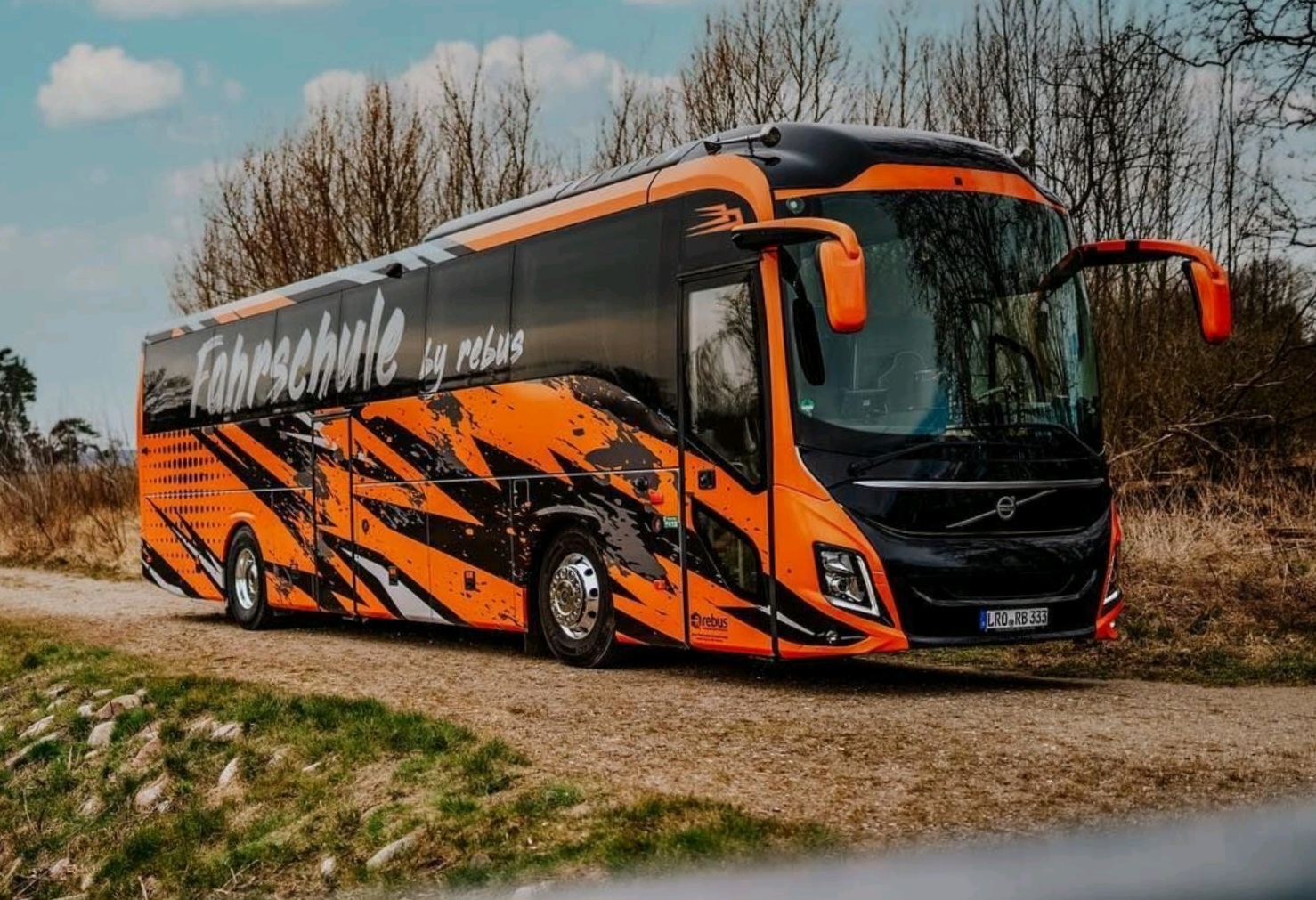
The Volvo 9700 is temporarily in short supply on the European market
In this changed environment, Volvo Buses is now seeking to strengthen its position again, having found itself in a particularly difficult situation in the coach segment after the closure of its plant in Wrocław, Poland, at least as far as the European market is concerned. While the company has already managed to rebuild its city and intercity bus range in Europe through its cooperation with Egypt’s MCV, its return to the long-distance segment is progressing more slowly for the time being. Nevertheless, the process has already begun, and as with the urban models, the help this time is not coming from Europe, but from the other side of the world: Mexico and Brazil are at the centre of Volvo’s new coach programme.
Volvo has begun to regain its former positions from several directions. After the planned cooperation with Sunsundegui, selected to continue European production of the Volvo 9700 and 9900 models, fell through, the Swedes were forced to look for an alternative solution. As a result, series production of the Volvo 9700 was transferred to the group’s Mexican plant — essentially back to where the design originally came from. From a technical and structural point of view, the current 9700, introduced in 2018, is closely related to the Volvo 9800 developed for the Mexican market, whose new generation was recently unveiled. However, the Volvo 9700 model intended for the European market will not, for the time being, adopt the design of the new Mexican generation. In its response to our portal’s enquiry, the manufacturer confirmed that the exterior design of the Volvo 9700 destined for Europe will remain largely unchanged and will continue to follow the styling already familiar from before. The necessary modifications are expected to be only minor, as Mexican production will also rely largely on the same suppliers and components that previously played a role in European production. Volvo will initially offer four basic variants on European markets, as the manufacturer’s aim for now is not to restore the full former model range, but to make the most in-demand versions quickly available on the market.
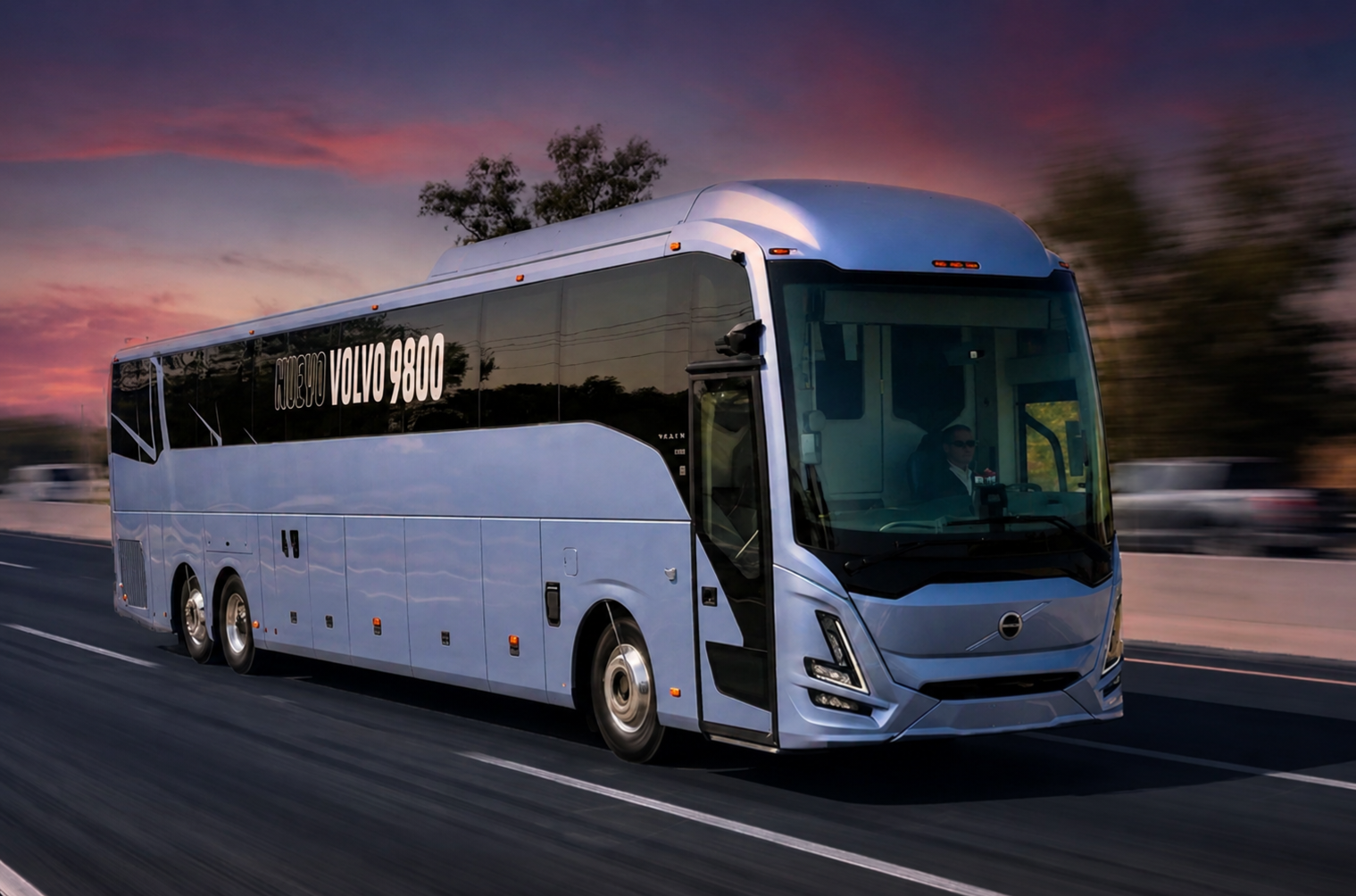
The design solutions of the new Volvo 9800 reserved for the Mexican market may indicate the direction the appearance of the renewed European Volvo 9700 could take
Relocating European production of the 9700 to Mexico will also significantly increase utilisation at the Tultitlán plant. The facility currently builds approximately three buses a day, so the planned export volume for the European market, around 200 units per year, is effectively equivalent to producing one additional vehicle per day. Compared with the current production level, this represents a capacity increase of nearly 25%.
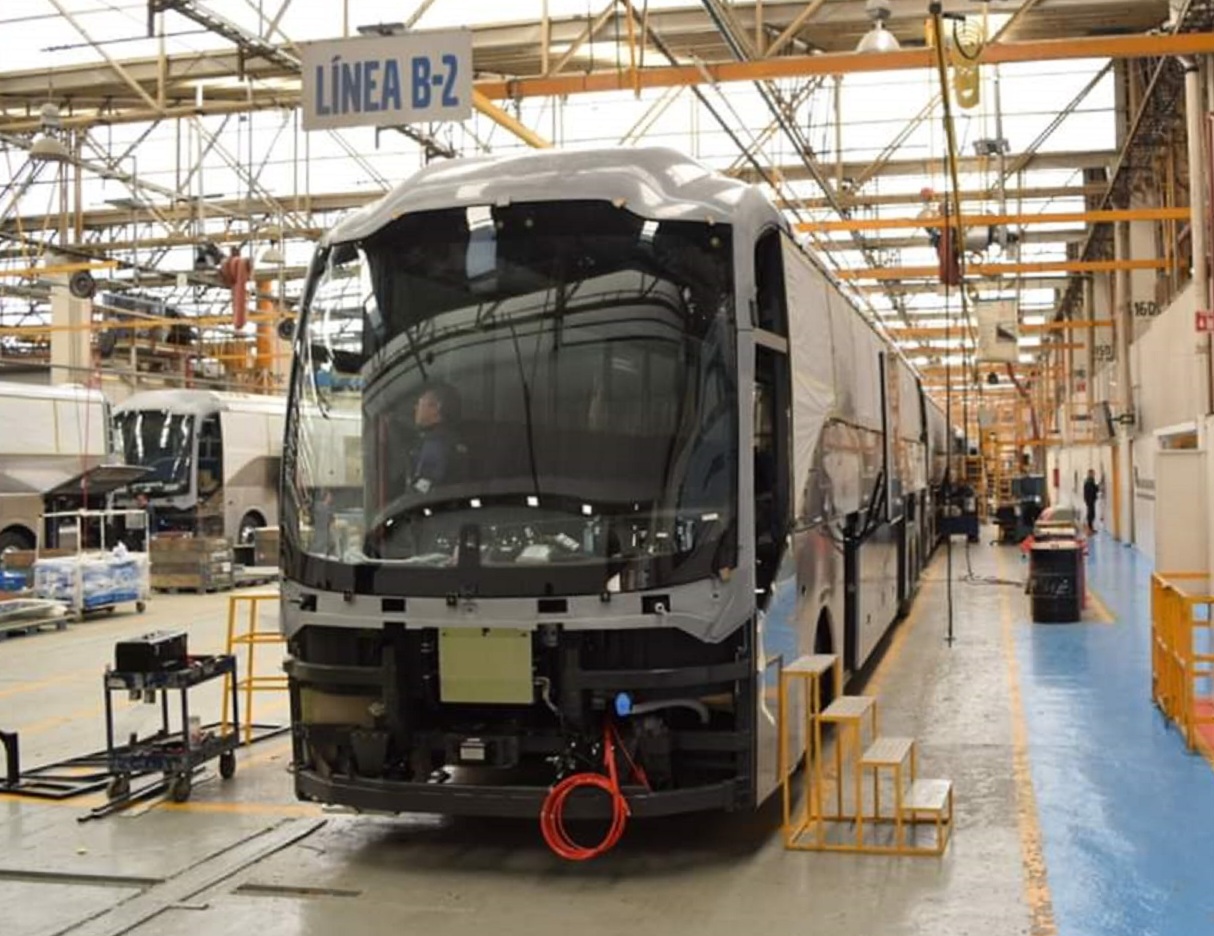
Volvo 9800 coaches for the Mexican market on one of the production lines at Volvo’s Tultitlán plant — series production of Volvo 9700 coaches for the European market will also start here soon
Volvo expects exports of the Mexico-built 9700s to begin as early as the end of the year. Around 30 buses are expected to arrive in Europe in the first year, after which production could be gradually ramped up to roughly 200 units annually. The main target markets for the vehicles will be Italy, France, the United Kingdom and the Nordic countries — markets where Volvo was previously regarded as a major player in the coach segment. In the Nordic countries, however, a specific situation remains in place, as the earlier, second-generation Volvo 9700 UpGrade model, built by Carrus Delta in Finland, as well as its further-developed diesel and electric versions, are still available through the Volvo network, so service to the region will not rely exclusively on vehicles arriving from Mexico.
Since the above-mentioned production volume for the Volvo 9700 intended for the European market is not an especially large number of units, Volvo is not basing its return to the coach market solely on this type. Instead, it is continuing to pursue a multi-pronged strategy: alongside the Volvo 9700 model family, developed and manufactured entirely in-house, it is also building on the Marcopolo partnership concluded in 2025. Under the cooperation, the Brazilian bodybuilder will also adapt the European version of the Paradiso G8 1200 coach to the Volvo B13R chassis, further expanding the Volvo coach offering in certain markets and operator segments.
In connection with Marcopolo’s European plans, this April we contacted the Brazilian manufacturer itself, in addition to Volvo Buses. José Luiz Moraes Goes, the company’s international and commercial director, informed our publication at the time that deliveries of the first buses complying with European regulations, developed under the programme jointly created with Volvo, are expected to begin in the first quarter of 2027. The vehicles will initially be built in Brazil.
According to Marcopolo, the project had by then already reached the final development and type-approval stage, and the first prototypes had been completed. Based on the company’s information, significant modifications were made to the body during development of the European version in order for the vehicle to meet the safety, comfort and design expectations of the Old Continent, as well as the new cybersecurity regulations. It was also emphasised that the version intended for the continent will not be a simple export variant, but a design specifically adapted to the needs of the European market.
In the first phase of the market launch, Marcopolo said it will focus primarily on the Italian and French markets, although in the longer term the vehicles could also appear in other southern and western European countries. No specific production volumes were disclosed, but the company stressed that the programme is planned for a gradual ramp-up, with capacity expansion aligned with the development of market demand. Marcopolo also did not rule out the possibility of cooperating with additional chassis manufacturers, while making it clear that the strategic partnership established with Volvo forms the basis for further strengthening its European presence.
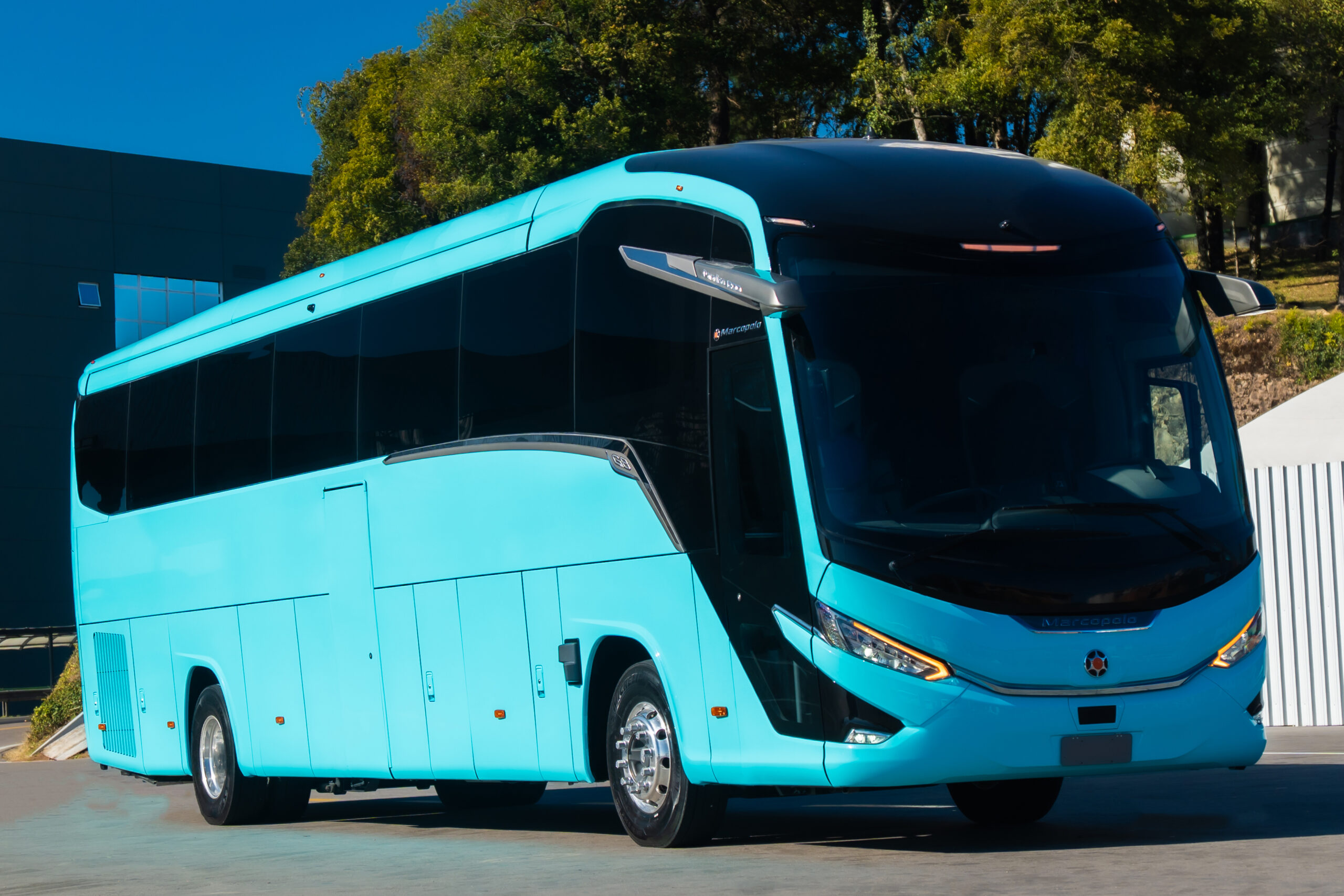
The Brazilian-market version of the Paradiso G8 1200 model intended for Europe, featuring a more raked front end
The common element of the models forming the basis of Volvo’s new coach strategy is that both the Mexico-built Volvo 9700s and the Marcopolo-bodied models produced in Brazil are based on the Swedish-built Volvo B13R drivable chassis. The chassis are shipped from Sweden to the Mexican and Brazilian assembly plants, where two- and three-axle bodies between 12 and 15 metres in length are fitted to them. The completed buses are then transported back to the European markets, while distribution and aftersales customer support will be provided by Volvo’s existing dealer and service network.
The cover image is an illustration.
This article has been translated using AI-powered tools. While we strive for perfect accuracy, some nuances may differ from the original Hungarian version.
 Related Articles


