![Magyarbusz [Info]](/mbi/header-logo.png)
From miners’ bus to national icon – Greyhound at 100
 Ludányi József
By now, the name of the American bus company Greyhound has become almost inseparable from the modern cultural myth of the United States. Its legendary coaches appear in songs and films, even if they were never considered truly glamorous. Quite the opposite: their appeal has always come from simplicity and affordability. Greyhound became the world’s largest and best-known intercity coach operator at a time when masses of the American working class still could not afford a car, while the railroad proved too expensive. In this way, the network became one of the most important means of crossing the vast country, enabling millions of people — from agricultural workers to jazz musicians — to find new homes and new work. Greyhound’s roots, too, are tied to the everyday lives of ordinary working people: at first it carried miners to their workplaces, and from there it developed into a nationwide network.
The story of Greyhound began in 1914 in Hibbing, Minnesota, where Swedish immigrant Carl Eric Wickman started transporting miners to work. Wickman was born in 1887 in a village near Mora, Sweden, and, encouraged by a friend, left Scandinavia in 1905 while still a teenager to try his luck in the United States. He spent all his money on a train ticket from New York to Tucson, but when he arrived in Arizona, he discovered that his friend had since moved away. With no money and no knowledge of the language, a complete stranger, he found work at a sawmill.
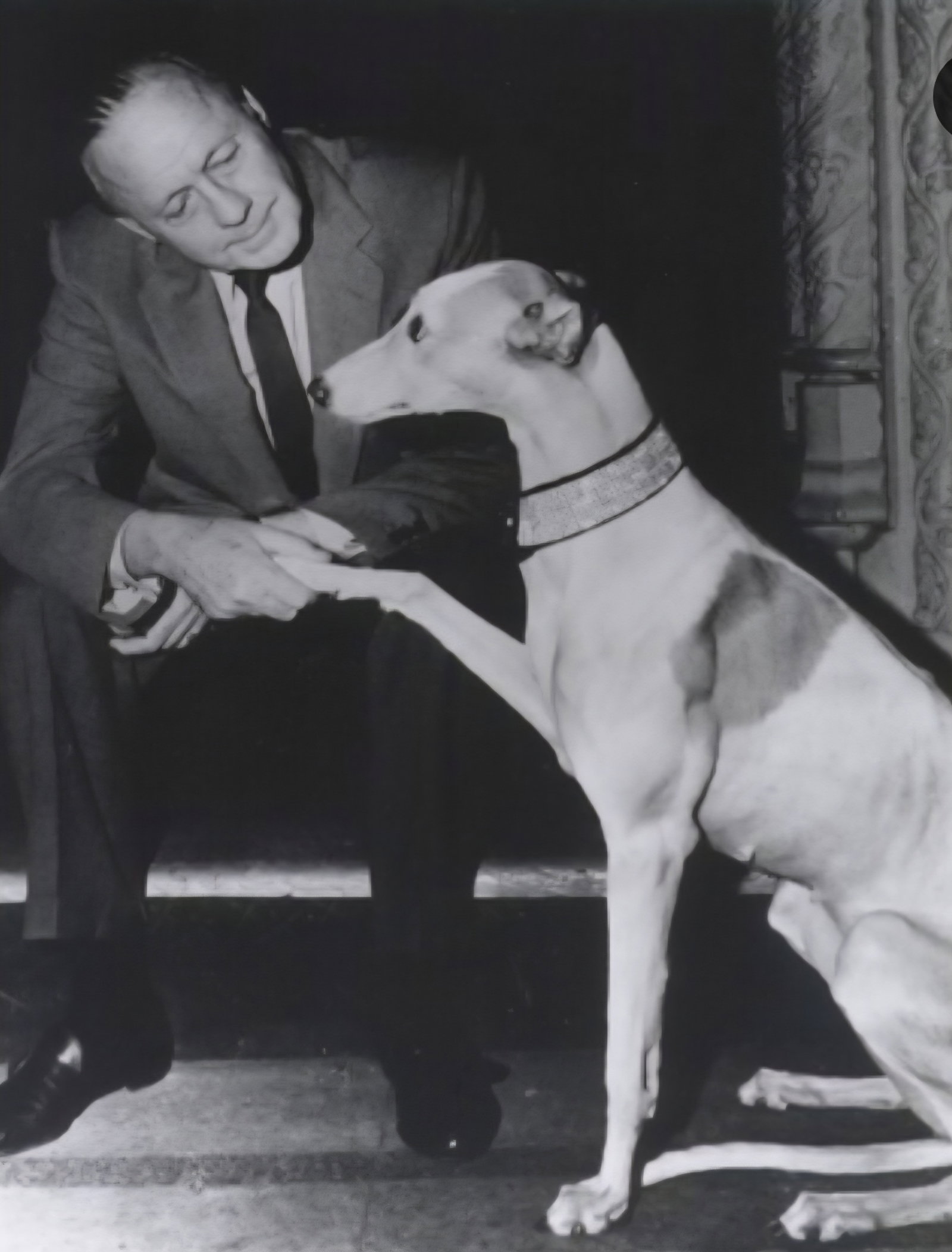
Carl Eric Wickman
The Arizona sun, however, proved far too hot, so when he heard of some acquaintances who had moved to Minnesota and described the local climate as much more similar to Sweden’s, he headed north as well. Before long he arrived in Hibbing, a tough, pioneer-spirited mining town known for its iron ore mines, where he worked for years as a diamond drill operator. In 1913, however, he was laid off, and at the age of 26 decided not to sit idle. He first tried selling Goodyear tires, then bought the local dealership for the short-lived Hupmobile automobile marque, but business did not go well.

One unsold Hupmobile ultimately became the turning point: Wickman converted it into his first bus, using it to ferry iron ore miners to the mine. The vehicle officially had seven seats, but as many as fifteen people were often crammed aboard. He usually picked up his passengers from one of Hibbing’s roughly seventy saloons and carried them barely two miles to the fire station at the mining settlement of Alice — a community that has since been absorbed into the city of Hibbing. He charged 15 cents for the trip, equivalent to about $3.50 today; on his first run he earned $2.25. The fledgling business quickly became popular. Word spread rapidly among the miners, and demand proved so strong that the operation soon became profitable. Wickman then brought in additional partners: his compatriot Andy Anderson and C. A. A. (Arvid) Heed, both of whom had also previously worked in the mines as drill operators, and who helped develop and expand the service.
In 1915, the first full year of operation, the trio was no longer carrying only miners, but also launched a regular 15-mile service between Hibbing and Nashwauk — creating the first scheduled intercity bus route in the United States. Later that same year, in December, Wickman merged his business with that of Ralph Bogan, just 19 years old, who operated a similar service between Hibbing and Duluth. Thus the Mesaba Transportation Company was born.
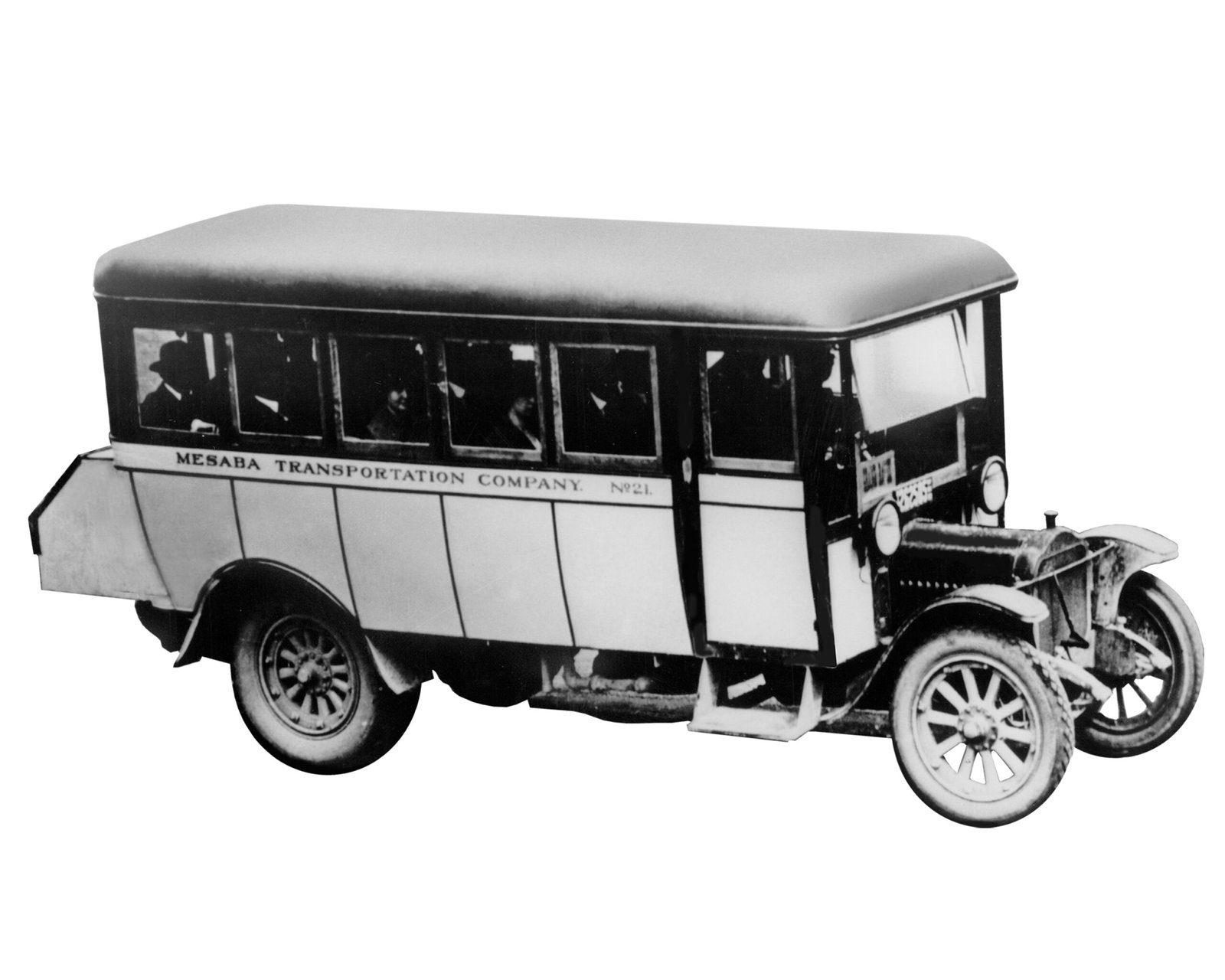
Demand grew explosively. When the existing vehicles were no longer enough, Wickman and Anderson lengthened them by hand, cutting the chassis in two, welding in new sections, and installing additional seats so they could carry not just seven but twelve miners. By 1918, the company’s fleet consisted of 18 vehicles, and its annual revenue had reached $40,000 — about $600,000 in today’s money.
The business moved to another level in the early 1920s. In 1919, the Mesaba Motor Company was established, not only operating buses but also building and repairing them. Because of the poor condition of roads in northern Minnesota and the harsh weather, vehicles tailored to local needs were also developed in-house, including buses fitted with a standardized heating system. The company soon built a garage and maintenance base in South Hibbing, where up to fifteen vehicles could be repaired at once.
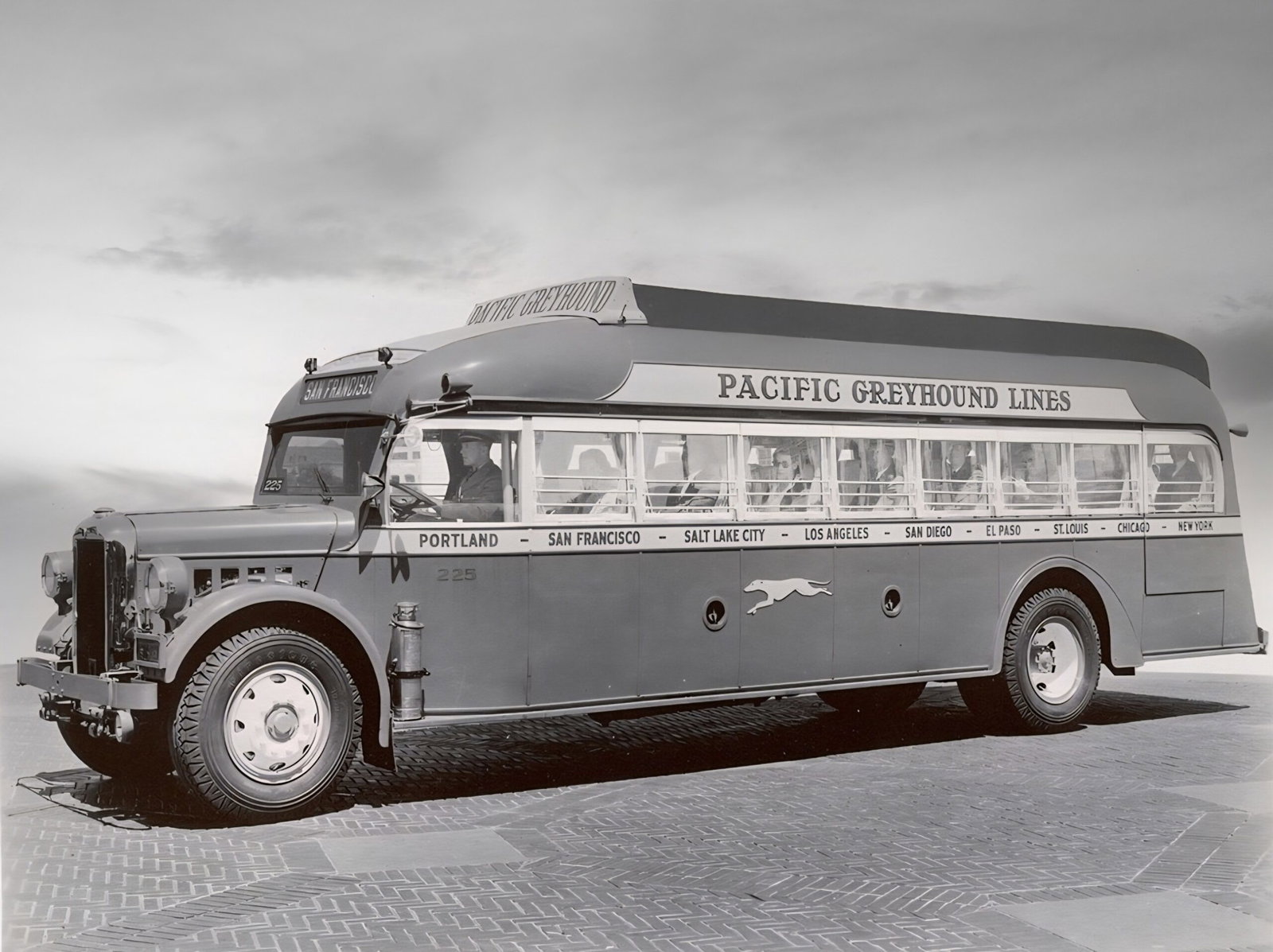
In 1922, the ownership structure changed: Anderson and Bogan bought Wickman and Heed’s shares in the Mesaba Transportation Company, while Wickman and Heed retained the Mesaba Motor Company. Wickman’s base of operations thus shifted to Duluth, where he began buying up the region’s smaller companies one after another. The new base built in Duluth included a garage capable of housing 40 buses, as well as a body shop and repair facility, making it possible to serve longer, busier routes.
By the end of 1924, Wickman was directing his expansion from Duluth. There he acquired White Bus Lines, which operated services from Duluth along the north shore of Lake Superior toward Grand Marais, as well as to Minneapolis. This enabled the business to outgrow its local area and become a regional player. In December of the following year, Wickman and his business partners founded the Northland Transportation Company, soon joined by significant railroad capital: the Great Northern Railway recognized the potential in bus transport and entered the market as a partner rather than a rival.
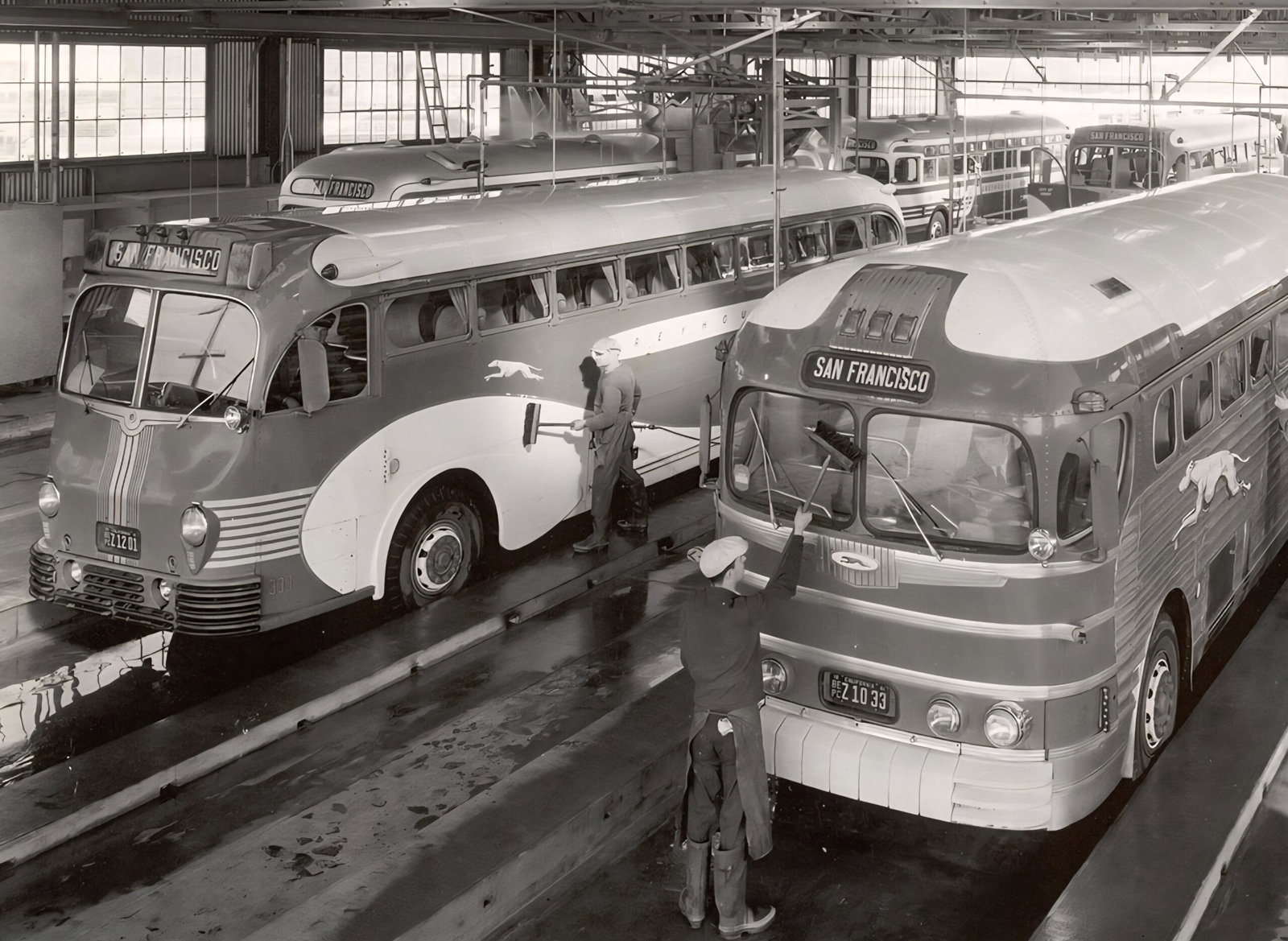
By 1925, Northland was already operating 150 buses and covering a route network of nearly 4,200 kilometres across northern and western Minnesota. Railroad backing and investor capital made large-scale development possible: new garages and repair bases were built, modern coaches entered service, and timetables became more regular. Within a short time, the company grew into the region’s dominant transport operator.
The legacy of the original small Hibbing business also ultimately flowed into this development. The Mesaba Transportation Company retained its independence under Anderson and Bogan until 1928, when the rapidly growing Northland Transportation Company acquired most of its routes. With that, Mesaba was finally absorbed into the increasingly extensive network.
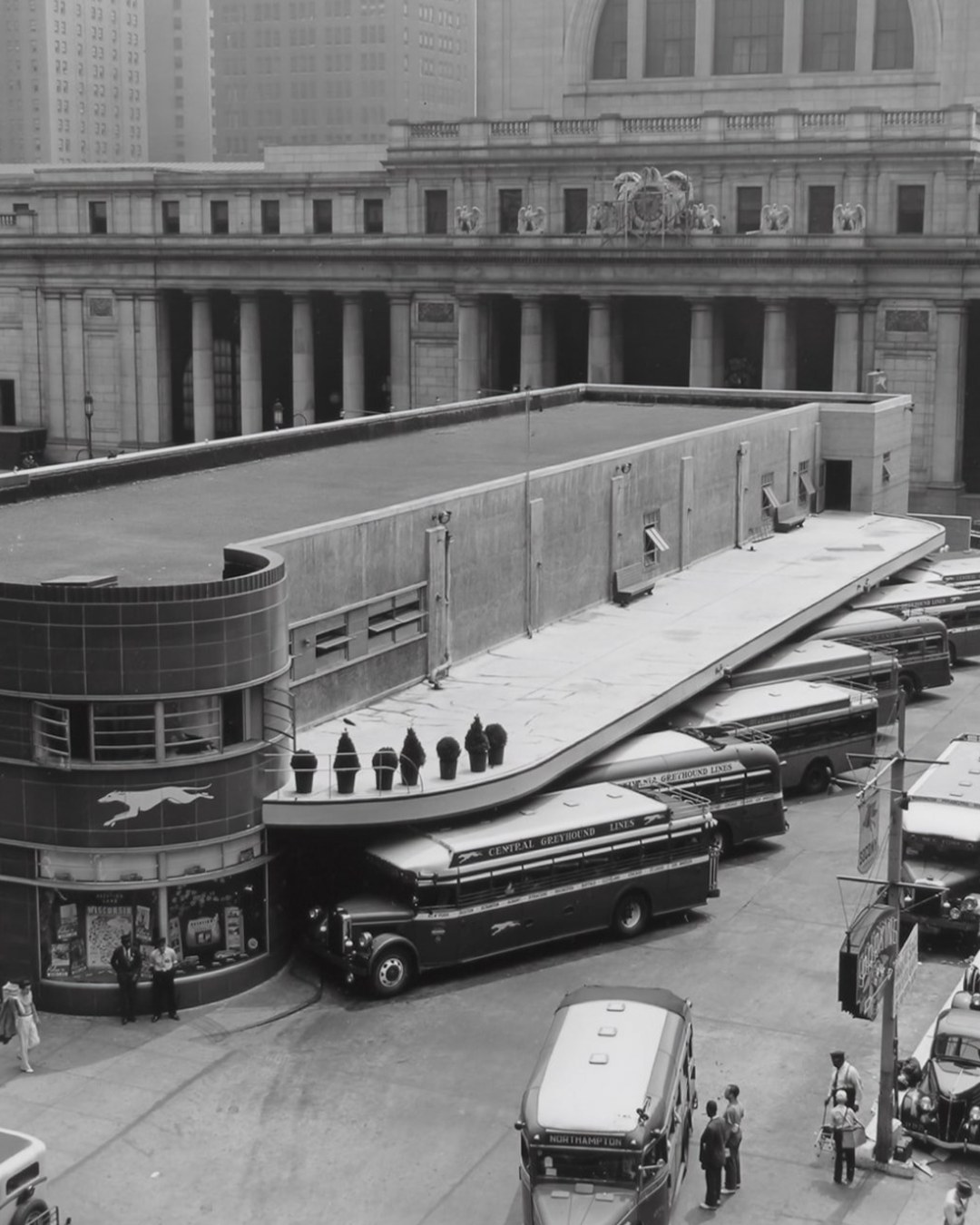
In the autumn of 1926, the Motor Transit Corporation was established in Chicago, a holding company with share capital of $10 million, created to consolidate smaller bus companies in the Midwestern and northern states. At the head of the initiative stood Carl Eric Wickman, by then president of Northland Transportation, along with investors from Lane, Piper & Jaffray of Minneapolis. The holding company was built on several bus operators.
Motor Transit soon launched new services toward St. Louis, Kansas City and Pittsburgh, then strengthened its position through further acquisitions. The company’s growth was almost explosive: while its buses covered 5 million miles annually in 1927, by 1929 that figure had risen to 20 million miles. Behind the rapid expansion were not only strategic acquisitions, but also the standardization of timetables, the purchase of modern coaches, and the integration of the network.
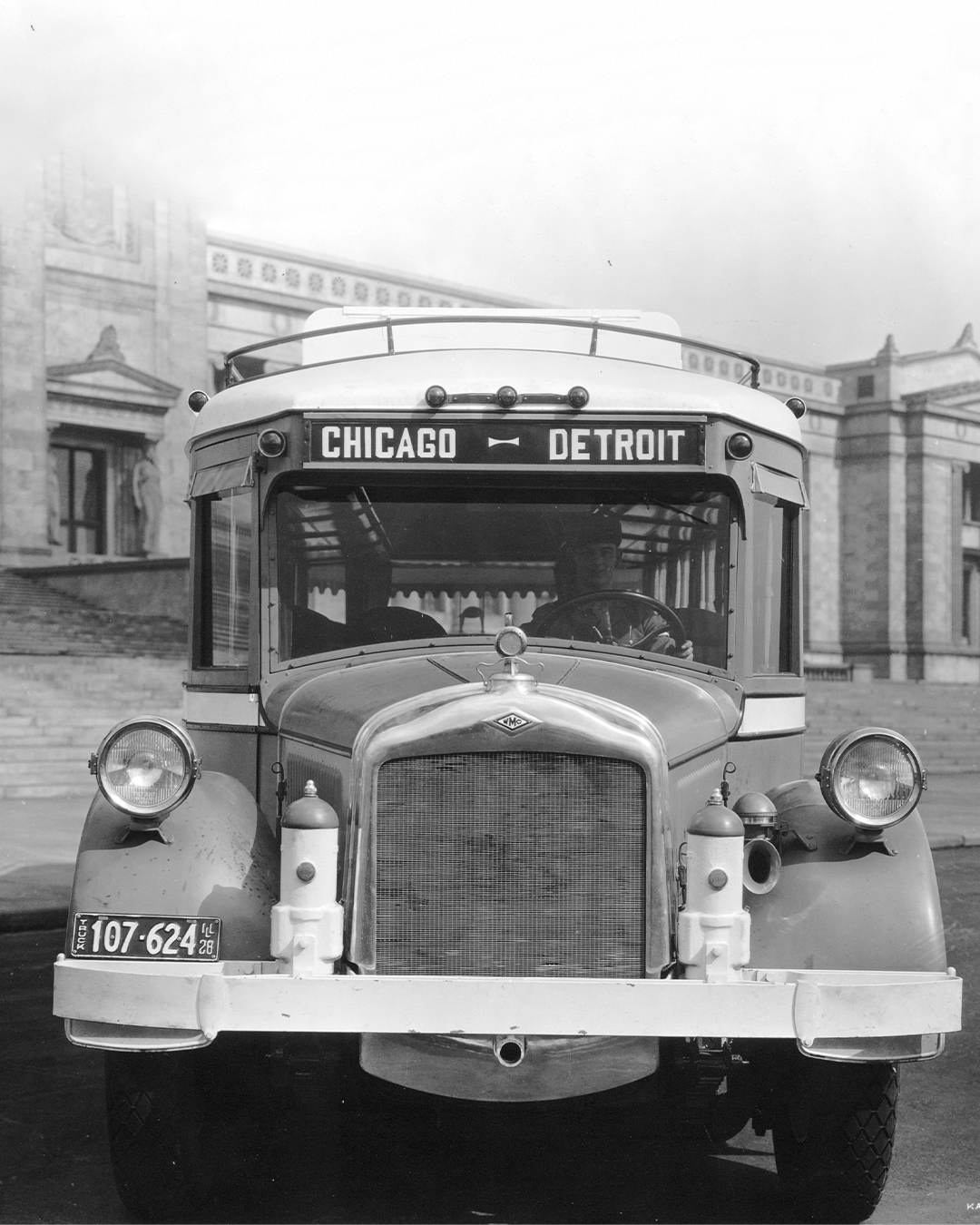
It was around this time that the name later to become the symbol of an entire era first appeared. The name Greyhound originally came from Safety Motor Coach Lines, a Michigan business owned by Edwin C. Eckstrom. One of its routes passed the Greyhound Inn, a roadside restaurant in Michigan, and passengers began comparing the vehicles to slender, fast greyhounds. Eckstrom liked the name; moreover, the restaurant’s logo also depicted a greyhound, making the parallel obvious. By the mid-1920s, he was already operating the route under the name “Greyhound Lines,” and from there the name spread to the entire network.
When the Motor Transit Corporation was formed in 1926, Eckstrom’s line was also absorbed into the network. Because of the name’s strong sound and its successful use in advertising campaigns, it spread throughout the entire system in a short time. Within a few years, everyone was referring to the holding company itself as Greyhound, and in 1929 it officially adopted the name Greyhound Corporation.
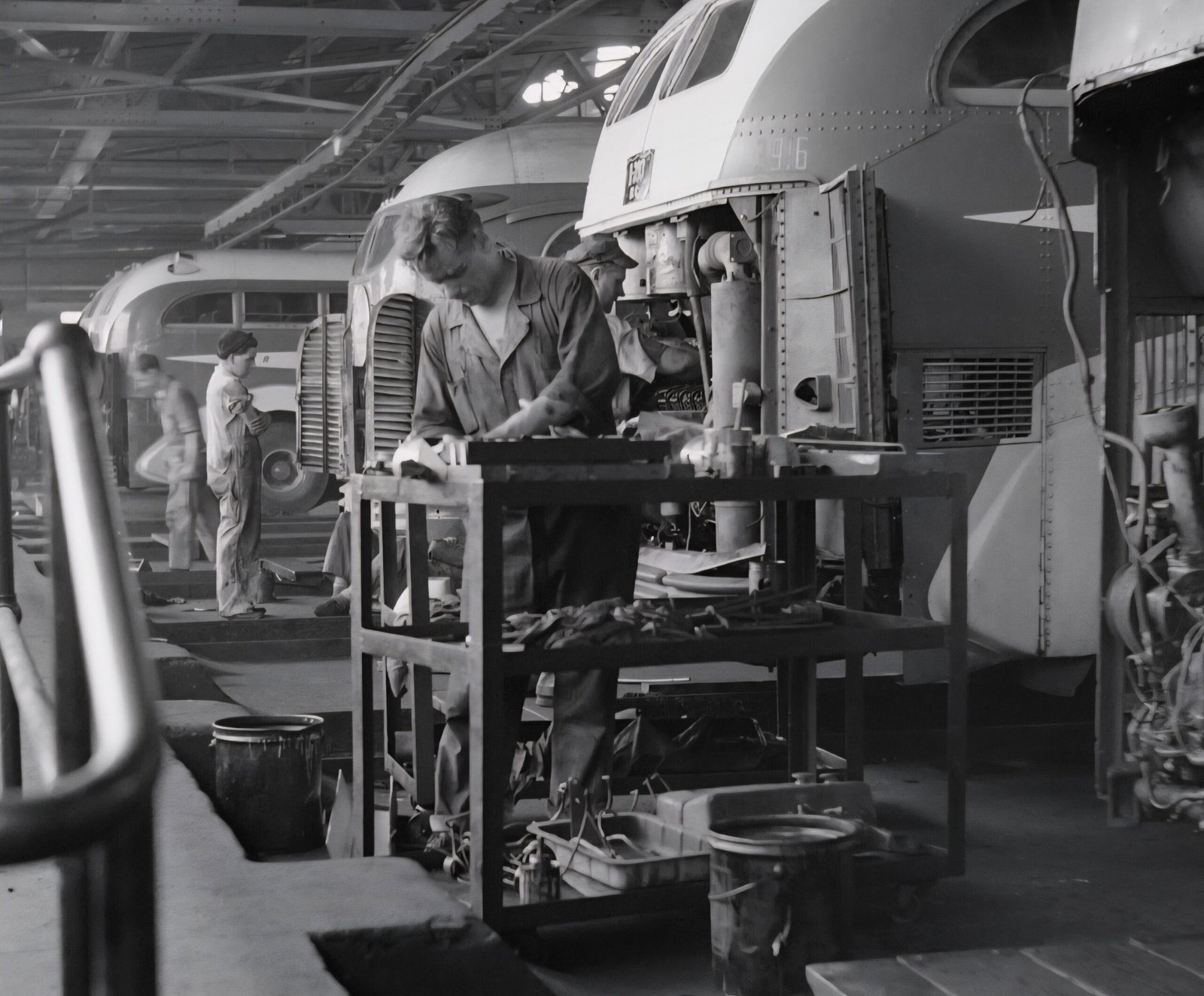
In the 1930s, Greyhound expanded rapidly and gradually grew into the leading intercity coach company in the United States. The Great Depression did hit the company hard — the appetite for travel fell, revenues declined, and several routes had to be reorganized — but the business nevertheless stayed afloat and continued to increase its national presence. Thanks to its low fares, it offered many passengers an accessible alternative to the railroad or the car even during the most difficult years.
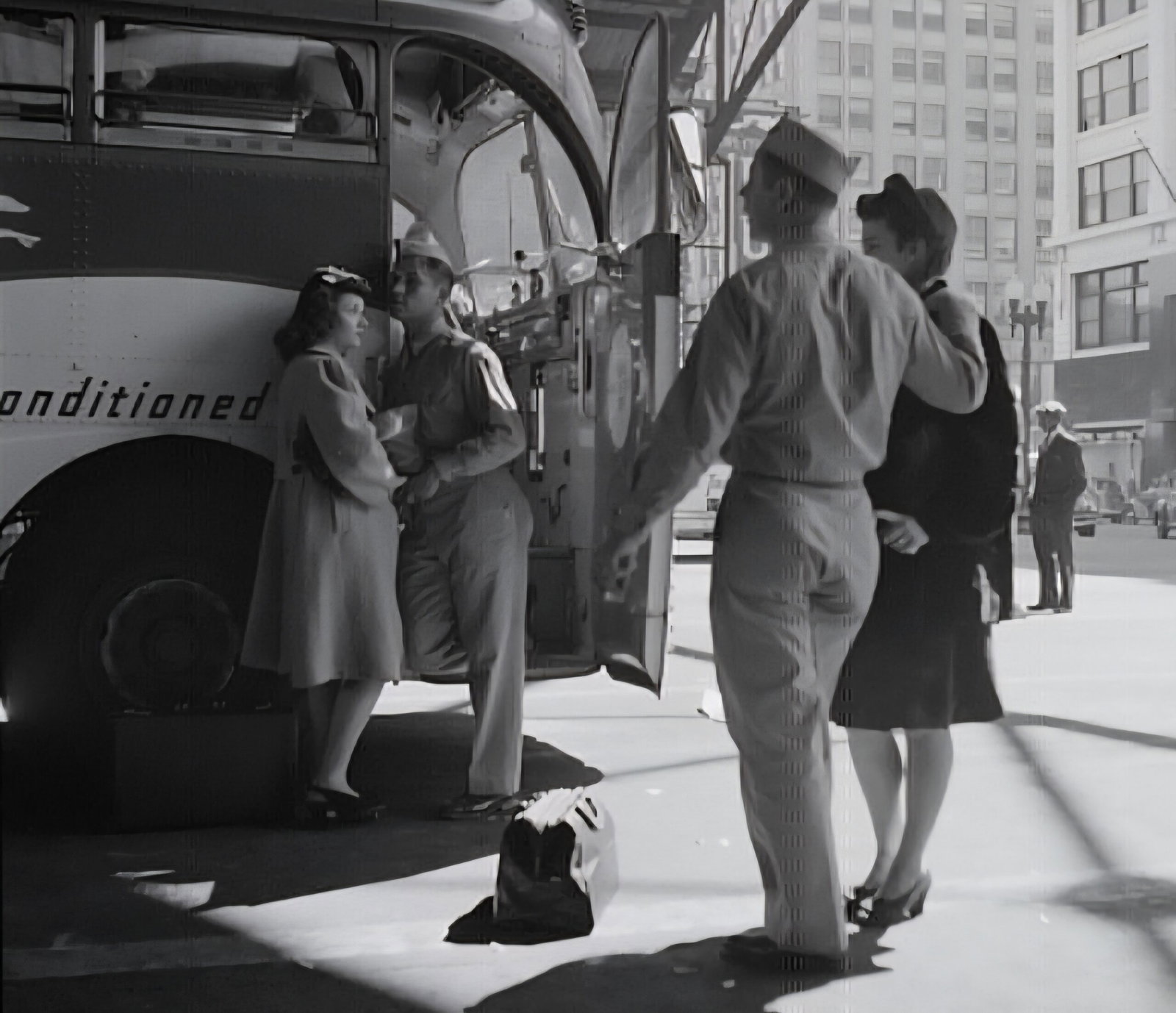
Even during the crisis years, Greyhound continued to acquire smaller regional operators, gradually merging them into a single, unified network. By the end of the 1930s, the company was operating more than 4,700 buses and carrying 230 million passengers a year. During consolidation, the identities of the former local and regional companies disappeared, replaced by the distinctive silver-grey buses bearing the running greyhound emblem on their sides. By then, Greyhound was no longer merely a transport company, but a symbol of American mobility. Modern bus terminals were built one after another along the roads, while advertisements emphasized speed, reliability and affordability.

After the end of the Second World War, Greyhound used the economic upswing to embark on significant growth. Demand for domestic mobility in the United States rose sharply: soldiers returned home, the economy expanded at an unprecedented pace, and the country’s population increasingly took to the road. In this era, the service offered by Greyhound represented an inexpensive and widely accessible form of transport.

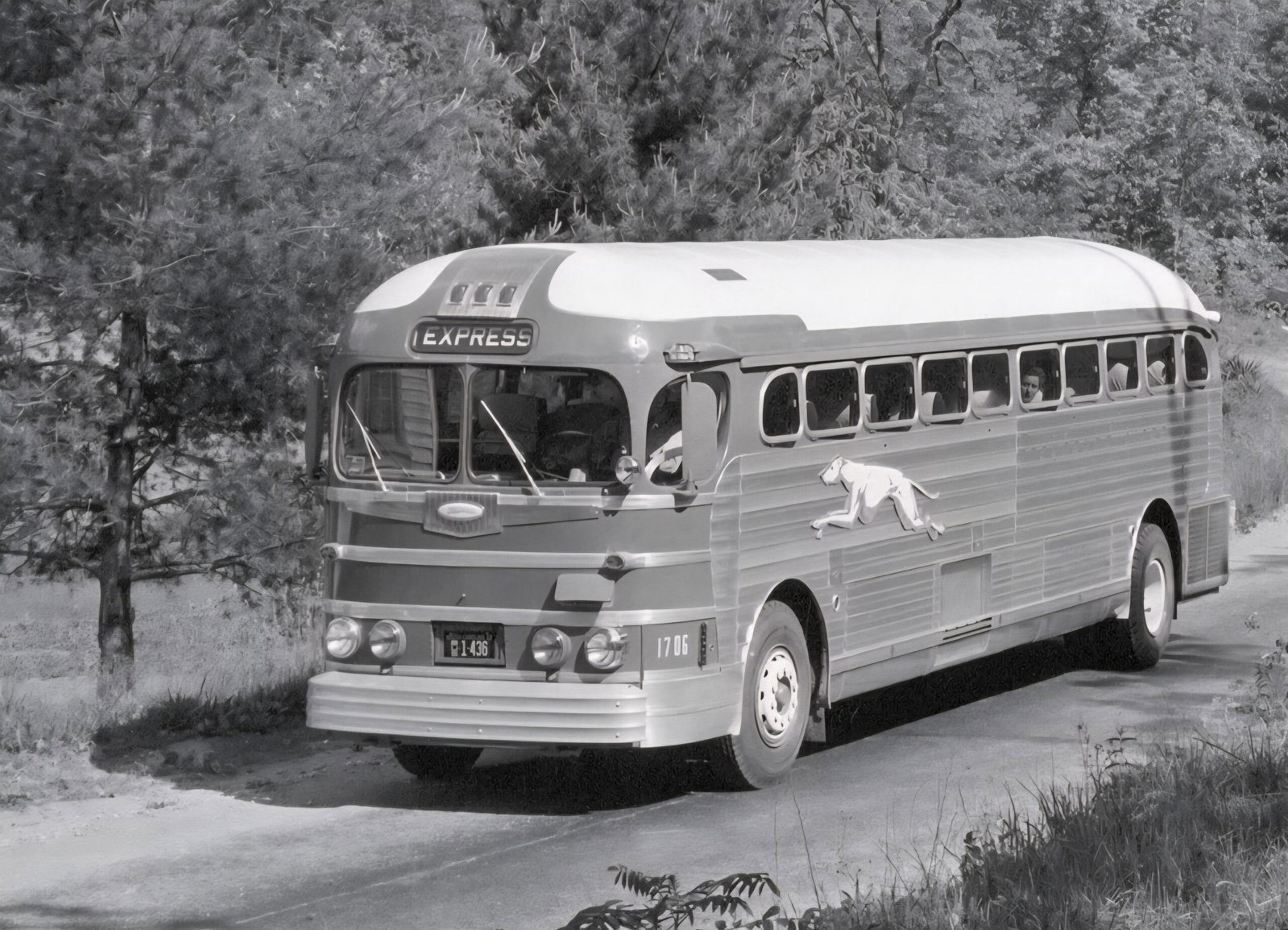
The company rapidly expanded its fleet and put modern, comfortable coaches into service, while connecting rural areas with large cities through new routes. Air conditioning was introduced in 1938 — long before it became widespread in passenger cars — and in 1940 the legendary GM Silversides type was unveiled. With its fluted aluminium side panels, it became one of Greyhound’s best-known visual signatures and shaped the appearance of its buses for many years.
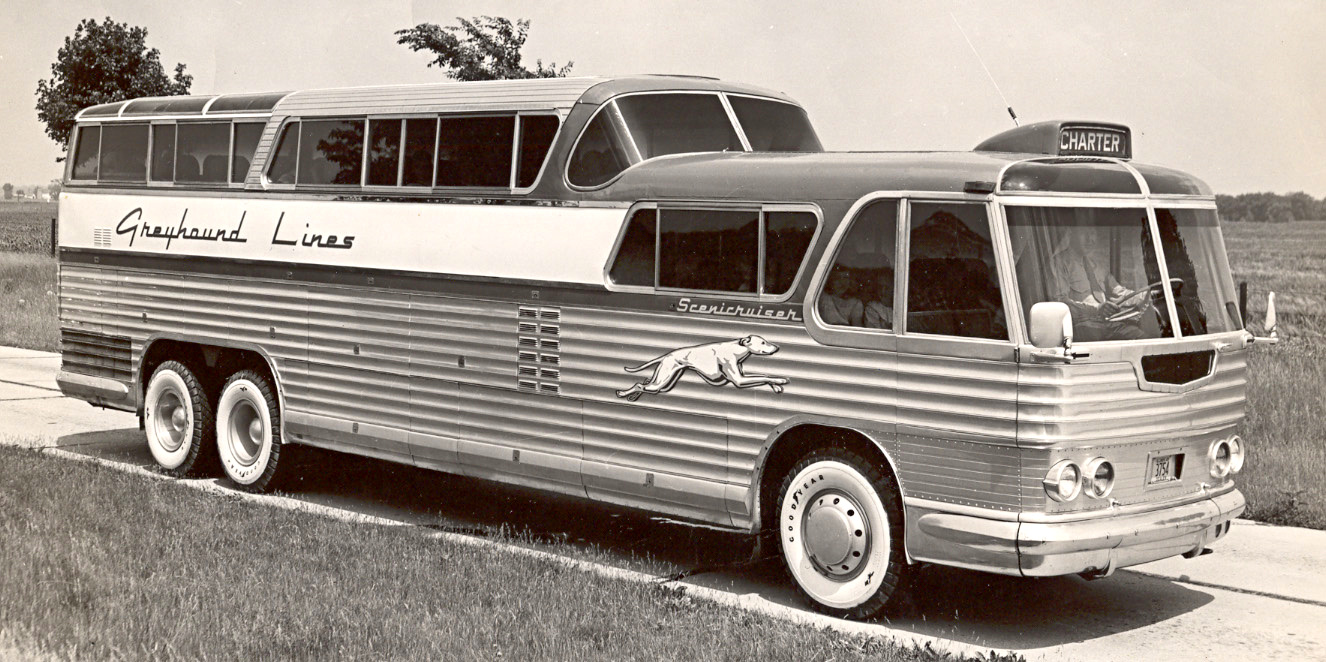
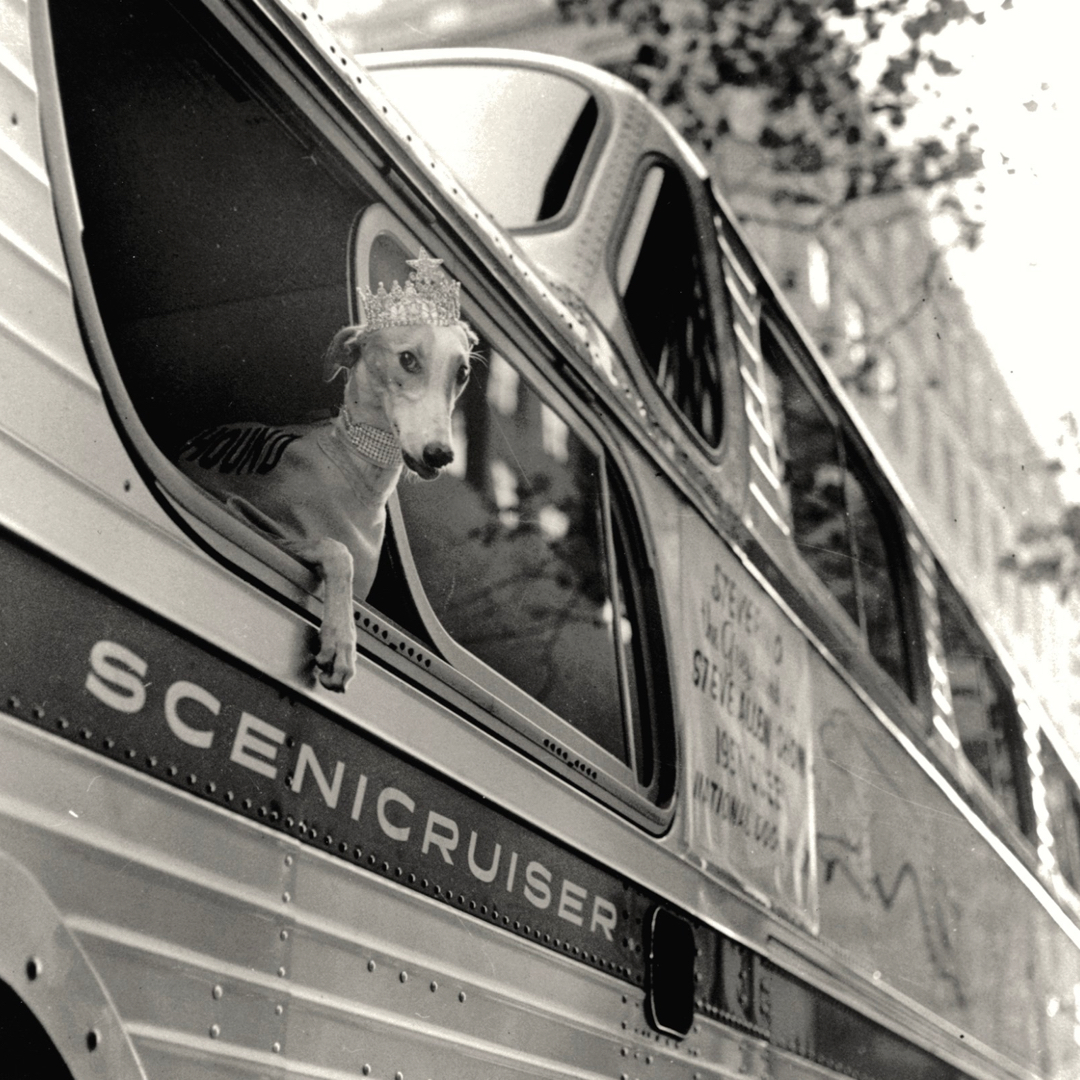
In the post-war period, Greyhound further strengthened its technological leadership. The high point of this was the Scenicruiser, introduced in 1954, which set a new standard in the world of intercity coaches with its split-level layout, onboard washrooms, spacious 43-seat interior and air-suspension system. The General Motors-built PD-4501 model was characterized by its stepped body: the front section was lower than the rear, giving the coach a distinctive, instantly recognizable silhouette. This type defined the appearance of North American intercity coaches for a long time and, by admission, this layout also inspired the distinctive styling of the Ikarus 270 safety coach. The 40-foot-long vehicle ran into legal obstacles in several states — the statutory limit at the time was still 35 feet — yet it soon became a Greyhound trademark and embodied the luxury of mid-20th-century American long-distance travel.
Founder Carl Eric Wickman died in that very year, 1954, when the Scenicruiser made its debut. He was 66. At the time of his death, Greyhound was already covering more than 200 million miles a year, had 4,750 stations, and served around 6,000 destinations nationwide — meaning that in barely four decades from its Hibbing beginnings, it had grown into the largest road passenger transport company in the United States.
By the 1970s, Greyhound had entered a new era, marked by fundamental changes in the structure of road transport. The development of the interstate highway network and the rapid spread of private car ownership gradually pushed intercity coaches into the background, while increasingly affordable air travel also lured passengers away from the company. Although better roads meant faster journeys and fewer technical failures for buses, they also encouraged a growing number of car owners to make business trips and holidays in their own vehicles instead.
Greyhound’s traffic and revenues fell noticeably, leading to serious financial difficulties. The company changed owners several times and, in order to remain viable, experimented with new activities. In addition to introducing charter coach services and parcel delivery, the group increasingly diversified its portfolio, entering sectors entirely unrelated to transport, such as the food industry and consumer goods. At one time, Greyhound’s interests included the Burger King fast-food chain, the Dial soap brand, Purex bleach, and numerous smaller services — including a mail-order business and even a skin bank established to treat burn victims.

These attempts showed that Greyhound’s management had recognized that, in the long term, the bus market alone could not support the company. Becoming a conglomerate, however, could not fully offset the contraction of its core activity: intercity coach transport.
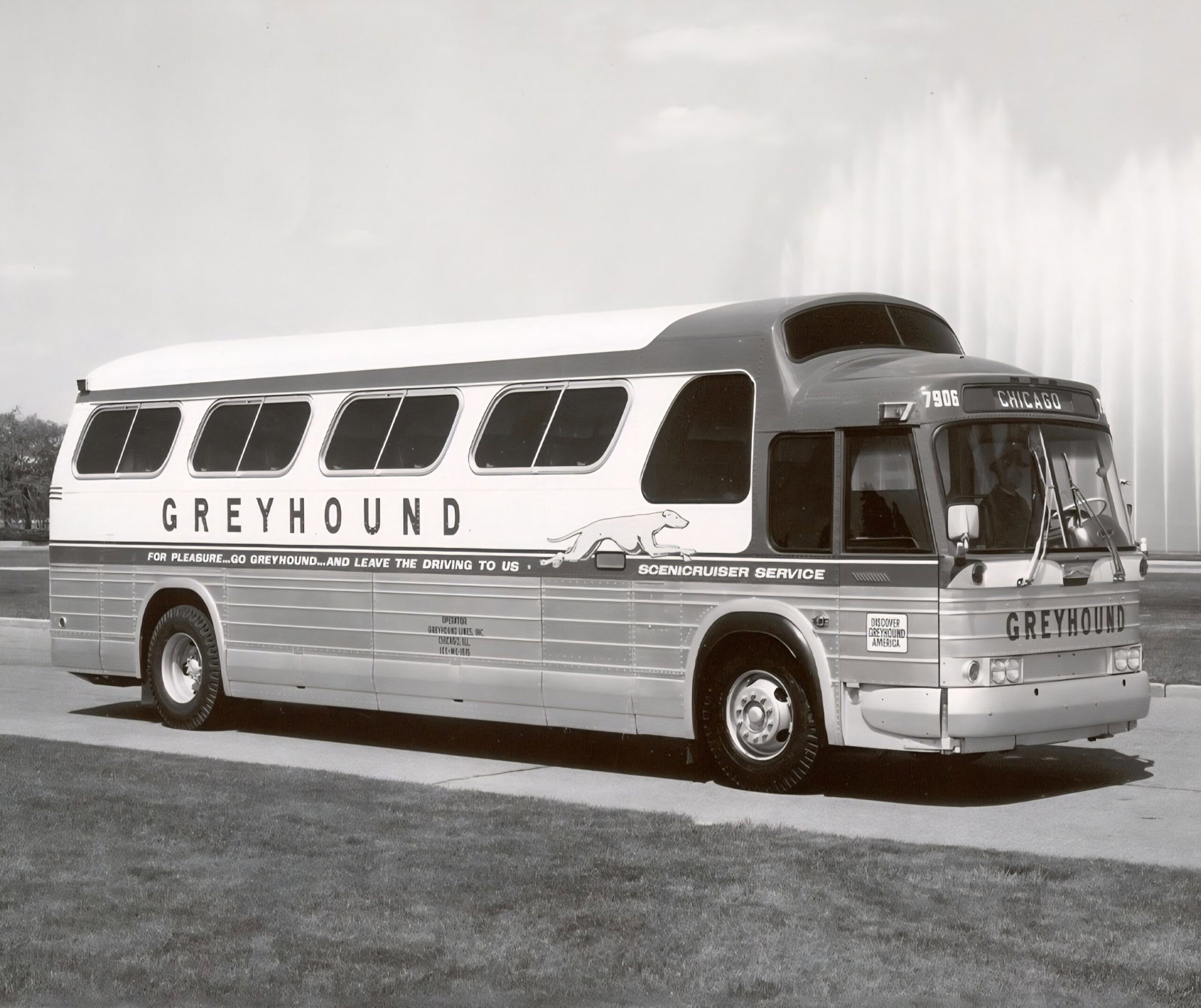
Interestingly, Greyhound played a significant role not only as an operator, but also in bus manufacturing. In 1948, the company’s Canadian subsidiary, Greyhound Lines of Canada — at the time MCI’s (Motor Coach Industries) largest customer — became the majority owner of the American bus manufacturer after acquiring 65% of its shares. In 1958, Greyhound acquired MCI outright, thereby gaining direct influence over the production of its own vehicles.
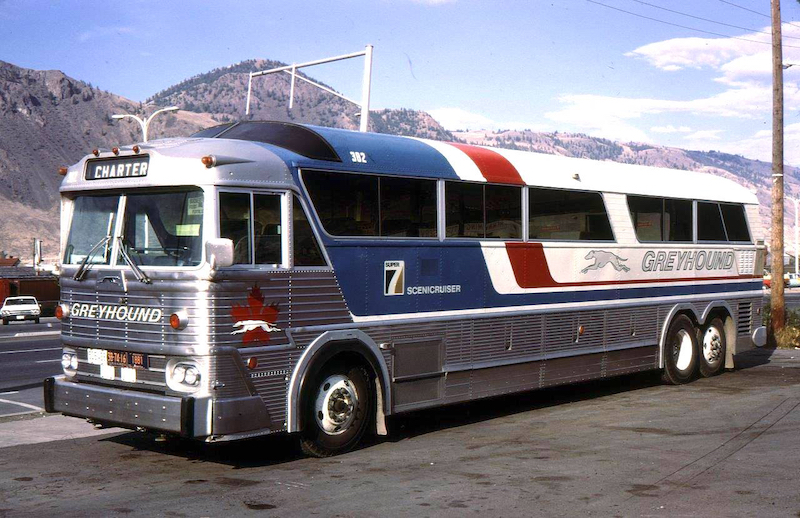
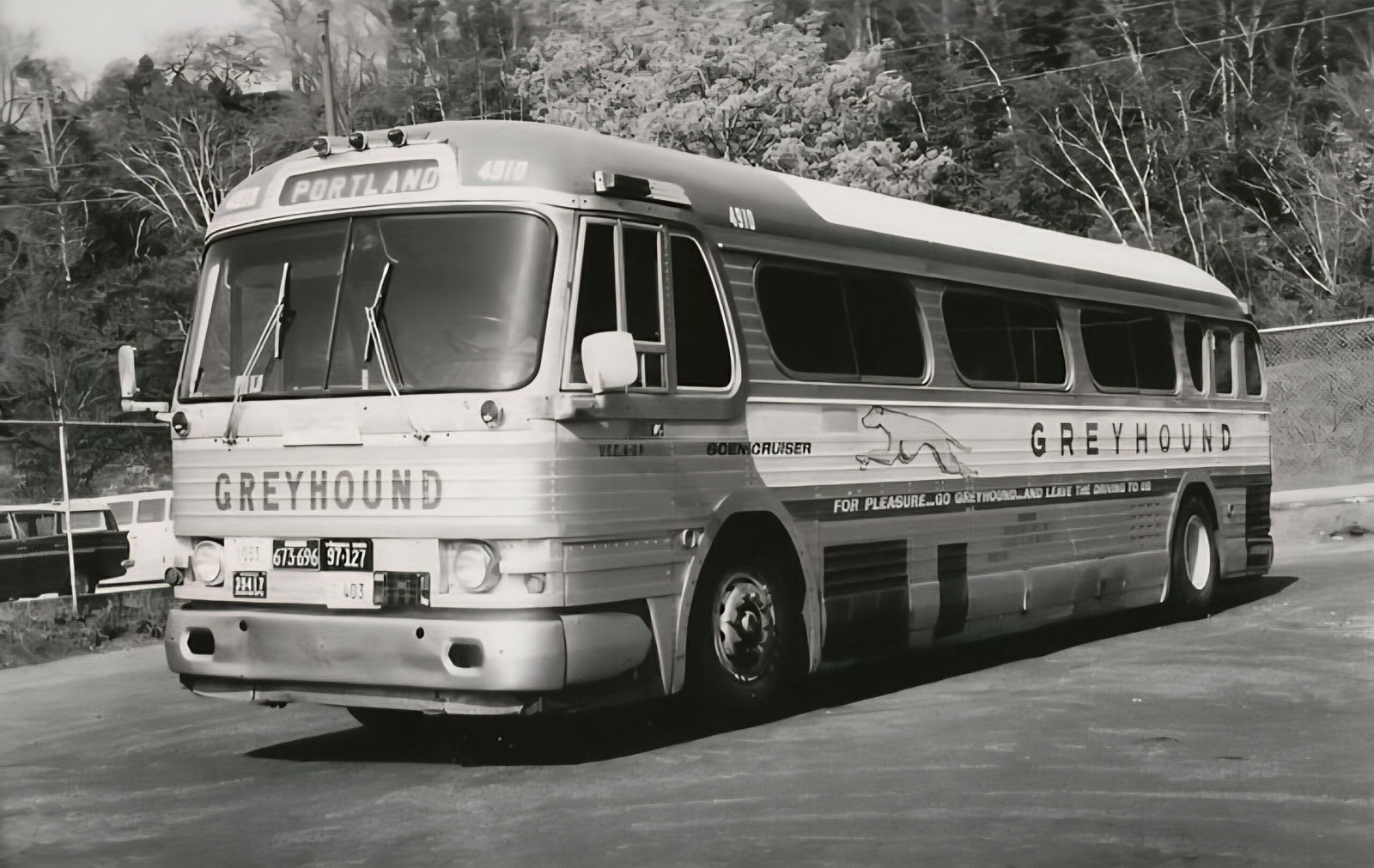
The cooperation soon became a strategic advantage. In 1963, the first U.S. MCI plant opened in Pembina, North Dakota, to increase capacity, while Greyhound gradually shifted away from GMC vehicles toward its own in-house-built models. Another milestone came with the opening in 1974 of the Roswell plant, which operated under the name Transportation Manufacturing Corporation (TMC) and produced vehicles for the U.S. market. This integration allowed Greyhound in the 1960s and 1970s to put into service vehicles tailored specifically to its needs, helping the company maintain its leading position in intercity coach transport for a long time.
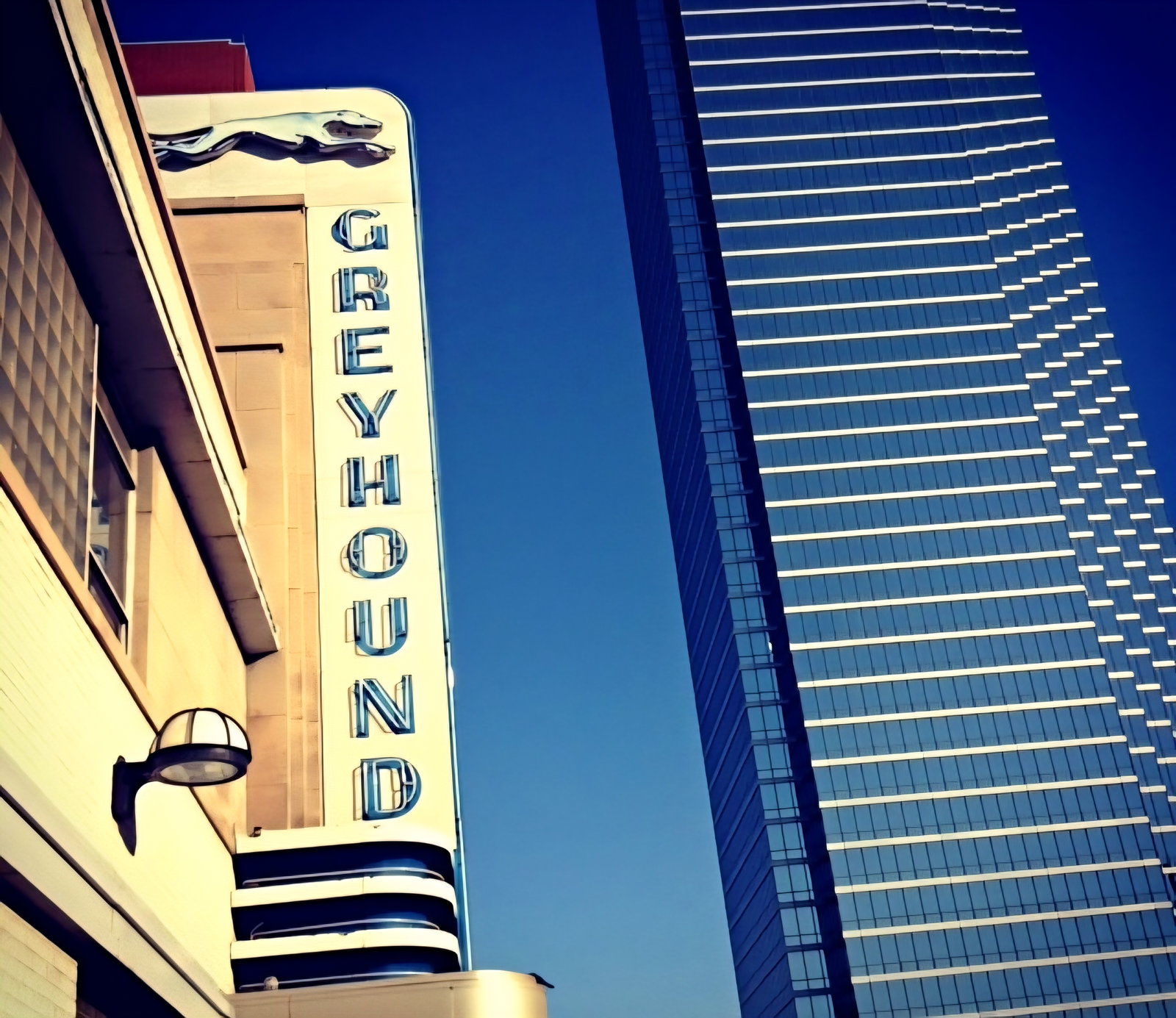
In the 1980s, the situation was made even more difficult by deregulation of the American bus industry. As regulation was relaxed, numerous smaller, more flexible regional operators entered the market, attacking Greyhound’s positions with more aggressive pricing and faster adaptation. In response, the company launched large-scale reorganizations, but the consequences were severe: repeated financial crises, service cuts and labour disputes undermined its stability.
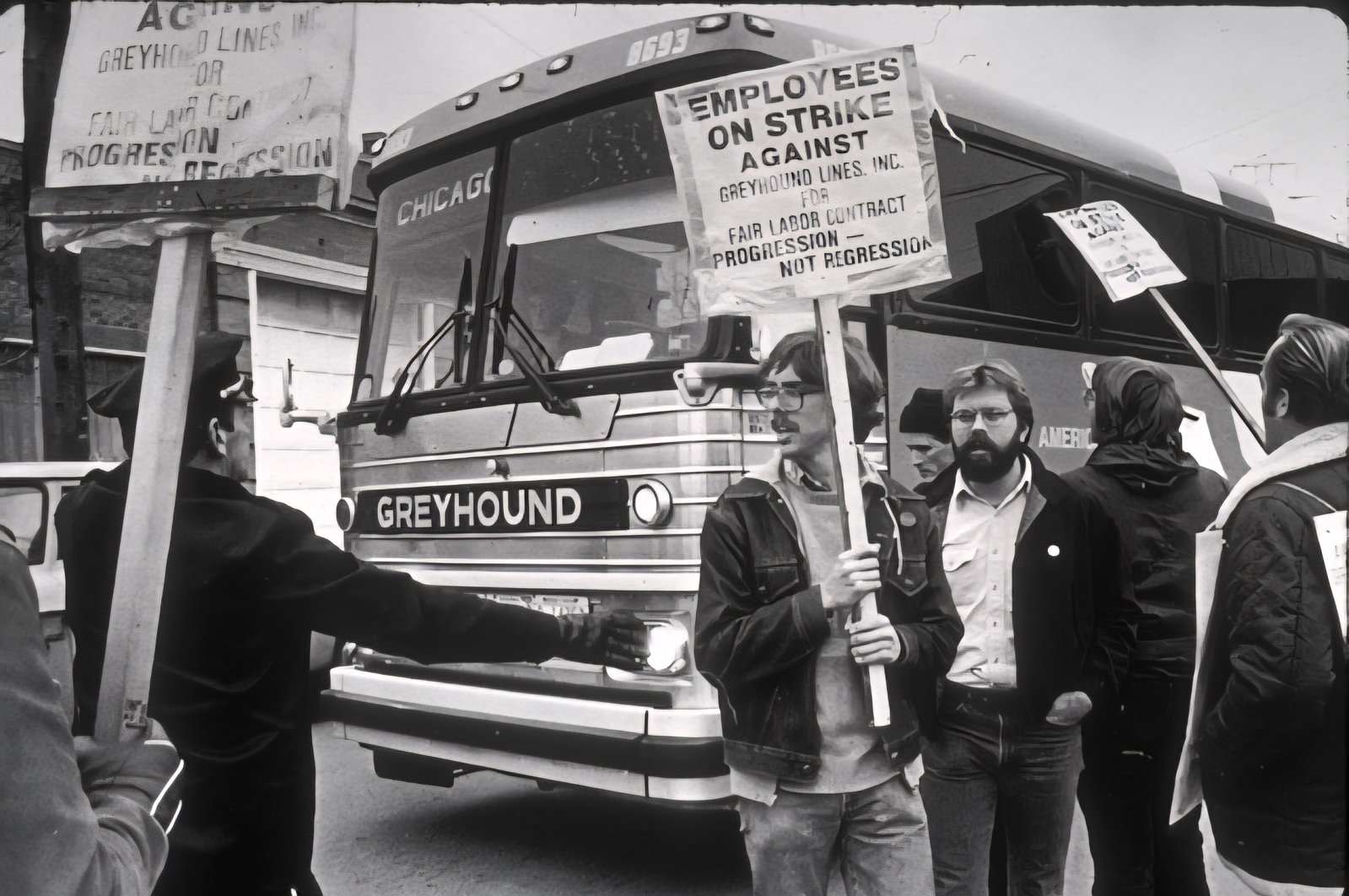
In 1983, drivers went on strike for seven weeks, paralyzing 70% of the nationwide network. During the stoppage, several violent incidents occurred; for example, a striker standing in a picket line was run over and killed by a replacement driver, causing a national scandal. Although service eventually resumed, Greyhound’s reputation deteriorated significantly, increasingly projecting the image of a “cheap but unreliable” mode of transport.

A turning point came in 1987, when the Greyhound conglomerate sold its bus business. The new owner was Greyhound Lines, Inc., founded in Dallas by Fred Currey, a former Trailways executive. That same year, the company acquired its biggest rival, Trailways, Inc., ending decades of competition between the two networks and effectively returning Greyhound to a monopoly position in the American intercity coach market. MCI, which had been acquired in 1958, remained with the conglomerate. From then on, the bus manufacturer developed independently of Greyhound, first coming under GE Capital, then the ownership of investment group KPS Capital Partners, later belonging briefly to DaimlerChrysler interests, and finally being acquired by Canada’s New Flyer.
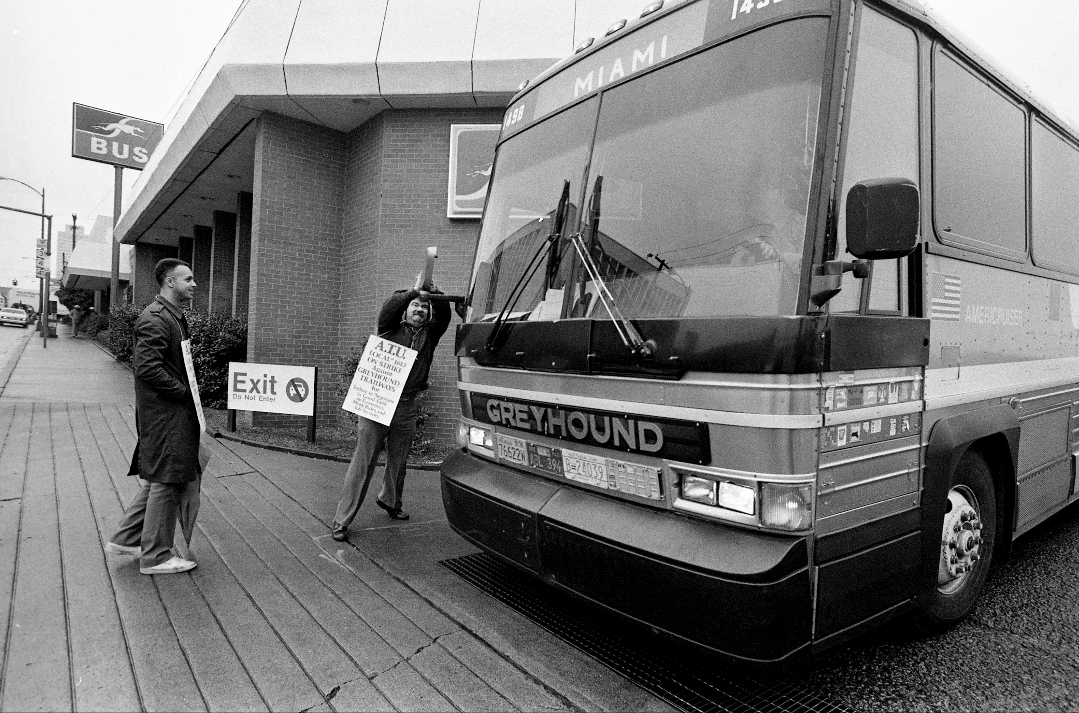
The new management, however, was unable to stabilize the company. In March 1990, another nationwide strike broke out: more than 6,300 drivers and terminal workers walked off the job, and 80% of services had to be cancelled. Street violence was not uncommon, with shootings, bomb threats and another fatal run-over incident. In June, the company filed for bankruptcy protection. The reorganization involved drastic workforce cuts: the number of employees was reduced from 12,000 to 7,900, and the fleet from nearly 4,000 to 2,750 vehicles.
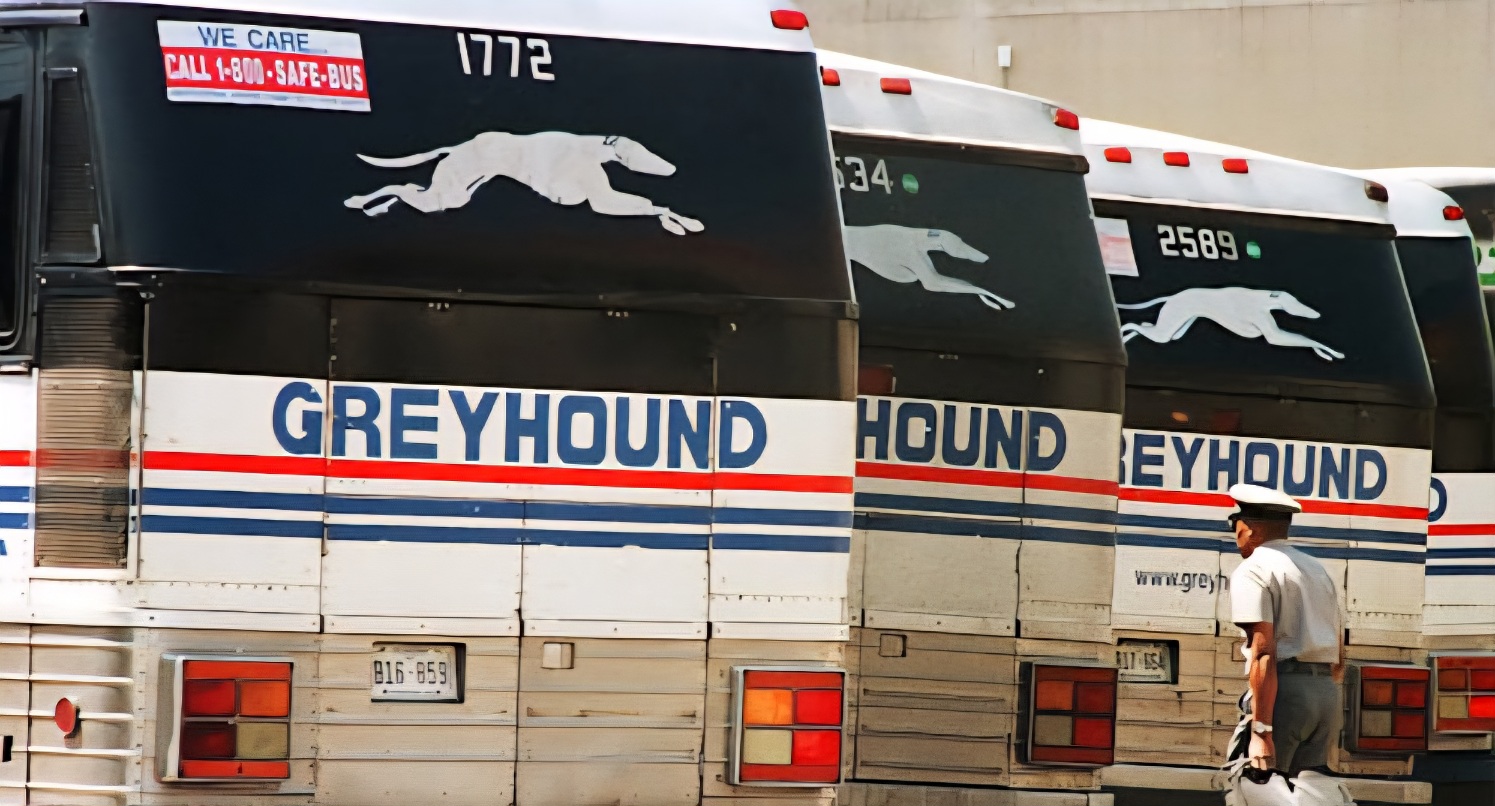
The strike ended only in May 1993, after 38 months, making it the longest labour dispute in the American transport sector. Although the agreement put an end to the damaging situation, by then Greyhound had lost a significant share of the market. In addition, in 1995 the U.S. Department of Justice won a lawsuit against the company because it had engaged in anti-competitive practices, attempting to exclude smaller operators from shared terminals.
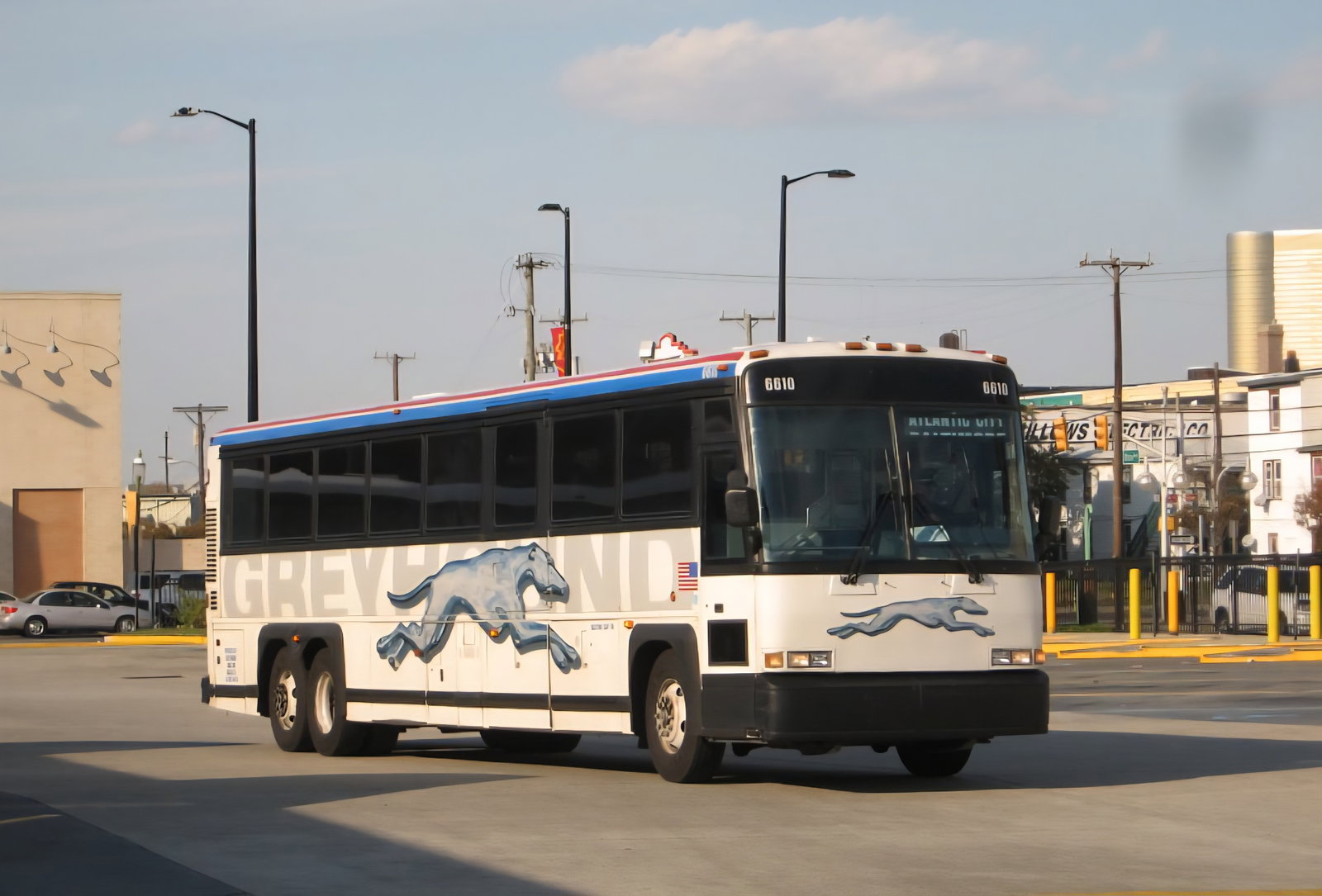
By the 1990s, Greyhound had lost its former dominance in long-distance transport. Because of increasingly cheap airline tickets, the further growth of private car ownership and changing travel habits, the company was forced to scale back its network.
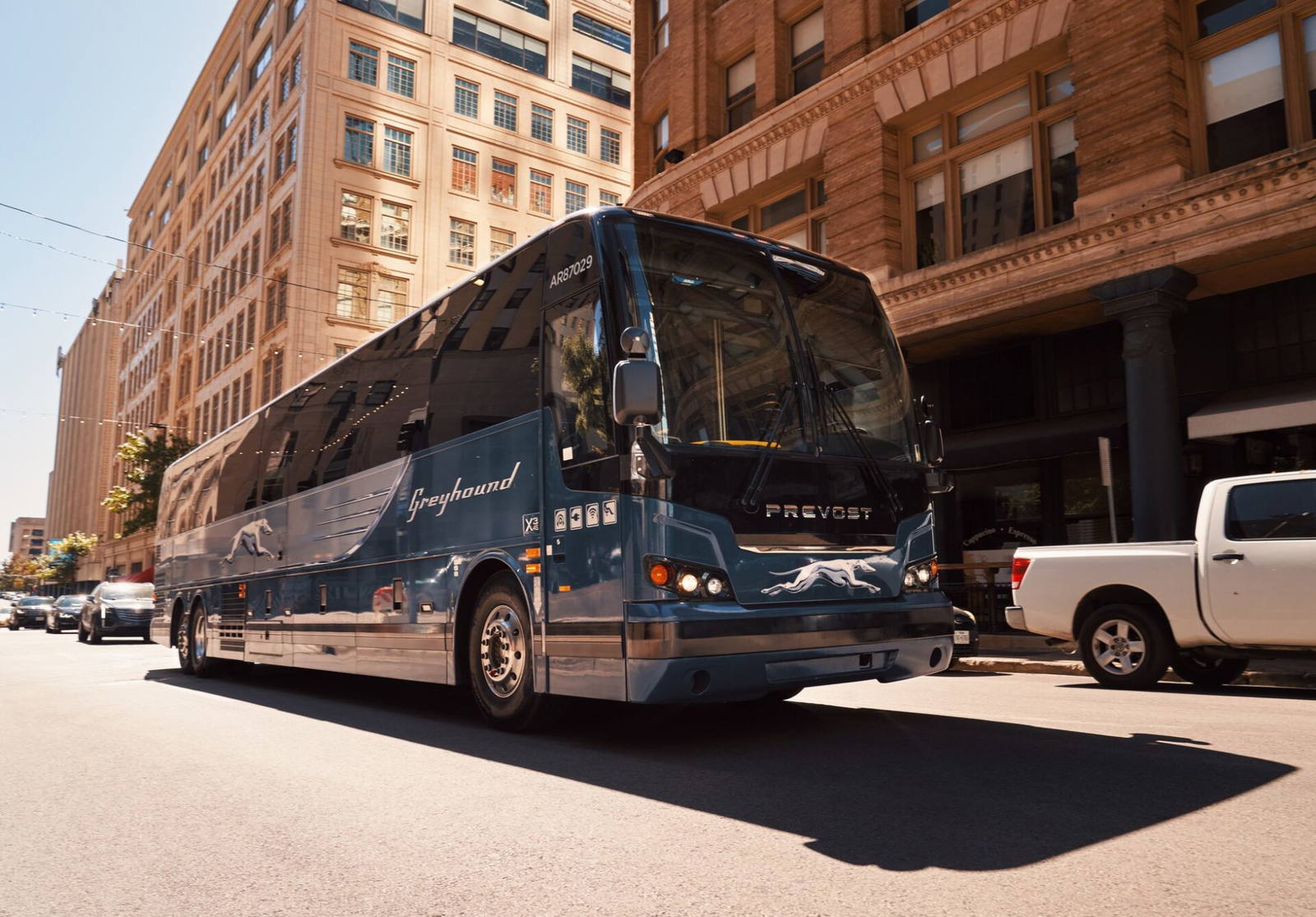
After the turn of the millennium, Greyhound launched a comprehensive restructuring programme to halt decades of decline. The company’s aim was to make bus travel attractive again to younger generations, while preserving its fundamental role in the mobility of rural and low-income passengers. As part of this, online ticketing was introduced, the fleet was gradually modernized, and comfort features such as onboard Wi-Fi, power outlets and more comfortable seats were provided.

In 2007, the company came under new ownership when it was acquired by the British transport group FirstGroup, whose aim was to stabilize Greyhound’s financial position and integrate the company into its own North American interests over the long term. Following the takeover, modernization of several terminals also began, and timetables were better coordinated with rail and air transport.
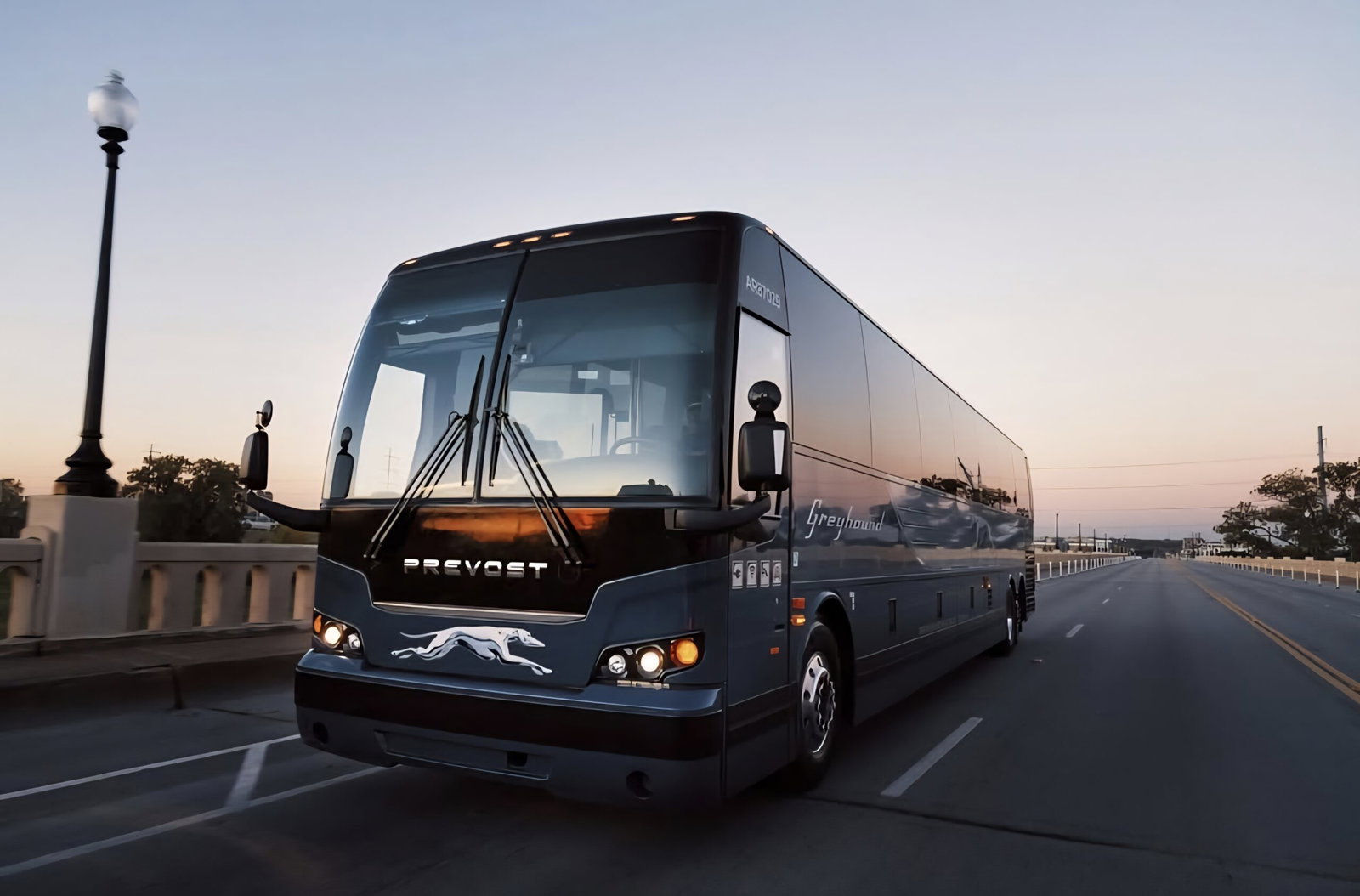
In the 2010s, Greyhound took further steps toward modernization. It established partnerships with other transport operators, such as the Amtrak railroad, offering combined train-and-bus tickets and making nationwide travel easier for passengers. At the same time, the company increased its role in parcel delivery in order to diversify its revenues. Economic crises and the emergence of ridesharing services (Uber, Lyft), however, continued to create strong competition. Greyhound’s core target group remained lower-income travellers, but with modernized services it sought to appeal to new passenger segments as well.
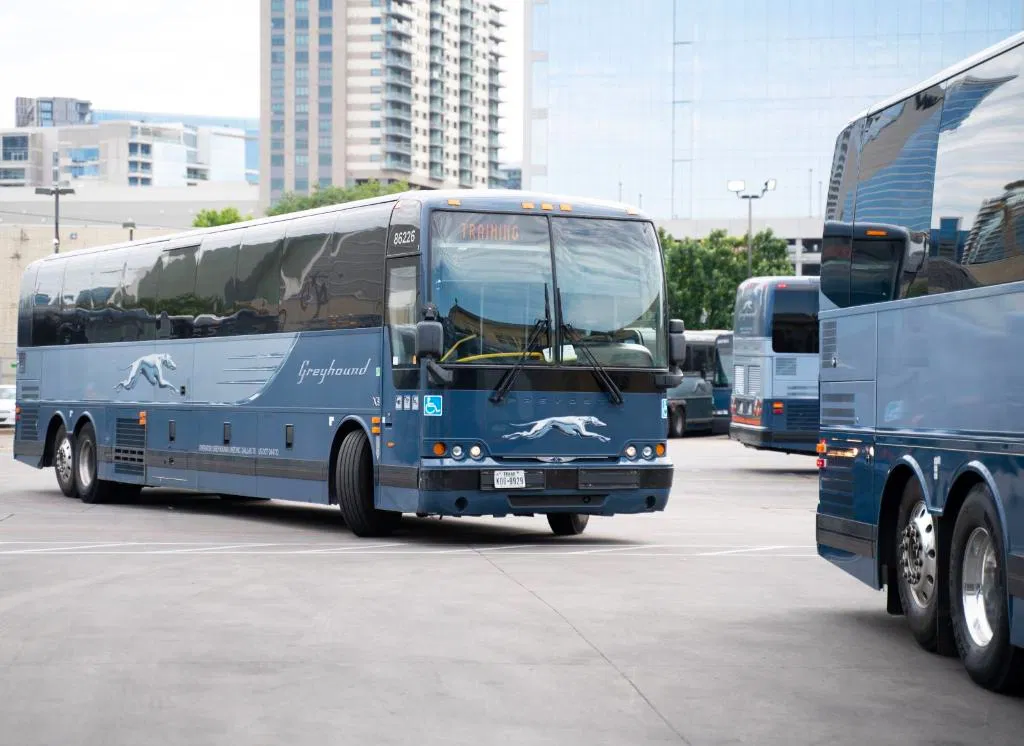
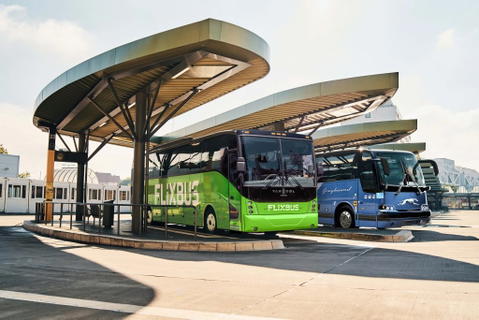
Another major change came in October 2021: Greyhound was acquired by Germany’s FlixMobility (today Flix SE), which had built an extensive network elsewhere in the world under the FlixBus brand. The sale took place because its previous owner, Britain’s FirstGroup, had long considered the North American bus business to be loss-making and shifted its strategic focus instead toward the British and European rail and local transport markets. Greyhound was sold to Flix for $78 million; however, before the transaction, FirstGroup separated the bus terminals and other real estate from the business and sold them separately. In practice, therefore, only Greyhound’s operating activities — the name, the route network and the active vehicle fleet — passed to Flix.
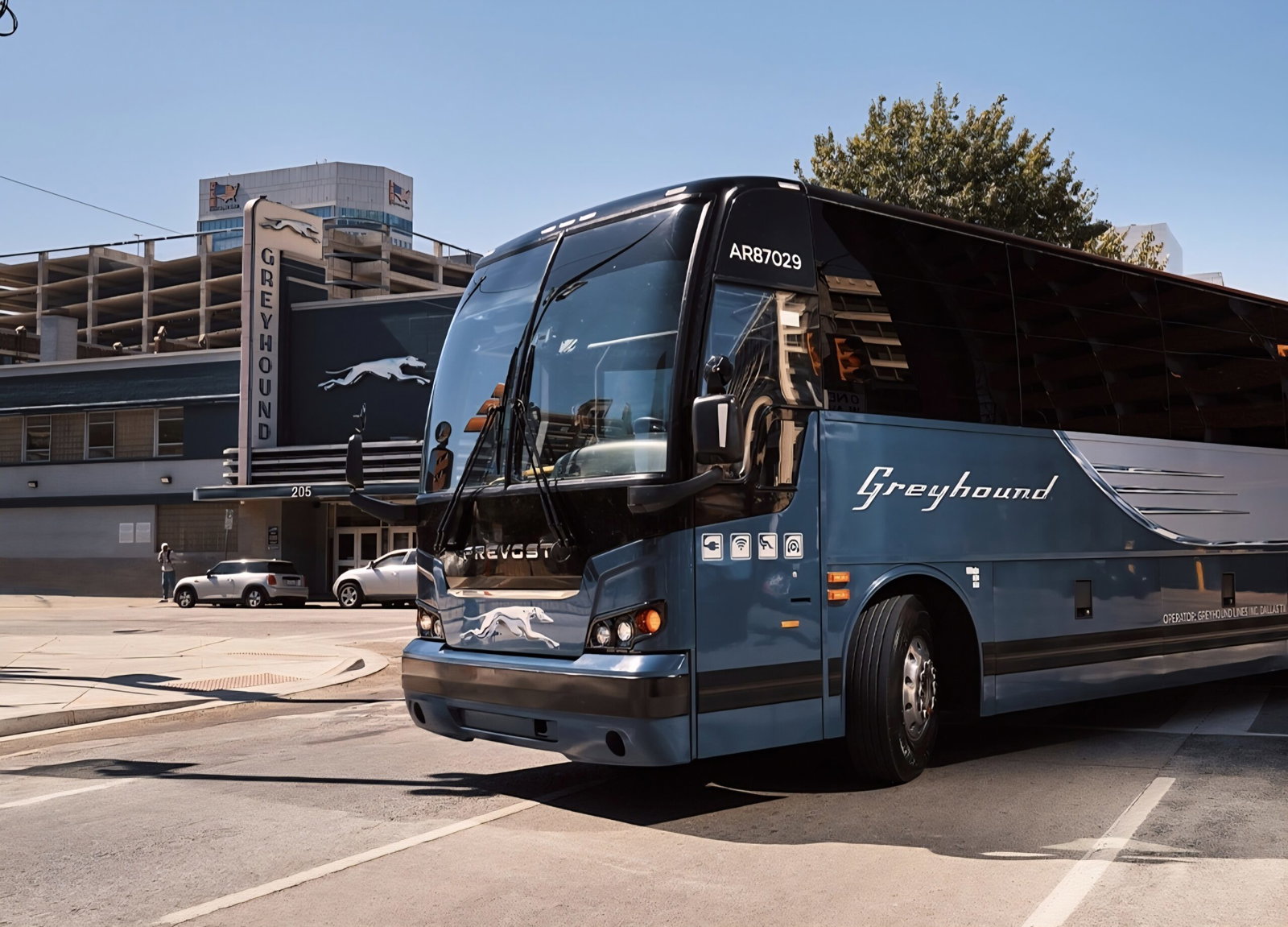
As a result of the acquisition, Greyhound became part of Flix’s global platform, enabling digital services already proven in the European market — such as the mobile app, dynamic pricing and flexible ticket management — to be made available to American passengers as well. Although operations gradually aligned with the Flix system, Greyhound was able to retain its own brand name and identity (apart from it, only Turkey’s Kâmil Koç has managed this among the bus companies acquired by Flix), and it still operates today as the best-known player in American intercity coach transport. The transaction also marked a milestone in Flix’s expansion in the United States: the company had already been present in the country under its own brand, but through Greyhound it gained true nationwide coverage.
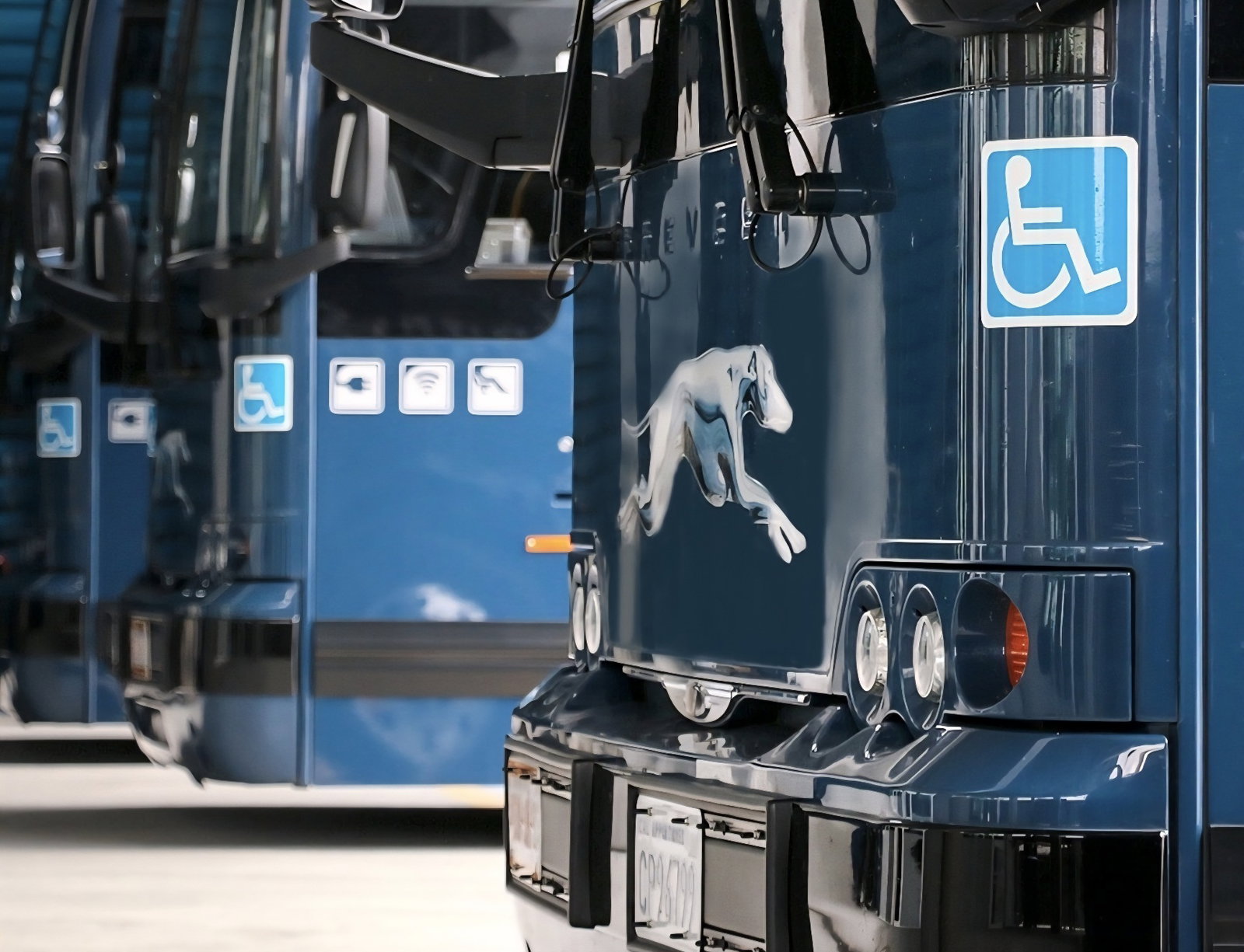
Greyhound has therefore accompanied the changes in American transport and society for more than a century. From a small business launched to carry miners in Hibbing, it became within a few decades a national network that for a long time represented the largest intercity coach system in the United States. Its buses carried millions of people to work, to new homes, or simply out on the road when no other transport option was available.
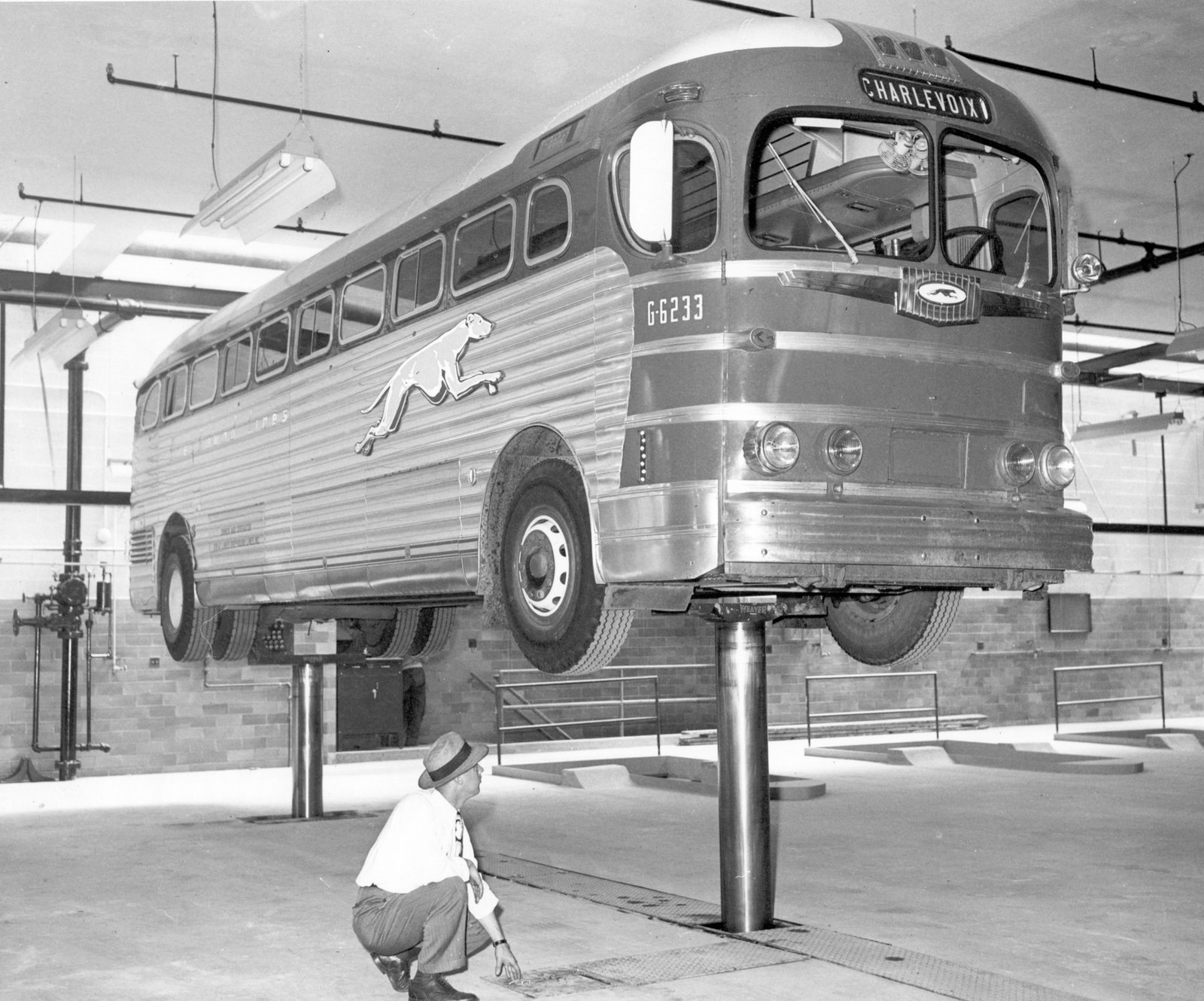
The Silversides and the Scenicruiser remain memorable types to this day, having become symbols of mid-20th-century American travel. Greyhound’s true distinction lay in providing mobility in a simple and affordable form, which is why it also found its way into pop culture: it became a frequent motif in songs, films and literature, and the film The Big Bus, previously featured as a curiosity on our site, can essentially be seen as a caricature of Greyhound. Although the role of intercity coach transport in the United States has by now receded with the spread of car travel and aviation, Greyhound’s history and cultural imprint remain a defining part of the past and present of American transport.