![Magyarbusz [Info]](/mbi/header-logo.png)
Heading to North America: the new Solaris Urbino 40 electric is ready to roll
 Ludányi József
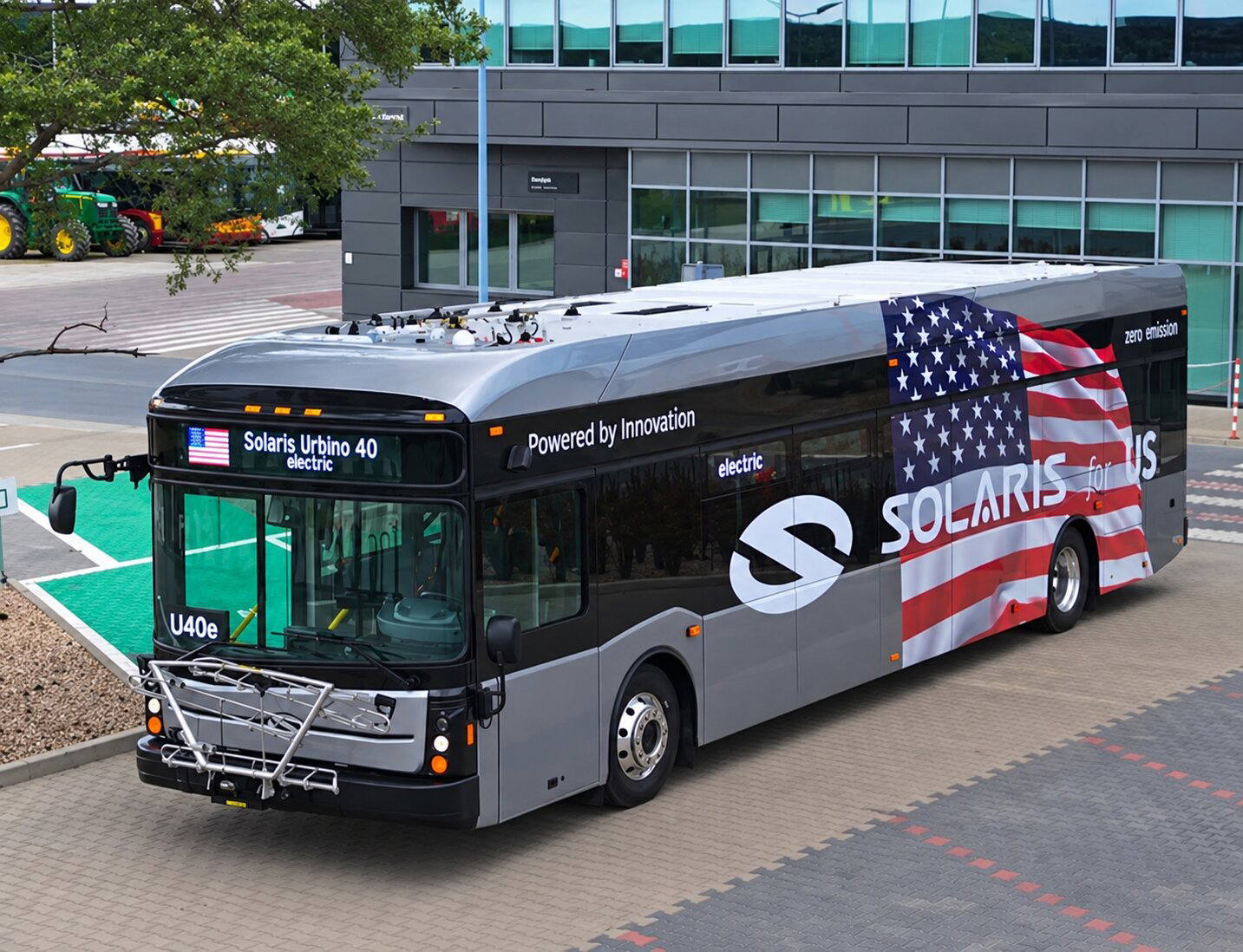
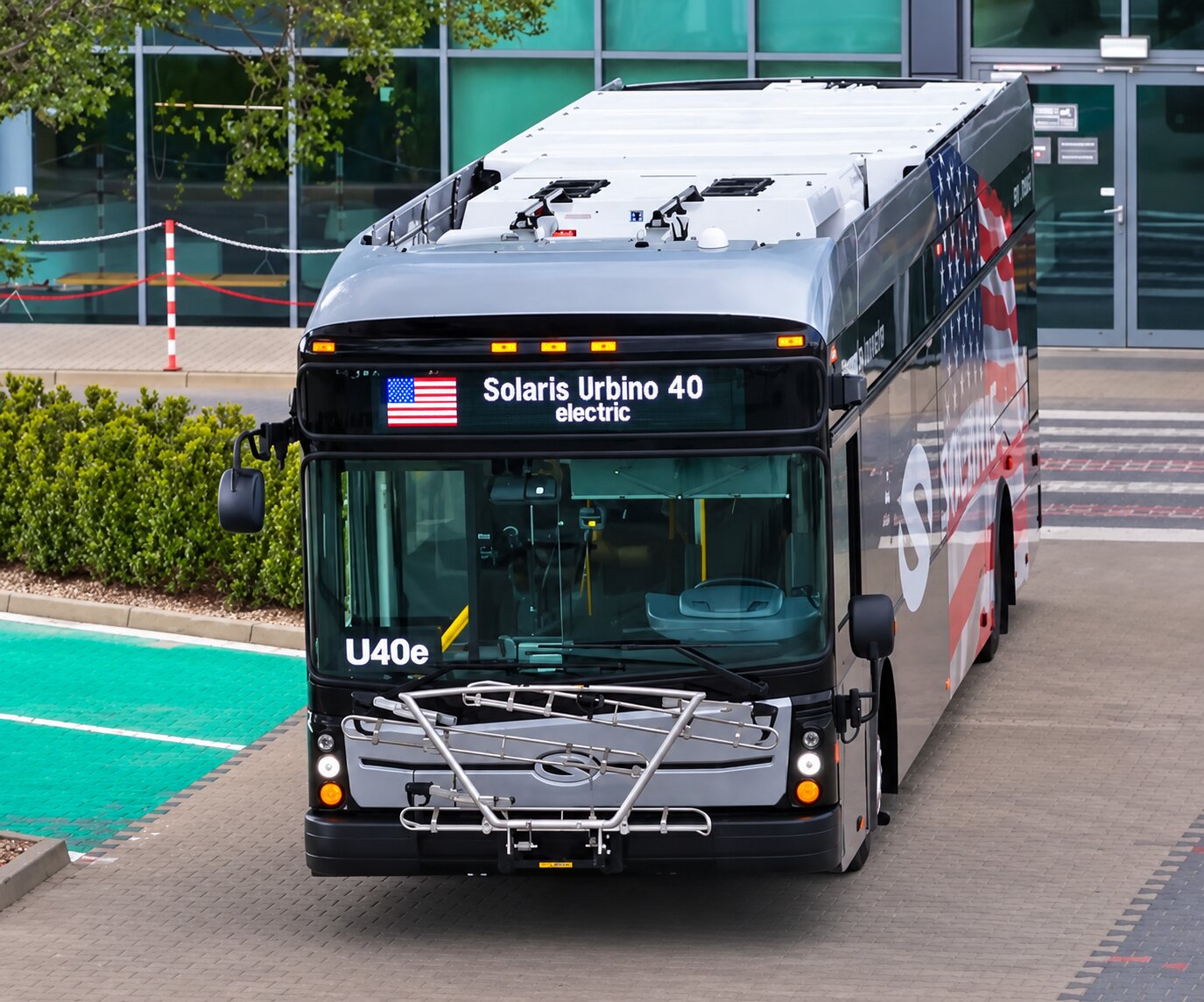
Solaris has released new images of its Urbino 40 electric battery-electric bus, developed specifically for the North American market, ahead of its official world premiere on October 5 at the APTA TRANSform & EXPO trade show in Chicago. The newly published details are particularly interesting because, after earlier close-up shots, the new model can now be seen in full for the first time, while the manufacturer also offers the first meaningful look at the passenger compartment. What is more, the photos do not show just a single bus: all three Urbino 40 electric vehicles currently completed or being prepared for their debut appear side by side.
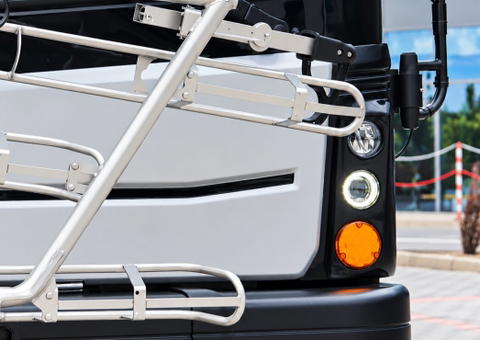
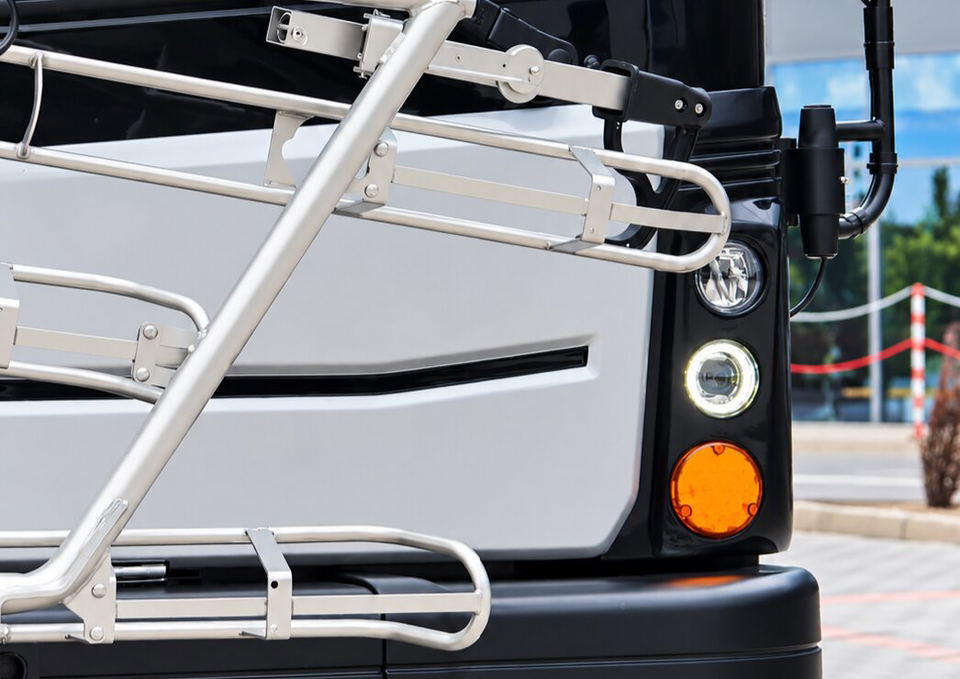
We reported on the first real details of the American Urbino in early September, but at that time Solaris deliberately showed only selected parts of the vehicle. The first images mainly revealed the front and rear ends adapted to North American regulations and operating practices, the robust bumpers, the front-mounted bicycle rack and the lighting equipment compliant with US standards. The latest photos reveal far more, while also making tangible what we described in detail in our earlier article on the technical background of the new model: the Urbino 40 electric is not simply a modified version of the European Urbino 12, but an independent design tailored to North American requirements.
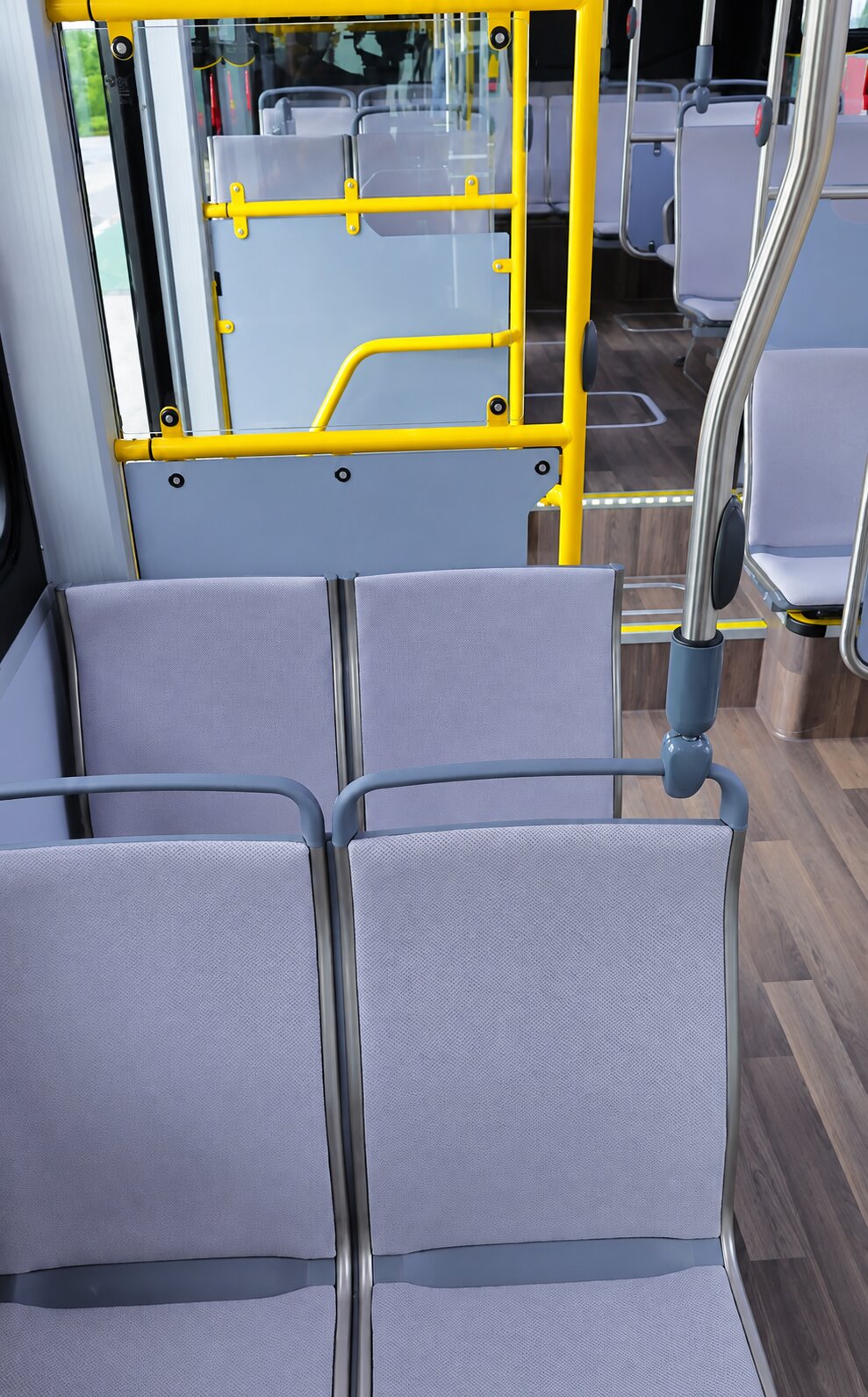
This is particularly clear from the first images of the passenger compartment. Unlike the urban versions of the European Urbino family, the American model is not fully low-floor throughout its length, but follows the low-entry layout customary in the United States and Canada. A low, step-free floor has been created in the front section of the vehicle, while further back steps lead up to the raised rear passenger area. This configuration is practically an industry standard in North America and, among other things, allows for more favourable packaging of the driven axles and associated mechanical equipment commonly used there.
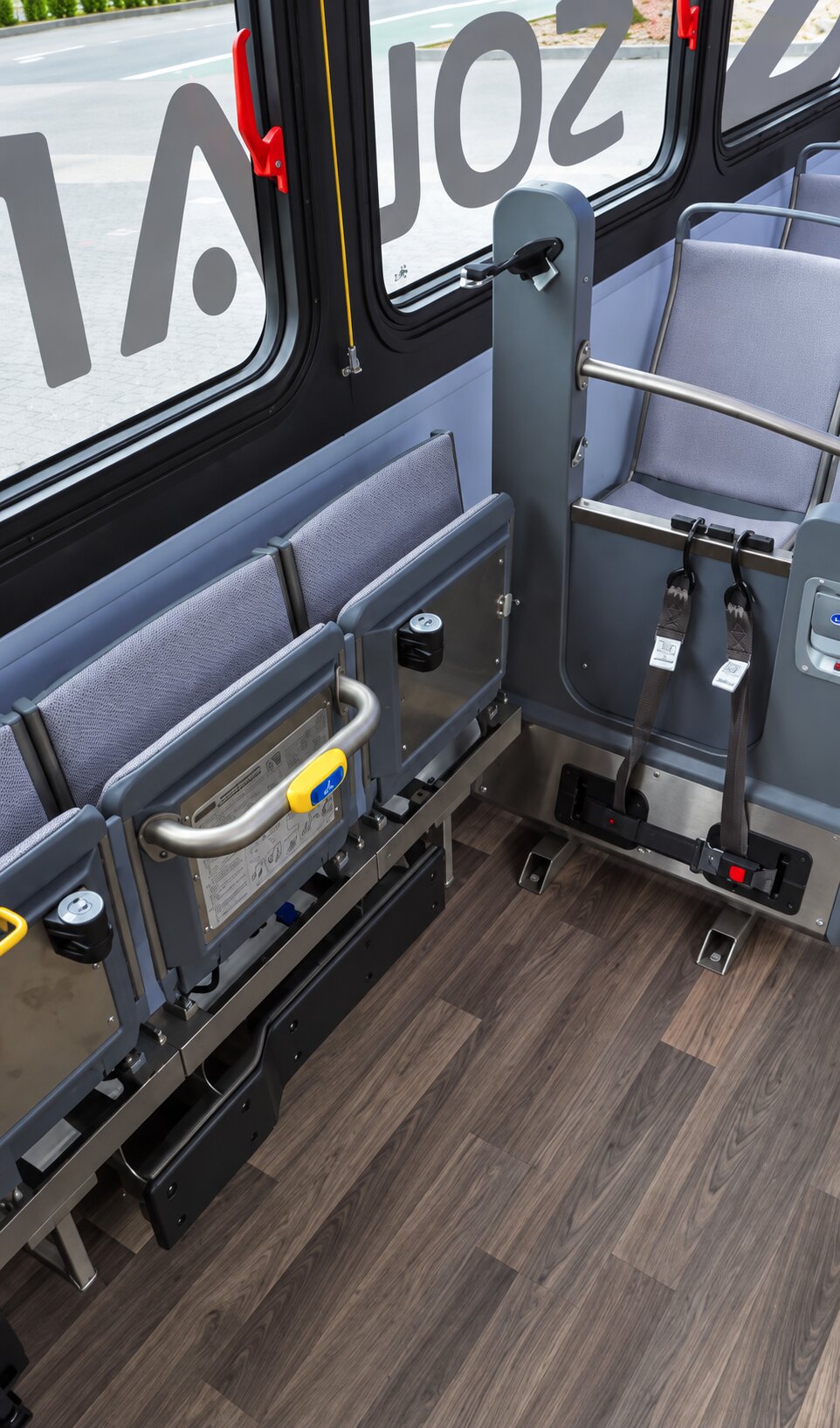
The layout of the front passenger area, which is crucial for accessibility, also had to be adapted to US ADA requirements. On North American city buses, wheelchair users board via a ramp at the front door, which also requires a suitably sized accessible area. Solaris has not yet disclosed the full passenger-compartment specification of the American Urbino in detail, so the exact number of seated and standing passengers is expected to be revealed at the official presentation.
The new exterior images also show the proportions of the Urbino 40 electric better than ever before. The 40-foot, or 12.19-metre, vehicle, with its 102-inch, approximately 2.59-metre body width and a wheelbase different from that of the European Urbinos, displays different proportions at first glance. The front end remains recognisably Solaris, but almost every detail has been adapted to American requirements. In addition to the large energy-absorbing bumper and the bicycle rack mounted on it, the lighting equipment designed to meet North American regulations immediately reveals which market the vehicle was built for. Particularly characteristic are the marker lights positioned on the upper part of the body: at the front, two amber lights are located at the body edges and three more in the centre, while at the rear the same arrangement is used with red lights.
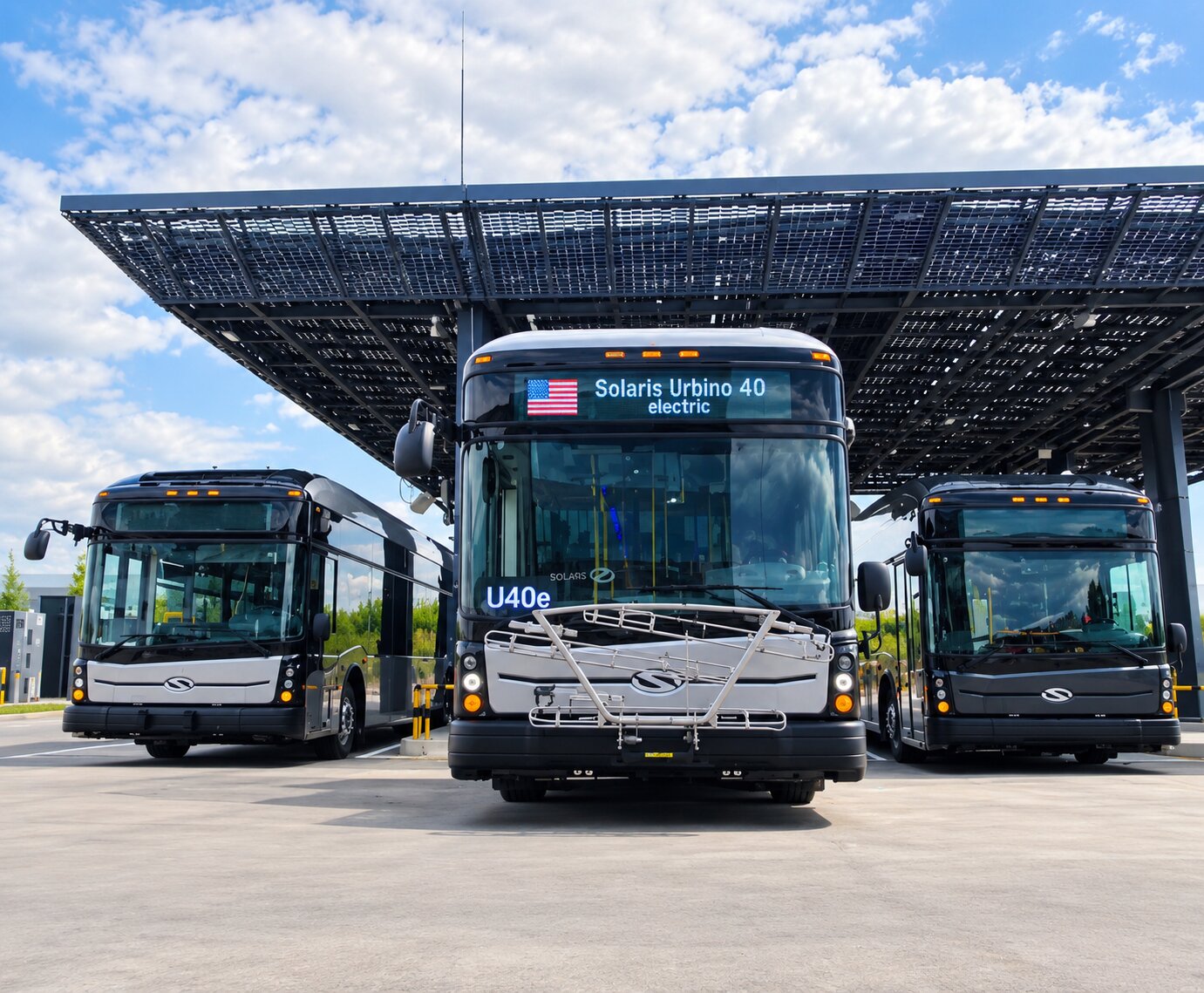
Another interesting aspect of the latest images is that they show three Urbino 40 electric buses at once. This is in line with our earlier information, according to which Solaris is building three 40-foot examples of the American model in the first phase, each for a different purpose. One vehicle will go to the manufacturer’s first US customer, King County Metro, which serves the Seattle area; another will be the show vehicle for the world premiere at the APTA Expo in October; and the third unit is intended for the mandatory Altoona Bus Testing Program.
The latter will be a particularly important milestone in the Urbino’s American career. In order to participate in future procurements supported by the FTA, the new model must undergo the comprehensive test programme at Penn State University’s Altoona Bus Research and Testing Center. The tests examine, among other things, structural durability, reliability, brake-system performance, dynamic driving characteristics, energy consumption and maintainability.
The joint appearance of the three buses also indicates that Solaris’ North American programme is increasingly moving from the development phase towards actual market launch. Even before the official world premiere, the manufacturer already has orders for ten vehicles: King County Metro has ordered two 40-foot and two 60-foot electric buses, while San Francisco has signed a contract with the Polish manufacturer for three standard and three articulated units.
The first series may still be built in Poland, as these orders are not subject to the Buy America localisation requirements applied to federally funded procurements. In the longer term, however, a meaningful presence in the US market will require local assembly and a significant share of US-sourced components. Solaris is already examining these options, and its parent company’s plant in Elmira, New York, operated by CAF, could play an important role in this.