![Magyarbusz [Info]](/mbi/header-logo.png)
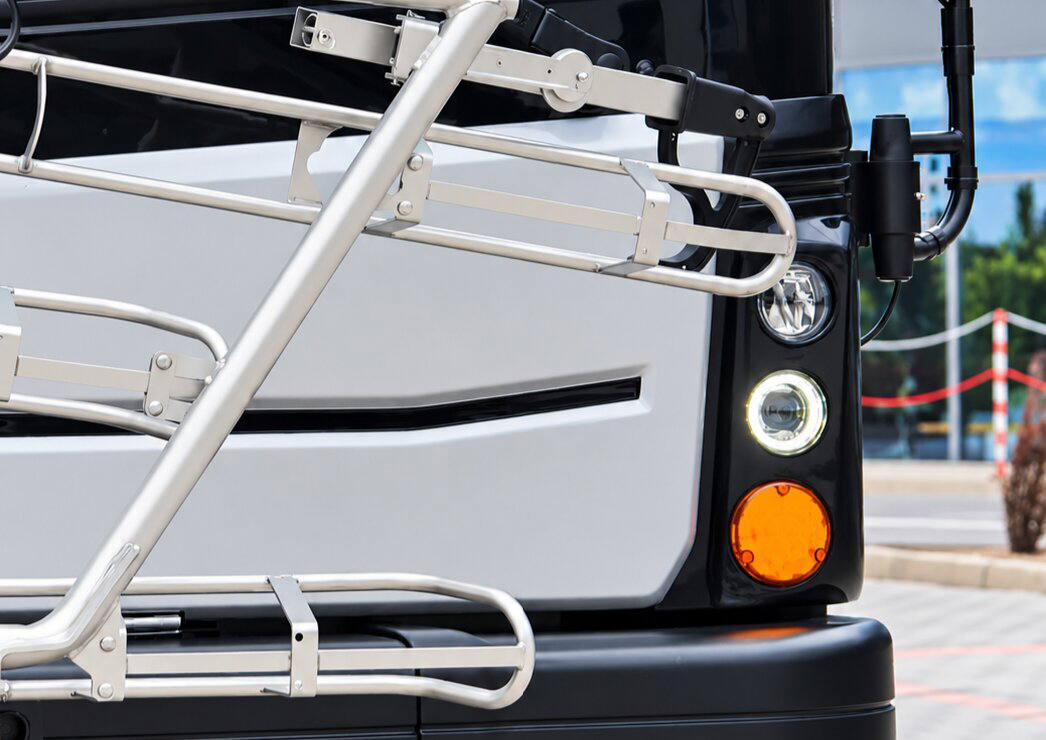
Tailored for North America: first real details of the US-market Solaris Urbino revealed
 Ludányi József
Just a month before its official world premiere, the shorter member of Solaris’s new electric bus family developed specifically for the North American market has shown itself in physical form for the first time. The first images released by the Polish manufacturer already clearly reveal details of the final design of the 40-foot (12.19-metre) Urbino 40 electric, which Solaris will officially unveil on 5 October at the APTA TRANSform & EXPO trade fair in Chicago.
We reported in detail back in July on Solaris’s entry into the US market and the fundamentally new bus design required for it, covering, among other things, the differences between American and European technical regulations, Buy America requirements, FMVSS and ADA rules, and the significance of the Altoona test. At that time, the new model family existed for the public only in renderings, but now the first real images of the show vehicle have also emerged. For now, it is the 40-foot solo version that has broken cover, and even then only in details, but the photos already clearly show the front and rear ends, as well as several styling solutions characteristic of the North American market. What can be seen also confirms that the previously published renderings were a fairly accurate preview of the final design.
The new Urbino model family developed for the North American market currently consists of two members: the 40-foot, or almost 12.2-metre, solo Urbino 40 electric, and its 60-foot, roughly 18.3-metre articulated version. As can be seen, the model designations follow North American practice by referring to the vehicles’ approximate length in feet. At the same time, the American Urbino family is far more than a simple adaptation of the version offered on the old continent: the body has effectively been redesigned from the ground up. The vehicle is wider than its European counterparts, has a longer wheelbase, and its passenger compartment follows the low-entry layout customary in North America. All this also required substantial redesign of the frame structure, the positioning of the running gear, and the floor, side and roof structures.
The solo version, now shown in detail, will be the first to make its debut, with three examples currently under construction. One is being built for Solaris’s first US customer, King County Metro; the second will be the centrepiece of the world premiere at the APTA Expo in October; and the third is destined for the mandatory Altoona Bus Testing Program. The latter is one of the key milestones for entering the US market, as every new bus type must undergo this comprehensive series of tests in order to participate in tenders funded by the United States’ federal transport authority, the FTA. At Penn State University’s Altoona Bus Research and Testing Center, the vehicle’s structural durability and reliability are examined over several thousand kilometres of test running, while checks are also carried out on, among other things, brake system performance, acceleration, steering behaviour, noise and vibration levels, energy consumption and maintainability. The tests are extremely stringent: in the past, more than one bus type has failed its first Altoona test due to structural faults or even serious frame damage, after which manufacturers had to modify the original design before submitting it for testing again.
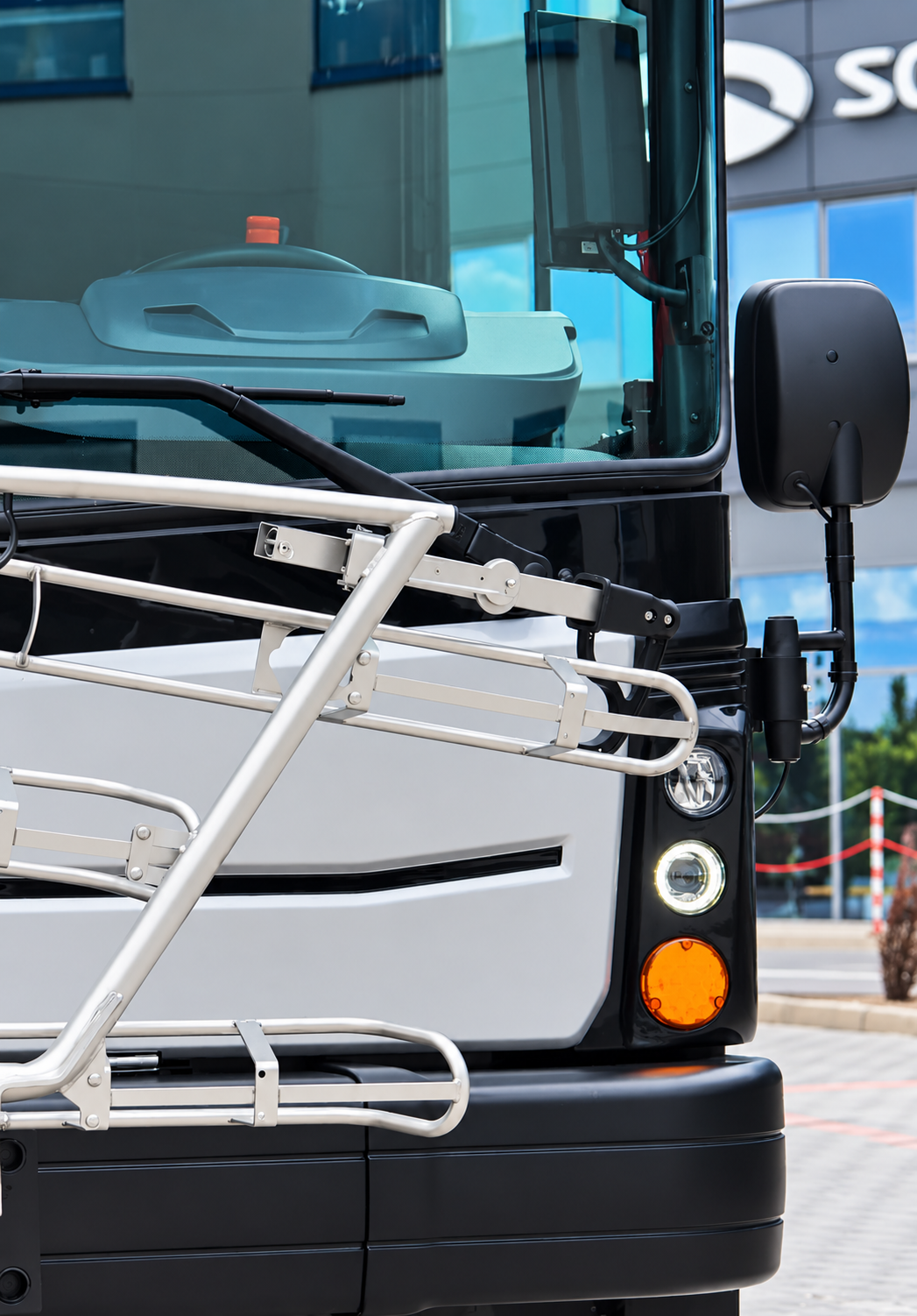
The first images released of the Urbino 40 electric already show several details that are specifically adapted to the requirements and operating practices of the North American market. These include the robust, energy-absorbing bumper, the front-mounted bicycle rack, lighting equipment adapted to North American regulations, and the completely different front and rear end design. The latter has no rear windscreen, while the lighting signature of the rear lamps is entirely different from that of European Urbinos: instead of the familiar small, horizontally positioned lamp units, the rear end is defined by larger circular lamps arranged in vertical columns.
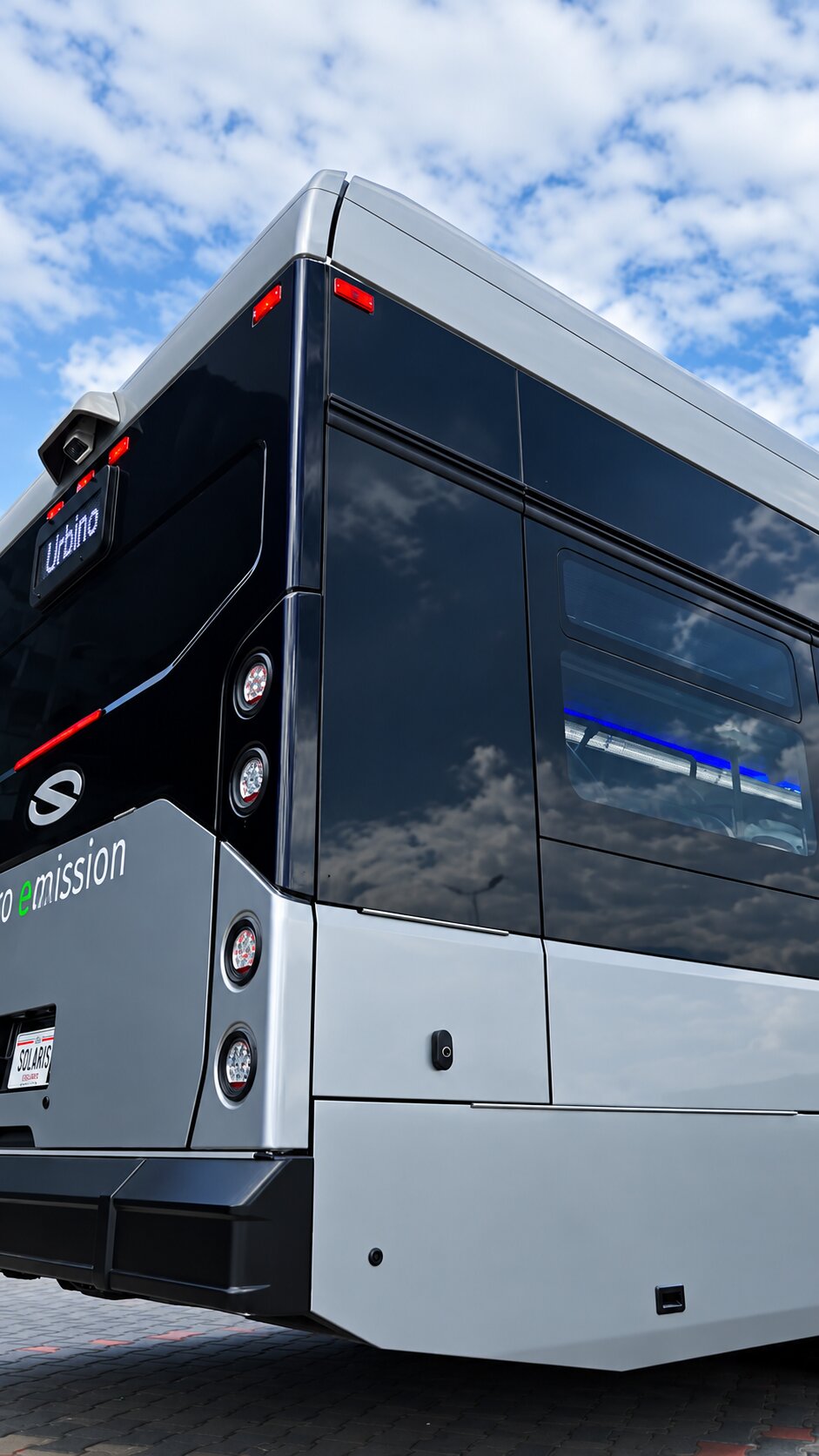
Despite all this, Solaris has sought to preserve the Urbino’s design identity. At first glance, the vehicle is recognisably a product of the Polish manufacturer, while its proportions, bodywork details and technical layout now follow the logic of the US market. The bus now seen is therefore not simply an overseas version of the European Urbino 12, but the first member of Solaris’s new electric product line created specifically for North America, described by the manufacturer itself as a new platform tailored to the technical and regulatory requirements there.
The official world premiere of the Urbino 40 electric will take place on 5 October at the long-established APTA EXPO event at McCormick Place in Chicago. The exhibition itself runs from 5 to 7 October, while the associated TRANSform conference begins on 4 October.
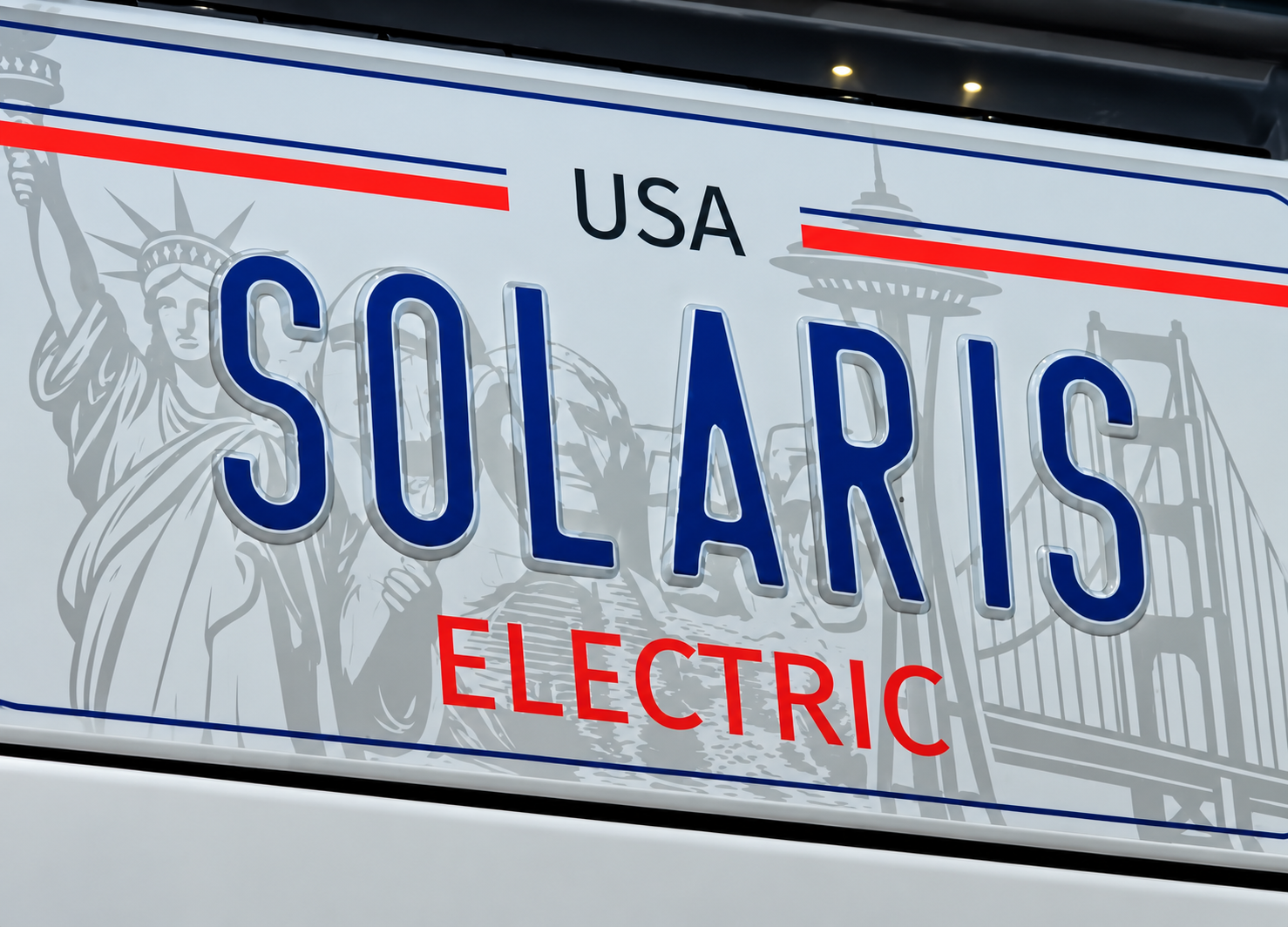
Even before its official debut, the new Urbino family already has orders for ten units from the United States. The aforementioned King County Metro, serving the Seattle area, has ordered two 40-foot and two 60-foot electric buses, while San Francisco has contracted with Solaris for three solo and three articulated examples. These first vehicles will still be built in Poland, but Solaris is already working on establishing its US manufacturing base. As previously reported, a key role in this could be played by the Elmira, New York plant of its parent company, Spain’s CAF, which currently assembles rail vehicles. Creating local manufacturing or assembly capacity is also crucial in the longer term because, without it, Solaris would not be able to meet the Buy America requirements applied to federally supported vehicle procurements.