![Magyarbusz [Info]](/mbi/header-logo.png)
Why the Iveco acquisition could be crucial for Tata
 Ludányi József
Although it is still too early to draw firm conclusions about the strategic rationale behind Tata Motors’ acquisition of Iveco Group, it is no secret that the Agnelli-Elkann family, through its investment holding company Exor – which owns 27.06% of Iveco’s ordinary shares and 43.11% of the voting rights – has long sought to reduce its direct exposure to vehicle manufacturing, a capital-intensive and cyclical sector burdened by industrial risks (according to our Italian sources, the family would instead prefer to invest in private healthcare services in the future). This ambition was already clearly illustrated by the creation of Stellantis, when the merger of Fiat Chrysler and PSA saw the family retreat into the role of financial investor. The sale of Iveco could be the next stage in this process, indirectly prepared by the company’s spin-off from CNH Industrial in 2022.
Tata Motors is by no means the first name to have emerged as a potential buyer for Iveco. Four years ago, the Italian government used its “Golden Power” authority to block an acquisition attempt by China’s FAW, while over the past year or so, insiders considered Hyundai the frontrunner to acquire the Turin-based truck, bus and industrial engine business. The logic behind the transaction is fundamentally strategic and concerns the market for road vehicle applications. Iveco is regarded as a relatively vulnerable player compared with aggressively expanding competitors, which often cooperate with one another – such as the Volvo and Daimler groups’ CellCentric fuel cell consortium, or the Traton Group, which is increasingly exploiting synergies within the group. This situation also makes the company more exposed to a financially strong strategic investor, while for Tata it offers an excellent opportunity to enter the European market backed by an established and extensive sales and service network.
In preparation for the transaction, the separate sale of Iveco Group’s defence business has also been put on the agenda, with completion planned by 31 March 2026 at the latest. The buyer of the division, which operates under the name Iveco Defence Vehicles, will be Leonardo, the defence-industry group in which the Italian state holds a 30% stake. The move is crucial from a political perspective, as separating the defence profile removes one of the main obstacles that had previously stalled a foreign takeover of Iveco Group; the Italian government considers the company’s military vehicle production to be of strategic importance, and in 2021 used this argument to veto FAW’s acquisition offer.

For Tata Group, the acquisition of Iveco Group (which currently comprises Iveco, Iveco Bus, Heuliez, ASTRA, FPT Industrial and Iveco Capital) could mark another milestone in the decades-long global expansion strategy aimed at elevating the Indian conglomerate into the ranks of the world’s leading industrial players. Over the past five years, the group’s revenue has almost doubled, while its net profit and market capitalisation have more than tripled, as it invested around USD 66 billion in laying the foundations for future-proof operations. The planned USD 3.8 billion acquisition of Iveco would be the second-largest acquisition in Tata’s history after the Corus deal in 2007.

The long-standing, trust-based relationship between Tata and the Agnelli family – partly thanks to the personal friendship between Ratan Tata and John Elkann – provides an important backdrop to the current transaction. In 2006, Ratan Tata even joined the supervisory board of Fiat, then still an Agnelli family interest, following an invitation brokered by the Agnellis. This relationship is not merely symbolic: it also formed the basis for broad corporate trust and strategic cooperation, which for years has provided Tata with a favourable framework for its global expansion ambitions toward Italy.
Tata’s commitment to global expansion is unique among India’s major corporations. While most local conglomerates primarily seek domestic dominance or regional growth, Tata’s strategy has been international in scale from the outset, consistently championed by two of the group’s defining leaders, JRD (Jehangir Ratanji Dadabhoy) Tata and Ratan Tata. Their goal has not simply been to build a presence based on low-cost manufacturing or back-office services, but to create proprietary brands, research and development capabilities and product portfolios that can make Indian industry competitive on a global level.

Over the past quarter of a century, the group has carried out a number of iconic foreign acquisitions. With the USD 407 million purchase of Tetley in 2000, it became the world’s second-largest tea company and gained access to developed markets. The strategic advantage of the transaction was that Tata could combine Tetley’s strong brand position in Western Europe and North America with its own plantations and low-cost Indian sourcing base. Through the USD 12 billion Corus deal in 2007, Tata Steel became the fifth-largest steelmaker, but the 2008 financial crisis, high European operating costs and the rise of China’s steel industry left the company struggling with losses for many years, forcing it to carry out major write-downs and asset sales. By contrast, the USD 2.3 billion acquisition of Jaguar Land Rover in 2008 – in which Tata Motors bought the two British carmakers from Ford Motor Company, along with the English Daimler brand that was incidentally also part of Ford’s interests – delivered spectacular success in its first decade: through capital injections, product development and a push into the Asian luxury car market, the company became profitable and regained its market prestige. After 2018, however, Brexit, weakening Chinese demand and the automotive industry’s shift away from internal combustion engines created new challenges, to which Tata is seeking to respond with further investment.

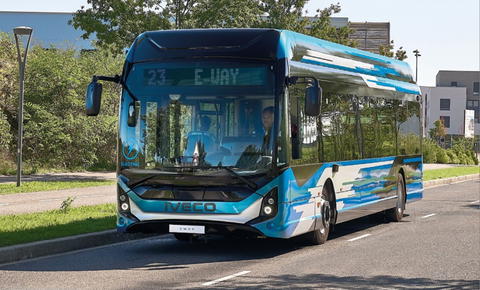
The acquisition of Iveco clearly fits this pattern, while also taking previous experience into account. Unlike the capital-intensive steel industry, commercial vehicle manufacturing is a segment Tata Motors knows in depth, and in which it already holds a leading position in India, while also being present in Asia, Africa and Latin America. As Europe’s fourth-largest commercial vehicle manufacturer, Iveco does not require fundamental brand repositioning or comprehensive restructuring, while it offers advanced technologies – particularly in electric and hydrogen-powered vehicles – as well as an extensive sales and service network that could allow Tata to strengthen its presence in Europe’s market for sustainable transport solutions at an accelerated pace.

The acquisition would mean more than simply expanding market presence. In addition to Iveco’s European base, its Latin American and Asian interests, along with its existing manufacturing and service network, would give Tata the opportunity to align these assets with its own cost-efficient manufacturing capacities and engineering resources, thereby improving the efficiency of production and supply processes. At the same time, investor sentiment remains cautious because of the size of the transaction, the integration risks and uncertainty over profitability. Iveco’s strong cash-generating ability, however, provides a good starting point, especially when compared with the lessons of earlier, financially burdensome acquisitions.
Over the past decades of international acquisitions, Tata has gradually refined its strategy. Some deals have been notably successful, others less so, but overall these steps reflect the emergence of an Indian company as a global player. If Tata Motors carries out this transaction with a clear strategy and disciplined execution, the acquisition of Iveco could stand out in the company’s history not only for its scale, but also for its effectiveness.