![Magyarbusz [Info]](/mbi/header-logo.png)
New Hess trolleybuses and another route section on Lausanne’s trolleybus network
 Ludányi József
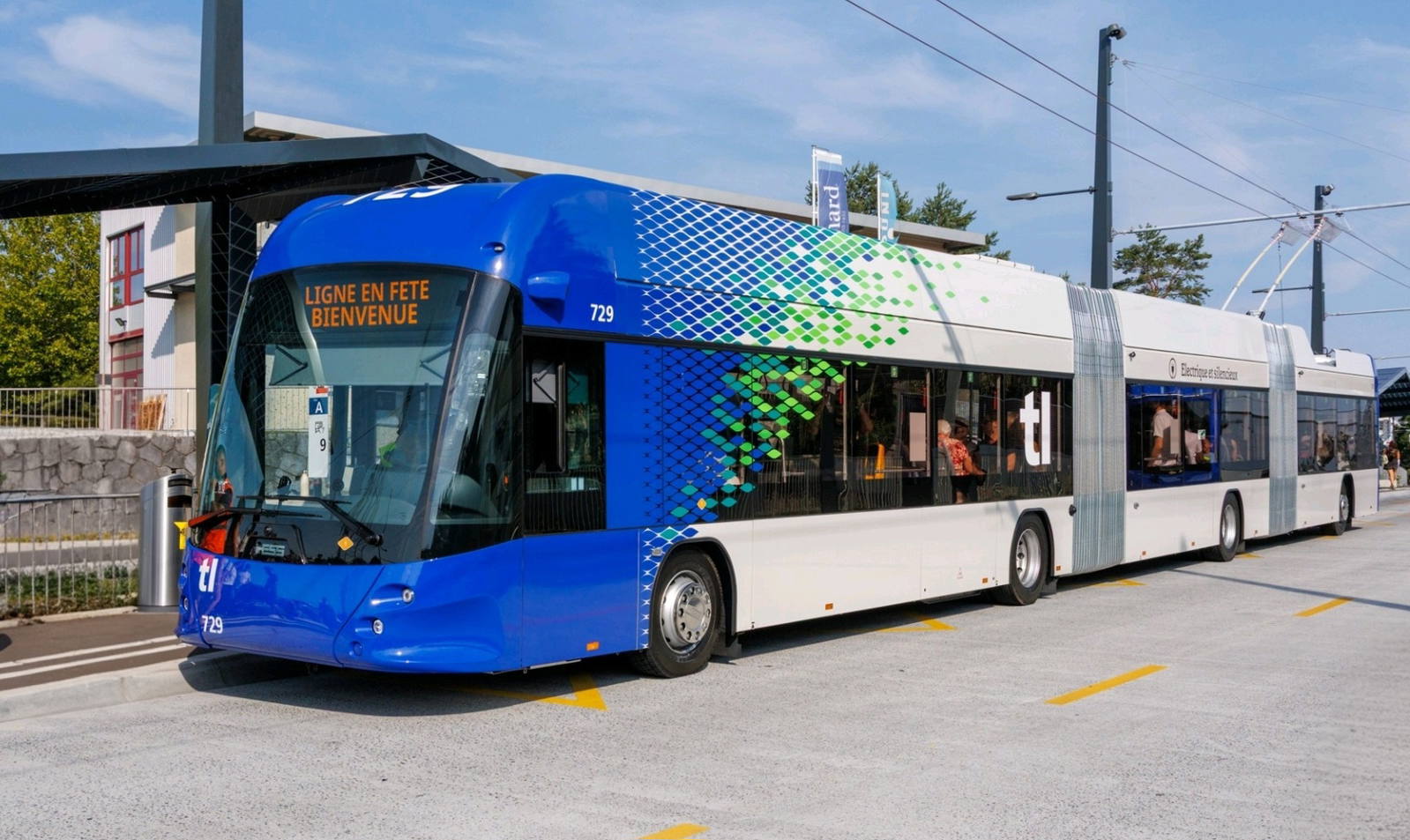
Another important milestone has been reached in the development of Lausanne’s trolleybus operations: in mid-August, one of the city’s busiest public transport services, trolleybus route 9, was extended to the centre of Crissier. With the investment, the Swiss city’s trolleybus network, which totals more than 70 kilometres, gained a further section of around two kilometres, while Transports publics de la région lausannoise (tl) also introduced its latest 25-metre Hess lighTram bi-articulated trolleybuses on the route. Although some cities are opting to scale back or discontinue trolleybus operations, there are now far more examples in Europe of the opposite approach: using the potential of existing systems, they are being developed and expanded instead. Lausanne is following this path too, with battery-equipped trolleybuses capable of off-wire operation opening up new possibilities, since the network can be extended without having to equip new sections with overhead wires along their entire length.
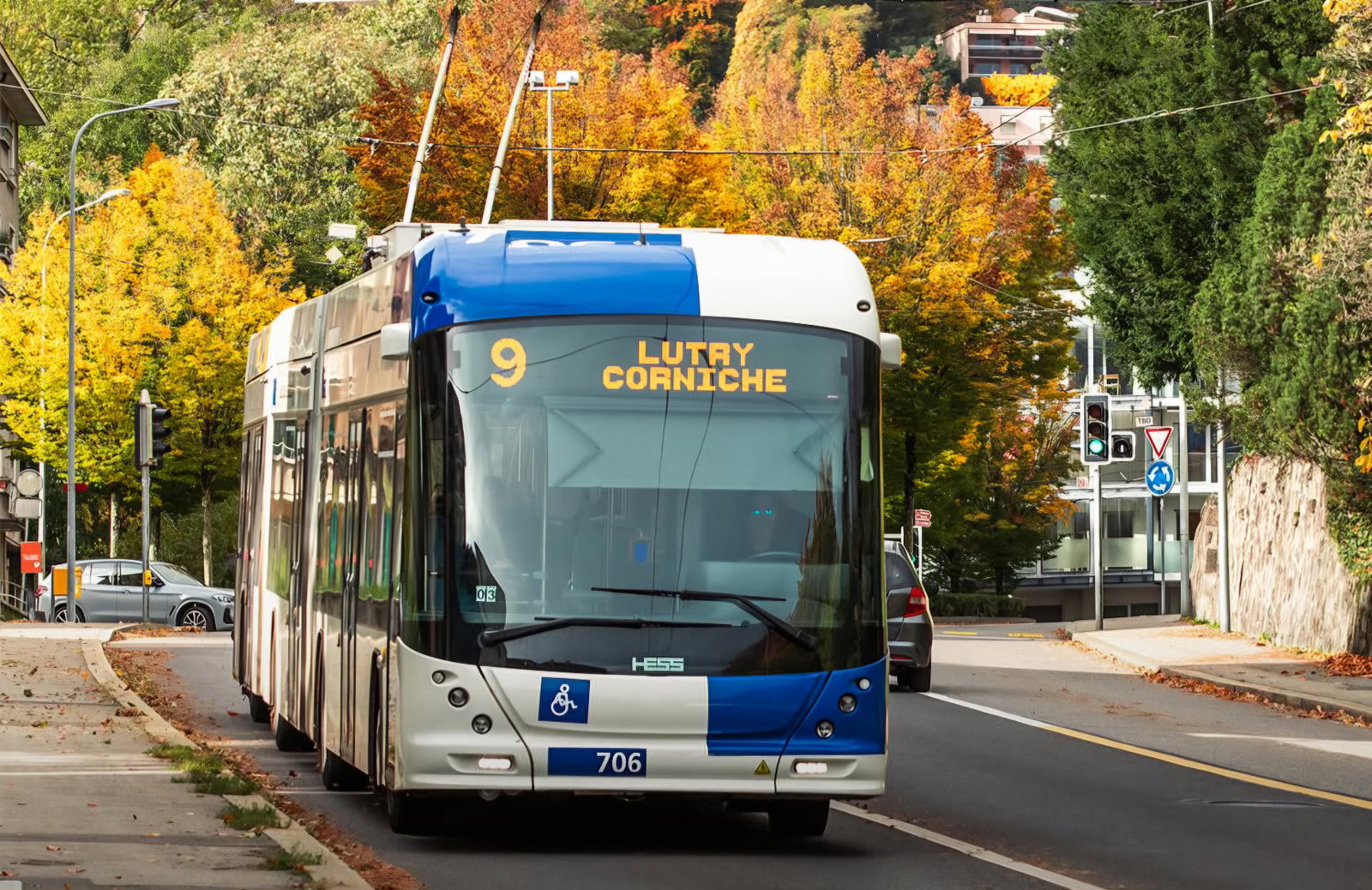
As a result of the latest development, route 9 has been extended from its former western terminus, through Prilly and Renens, all the way to the centre of Crissier. The new section was officially inaugurated on 15 August, with scheduled services beginning two days later, on 17 August. Running from Lutry through central Lausanne, the route was already one of the most important and busiest services on the tl network, carrying around 6 million passengers a year, and its role will be further strengthened by the westward extension.
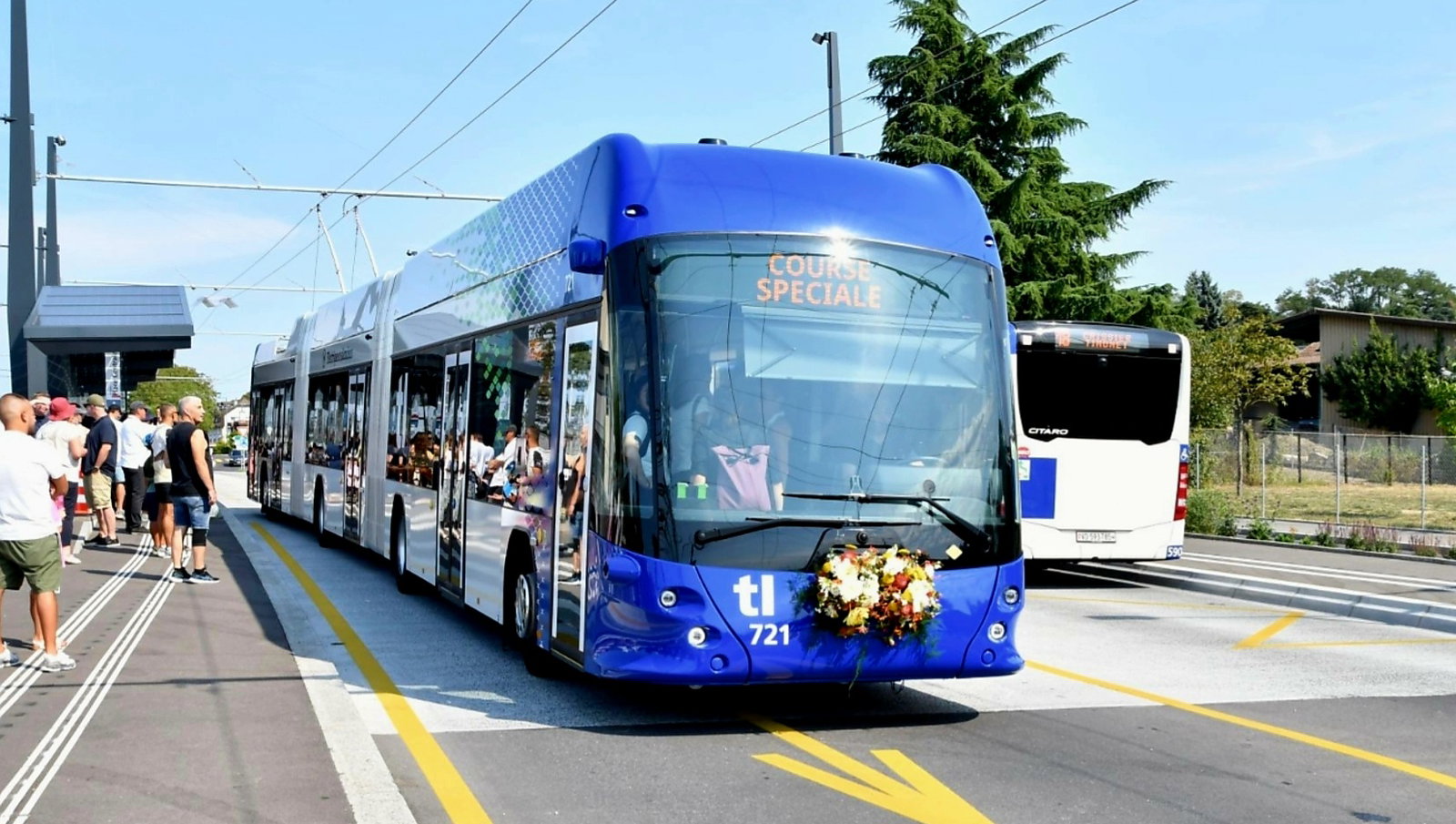
The project, however, involved much more than simply extending a trolleybus line. The works affected an approximately 3.1-kilometre section of Route de Cossonay between Prilly Huttins and Crissier Bré, where a high-capacity, high-quality BHNS corridor, including eight stops, was created. As part of the project, more than two kilometres of new trolleybus overhead wiring was also installed, providing the infrastructure needed to extend route 9 to Crissier. From the outset, the project was designed to improve the commercial speed, regularity and reliability of public transport even with high passenger volumes.
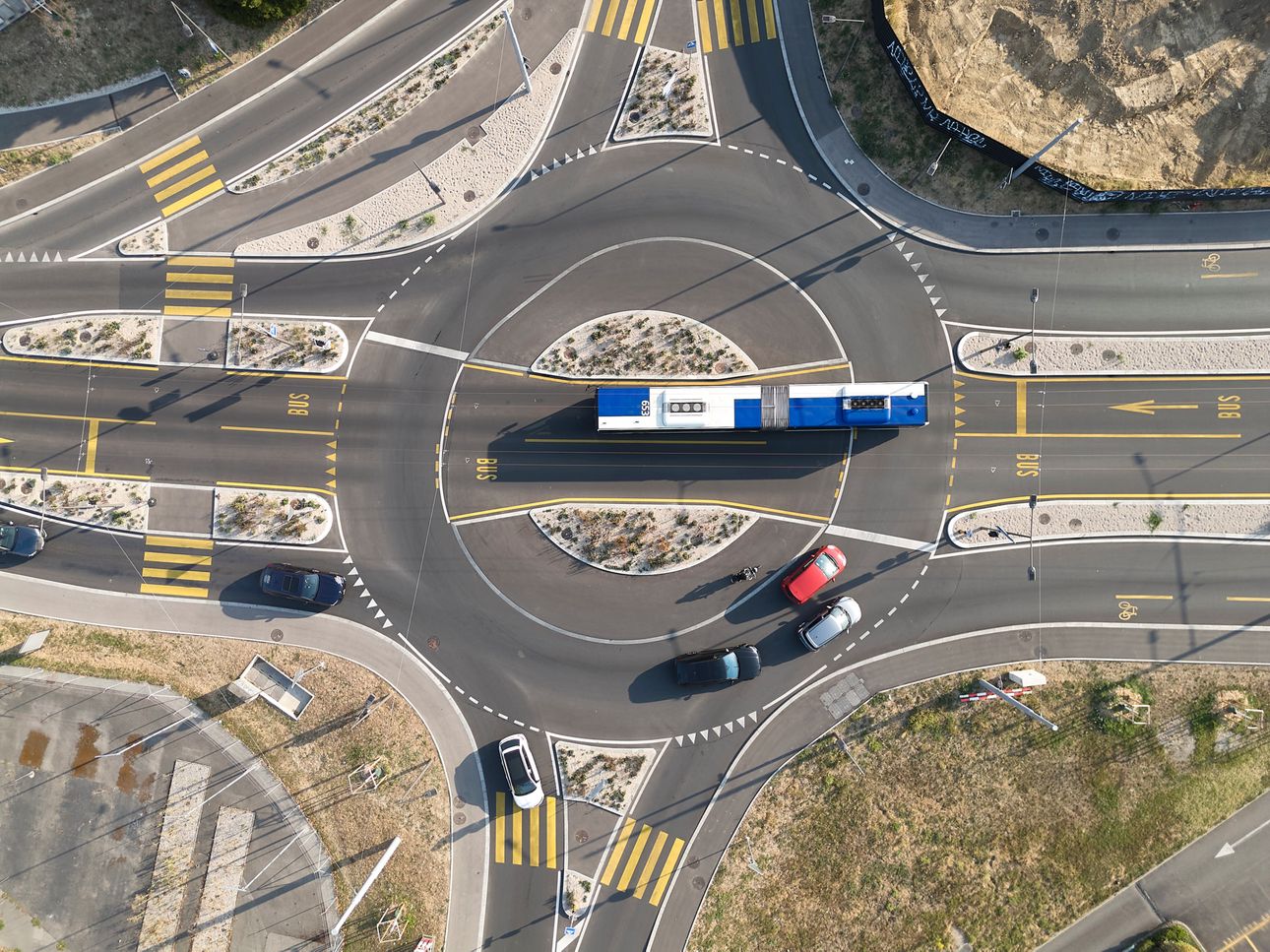
To achieve this, dedicated bus lanes separated from private road traffic were created along much of the route, running in the middle of the carriageway, while public transport is given priority at junctions. The rebuilt roundabouts are a particular feature: five intersections were redesigned so that BHNS vehicles – including the 25-metre bi-articulated trolleybuses – can pass through the centre of the roundabout with traffic-light priority. At the same time, due to the constraints of the built environment, it was not possible to provide a segregated alignment along the entire section.
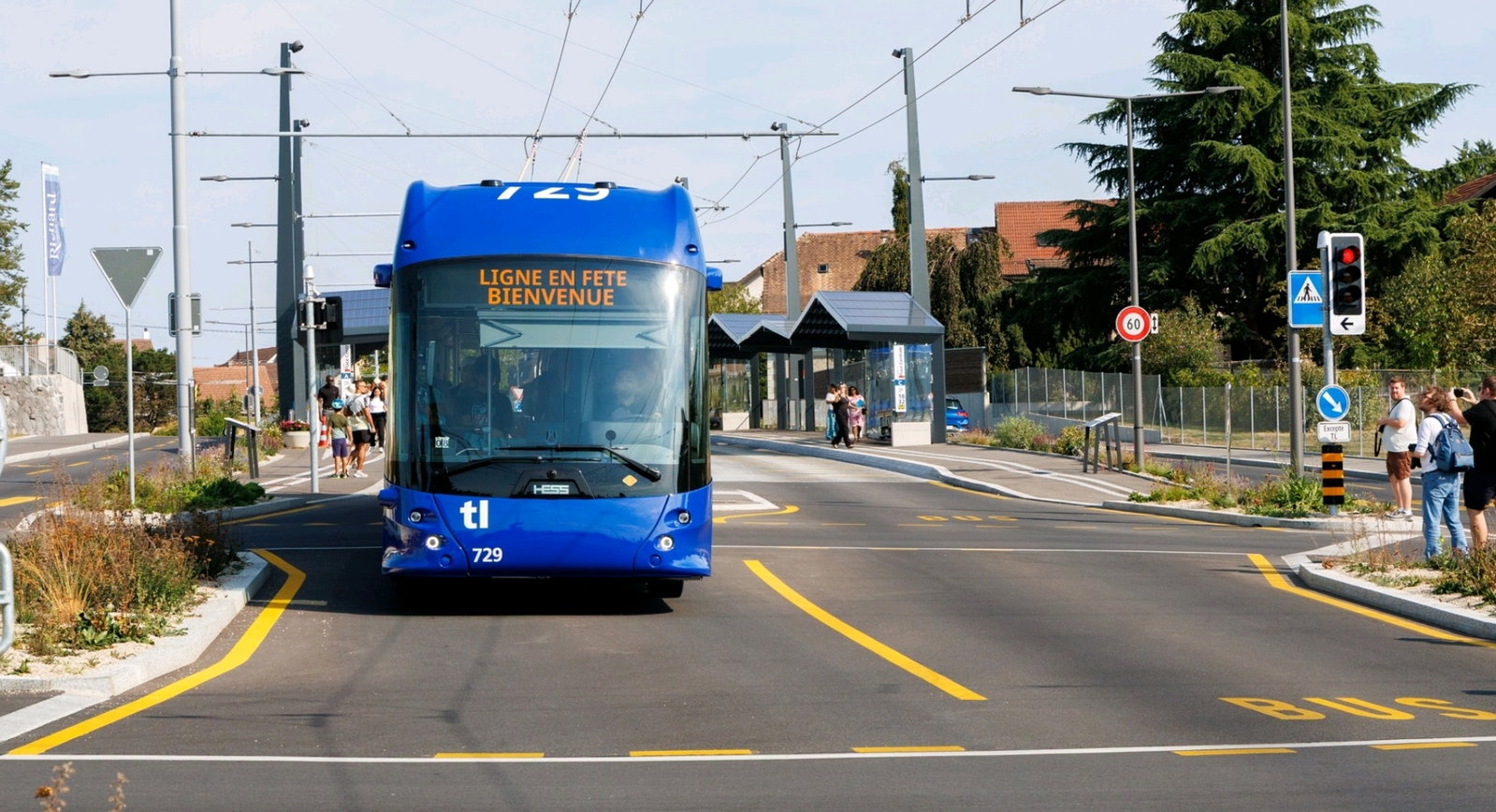
As part of the project, not only the roadway and stops were rebuilt; the overhead infrastructure needed for trolleybus operation was installed, along with a new traction substation, while pavements and street lighting were renewed and new cycle lanes and cycle paths were also created. In several places, the overhead line support poles were combined with street-lighting poles in order to reduce the visual impact of the infrastructure on the urban landscape.
Moreover, the section just completed is only one stage of a larger development programme. In the longer term, the BHNS corridor is to be extended as far as Bussigny, enabling route 9 to become part of a high-capacity trolleybus corridor crossing the Lausanne agglomeration from east to west, between Lutry and Bussigny. The future extension towards Bussigny was already taken into account when the current section was being planned.
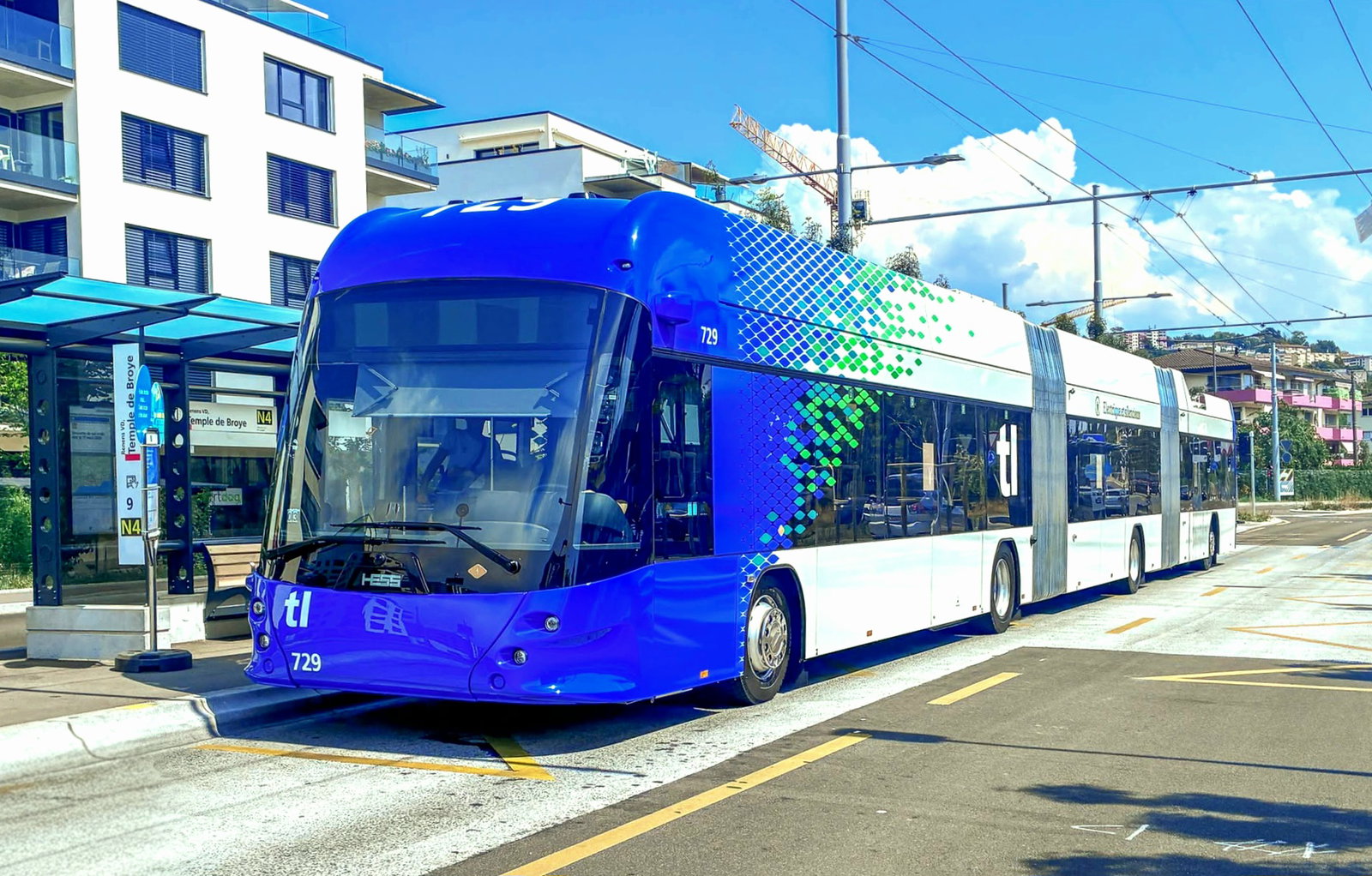
In parallel with the extension, the expansion of the vehicle fleet for route 9 has also begun. tl has so far taken delivery of four vehicles from the new 14-strong Hess lighTram 25 DC series ordered to further develop high-capacity trolleybus services. The nearly 25-metre-long bi-articulated battery trolleybuses are not new to Lausanne: the transport operator already runs 12 such vehicles, delivered in 2020–2021, which have primarily served the heavily used route 9 from the beginning. Once the entire new batch has been delivered, the number of bi-articulated trolleybuses in tl’s fleet will rise from 12 to 26.
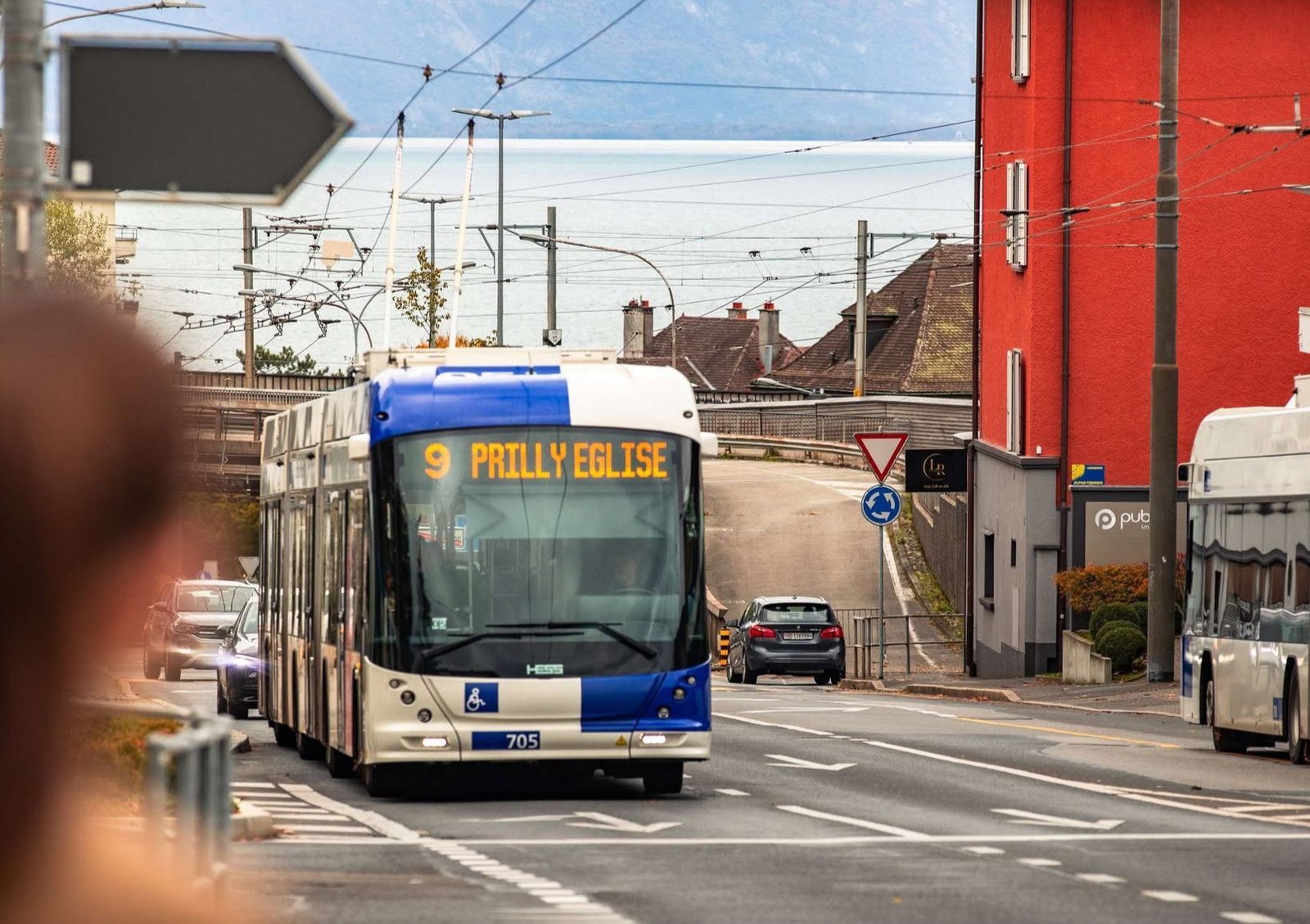
The 14 bi-articulated vehicles, however, form part of a much larger vehicle procurement: in June 2024, tl signed a contract with Hess for the supply of a total of 51 new battery trolleybuses. Alongside the lighTram 25 DCs, 37 nearly 19-metre lighTram 19 DC articulated vehicles will arrive, with deliveries scheduled between 2026 and 2028. The two versions are intended to play partly different roles. According to tl, the 37 articulated trolleybuses will partly renew the existing trolleybus fleet, while the 14 bi-articulated vehicles are being acquired specifically to increase carrying capacity and will be deployed on high-demand corridors. In addition, the new vehicles will also be needed for further network expansion.
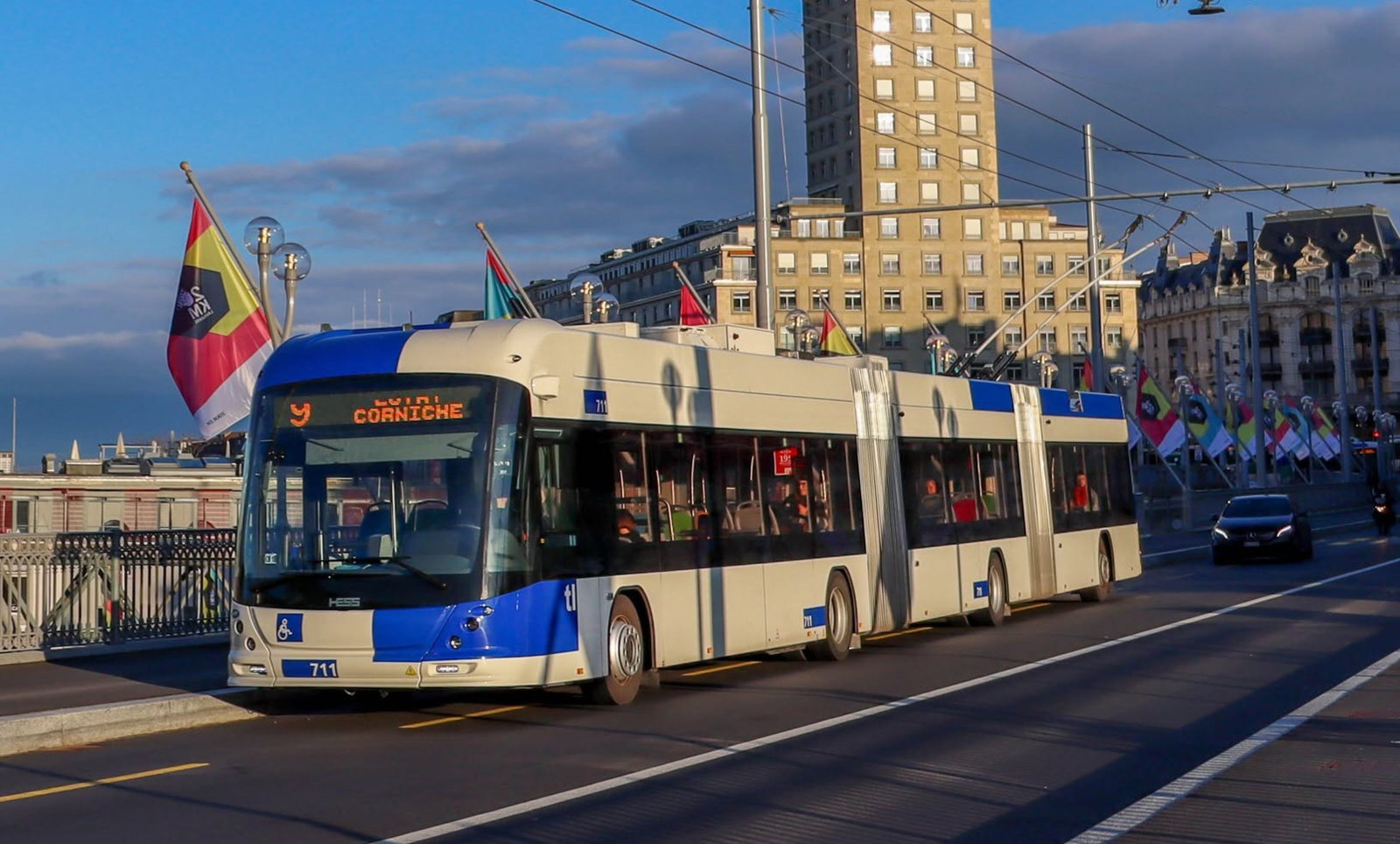
Even before the current procurement, Lausanne already had a fleet of more than one hundred trolleybuses, made up exclusively of vehicles from different generations of the Swiss manufacturer Hess. In addition to the 12 bi-articulated lighTram 25 DCs, the younger fleet includes 29 lighTram 19 DC articulated vehicles, but earlier Hess generations also continue to operate in significant numbers. The older fleet consists of 35 Swisstrolley 3 and 27 Swisstrolley 4 vehicles, meaning there are more than sixty articulated trolleybuses of these types in the fleet.
These vehicles, however, are not necessarily facing imminent withdrawal. In recent years, tl has launched a major refurbishment programme to extend the service life of its older trolleybuses. In 2021 and 2022, Hess refurbished a total of 35 Lausanne trolleybuses. According to the manufacturer’s detailed description, the passenger-compartment floor covering was completely replaced on these vehicles, and the power-steering pump was modified so that they could manoeuvre safely across the entire Lausanne network. The programme was completed in December 2022.
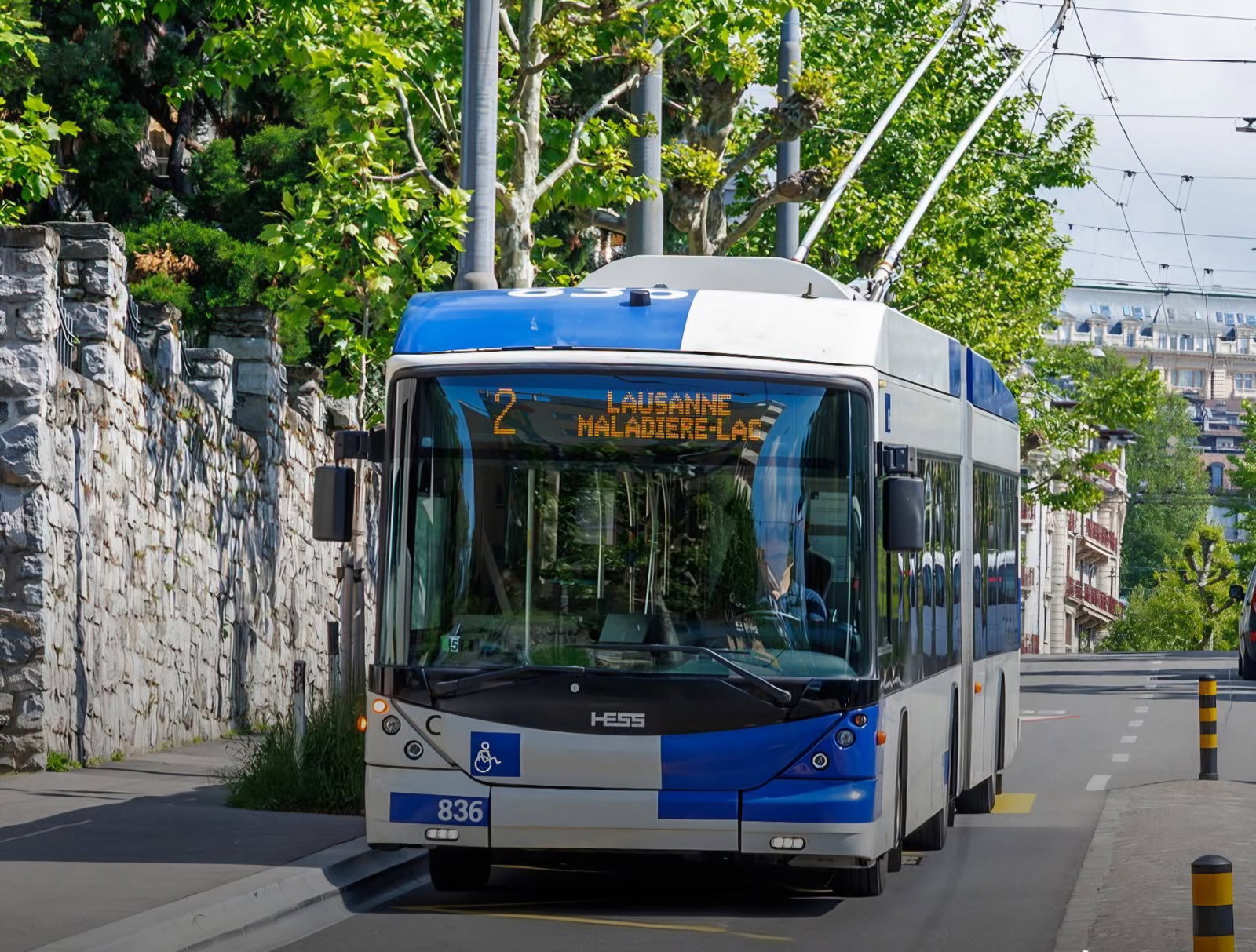
This was followed by another programme covering 27 vehicles: Hess scheduled the modernisation of the Swisstrolley 4 series between February 2023 and May 2025. tl has also invested in renewing the auxiliary drives of its older vehicles; according to the company’s 2023 report, alongside a major overhaul of the oldest types, it also ordered new auxiliary drives so that the trolleybuses concerned can remain in service as planned until 2032.
All this suggests that the arrival of the 51 new Hess vehicles should not be regarded as a straightforward one-for-one fleet replacement. While the 37 new articulated trolleybuses will partly renew the existing fleet, substantial sums are also being spent on extending the life of older vehicles, and the 14 new bi-articulated trolleybuses are being acquired from the outset as a capacity increase. This will be needed in the coming years, as tl is planning further extensions of the existing trolleybus network and the electrification of additional routes that are currently diesel-operated.
Lausanne’s still extensive trolleybus network provides a solid basis for these developments. According to tl’s most recent full-year statistics, the combined length of the trolleybus routes is 74.5 kilometres, while the physically installed overhead infrastructure covers a network of around 60 kilometres. The system consists of 11 trolleybus routes and is not confined solely to the administrative area of Lausanne, but also reaches several surrounding municipalities in the agglomeration.
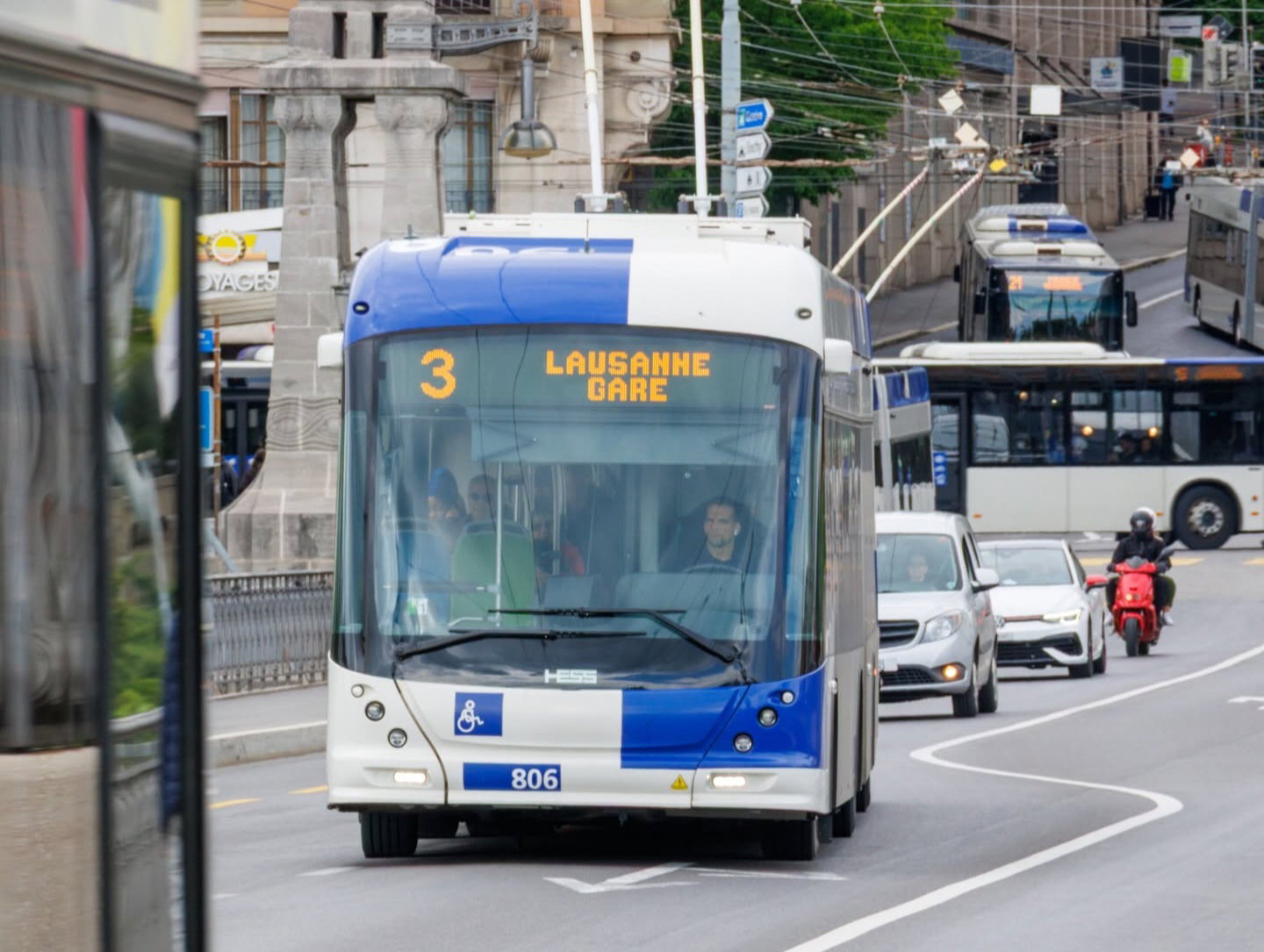
When expanding the network, tl is relying increasingly on new-generation battery trolleybuses capable of in-motion charging. These can travel several kilometres without overhead wires, while their batteries are recharged while running on sections that are already electrified. As a result, new route sections do not have to be equipped with overhead wiring along their entire length. This solution was already used for the extensions of route 4 in 2022, route 1 in 2023 and route 3 in 2024, where trolleybuses can also serve areas close to the network that are not fitted with overhead wires.
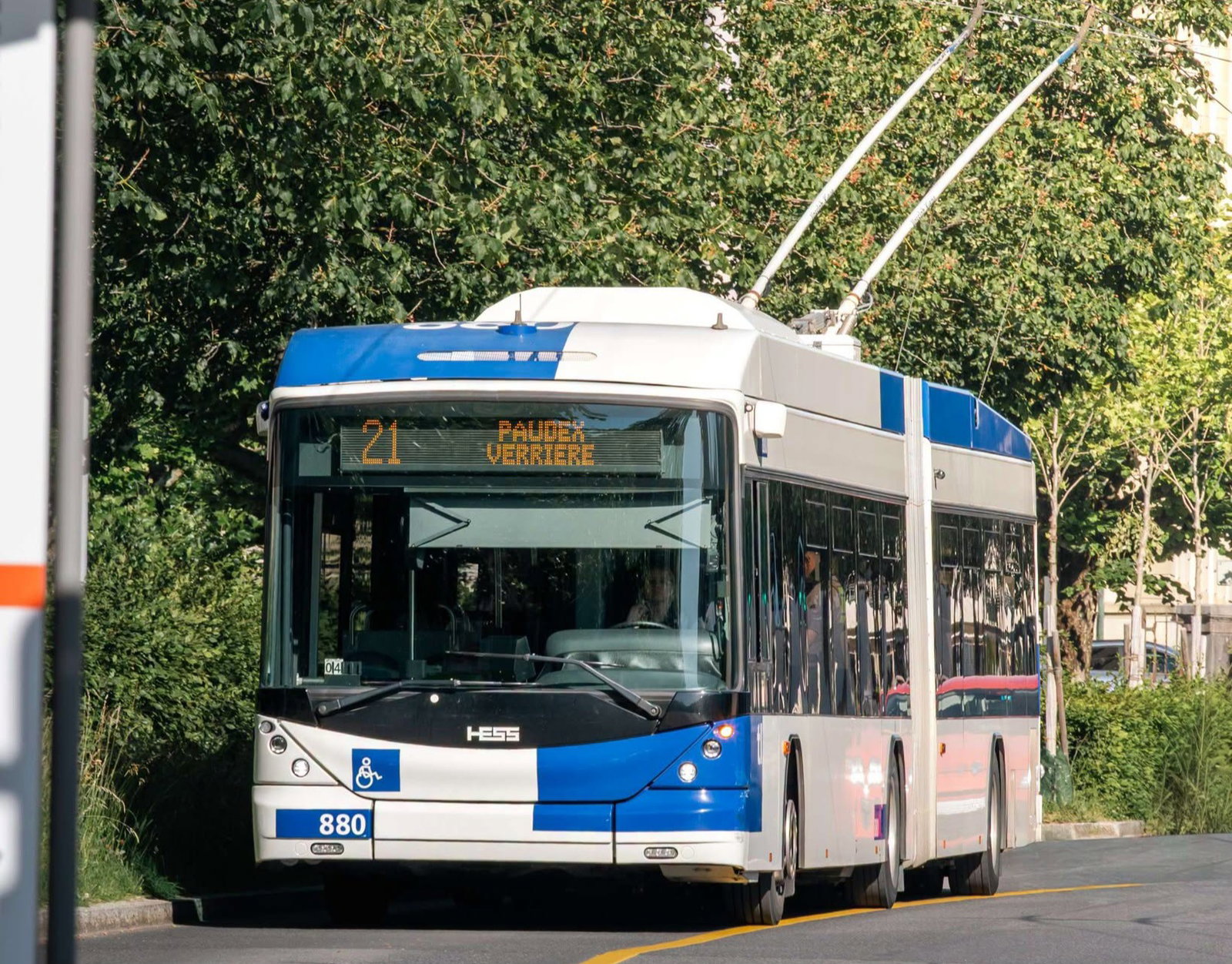
The role of trolleybuses in the city will therefore continue to grow in the coming years. By 2030, tl aims to make its entire public transport network electrically operated – apart from a few specialised minibuses – and intends the trolleybus system, in operation since 1932, to play a central role in this. In addition to the newly completed extension of route 9 to Crissier, the next developments include converting route 18 to trolleybus operation and extending route 21 towards Le Mont-sur-Lausanne. The longer-term goal is to create a system in which the existing dense overhead-wire network and battery off-wire capability complement each other, enabling trolleybus operations to expand further.