![Magyarbusz [Info]](/mbi/header-logo.png)
Prague’s first trolleybus started running 90 years ago – the reborn network continues to expand
 Ludányi József
Prague is celebrating the 90th anniversary of the launch of trolleybus services this year, but the jubilee also marks the emergence of a new era. After a break of several decades, trolleybuses returned to the Czech capital in 2017, initially on a trial basis; in the years since then, however, the concept based on partial overhead wiring and battery operation has gradually become the foundation of a new network. Full-scale trolleybus operation is now in place on routes 58 and 59, while the electrification of three further bus routes has also reached an advanced stage.
The basis of Prague’s developments is what is known as partial overhead wiring: former bus routes are not converted to conventional trolleybus operation along their entire length, but overhead lines are installed only on suitable sections of the route. On these sections, the vehicles run directly from the network while also charging their onboard batteries on the move, while the unwired sections are covered using the energy stored in the batteries. This solution makes it possible to serve longer sections, or stretches that are harder to equip with overhead lines for urban-design or technical reasons, without the batteries having to be sized to cover the full daily mileage independently.
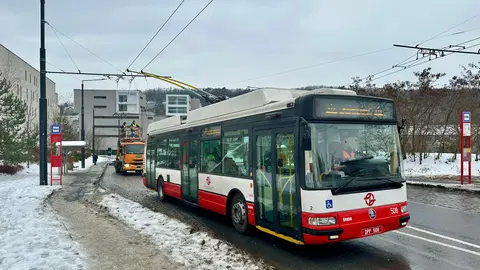
The first two lines in the revival of Prague’s trolleybus operation were also built on this concept: the former bus routes 140 and 119 were converted with partial overhead wiring into today’s trolleybus routes 58 and 59, respectively.
The first to be electrified was bus route 140 between Palmovka and Miškovice, with preparations taking place between 2017 and 2020. Overhead wiring was installed along roughly half of the route, partly using the infrastructure built in Prosecká Street in 2017 for trolleybus test operation.
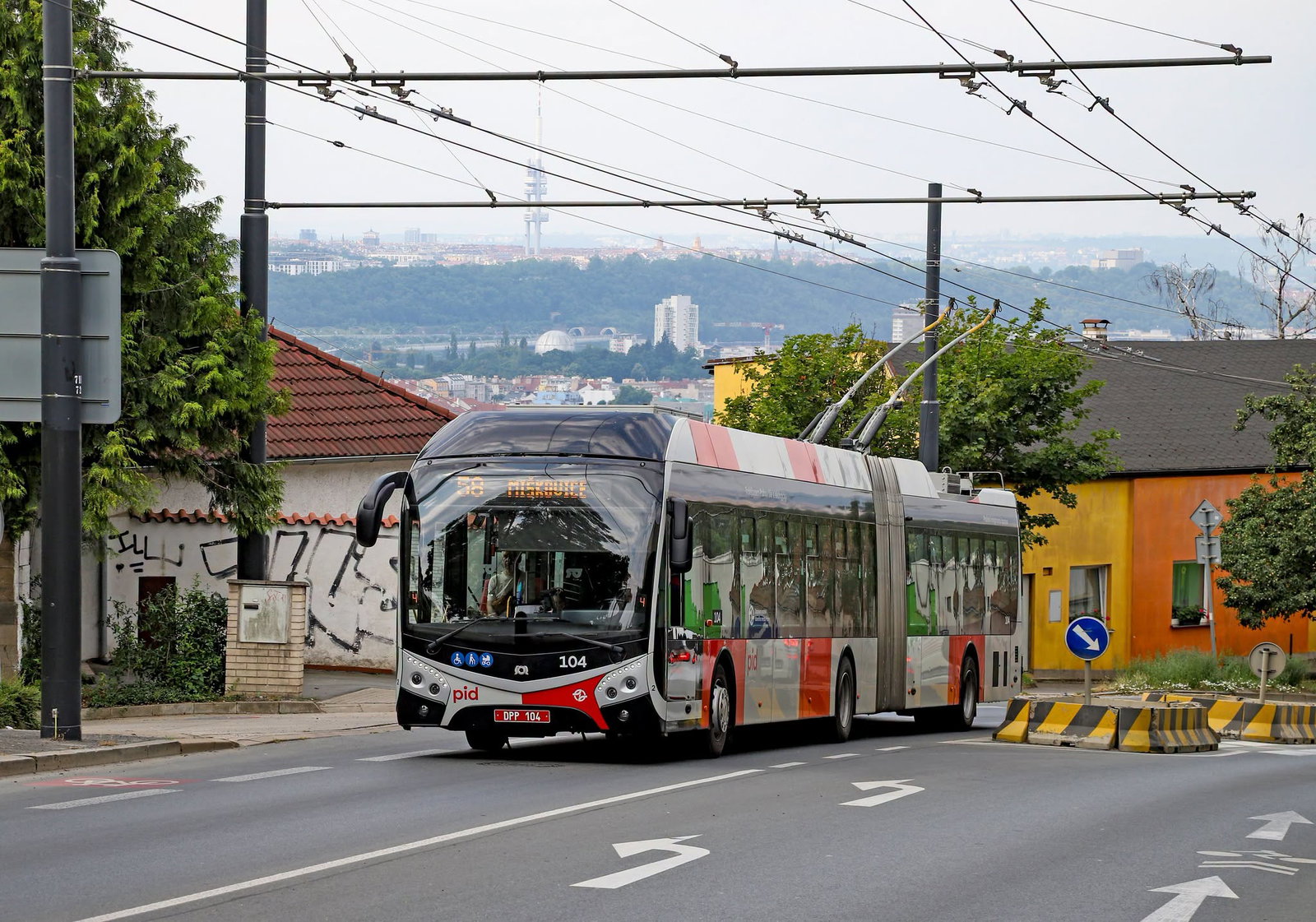
In total, more than 11 kilometres of new overhead wiring were built, along with several tens of kilometres of feeder cables. According to DPP, a large proportion of the new support poles were designed to be shared with public lighting, avoiding the need to install a separate line of poles in the affected streets. Power for the overhead line is supplied by three converter substations in the Prosecká, Letňany and Klíčov areas, while a battery station was also built in Čakovice.
On the vehicle side, however, not everything went according to plan. Passenger trial operation of the first SOR TNS 18 articulated battery trolleybuses began on route 58 on 26 October 2023, but due to significant delays in vehicle deliveries, only limited operation was possible until January 2024. Full scheduled service finally began on 1 February 2024, by which time all 15 ordered SOR TNS 18 vehicles were available. In parallel, preparations also began for further expansion of the network.
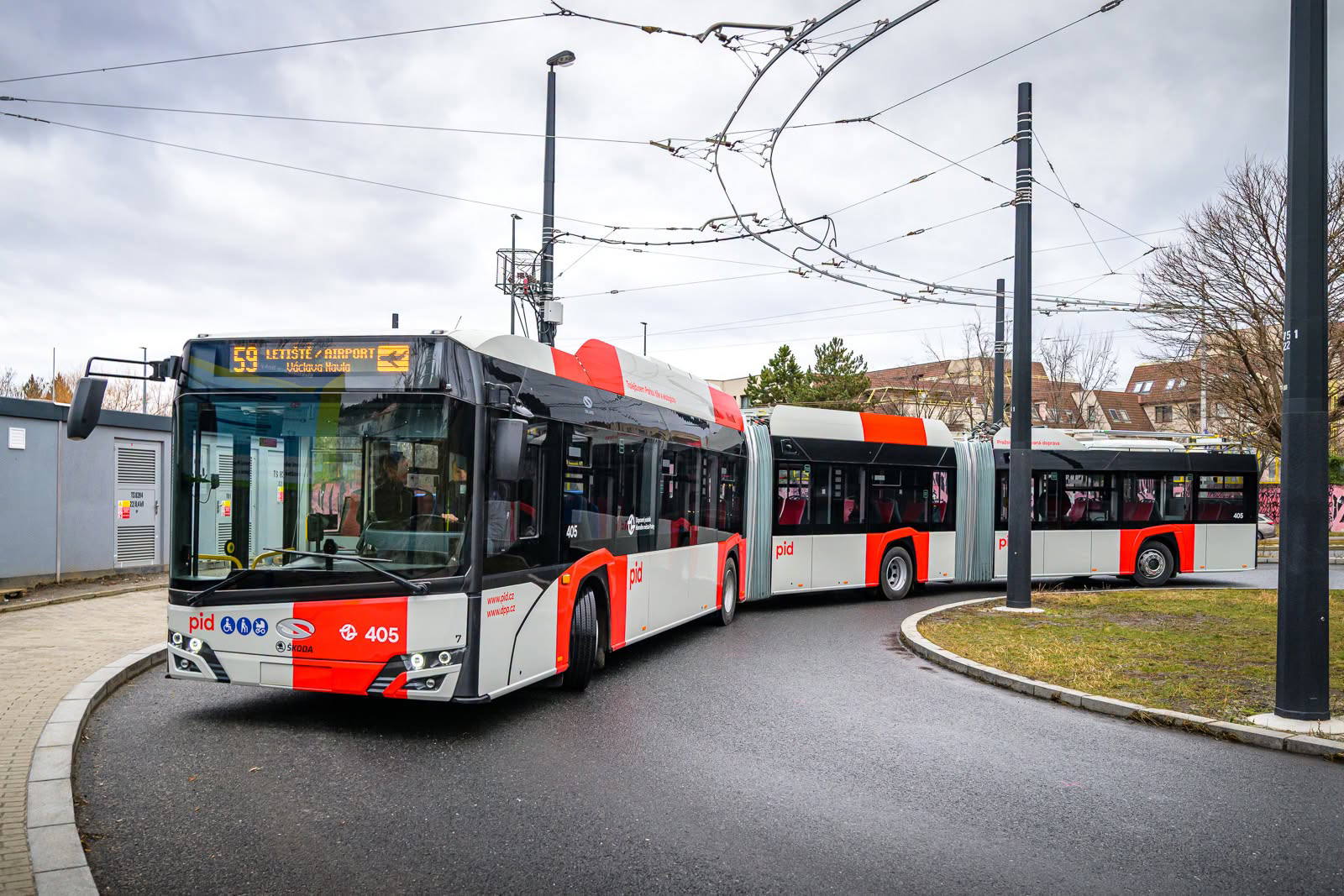
An even larger-scale project was the electrification of the former bus route 119. The busy service linking Nádraží Veleslavín metro station with Václav Havel Airport was fully replaced by the new trolleybus route 59 on 6 March 2024. On this route, the conventional articulated diesel buses were replaced not by standard articulated vehicles, but by nearly 25-metre-long bi-articulated Škoda–Solaris 24M battery trolleybuses. Each member of the 20-vehicle fleet can carry 180 passengers, including 54 seated. According to DPP figures, the bi-articulated vehicles offer around 30% more capacity than the buses they replaced.
Construction of the infrastructure for route 59 began on 29 November 2022, while testing of the Škoda–Solaris trolleybuses started months before the launch of scheduled operation. From 30 November 2023, the vehicles carried out test runs on route 58, partly in passenger service, and on 1 February 2024 the first test run under overhead wire also took place on the infrastructure of the future route 59.
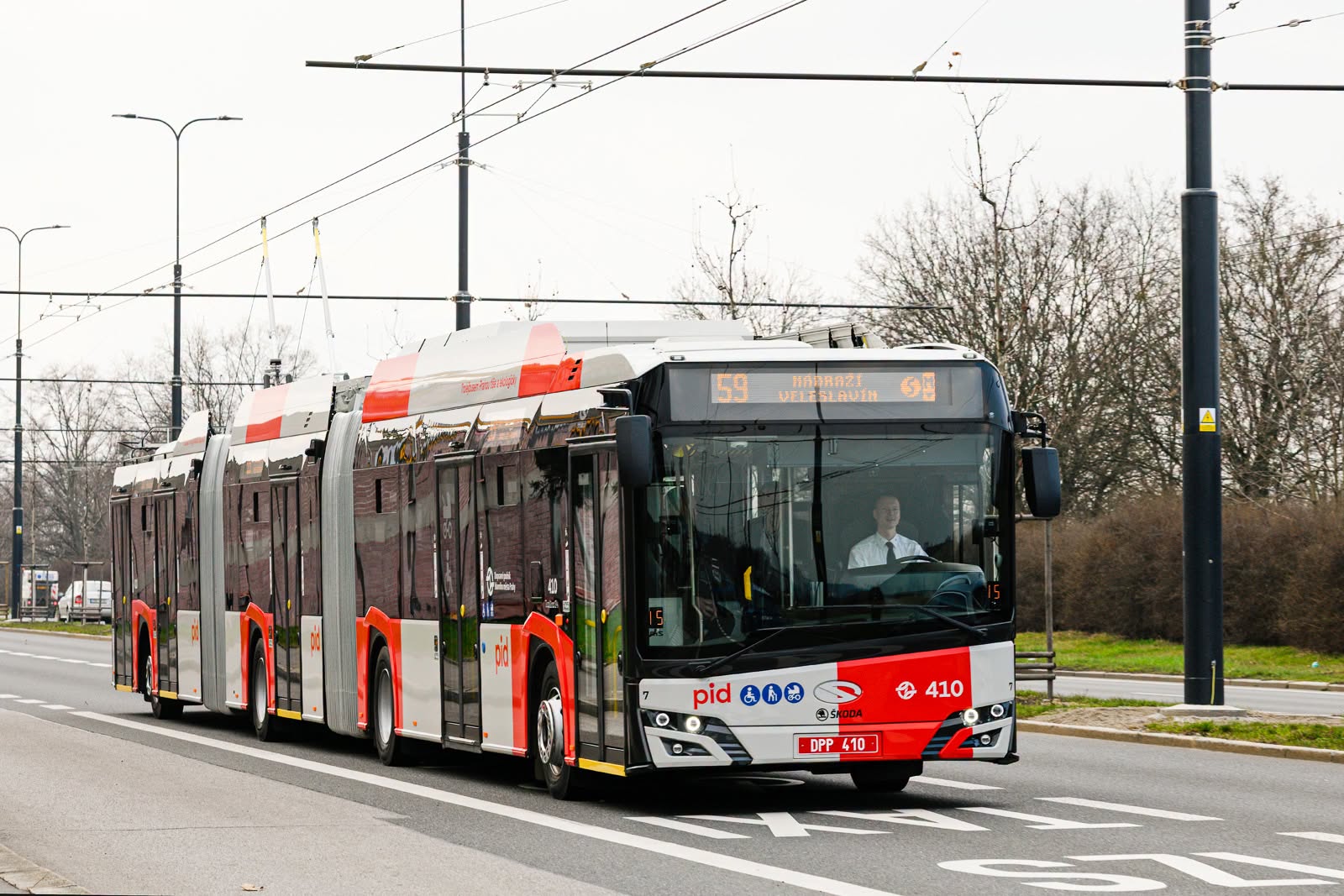
Between Nádraží Veleslavín and Terminal 3, a total of 11.5 kilometres of overhead wiring was installed, covering roughly half the route. The section between Terminal 3 and Václav Havel Airport is operated by the trolleybuses in battery mode, without overhead wires. The vehicles’ energy supply is also supported by charging points at the two termini, where the batteries can be charged during scheduled layover times.
Power for the wired section is supplied by three converter substations. Two of these are containerised units, located at Nádraží Veleslavín and at the airport turning loop. The third, a permanent building, is located near the Dědina tram terminus and serves as a shared power supply point for the tram and trolleybus networks. The substation was built as part of the investment linked to the construction of the Divoká Šárka–Dědina tram line.
DPP has previously published more detailed data on the performance delivered by the bi-articulated trolleybuses over a full year. In 2025, the twenty Škoda–Solaris trolleybuses covered a total of almost 1.5 million kilometres and carried 5.5 million passengers. According to the transport company’s calculations, trolleybus operation replaced the use of around 742,000 litres of diesel fuel and avoided 1,990 tonnes of carbon dioxide emissions. Each bi-articulated trolleybus averaged nearly 72,000 kilometres over the year on route 59, equivalent to almost 6,000 kilometres per month.
The figures are also interesting because route 59 is the first line in Prague where high-capacity bi-articulated vehicles no longer operate on an experimental basis, but form the backbone of everyday public transport. The arrangement also demonstrates that deploying battery trolleybuses does not necessarily require the costly installation of overhead wiring along an entire route: on both routes 58 and 59, wired power supply is available along roughly half of the alignment.
The commissioning of routes 58 and 59, however, did not mark the end of development for Prague’s trolleybus network. In the next phase of development, DPP launched the partial overhead electrification of three further bus routes: routes 131, 137 and 176 will be replaced by battery trolleybus routes 51, 52 and 53, respectively. The conversion of route 137 was the first to reach the construction stage, in August 2024, followed in May 2025 by the start of infrastructure construction for routes 131 and 176.
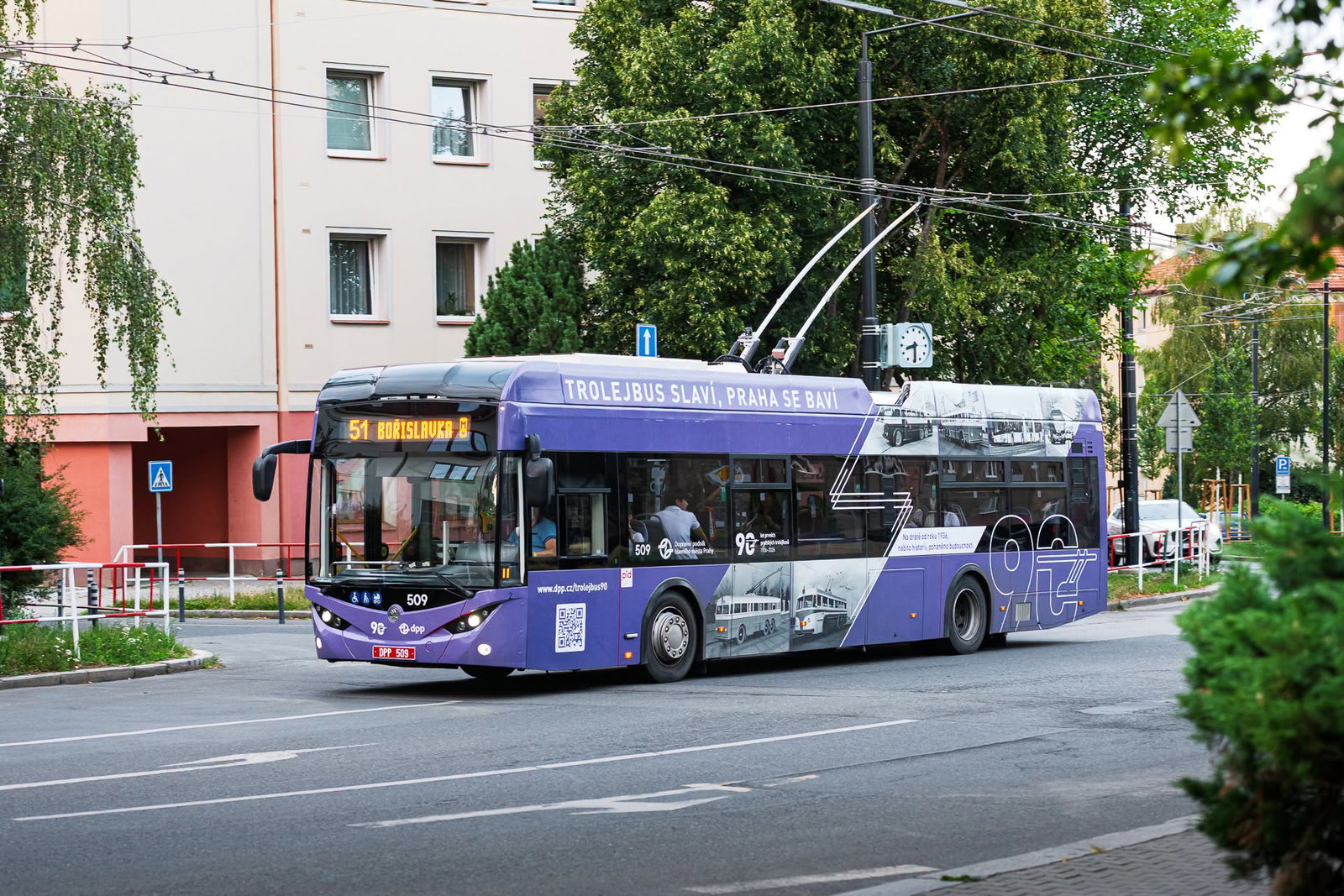
The project also involved the Řepy bus garage, from which the former route 119 buses were previously dispatched and from which the route 59 trolleybuses are currently put into service. A new high-capacity converter substation and 37 outdoor charging stands were installed at the depot, with trial operation of the latter beginning on 15 December 2025. At the end of the year, DPP had an operational trolleybus network 21.45 kilometres long and 38 vehicles; on the two operating routes, an average of 31 trolleybuses were dispatched during the morning peak period.
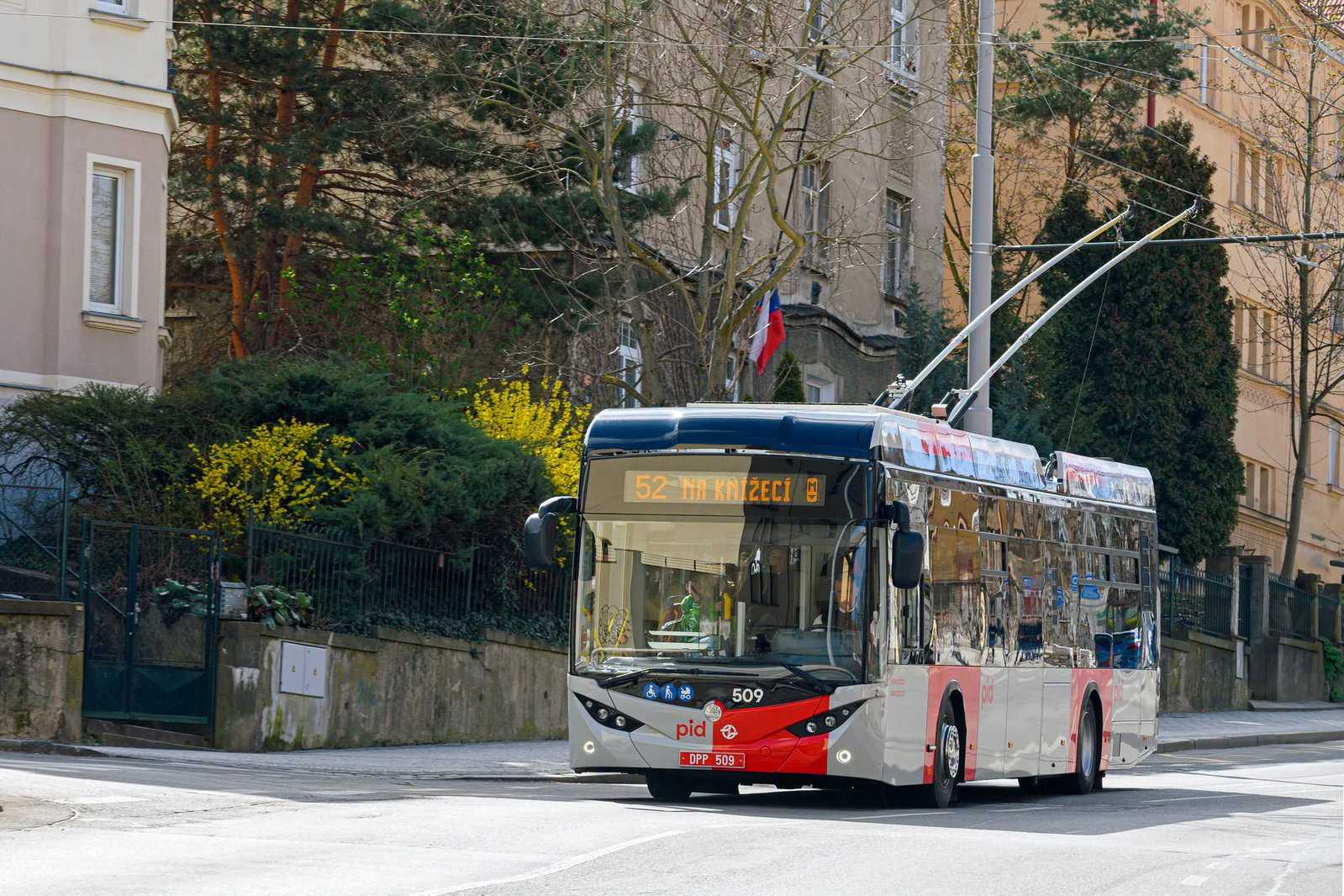
The vehicle-side basis for the next expansion phase of the network is provided by Bozankaya SNG 12T standard battery trolleybuses, of which DPP has ordered 30 units to serve routes 51, 52 and 53. The first major milestone in the type’s introduction in Prague came on 15 October 2025, when a demonstrator began passenger trial operation on route 58. Passengers were first able to travel on the first series-built vehicle produced to DPP’s specification, already carrying the PID livery, on 12 February 2026, also on route 58.
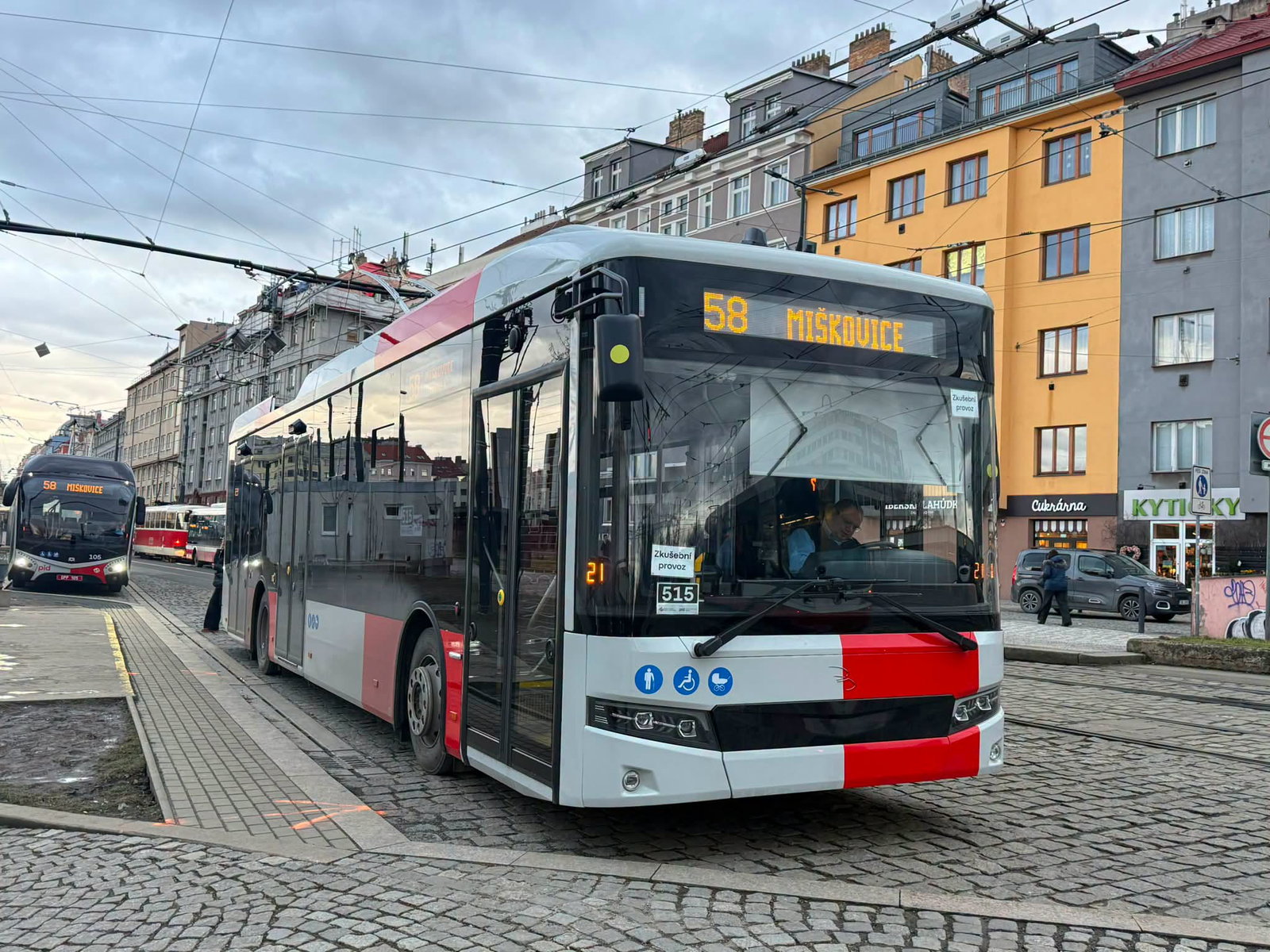
Homologation of the type was completed in mid-April, and in the meantime all 30 ordered trolleybuses have been completed and delivered to Prague. However, the vehicles waiting in the Řepy and Klíčov garages have not yet been officially accepted into DPP’s fleet, as work is still under way to rectify defects and shortcomings identified during the acceptance procedure. The process is being slowed, among other things, by long delivery times for spare parts arriving from Ankara, while the transport company has also reported shortcomings in connection with the translation of the vehicles’ operating documentation. The start of full trolleybus operation on routes 51, 52 and 53 therefore now depends primarily on the completion of the Bozankaya fleet’s acceptance procedure.
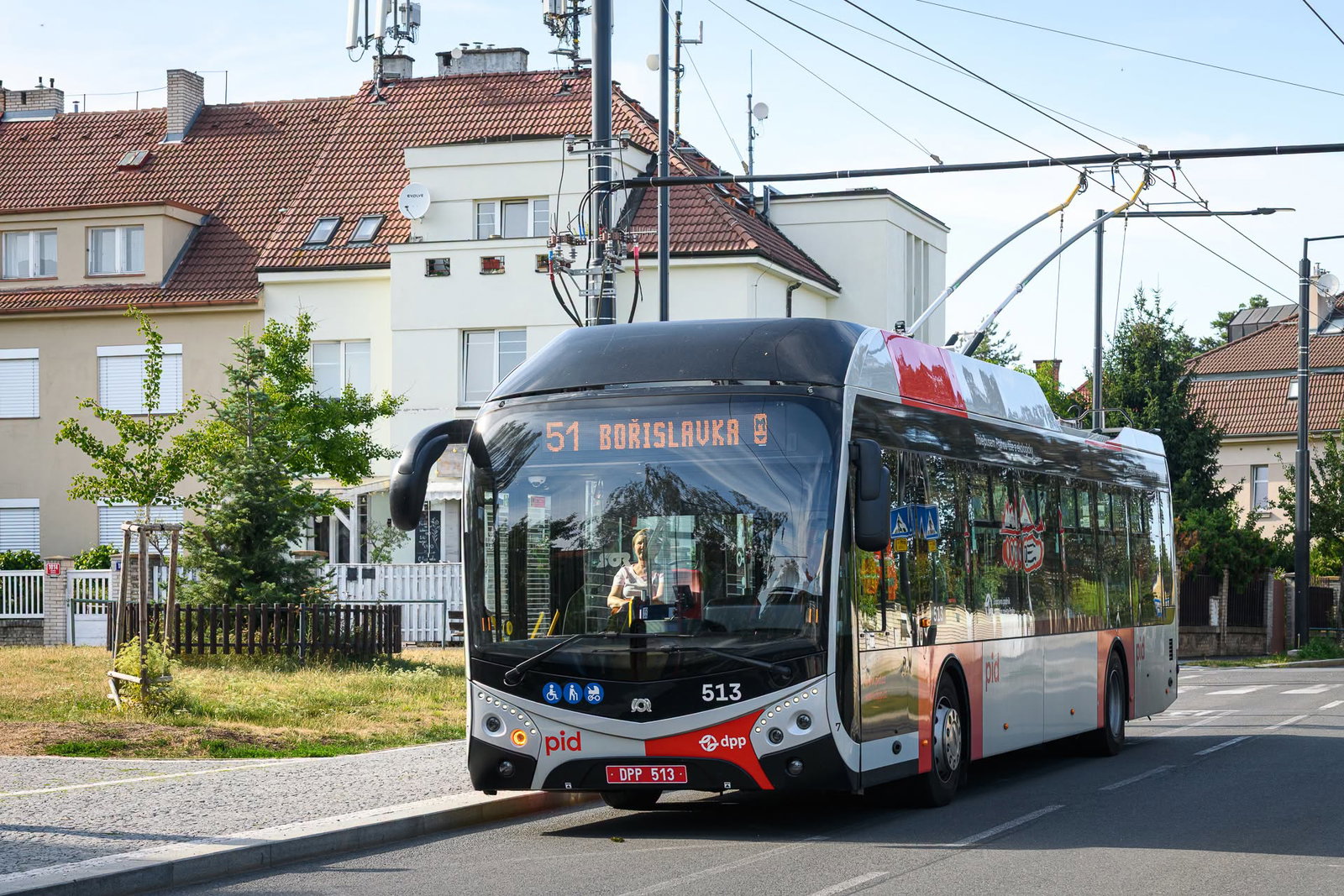
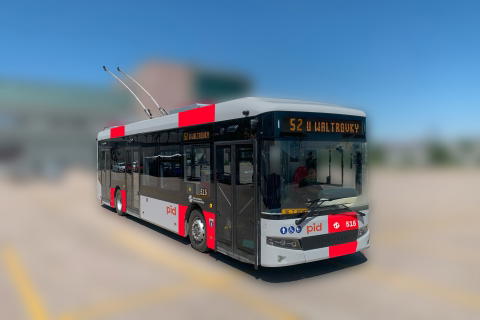
Among the new routes, operational testing of the infrastructure for route 52 was the first to reach an advanced stage. The first test run on the new network between Na Knížecí and U Waltrovky was carried out on 14 January 2026, using a Škoda 24Tr trolleybus. On 1 April, trolleybus operation began under the 52 route number on the Na Knížecí–U Waltrovky–Jinonice route, and from 17 April four SOR TNS 12 vehicles, numbered 511–514, were assigned alternately to a supplementary working. Their operation still forms part of the trial service, meaning that the complete replacement of bus route 137 has not yet taken place.
In addition to route 52, the infrastructure for route 51 between Bořislavka and Hradčanská and route 53 between Karlovo náměstí and Stadion Strahov has also been completed, meaning that the technical conditions for battery trolleybus operation have been established on all three routes previously served by buses. For route 52, around 4.3 kilometres of overhead wiring were installed between Santoška and U Waltrovky, along with a new converter substation in Peroutkova Street and seven charging points at Na Knížecí. For routes 51 and 53, more than 15 kilometres of additional overhead wiring were built in total, together with two new converter substations and 451 overhead-line support poles.
In building the new infrastructure, DPP continued to use solutions already applied in earlier projects: the vast majority of overhead-line support poles also carry public lighting equipment, thereby reducing the number of separate items of street furniture. The development phase reached another milestone on 26 June 2026, when passenger trial operation also began on routes 51 and 53. This brought trolleybuses back to the Hanspaulka and Strahov areas as well, returning them to districts closely linked to the history of Prague’s former trolleybus network.
The development of the network, however, will not end with the commissioning of routes 51, 52 and 53. These investments form part of a larger programme aimed at electrifying bus services in the districts on the left bank of the Vltava. DPP’s original concept envisages converting four bus routes – 131, 137, 176 and 191 – to battery trolleybus operation.
Under the plans, route 191 would be replaced by trolleybus route 56, running between Na Knížecí and Václav Havel Airport and also serving the Smíchov, Strahov, Břevnov and Ruzyně areas. DPP intends this route to become one of the defining axes of the left-bank trolleybus network, which is why part of the infrastructure now completed was designed from the outset with the future requirements of route 56 in mind.
One example is the seven charging points installed at Na Knížecí in connection with the electrification of route 52, which could later also be used by vehicles on route 56. Similar preparation has taken place in the Strahov area as well: certain elements of the power supply infrastructure built for route 53 were sized so that, after the electrification of route 191, they can also be used to serve trolleybus route 56.
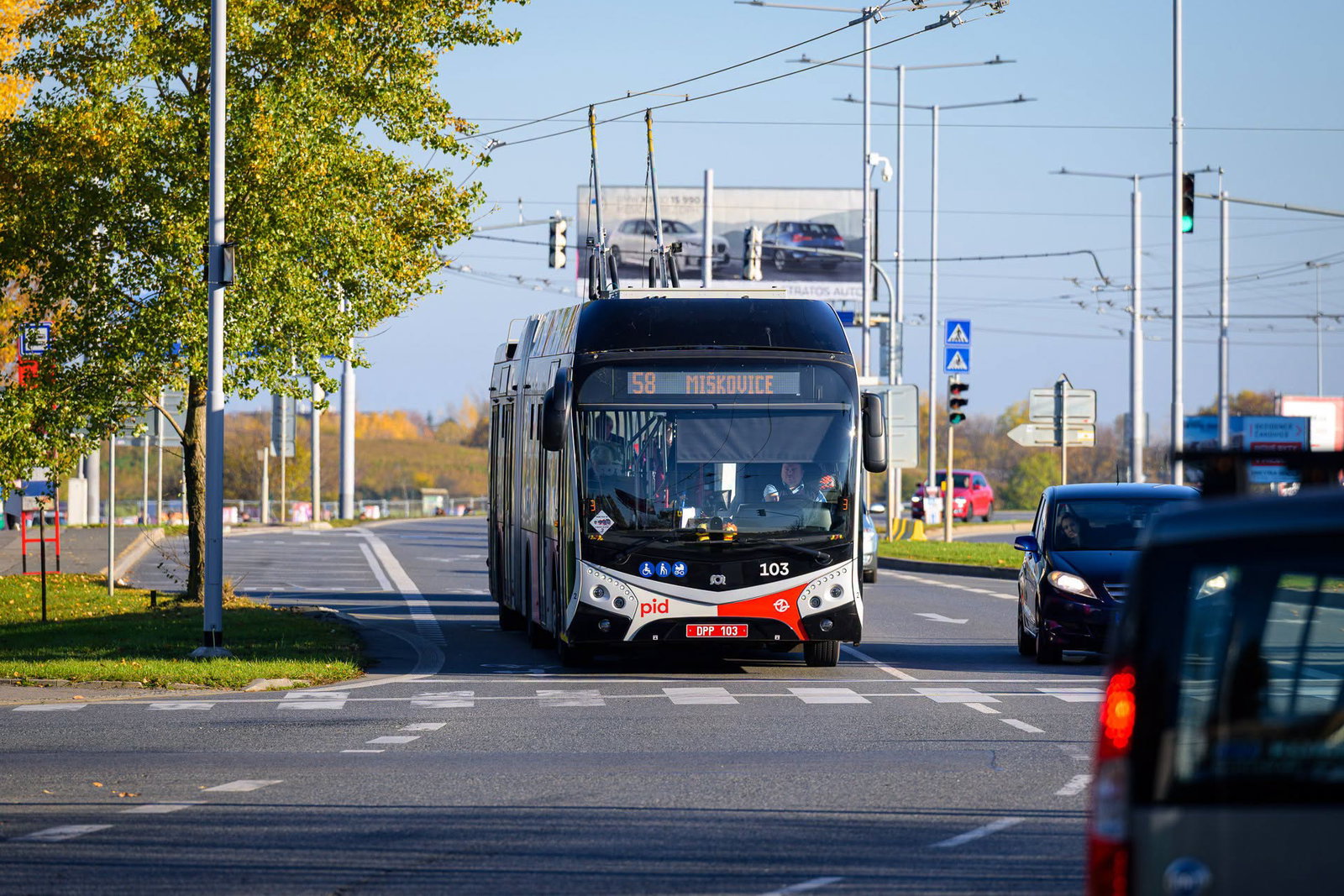
The left-bank network could thus gradually become an integrated system in which individual routes do not use standalone infrastructure, but rely at several points on shared overhead-wire, charging and power-supply facilities. The electrification of route 191, however, is still at the preparation stage, and DPP has not yet announced a specific planned date for the introduction of trolleybus route 56.