![Magyarbusz [Info]](/mbi/header-logo.png)
First electric bus for Cape Town\'s BRT system is built on Volvo chassis
 Patthy Gellért
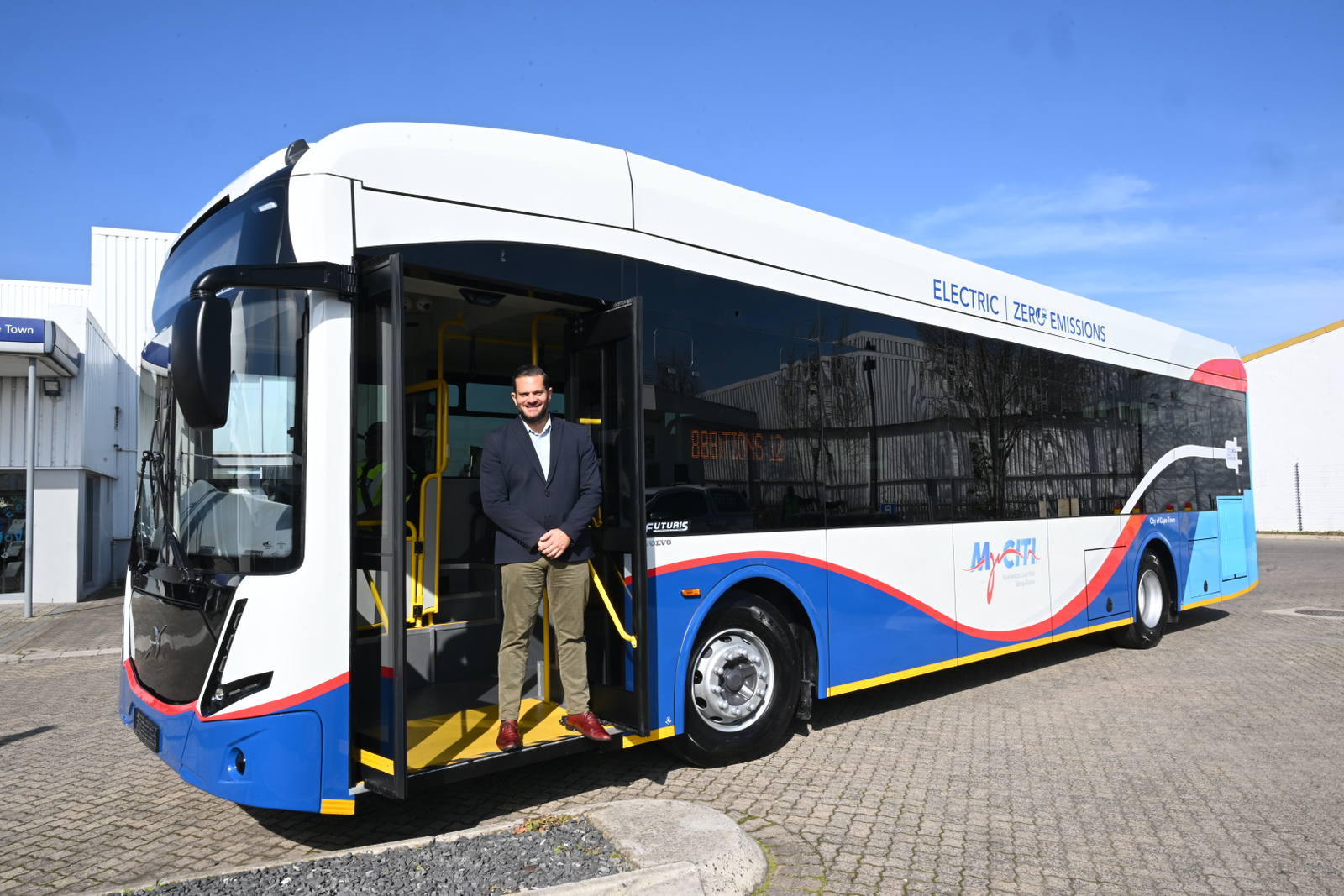
On July 23, in the presence of Mayor Geordin Hill-Lewis, the first fully electric bus for Cape Town’s BRT network, operated under the MyCiTi name, was ceremonially presented to the public. The prototype, nicknamed “Evie”, is based on the low-entry Volvo BZR Low Entry Electric (BZRLE for short) rolling chassis and arrived at its destination in the first half of July. Over the past few weeks, it has been tested without passengers under various traffic and topographical conditions. According to reports, the bus has successfully completed the tests carried out so far, paving the way for the procurement of the full 38-strong series. Although the vehicle is being referred to in several places as Cape Town’s first fully electric bus, this is in fact only true for the municipally maintained MyCiTi network: Golden Arrow Bus Services (GABS), one of South Africa’s longest-established transport operators, already procured 120 standard-floor BYD electric buses last year, and had previously tested two low-floor examples in Cape Town.
Volvo’s South African subsidiary won the contract to supply the vehicles last July, after coming out on top in the relevant tender, which had been issued back in June 2024. At the time, reports still referred to the procurement of only 30 electric buses, but the city administration already indicated that additional units could be called off if the necessary funding became available. The electric charging infrastructure serving the fleet was installed under a separate procedure. Procured in line with plans to expand the MyCiTi network, the vehicles are expected by the operator to deliver lower maintenance costs and greater energy independence than their diesel-powered predecessors, particularly in view of the uncertainty on the global energy market caused by armed conflicts. Cape Town’s leadership says it will continue to treat the purchase of battery-electric buses as a strategic priority in the future, although further procurements will depend on the financial resources available.
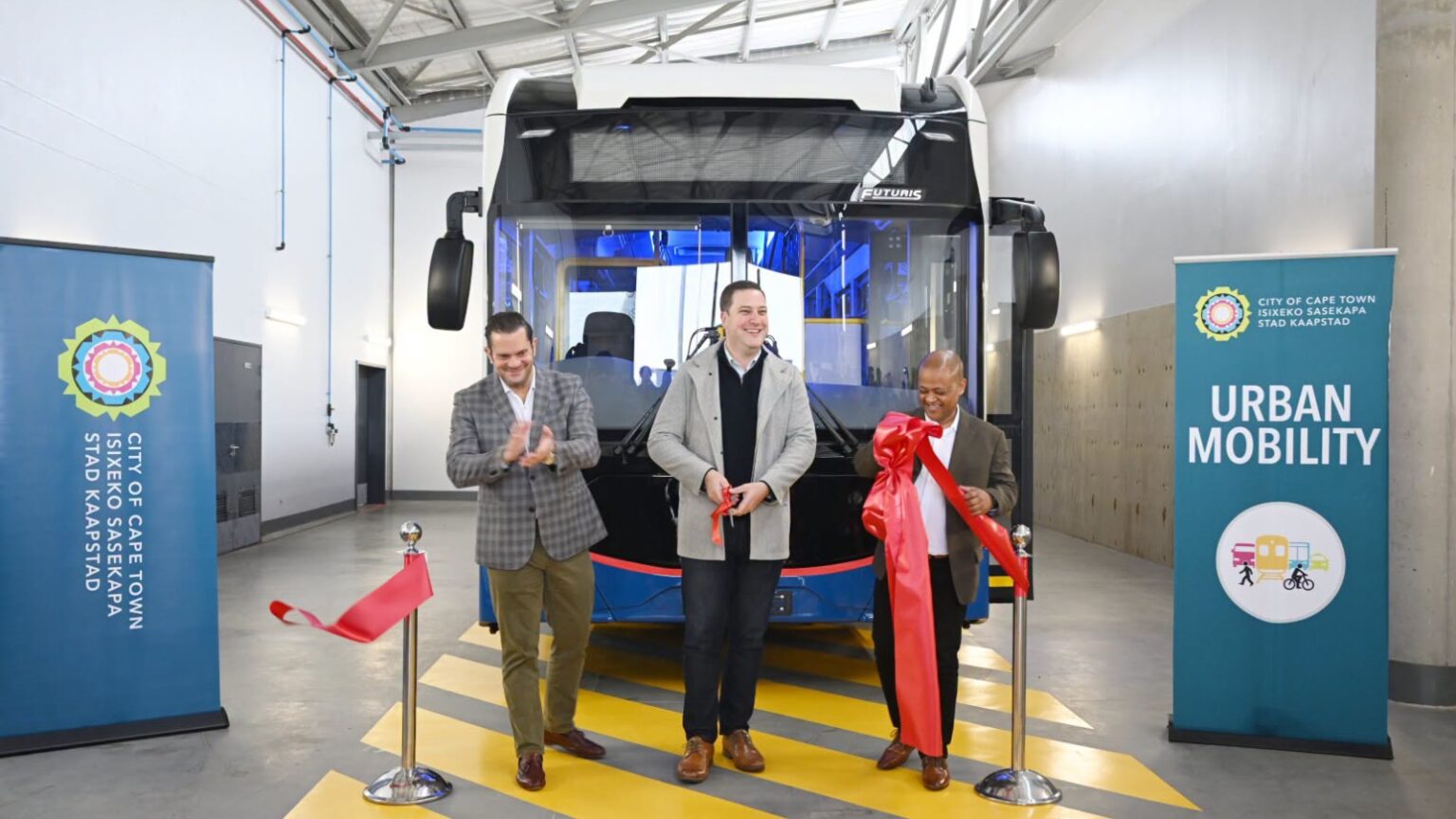
Cape Town Mayor Geordin Hill-Lewis (centre) at the ceremonial presentation of the first unit
Initial reports suggested that delivery of the new electric buses would not begin until 2027, but in April this year it emerged that the first unit could arrive as early as August, with the transport operator expecting to take delivery of a further 13 vehicles by the end of December. For now, the project is progressing particularly well, at least in terms of deadlines, since full entry into service is planned for much later: if everything goes according to plan, the new electric buses will begin scheduled operations from July 1, 2027, between Mitchells Plain and Khayelitsha, Wynberg and Claremont, and Cape Town’s central business district (Cape Town CBD). Until then, trial runs will continue with the units already delivered: according to MyCiTi, during an approximately one-year test programme conducted by Cape Town’s Urban Mobility Directorate and the University of Cape Town, the electric buses will be trialled on as many existing routes in the network as possible. The tests will examine, among other things, energy consumption and storage, charging times, passenger flows, route characteristics, and the impact of the local climate on vehicle performance. The experience gained will be used to fine-tune operating parameters and infrastructure (charging strategy, maintenance), as well as in driver training.
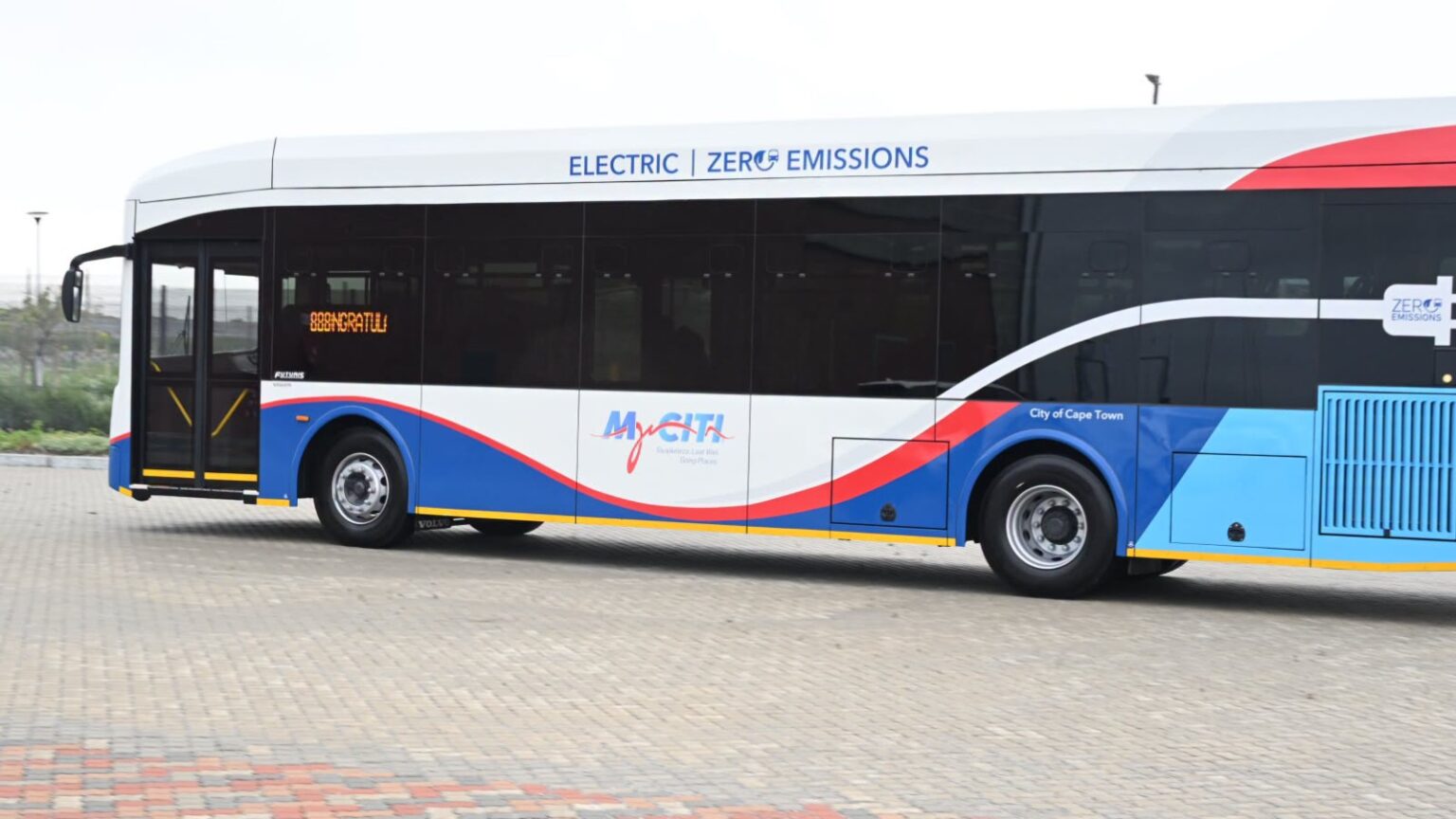
The vehicles, built in a configuration tailored to the characteristics of the local BRT system, have one passenger door on the left side…
Although the Volvo BZRLE rolling chassis that provides the mechanical basis for the new vehicles is imported, the bodywork is locally manufactured: the Futuris body, unveiled last year, is produced by Johannesburg-based Gauteng Bus and Coach Centre (GBCC), whose main activity is bus refurbishment. The frame structure is made of corrosion-resistant steel — more precisely 3CR12, or 1.4003 grade steel — with aluminium side panels. According to the bodybuilder, the body, which features a split laminated windscreen and Hella lights, is also compatible with diesel-powered Mercedes-Benz and Volvo chassis, such as the latter’s B8RLE platform. At 12,500 mm long, the low-entry solo model has a width of 2,580 mm, exceeding the European maximum; in South Africa, buses with a gross vehicle weight of over 12 tonnes may be up to 2.6 metres wide.
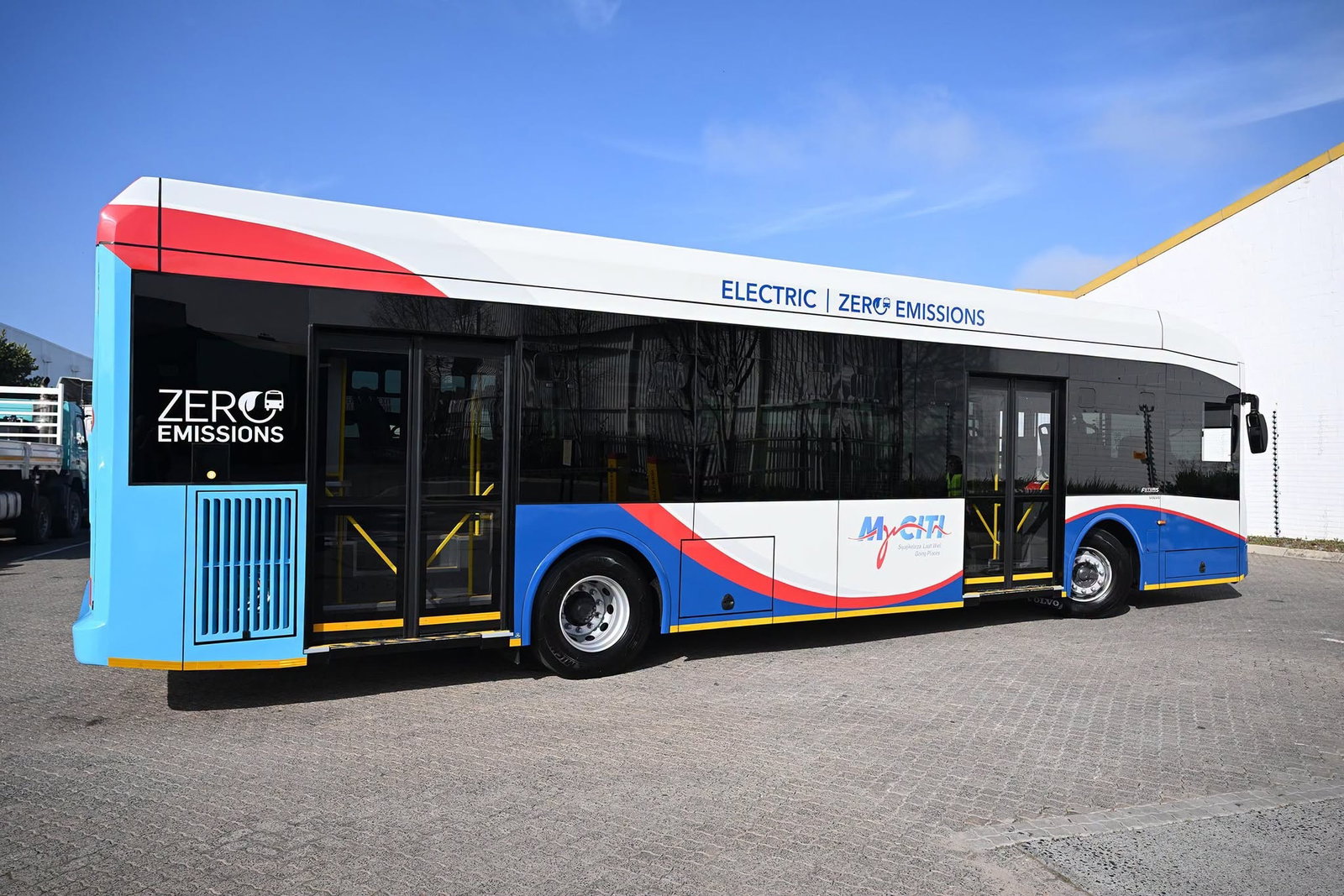
…while on the right side they have two passenger doors (Photo: MyCiTi)
The door layout of the units to be supplied to the MyCiTi network is adapted to the local BRT system, which may also seem unusual at first: although the buses have three doors, these are distributed across both sides of the body. On the left side the layout is 2-0-0, while on the right-hand side in the direction of travel it is 0-2-2, in line with centre-platform stations. The passenger compartment, which has an interior height of 2,400 mm at the front, officially accommodates just 55 passengers, mainly because of the 2+2 seating layout, but in return it offers a relatively large number of seats: 36 in total, including priority seats. Passenger comfort and safety are supported by features including USB charging sockets for mobile phones located beneath the seats, a CCTV security camera system and contactless ticket validation. The vehicles will be charged at MyCiTi’s depot, primarily using electricity generated by solar panels.
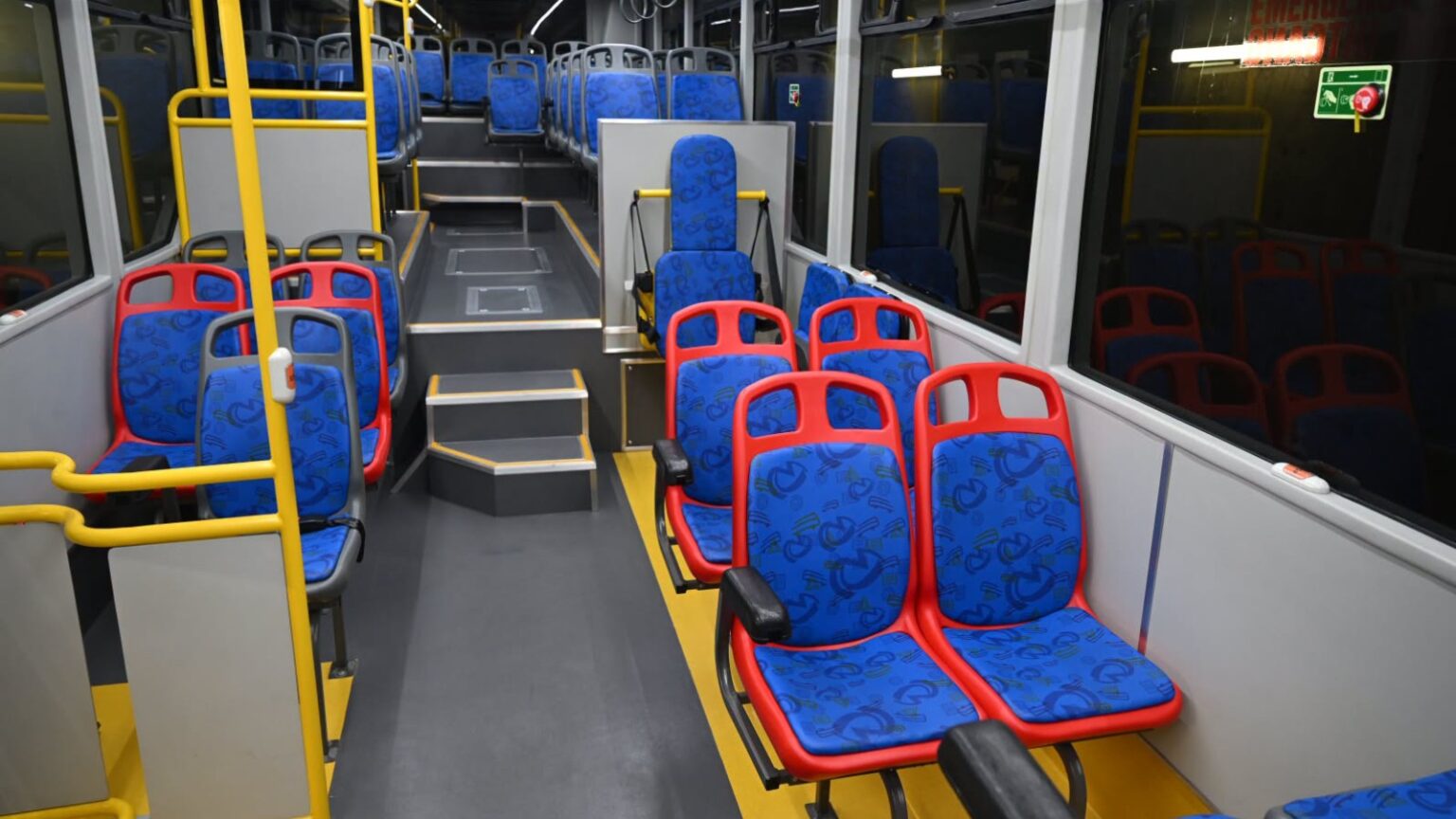
A 2+2 seating layout has been used across most of the interior, but space is also provided for a wheelchair user
Leon Nelson, director of Volvo Buses Southern Africa, said when the supply contract was signed that the project was more than a simple vehicle delivery: it would be the first electric bus manufactured in South Africa for South Africa (although there are other contenders for this title as well – ed.). “The project enables the transfer of competencies and skills from Sweden to South Africa, supporting the training of the local workforce and boosting local manufacturing capacity”, the company executive added at the time.