![Magyarbusz [Info]](/mbi/header-logo.png)
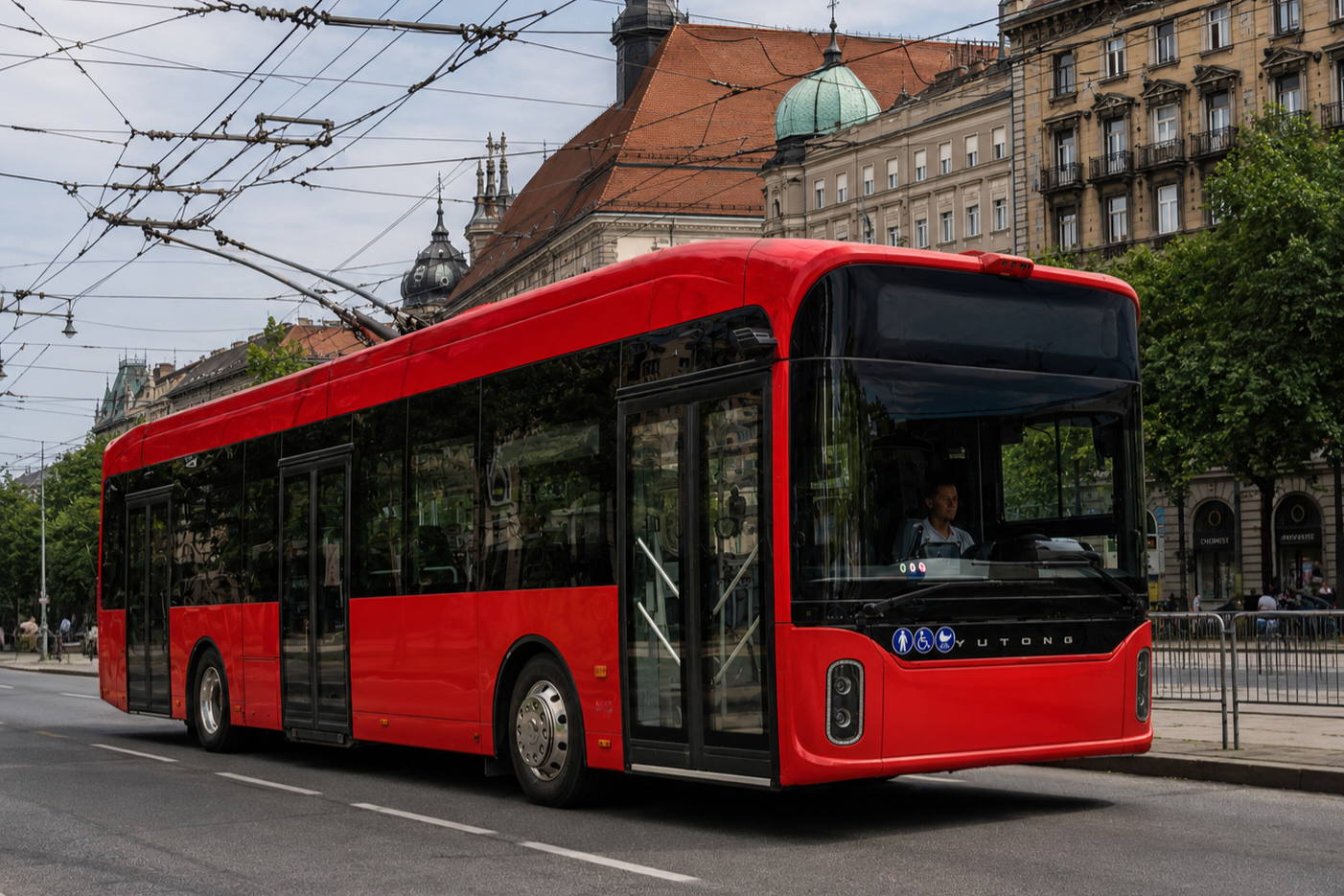
Framework contract signed: with suitable financing, up to 160 new trolleybuses could arrive in Budapest
 Patthy Gellért
According to today’s announcement by the Budapest Transport Centre (BKK), it has signed the framework agreement for the vehicle procurement with the Electrobus Europe Zrt.–Yutong pairing, which won the latest large-scale Budapest trolleybus tender, officially clearing the way on its part for the arrival of the new vehicles. This means that, if the necessary financial resources are available, the development of Budapest’s public-service vehicle fleet can continue within the shortest possible time, and the capital’s fleet could be expanded by as many as 160 brand-new trolleybuses in total. The fully low-floor vehicles, which are also capable of autonomous operation, could provide a more comfortable journey for passengers in Budapest thanks to their modern design and equipment, improving the standard of local public transport while also helping to make the capital a cleaner-air, more liveable and more sustainable city.
For the framework agreement to enter into force, the financial cover required to order the 40 vehicles forming the base quantity of the procurement covered by the commitment — including 16 solo and 24 articulated trolleybuses — must be secured within six months of signing the contract. BKK intends that financing for further vehicles may also become possible later from European Union funds, meaning the company is seriously planning to call off the optional quantity, or at least part of it. Under the previous call for tenders, the winning bidder will ensure the manufacture and delivery of modern vehicles, the conduct of their on-site trial operation, and the acquisition of the required permits. Among other features, the vehicles will be fully low-floor and air-conditioned, and, thanks to their built-in traction batteries, will be capable of travelling up to 25 kilometres in autonomous mode, beyond sections equipped with overhead wires.
According to BKK, it is mainly this latter capability that means the vehicle procurement could, in the longer term, contribute to the further development and modernisation of trolleybus transport in Budapest, while also creating new opportunities for the planned flexible expansion of the network. In addition to renewing the fleet, the new trolleybuses capable of autonomous operation could also represent the next step in the electrification of Budapest’s public transport. The modern technology makes it possible, with the necessary infrastructure developments and if funding is available, for new districts to be connected to environmentally friendly, zero-emission transport. BKK says it envisages a defining role for trolleybuses in the electrification of transport in the capital over the long term as well. As it writes, the current vehicle procurement and the gradual development of the network together could create the opportunity for Budapest’s public transport to become even more sustainable, quieter and more accessible to everyone.
The cover image is an illustration.