![Magyarbusz [Info]](/mbi/header-logo.png)
Another Chinese bus case in Oslo: CRRC-to-Solaris switch leads to NOK 585 million lawsuit
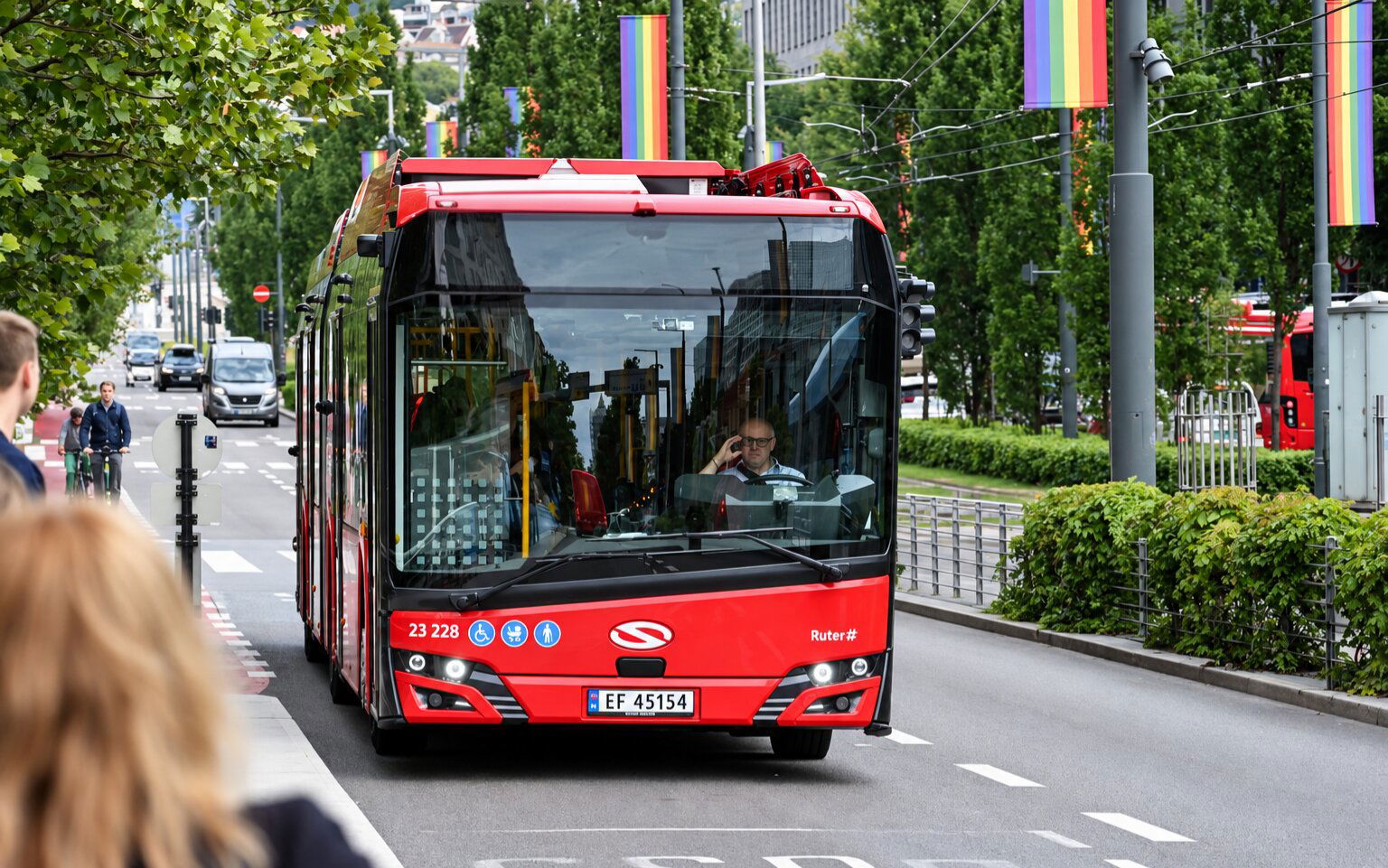
The cybersecurity issue surrounding Yutong electric buses has been followed by another conflict involving Chinese buses in Norway. Three years after 183 Solaris articulated electric buses entered service on Oslo’s inner-city bus network, the vehicle replacement that sparked serious controversy at the time is continuing in court. According to YES-EU, which has long been active in the sale of Chinese buses in Norway, it was not originally the Polish manufacturer’s vehicles that were supposed to fulfil one of the Norwegian capital’s largest bus public-service contracts: Unibuss initially selected electric articulated buses with two driven axles from Chinese state-owned CRRC, to be supplied by YES-EU. However, the solution was abandoned due to human-rights and national-security concerns raised by Ruter, and Unibuss ultimately procured 183 Solaris Urbino 18.75 electric buses.
The decision taken years ago may now have serious financial consequences. According to Swedish media reports, Yes-EU and Unibuss will meet before the Oslo District Court in October 2026, with the vehicle supplier seeking compensation of up to NOK 585.6 million. Yes-EU’s position is that Unibuss unlawfully withdrew from an agreement that was already binding. The claim covers not only the lost profit from the sale of the 183 buses, but also lost servicing and related revenue during the public-service contract period. Unibuss disputes the claim, but in view of the forthcoming hearing neither party wishes to comment on the matter in detail in public.
The story dates back to 2021, when Unibuss was preparing to bid for the Oslo Indre by bus public-service contract, covering Oslo’s inner-city districts. In the tender issued by transport authority Ruter, the operator submitted a vehicle package based on battery-electric articulated buses manufactured by China’s CRRC and brokered by Yes-EU.
This is significant because Unibuss won the public-service contract with this vehicle concept. The technical design of the CRRC buses differed in several important respects from what Solaris later supplied. The Chinese articulated buses would have had two driven axles, a drivetrain referred to by Norwegian sources as ‘four-wheel drive’. They were also envisaged with a heat-pump heating system and a sand-spreading device, the latter of which could have improved grip in slippery road conditions. Yes-EU later cited precisely these features in arguing that the original solution would have been better suited, from a technical perspective, to the requirements of winter operation in Oslo.
The situation changed when Ruter became aware that the manufacturer of the vehicles selected by Unibuss was the Chinese state-owned CRRC. The transport authority subsequently raised concerns regarding the supply chain.
The objections concerned two areas. First, Ruter was required to conduct appropriate due diligence on the supply chain under the human-rights and labour-law requirements imposed on its contracted operators. Second, national-security considerations also arose in connection with involving a Chinese state-owned manufacturer. One of the most important questions in the subsequent dispute was precisely what Ruter had actually asked Unibuss to do.
Ruter maintains that it did not instruct the operator to replace CRRC. According to the transport authority’s subsequent explanation, it outlined two options: Unibuss could either choose another vehicle manufacturer, or carry out the necessary human-rights and national-security due diligence concerning CRRC and its supply chain. Unibuss, however, interpreted Ruter’s indication as a request to replace the supplier. The operator accordingly ultimately withdrew from the CRRC vehicles.
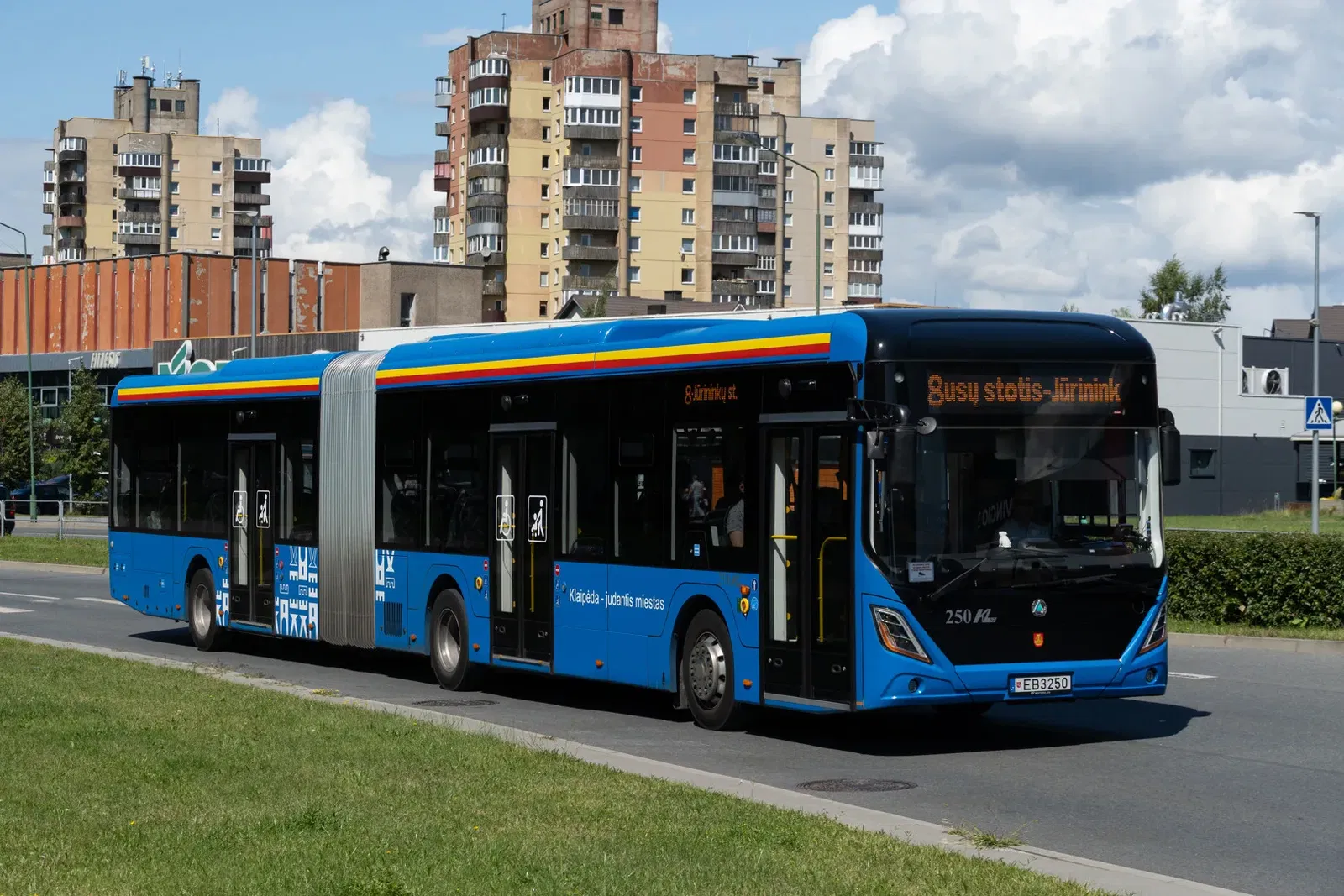
In 2024, Ruter also acknowledged that its previous approach to Chinese vehicle manufacturers had not been consistent. A few years earlier, it had accepted the use of vehicles from the also Chinese BYD, whereas in 2021 it raised objections in the case of CRRC.
One of the central questions in the current lawsuit is likely to be the legal status of the agreement between Unibuss and Yes-EU. According to earlier Norwegian reports, no final vehicle procurement contract signed by both parties was concluded. However, Yes-EU claimed as early as 2024 that a binding agreement had been reached between the parties for the delivery of 183 CRRC buses. Unibuss, by contrast, argued that the draft contract allowed it to reject the vehicle offer. This seemingly technical legal distinction has now taken on significance worth hundreds of millions of kroner. According to Yes-EU, Unibuss did not simply reject an offer, but withdrew from an agreement that had already been concluded.
The company indicated as early as the beginning of 2024 that it might pursue the matter through legal channels. At the time, it was still primarily hoping for an amicable settlement, and even publicly raised the possibility of replacing the Solaris buses with CRRC vehicles. This ultimately did not happen, but the matter was not resolved.
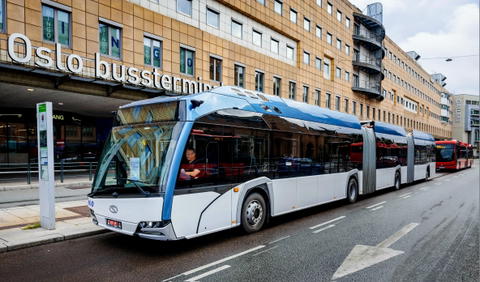
After Unibuss abandoned the Chinese solution, it needed a new bus supplier. Solaris was ultimately selected. In January 2022, Unibuss signed a contract for the procurement of 183 Solaris Urbino 18.75 electric articulated electric buses. Worth approximately €100 million, the deal was then the largest single electric-bus order in the Polish manufacturer’s history.
Solaris delivered all vehicles for the start of operations on 16 April 2023. The 18.75-metre articulated buses were allocated to the new depot established in Stubberud and entered service primarily on Oslo’s busiest inner-city routes, including routes 20, 21, 31 and 37. Together, these services are used by nearly 150,000 passengers a day.
Of particular importance in the subsequent assessment of the replacement was that the two vehicles’ technical concepts were not identical. While CRRC’s offer envisaged two driven axles, the Solaris Urbino 18.75 electric buses drive only the third, rearmost axle. The Oslo Solaris buses were fitted with battery packs with a capacity of more than 500 kWh and a central electric motor rated at 240 kW, and at the time of procurement they were stated to have a range of more than 250 kilometres.
The Solaris buses were not fitted with heat pumps either, which can heat the passenger compartment much more energy-efficiently than simple electric heating and therefore place less strain on the traction battery in winter conditions. This was not a general design characteristic of the model, but resulted from the configuration of the specific order. Moreover, Ruter’s tender evaluation system took energy consumption into account in a way that resulted in more favourable scoring for Unibuss if the heat pump was omitted. The vehicles originally used electric heating, which in cold weather drew a significant amount of energy from the traction battery. By contrast, the CRRC buses originally selected would have had heat pumps. The vehicles in Yes-EU’s offer also included a sand-spreading system that could be operated remotely by the driver.
The story of the supplier change would probably have received much less publicity had Oslo’s bus services not faced a serious situation at the beginning of 2024. A significant number of services were cancelled during the severe cold, snowfall and icy roads. Two of Unibuss’s contract areas were particularly affected: the inner-city network served by the 183 Solaris buses, and the north-eastern Oslo network, where 76 MAN electric buses operated. The disruptions further complicated Unibuss’s financial position: Ruter initially imposed contractual penalties of around NOK 200 million on the company due to delays and cancelled services, and Unibuss warned at the time that, without an agreement, it could even face bankruptcy.
The problems could be traced to several causes and therefore cannot be attributed solely to the Solaris buses or their drivetrain. There were also faults with the charging infrastructure, while the exceptional cold significantly increased the vehicles’ energy consumption. According to Unibuss’s subsequent measurements, on the coldest days up to around half of the buses’ total energy consumption was used to heat the passenger compartment.
However, the traction problems of the articulated buses driven on only one axle also came to the fore on slippery roads. It was at this point that it became more widely known that the CRRC buses originally selected would have had two driven axles, heat pumps and sand spreaders. The story consequently received significant coverage in the Norwegian media in February 2024.
After the first problematic winter, Unibuss and Ruter decided on several modifications. The possibility of retrofitting heat pumps was examined, but ultimately rejected. Instead, all 183 inner-city Solaris buses were fitted with auxiliary heaters running on HVO renewable diesel fuel. The aim was to ensure that, during the coldest periods, heating the passenger compartment would not consume a significant share of the battery’s energy. Unibuss also had the software of the vehicles’ traction-control system modified to improve grip in slippery road conditions.
Following the winter problems of 2024, Yes-EU also publicly revived the matter. The company’s project manager at the time, Ståle Hagen, said that they primarily wanted an out-of-court settlement and hoped that court proceedings would not be necessary. The lawyer representing Yes-EU went further. In his view, Ruter had also raised public-procurement issues by accepting the fulfilment of the public-service contract with buses that differed substantially from those originally offered. According to the argument put forward by Yes-EU, the vehicle configuration could not have been changed after the competition had closed without allowing the other bidders an opportunity to compete under the new conditions. Ruter did not accept this interpretation. Its position was that Unibuss was free to choose its vehicle supplier at its own responsibility, provided the requirements laid down in the public-service contract were met.
The out-of-court settlement ultimately did not produce a result, so the legal aftermath of the supplier change made years ago will continue before the Oslo District Court in October 2026. One of the central questions at the hearing is likely to be whether a legally binding agreement was concluded between Unibuss and Yes-EU for the delivery of 183 CRRC articulated buses, and what role Ruter played in the ultimately abandoned procurement of the Chinese vehicles.