![Magyarbusz [Info]](/mbi/header-logo.png)
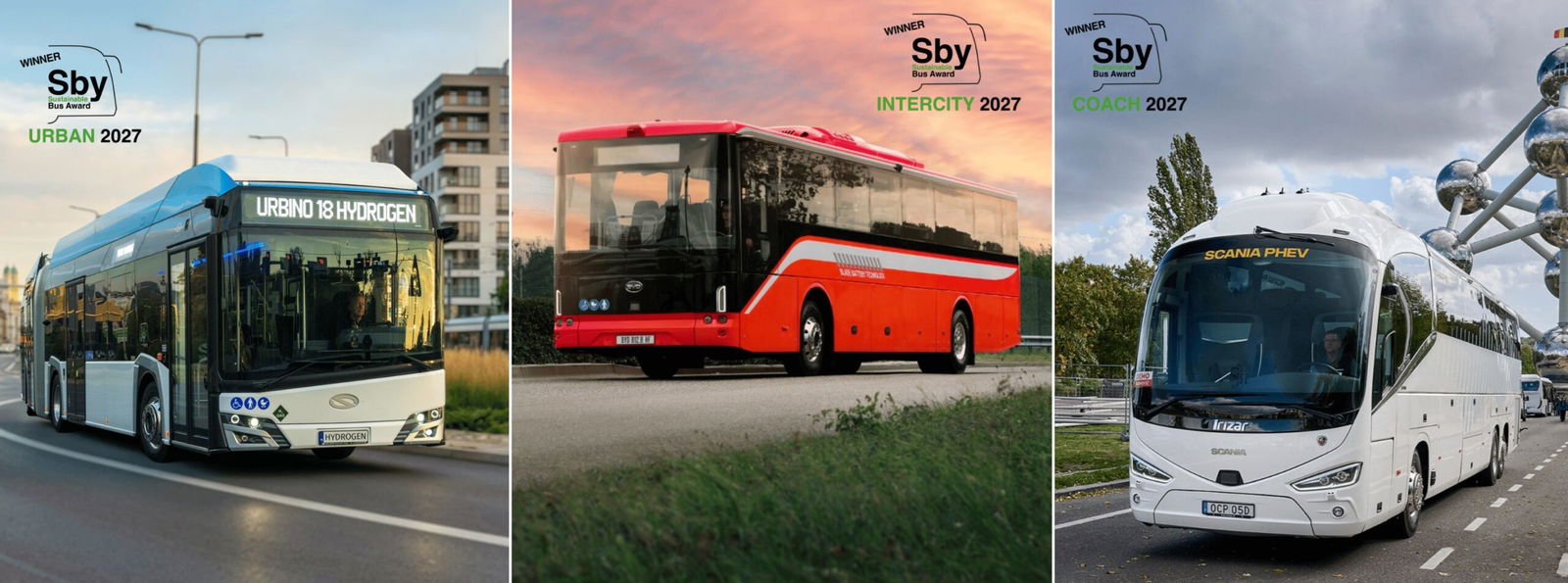
Sustainable Bus Awards 2027 goes to Solaris, BYD and the Irizar-Scania duo
The winners of the international Sustainable Bus Awards 2027 were formally announced on 23 September as part of the FIAA 2026 exhibition in Madrid. As in previous years, the winners were selected by a ten-member international professional jury, in whose work our portal took part for the third time this year, representing Hungary. The result clearly shows that the energy transition in the passenger transport segment cannot be based on a single type of propulsion, as the winners include plug-in hybrid, fully electric and hydrogen fuel-cell models alike.
The Sustainable Bus Awards, one of Europe’s most prestigious professional accolades, is not a road test, nor does it seek to reward a single technology or technical solution. It assesses each bus as a complete ecosystem, with the aim of selecting the models that are most closely aligned with their intended mission and create the greatest value for operators, passengers and communities throughout their entire service life, from manufacturing conditions through to recycling.
Following the preliminary nominations, the final stage saw a total of 12 innovative, state-of-the-art bus models competing across three categories. The ten-member jury of European trade journalists examined and compared the nominees on the basis of the technical documentation and detailed presentations submitted by the manufacturers. The assessment process covered the design of the vehicles and drivetrains, energy efficiency, safety, comfort and accessibility, connectivity, maintenance, the life cycle of key components, environmental impact, the value delivered to the operator, and the manufacturer’s overall approach to sustainability and environmental protection. This year’s winners offer three different answers to the decarbonisation requirements of road passenger transport.
The winner in the Urban category: Solaris Urbino 18 hydrogen New Generation
Solaris has won the Urban category of the Sustainable Bus Awards for the third year in a row (last year the Urbino 10.5 electric midibus, and two years ago the updated version of the full-size Urbino 12 electric, proved to be the most successful models on the basis of the overall scores). This time the manufacturer entered the competition with the latest generation of the fuel-cell-powered Urbino 18 hydrogen.
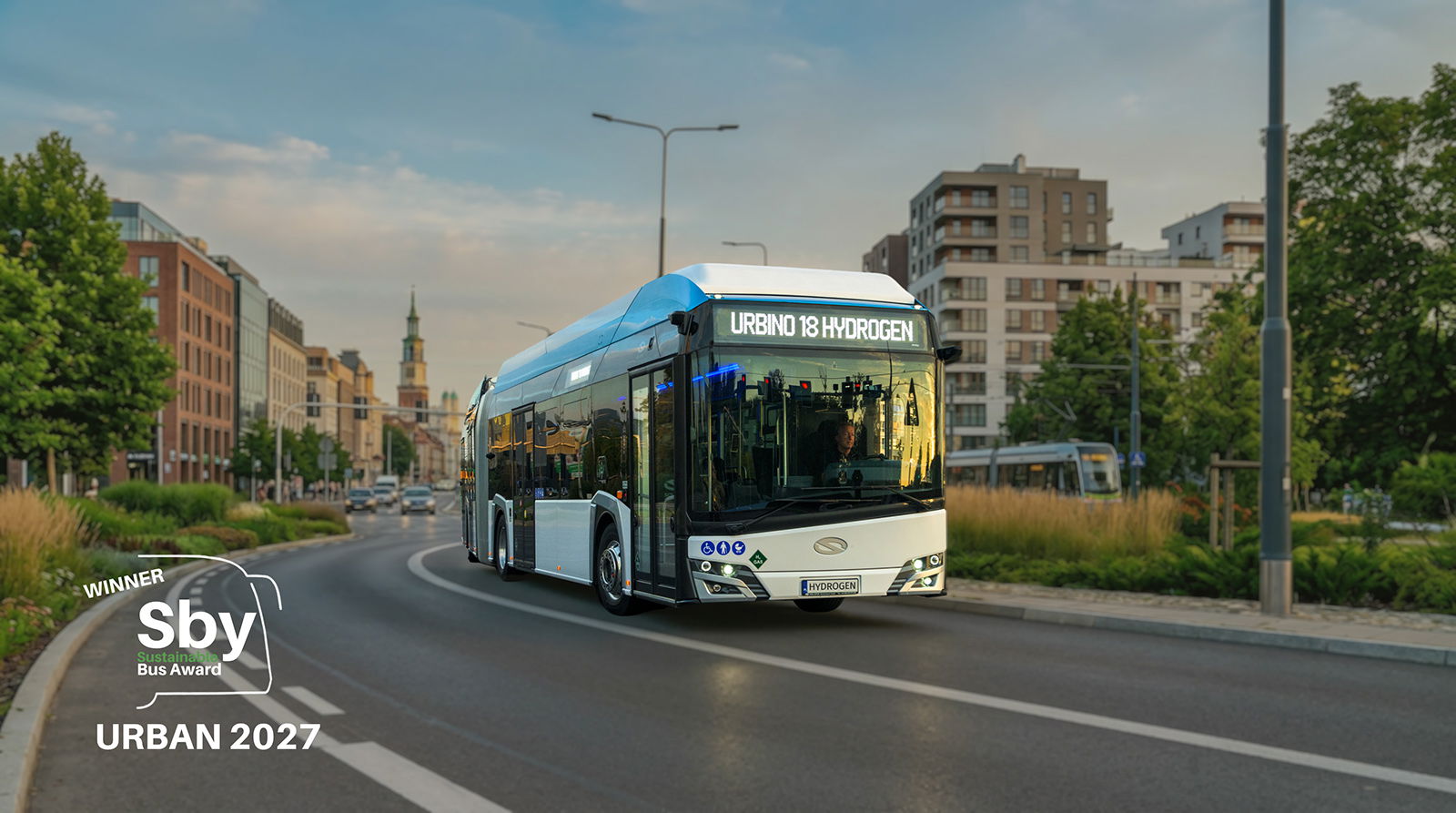
In the jury’s view, the Polish bus manufacturer is applying fuel-cell technology effectively in a high-capacity articulated bus designed for intensive urban use and high daily mileage, demonstrating the potential of this propulsion system in this segment. The maturity of Solaris’s urban model family, the range of the hydrogen-powered version, its short refuelling time, high passenger capacity, passenger comfort and modularity were also praised. In practice, this means that, from an engineering standpoint, the hydrogen version differs from the battery-electric Urbino 18 only in the components mounted on the roof, making maintenance and fleet integration easier.
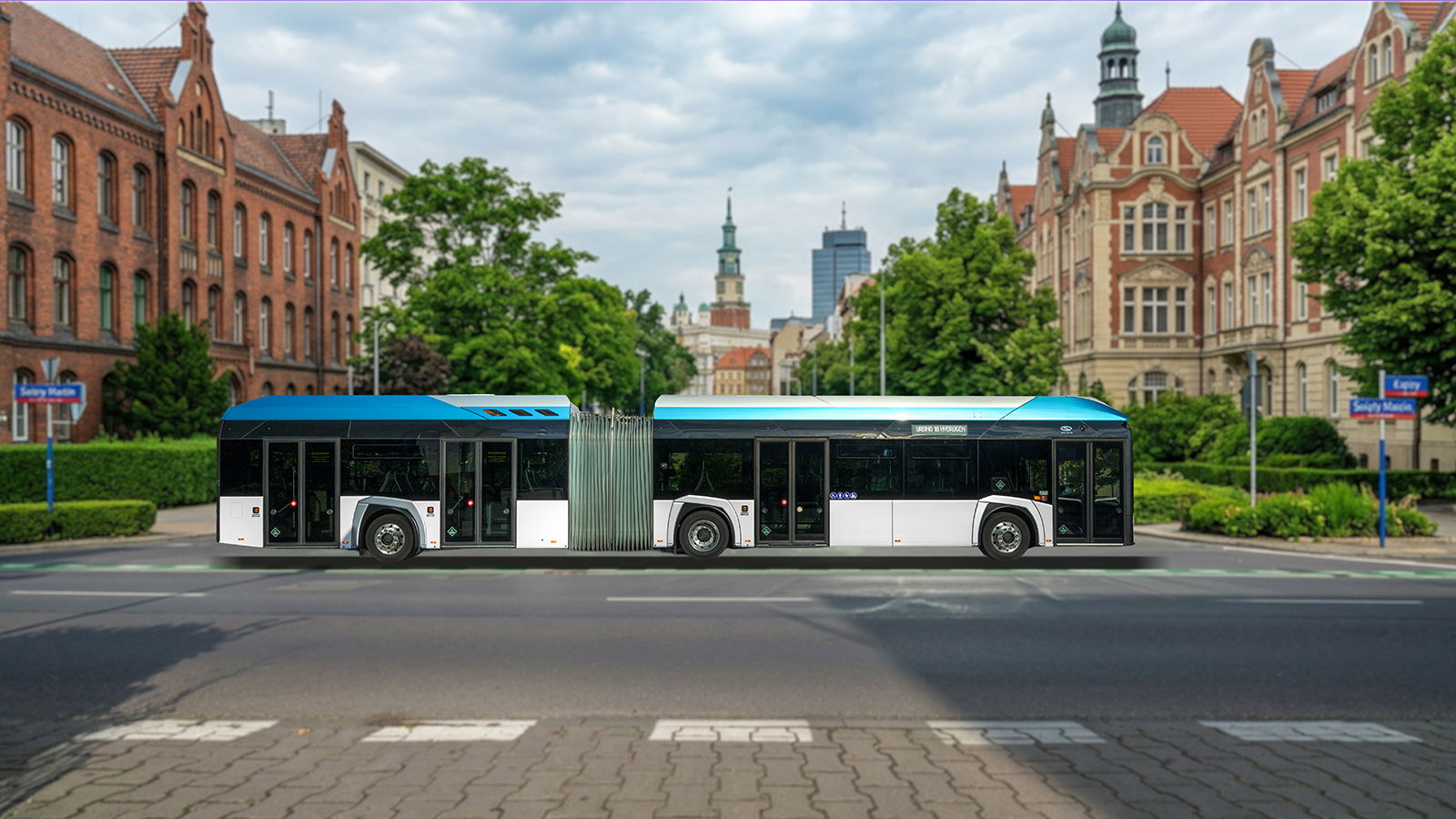
Although it is essentially a niche-market product – that is, not a universal solution that is equally effective for every operator – Solaris’s articulated hydrogen bus provides a professionally credible response to the challenges of metropolitan operating environments.
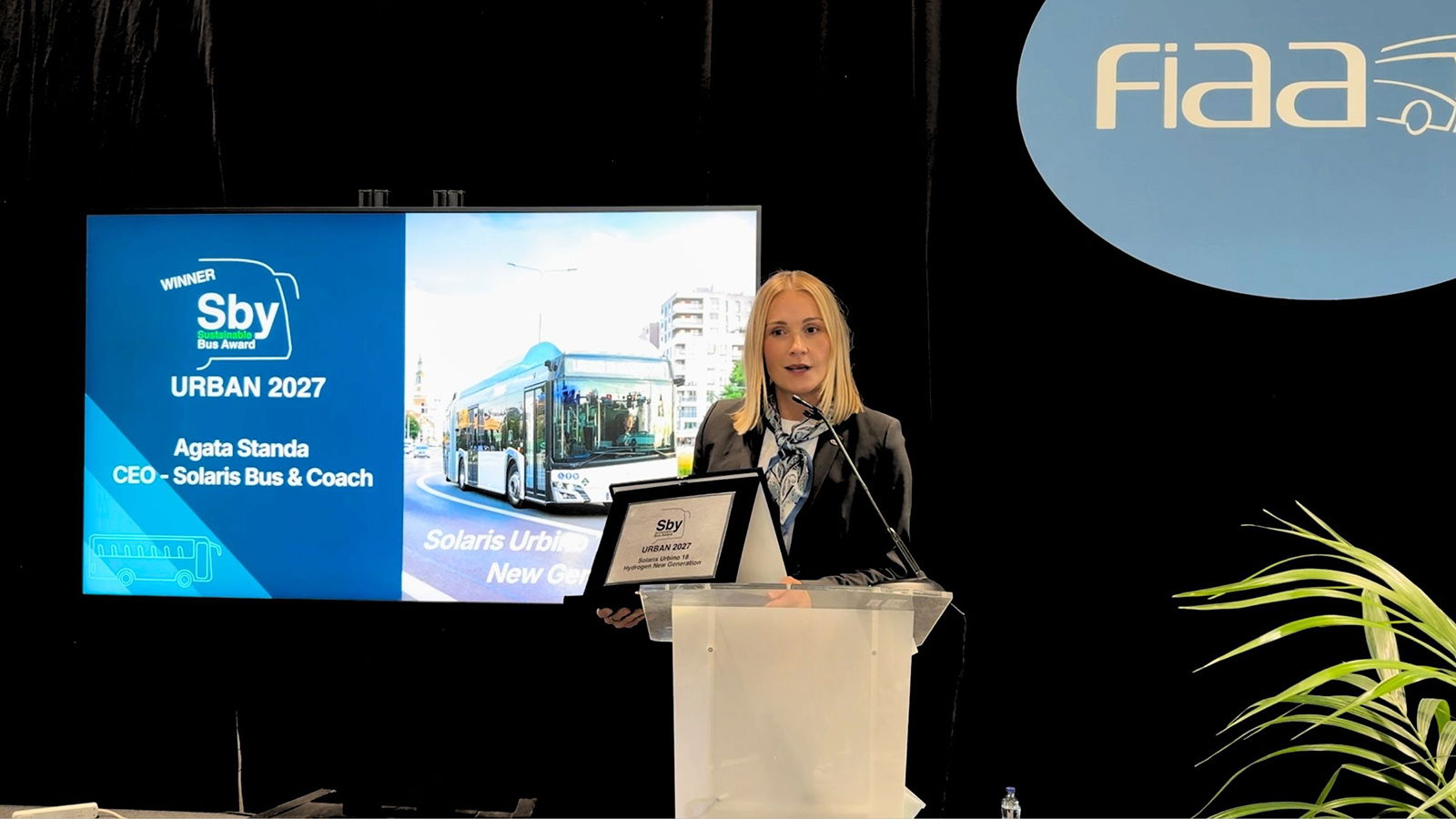
At the awards ceremony in Madrid, the manufacturer, which is celebrating its 30th anniversary this year, was represented by CEO Agata Stańda.
The winner in the Intercity category: BYD B12.b HF
For the first time in the decade-long history of the Sustainable Bus Awards, a Chinese winner has been crowned: in the Intercity category, the title went to BYD’s innovative high-floor electric bus, the B12.b HF model unveiled last year. The jury recognised the vehicle’s forward-looking construction, the high level of integration of its electrical architecture, and the fact that its range of up to 655 kilometres, charging capabilities, luggage capacity and outstanding passenger comfort for the segment make it a particularly attractive proposition for the gradual electrification of European regional and intercity bus services.
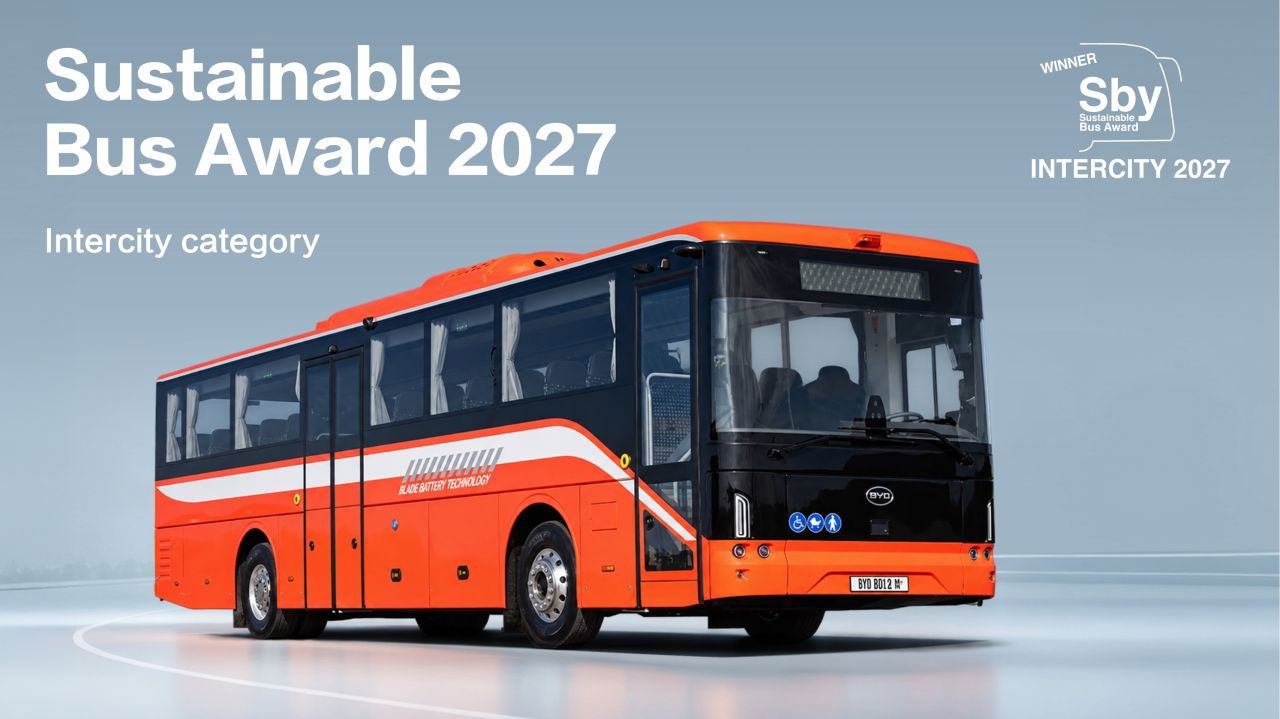
A key element of the concept is the lithium iron phosphate (LFP) traction battery pack, developed in-house by BYD under the Blade Battery name, which is largely integrated into the floor frame and available with several total capacity options. This arrangement improves weight distribution, structural rigidity, stability and overall efficiency. Further features of the vehicle include a driven axle with two wheel-hub motors, an integrated controller based on silicon carbide (SiC) technology that combines the operation of several electrical subsystems, advanced thermal management of the drivetrain and flexible charging options. The model also offers a comprehensive advanced driver assistance systems (ADAS) package, as well as digital services and remote monitoring functions for the driver and the operator, with wireless over-the-air software update capability.
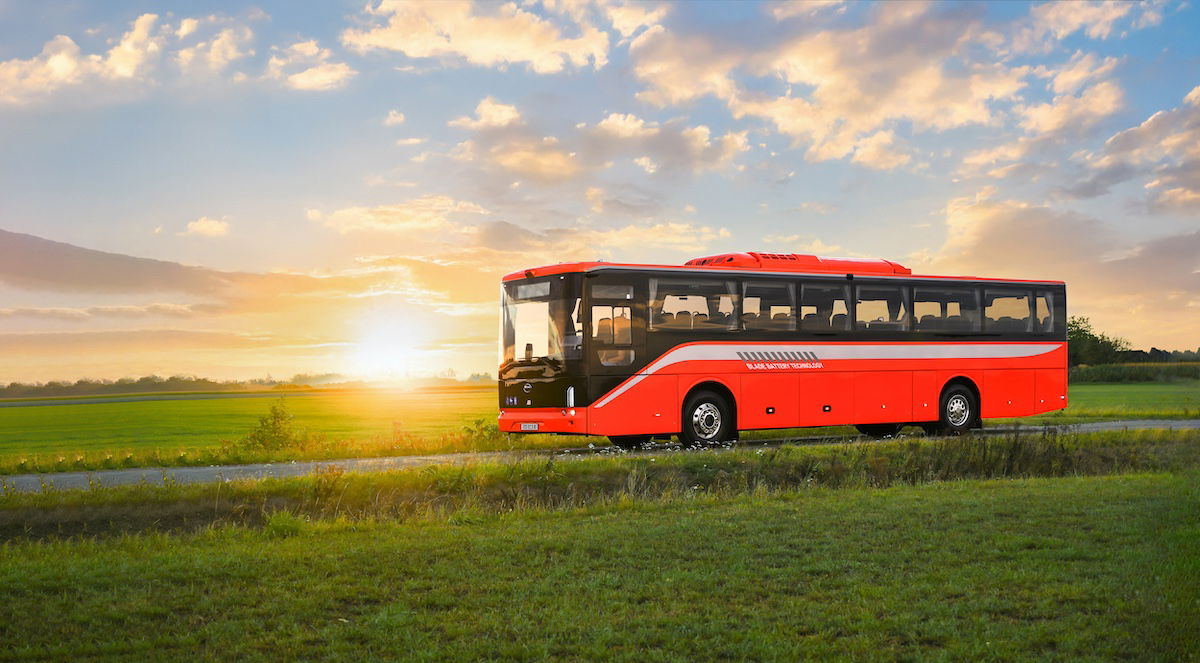
BYD also pays particular attention to the service life of its energy storage systems. If the 18-year or 1.5-million-kilometre figure promised by the Chinese manufacturer is confirmed under real operating conditions, it could make a significant contribution to reducing the vehicle’s total cost of ownership, preserving its residual value and lowering its environmental impact over its full life cycle.
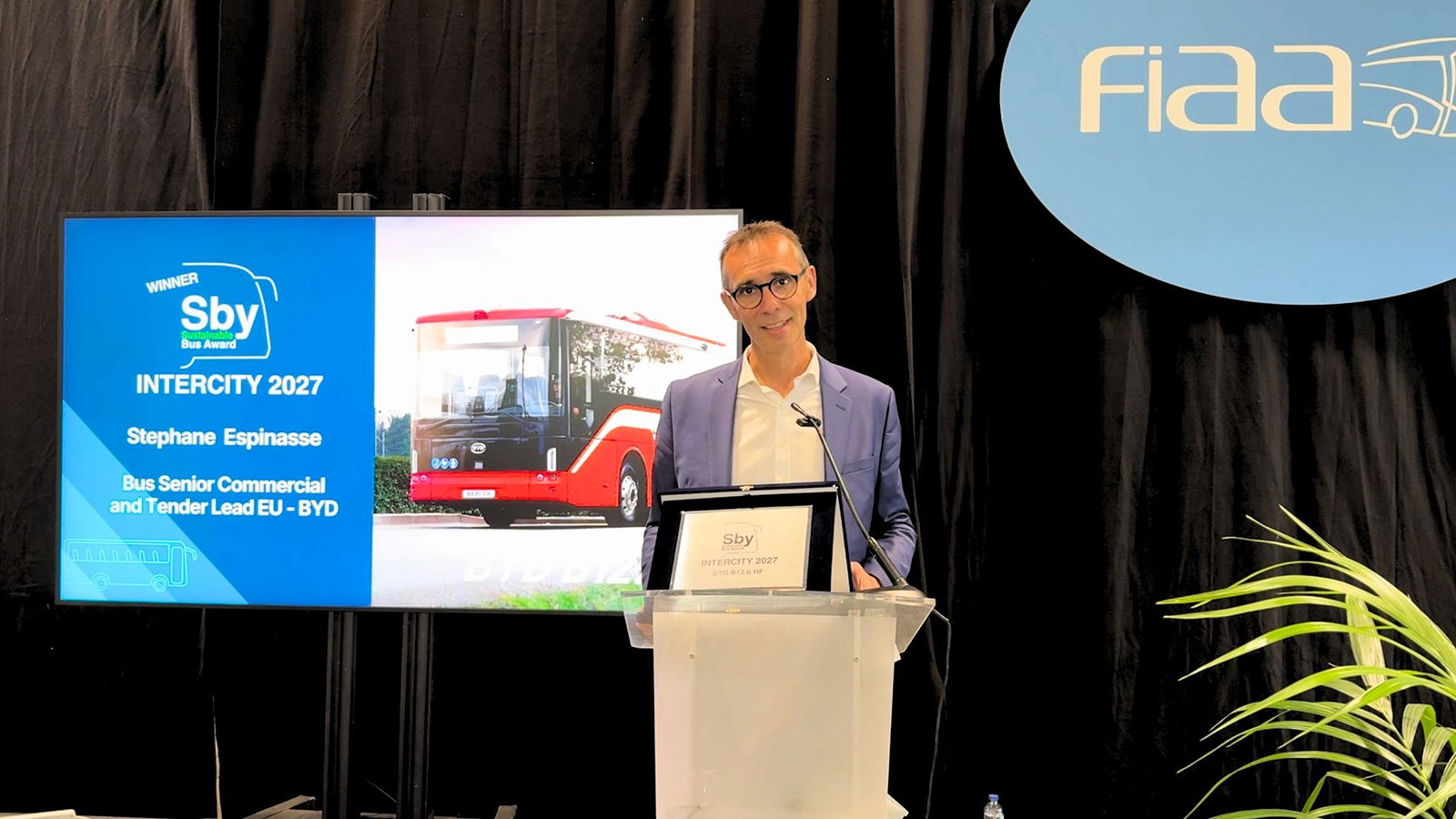
The award, the first in the brand’s history, was accepted on behalf of the manufacturer by Stéphane Espinasse, the new head of BYD’s European bus division, who was appointed in May.
The winner in the Coach category: Irizar i6S Efficient Scania PHEV
There was a Spanish-Swedish victory in the coach and touring coach field, as the top prize went to the latest version of the Irizar i6S Efficient, built on a Scania PHEV chassis. It is a very well-balanced, distinctive yet coherent vehicle concept that, through the introduction of plug-in hybrid drive technology, offers an immediate and realistic opportunity to make coach transport more environmentally friendly and sustainable.
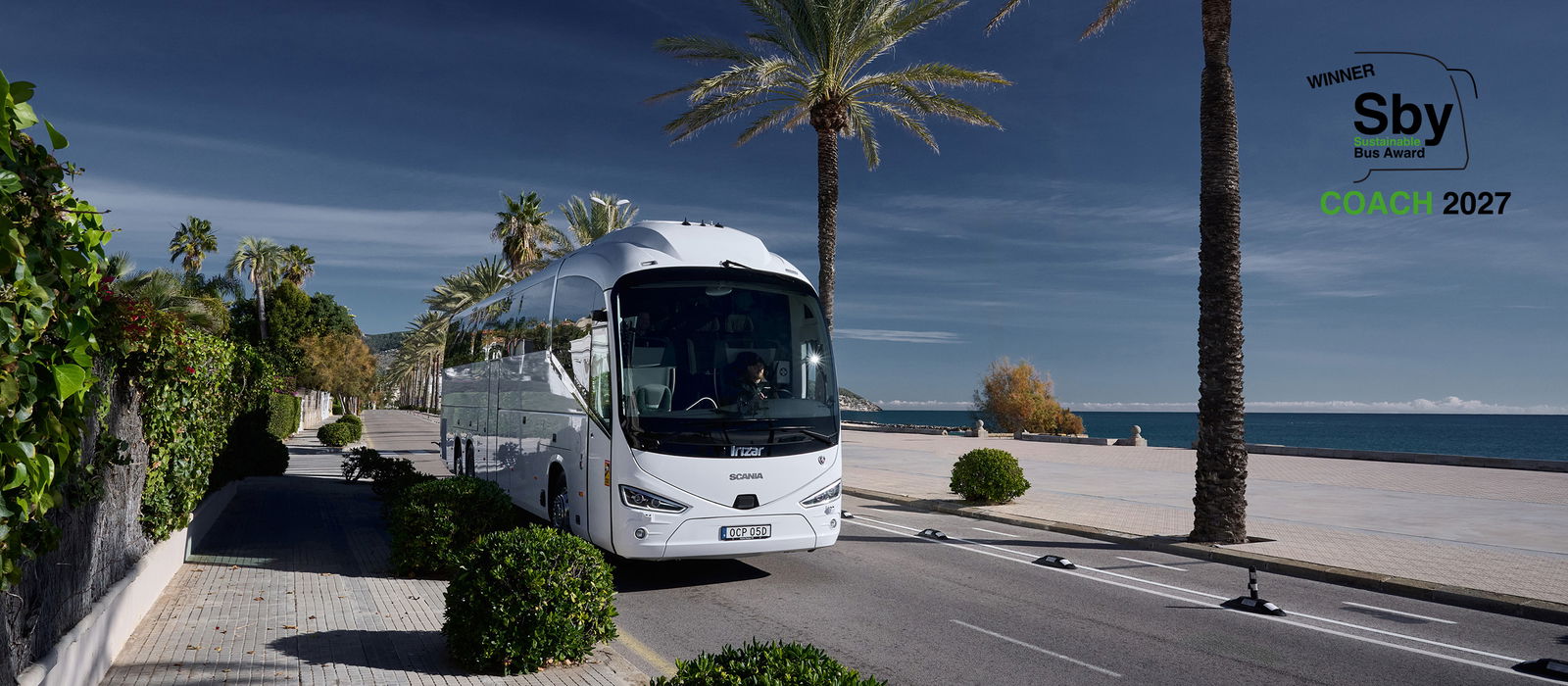
Scania’s self-propelled platform presented last autumn can operate in four different modes (electric, hybrid, charge-sustaining and forced charging), allowing its use to be adapted to the characteristics of the route and the charging strategy. Thanks to the built-in 89 kWh lithium-ion battery, which can be charged from 20% to 80% in around 44 minutes, the two-axle version can cover 80 kilometres in fully electric mode, while the three-axle version can travel 70 kilometres. This is more than enough for the vehicle to operate with zero local emissions in urban environments, at terminals and in designated zero-emission zones. Regenerative braking, electrically operated auxiliaries and intelligent energy management effectively reduce energy consumption. As an additional advantage, depending on the configuration, the 460 hp (336 kW) Scania Super 13 internal combustion engine can also run on biodiesel (FAME) and hydrotreated vegetable oil (HVO), meaning that, according to Scania, CO2 emissions can be reduced by up to 94% when the plug-in hybrid drivetrain is paired with the latter. The state-of-the-art engineering is complemented by Scania’s digital diagnostics and fleet management services, as well as the weight-reduction and aerodynamic solutions of Irizar, which is responsible for the body, further reducing the vehicle’s energy consumption and the resulting emissions.
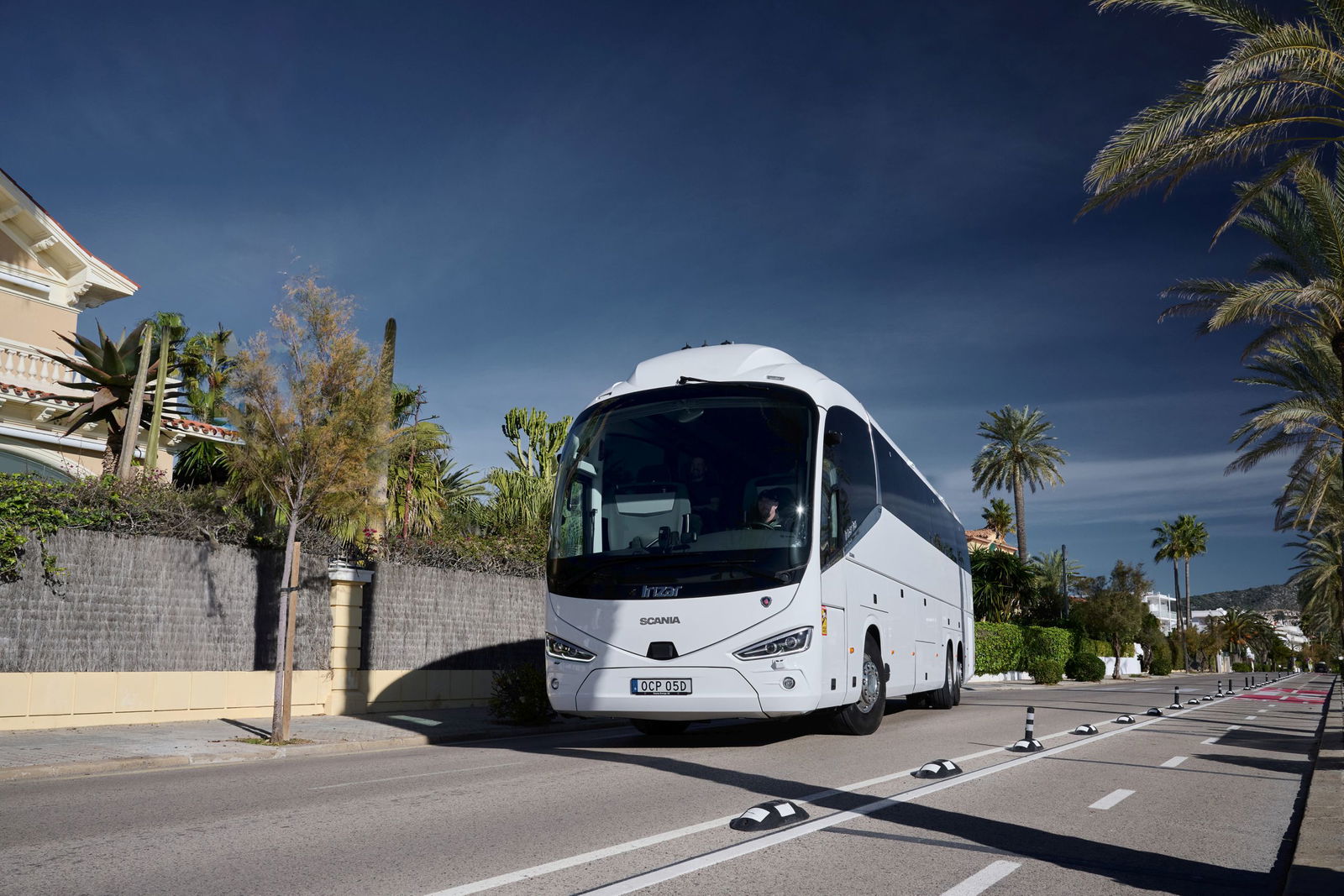
In its reasoning, the jury highlighted that the joint development by Irizar and Scania is capable of effectively reducing fuel consumption and pollutant emissions without the infrastructure and operational constraints, or the additional investments, that still limit the uptake of fully electric coaches today. At the same time, thanks to its range and luggage capacity, it also provides the operational flexibility required for long-distance passenger transport as a fully fledged touring coach. In practice, the actual environmental benefits depend on regular charging and appropriate route and duty planning, but if these conditions are met, the Scania PHEV-chassied Irizar i6S Efficient offers a practical, immediate solution to support the gradual decarbonisation of the coach segment.
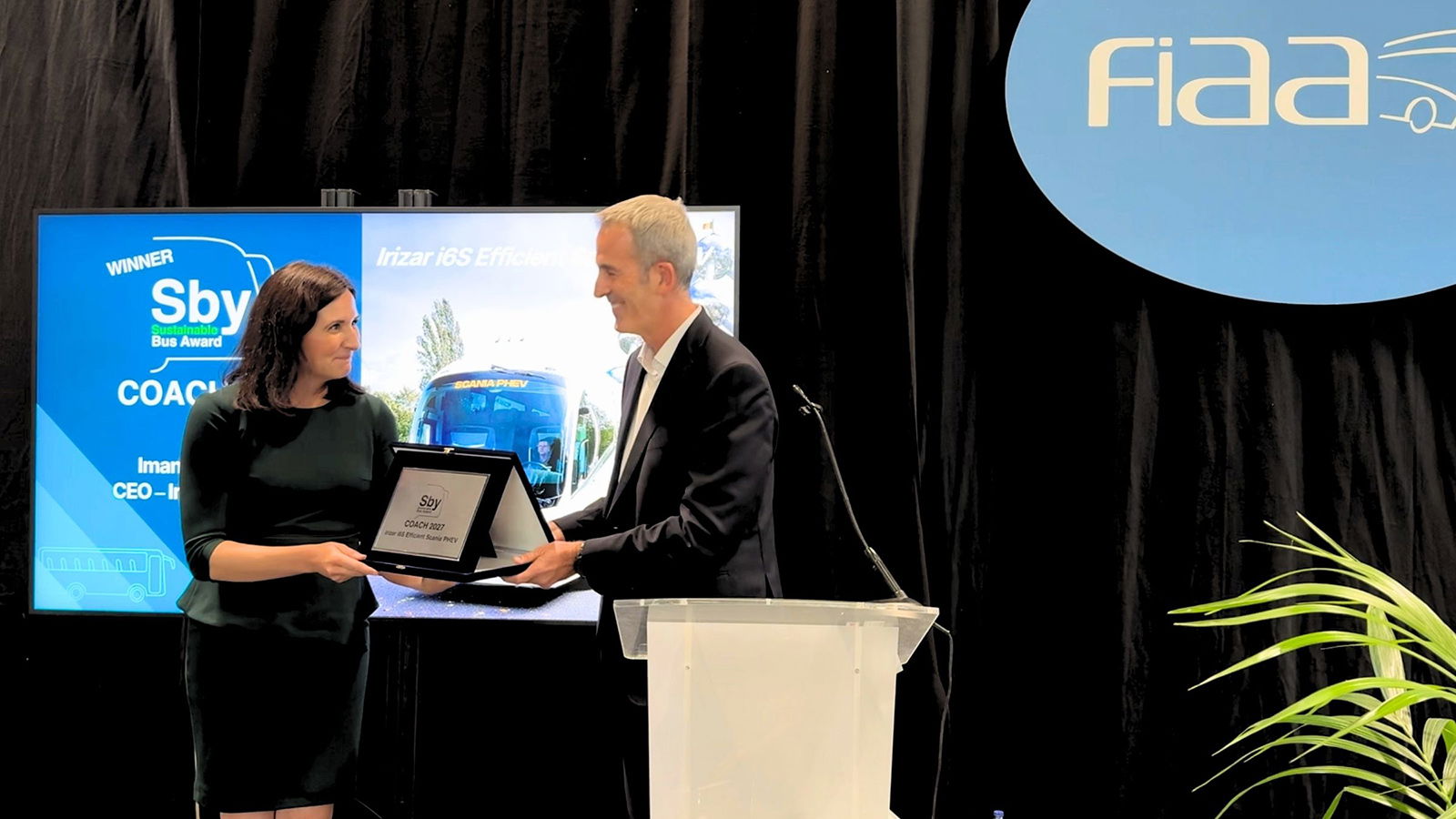
The award was jointly accepted at the Madrid ceremony by Imanol Rego, CEO of Irizar, and Johanna Salomonsson Lind, senior vice-president and head of Scania’s people transport business.