![Magyarbusz [Info]](/mbi/header-logo.png)
Salzburg mayor questions the rationale for the city’s trolleybus operation
 Ludányi József
A serious transport-policy debate has erupted in Salzburg over the future of trolleybus services: while the system was still celebrating its 85th anniversary last year, barely a year later Mayor Bernhard Auinger has raised the possibility of gradually phasing out a network that has been in operation for more than eight decades. Operating since 1940 and continuously developed ever since, Salzburg’s trolleybus network is one of the defining pillars of the city’s public transport system and also one of its transport symbols, meaning any technology shift would go far beyond a simple fleet replacement. According to Auinger, however, the development of battery-electric buses could make it possible in the longer term to replace trolleybuses, so future procurements should already consider whether it is still worth ordering more trolleybuses. The mayor’s statement does not yet amount to a change of direction in Salzburg’s transport policy, but it has certainly opened a debate that, not so long ago, would hardly have seemed topical in light of the plans for the long-term development of the trolleybus system.
The scale of the change this would represent for public transport in Salzburg is clearly shown by the current importance of the trolleybus operation. The city currently has 12 trolleybus routes, with a network length of around 128 kilometres and a fleet of 129 vehicles. The trolleybuses cover approximately 6.5 million kilometres a year and carry around 32 million passengers, meaning this is not a supplementary mode of transport, but one of the most important foundations of Salzburg’s surface public transport.
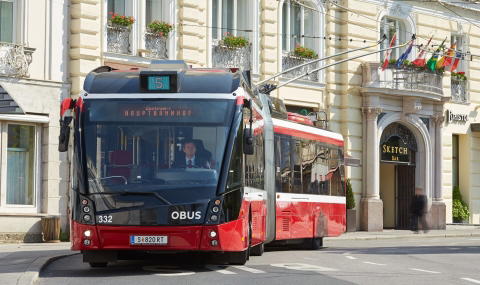
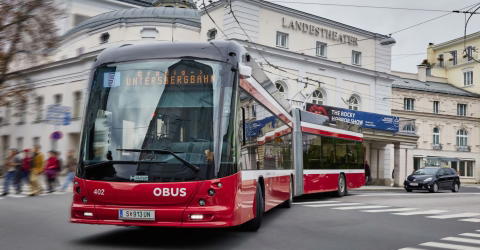
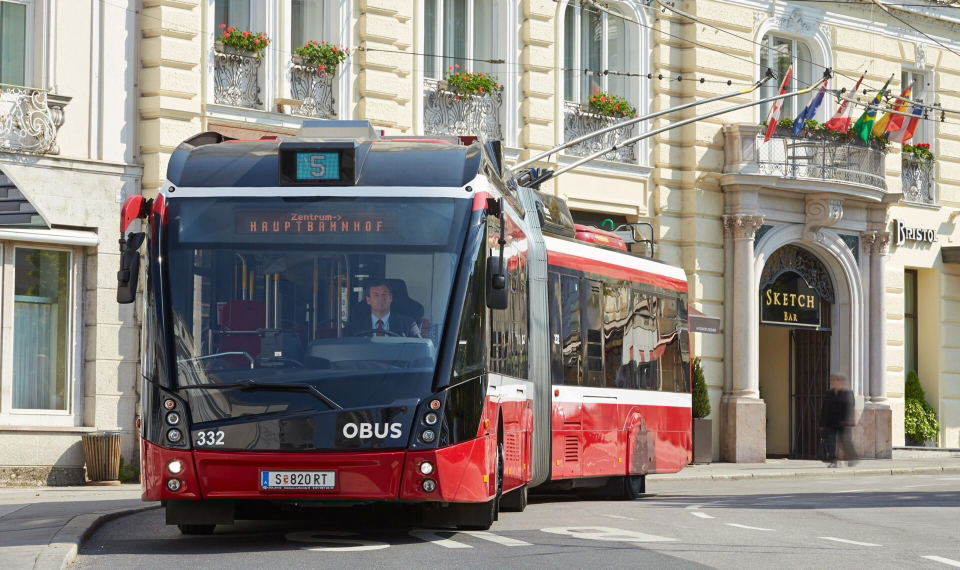
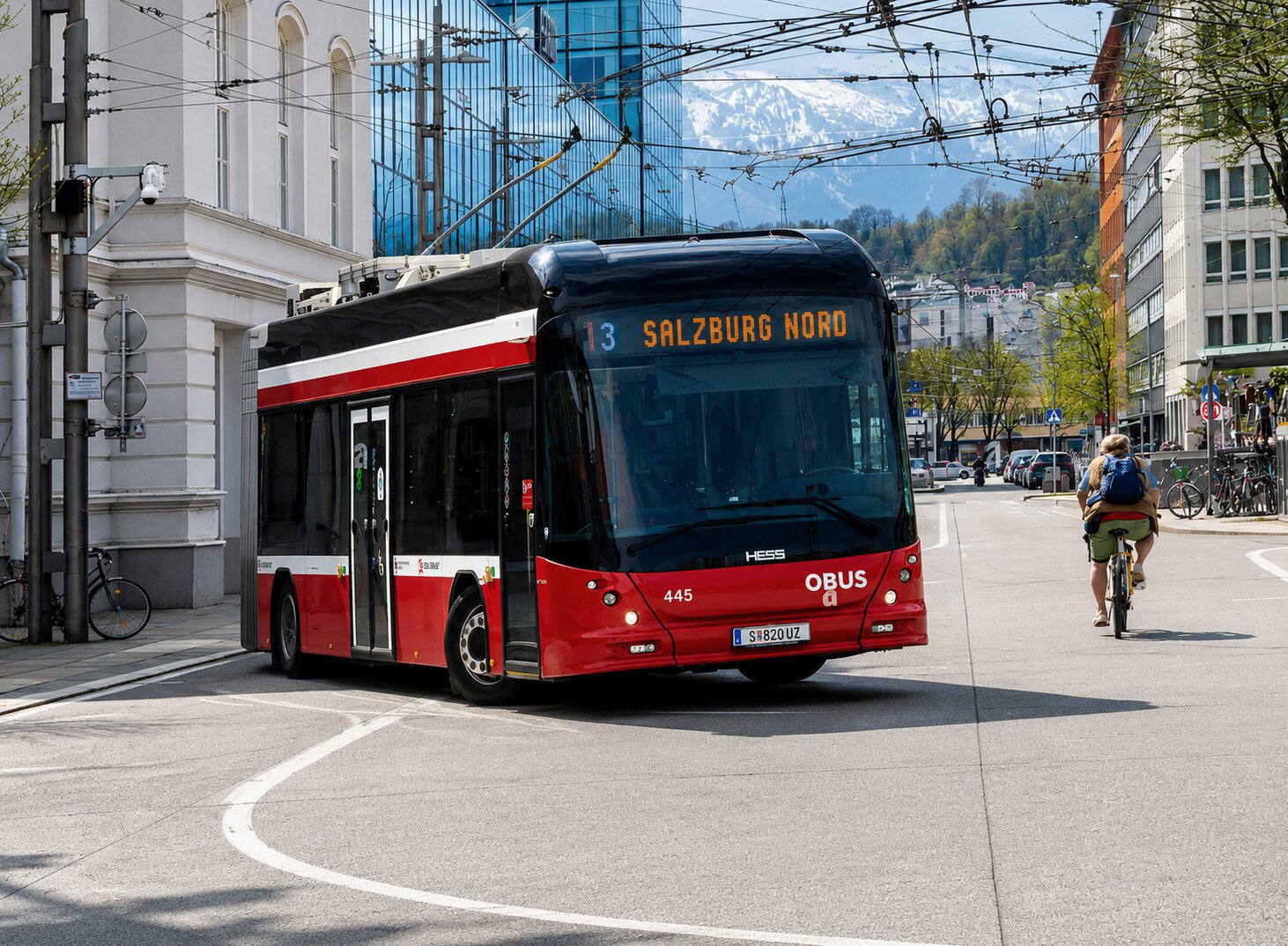
A significant share of the fleet, moreover, has been procured over the past decade and a half. Its backbone consists of 51 Solaris Trollino 18 AC MetroStyle vehicles introduced between 2012 and 2018, and 50 Hess lighTram 19 DC trolleybuses, delivered between 2019 and 2025, which are also capable of battery-powered off-wire operation. Alongside them, the fleet includes 15 Solaris Trollino 18 AC vehicles procured between 2009 and 2011, and 13 Van Hool AG300T vehicles that have now reached two decades in service. The system has therefore continued to develop in recent years, and Salzburg AG had previously even examined the possibility of converting further diesel bus routes to trolleybus operation.
Compared with these earlier development concepts, Bernhard Auinger’s latest suggestion represents a radical change of direction. The immediate trigger was the technical problems of recent weeks, above all the mass vehicle failures that occurred in early August. Following heavy rainfall in the city, first 25 and then, after another cloudburst, a further 10 Hess lighTram 19 DC vehicles had to be withdrawn from service. Of the 50-strong Hess fleet procured between 2019 and 2025, 35 vehicles – 70% of the fleet – thus became temporarily unfit for service. According to Salzburg Linien, the problem has been narrowed down to the area around the vehicles’ insulators, while the exact cause of the failures, and whether they may stem from a design issue, is still being investigated with the involvement of Hess.
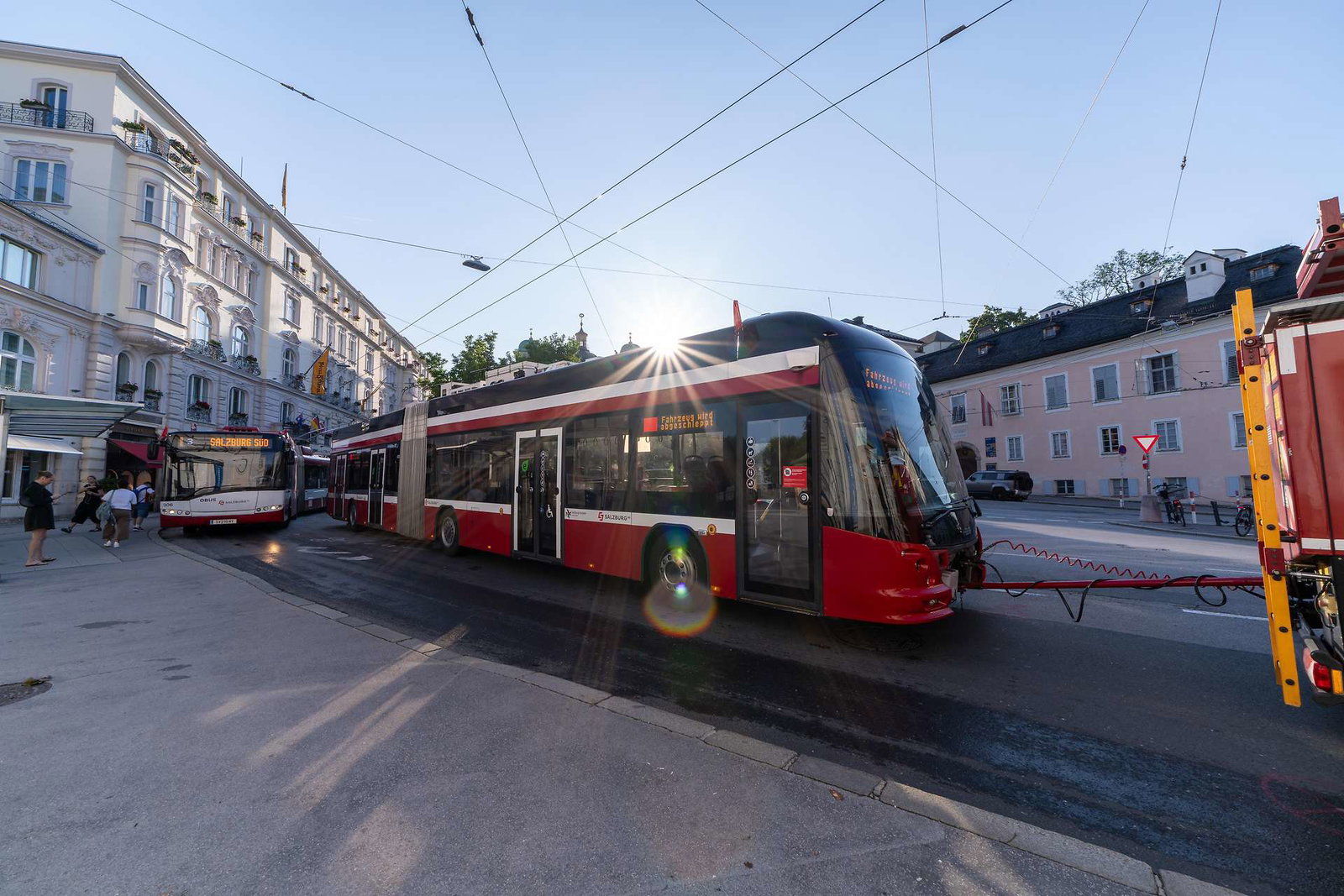
Photo: Georg Hummer
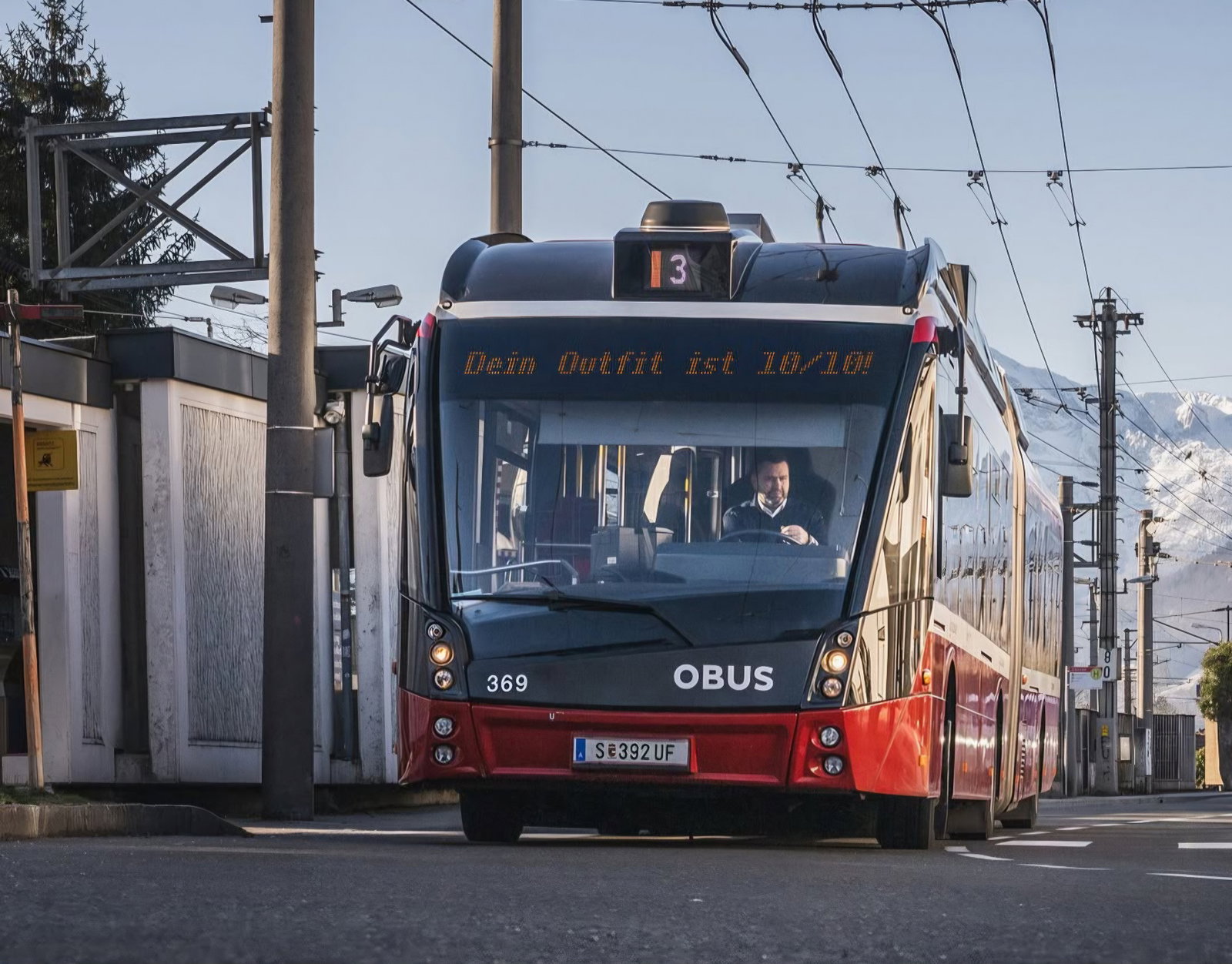
The latest case is not the first more serious technical problem affecting Salzburg’s trolleybus fleet. Earlier, the Solaris Trollino 18 AC MetroStyle series also experienced significant issues, which ultimately led to the conversion of the vehicles’ electrical equipment. The vehicles were originally built with electrical equipment from Prague-based Cegelec – today Electric Components, a member of the Škoda Group – but this was replaced between 2023 and 2025 with a system from Poland’s Medcom. Initially, the plan had only been to refurbish the integrated roof-mounted converters, a task that would have been carried out by the original manufacturer. Before the work began, however, Solaris withdrew from that solution and ultimately decided to install Medcom equipment instead. The change was presumably also influenced by component-supply problems affecting Cegelec at the time, which also delayed the delivery of other trolleybuses ordered with the company’s traction systems and, in some cases, ultimately made it necessary to involve another supplier of electrical equipment.
The operation of the Hess vehicles has not been entirely trouble-free either, with various technical defects already appearing in the early period. From a technical perspective, the lighTram 19 DCs are also an interesting design: unlike conventional double-insulated trolleybuses, they are essentially based on a battery-electric bus platform. They are connected to the overhead contact-line infrastructure through a galvanically isolated DC/DC converter, while the traction battery is a continuously active part of the drive system. Even in overhead-wire operation, the energy supply passes through the battery, while the converter charges the energy storage system on the move. Whereas in a conventional IMC trolleybus with battery off-wire capability roughly 40% of the energy used passes through the batteries, in this battery-bus-platform-based design the figure is effectively 100%.
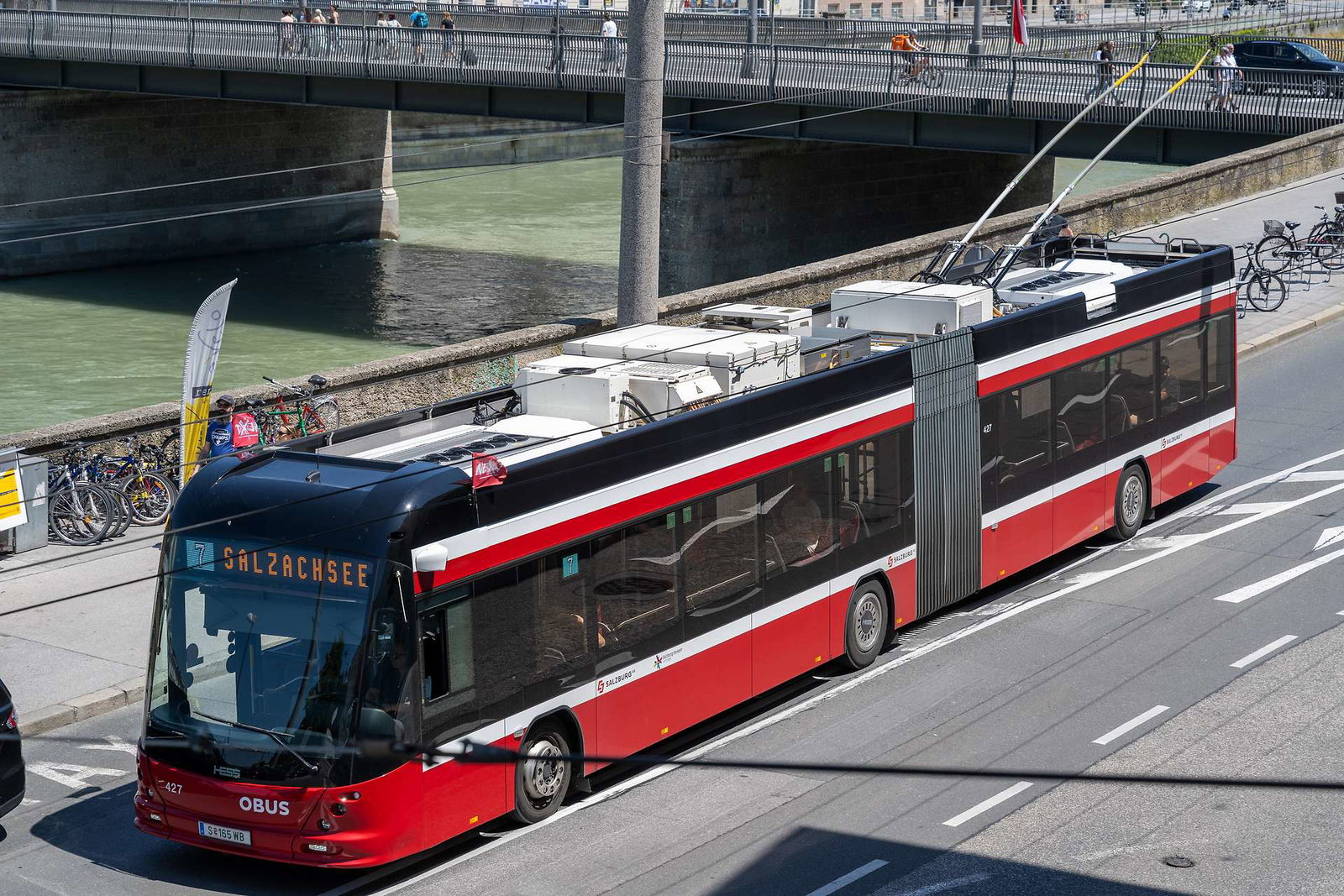
Photo: Georg Hummer
In the wake of the repeated problems, Auinger has now questioned the long-term rationale for the trolleybus technology itself. According to the mayor, the increasing range of battery-electric buses and their more favourable purchase costs compared with trolleybuses mean Salzburg should turn towards them in future fleet renewal programmes. He believes that within one to five years, models could become available that are capable of taking over the duties of today’s trolleybuses, allowing the existing fleet to be phased out gradually over around 15 years, taking account of its remaining service life.
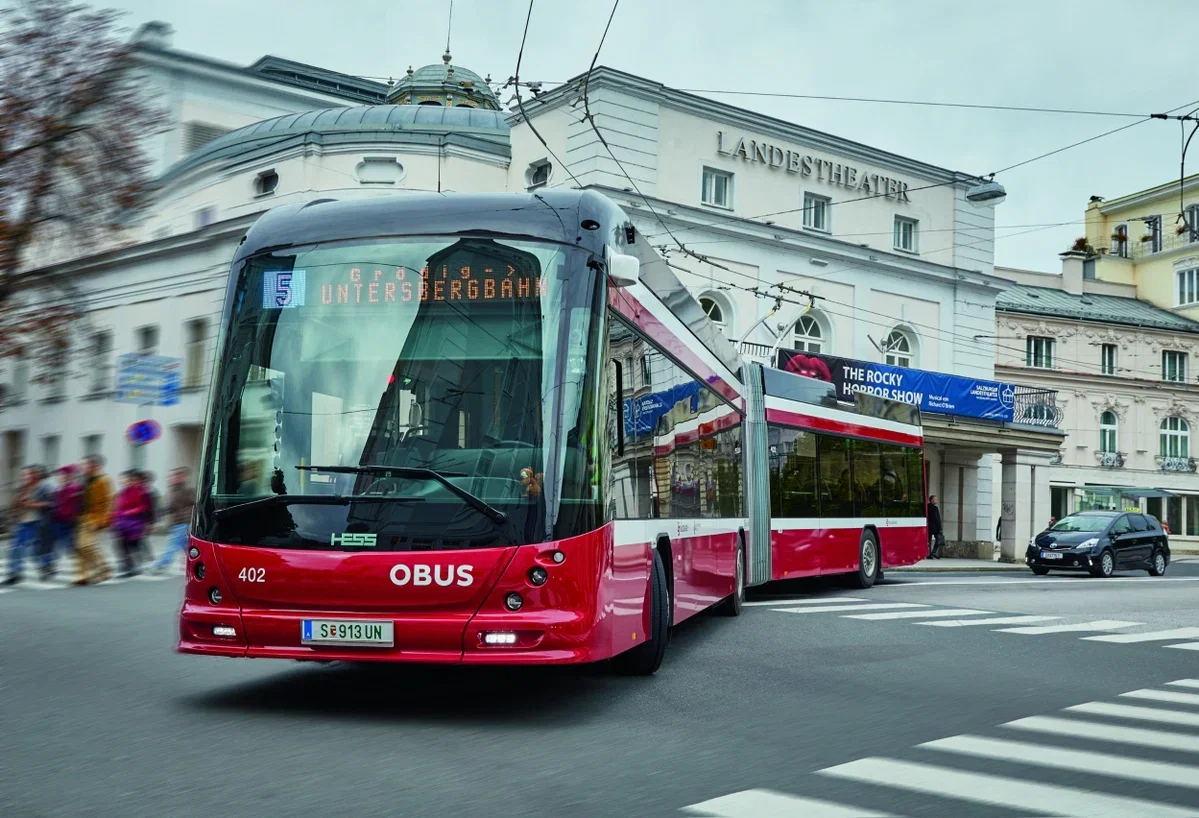
The proposal is particularly timely because Salzburg currently has a framework agreement with Hess that allows for the procurement of further trolleybuses. Under previous plans, the vehicle replacement programme would continue in the coming years: the new framework contract, running until 2032, provides for the procurement in several phases of up to 60 additional lighTram articulated trolleybuses, meaning the city had until now been planning to maintain and modernise its trolleybus operation in the long term. The first 12 vehicles have already been ordered, but there is no obligation to call off the full framework quantity. Auinger therefore argues that before any further orders are placed, Salzburg must decide whether it will continue with the previously planned renewal of the trolleybus fleet or gradually shift its focus to battery-electric buses over the coming years.
Auinger’s idea, however, has by no means met with unanimous support. The mayor has faced serious criticism from the opposition, certain figures in state politics and transport experts, with his statement described, among other things, as premature and insufficiently substantiated from a professional standpoint. The chair of Salzburg AG’s supervisory board has also called for a more cautious approach, urging broader professional dialogue instead of rapid conclusions on a technology switch.
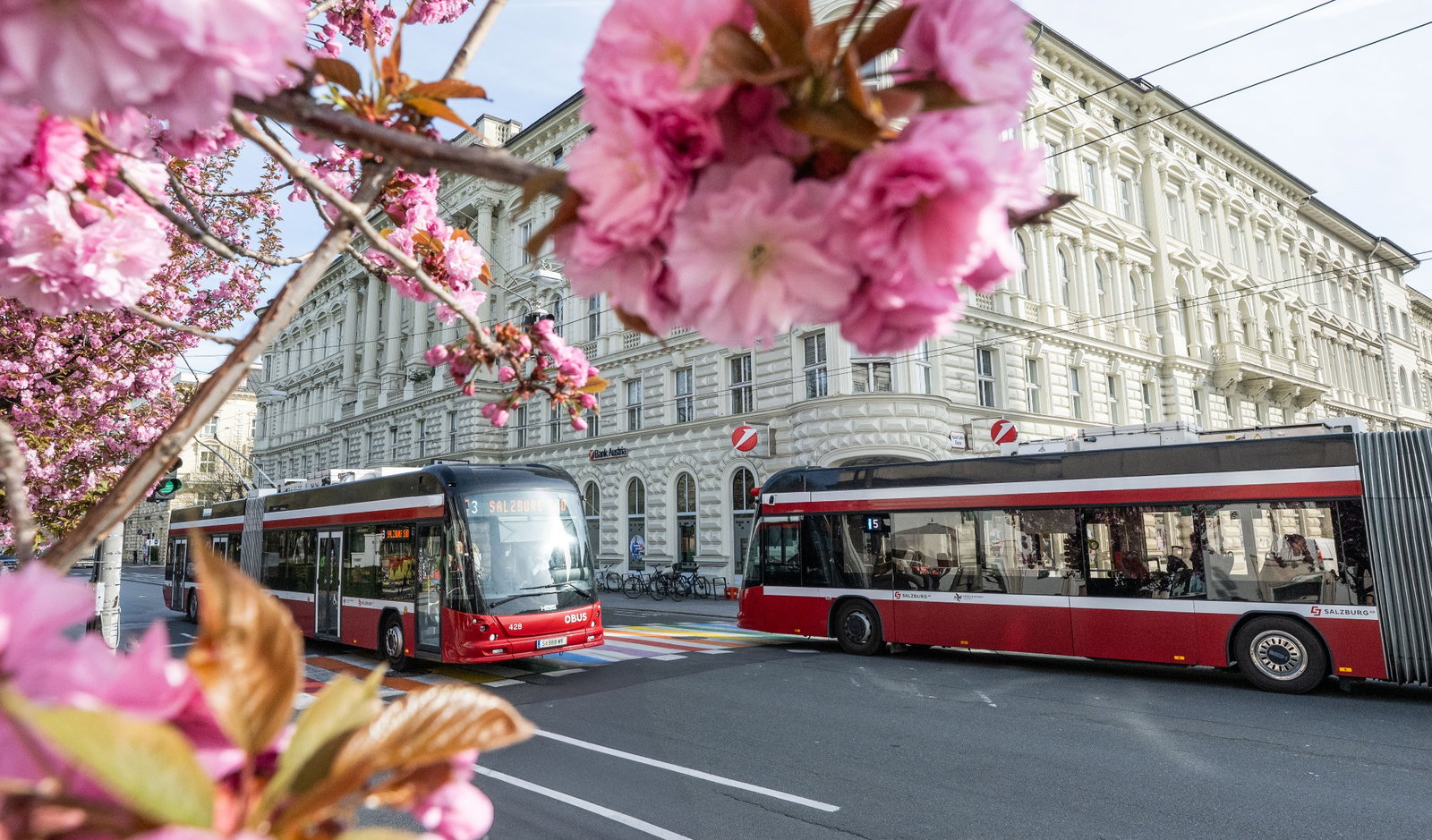
One central element of the criticism is that the precise cause of the current failures affecting the Hess trolleybuses is still unknown, and the manufacturer and external experts are still working to identify it. Those arguing for the retention of trolleybus operation therefore say it cannot yet be stated that this is a system-level problem: in their view, a design or electronics fault in a particular vehicle type does not in itself call into question the rationale for the entire technology.
Moreover, the boundary between trolleybuses and battery-electric buses has become increasingly blurred in recent years with the spread of IMC technology. Modern trolleybuses are no longer able to operate only when connected to overhead wires: they draw power directly while on the move and at the same time charge their onboard batteries, enabling them to cover longer sections without overhead wiring. One of the most important advantages of this is that they do not need a heavy battery pack sized for an entire day’s operation, while still being able to offer flexibility similar to battery-electric buses on route sections where overhead wiring is not available.
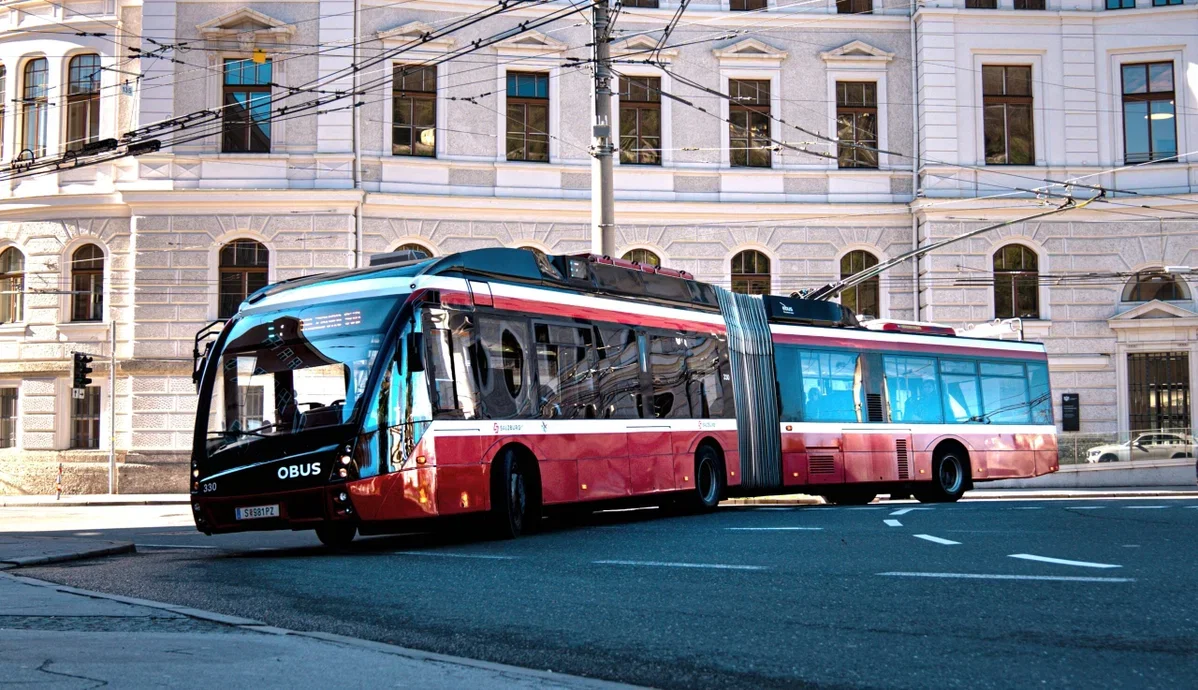
In Salzburg’s case, this is all the more relevant because the city already has an extensive overhead wiring and power-supply infrastructure built up over decades. Gradually abandoning it would not simply mean replacing trolleybuses with battery buses, since the latter would also require adequate charging capacity to be built, while the cost, weight and later replacement of the vehicles’ larger batteries would also have to be taken into account. For this reason, the two technologies are not necessarily mutually exclusive alternatives: on heavily used sections, the existing overhead wiring could continue to provide direct energy supply, while the option of off-wire operation could extend electric operation to areas where building new overhead lines would no longer be justified.
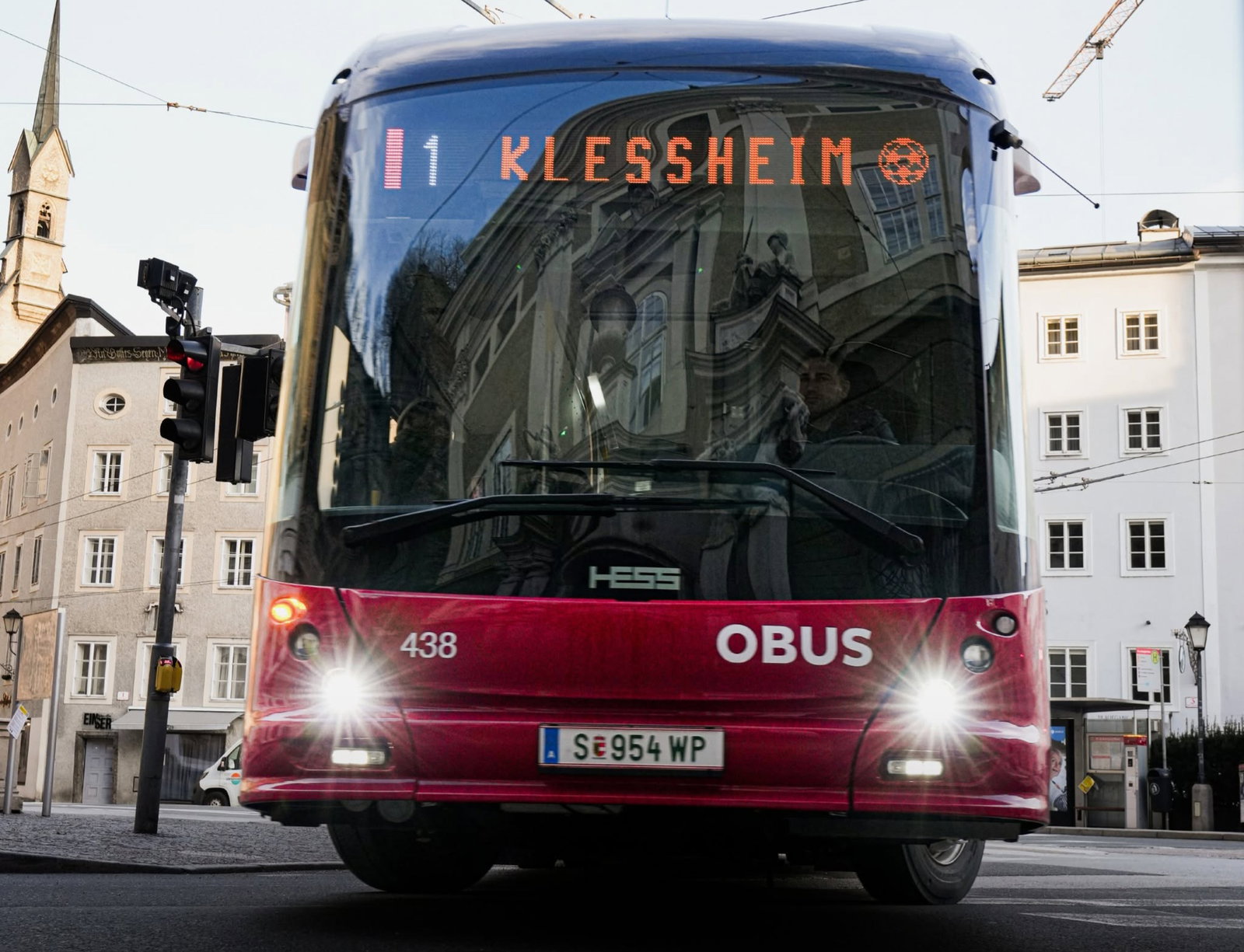
The idea of a complete technology shift also sharply diverges from the transport-development direction set out only a few years ago. The 2024 public transport concept commissioned by the City of Salzburg, the State of Salzburg and the Salzburger Verkehrsverbund did not recommend scaling back the trolleybus system, but rather its phased further development. The study, prepared by Zurich-based mrs partner ag, also called for stronger priority for public transport, the creation of new bus lanes, shorter headways and faster services. From this perspective, one of the most important problems affecting Salzburg’s surface transport is not trolleybus technology itself, but road congestion and the lack of adequate traffic priority – factors that would slow battery-electric buses just as much, regardless of their drive system.