![Magyarbusz [Info]](/mbi/header-logo.png)
Irizar’s second-generation hydrogen coach begins real-world operational testing in the Madrid region
 Ludányi József
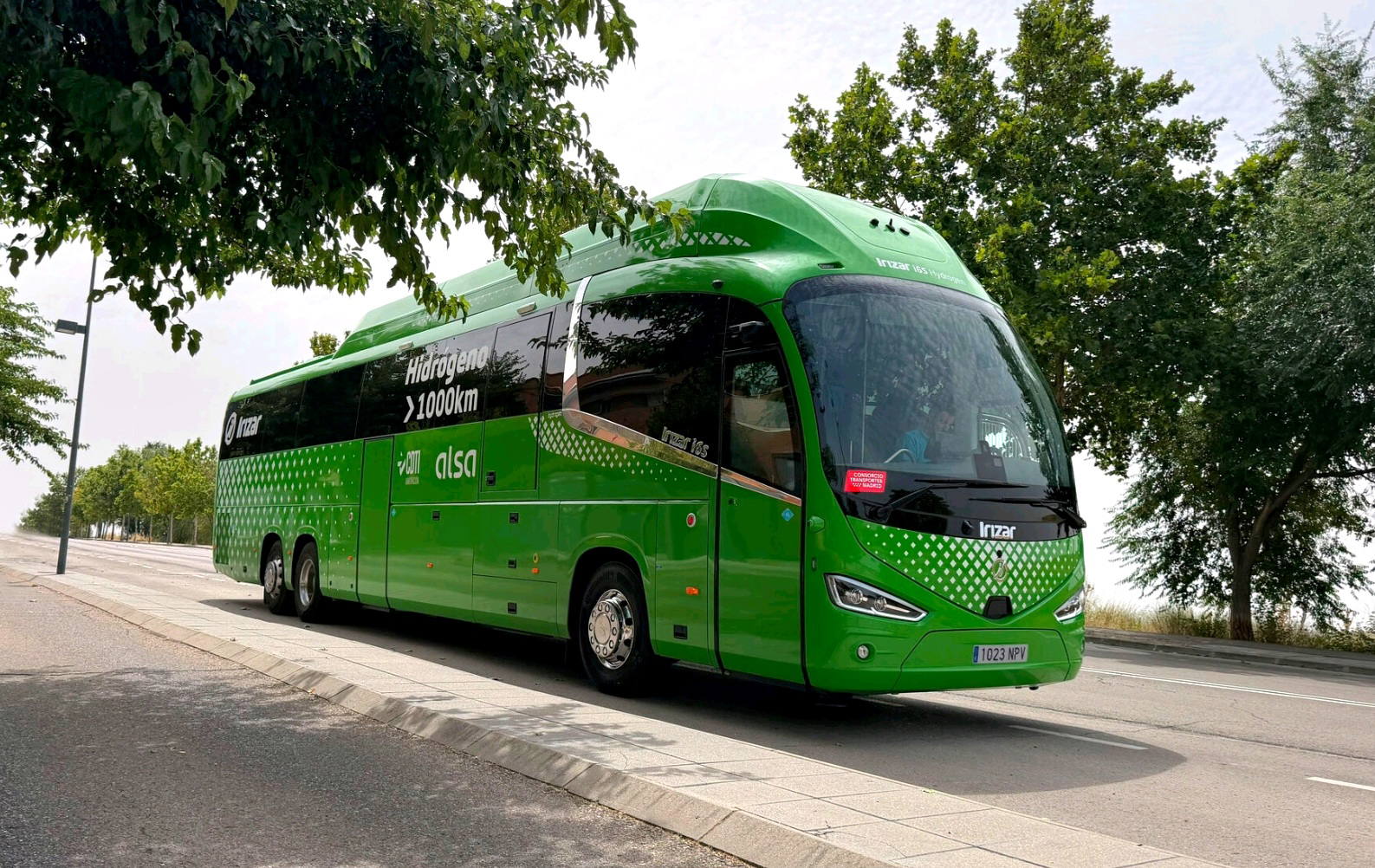
Irizar’s second-generation hydrogen-powered intercity coach has begun real-world testing in passenger service. According to the Spanish manufacturer, the vehicle has been operating in scheduled service in the Madrid region since June, where the hydrogen-powered drive system is being tested under real operating conditions. The aim of the demonstration programme is to enable the developers to gather experience in a passenger-service environment on the vehicle’s performance, energy efficiency and reliability.
The demonstration operation is taking place on the network of the Madrid Regional Transport Consortium (Consorcio Regional de Transportes de Madrid – CRTM), with the participation of Alsa, the country’s largest bus and coach passenger transport company. During the test programme, the tri-axle Irizar i6S Efficient H2 FCEV is operating not only on suburban services but also on longer-distance regional routes, allowing the developers to assess the drive system in everyday traffic and under real load conditions. Alsa is one of the largest bus and coach operators not only in Spain but also in Europe, with a significant presence in Portugal, France, Switzerland and Morocco. With a history of more than a century, the company has taken part in operational trials of numerous alternative-drive vehicles in recent years, making it an important partner for Irizar in the practical testing of hydrogen technology.
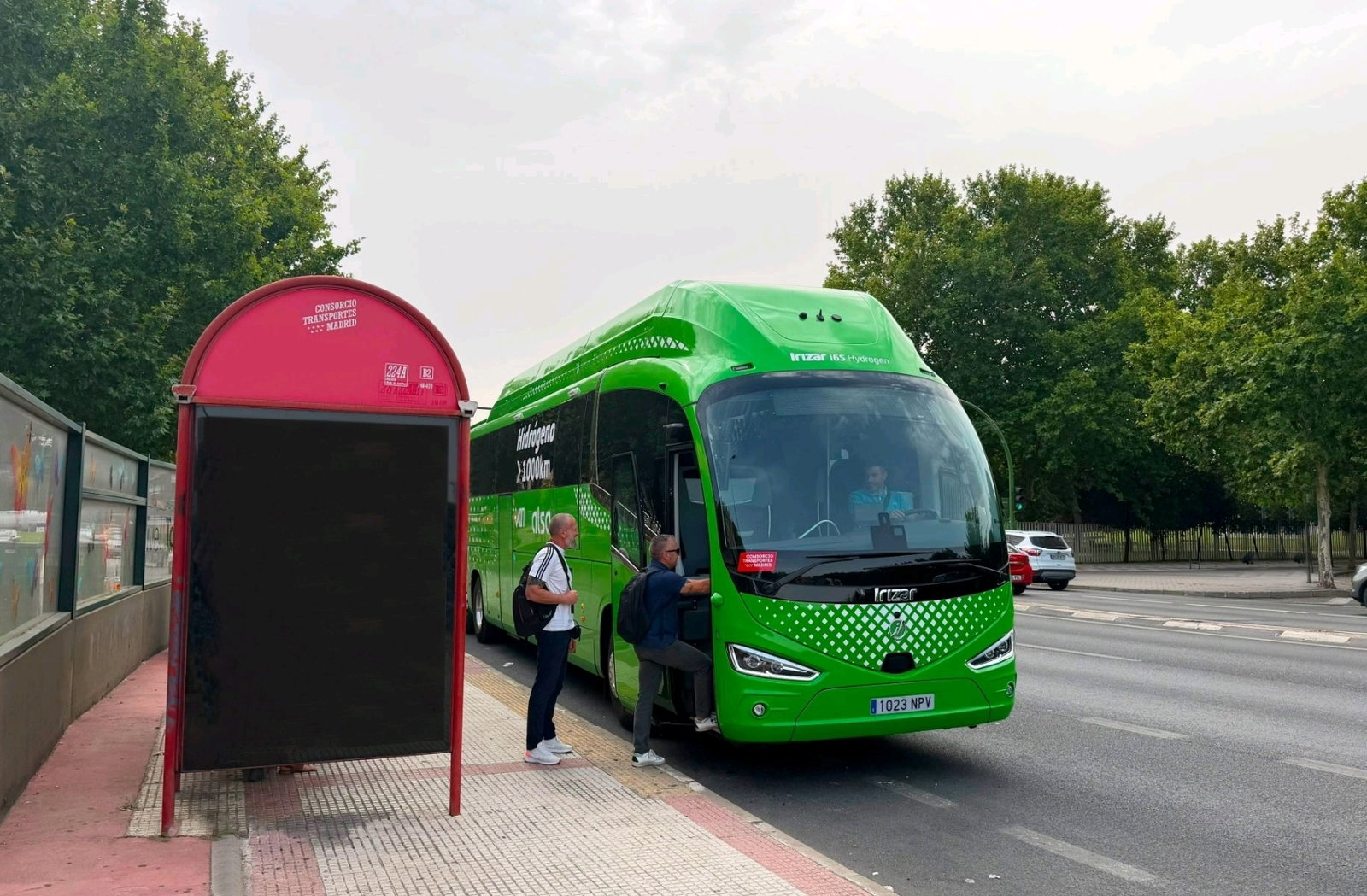
The coach now operating in service is the second-generation version unveiled this June, representing a design that has been further developed in several areas compared with the first prototype. According to the manufacturer, passenger and luggage capacity have increased, the vehicle’s kerb weight has been reduced and energy efficiency has improved, while range has also been extended further. The 200 kW fuel cell used in the first prototype has been replaced by Bosch’s new FCPM C190 unit, which, working together with an electric drive system optimised for medium- and long-distance transport, provides a range of more than 1,000 kilometres on a single fill. Refuelling the hydrogen tanks takes just 10–15 minutes, which, according to Irizar, enables operating flexibility similar to that of conventional diesel-powered intercity coaches.
Propulsion is provided by a ZF CeTrax 2 central electric motor with a continuous output of 360 kW, integrated with an automatic three-speed transmission. The drive system is also supplemented by a battery pack with a total capacity of 60 kWh, which acts as an intermediate energy store, primarily providing assistance during acceleration, while also playing an important role in recuperating braking energy. At low speeds, energy supply is mainly provided by the fuel cell, with the batteries contributing only minimally to propulsion. In motorway operation or at other higher speeds, however, the system’s operation is reversed: in this case, a significant part of the energy required for propulsion is supplied by the batteries, which are continuously charged by the fuel cell.
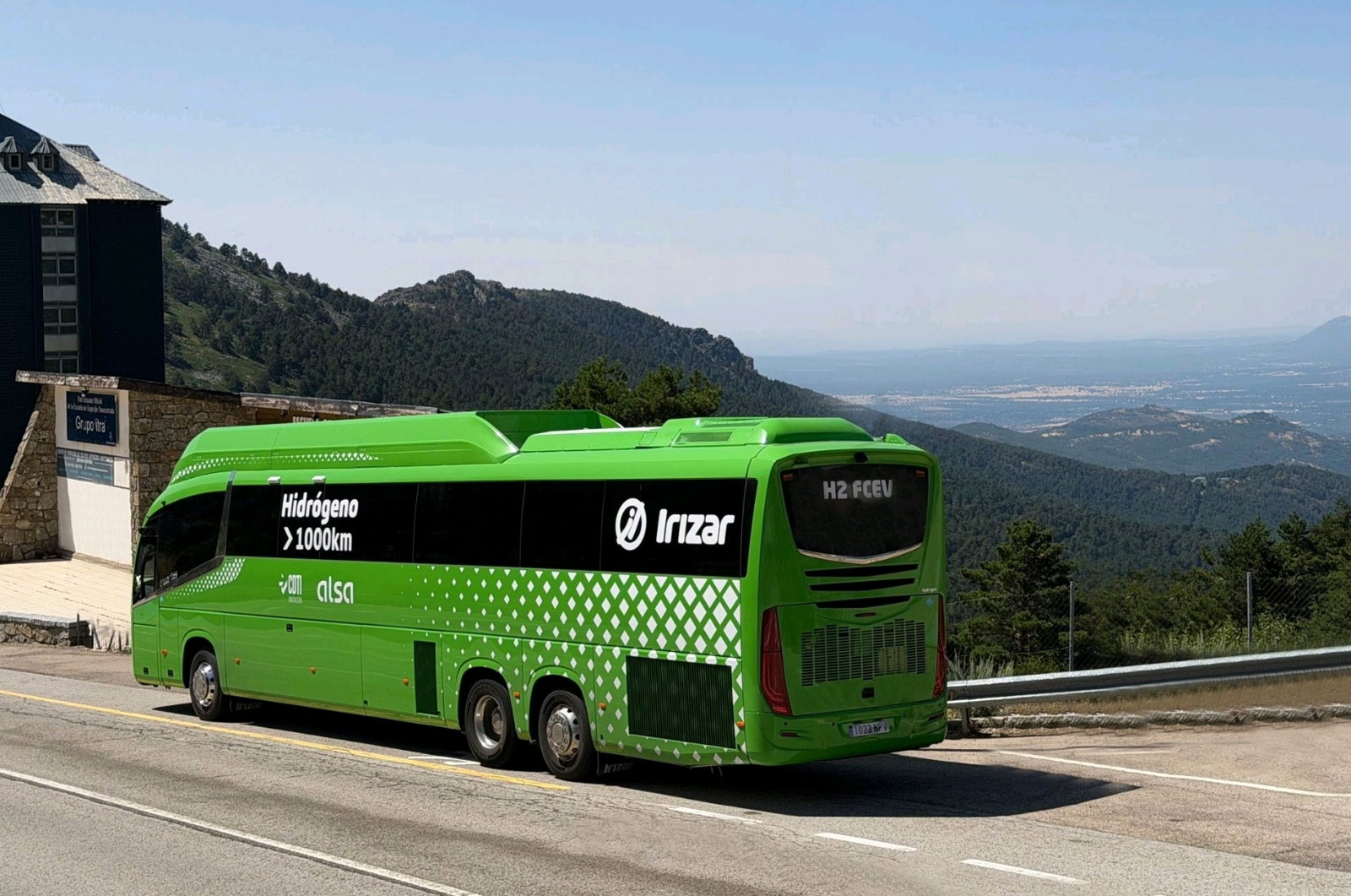
The second-generation prototype can essentially already be regarded as the forerunner of the later series-production version. According to the plans, the hydrogen-powered model will be available in four different length variants: two-axle versions measuring 12.2 and 12.9 metres, and tri-axle versions measuring 14.07 and 14.98 metres. The two- and three-axle variants will have different hydrogen storage capacities, and the vehicles will also be available with hydrogen storage systems operating at 350 bar — currently the most common pressure for commercial road vehicles — as well as at 700 bar. In the two-axle versions, the tanks can store a total of 46.3 kg of hydrogen with the 350 bar system, or 57 kg in the 700 bar version. For the tri-axle variants, the corresponding figures are 69.4 kg and 84 kg, respectively.