![Magyarbusz [Info]](/mbi/header-logo.png)
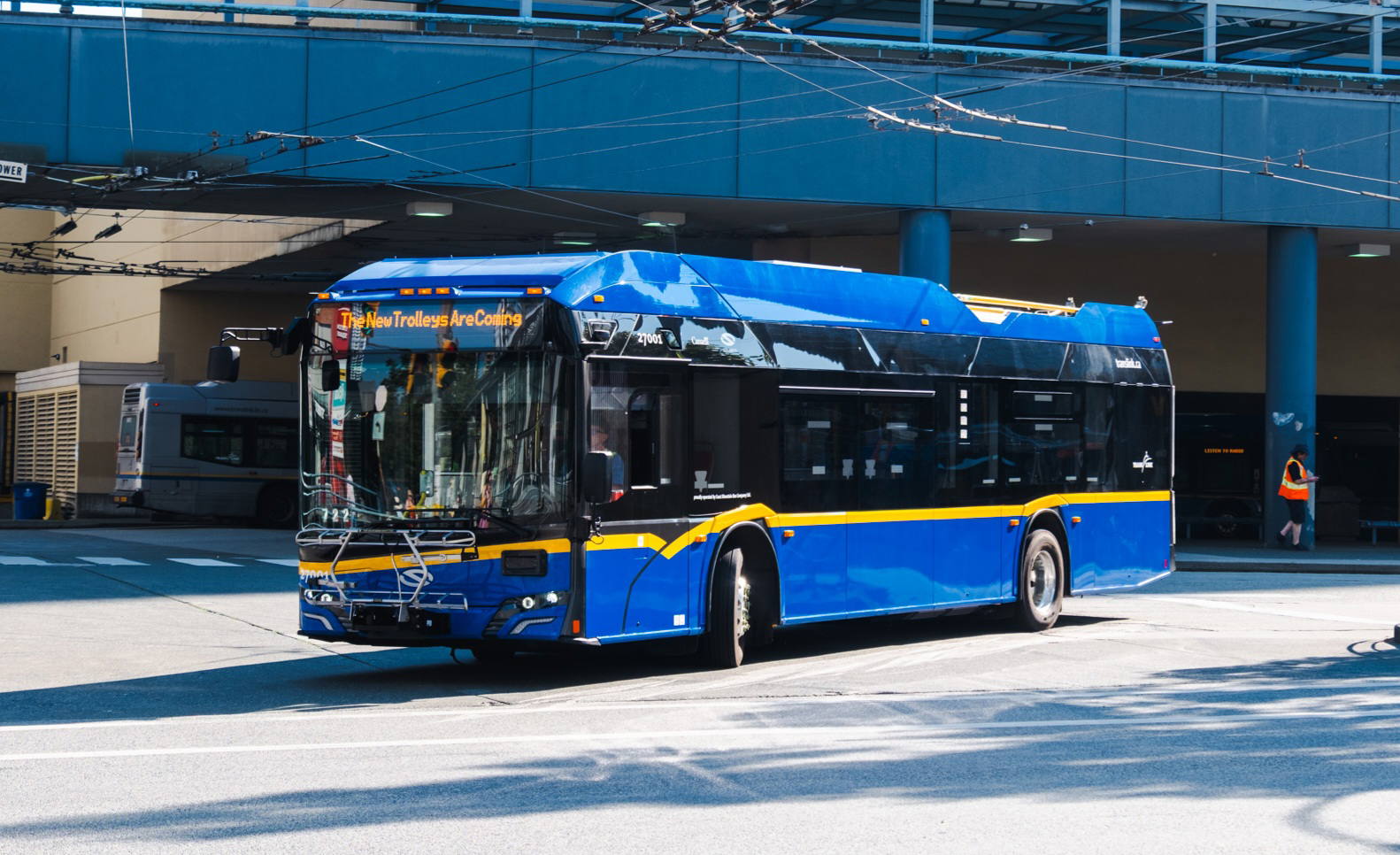
Vancouver’s first European trolleybus could enter service in September
 Ludányi József
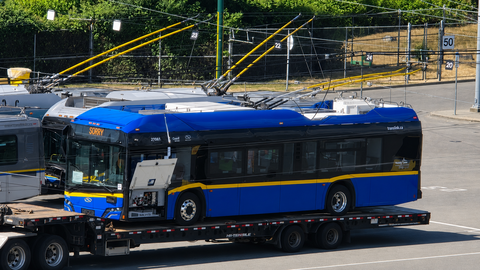
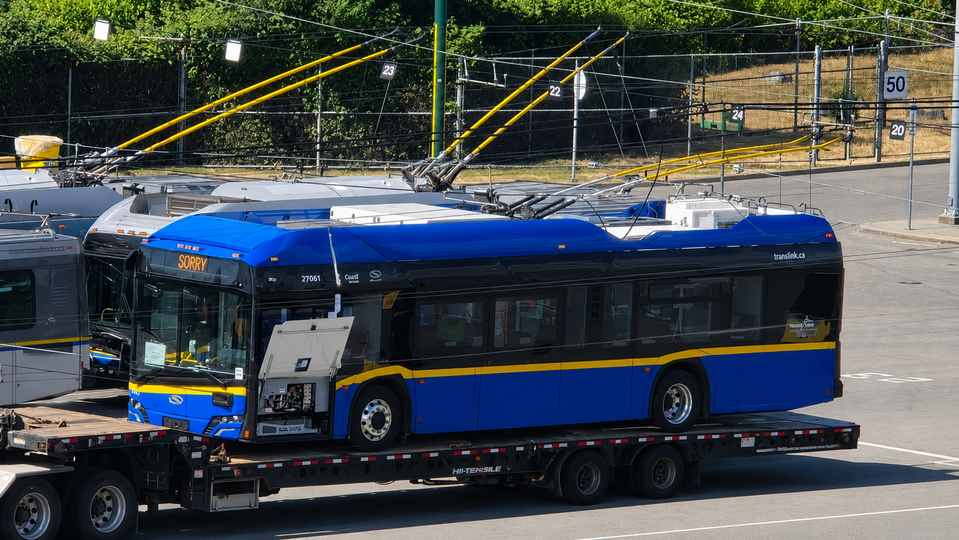
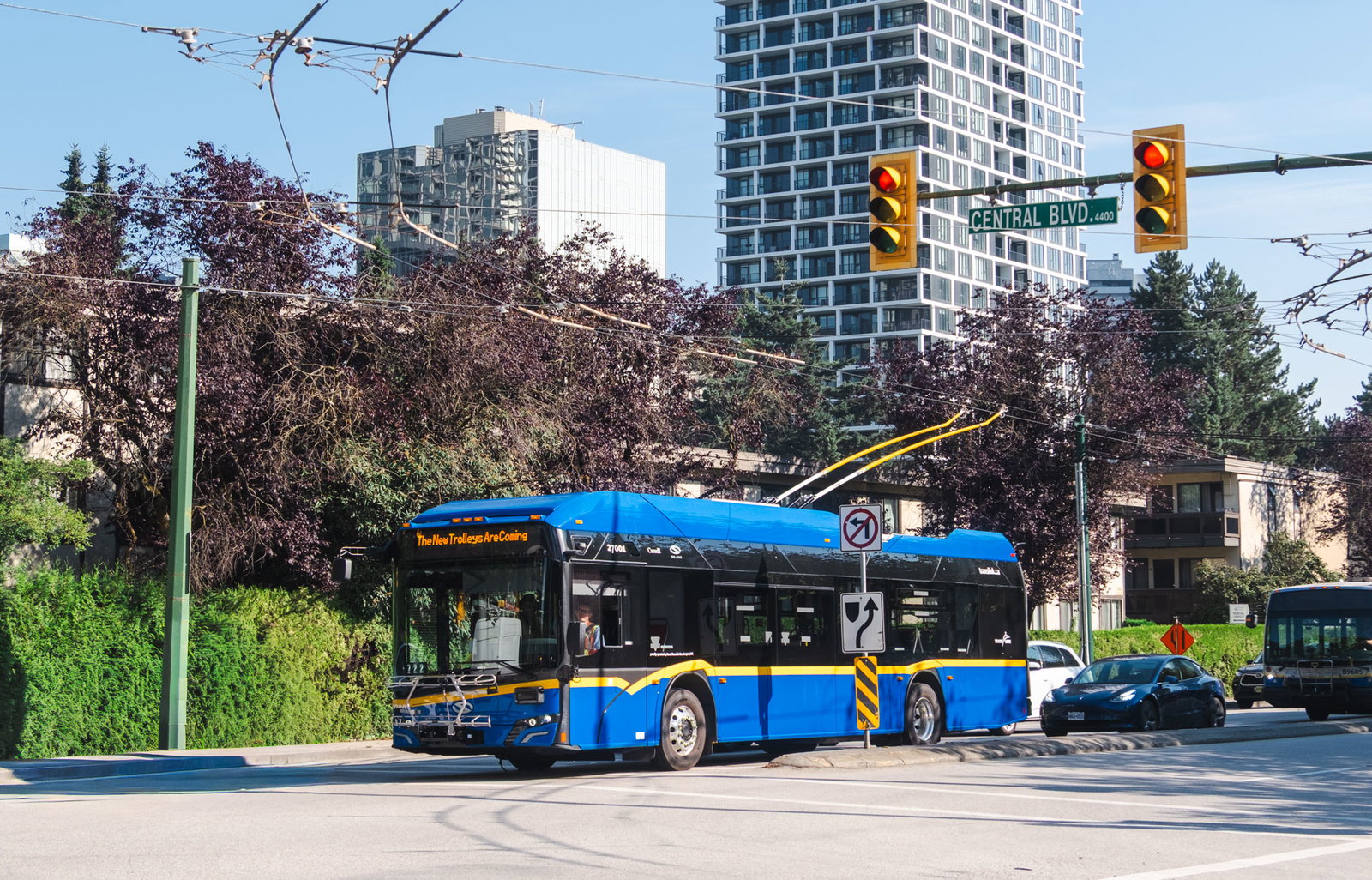
It is a milestone not only for Solaris, but for the entire European bus industry, that Vancouver’s first European-built trolleybus could soon begin carrying passengers in scheduled service. After Škoda’s North American presence in Dayton and San Francisco, no European manufacturer had been active on the continent’s trolleybus market for many decades — something Solaris is now changing. Although the first, prototype vehicle from the order for several hundred Solaris Trollinos has already been in Vancouver for weeks, the operator, Coast Mountain Bus Company, has only now reported that the 40-foot (12-metre) off-wire-capable trolleybus is currently undergoing road and operational testing across the entire trolleybus network. If the trials proceed as planned, the vehicle could enter service in a remarkably short time, possibly as early as September. The first unit will soon be followed by a second, pre-series articulated example, with deliveries of series-production vehicles due to begin in 2027; under the framework agreement finalised last year, a further 273 Trollinos will arrive in Vancouver in the first phase.
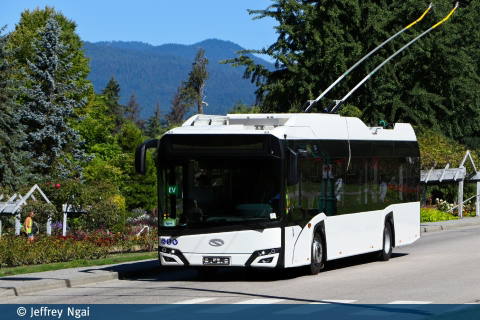
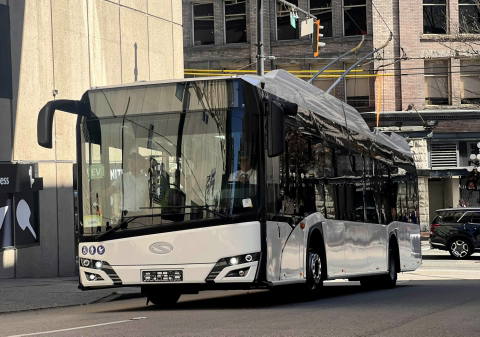
One of the most interesting aspects of the Solaris Trollino trolleybuses being built for Vancouver is that, despite the specific requirements of the North American market, they are based on the European base platform. As a result — within the Canadian regulatory environment and the technical parameters permitted by the customer — Solaris did not have to fundamentally modify the body structure, with the necessary changes largely limited to local regulations and operational characteristics.
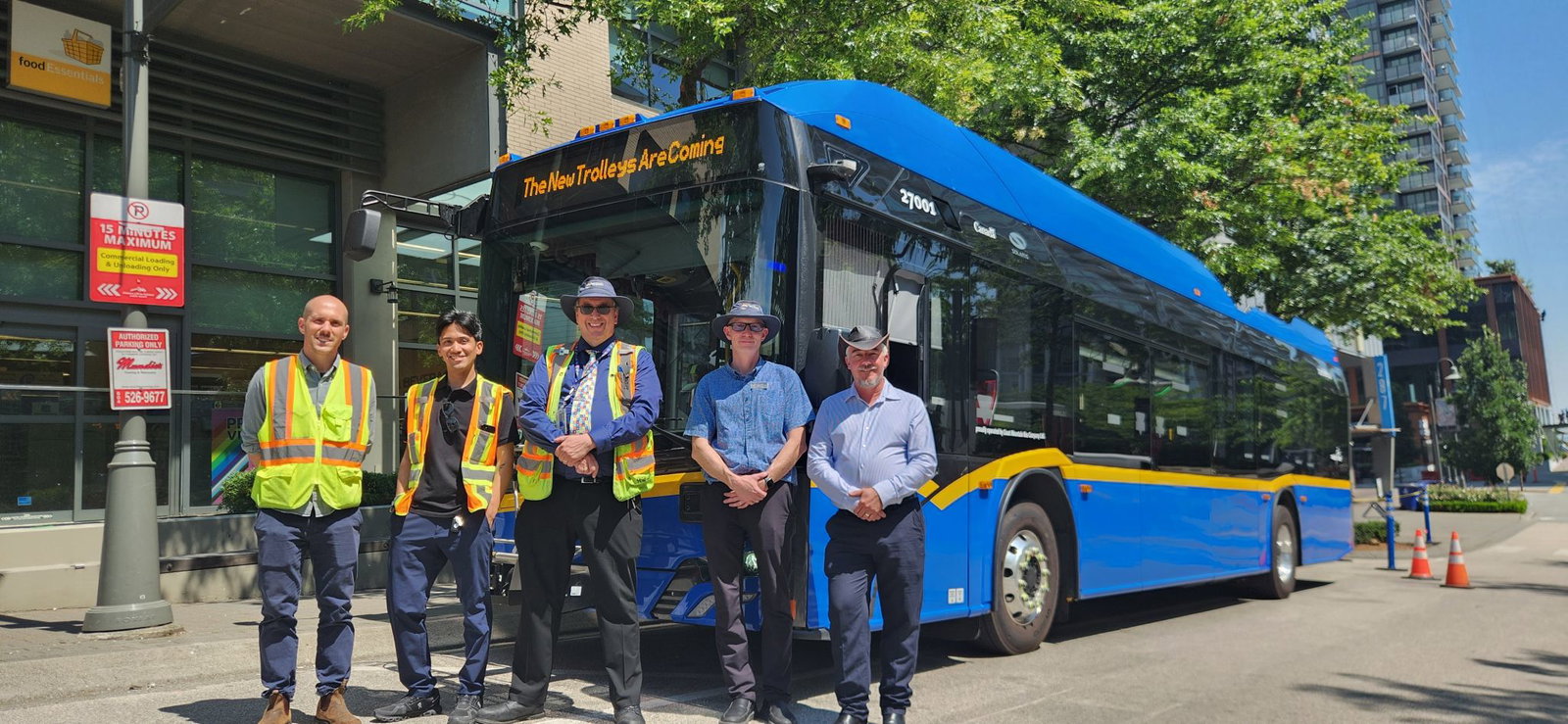
Thanks to this, the vehicles will offer local passengers a number of technical and comfort features that are commonplace in Europe, but represent a major step forward compared with Vancouver’s current trolleybus fleet. TransLink — the transport authority for the Metro Vancouver region and the customer behind the vehicle procurement — specifically highlights the fully low-floor passenger compartment and the three-door layout of the standard-length version.
Although these are well-established solutions on the European market, they are not standard in North America, where partially low-floor, or low-entry, layouts are typically used among urban transit buses. The introduction of air conditioning is also a significant improvement for the trolleybus fleet: the current New Flyer trolleybuses are the last vehicles in TransLink’s rubber-tyred fleet without air conditioning, so with the entry into service of the Solaris Trollinos, the company’s entire bus and trolleybus fleet will become climate-controlled.
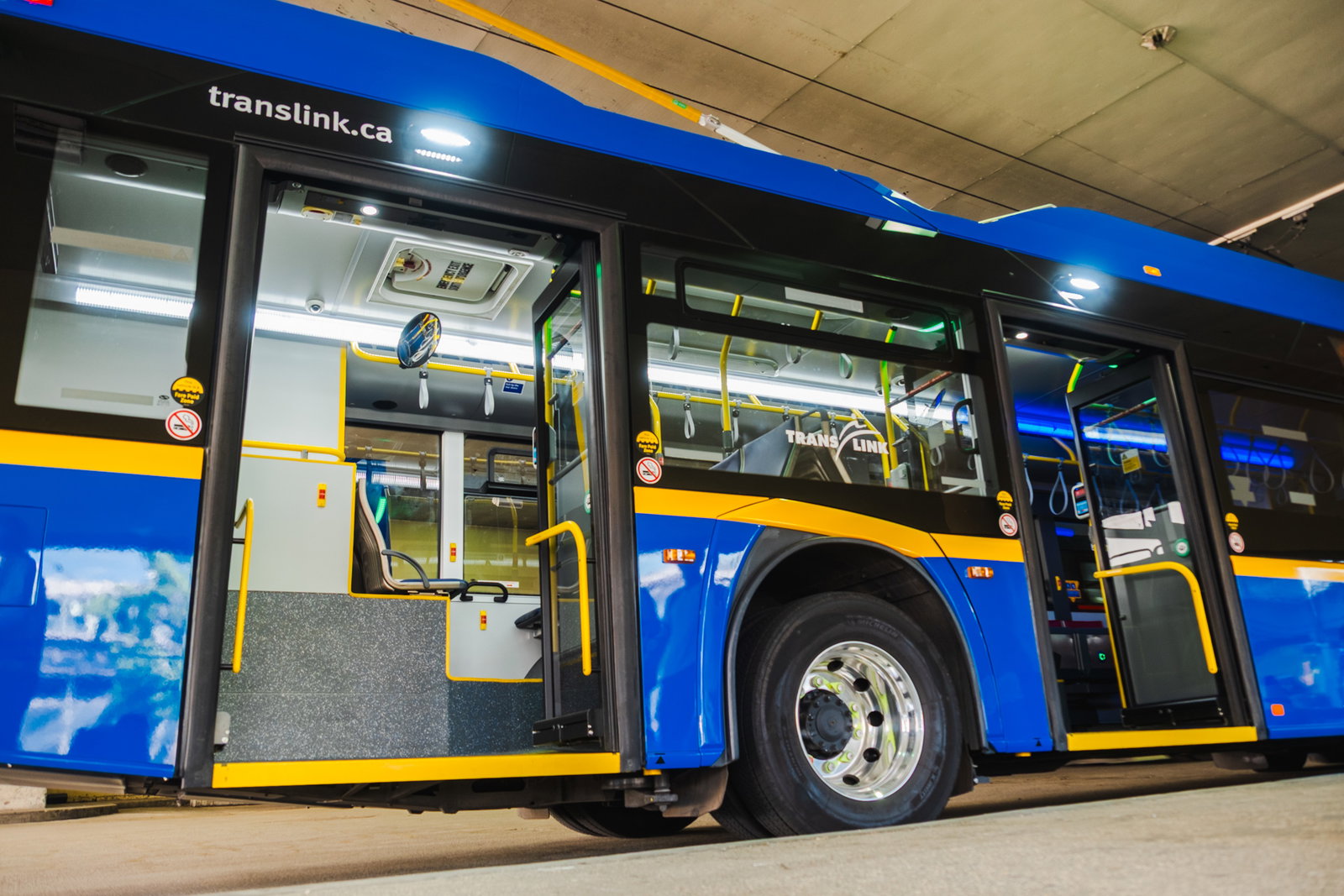
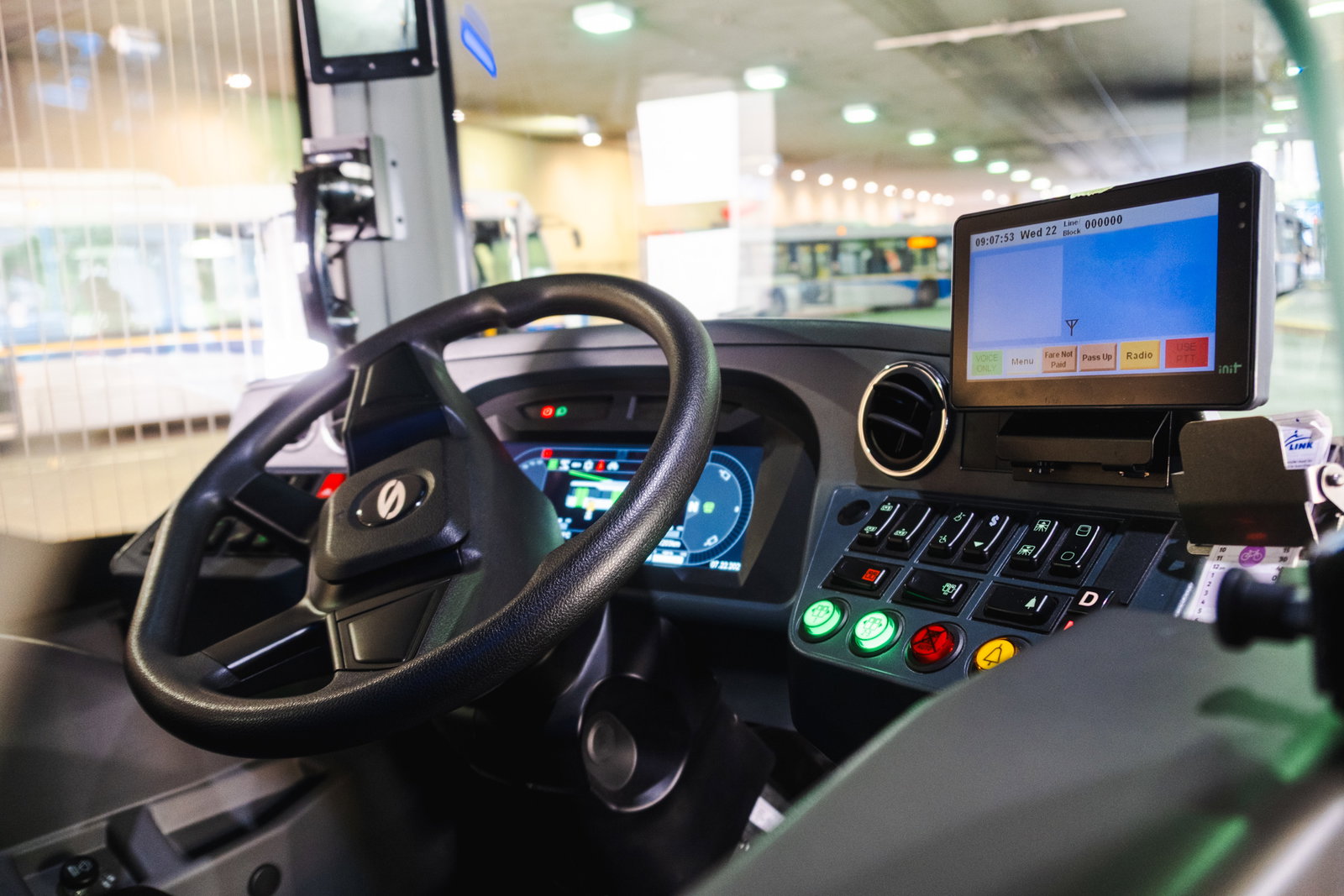
According to TransLink, the interior of the new Trollinos also differs in several respects from what Vancouver passengers have been used to: the former pull cords are replaced by illuminated stop-request buttons with Braille markings; designated priority seats receive red upholstery to make them easier to identify; larger window areas provide a brighter passenger saloon; while a modern camera mirror system supplements the conventional exterior rear-view mirrors, improving visibility around the vehicle and reducing blind spots. The driver’s working environment is improved by a redesigned cab, an adjustable dashboard and a separate climate-control system for the driver.
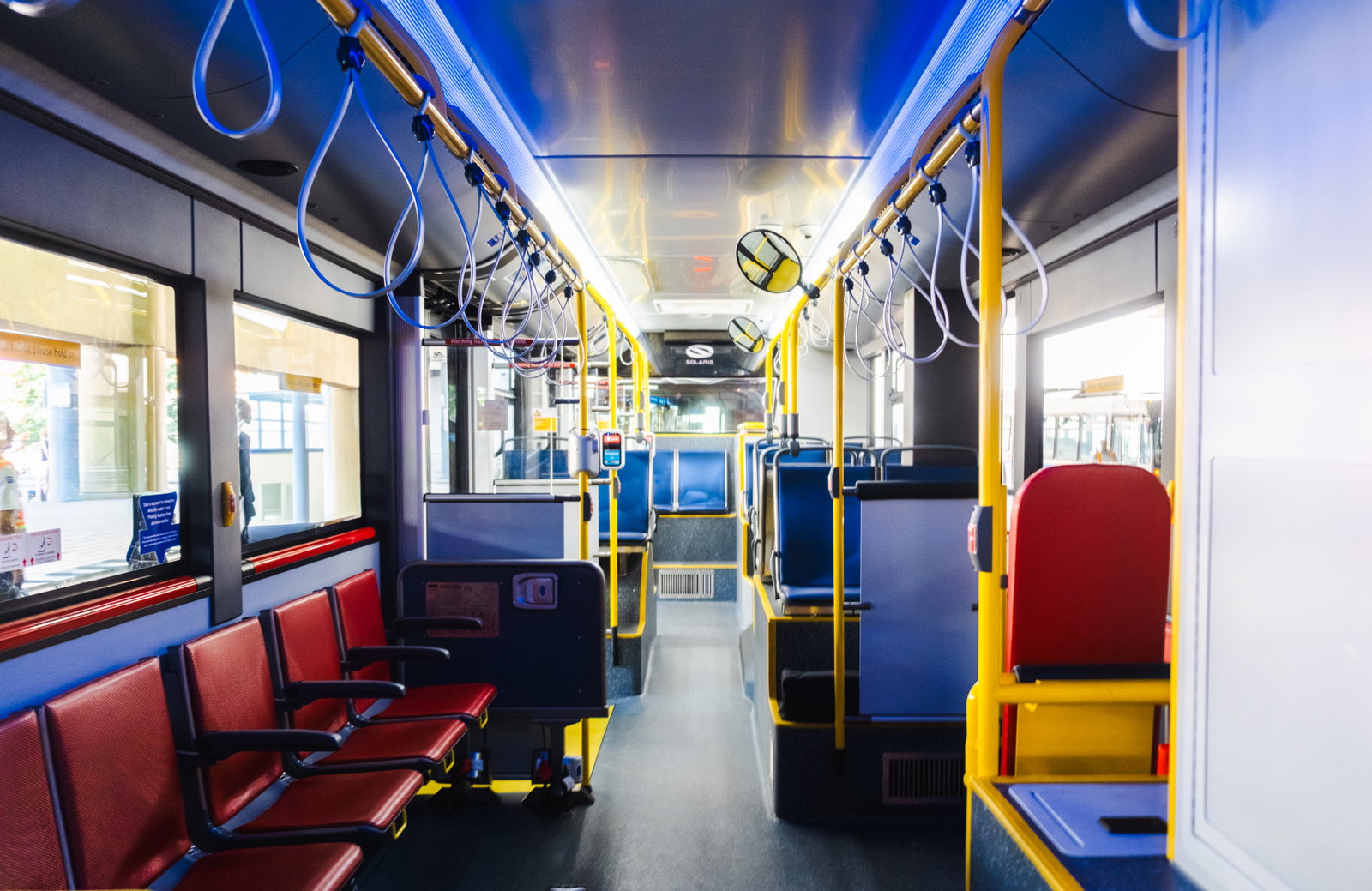
From a European perspective, however, many other interesting details can also be found on the vehicle and in its interior. These include the wheelchair ramp at the front door, the front-mounted bicycle rack, the corded handset in the driver’s cab, and the use of floor-mounted foot switches for the turn signals. The handset, reminiscent of a telephone receiver, is part of the onboard communications system and provides a direct link to the dispatch centre and operations control. Such devices are common in North American public transport and are connected to vehicle tracking and traffic management systems that operate via radio or digital data links. The foot-operated turn signals built into the floor allow the driver to keep both hands on the steering wheel while turning or pulling into a stop.
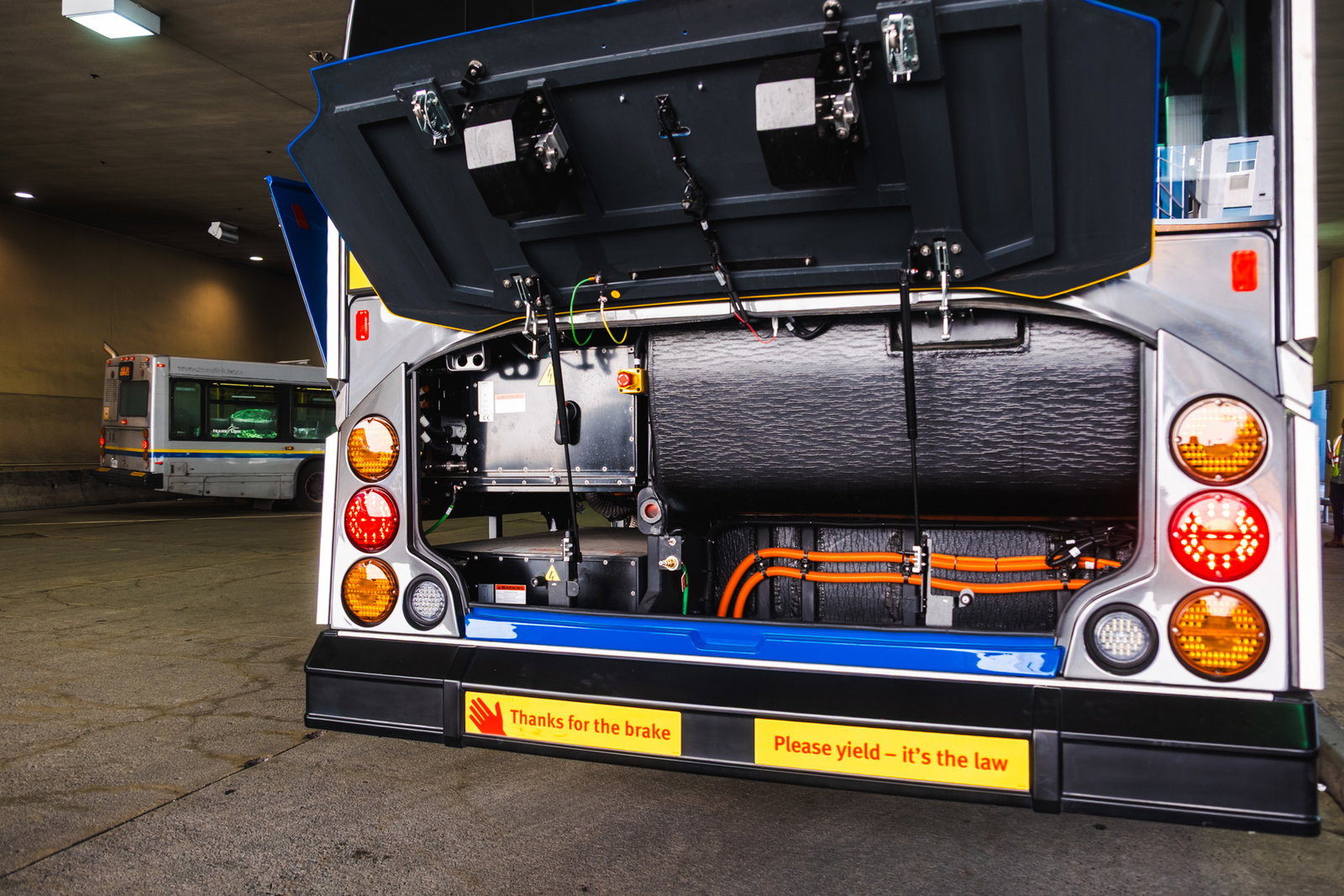
The most important technical development, however, is the onboard battery associated with Medcom’s electric drive system, which can be charged from the overhead wires while in motion and enables up to 20 kilometres of operation away from the wires. This is a major advance compared with the outgoing New Flyer trolleybuses, which are equipped only with a nickel-cadmium battery pack providing emergency power. The latter allows just a few hundred metres of off-wire movement, primarily for bypassing temporary road closures, accidents or other obstacles.
The first Solaris Trollino is scheduled to enter service in September 2026, featuring a special livery celebrating the arrival of the new fleet. According to TransLink, the full 275-vehicle fleet — comprising 183 standard-length and 92 articulated vehicles — will then arrive and enter service gradually, replacing the current 262-strong New Flyer trolleybus fleet by the end of the decade and completely renewing Vancouver’s trolleybus fleet.
The vehicles are being built entirely at Solaris’s plant in Bolechowo, since in Canada — unlike in the United States — there is no nationwide regulation favouring domestic production, comparable to Buy America requirements, for publicly funded bus procurements. The completed vehicles will travel by road from Poland to the German port of Bremerhaven, from where they will cross the Atlantic by ship to Canada. After the ocean crossing, they will continue on special trailers across the North American continent to their final destination, Vancouver. We wrote in detail in the article below about the technical modifications Solaris had to make to its buses intended for the US market in order to comply with the requirements of the Buy America Act and other North American regulations.