![Magyarbusz [Info]](/mbi/header-logo.png)
After last year’s slump, Russian bus market showed signs of life again in the first half of 2026
 Patthy Gellért
After suffering a major downturn last year, the Russian bus market’s results for the first half of this year suggest that the sector is slowly emerging from the crisis. According to the Autostat (Автостат) agency, a total of 4,361 new buses were sold in the world’s largest country by area between January and the end of June 2026, 5.1% more than in the first six months of last year. In June, Russian operators purchased 779 new buses, which, although 10.9% fewer than in May, represents a 32% increase compared with June 2025, giving local market players grounds for cautious optimism regarding the long-term trend.
With a market share of more than 40%, Russia’s PAZ once again proved to be the most popular brand, even though the 1,408 units it sold in the first six months of the year represented a 28.3% decline compared with the same period of the previous year. In second place was NefAZ, the manufacturer of KAMAZ buses, with 643 units sold, increasing its sales 2.7-fold in a single year (+176%), while the first foreign player, China’s Yutong, took the third step of the imaginary podium, having delivered 570 buses to the Russian market in the first half of 2026, improving on its sales from a year earlier by 5.2%. In fourth place came LiAZ, which made a major leap forward compared with last year with 569 buses (+56.7%), while the top five was rounded out by Belarusian MAZ, which exported around two and a half times as many buses as a year earlier, a total of 354 units, to Russia during the period under review – a significant share of this was accounted for by the St. Petersburg delivery completed in the first months of the year.

The PAZ-3205 has led Russian bus sales statistics for decades (Photo: GAZ Group)
For readers who regularly follow our coverage of the Russian market, it will hardly come as a surprise that, broken down by model, the indestructible PAZ-3205 midibus once again took first place, with 736 units sold in the first six months of the year, 7.8% more than in the first half of 2025. Second place was occupied by the NeFAZ-5299, a full-size rigid city bus, with 643 units sold (meaning this model accounted for the company’s entire sales), while the third best-seller was the more modern PAZ-3204 Vector midibus, whose latest facelifted version made its debut this May at the COMvex 2026 exhibition in Moscow. In this comparison, Yutong secured fourth place with a tourist coach, the ZK6128H model also marketed as the C12 Pro, of which 305 units found buyers among Russian operators in half a year (+11.3%), while fifth place went to the LiAZ Citymax 12 rigid city bus, available since last November, with 259 units sold in its home market over six months, making its market launch a success.
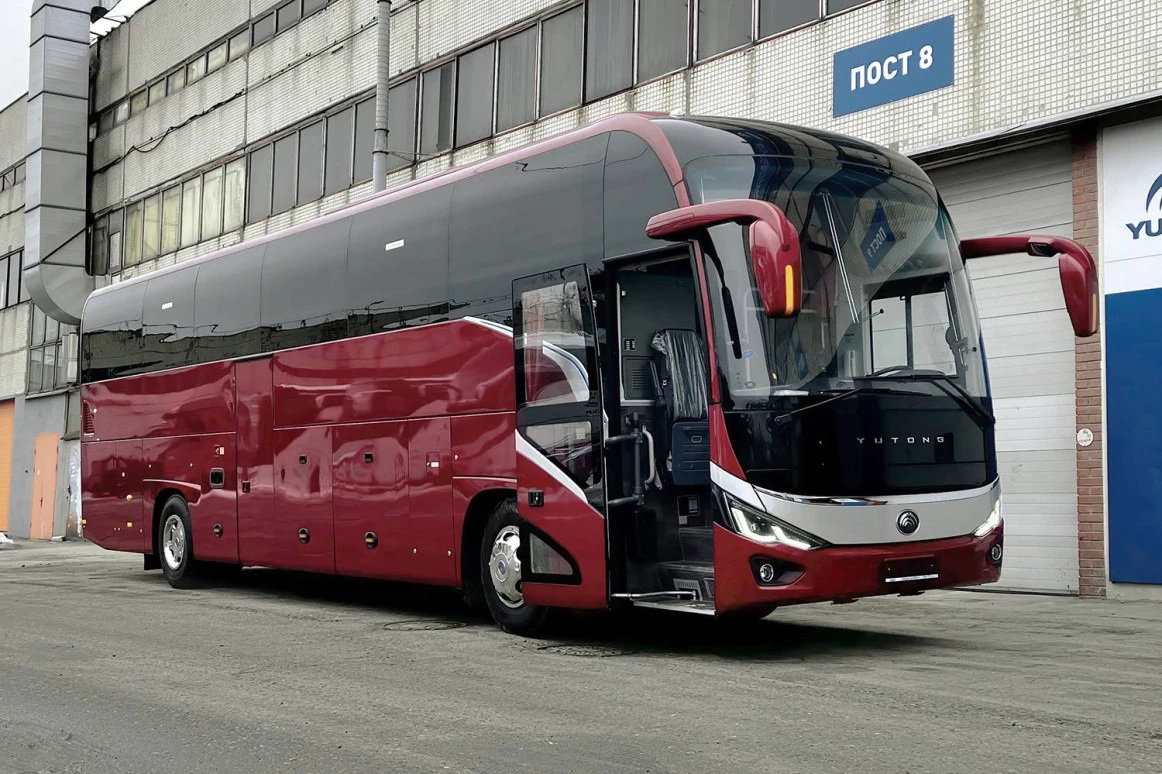
Despite being a long distance coach, the Yutong ZK6128H (C12 Pro) continues to hold a stable place among Russia’s most popular bus models (Photo: Yutong)
Speaking at an Autostat event about the positive momentum in Russia’s new bus market, Vitaly Kiselyov, head of the commercial vehicles committee of the Russian Automobile Dealers Association (ROAD), said that in his view the market expansion is being driven primarily by the significant ageing of the existing Russian vehicle fleet, while several favourable factors, such as the school bus fleet renewal programme, are also supporting the process. In addition, June marks the close of the first half of the year (which is also important from the perspective of VAT-related settlements), while various social programmes are operating in the regions (for example to support excursions and domestic tourism), and the reduction of the key interest rate is also making its effects felt. Alongside all this, debt relief programmes provided by the Russian government to the regions are also encouraging the purchase of new buses. „I believe that growth in the bus market will continue steadily until the end of the year” – Kiselyov concluded.
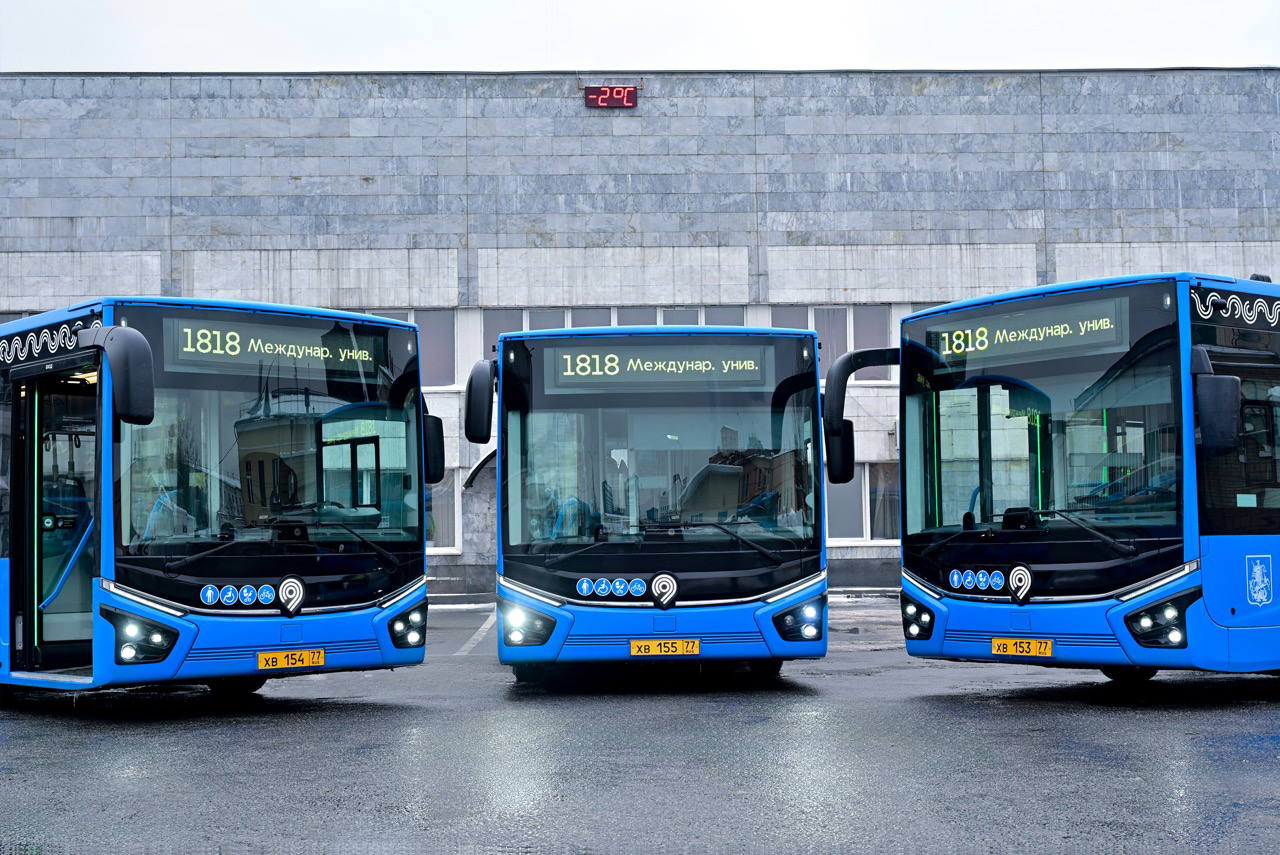
The cover image is an illustration, source: Mosgortrans