![Magyarbusz [Info]](/mbi/header-logo.png)
A new player in Hungarian transport: what does a national transport organiser do?
 Ludányi József
The submission of the bill on establishing a national transport organiser has once again put the transport-organiser model in the spotlight. Although many may at first see it as yet another state background institution, a bureaucratic “top-heavy” body, the aim is far more complex: the government wants to create a professional contracting organisation with unified responsibility for the planning, commissioning and coordination of national, regional and suburban public transport, and, in the longer term, for preparing the competitive tendering of rail public services. In itself, however, the creation of such an organisation does not guarantee more efficient operation of public transport; its effectiveness will depend fundamentally on the tasks, powers and practical operating model that are put in place. According to the explanatory memorandum to the bill, the organisational reform is also a fundamental condition for the use of European Union rail-development funds. The idea, however, is not entirely new: the creation of a similar model separating contracting functions from service provision had already appeared as a transport-policy objective earlier, during Dávid Vitézy’s tenure as state secretary for transport.
Although no national transport organiser has operated in Hungary to date, the transport-organiser model is not unfamiliar in this country either. In Budapest, the Budapest Transport Centre (BKK) has performed the capital’s public-transport contracting and organising functions since 2010. When the company was established, several Western European models served as examples, above all Transport for London (TfL). Over the past two decades, TfL has become one of the best-known and most highly regarded transport organisers in the world, and its role now extends far beyond the commissioning of public transport. As the contracting authority and regulator for one of the world’s largest bus networks, the organisation actively shapes vehicle-development trends, while also playing a pioneering role in the introduction of a number of technical and road-safety requirements that later became widespread in other European cities and across the bus industry.
Although problems and challenges arise from time to time in the operation of Budapest’s public transport, several international comparisons rank the capital’s network and service system among the best in Europe. A significant part of this is due to the transport-organiser model developed by BKK, which brings network planning, timetable coordination, the fare system and service commissioning together within a single organisation. The actual passenger-transport services, however, are provided by BKV Zrt. and contracted bus operators.
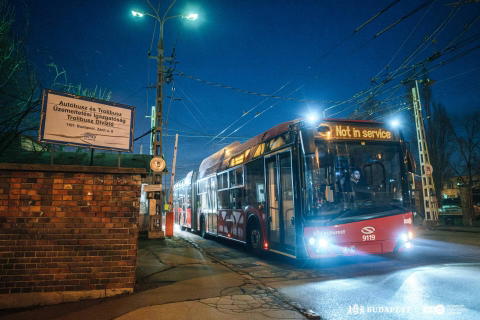
Similar organisations can now be found across Europe: in London, the aforementioned TfL; in Paris, Île-de-France Mobilités; in the Berlin and Brandenburg region, Verkehrsverbund Berlin–Brandenburg (VBB); around Vienna, Verkehrsverbund Ost-Region (VOR); in Hamburg, Hamburger Verkehrsverbund (HVV); in Stockholm, Storstockholms Lokaltrafik (SL); in Oslo and Akershus county, Ruter; in western Sweden, Västtrafik; in Prague, ROPID; and in Brno, KORDIS JMK carry out transport-organisation tasks. These organisations typically do not operate buses, trams or trains themselves, but instead plan the network, coordinate timetables, develop the fare system, commission and monitor services. In some cases they also handle vehicle-procurement tasks, although day-to-day operation of the vehicles is mostly entrusted to separate transport companies. BKK is also a good example of this: in recent years it has put new CAF trams and Solaris–Škoda trolleybuses into service through its own procurements, while entrusting their operation to BKV Zrt.
It is worth adding that national-level competence in Hungary does not in itself necessarily mean a larger or more complex system. London’s TfL and Île-de-France Mobilités, which organises transport in the Paris region, each coordinate around 10,000 buses as well as extensive metro, suburban-rail, tram and other public-transport systems, meaning that the size and complexity of the coordinated transport system in several respects even exceeds the tasks of a national transport organiser.
The emergence of transport organisers is the result of a shift in approach: the quality of public transport is determined not only by the vehicle fleet or the performance of individual operators, but by how the entire system functions. From the passenger’s perspective, a journey is a single process that includes pedestrian access, waiting, transfers, time spent on board and passenger information. If these elements are not coordinated, the competitiveness of public transport can deteriorate even with a modern vehicle fleet. Experience shows that the greatest obstacle to this is often not technical but institutional: if there is no organisation responsible for coordinating the entire network, the different services, timetables, fare systems and passenger-information systems struggle to operate as a unified system. International literature therefore lists unified network planning, timetable coordination, optimisation of interchange connections, integrated fare and ticketing systems, unified passenger information, continuous monitoring of operator performance and the development of a long-term transport-development strategy among the fundamental elements of integrated transport systems.
Almost all of this is reflected in the Hungarian bill now submitted: the national transport organiser would be responsible for preparing national, regional and suburban timetables, providing unified passenger information, coordinating ticket and pass sales, defining the technical conditions for the ticket-inspection system, coordinating the operation of bus stations, developing links between transport modes, and coordinating the procurement of clean and zero-emission vehicles.
In Western Europe, however, the vast majority of transport organisers do not operate with national, but rather regional or metropolitan, competence. The reason is that the planning of local and suburban transport needs, the preparation of timetables and the commissioning of public services are typically carried out by regions or municipalities, while national governments are primarily responsible for transport policy, legislation, financing and infrastructure development.
Relatively few transport organisers with nationwide competence operate in Europe. One of the best-known examples is Ireland’s National Transport Authority (NTA), which is responsible for developing the national public-transport strategy, planning, commissioning and coordinating rail and bus public services, operating the integrated ticketing and fare system, and preparing transport-infrastructure developments. In addition, it performs the full transport-organisation functions for the Dublin metropolitan area, coordinates the development of cycling and walking, regulates the taxi sector, and carries out licensing and market-supervision tasks for certain bus services. In most European countries, by contrast, the contracting authority for national rail public services remains the transport ministry or the state directly, while regional and local transport is organised by independent transport authorities, regions or municipalities. This division of responsibilities can still be regarded as the dominant model in Europe today.
From this perspective, the Hungarian bill would introduce a distinctive model. At present, national rail and interurban bus public services are effectively provided by a single state-owned operator, MÁV Személyszállítási Zrt., so the creation of a national transport organiser is not currently justified by the need to coordinate multiple operators. In the short term, the new organisation’s most important task may be to manage the national transport system in a unified way.
When assessing the Hungarian model, however, it is important to take into account that the domestic transport system differs in several respects from most Western European models. In Hungary, not only regional and suburban transport but also long-distance rail and interurban bus services operate within the framework of public service obligations. In many Western European countries, by contrast, a significant share of long-distance services—especially high-speed, international and, in several cases, long-distance coach services—operate on a commercial basis, while public service provision is focused primarily on regional and suburban transport. Foreign transport-organiser models therefore operate in partly different market and institutional environments, so not all of their elements can be transferred directly to Hungarian conditions.
The specific features of Hungary’s transport system are also well illustrated by the development of the public-service market. During preparations for the transformation of national bus public services, the original plans included the creation of several larger and smaller regional service packages, for which tenders could have been submitted separately. In such a model, the creation of a national transport organiser would have been even more justified, since its task would have been to coordinate the networks, timetables, fare systems and passenger information of independent operators. In the end, however, the public procurement was launched as a single nationwide package, which was won by MÁV Személyszállítási Zrt., so the need to coordinate multiple operators has not yet appeared in practice.
The proposal therefore clearly goes beyond the current situation. Under the European Union’s Fourth Railway Package, the competitive tendering of rail public services will gradually expand in the coming years, which is why the law already stipulates that the national transport organiser must begin preparing tenders for rail public-service contracts by the end of 2026. In the longer term, therefore, it may not necessarily be the case that a single state-owned operator alone performs all public-service tasks. In other words, the planned institutional restructuring is not primarily a response to the current market structure, but lays the foundations for a future operating model. Its aim is to separate the commissioning, coordination and monitoring of public services from service provision, so that the system can continue to function as a unified whole even if some public-service tasks are performed in the future by several railway undertakings, bus companies or other operators.
This division of responsibilities, however, is not justified solely by market opening. Although in many European countries the contracting authority for national rail public services remains the state or transport ministry directly, the separation of day-to-day transport-organisation tasks has long been established practice at urban and regional level. The Hungarian bill seeks to create a new model by raising this principle to the national level: strategic direction would remain with the transport ministry, while a significant share of operational contracting and coordination tasks would be taken over by the national transport organiser.
Creating a national transport organiser, however, does not in itself automatically mean more efficient or higher-quality public transport. Its success will be determined fundamentally by what powers the organisation has, how securely its operation is financed, what professional competencies it can bring together, and whether it is able to perform the contracting functions of the transport system with real decision-making authority. It is equally important that transport organisation should not be carried out solely from a central perspective, but that local and regional specificities should also be reflected in decision-making. If the new organisation is not given meaningful powers, or if its operation is coupled with excessive bureaucracy, there is a risk that instead of the expected increase in efficiency, it will merely create another administrative layer. The real added value will therefore be determined not by the establishment of the organisation itself, but by its actual operation and the rational design of its responsibilities.
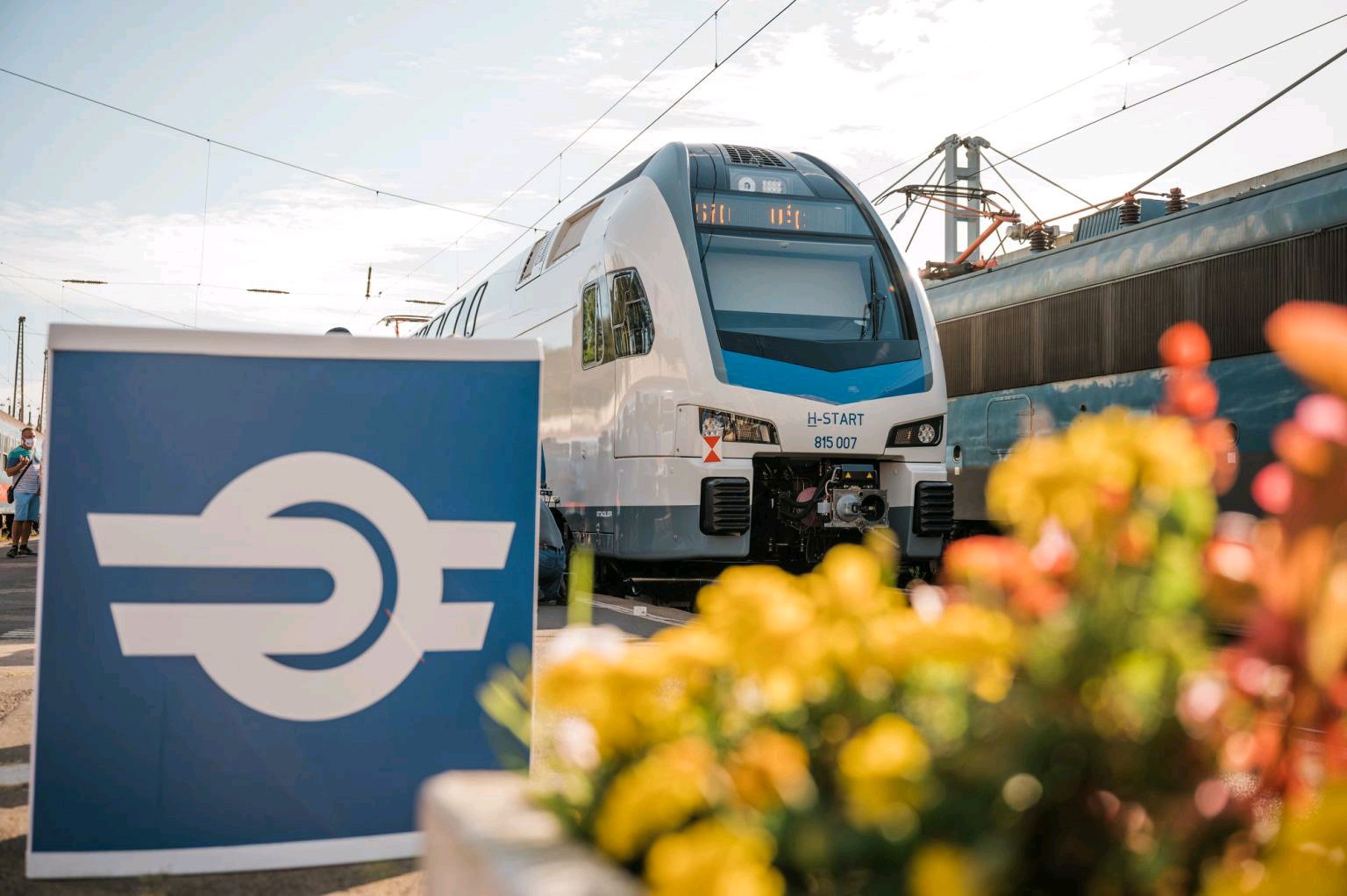
Public transport serves needs that vary enormously by area. The transport of the Budapest agglomeration, a large-city suburban system, a county or a sparsely populated region must be organised according to different criteria. A decision taken solely at national level cannot always respond adequately to these differences, which is precisely why regional or metropolitan transport organisers have been created in most Western European countries: they plan the network, commission services and design the fare system based on their knowledge of local transport needs.
At the same time, it is not optimal either if transport-organisation tasks are divided among too many organisations. In such cases, it can become more difficult to coordinate timetables, create a unified fare system, coordinate developments and manage financing transparently. A well-functioning transport-organisation model therefore provides both national-level strategic coordination and appropriate autonomy for local actors.
This approach is also reflected in the bill now submitted. Alongside the national transport organiser, it also creates the possibility of establishing so-called joint transport-organiser organisations, which may be set up jointly by the state and the municipalities concerned. Their task may be to coordinate national, suburban and local transport services, jointly plan timetables and services, and ensure that regional transport needs are represented more effectively. This suggests that the legislator does not intend to create an exclusively centralised system, but rather a multi-level transport-organisation model in which, alongside national coordination, local actors also have a meaningful role. How this will work in practice, and how effective it will be, can only be assessed after the new system has been introduced.