![Magyarbusz [Info]](/mbi/header-logo.png)
Busworld Southeast Asia 2026: where urban functionality meets long-distance luxury
 Patthy Gellért
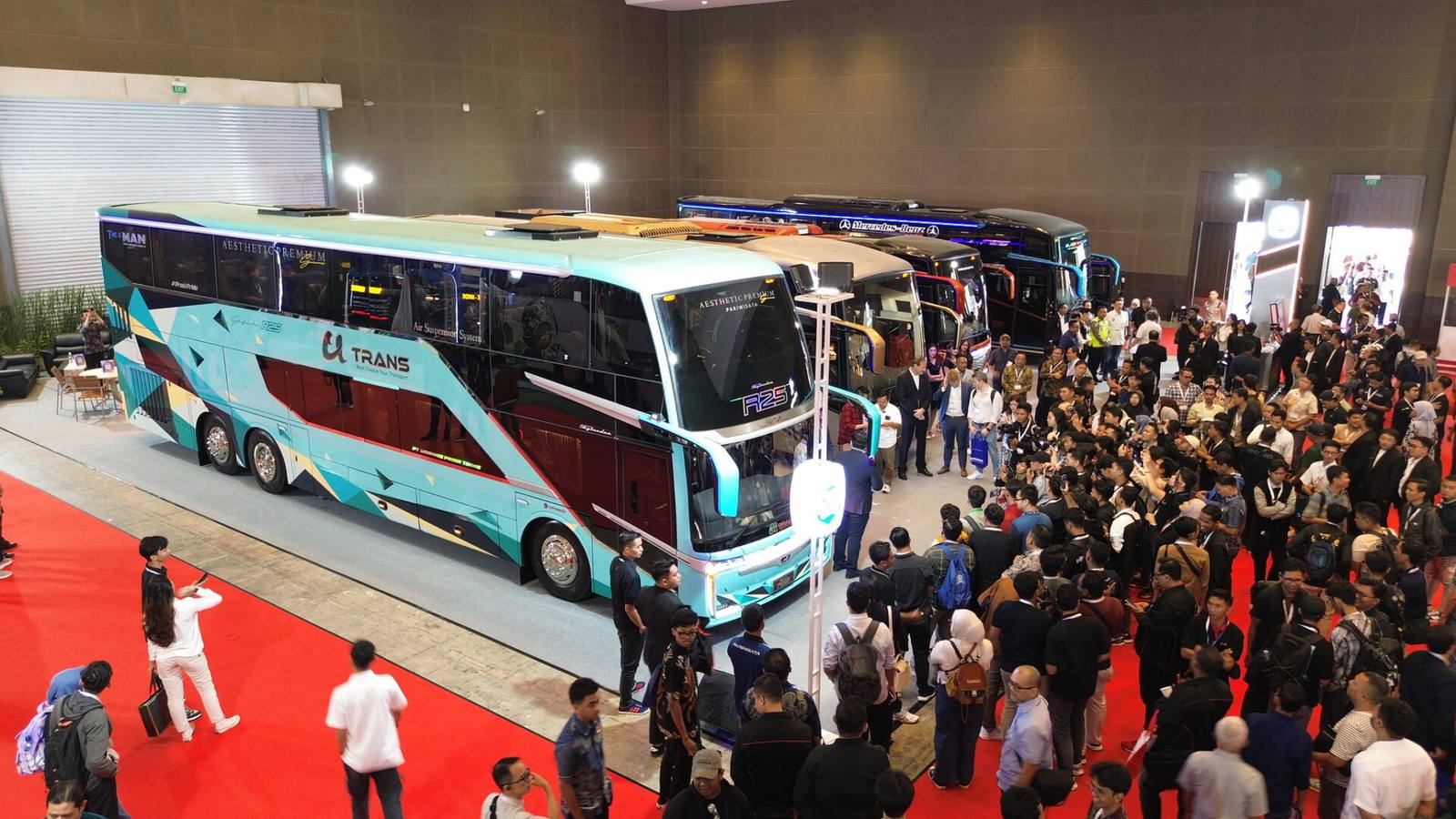
Busworld Southeast Asia 2026 was held between May 20 and 22 in Indonesia’s capital, Jakarta. For more than a decade, the event has been Southeast Asia’s largest professional gathering for the bus industry. The fifth edition of the showcase brought together 47 exhibitors from nine countries, with a total of 25 vehicles on display – from these, we now present a short illustrated selection, without any claim to completeness, as an interesting glimpse into the distinctive bus industry of a faraway region of the world.
According to the organisers, the three-day exhibition, staged over an area of around 8,000 m², welcomed a total of 5,133 registered visitors from 41 countries. Alongside the leading bus manufacturers and industry suppliers in the Indonesian market, numerous operators from the urban and long-distance public transport sectors, as well as from the tourism segment, were also represented at the event, several of them arriving from neighbouring Malaysia.
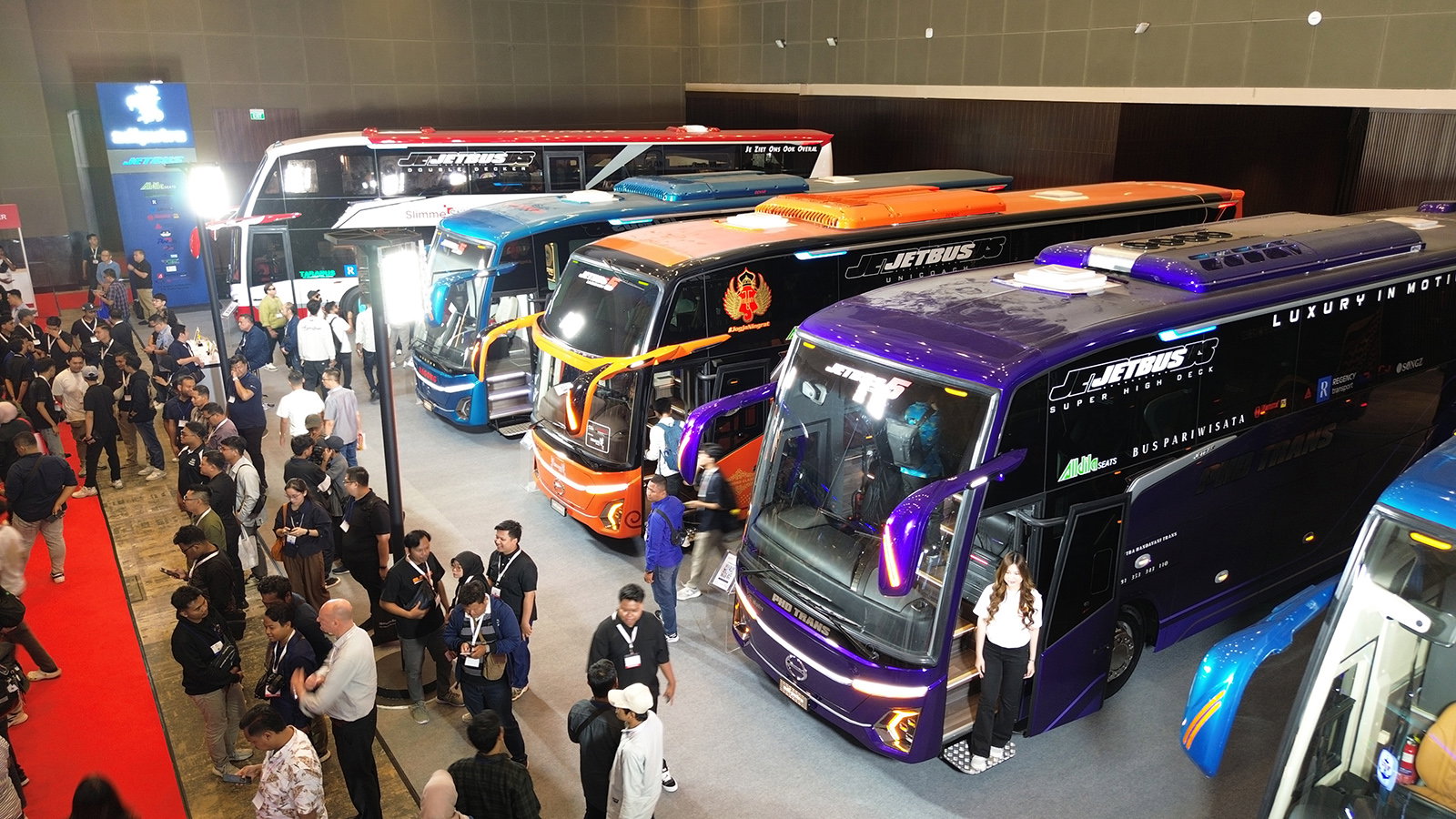
The stand of Adi Putro, one of the important players in the Indonesian market, at Busworld Southeast Asia 2026, featuring long-distance models from the Jetbus family on Hino chassis
Indonesia is one of the largest bus markets in the Southeast Asian region – although the organisers’ summary of Busworld Southeast Asia 2026 describes its current market situation as “cautious” – with a strong local bodybuilding sector, meaning that, unlike in Europe, chassis-based constructions dominate here. As this was a distinctly regional exhibition, the spotlight fell on local brands that are highly exotic from our perspective, while market players familiar to us appeared at most as chassis manufacturers, with the obvious exception of the ever-stronger Chinese presence. Although the city bus types on display were characterised by simple execution, the growing importance of comfort and the travel experience was clearly visible in the long-distance segment: premium seating layouts and high-quality interiors attracted considerable attention. Sleeper-type vehicles are also common in this part of the world, just as it is increasingly typical for bus companies to sell tickets in different classes, much like in rail or air transport. The often luxurious interiors are accompanied by striking design, with forms that can seem somewhat overdrawn to European eyes and complex, distinctive headlamp units appearing frequently.
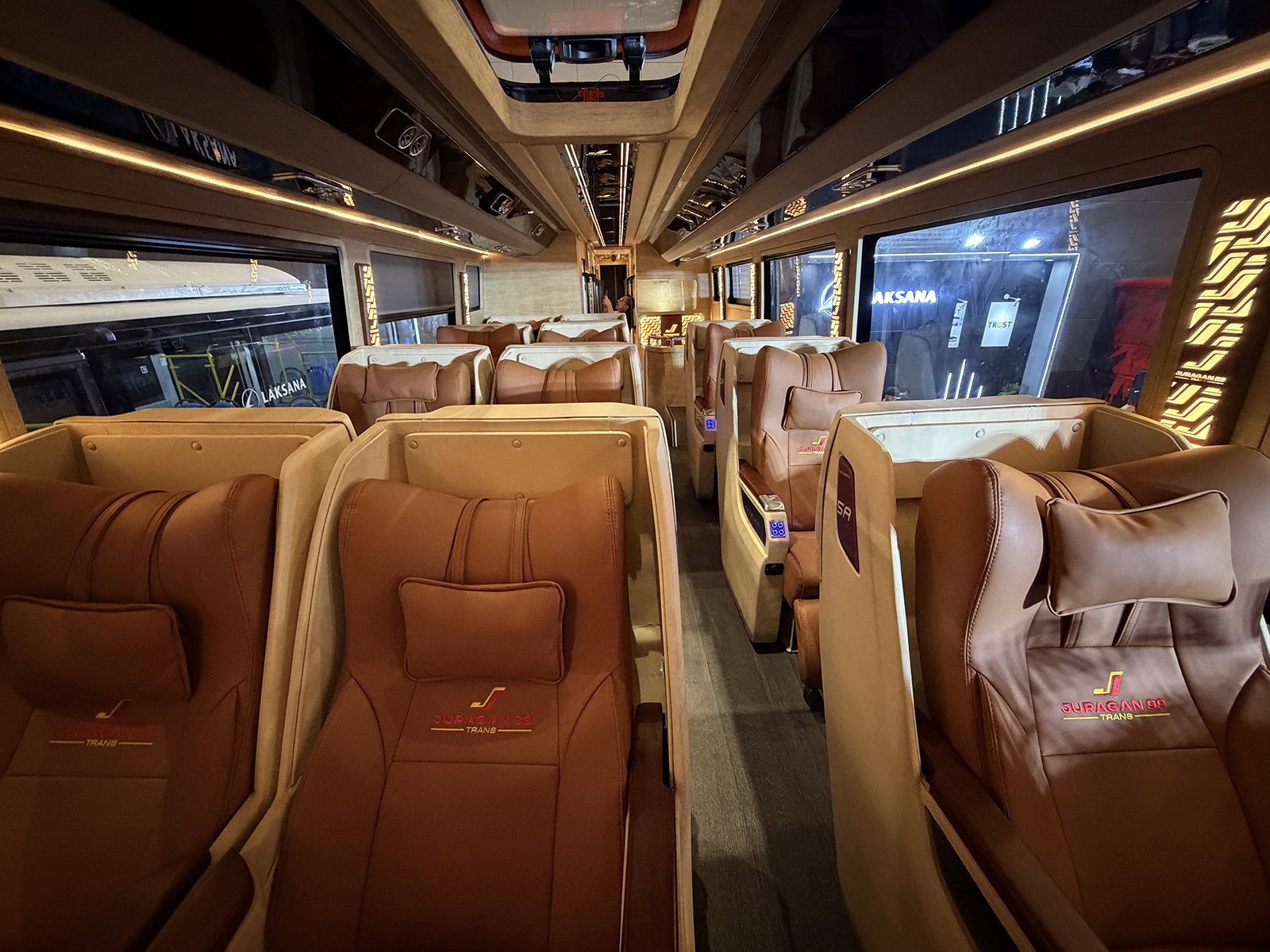
No doubt many of us would be keen to try travelling on the upper deck of Laksana’s luxury double-decker coach
One of the key players in the Indonesian bus market is Laksana, whose stand this year featured as one of its main attractions a bespoke Legacy SR3 Neo Panorama electric long-distance coach built for the Persija Jakarta football club. The vehicle is based on the Hyundai Elec City platform, which we are more familiar with as a complete city bus type. The lithium-polymer traction battery pack, with a total capacity of 290 kWh, supplies a central ZF asynchronous electric motor with a peak output of 240 kW, and on paper allows a range of up to 420 kilometres. That seems somewhat optimistic, although it should be added that, due to the limited axle loads of the chassis, the bus’s maximum permissible gross weight remains slightly below 17 tonnes. It is the first fully electric official team bus in the history of Indonesian football, which, according to the manufacturer, clearly demonstrates that electrification is also making inroads into the premium and lifestyle-oriented segments of transport.
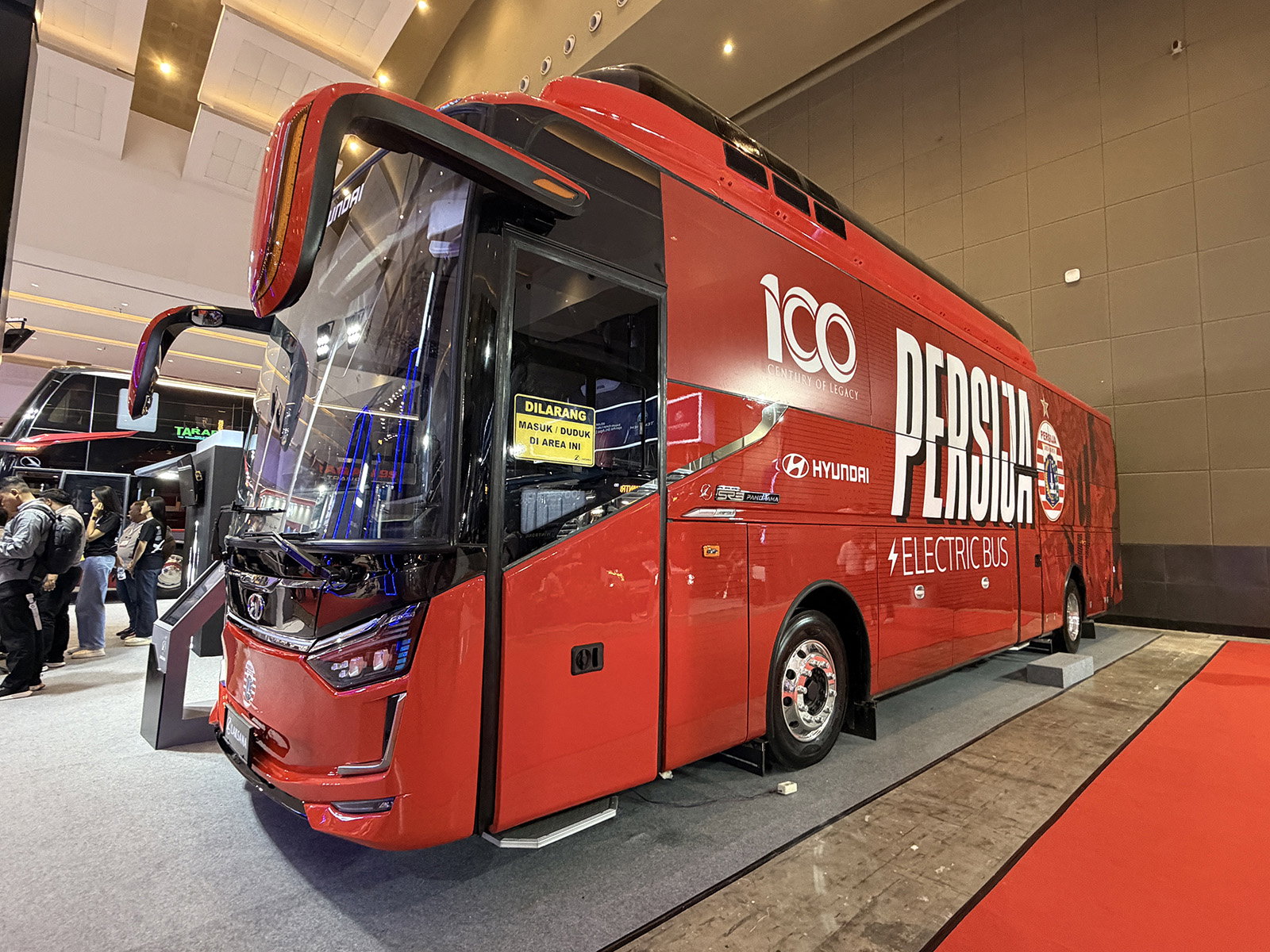
Persija Jakarta football team’s electric Laksana team bus, built on Hyundai underpinnings
Laksana was also present at the event with the BRT version of the latest, facelifted edition of its urban Cityline family, built on a fully electric Skywell chassis (E-Cityline 3), as well as with a super-luxury double-decker Legacy SR3 Neo DD Suites Combi long-distance coach mounted on a Volvo B11R chassis. On the lower deck of the latter vehicle, private cabins have been created with armchairs that can be converted into berths.
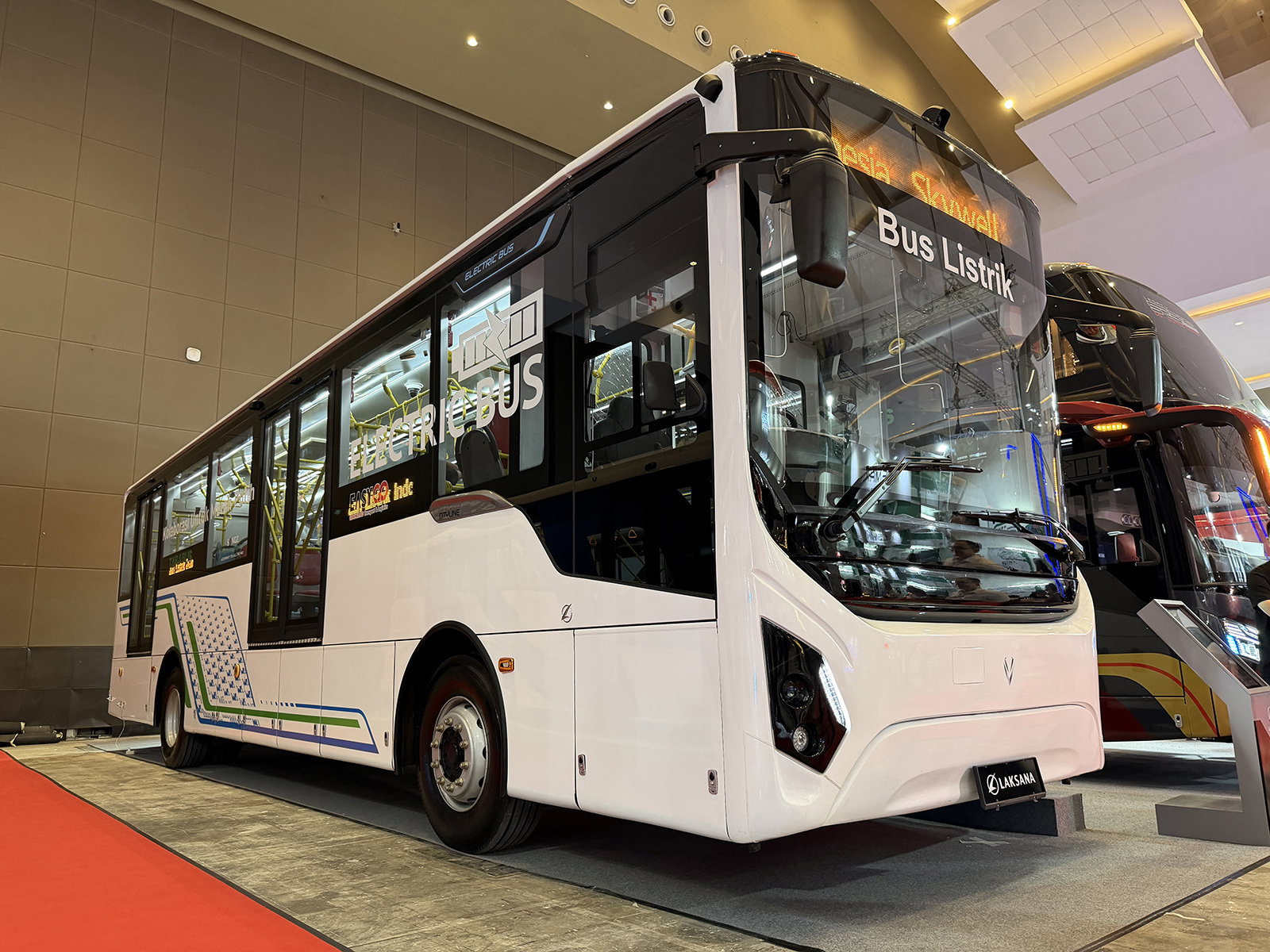
Laksana e-Cityline 3 electric bus, in a version adapted to the stations of the TransJakarta BRT network
Two Indonesian bodybuilders took part in Busworld Southeast Asia for the first time. Trijaya Union, founded in 1978, presented the premium-class Triun CX minibus, based on a truck platform, alongside its long-distance midibuses carrying the Neo Grantour and Triun MX fantasy names, while Piala Mas drew attention with the current generation of its full-size Rexus touring coach.
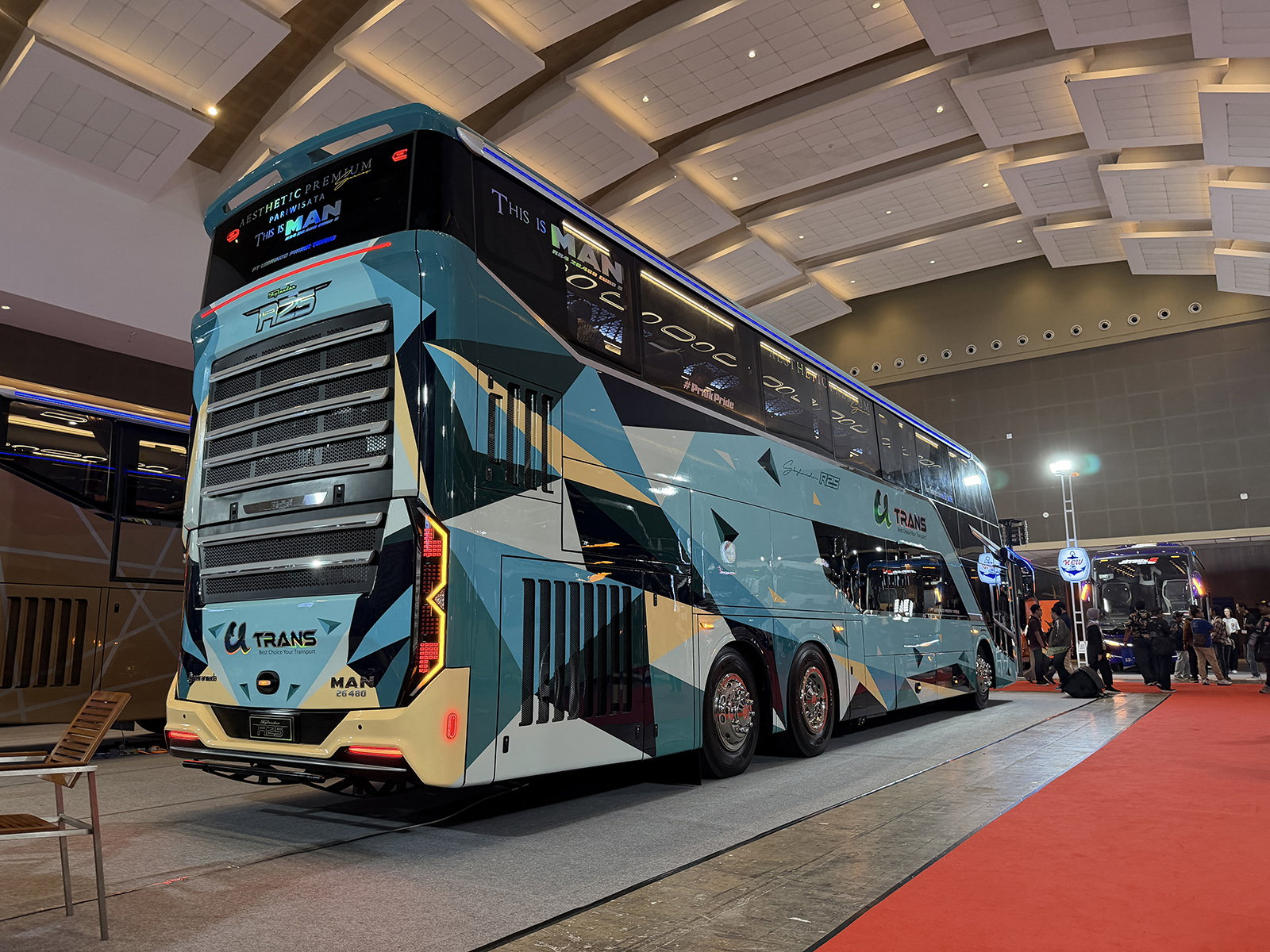
New Armada’s double-decker flagship on a MAN CO 26.480 (RR4) chassis
There were also manufacturers in the line-up that are well known internationally. MAN likewise appeared among the exhibitors at Busworld Southeast Asia for the first time. As in many of its other export markets outside Europe, the company operates in Southeast Asia as a chassis manufacturer, working together with local bodybuilders. Both the lion-branded manufacturer and its Indonesian partner, PT Millennium Inframach Distribusi Indonesia, assessed their participation and the business opportunities positively; according to reports, they held constructive discussions with local bodybuilders and an order was also signed. In Jakarta, the focus of MAN’s stand was the three-axle CO 26.480 RR4 rolling chassis from the global Lion’s Chassis product line, suitable for building single-deck or double-deck long-distance coaches and, according to the manufacturer, appropriate for a wide range of applications and flexibly adaptable to local operating requirements. The same chassis was present at the exhibition in bodiless delivery form as well as underneath a New Armada Skylander R25 double-decker demonstrator bus. New Armada, one of Indonesia’s leading bodybuilders, also exhibited several single-deck long-distance types in Jakarta as an independent coachbuilder, on a variety of technical bases, including Mercedes-Benz chassis.
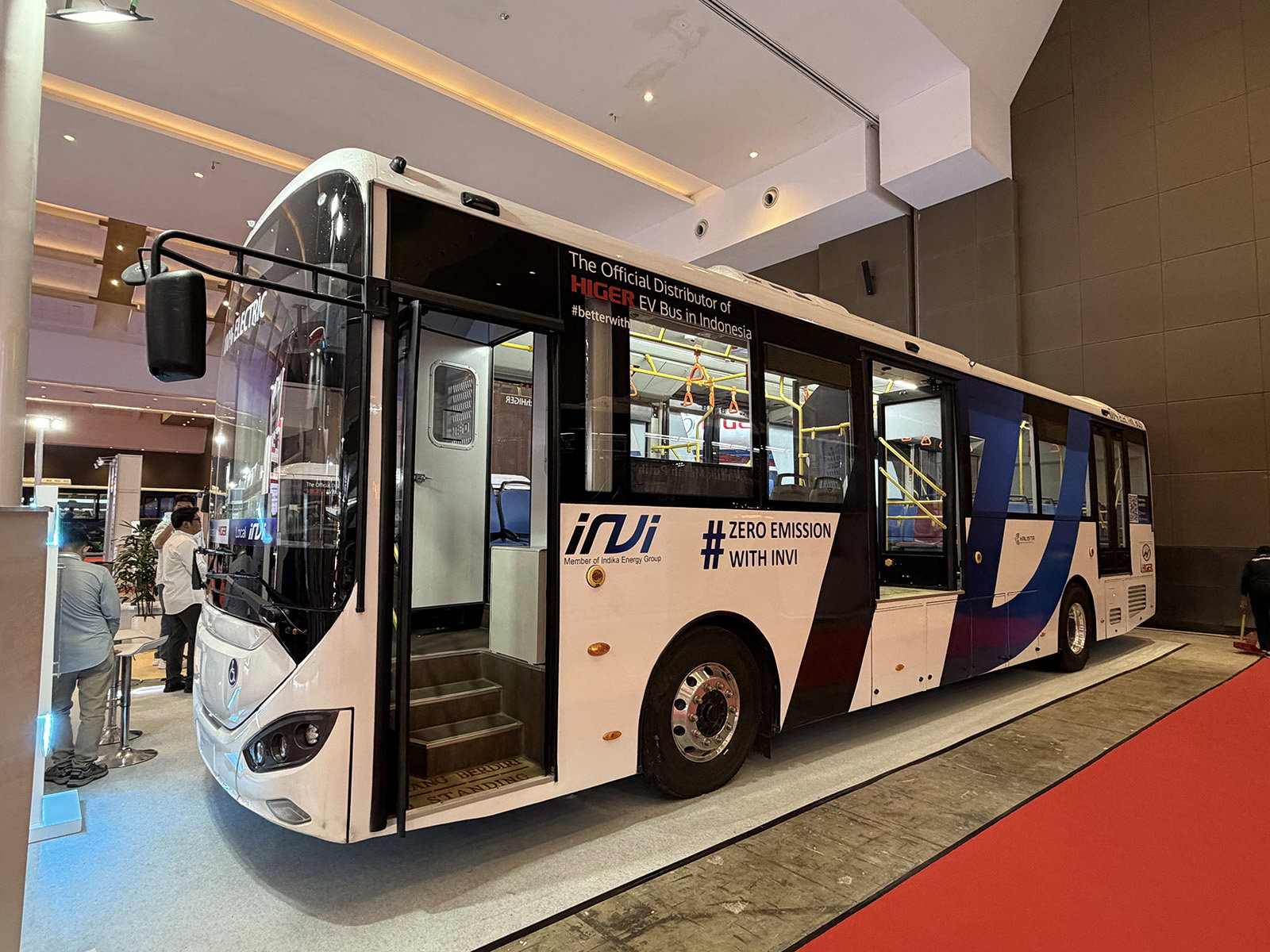
Chinese variations on a theme: the Higer…
The steadily growing Chinese presence in Southeast Asia as well was represented this time by Higer and Golden Dragon. Both brands took part through local distributors – the former via INVI, the latter through a company called SAG. Another common feature of their stands was that each brought, as its main attraction, a normal-floor electric solo bus type fitted with passenger doors on both sides and specifically adapted to local BRT systems. In Golden Dragon’s case, more precisely, this was the XML6125JEVJC3 model, equipped with a permanent-magnet synchronous electric motor rated at 145 kW continuous and 245 kW peak output, as well as a lithium iron phosphate (LFP) battery pack with a total capacity of 326 kWh, offering a range of 250 kilometres – illustrating the slow but steady advance of urban electromobility in the Indonesian market. At the Higer stand, this was complemented by a low-entry urban midibus, while Golden Dragon added the likewise zero-emission, 16-seat XML6549JEV minibus, which can cover up to 440 kilometres on a single charge.
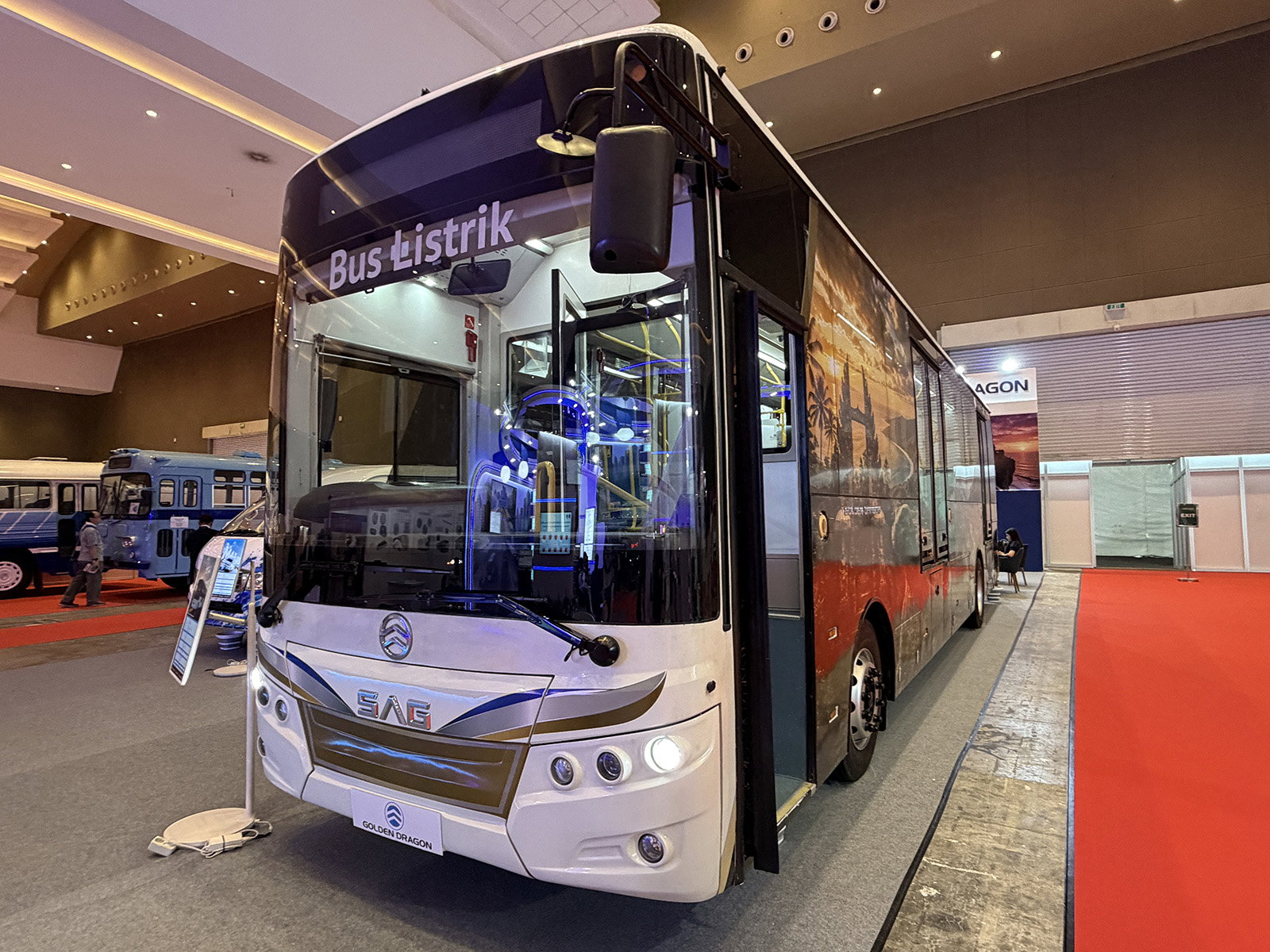
…and Golden Dragon’s electric bus type tailored to Jakarta’s BRT network
As is customary for the Busworld exhibition series, a number of awards were also presented to the participating models that stood out most in terms of design, innovation and passenger comfort. This time, votes for the nominees could also be cast online and on Instagram, involving not only industry representatives but also Indonesia’s vehicle-enthusiast community in the decision. Adi Putro proved particularly successful, winning Indonesia’s “Bus of the Year” title with its double-decker SDD Jetbus 5 type and the “Best Coach Design” award with its MHD Single Glass Jetbus 5 model. The aforementioned Piala Mas also did well: as a newcomer, it took home the “The Most Favorite Bus” and “Most Eye-Catching Bus” distinctions for the most popular and most spectacular vehicle with its Rexus 8D touring coach.
The remaining award winners were as follows:
- Most Interior Comfort Bus: Laksana Semeru (Legacy SR3 Neo DD Combi)
- Most Futuristic Bus: Laksana MTrans DD 4M (Legacy SR3 Neo DD Combi)
- Most Luxury Coach: New Armada Skylander R25 Vision Sleeper
- Best E-Bus Design: Tentrem E-Velocity W1
- Most Favorite E-Bus: Golden Dragon MAX XML6549JEV
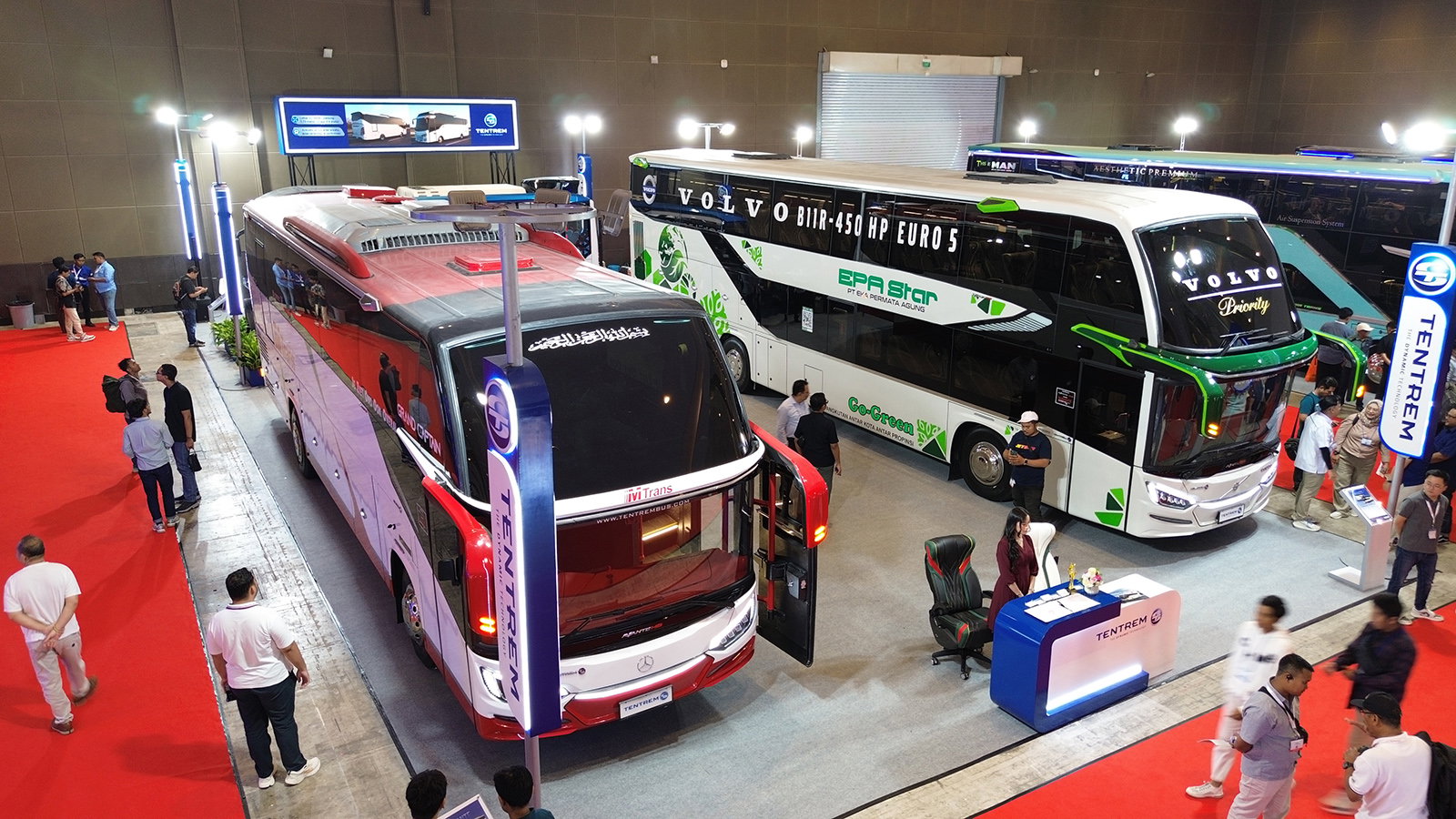
Indonesian manufacturer Tentrem’s long-distance demonstration coaches at the exhibition
The programme was once again enriched by conferences, with more than 40 professional speakers, including representatives of the Indonesian Ministry of Transportation, industry organisations (UITP, Askarindo), transport companies from the region (TransJakarta, LTA Singapore) and bus manufacturers with interests in the local market (Gemilang Coachworks, MAN, Laksana). Overall, this year’s exhibition again proved successful, so its continuation is assured: according to the organisers’ announcement, the next edition of Busworld Southeast Asia will be held in May 2028.
Photos: Busworld