![Magyarbusz [Info]](/mbi/header-logo.png)
No return to diesel buses: Wiesbaden continues electrification
 Ludányi József
In recent years, both industry debate and the press have repeatedly suggested that ESWE Verkehr, the public transport operator in Wiesbaden, Germany, had partly backed away from using electric buses. This impression emerged especially after early operating experience with the first-generation eCitaro electric buses – primarily challenges relating to range and operational reliability – and the later discontinuation of the hydrogen bus project. It led to the perception that the company had stalled, or had even moved away from its previously ambitious electrification course. Some media reports in recent years reinforced this view, particularly in connection with the problems surrounding the first-generation vehicles and the abandonment of the hydrogen strategy. However, in detailed answers to our questions, the company presented a more nuanced picture: according to ESWE Verkehr, this is not a technological retreat, but a deliberate strategic adjustment based on operating experience. ESWE Verkehr currently operates 119 electric buses and is preparing to procure further electric articulated buses, while clearly placing the emphasis on battery-electric mobility rather than hydrogen technology.
The detailed responses to our portal’s questions were sent by Michael Skwarciak, who is responsible for corporate communications, business development and services at ESWE Verkehr. At the same time, the company says it is important to clarify that Wiesbaden is neither returning to diesel operation nor turning away from fully electric buses. ESWE Verkehr continues to base its fleet strategy on two drive technologies – battery-electric and environmentally friendly diesel buses – while also keeping the continuation of electrification on the agenda.

According to the company, the first-generation electric buses – the early eCitaros – have proved themselves overall despite initial operating difficulties. ESWE Verkehr stressed that the experience gained has continuously been, and continues to be, taken into account both in day-to-day operations and in shaping the fleet strategy. In the further expansion of electric mobility, operational framework conditions such as vehicle duty planning, charging infrastructure capacity and vehicle availability are also being considered. All this suggests that the experience gained with the first-generation electric buses ultimately did not lead to the electric drive being called into question, but rather to its more deliberate and operationally sound application.
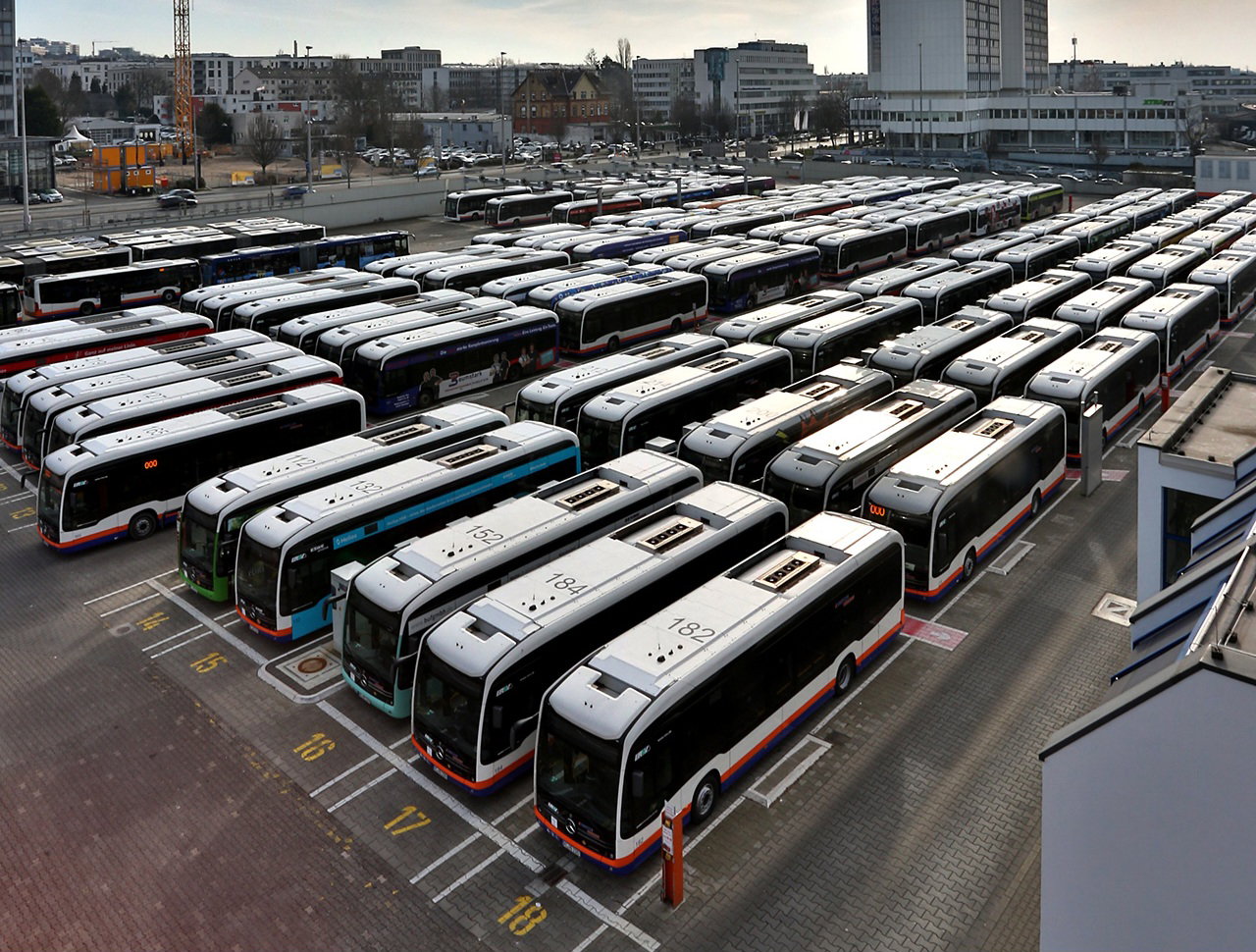
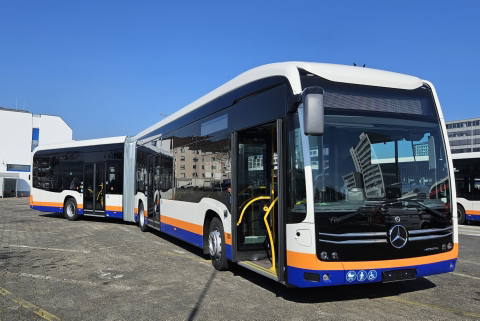
At the same time, the company emphasised that none of this means abandoning the transition to electric operation. Recently, it launched the procurement of six new electric articulated buses, partly in preparation for the network reform planned for 2027. ESWE Verkehr intends to continue electrifying the fleet step by step, although the pace of further procurements will be significantly influenced by operational, economic and political framework conditions. Larger-scale procurement of future fully electric articulated buses would also require further infrastructure development. The capacity of the current depot has, in practice, been fully utilised for years, so in the longer term the creation of a second depot is also being considered. The City of Wiesbaden has already purchased a site where a new bus depot could be built, although the suitability assessments have not yet been definitively completed.
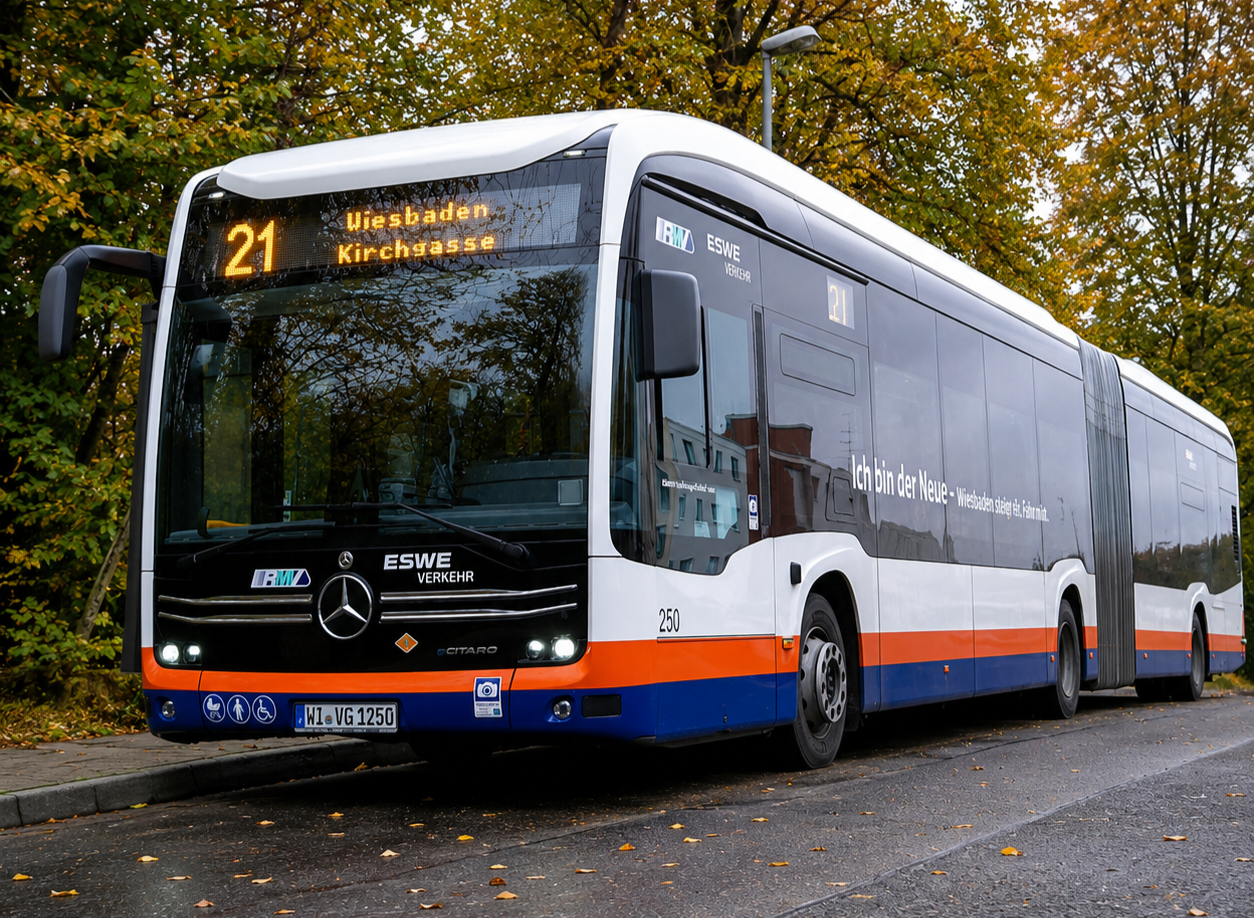
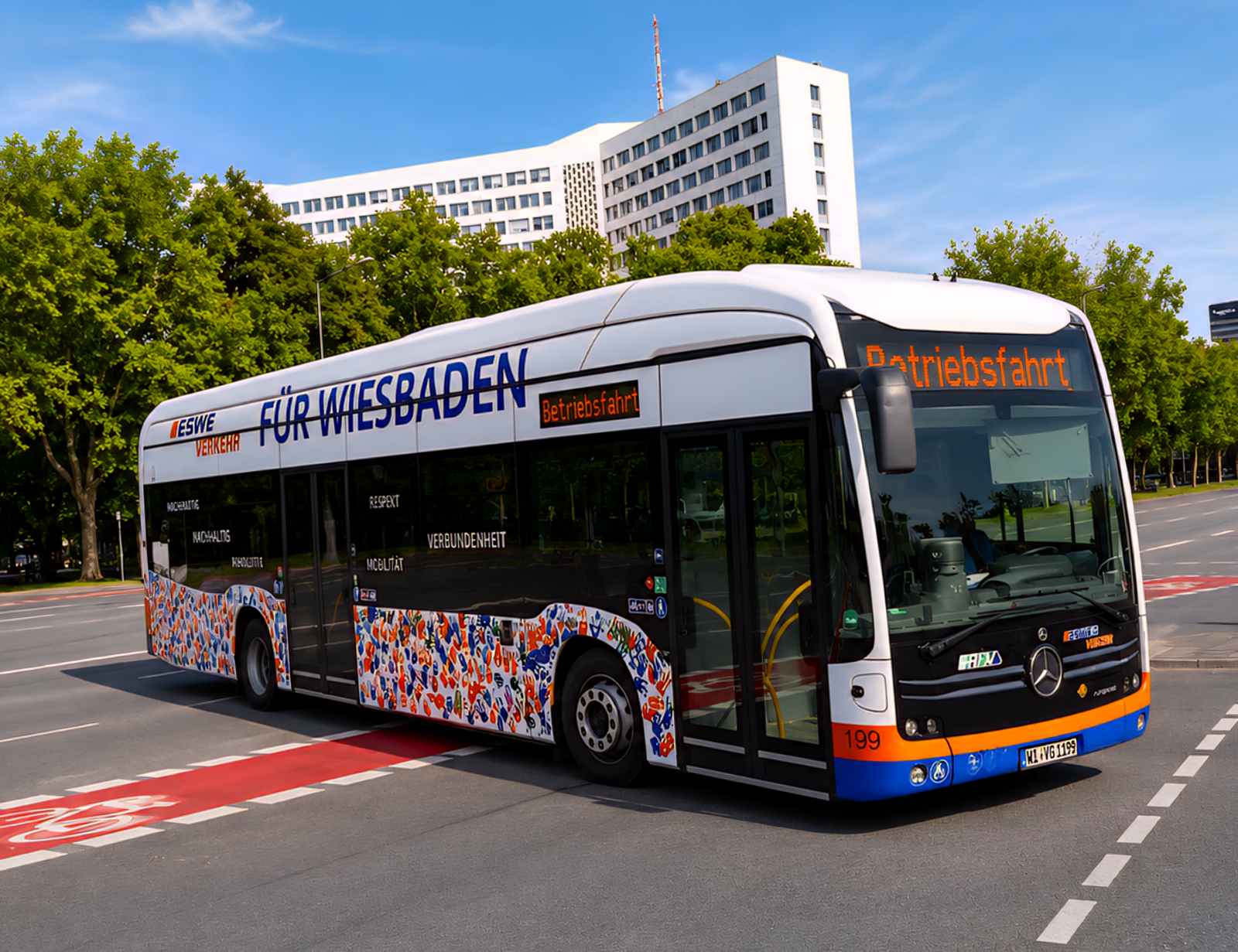
According to ESWE Verkehr, its electric buses currently provide around 45% of total service output in Wiesbaden. The company’s fleet currently includes 119 Mercedes-Benz eCitaro electric buses, which already account for almost half of the vehicle fleet and play a key role in daily operations. The company stressed that electric mobility is an important element of the mobility transition and also contributes to sustainable public transport in the city.

As one of the most important lessons from its early operating experience, ESWE Verkehr highlighted that electric mobility can be operated reliably when supported by the right infrastructure. In the company’s view, the establishment of intelligent load and charging management systems, together with close coordination between operations, service planning and the technical background, plays a key role in ensuring high vehicle availability and stable daily operation. The company added that every one of its electric buses currently has its own charging point at the depot.

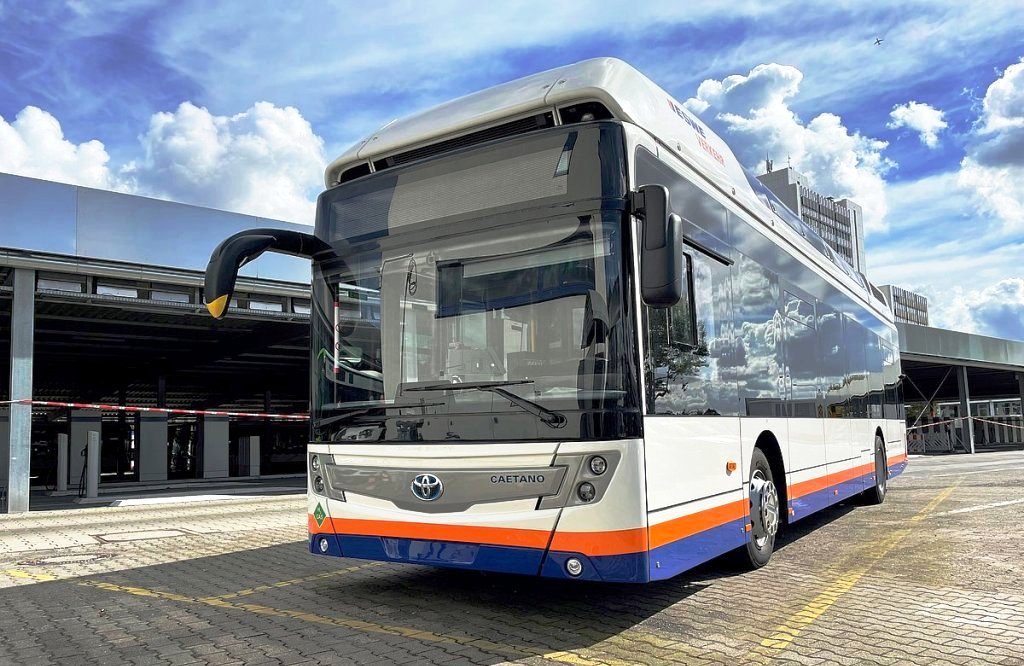
Regarding the abandonment of hydrogen technology, ESWE Verkehr wrote that it decided to phase out the technology, which had been used for only one year, in order to concentrate at depot level exclusively on two drive technologies: environmentally friendly diesel and battery-electric buses. According to the company, the hydrogen project was closed without any adverse consequences in terms of funding. The ten Caetano hydrogen buses were sold, while the joint hydrogen filling station owned by Verkehrsverbund Mainz–Wiesbaden (VMW) was relocated to Mainz. ESWE Verkehr says that, in light of local conditions – including workshop infrastructure – hydrogen technology no longer fitted its operating model in the longer term. At the same time, the company stressed that it intends to continue further expanding battery-electric mobility in the future.
ESWE Verkehr still regards achieving a fully or predominantly zero-emission bus fleet as a longer-term process. According to the company, thanks to the current high proportion of electric buses, public transport in Wiesbaden already relies to a significant extent on low-emission operation, but the complete transition will remain a gradual process.