![Magyarbusz [Info] International](https://bunny-wp-pullzone-9e1je37kud.b-cdn.net/wp-content/uploads/2025/06/cropped-cropped-mbi_sby_v1-scaled-1.png)

Volvo is expanding its zero-emission self-driving chassis range, introduced last year under the name BZR Electric, with a model designed for long-distance use. This versatile platform, available in both low-entry and standard-floor versions, can support electric buses with a range of up to 700 kilometers, according to the Swedish manufacturer, making them suitable for long-distance routes. Concurrently with the introduction of the new chassis variant, Volvo announced the launch of its first fully electric long-distance coach, based on the diesel-powered 9700 series.
The newest variant of the BZR Electric chassis family will be available in both two- and three-axle versions. The energy storage system can be configured with four to eight battery modules, allowing a total capacity ranging from 360 to 720 kWh. This flexibility enables the chassis to be tailored to different operational needs, from setups optimized for shorter distances to versions offering maximum range for longer routes. The highest battery capacity can provide a range of up to 700 kilometers based on the SORT 3 measurement cycle simulating suburban traffic.
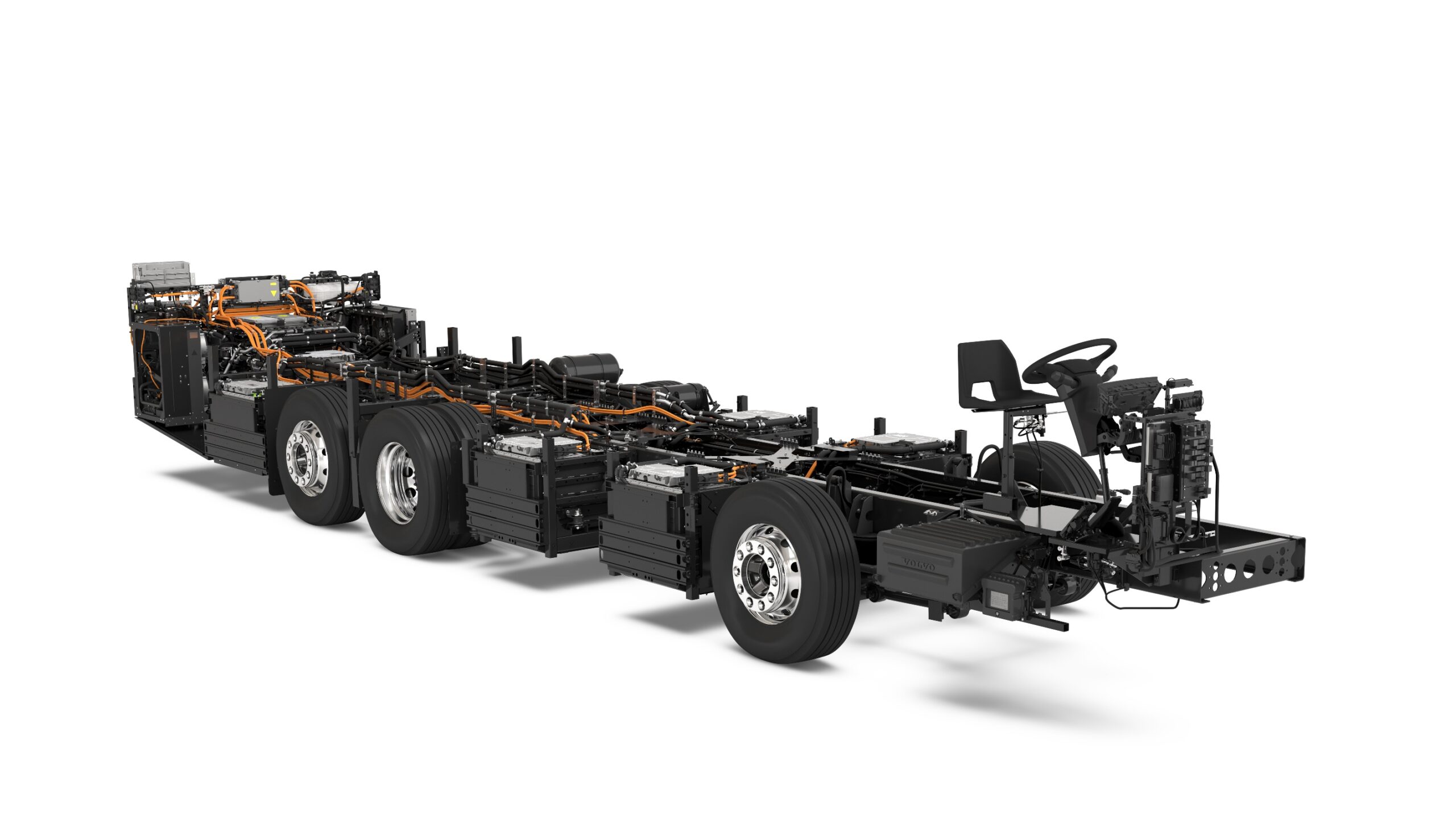
The chassis can accommodate body lengths between 9.5 and 14.9 meters, available in 4×2 (two-axle) or 6×2 (three-axle) configurations. The two-axle version can support bodies between 9.5 and 13.26 meters, with a maximum permissible gross weight of 21,200 kg, although this exceeds the legally allowed value in most European countries. The three-axle version can accommodate bodies from 12.48 to 14.96 meters, with a maximum permissible gross weight of 27,200 kg.
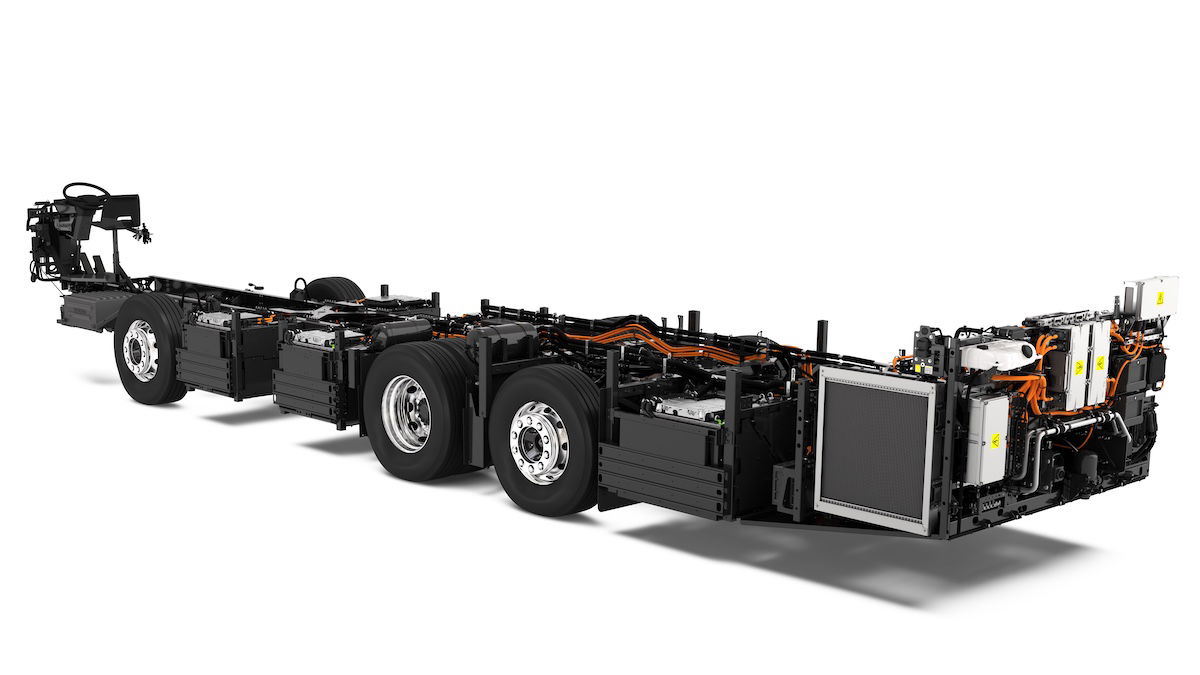
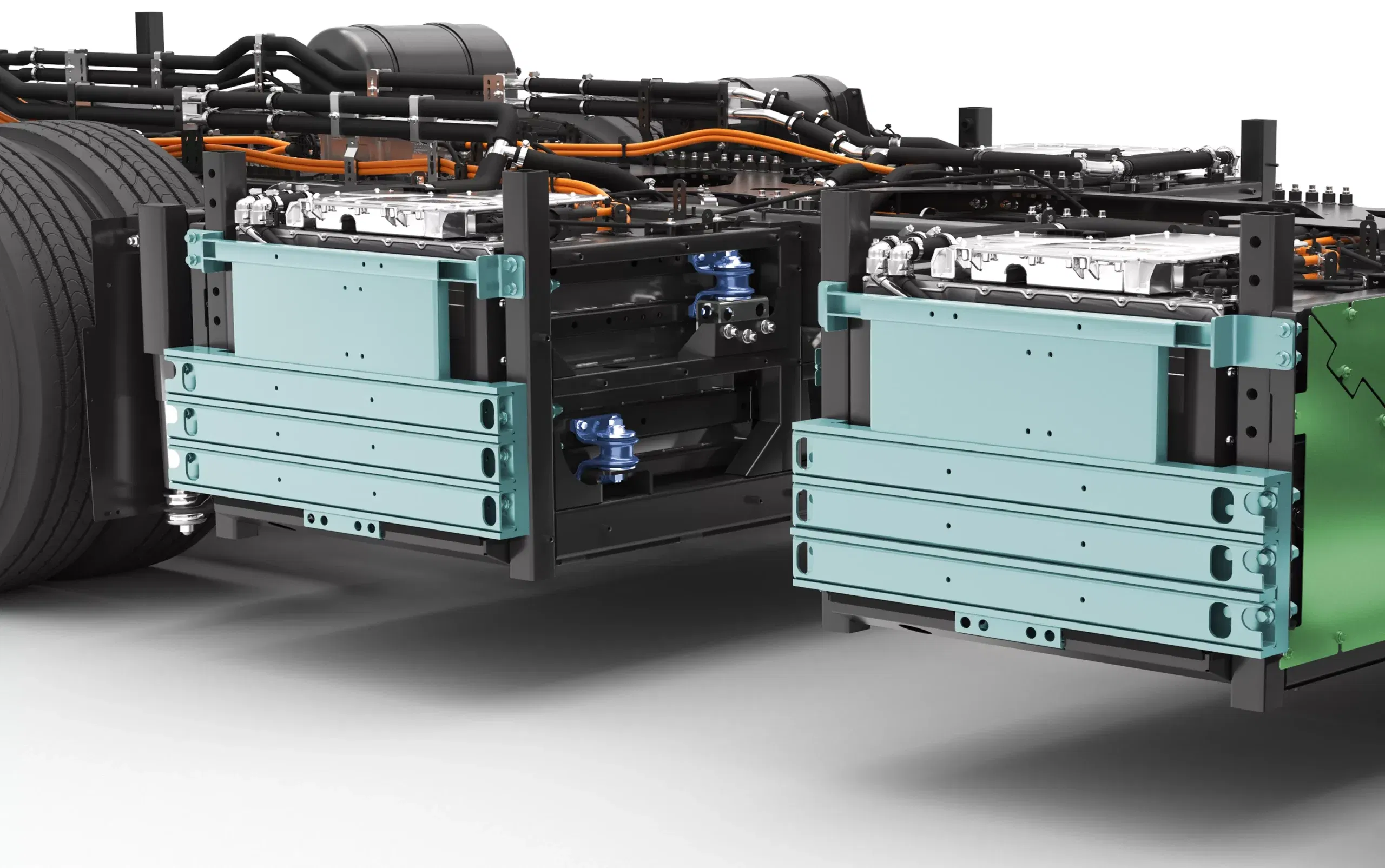
The energy storage relies on lithium-nickel-cobalt-aluminum-oxide (NCA) batteries, each with a capacity of 90 kWh and a weight of 535 kg, using Samsung SDI 21700 cells, which are already employed in urban models. These batteries operate at 600 V. The two-axle solo versions can be ordered with battery packs consisting of four, five, or six modules, with a total capacity between 360 and 540 kWh. The three-axle version can be equipped with five, six, seven, or eight modules, reaching a total capacity of up to 720 kWh. Volvo offers two charging solutions: a depot plug-in system providing up to 250 kW, and the inverted pantograph OppCharge technology for rapid charging at terminals, offering up to 450 kW charging power – a novel capability in the long-distance electric bus segment.
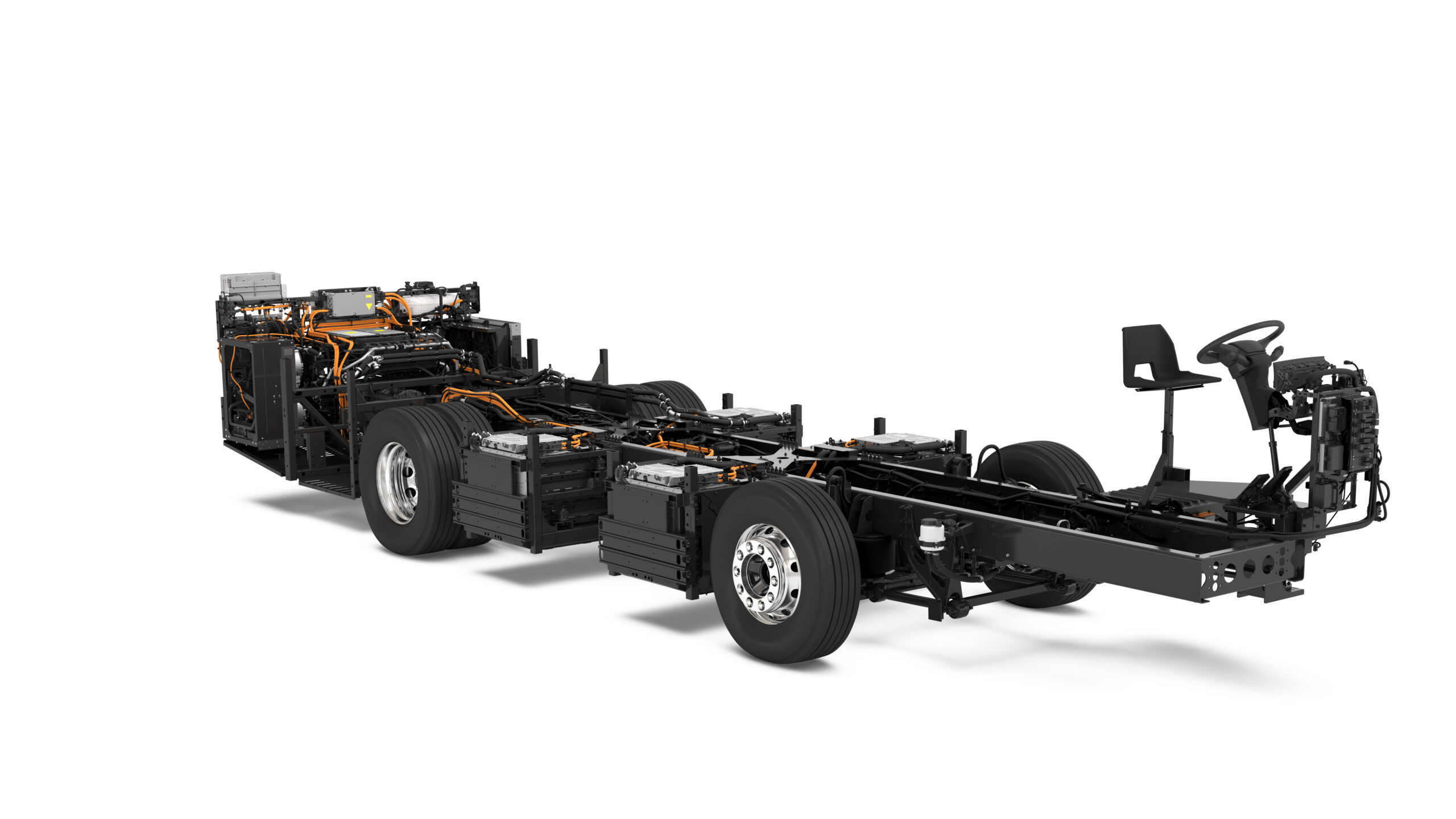
The technical foundation is powered by the Volvo EPT802 electric motor, well-known from Volvo’s electric city buses, featuring its own cooling circuit, with a continuous power of 167 kW, peak power of 200 kW, and a maximum torque of 425 Nm. The two-axle version can optionally include a twin-motor setup. The three-axle version is only available with this setup, providing a combined continuous power of 334 kW and peak power of 400 kW. For greater efficiency, the motors are arranged in a T-drive configuration, with torque transmitted to the driven axle via a two-speed automated Volvo I-Shift gearbox. In the twin-motor configuration, a summing unit is also integrated between the motors and the transmission unit.
Volvo provides the latest generation of active safety and driver assistance systems, as required by the revised EU GSR regulation, with the chassis. This means body manufacturers do not need to integrate these systems separately. The package includes features such as collision warning and emergency braking, frontal collision alert, intelligent speed limiter, side collision avoidance assistant, front short-range assistant, lane change support and lane keeping system, as well as driver alertness and distraction monitoring functions. Additionally, a tire pressure monitoring system and automatic brake light activation during emergency braking are standard.
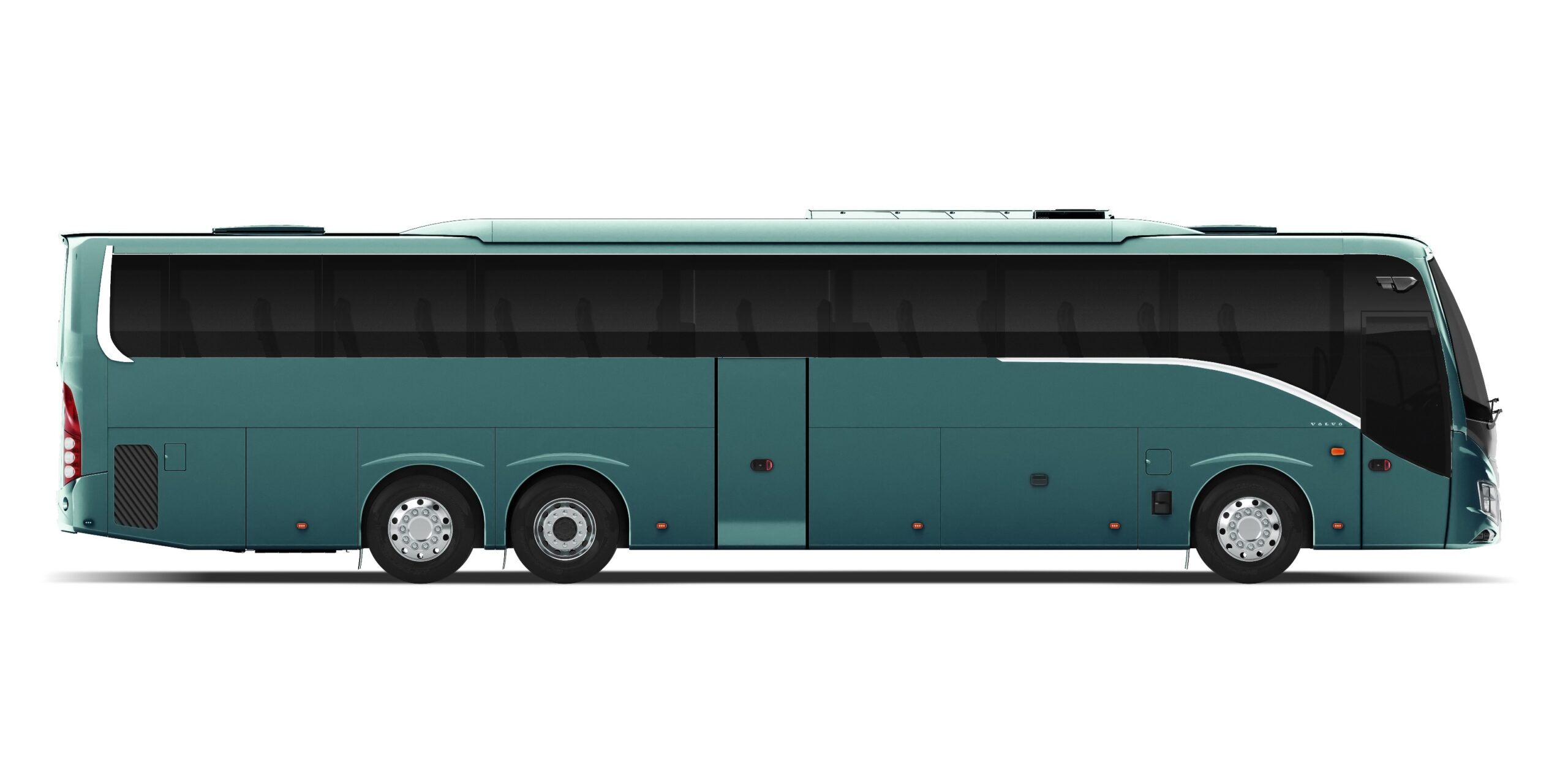
Along with the announcement of the new chassis, Volvo also revealed that the first units built under its own brand and license will have their bodies manufactured by Finnish company Carrus Delta, which also handles the bodywork for previous generation 9700 UpGrade and double-decker 9700 DD models. These vehicles are primarily intended for the Scandinavian and Benelux markets. Since the Swedish manufacturer ceased complete bus production in Europe in 2023, models based on the BZR Electric chassis for long-distance use will also be marketed with the collaboration of external body partners. The platform will later be available with bodies from other manufacturers, tailored to market and customer demands.
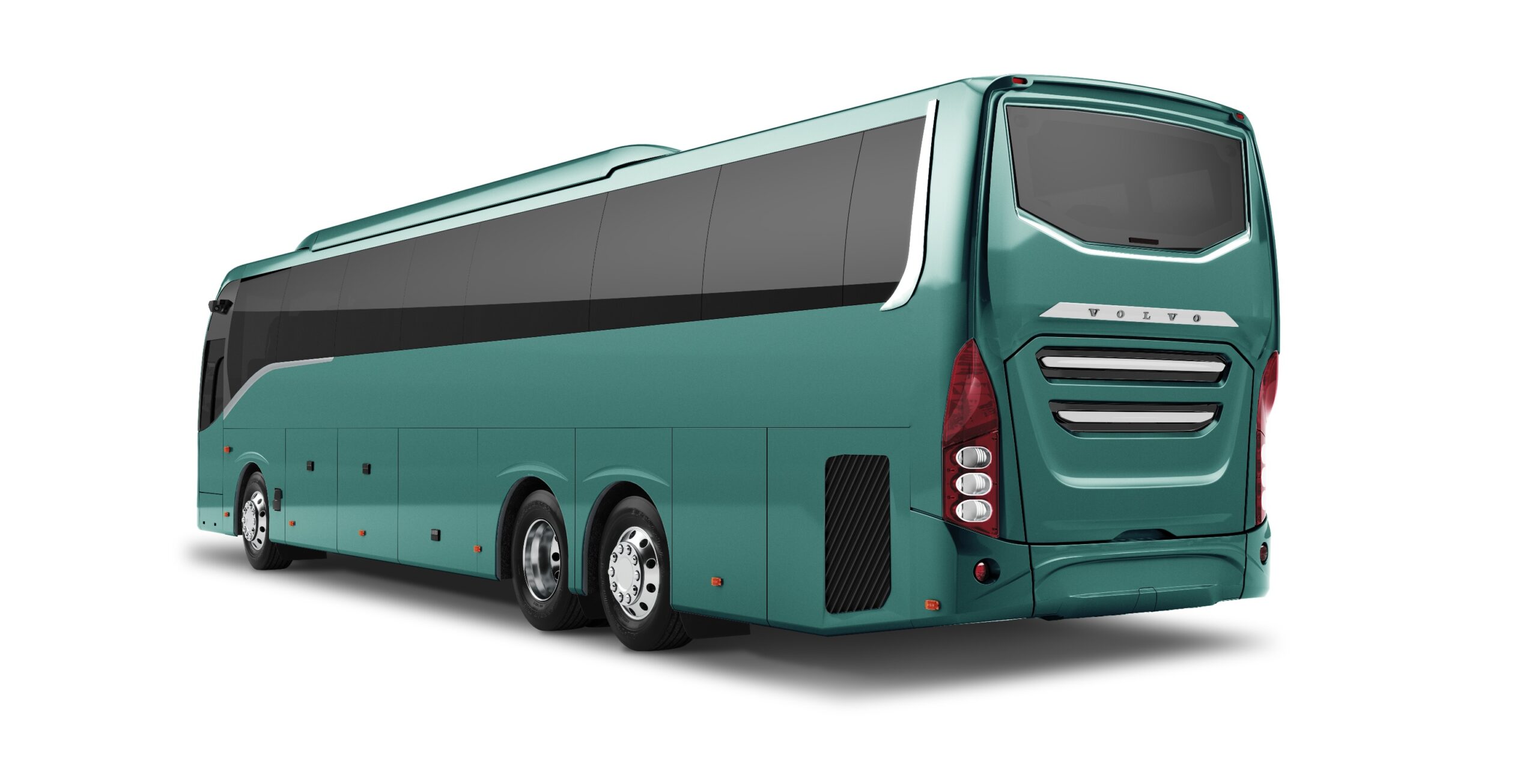
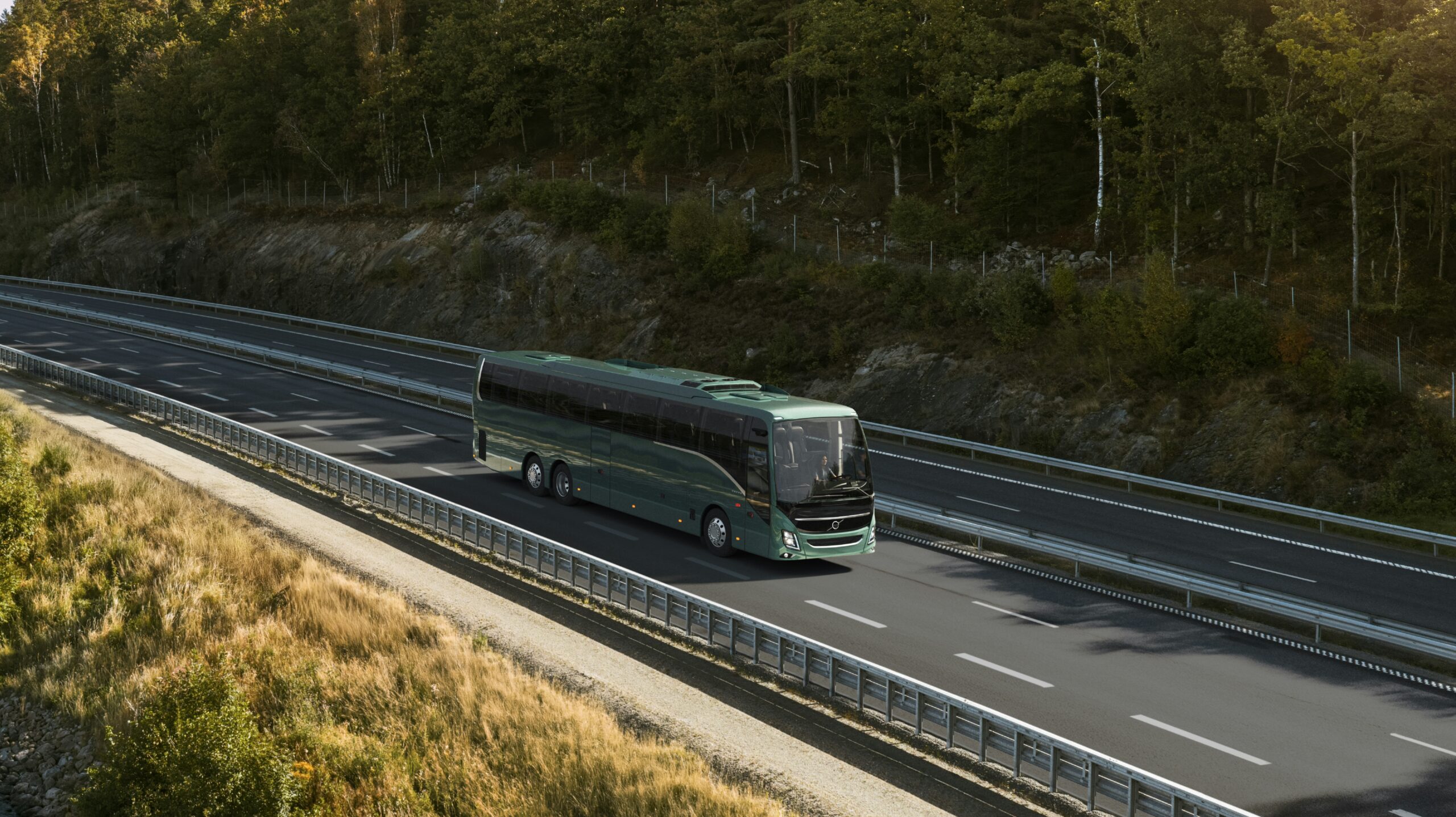
The long-distance model, bodied by Carrus Delta, will initially be available in a three-axle version, in three lengths: 13.3, 14.0, and 14.9 meters, with the aforementioned battery pack capacity of up to 720 kWh and a seating capacity of up to 67 passengers. According to factory renderings, the model does not use the body of the new-generation Volvo 9700 introduced in 2019, but partially adopts its design elements: while the front and rear resemble the newer series, the side panels appear to derive from the previous generation. This older body was phased out by Volvo years ago, but Carrus Delta continues to manufacture it under license, and it is exclusively marketed in the Nordic region through Volvo’s sales network. The “reactivation” of the older body is likely due to the manufacturing technology available at Carrus Delta.
 Related Articles


