![Magyarbusz [Info]](/mbi/header-logo.png)
FlixBus launches domestic ticket sales in Hungary
 Patthy Gellért
During the summer, FlixBus took a significant step towards further expanding its presence in the Hungarian market, and today officially announced the launch of its long-planned domestic ticket sales in the country. For the time being, the global market-leading coach mobility umbrella company is offering passengers the option to buy domestic tickets within Hungary on 16 of its international services, covering a total of 41 relations and serving 14 Hungarian cities. According to FlixBus, which this year is celebrating the 10th anniversary of its presence in Hungary, the expansion is intended to offer modern, affordable and sustainable mobility options for both the Hungarian public and tourists arriving in the country.
Hungary is one of the few European countries where FlixBus had not yet built up a domestic network – despite having already done so in most markets across the continent, including several of Hungary’s neighbours. Today, FlixBus’s comprehensive international network covers almost the whole of Europe: a total of 65 routes connect Hungary with 267 cities in 21 countries. This network has always included stops in Hungary – the novelty is that domestic tickets can now be purchased for these relations as well. The most important element of the newly opened domestic connections is the direct link between Budapest Liszt Ferenc Airport and major regional cities, something that had so far been missing from Hungary’s transport offer. Thanks to the new direct airport connection, passengers can travel without changing from the airport to Szeged, Győr, Miskolc, Siófok, Debrecen, Kecskemét and Szolnok. Of these, the Debrecen relation is the longest in terms of journey time, at 2 hours 45 minutes; the other cities listed can be reached by FlixBus services in less time. The airport services operate in both directions: passengers arriving from the major cities can reach the airport directly, just as those arriving from abroad can get to their final destination.
„Direct bus connections between Budapest Liszt Ferenc Airport and Hungary’s major cities create a travel option that simply did not exist before: from the airport, passengers can now get to Miskolc, Szeged or even Siófok easily and affordably by bus – without a taxi, transfers or car rental. For Hungarian passengers living in major regional cities, this is a genuine novelty: after landing at the airport, the journey home can be arranged in just a few clicks with a ticket booked in the FlixBus app. We are convinced that this kind of convenient, accessible and sustainable mobility helps not only passengers, but the whole of Hungarian tourism as well – and this is only the beginning” said Michał Leman, vice president for FlixBus’s Eastern Europe region.

Michał Leman, regional vice president for Eastern Europe at FlixBus
Beyond the airport connections, FlixBus’s domestic network already covers most of the country’s major cities. The 41 relations currently available serve 13 Hungarian cities in addition to Budapest: Győr, Siófok, Szeged, Kecskemét, Debrecen, Miskolc, Szolnok, Hévíz, Keszthely, Sárvár, Sopron, Nagykanizsa and Székesfehérvár. Within the capital, domestic relations are available from several stops – Népliget, Kelenföld, Keleti railway station and Mexikói út. One of the network’s notable elements is the international service operating on the Sopron–Sárvár–Hévíz–Keszthely route: tickets can now also be purchased between the Hungarian stops on the line connecting Brno in Czechia with Zagreb in Croatia. Since the launch of domestic ticket sales, booking data show that the following relations have been the most popular, according to FlixBus:
- Budapest-Népliget–Budapest Liszt Ferenc Airport
- Budapest–Siófok
- Budapest–Kecskemét
- Budapest–Győr
- Budapest–Miskolc
Further relations will be added to the 16 lines currently available in the near future, meaning that the network accessible to domestic travellers will continue to expand. FlixBus domestic tickets are available at flixbus.hu and via the FlixBus mobile app. The ticket price includes the carriage of one smaller and one larger item of luggage, and the air-conditioned vehicles are also equipped with onboard Wi-Fi. Importantly, ticket prices are not fixed, but change dynamically according to demand. The company also gives a few specific examples of initial fares: journeys from Budapest Airport to Kecskemét are offered from HUF 1,599, to Szeged from HUF 2,249, while Siófok can be reached from the capital at an entry price of HUF 2,349. (Within the capital, however, at the time of writing FlixBus is uniformly offering airport services from HUF 2,949, making the service somewhat more expensive than the 100E airport express operated by BKK, which incidentally already costs several times the price of a standard Budapest single ticket; in return, however, it offers direct access to the airport from other parts of Budapest as well – ed.)
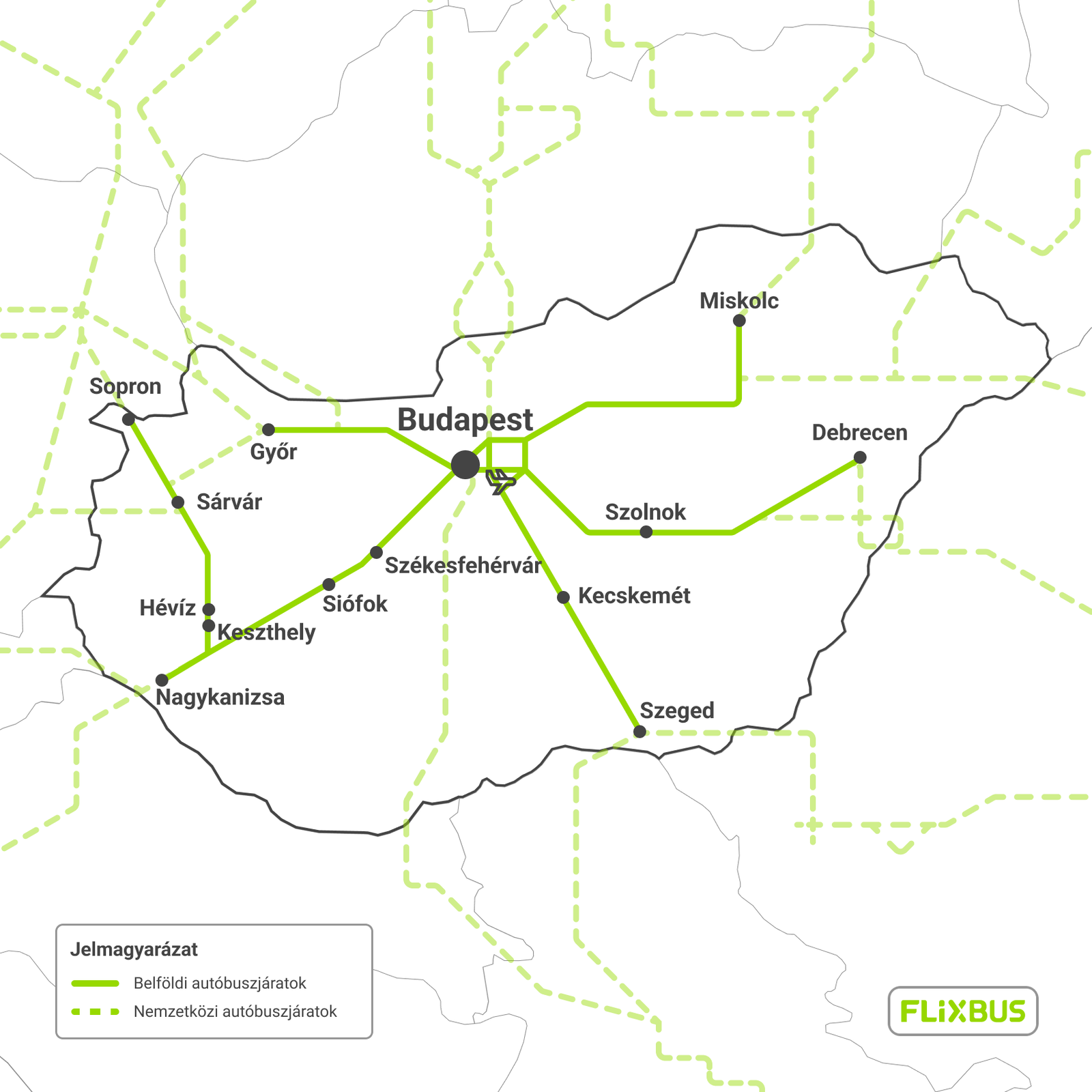
Map of FlixBus’s network in Hungary
Based on the experience of more than a decade of presence in Hungary so far, FlixBus’s clear aim is, as the company puts it, „to enable free and fair competition to develop in long-distance public transport in Hungary”. The company is convinced that opening up the market would not only make public transport more competitive, but would also noticeably improve the country’s overall mobility and the accessibility of smaller towns. The first step came in March 2026, when ticket sales were launched between Budapest Keleti railway station and Budapest Liszt Ferenc Airport – this was FlixBus’s first cabotage service in Hungary, meaning a service operated within the territory of one country by an economic operator registered in another. Although it was a modest start, FlixBus says it proved that the company is ready to gradually build up a domestic network.
FlixBus has long been calling for an even broader, genuine market opening in Hungary, citing neighbouring countries as positive examples. According to the mobility company, passengers in Romania reacted immediately to liberalisation: in just eight months – between July 2025 and February 2026 – FlixBus carried around 300,000 passengers on domestic services there, accounting for nearly half of the company’s total passenger numbers in Romania. In Croatia, FlixBus’s entry into the domestic market added 2.7 million kilometres of new capacity to the network annually, creating connections that previously did not exist or were difficult to use. According to the company, the improved links between the Croatian coast and inland areas had a direct impact on both tourism and local mobility.
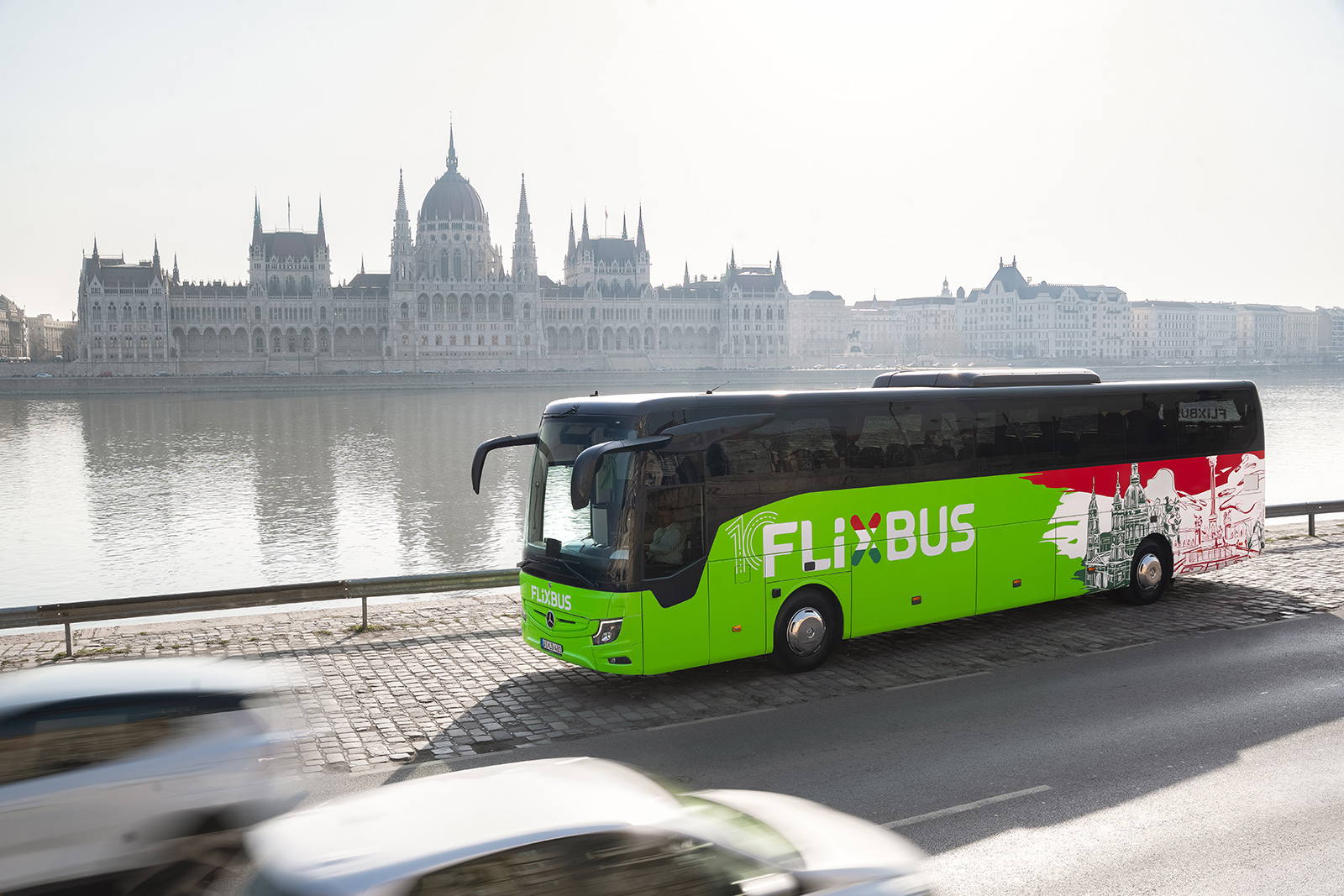
The cover image is an illustration, source: FlixBus