![Magyarbusz [Info]](/mbi/header-logo.png)
Utrecht’s busiest bus route is built around double-articulated Solaris electric buses
 Ludányi József
In recent years, double-articulated buses have once again been attracting growing attention in Europe. Although 24–25-metre vehicles have never been mass-market products in the bus sector, several manufacturers have offered such models, and a number of European cities have built up considerable operational experience with them. In the meantime, however, the range of manufacturers has narrowed significantly: with Van Hool out of the picture, Solaris and Switzerland’s Hess are now essentially the only genuinely active European players with both a series-produced model and substantial operating references in this category. In theory, Turkey’s Bozankaya could also join them, as its new electric bus family includes a 25-metre double-articulated version, but this model has yet to materialise. Recently, demand has picked up especially for the Solaris Urbino 24 electric. One of the type’s most significant customers has become Transdev, which has purchased what can already be described as a sizeable batch of the Polish manufacturer’s double-articulated electric buses for two of its Dutch concessions. Thirteen units are due to arrive for public transport in the Arnhem–Nijmegen–Foodvalley region, with their entry into service still to come, while the 25 vehicles procured for the Utrecht concession have already entered service and can mainly be seen on Utrecht’s high-ridership bus route 28.
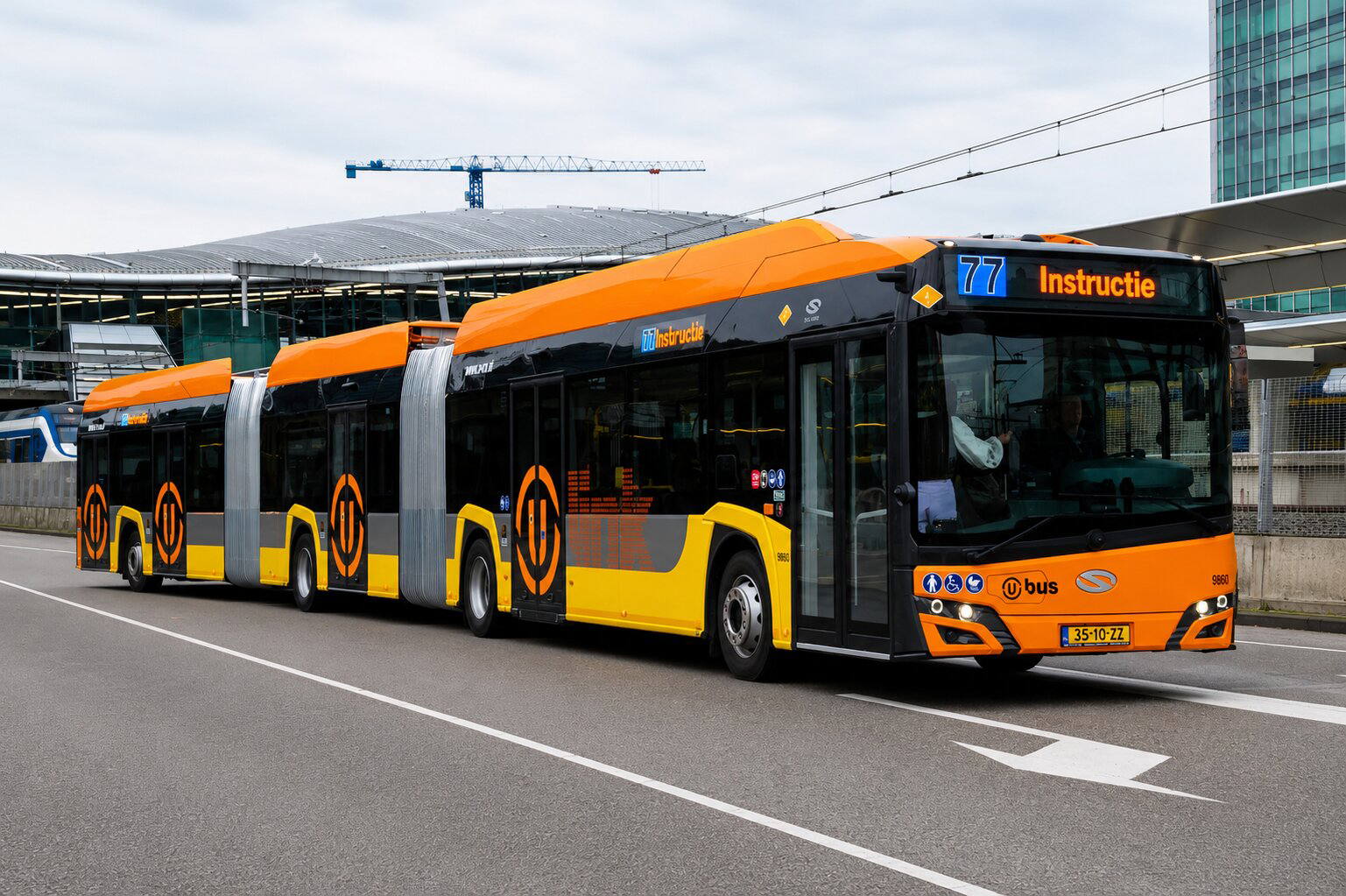
The Utrecht double-articulated Solaris fleet, numbered 9840–9864 and carrying the striking orange-and-yellow U-OV livery, arrived as part of a much larger fleet replacement programme launched in December 2025. Under the new public service concessions that came into effect on 14 December, operation of the urban network was transferred from Qbuzz to Transdev, while Keolis remained the operator of regional services. Across the two concessions, the gradual entry into service of more than 300 new all-electric buses began in Utrecht province. For this task, Transdev procured vehicles from several manufacturers – Solaris, Volvo, VDL and Yutong. Solaris alone delivered 96 electric buses to the Dutch city: 11 Urbino 9 electric buses measuring 9 metres, 14 three-axle Urbino 15 LE electric buses, 46 Urbino 18 electric buses and 25 Urbino 24 electric buses.
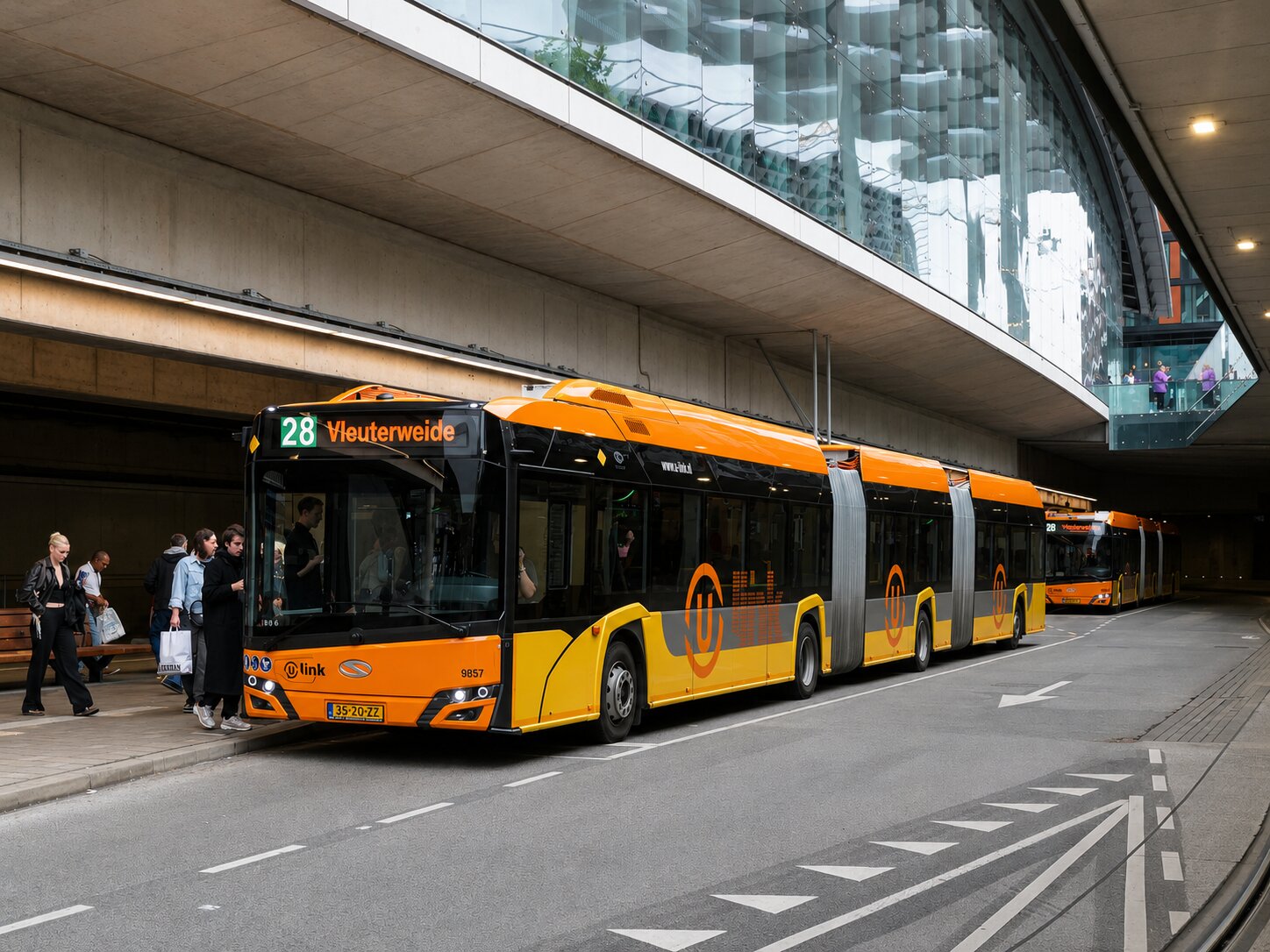
The double-articulated vehicles did not arrive in Utrecht as part of some demonstration or trial project; the 25 super-long electric buses have entered service on one of the city’s key high-demand routes, line 28, and also represent the highest-capacity, flagship vehicle type of the new concession. At the same time, the double-articulated vehicle category is by no means unfamiliar in Utrecht: Van Hool delivered 27 NewAGG300s to the city as early as 2002–2003, followed by a further 17 units in 2014, of which only six remained in operation by the start of the new concession. In addition, three Hess BGGH-N2C lighTram Hybrid vehicles operated in the city between 2014 and 2023, including on routes 12, 28 and 73. The introduction of the Solaris fleet can therefore be seen far more as the continuation of more than two decades of local practice than as the testing of a new vehicle concept; the real novelty this time is the fully electric drivetrain. The infrastructure needed to accommodate double-articulated buses was essentially already in place, as the stops and turning facilities on the designated routes had already been suitable for buses of almost 25 metres thanks to the operation of earlier vehicles.
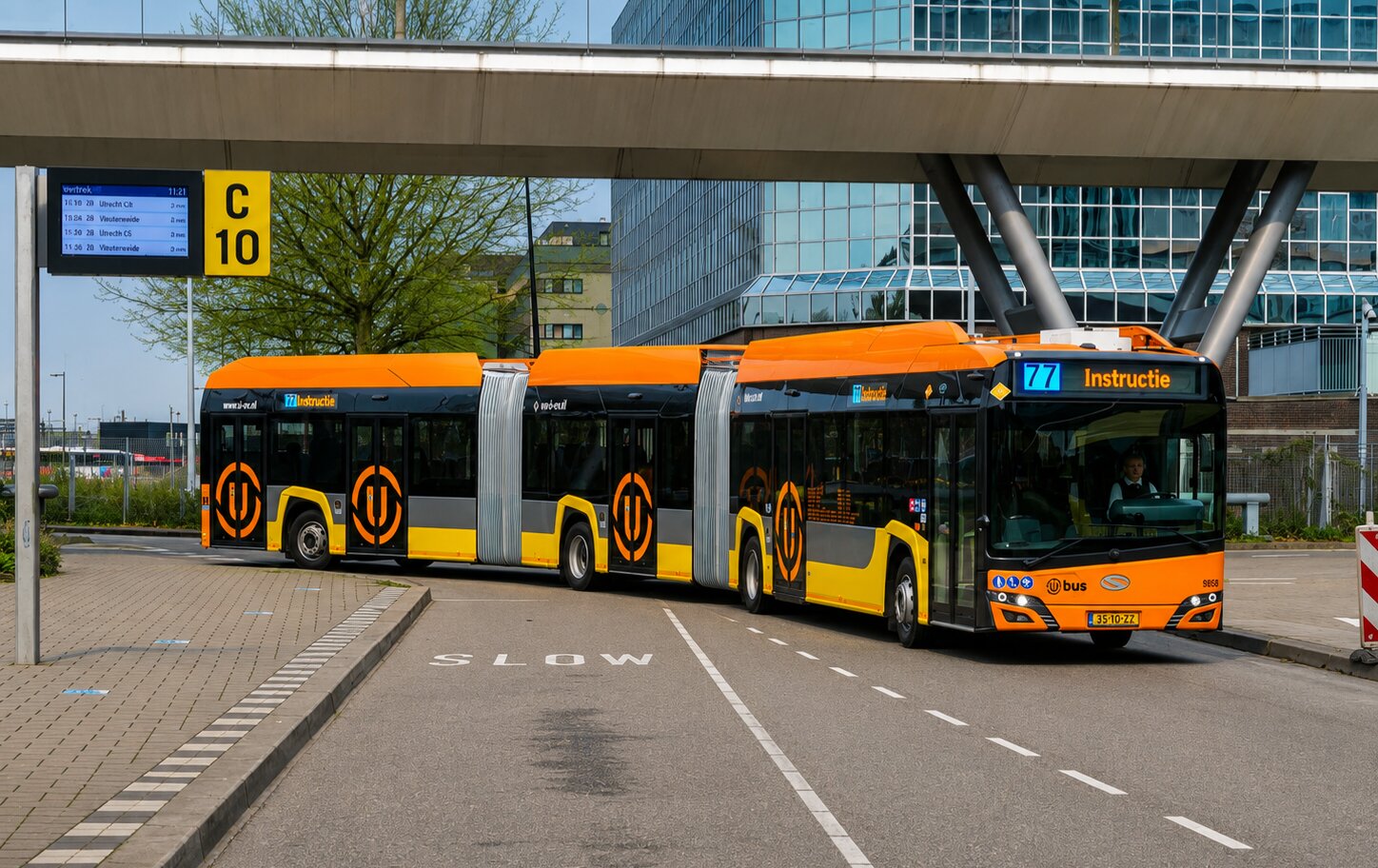
Moreover, the double-articulated buses had not only the right infrastructure waiting for them, but also a clearly defined task. U-Link route 28 connects Vleuten railway station with central Utrecht via Vleuterweide and De Meern, then continues from the Utrecht Centraal area towards Rijnsweerd before reaching the P+R Science Park terminus. The approximately 22-kilometre route, which crosses the western and eastern parts of the city, serves more than 30 stops in each direction, with an end-to-end journey time of around one hour depending on traffic and time of day. Why the highest-capacity vehicles were assigned here is also clearly shown by the data in Transdev’s transport plan: the document identifies route 28 as the busiest bus route in the Utrecht-Binnen concession, and its section between Utrecht Centraal and Rijnsweerd as the most heavily used bus corridor in the entire Utrecht region, where an average of around 680 passengers were recorded in the busiest hour. The arrival of the vehicles therefore does not mark the start of a new operating concept, but rather the provision of capacity on an exceptionally busy route already served by double-articulated buses, now using modern, fully electric vehicles.
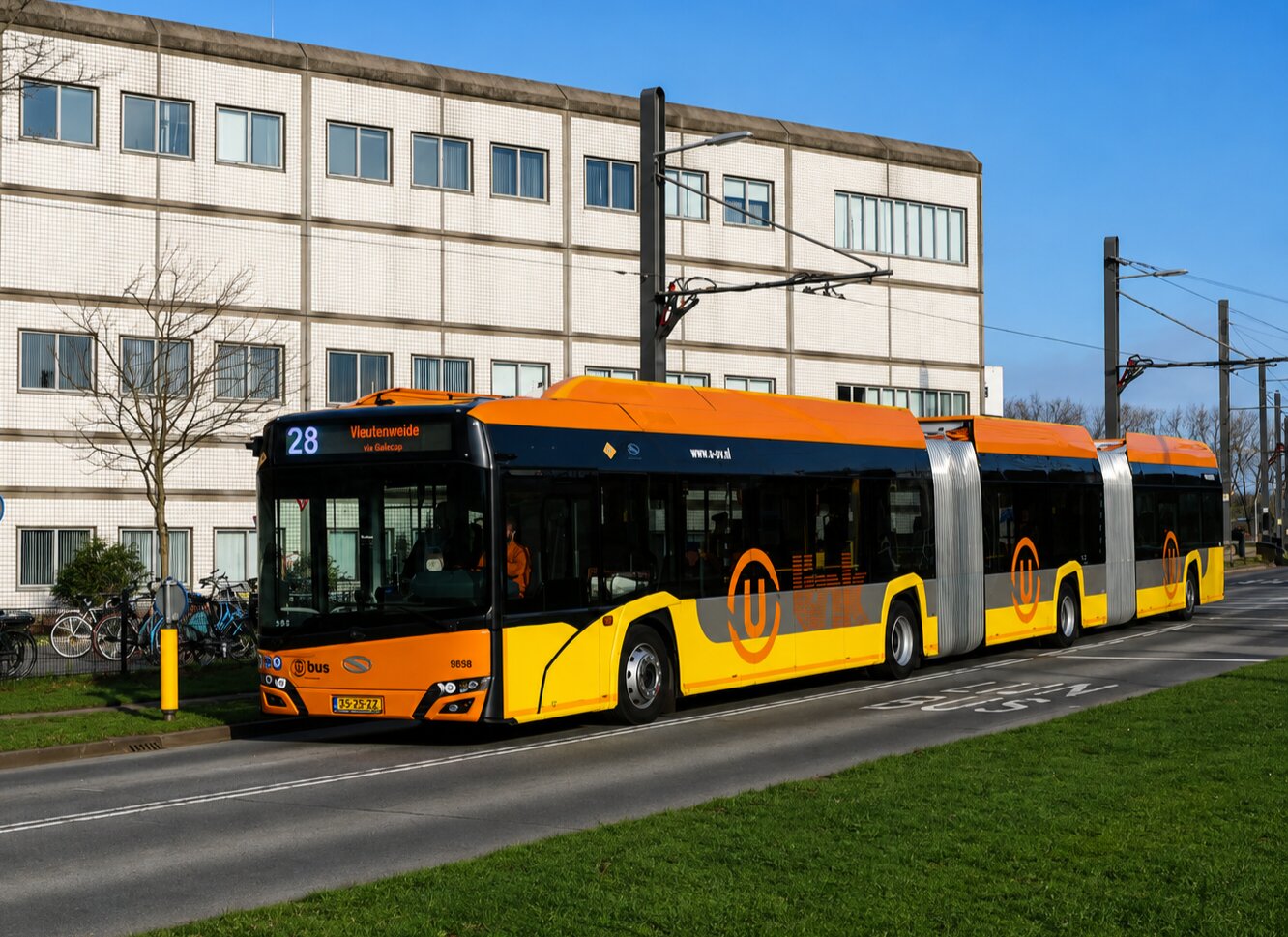
Route 28 carries substantial passenger volumes throughout the day: it operates from the early morning hours until after midnight, with frequent services during the busiest periods on working days and currently five departures per hour during the daytime. Accordingly, the double-articulated buses are not used solely to handle the increased passenger flows of the morning and afternoon peaks; they operate regularly throughout the day as the standard vehicles on route 28.
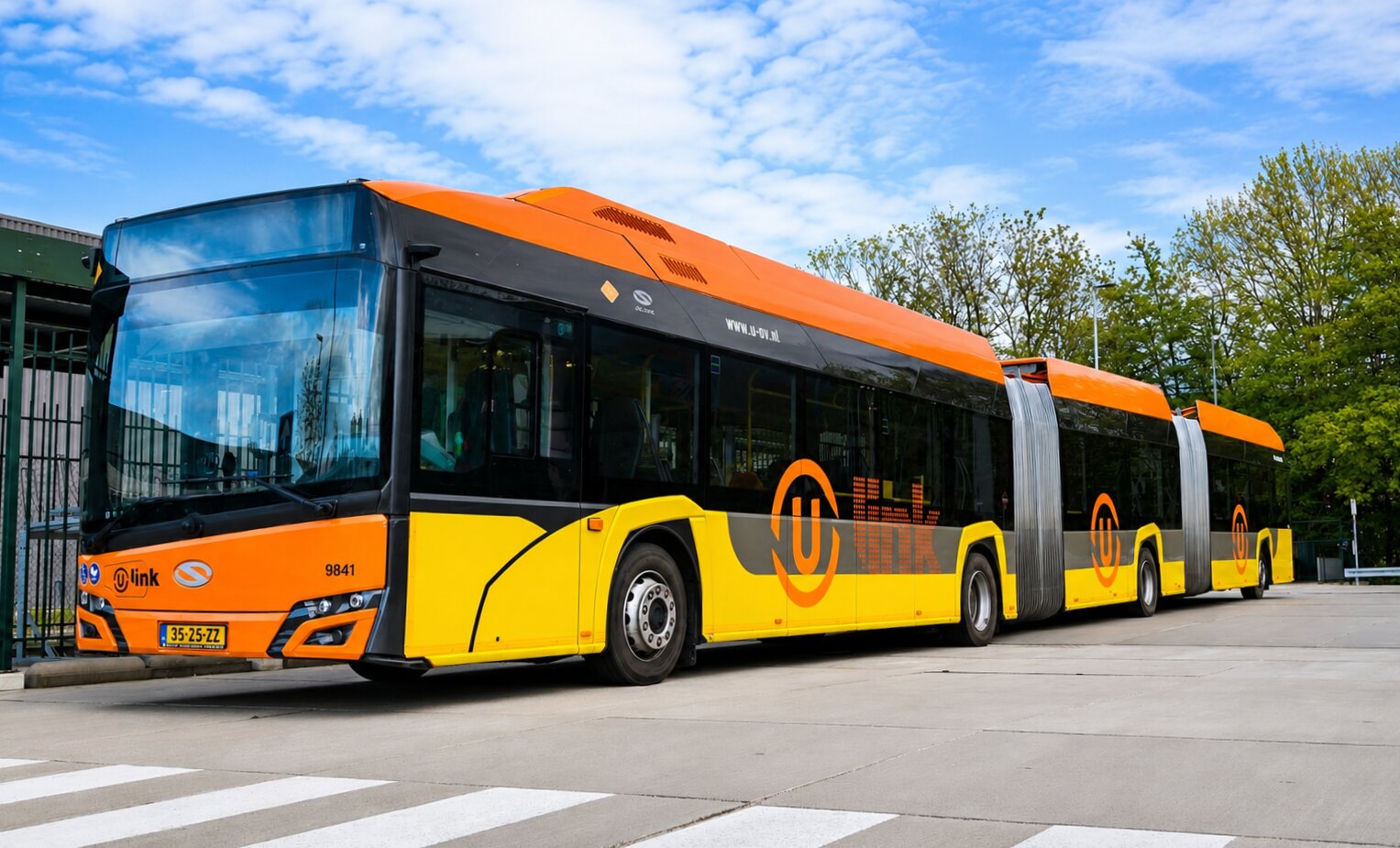
The 24.8-metre Solaris buses are built with two driven axles. Direct drive is provided by ZF AxTrax AVE portal axles, which use electric motors mounted close to the wheel hubs, meaning that both the B and C axles are driven, each with two 125 kW traction motors. Energy is supplied by an exceptionally large battery pack with a total capacity of 824 kWh, which represents a substantial amount of onboard energy storage even in this vehicle category.
Photos: Harald Jans OV