![Magyarbusz [Info]](/mbi/header-logo.png)
Yutong trolleybuses are also coming to the Netherlands, but their commissioning has not gone smoothly
 Ludányi József
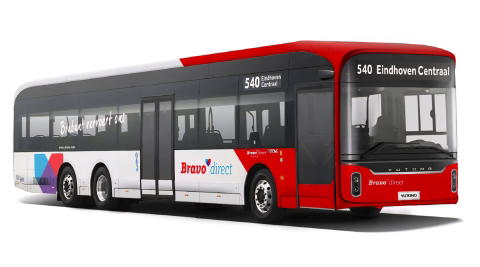
Following its success in Bucharest, Yutong is also establishing a foothold in the Netherlands with its IMC trolleybuses. Under the ten-year Arnhem–Nijmegen–Foodvalley public transport service contract launched in June 2026, Transdev will put around 350 zero-emission buses and trolleybuses into service over the coming months. The fleet renewal covers the entire vehicle range, from midibuses to solo, three-axle, articulated and bi-articulated vehicles, with the largest order going to Yutong, which will supply the operator with a total of 176 battery-electric buses and e-bus-based IMC trolleybuses. The full fleet replacement is scheduled to be completed by 12 December 2026 at the latest.
The order can be seen as another milestone for Yutong. After its first successes in Eastern Europe, the Chinese manufacturer is entering the Western European market with its IMC trolleybuses for the first time, and in a city that has for many decades been one of the traditional markets for European trolleybus manufacturers. In Arnhem’s fleet, the new vehicles will replace trolleybuses from the Swiss manufacturer Hess, while Solaris – which previously supplied ten Trollino trolleybuses to the city – has not received a trolleybus order this time. The Polish manufacturer has nevertheless not been left out of the vehicle procurement for the concession, as it will also deliver 42 Urbino 9 LE Electric midibuses and 13 Urbino 24 Electric bi-articulated electric buses to Transdev.
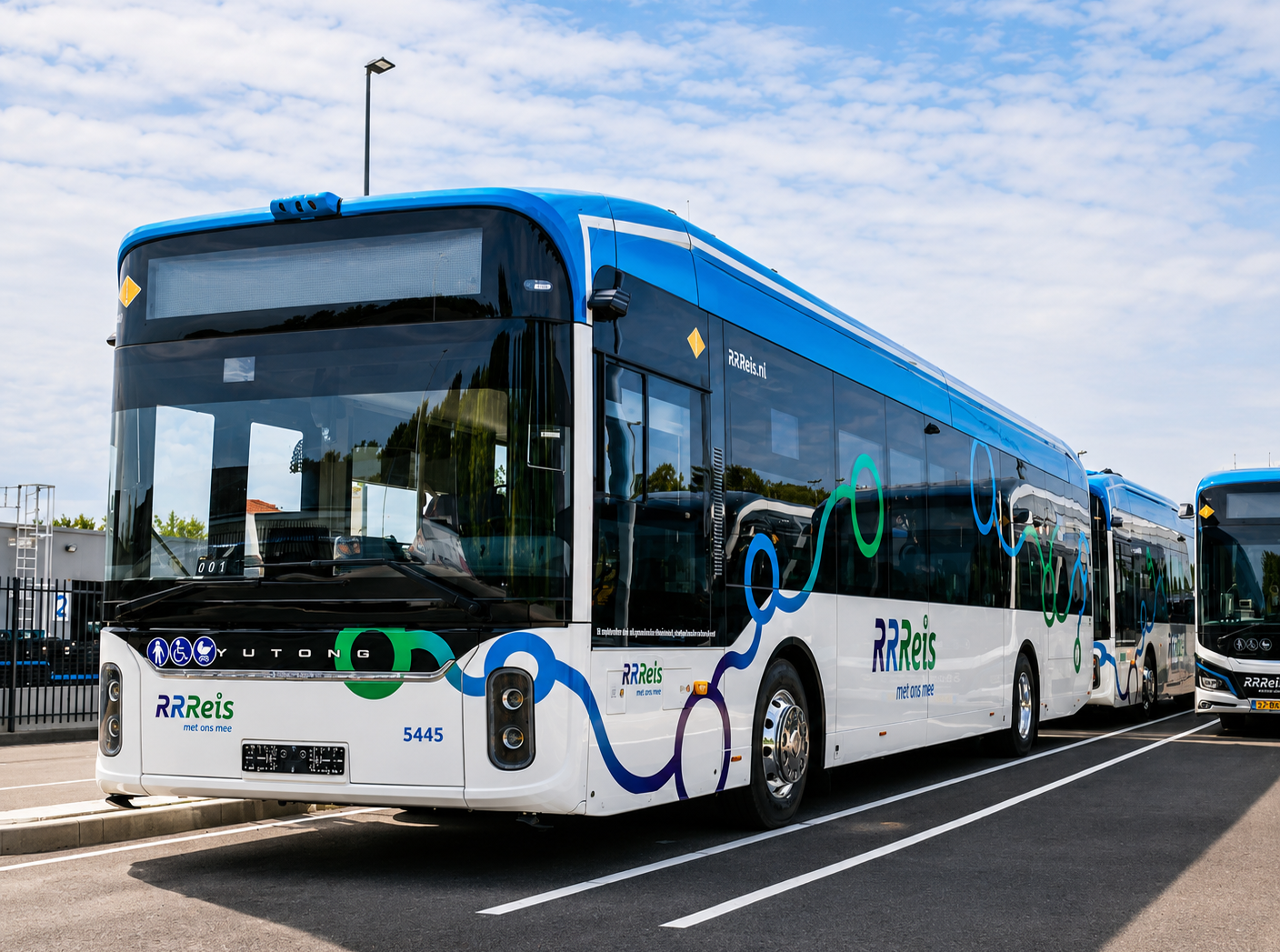
Photo: Transdev
One of the most important elements of the concession is the further development of Arnhem’s trolleybus network. Arnhem will remain the only city in the Benelux countries with scheduled trolleybus services. Trolleybus routes 1, 2, 3, 5, 7 and 352 will be retained under the new concession, while the development will be based not on building new overhead wiring, but on the possibilities offered by IMC technology. Thanks to their high-capacity onboard batteries with LFP chemistry, the Yutong trolleybuses can cover longer sections without overhead wires, allowing the system to be extended towards Ede, Heteren, Duiven, Westervoort, Elst and Nijmegen without expanding the existing overhead-wire infrastructure, which is only 4.5 kilometres long. The development will also include the long-planned Rijnlijn high-capacity public transport corridor, creating a direct trolleybus link between Arnhem city centre, Wageningen University and Ede railway station.
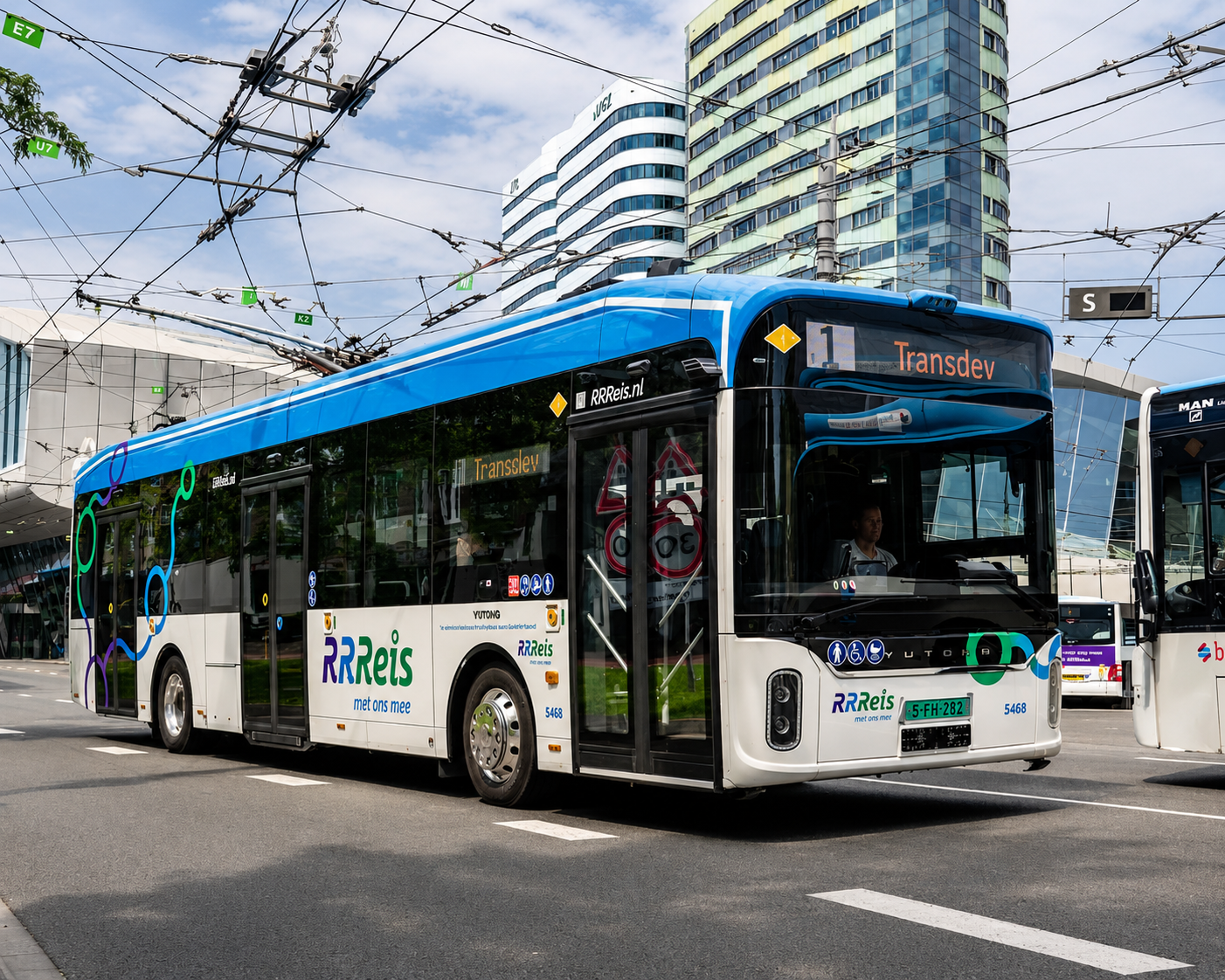
Photo: Transdev
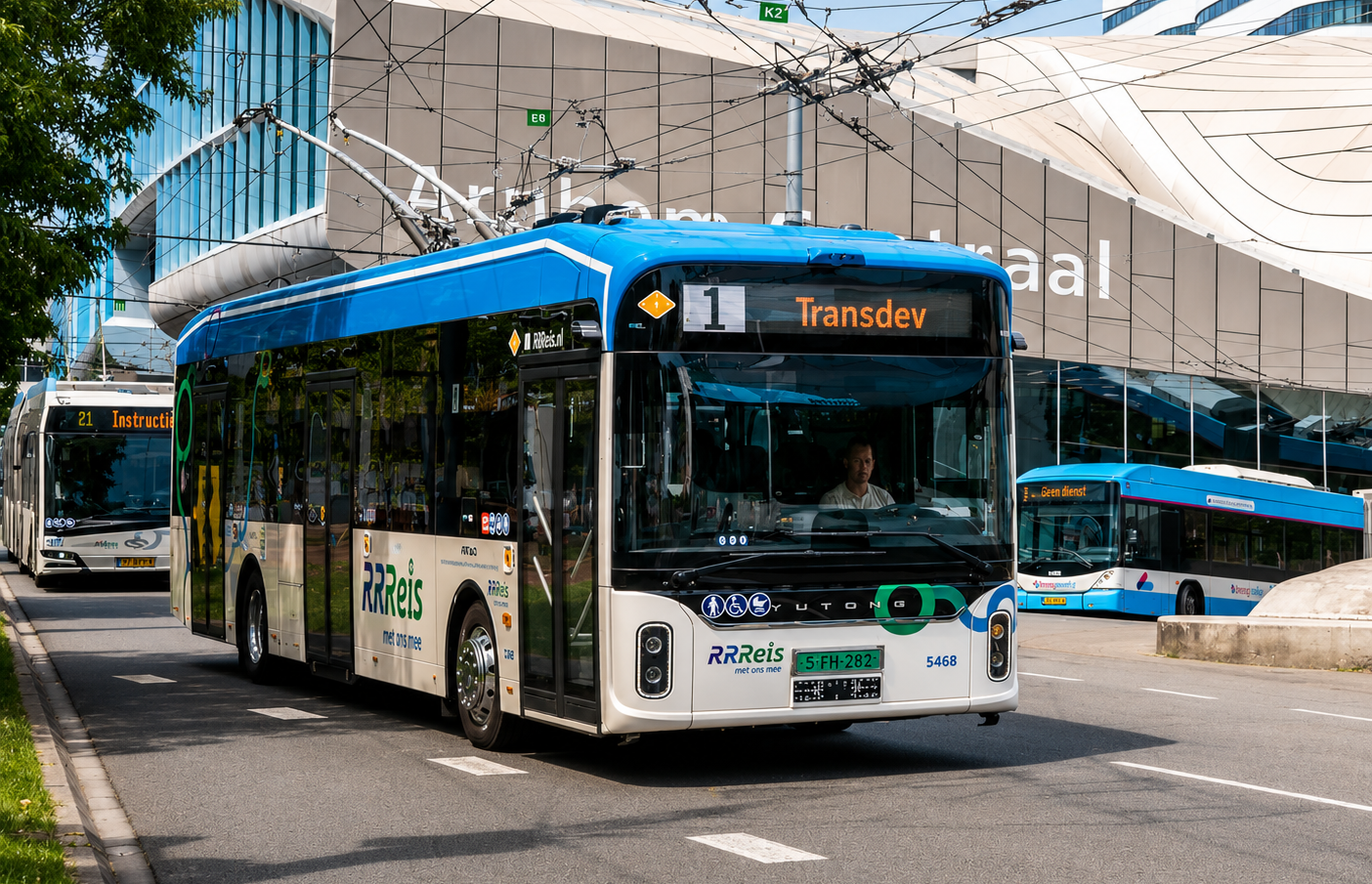
The backbone of Yutong’s trolleybus fleet will be formed by 31 U12 solo trolleybuses arriving for the RRReis network, supplemented by the 10 Solaris Trollino 18 MetroStyle vehicles carried over from the previous concession. In addition, a further 19 Yutong U12s will arrive for comfortRRReis premium services and will be deployed on route 306 between Arnhem and Nijmegen, while services on route 303 between Ede and Velp will be operated by 19 articulated Yutong U18s. Under the public service contract, a total of 69 Yutong U12 and U18 IMC trolleybuses will therefore enter service in the region.
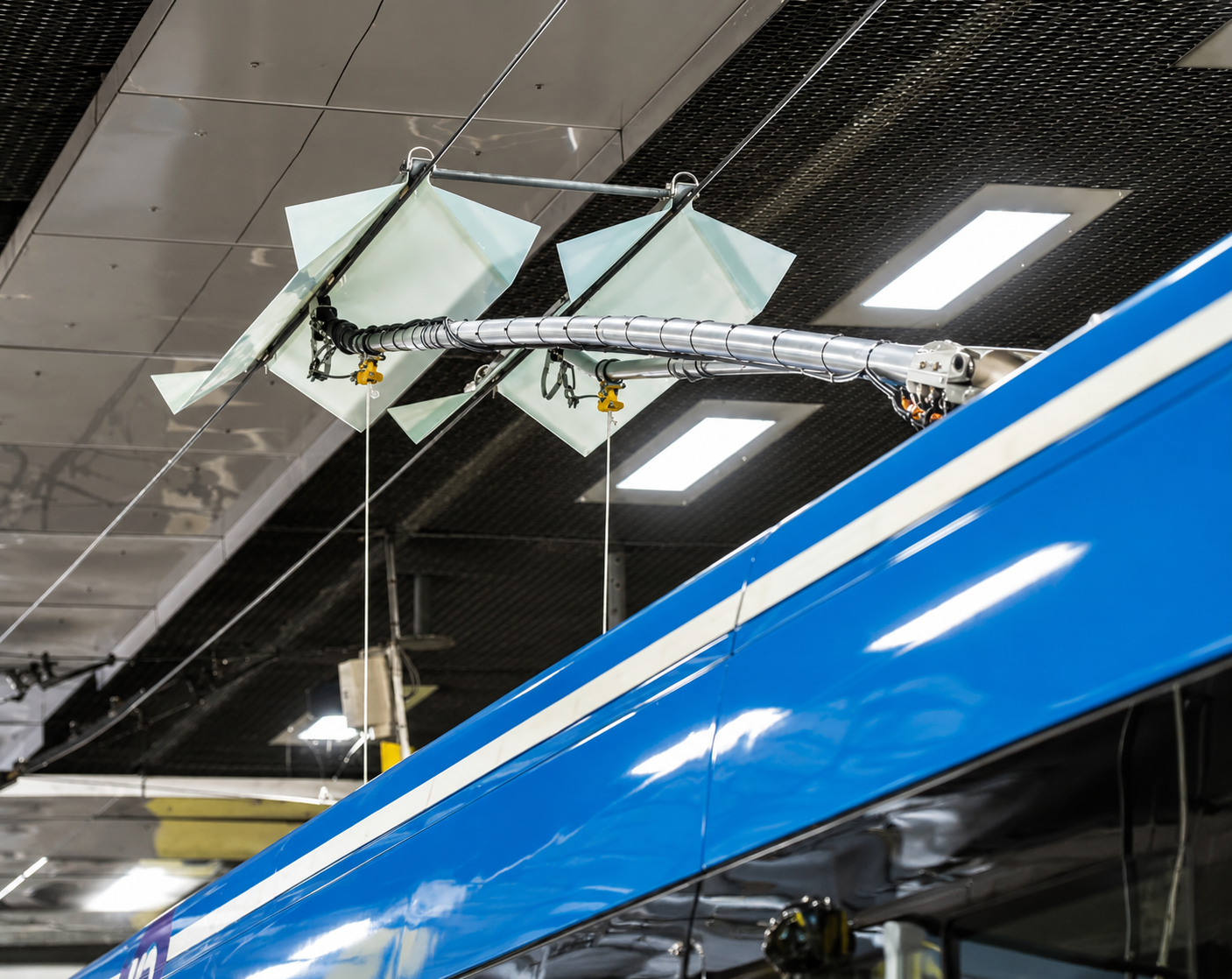
Photo: Transdev
However, the introduction of the new vehicles into passenger service has not been smooth so far: the first 31 U12s intended for the urban and regional RRReis network were already supposed to enter service at the start of the new concession in June, replacing the 31 Hess articulated trolleybuses operated under the previous contract. This has not yet happened, as the vehicles have still not received the necessary type approval and authorisation for entry into service from the Dutch transport authority, the RDW. As a result, Transdev is temporarily providing the service with reserve CNG-powered buses, since the Hess trolleybuses have already been withdrawn from service. At the same time, the current situation does not put the operator under immediate pressure, as the public service contract allows it to use vehicles from the previous concession until 1 January 2027 at the latest. The exact reason for the delay remains undisclosed: neither the RDW nor Transdev has stated whether technical or administrative factors are behind the protracted type-approval procedure. There is also no information yet on when the vehicles may receive the required permits.
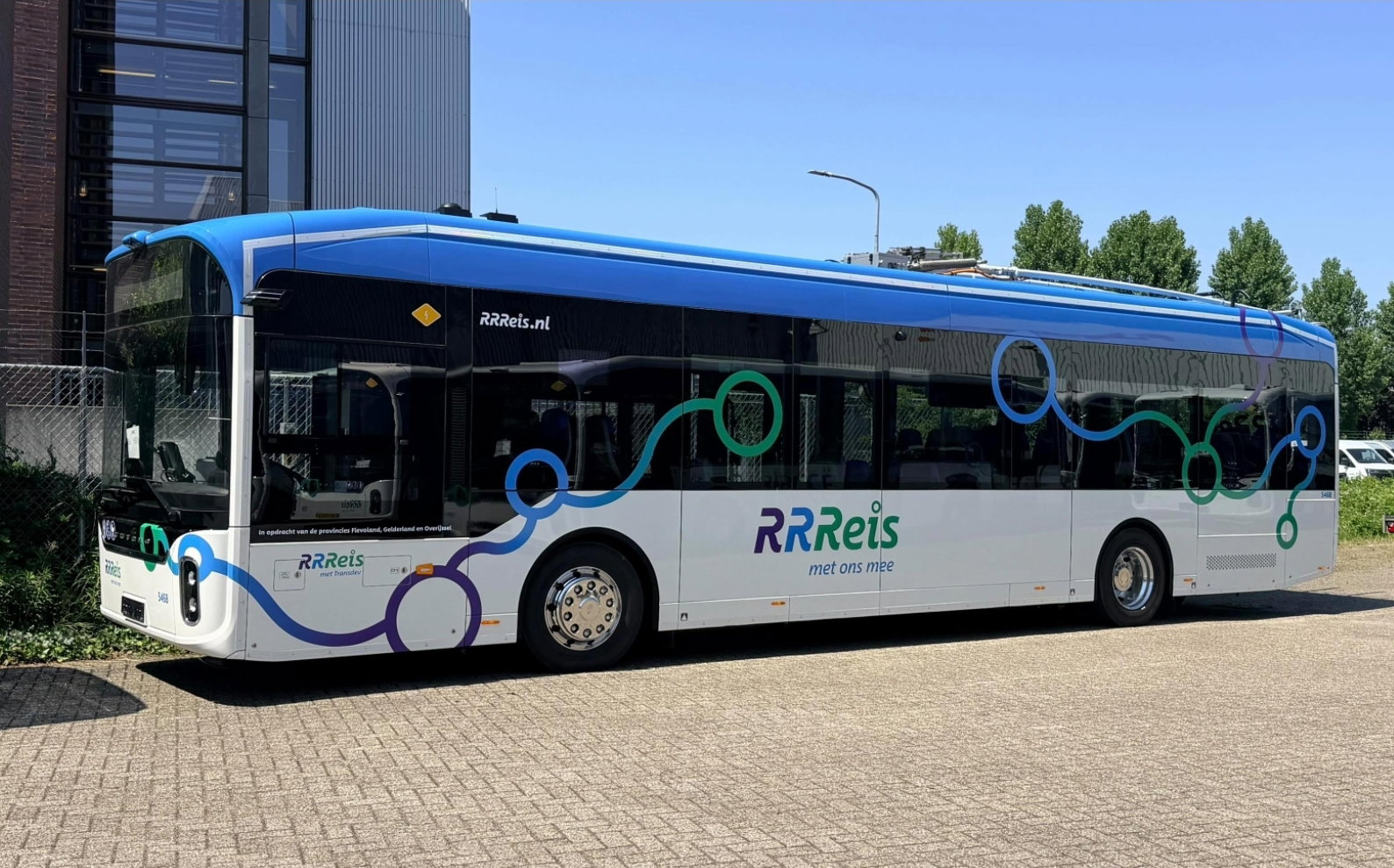
Photo: Marco Langandam
It is worth noting about Yutong’s trolleybuses that, from a technical point of view, they are not built on a classic dedicated trolleybus platform, but use the foundations of the Chinese manufacturer’s U-series electric buses. This solution differs from the traditional IMC trolleybuses from Solaris and Škoda, which use a double-insulated high-voltage electrical system. In Yutong’s architecture – an approach based on an electric bus platform that Hess now also uses in a similar form – the vehicle essentially operates as an electric bus, with the main differences being the current collectors, the galvanically isolated DC–DC converter that enables power intake from the overhead wires, and the associated control system.
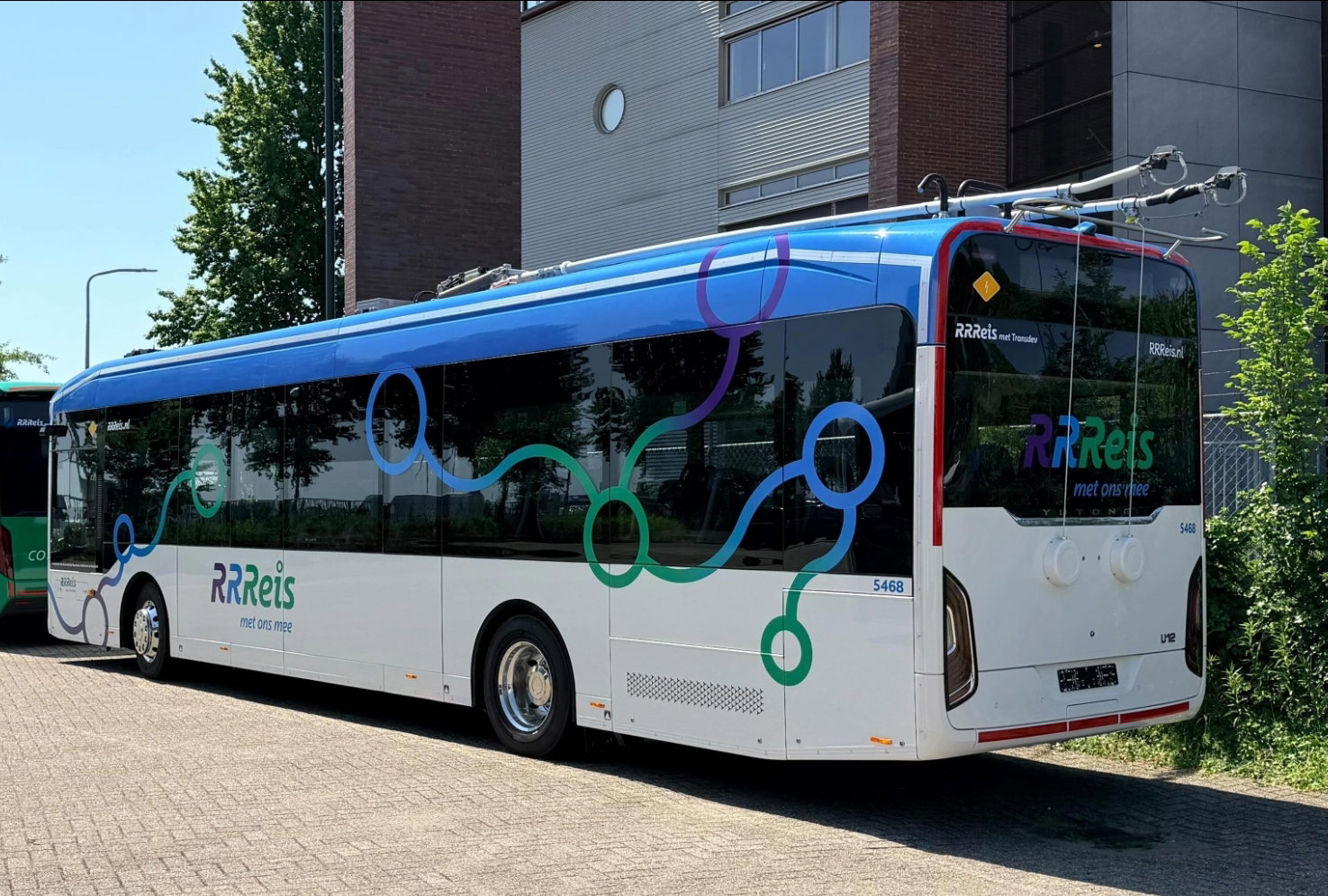
Photo: Marco Langandam
Accordingly, in this configuration the main energy source is the traction battery, which is continuously charged by the converter while the vehicle is running under overhead wires. The advantages of this solution include a more unified system architecture, a parts base shared with electric buses, better interchangeability of components, and simpler, presumably more cost-effective maintenance. At the same time, the battery is actively involved in the power supply in all operating modes – even when running under overhead wires – meaning that virtually all traction energy passes through it. Whereas in a conventional, double-insulated IMC trolleybus capable of battery-powered off-wire operation, roughly 40% of the energy passes through the batteries, in a trolleybus based on an electric bus platform this proportion is effectively 100%. In the long term, this may place greater stress on the battery and could have an adverse effect on its service life and operational reliability.