![Magyarbusz [Info]](/mbi/header-logo.png)
Regional showcase project: how Prague’s 119 became a bi-articulated trolleybus corridor
 Ludányi József
Prague is now able not only to plan, but also to support with operational experience how a high-traffic airport bus route can be converted to trolleybus operation. The new route 59, created in place of the former bus route 119, brought trolleybuses back to the Czech capital after almost half a century — and did so straight away with bi-articulated, battery-capable vehicles. In an interview published on the website of the EU-funded eBRT2030 research and demonstration programme, Martin Košek, deputy head of bus operations at Dopravní podnik hl. m. Prahy (DPP), discussed the background to the Prague pilot corridor, the technology concept applied and the lessons that may also be useful for other Central European cities.
The Prague development is one of the pilot corridors of the European eBRT2030 research and demonstration project. Supported by the Horizon Europe programme, the initiative runs from 2023 to 2026 and examines, through the examples of seven cities — Barcelona, Amsterdam, Athens, Prague, Rimini, Nantes and Bogotá — how bus rapid transit systems can be electrified in a way that makes them not only more favourable from an environmental perspective, but also competitive in terms of operations, energy use and costs. The Prague demonstration is one of the most interesting examples, because the airport link was modernised not with purely battery-electric buses, but with self-propelled trolleybuses capable of operating both from overhead wires and from batteries, using the so-called IMC system — in other words, in-motion charging. The official objectives of the project included optimising the proportion of wired sections, reducing peak charging loads, fine-tuning the vehicles’ energy management and improving battery life.
Behind the creation of the corridor were, above all, not climate-policy considerations, but very specific operational requirements. The former bus route 119 operated as many as 250 departures per direction on weekdays, with headways of 3–5 minutes, yet still regularly proved overcrowded at peak times. According to DPP, further increasing the frequency of the timetable was no longer a realistic option either operationally or economically.
When the city examined the future of route 119, it first identified the problems that had to be solved: passenger capacity had to be increased, short headways had to be maintained, the number of vehicles required ideally could not be increased further because of depot constraints, and it also seemed sensible for the system to rely on a shared energy supply background with the tram network. Before making the decision, DPP also tested bi-articulated and high-capacity articulated diesel buses on the route, but ultimately concluded that, in the long term, a modern battery-capable trolleybus would offer the more favourable solution. Electrification in Prague therefore did not appear as a goal in itself, but as a technological response to a capacity and operational problem.

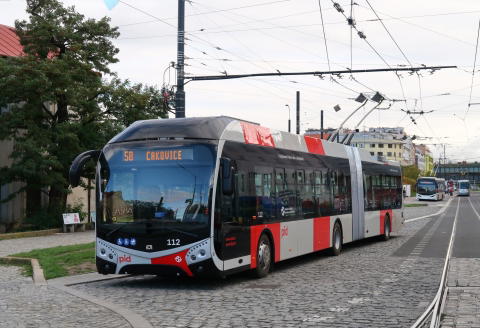
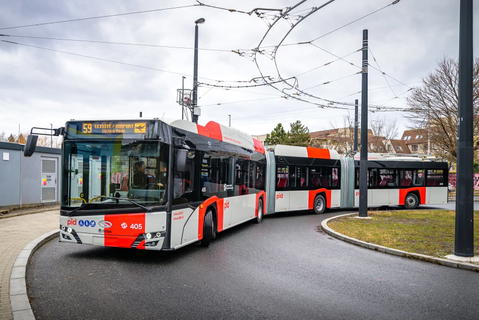
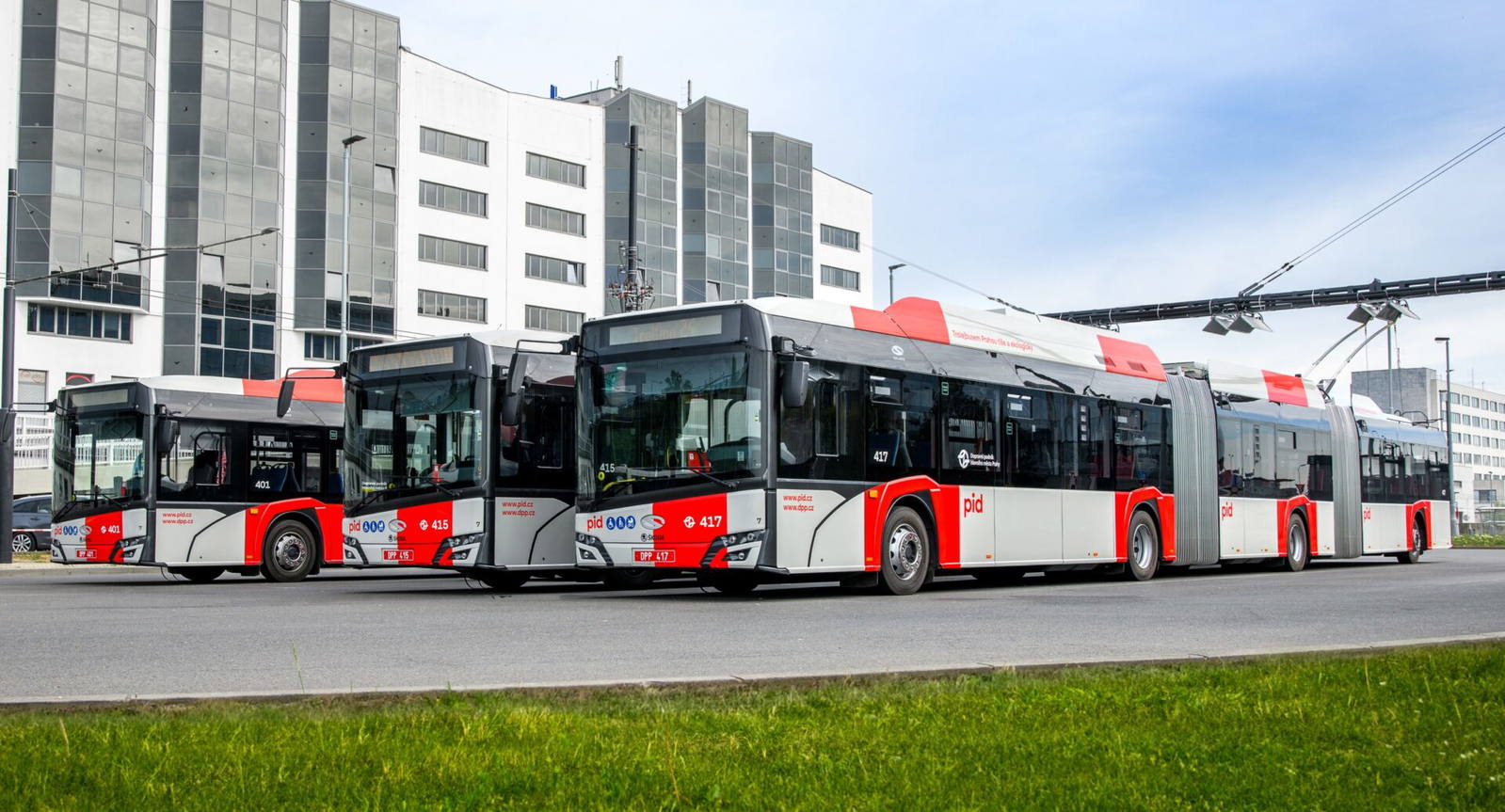
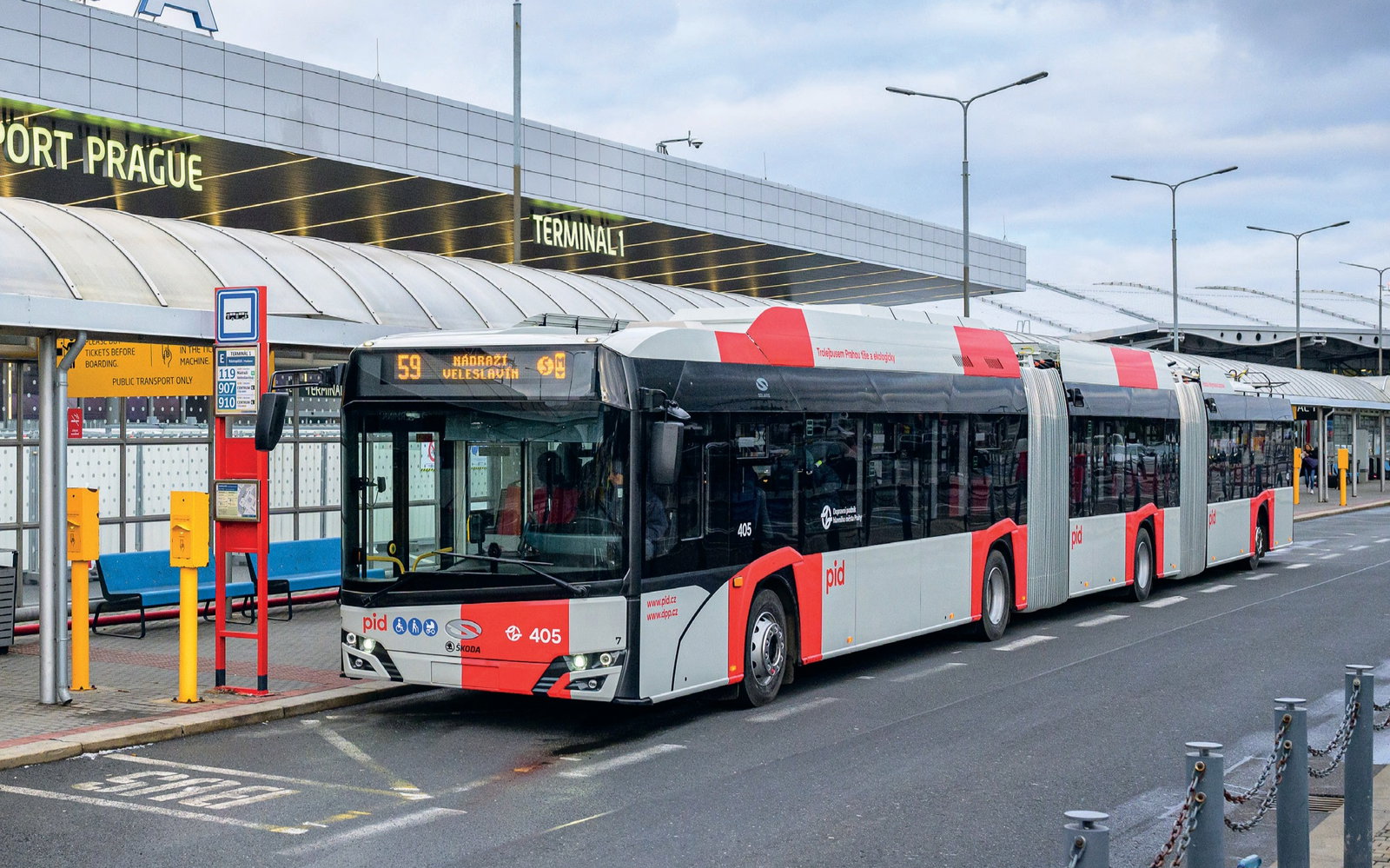
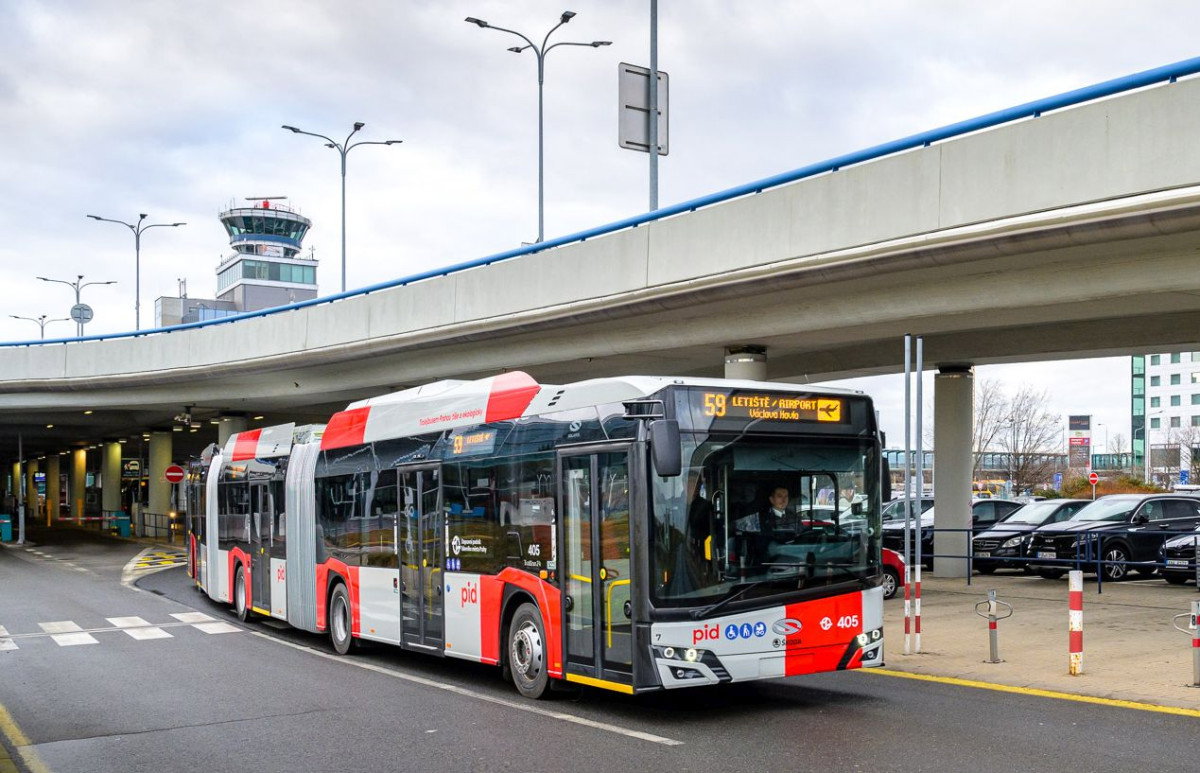
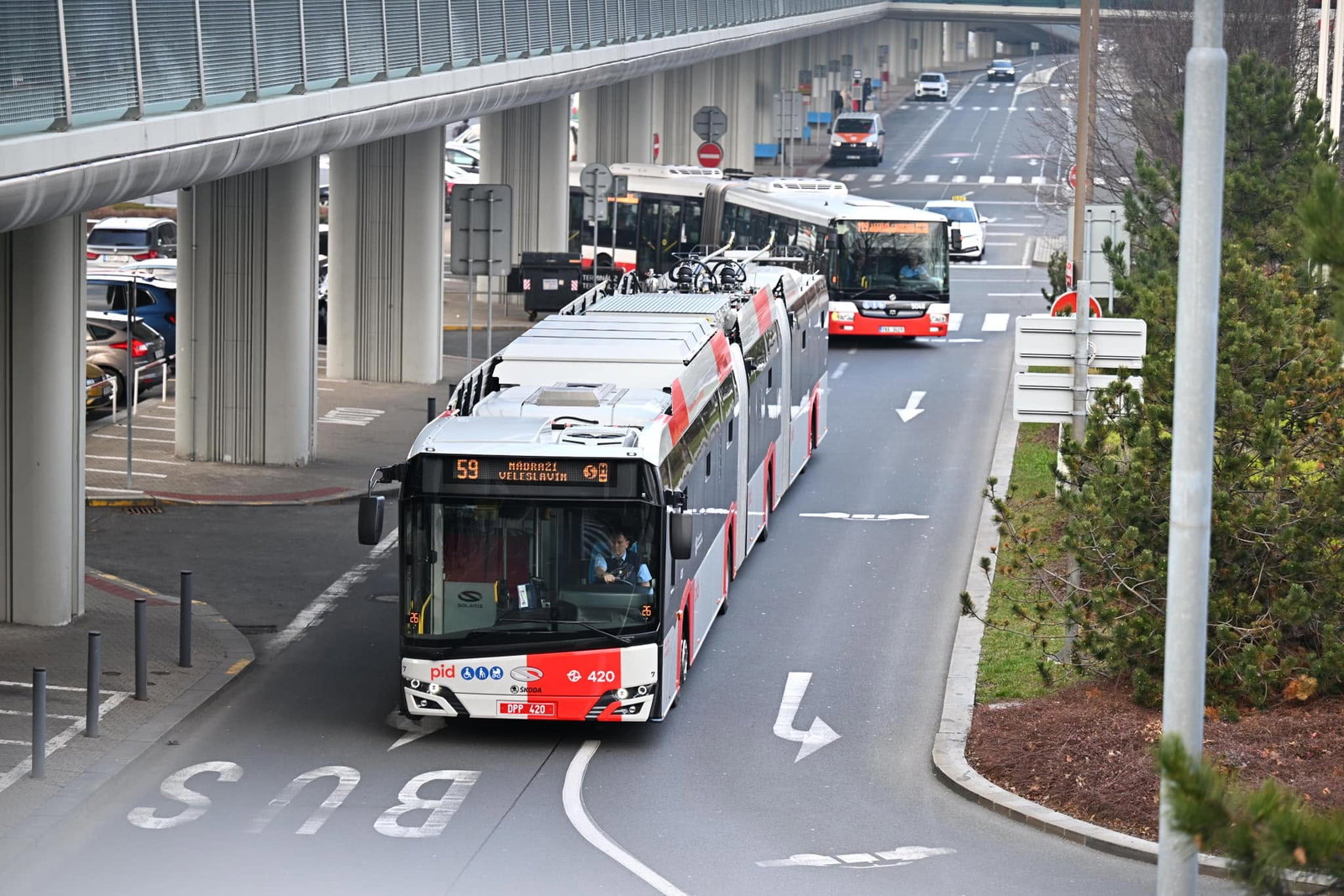
Launched on 6 March 2024, route 59 took over the former route 119 alignment between Nádraží Veleslavín and Václav Havel Airport. The timetable of the service did not change substantially, but the operation of the route was placed on an entirely new footing. DPP put into service a total of twenty bi-articulated Solaris-Škoda Trollino 24 (38 Tr) trolleybuses capable of battery operation, which, at 24.7 metres long, are currently the longest trolleybuses in regular service in the Czech Republic. The five-door vehicles, with a 2-2-2-2-2 door arrangement, have a passenger capacity of 180, including 54 seats, and the interior layout was designed with passengers travelling with luggage in mind, in line with the character of the airport link. According to communications from DPP and the eBRT2030 project, the introduction of the type increased capacity on the airport route by roughly 30%, while the timetable remained unchanged.
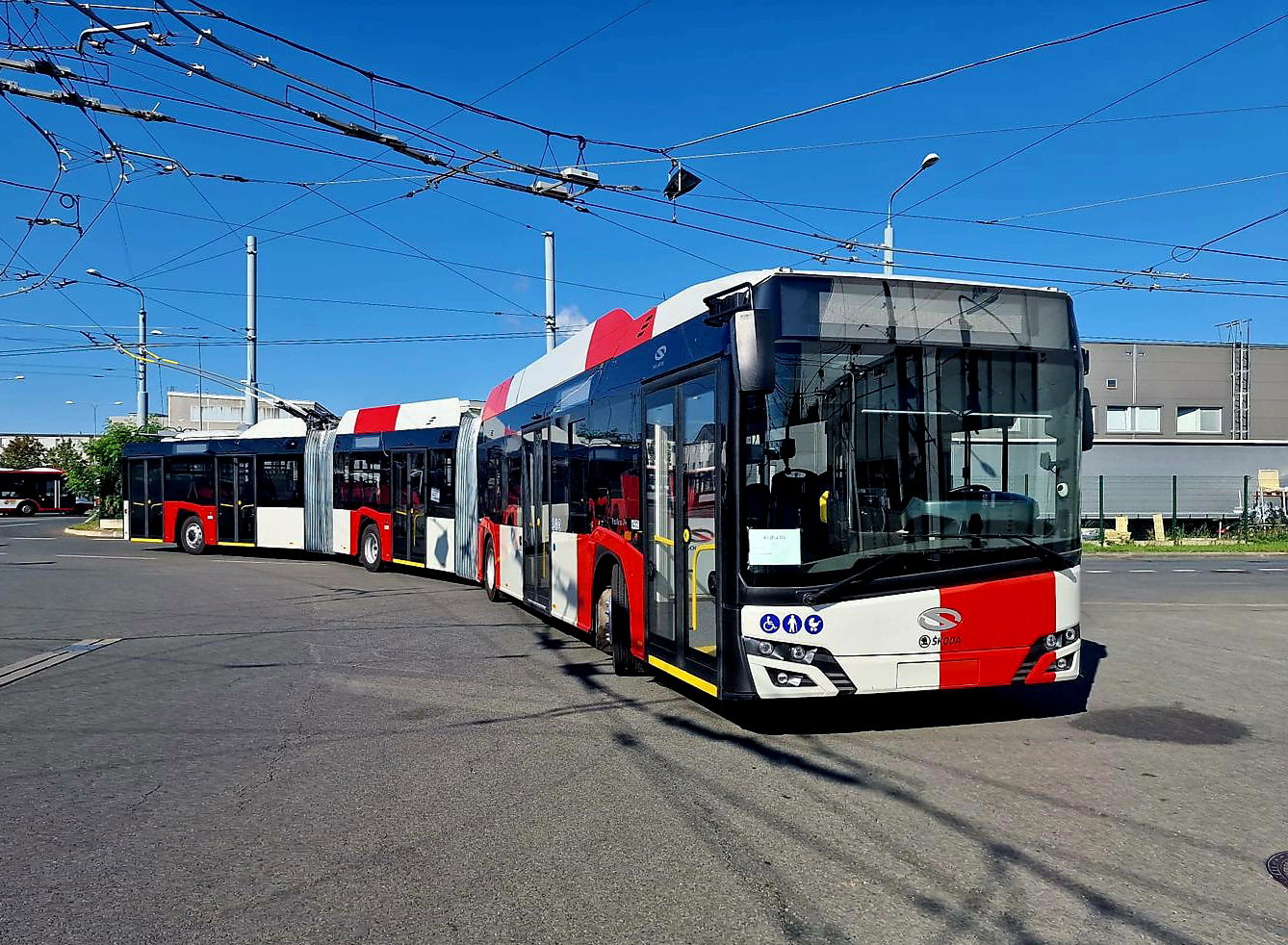
On around half of trolleybus route 59, as well as in DPP’s Řepy garage and at the airport stabling area, overhead contact line infrastructure with a traction voltage of 600 V was installed over a total length of nearly 11.5 kilometres. As part of the investment, a total of 235 overhead line poles were erected; the total length of the installed overhead network is 11,457 metres, of which 10,616 metres directly provide line-side power supply. On the remaining sections of the route, the vehicles operate in off-wire mode, relying on onboard traction batteries with a total capacity of 58 kWh; this is particularly important on the section between the Terminal 3 building and the airport terminus. Three transformer substations were installed as part of the project: one at DPP’s Řepy garage, one at Nádraží Veleslavín and one at the airport. The new substation built at the Řepy garage was, moreover, sized from the outset to be able to meet the electricity demand of the planned future expansion of the trolleybus fleet. In addition, part of the overhead network is supplied with electricity by a station commissioned in the Dědina district. The total cost of the project approaches CZK 1 billion, of which the procurement of the 20 trolleybuses accounted for CZK 623 million. For the purchase of the vehicles, the European Union provided CZK 510 million in support under the Czech national recovery plan, while a further CZK 352 million was allocated to the construction of the trolleybus infrastructure leading to Václav Havel Airport.
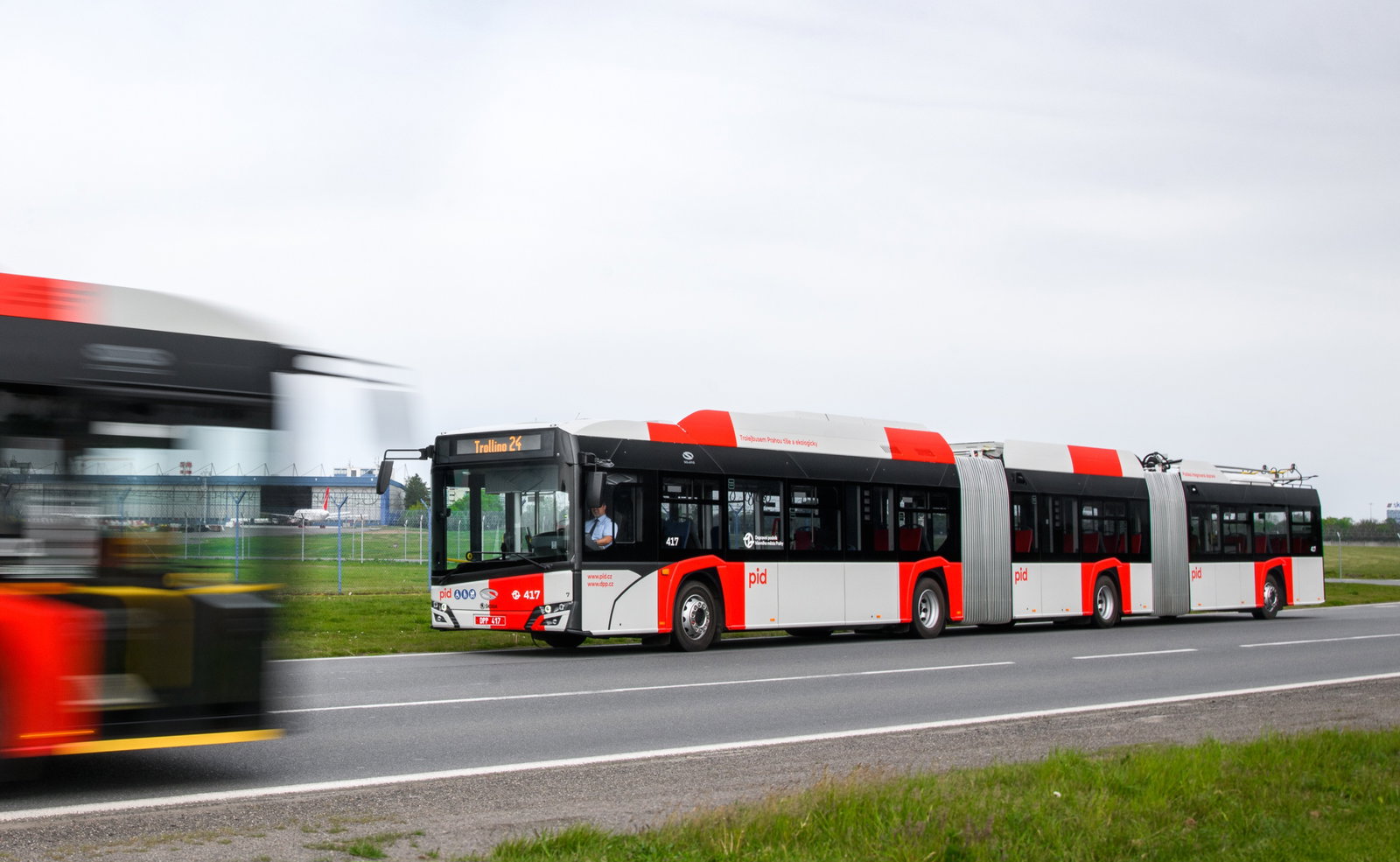
The day-to-day operation of the route clearly shows that the Prague demonstration is in fact much closer to the logic of a high-capacity bus rapid transit corridor than to that of a traditional trolleybus line. Of the twenty vehicles, up to seventeen operate at the same time on an average day, with three-minute headways at peak times. The services act as feeders to metro line A, while the journey time between the airport and Veleslavín is just 16 minutes. Reliability is ensured partly by dedicated or priority bus lanes, partly by traffic-signal priority, and partly by the overhead wiring and charging infrastructure that allows the vehicles to avoid being taken out of service for longer periods for separate charging. One of the system’s essential advantages is precisely that the vehicles can take on energy during the day, while in motion, on the wired sections, so the entire operation does not have to be based on long overnight or terminal charging in the manner of a high-capacity battery-electric bus.
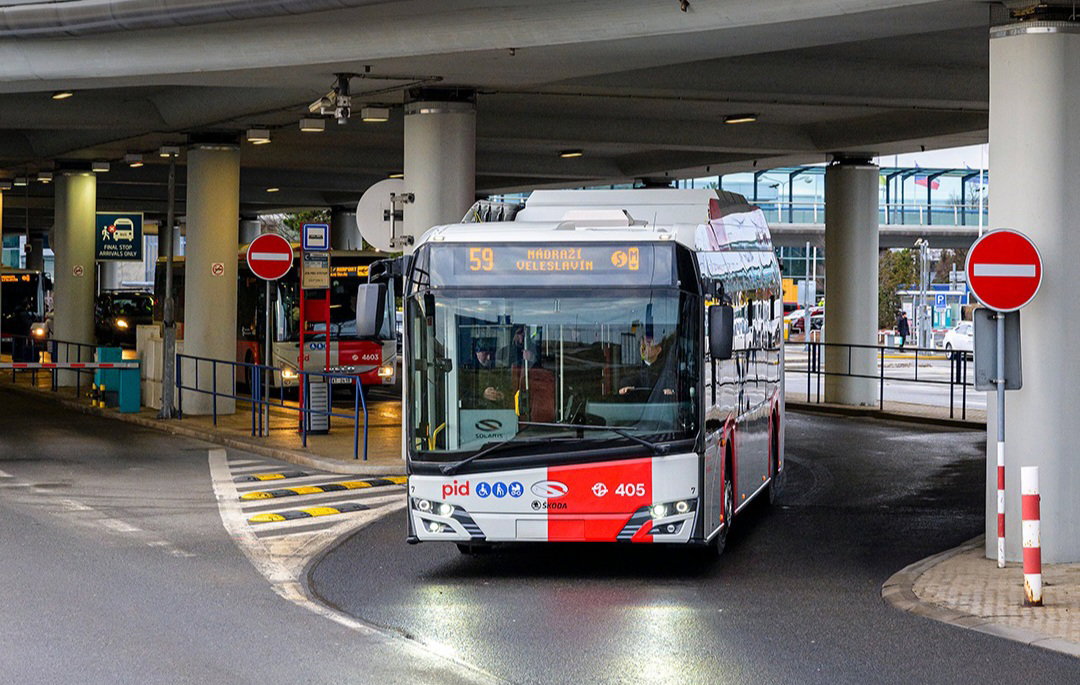
DPP’s operating data to date also gives a good indication of the actual load placed on the system. The 20-strong trolleybus fleet on route 59 has already covered more than 3 million kilometres, while carrying approximately 11 million passengers. According to DPP’s calculations, this volume of operation has so far made it possible to replace roughly 800,000 litres of diesel fuel. Over the past year, each vehicle covered an average of around 72,000 kilometres on the route, equating to nearly 6,000 kilometres per month. The highest individual mileage in 2025 was achieved by vehicle No. 415, with 80,435 kilometres, while trolleybus No. 407 alone completed 10,015 kilometres in December 2025.
According to DPP, this energy concept is not merely a technological issue, but also an urban-structure question. In his interview with eBRT2030, Martin Košek, deputy head of bus operations at DPP, pointed out that in a densely built-up metropolis it is far from self-evident that sufficient electrical capacity can be provided for the overnight charging of several hundred high-capacity battery buses. His argument was that if, for example, 200 electric buses equipped with batteries of 500–600 kWh each had to be charged at one depot in around four hours, the resulting power requirement would be about 30 MW, which in itself raises serious questions of grid and infrastructure development. By contrast, a trolleybus takes on energy continuously during daily operation, so consumption can be distributed more evenly, peak loads can be reduced, and the use of the batteries can also be optimised through energy management. On this basis, the Prague model does not simply claim that the trolleybus is “better” than the battery-electric bus, but rather that on certain heavily loaded, high-frequency corridors used intensively throughout the day, it may offer a more favourable compromise in terms of energy supply, weight, charging infrastructure and operational reliability.
It is also not incidental that the electrification of route 119 originally emerged in the shadow of a much older transport-development problem. Plans for a rail connection to Prague Airport have been on the agenda for decades, but because of the complexity of preparation, the dense urban fabric and the need for tunnel sections, the project has still not been realised. Growth in airport traffic, however, did not allow the city to keep waiting for an exclusively rail-based solution. The eBRT corridor was therefore created essentially as a high-capacity interim solution that could be implemented more quickly. According to DPP’s concept, it will not become redundant even after the later rail link is opened: the current infrastructure may also play a role in electrifying other routes, while route 59 itself is expected to continue operating as a local connection and as a backup airport link, albeit presumably with modified operating parameters. DPP had already indicated earlier that the installed infrastructure could in future be used for the electrification of other routes — such as route 191 — and the later redeployment of the extra-long vehicles to other high-traffic routes may also be on the agenda.
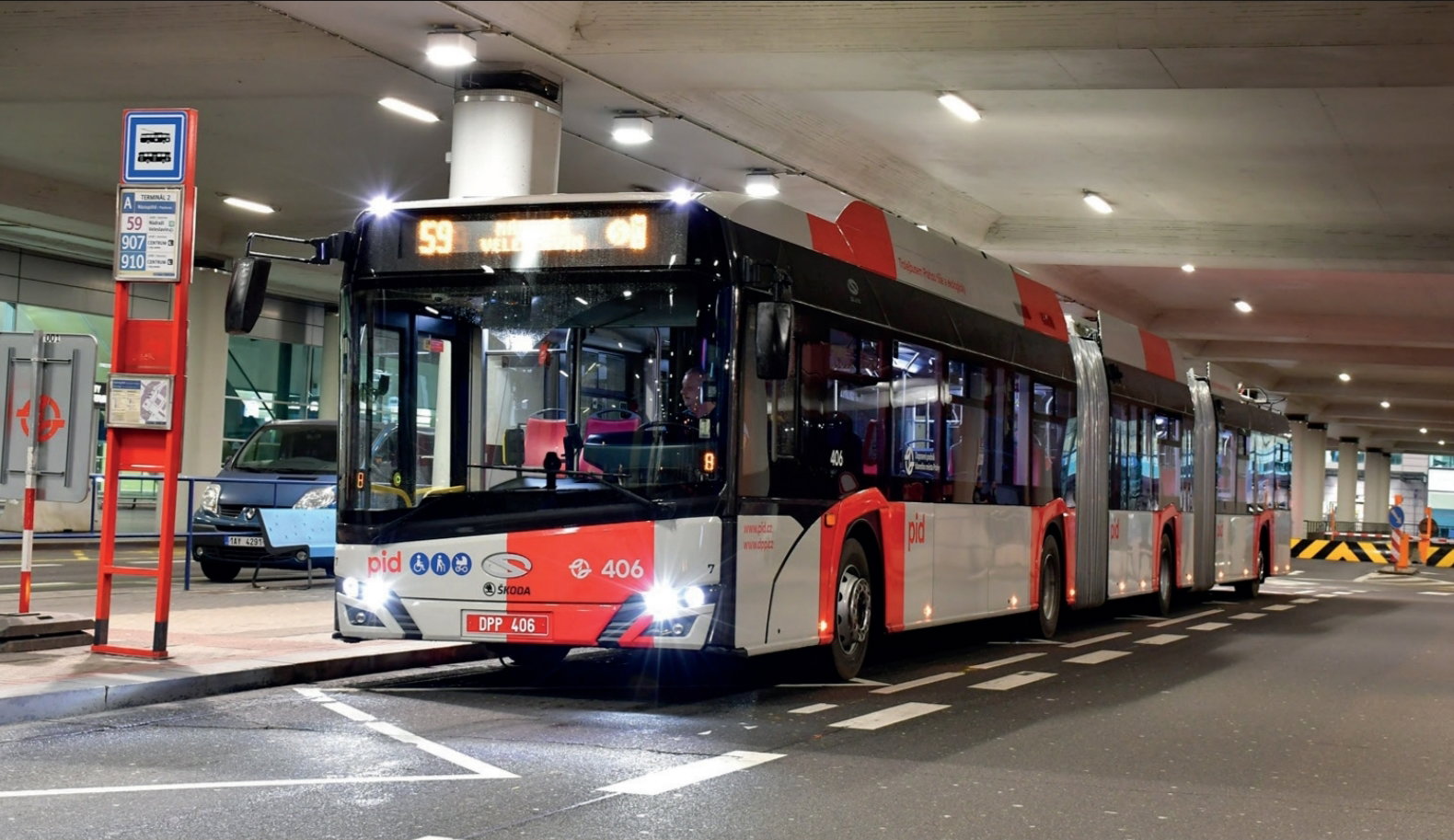
At the same time, the exceptional vehicle length of almost 25 metres raises not only questions of increased capacity, but also very specific operational and infrastructure issues. DPP previously discussed these practical experiences in detail in response to an enquiry from Magyarbusz [Info], pointing out that because of the extraordinary length and the special running-gear arrangement, the handling, movement and infrastructure requirements of the type differ in several respects from those of conventional articulated buses.
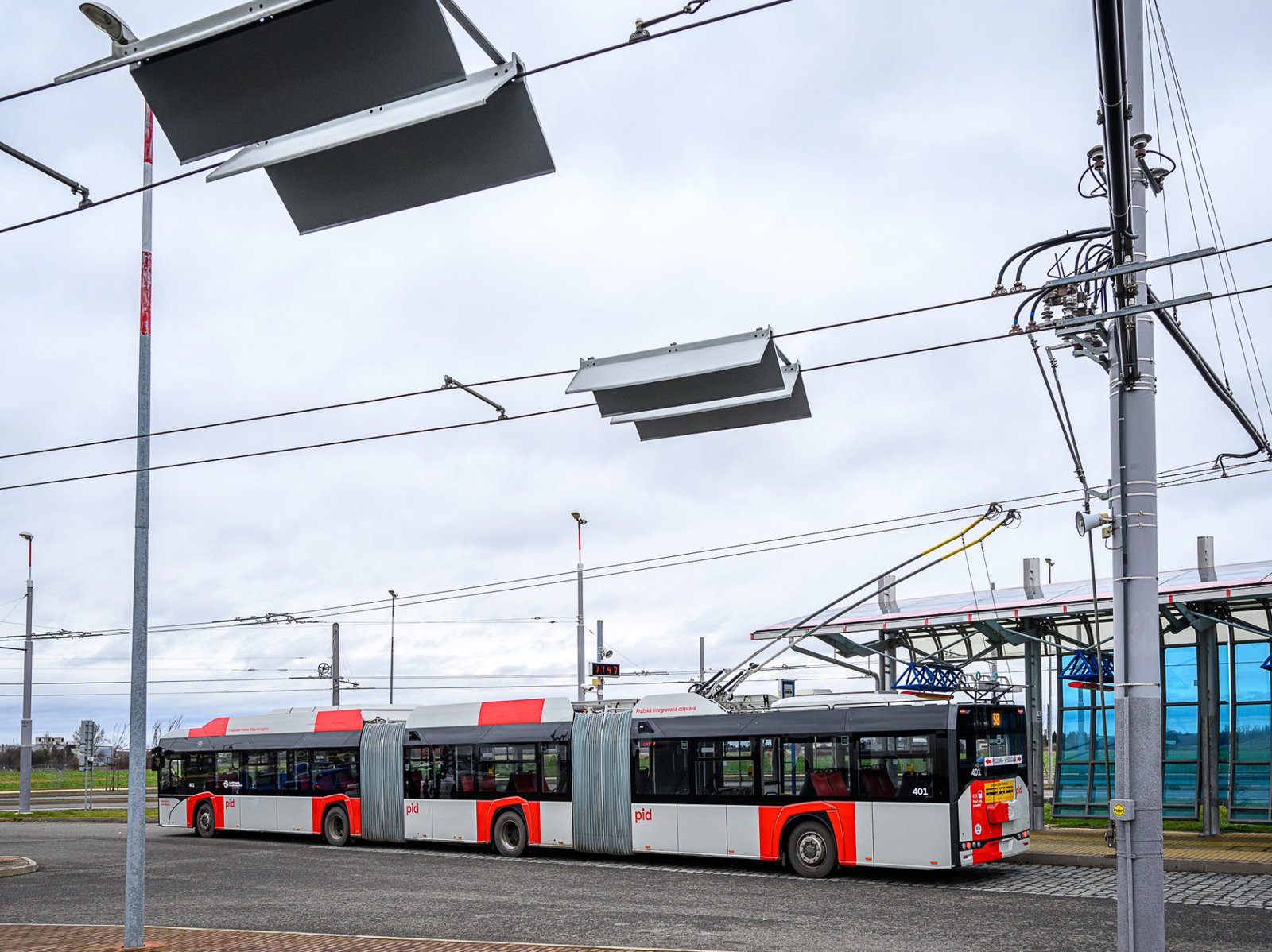
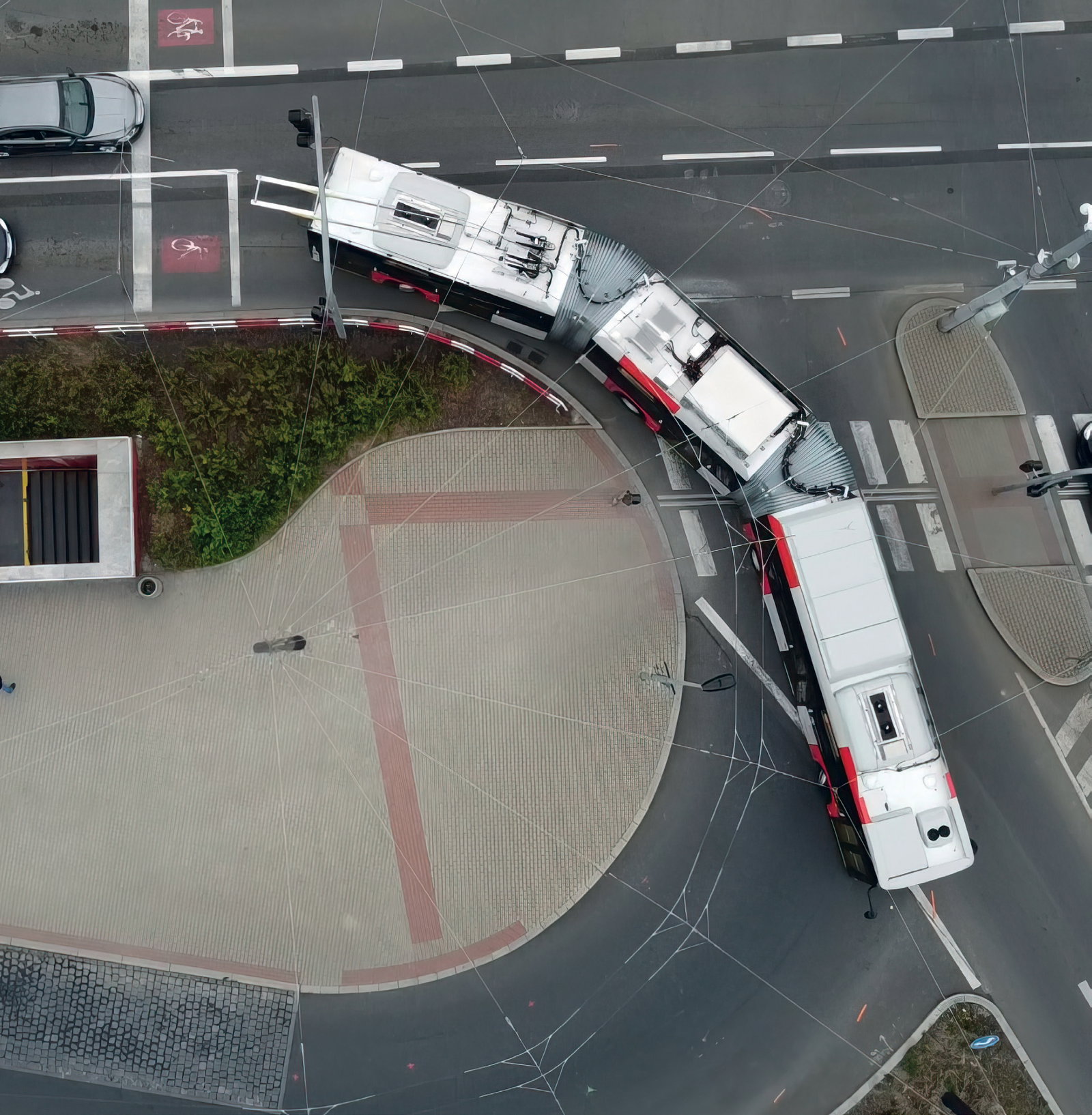
DPP emphasised that, because of the size of the vehicles, a larger swept path must be allowed for in certain traffic situations. This is due in part to the steered fourth axle, which significantly improves manoeuvrability but, on curved paths, results in greater rear overhang swing than usual. According to the company’s experience, the vehicles’ behaviour is most comparable to that of a 15-metre, three-axle extended rigid bus with a steered rear axle. With appropriate caution, the bi-articulated trolleybuses are able to operate on all road sections where conventional articulated buses can also run; at the same time, reversing manoeuvres — whether on public roads or in depot environments — should be avoided wherever possible. Driver feedback also indicates that operating the trolleybuses requires greater care and targeted training compared with a conventional articulated bus.
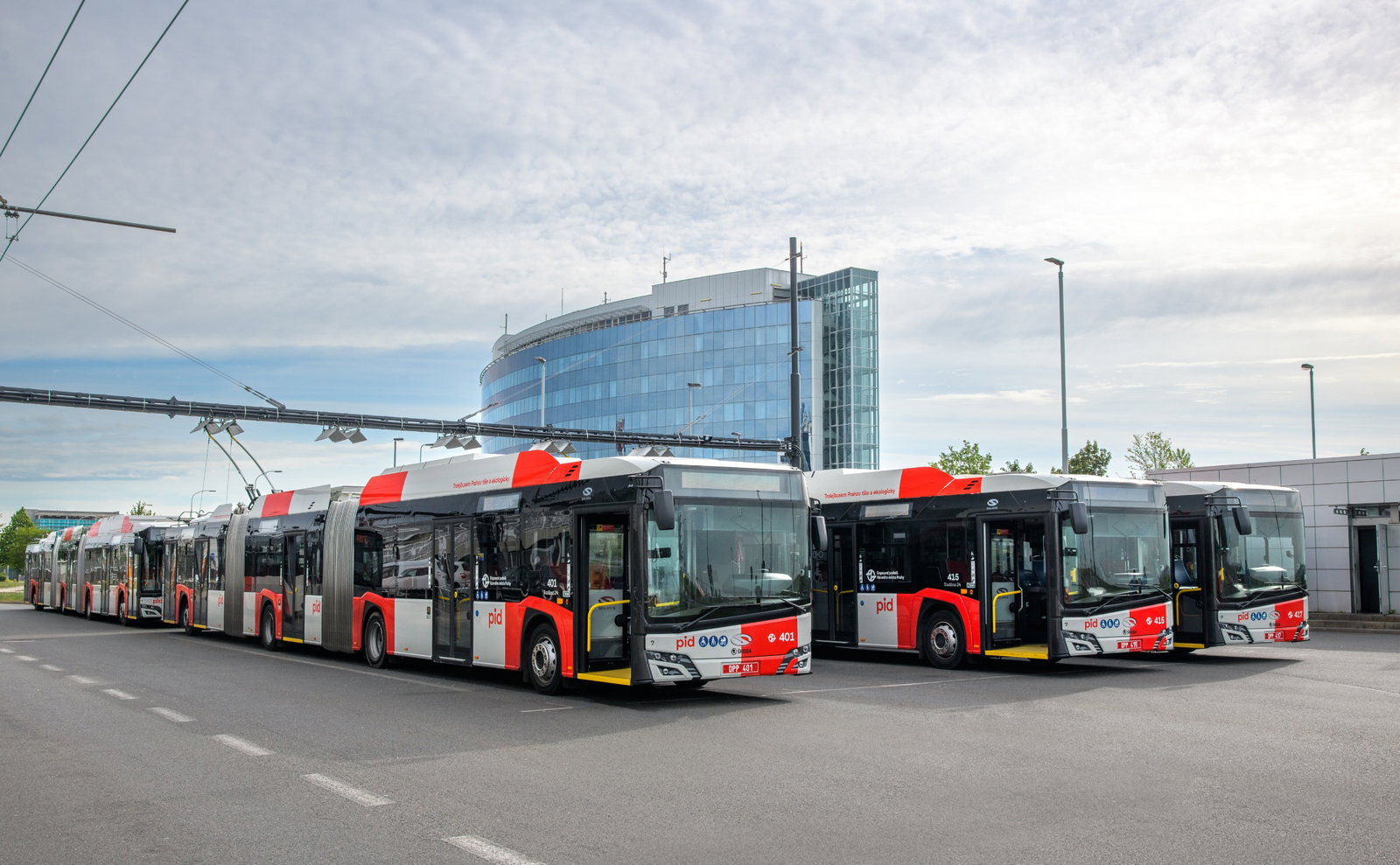
The introduction of the type also made it necessary to modify the infrastructure at certain points, primarily by increasing the usable length of stops and by reviewing some turning lanes and junction layouts. DPP nevertheless stressed that, with proper preparation, the vehicles can be operated safely and predictably in an urban environment, even if their operation temporarily required greater attention at more sensitive junctions during the introductory period.
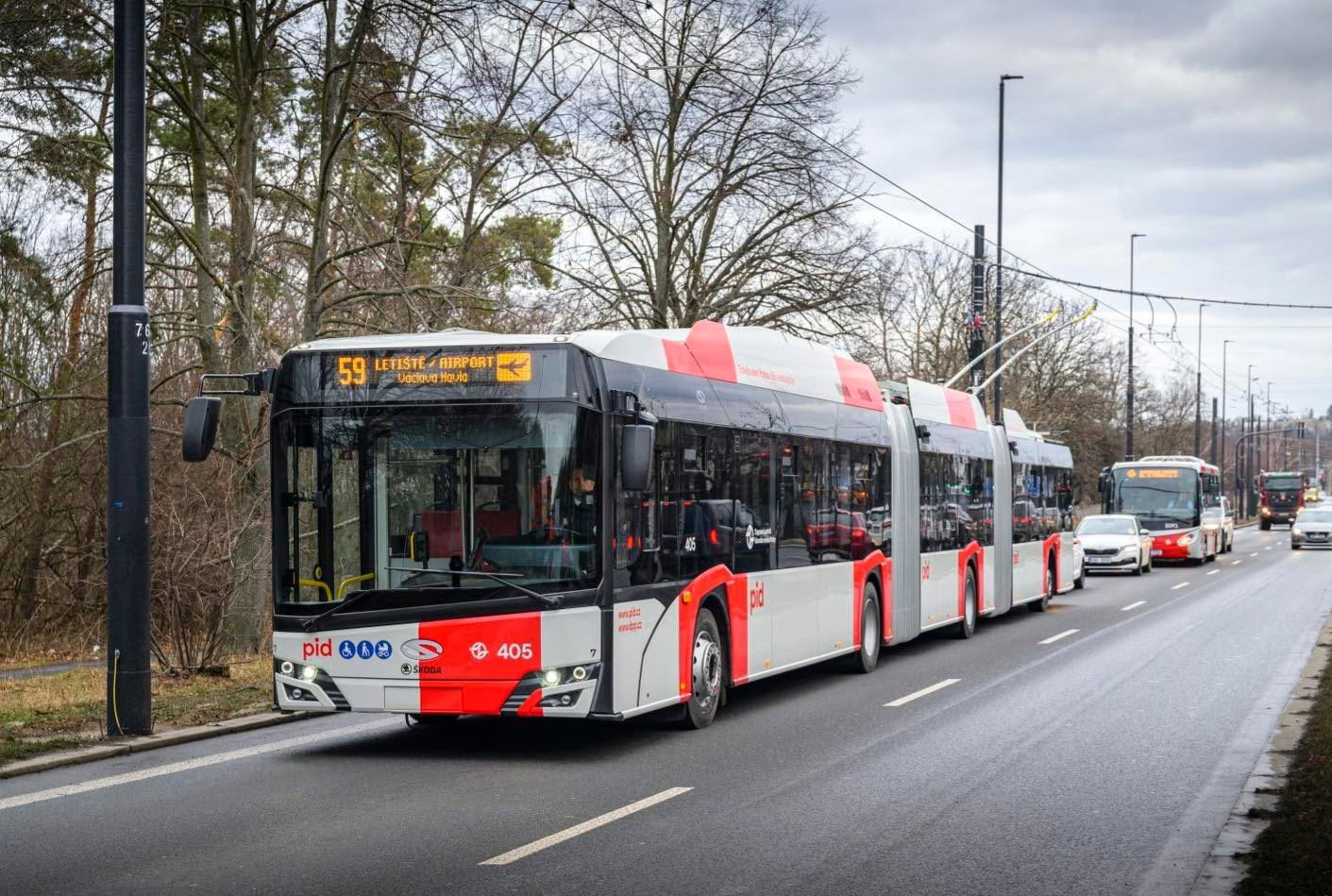
The Prague transport company currently operates these vehicles exclusively on trolleybus route 59, that is, on the route between Nádraží Veleslavín and Václav Havel Airport. Although homologation was provided by the manufacturer, the oversized and heavy design of the vehicles means that separate official permits, renewable annually, are also required: for the first period the operating permit is issued by the Prague transport authority, and for subsequent periods by the Czech Ministry of Transport.
In its response to our enquiry, DPP also highlighted the significantly increased passenger capacity as the type’s most important advantage, since more passengers can be carried with the same number of drivers — a factor of particular importance on such a heavily loaded airport route. In addition, replacing diesel operation, eliminating local pollutant emissions and reducing noise levels are also among the benefits, even if these do not arise from the bi-articulated design itself, but from trolleybus operation in general. At the same time, the company also pointed out that the lower energy consumption is primarily the result of the shift to electric drive, while maintaining the overhead line infrastructure entails additional costs, and vehicle maintenance requires specialist expertise and targeted staff training.