![Magyarbusz [Info]](/mbi/header-logo.png)
Metz, France, looks to replace its 24-metre Van Hool diesel-electric hybrids with bi-articulated electric buses
 Ludányi József
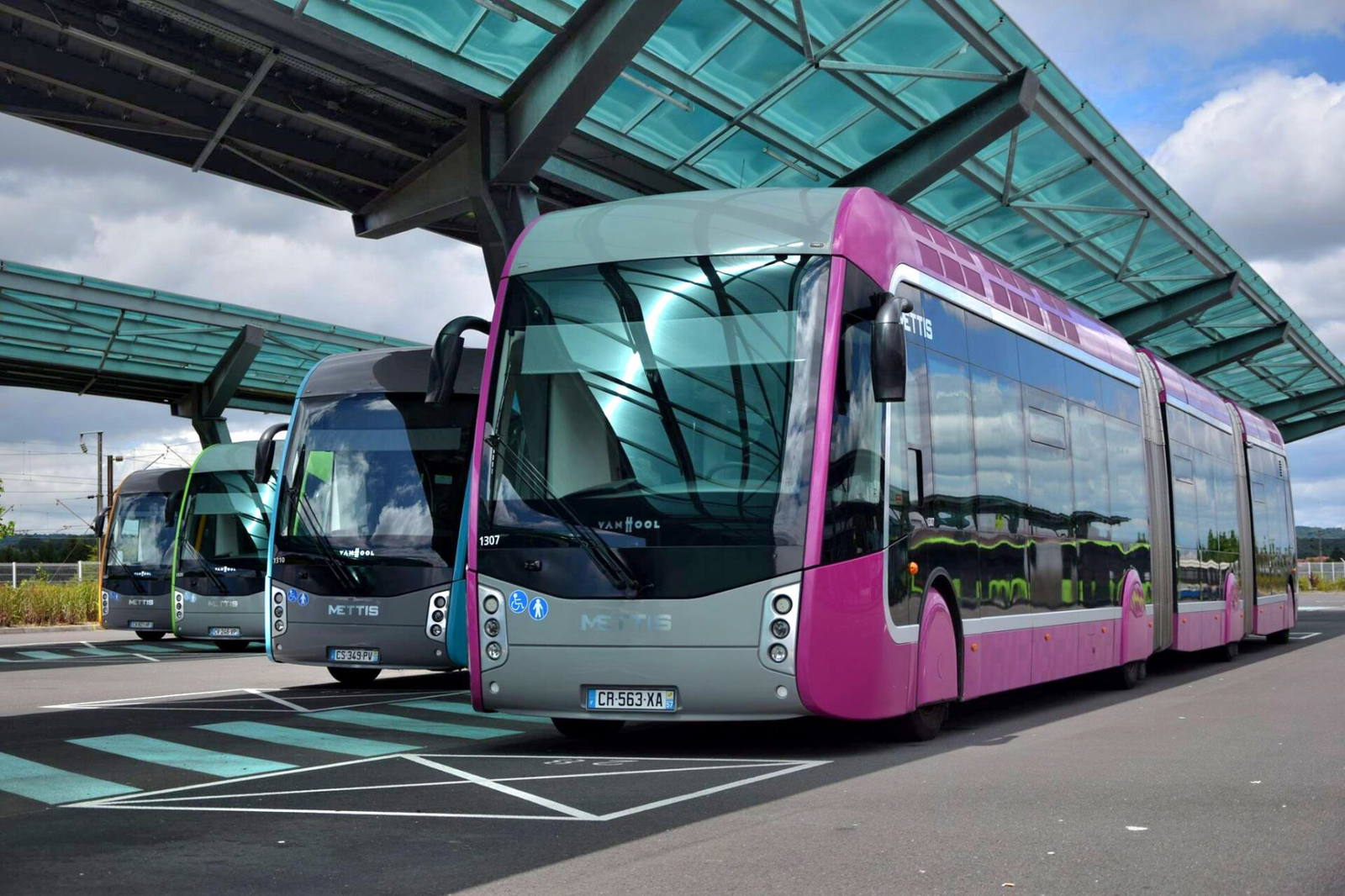
In public transport across the Metz metropolitan area in France – as in most major European cities – one of the defining processes of the coming years will be the ambitious energy transition of the fleet, with the redesign of the BRT network and the renewal of its vehicles also on the agenda. As part of this, Metz Métropole – the metropolitan authority grouping Metz and the surrounding municipalities – is examining the replacement of the Van Hool Exqui.City 24 Hybrid diesel-electric bi-articulated buses procured in 2013 with fully electric 18- and/or 24-metre articulated vehicles. The current fleet consists of 30 vehicles, 27 of which entered service in autumn 2013 on the MA and MB BHNS (BRT) lines. The use of new, high-capacity electric buses could also be considered not only on the existing corridors, but also on a planned new BRT corridor designated MC. The vehicles will be put into service by the new public transport operator, Keolis, which will take over operation of the LE MET network on 1 January 2026.
The MA and MB lines of the BRT system operating under the METTIS brand were launched in the Metz metropolitan area on 5 October 2013. The network was developed in place of the tram lines originally planned, following the BRT concept known in France as Bus à Haut Niveau de Service (BHNS), with the aim of achieving a tram-like level of service without building rail infrastructure. Line MA is approximately 14.7 kilometres long and links the main districts of the conurbation on an east–west axis. Route MB is around 11 kilometres long and forms a north–south corridor. The two lines share a several-kilometre common section in the city centre. The METTIS lines do not run on segregated infrastructure along their entire length, but they do so for the most part; the infrastructure includes physically separated busways, dedicated bus lanes and traffic-signal priority at junctions.
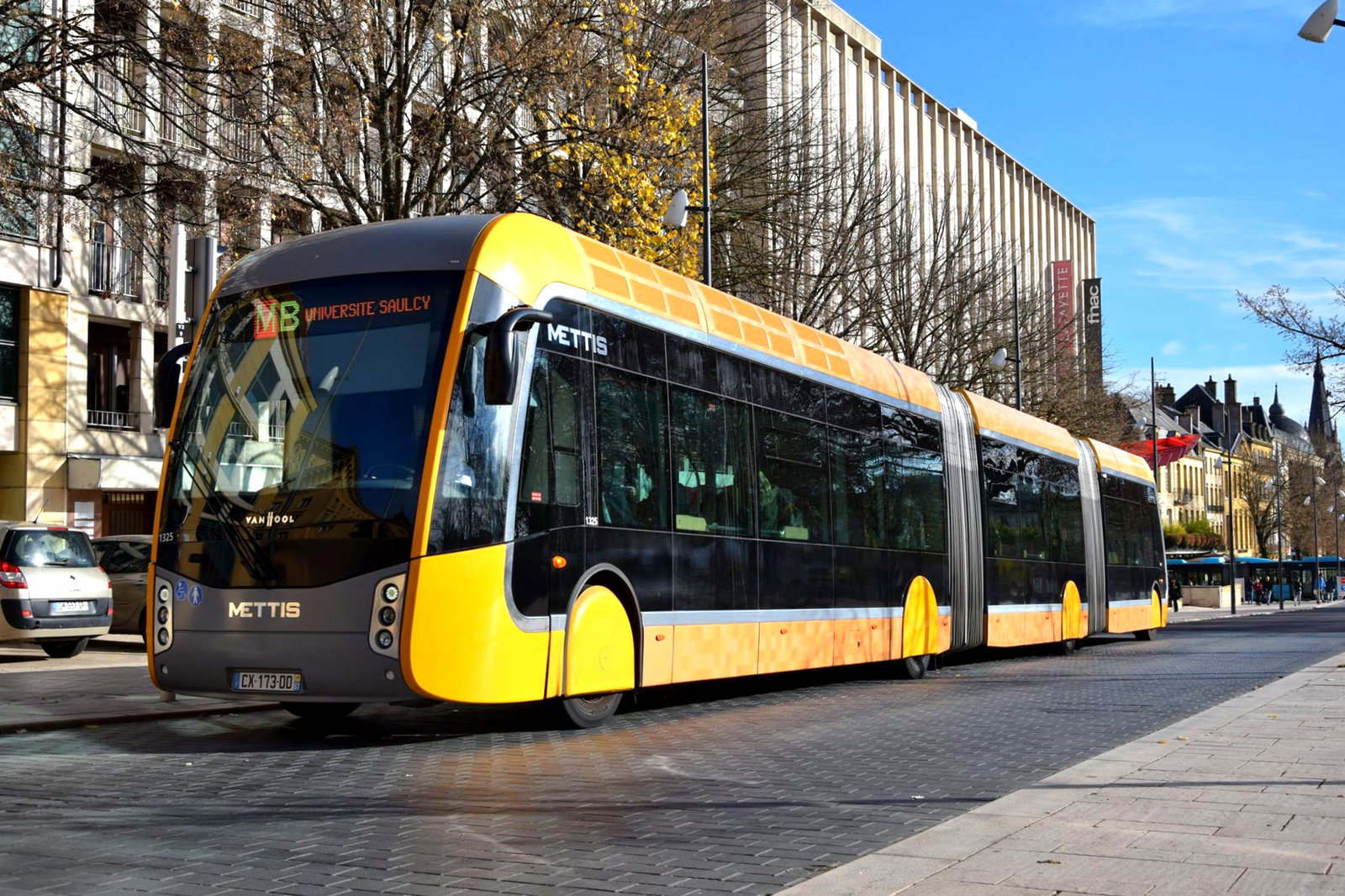
Photo: Gilles Pluet
To operate the system, a total of 27 Van Hool Exqui.City 24 bi-articulated buses equipped with a series-hybrid driveline were procured in 2013, followed by three more in 2020. The 23.8-metre-long diesel-electric vehicles are fitted with a 184 kW MAN diesel engine and a Siemens generator of around 240 kW; each bus can carry roughly 150 passengers. METTIS was among the first French urban BRT systems to adopt such a high-capacity BHNS concept with a unified visual identity.
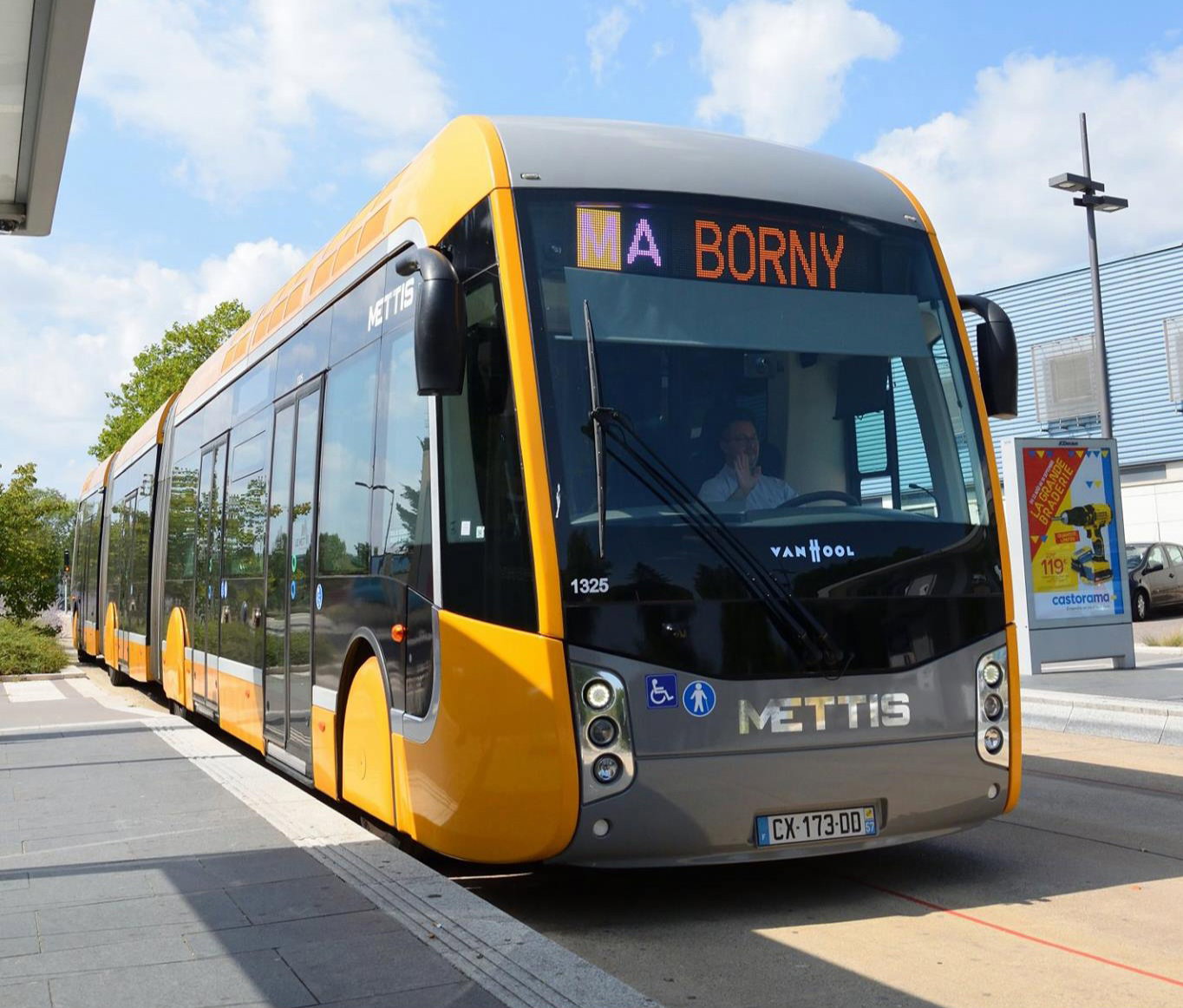
Photo: Gilles Pluet
Based on operational experience, the metropolitan authority also put the possibility of developing a third, transverse BRT line, designated MC, on the agenda in the late 2010s. The route will connect the area around Avenue du XXe Corps Américain with Avenue de Pont-à-Mousson, and is expected to enter service in 2027. The implementation of the new line had previously been surrounded by uncertainty, as the region had placed an order for 15 hydrogen-powered bi-articulated Van Hool buses, for which an advance payment of around €1.45 million was also made in 2023. Van Hool’s bankruptcy, however, overrode the earlier plans and put both the future expansion of the METTIS network and the review of the overall vehicle strategy back on the agenda. The market consultation now published is intended to prepare this rethinking process.
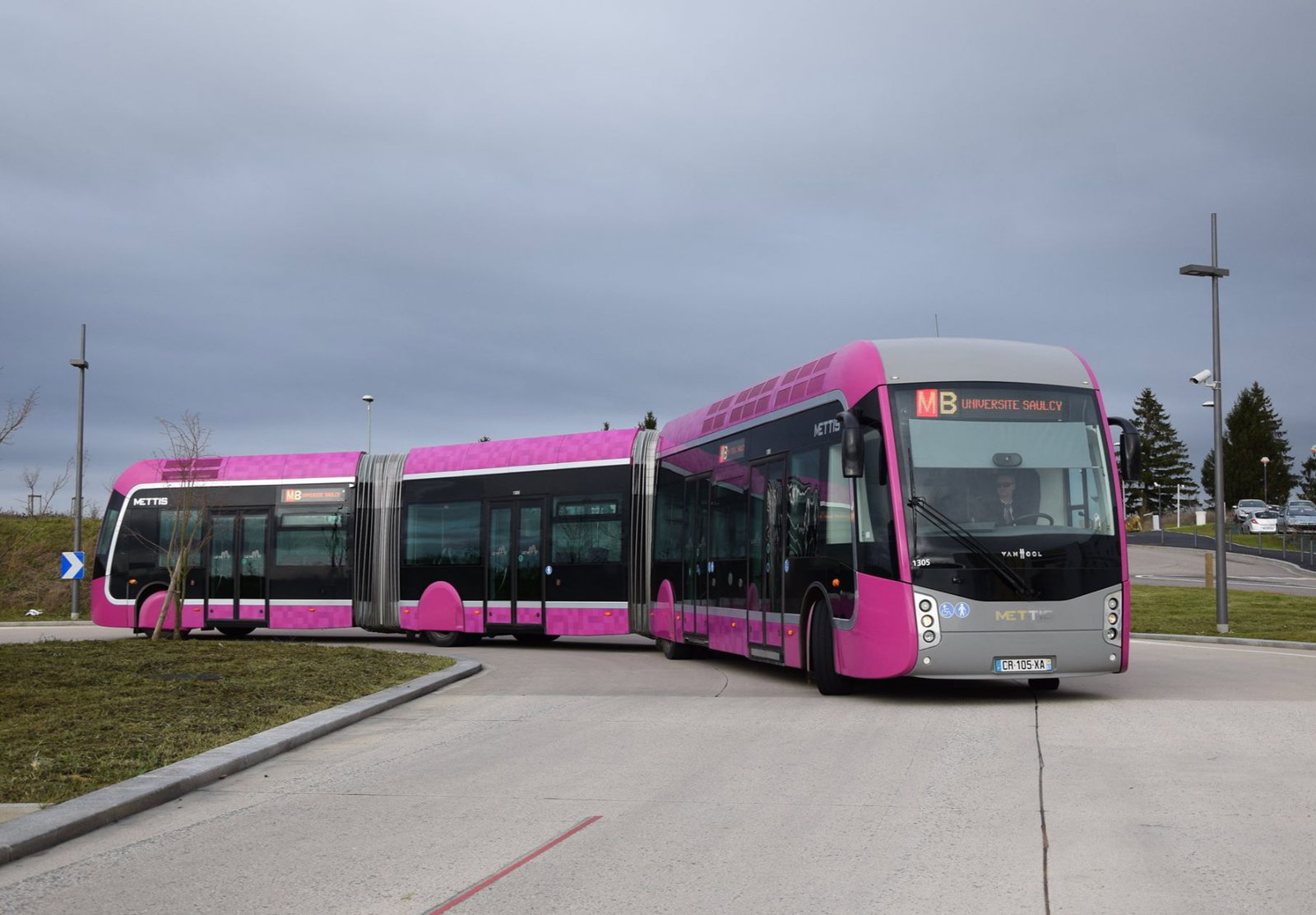
Photo: Gilles Pluet
The new vehicles will be procured by Metz Métropole, while operation will be the responsibility of Keolis, which will provide services in the area from 1 January 2026. The new 10-year concession contract, worth around €700 million, covers the operation of LE MET’s 93-route bus network – including the two BHNS lines – with nearly 500 stops. The network serves all municipalities in the metropolitan area and carries around 77,000 trips per day.
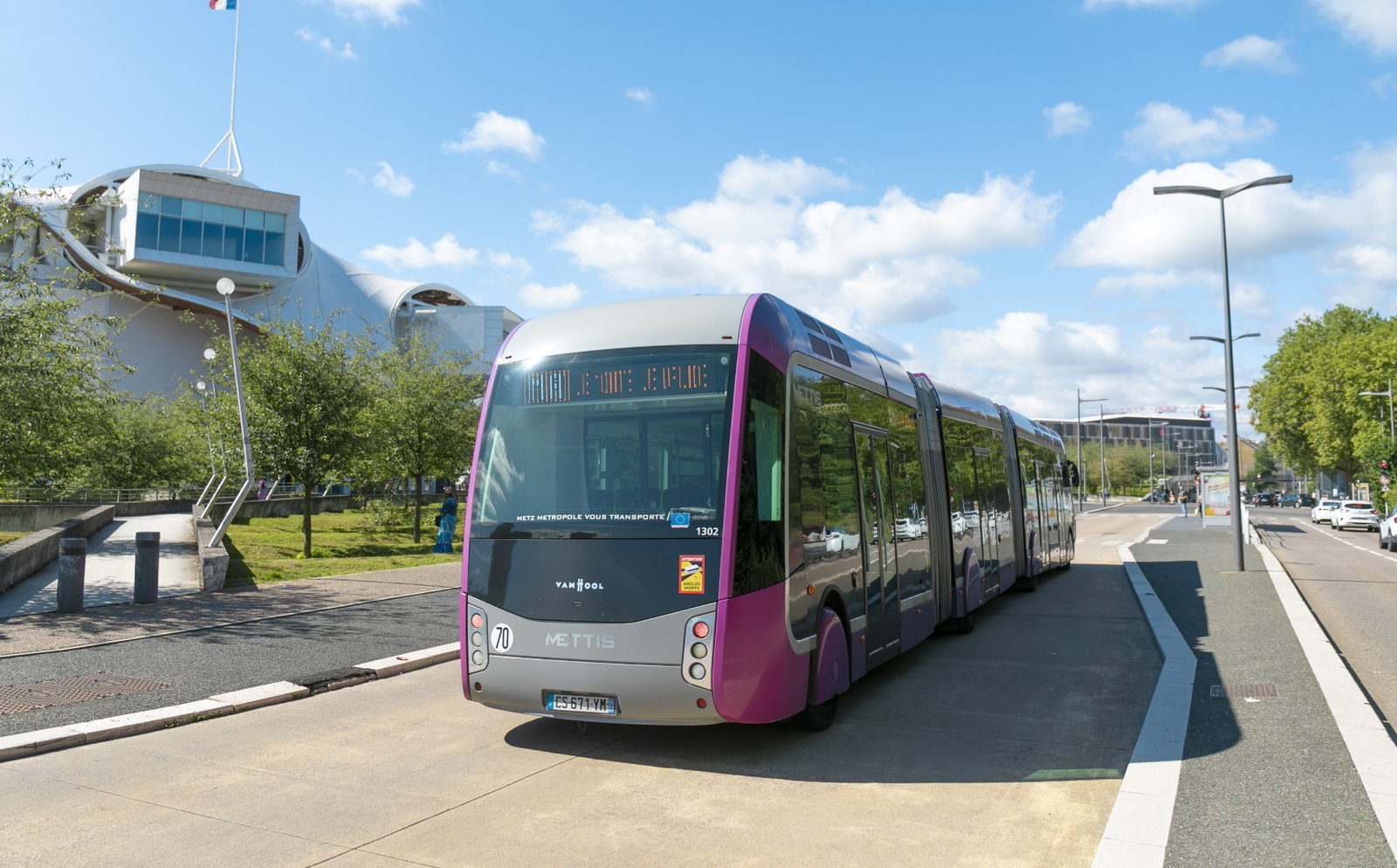
The market consultation launched in preparation for the future vehicle replacement on the METTIS network examines what technically mature solutions are available on the market, and realistically deliverable in the short term, in the form of fully electric 18- and 24-metre articulated buses to replace the 24-metre bi-articulated hybrids currently operating on the MA and MB BHNS lines, as well as what charging and energy concepts could be matched to METTIS’s high-capacity BHNS operation.

Photo: Gilles Pluet
The documentation stresses that the process is primarily intended to identify technical, industrial and operational risks. As part of this, manufacturers must present the homologation status and real-world operating parameters of the vehicle types under consideration, as well as how the various drive and energy-storage architectures can be matched to the load profiles and headways typical of METTIS routes. The consultation pays particular attention to the charging strategies required for high-capacity BHNS operation, including depot charging, terminus charging and, where applicable, en-route fast charging, as well as the infrastructure requirements associated with these options.
In addition to technical presentations, market players must also provide operating references, energy calculations and integration proposals, with particular regard to the challenges arising from the combination of very long vehicles and fully electric propulsion. Following the conclusion of the consultation, the contracting authority intends to use the responses received to establish the technical and operational framework for a subsequent actual procurement procedure, which can then be developed in line with the redesign of the network and the transformation of the vehicle strategy.

Photo: Francis Wagner
In this niche vehicle segment in Europe, since Van Hool’s bankruptcy last year only two currently active bus manufacturers have genuine series-production and operational references: Hess and Solaris. The Swiss manufacturer’s vehicles are in service not only in several Swiss and Austrian cities, but also in France and Australia, while Solaris has built up a significant presence in the market for bi-articulated buses and trolleybuses thanks to large-volume European orders in recent years. Based on the current composition of the market offering, these two manufacturers can realistically be regarded as the only serious contenders in the consultation and the eventual public procurement procedure.
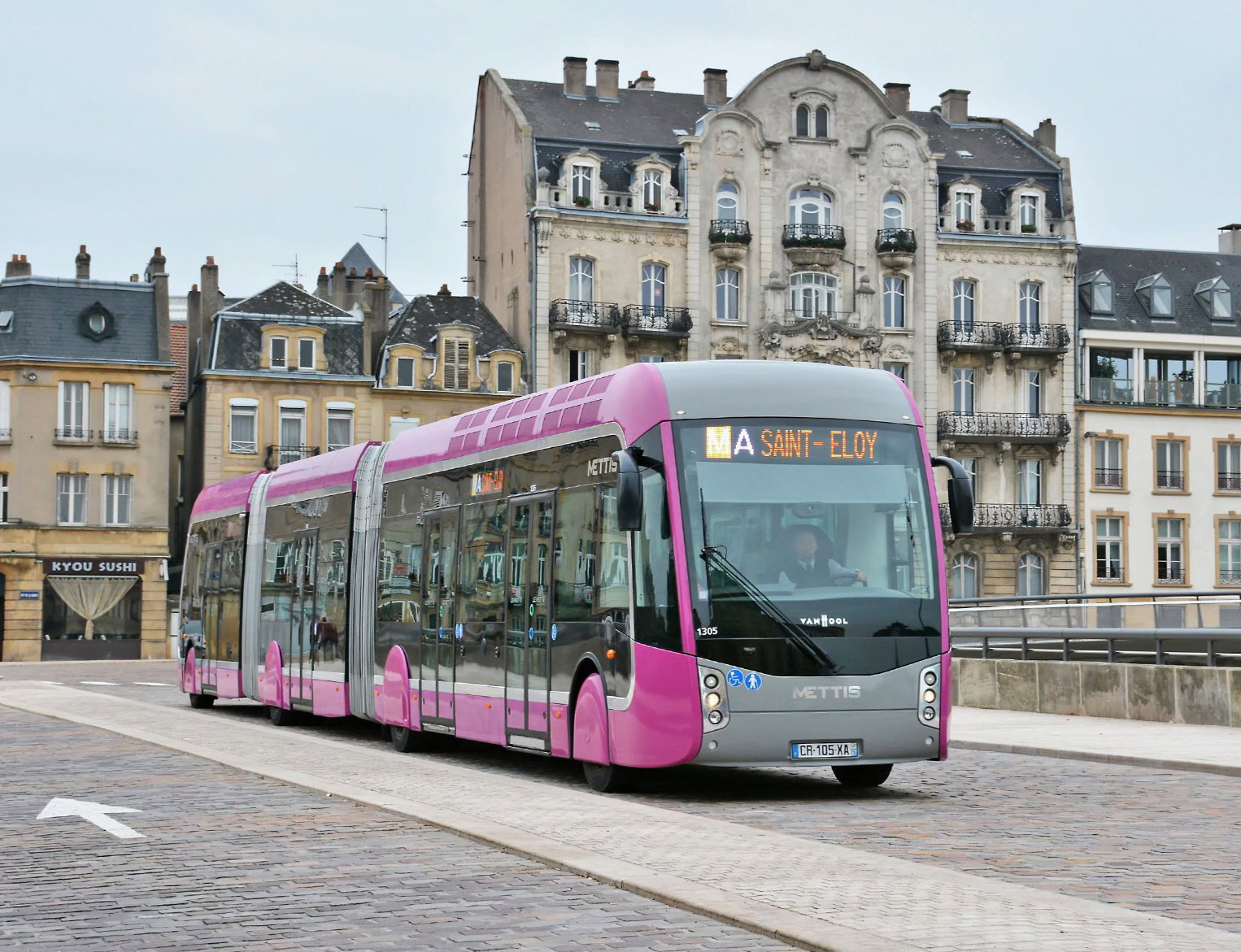
Photo: Francis Wagner
In connection with the introduction of bi-articulated vehicles, we recently contacted both manufacturers; in their responses, they set out in detail the operating experience gained so far, as well as the technical and organisational specifics of deploying high-capacity electric buses.
Cover photo: Gilles Pluet