![Magyarbusz [Info]](/mbi/header-logo.png)
Trial runs of Paris’s stranded bi-articulated Van Hool electric buses may begin in July
 Ludányi József
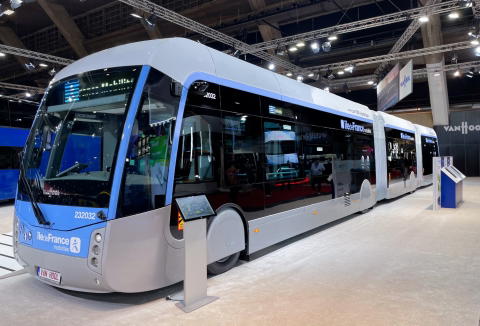
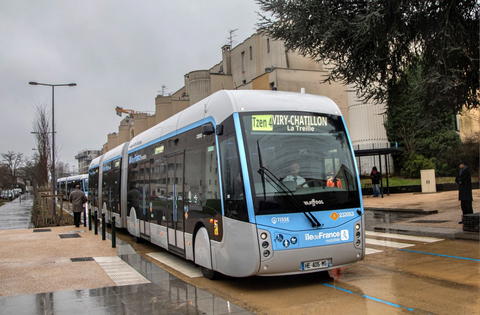
After months of uncertainty, the crisis surrounding the vehicle procurement for the Paris T Zen 4 BRT project is nearing its end, as confirmed by Île-de-France Mobilités in response to our inquiry. In October 2024, it became known that following the bankruptcy of the Belgian company Van Hool, the final assembly of the Exqui.City 24 Electric bi-articulated electric buses, manufactured for the Paris transport organizer, would be taken over by the Swiss company Hess. Van Hool managed to deliver only five out of the 30 ordered vehicles before the bankruptcy announcement in April 2024, leaving the remaining 25 at various stages of production stranded at the Koningshooikt plant. The manufacturer’s bankruptcy and the subsequent change of ownership not only halted the commissioning of the vehicles, each valued at over 1,2 million euros, but also made it impossible to complete the T Zen 4 BRT project, with a budget of 140 million euros, on schedule. The fleet of 30 was specifically ordered for the T Zen 4 line, which is intended to connect the southern suburbs of Paris with the capital’s network in the form of a new high-capacity BRT line.
The fate of the 25 vehicles, mostly at a high stage of completion and stranded at Van Hool’s Koningshooikt plant, remained uncertain for a long time. While several other clients were unable to salvage the unfinished vehicles from the bankrupt manufacturer, the Île-de-France Mobilités transport authority eventually succeeded in reaching an agreement with the liquidation trustees regarding the transfer of ownership and continuation of production. The final assembly of the 24-meter vehicles, which have particularly high production costs, will not be carried out by Van Hool, now owned by VDL, but surprisingly by the Swiss manufacturer Hess, which, like the Belgian company, has significant experience in the development and production of bi-articulated trolleybuses and battery-electric buses.
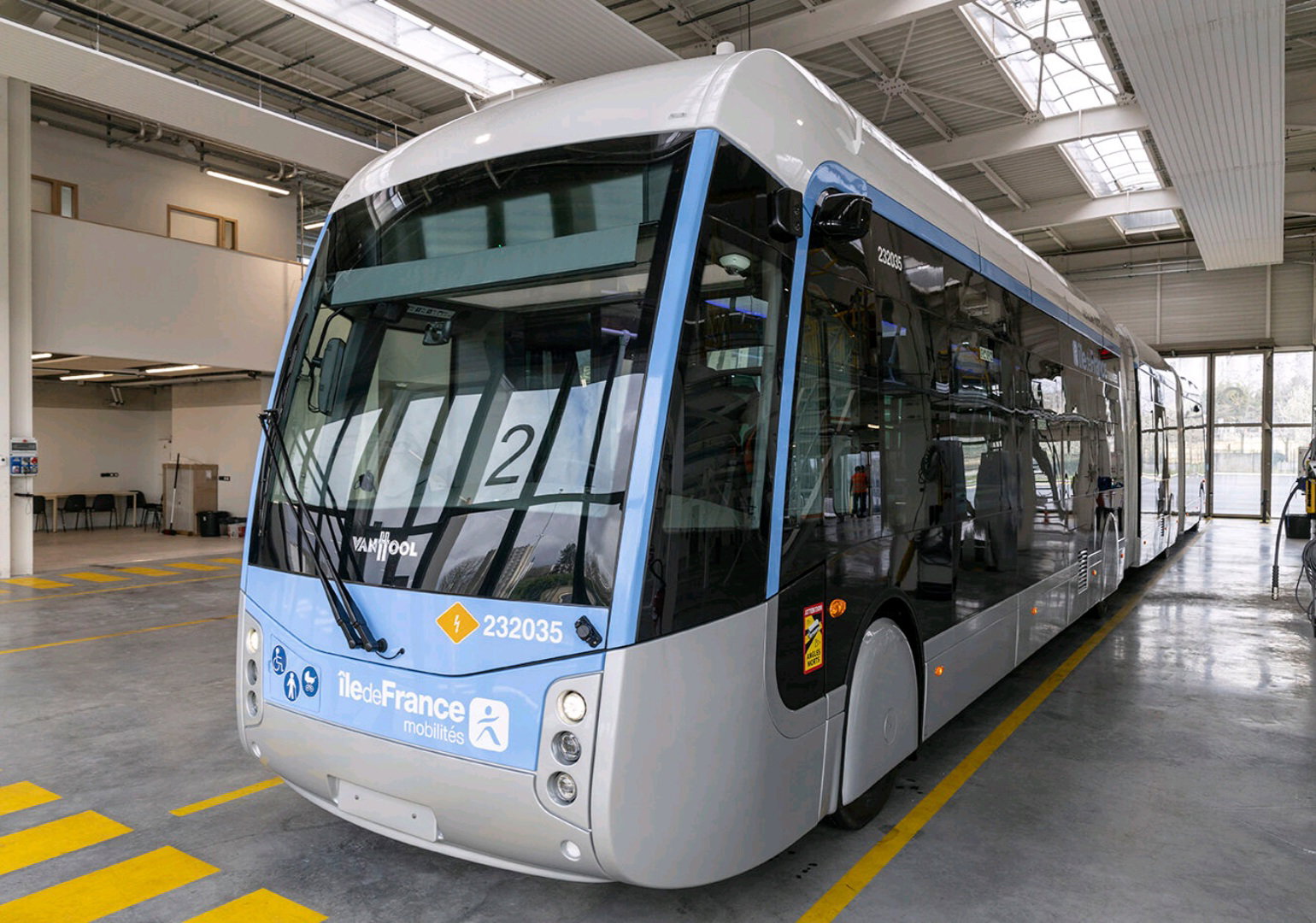
Since Van Hool originally manufactured the vehicles with the technological collaboration of Alstom and Kiepe Electric, Hess continues to work with these partners for the integration of the drive system and electrical equipment. The final assembly is currently taking place at Van Hool’s Koningshooikt site, where Hess has set up a leased production area for its own purposes. The work is being carried out by a team of former Van Hool employees specialized in this type, commissioned by Hess. As part of the project, the Swiss manufacturer is not only responsible for completing the vehicles but also for providing technical support and spare parts supply after delivery.
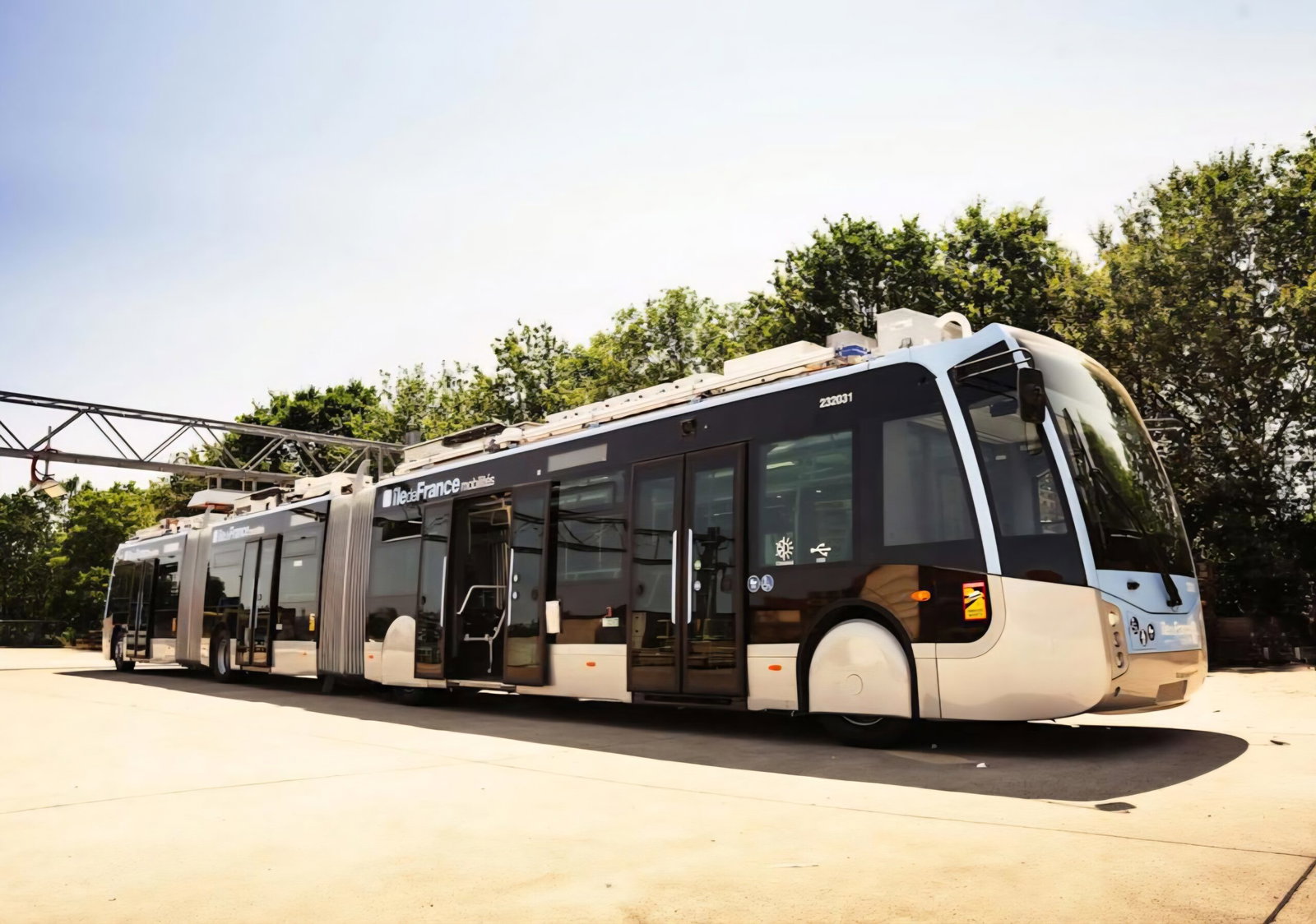
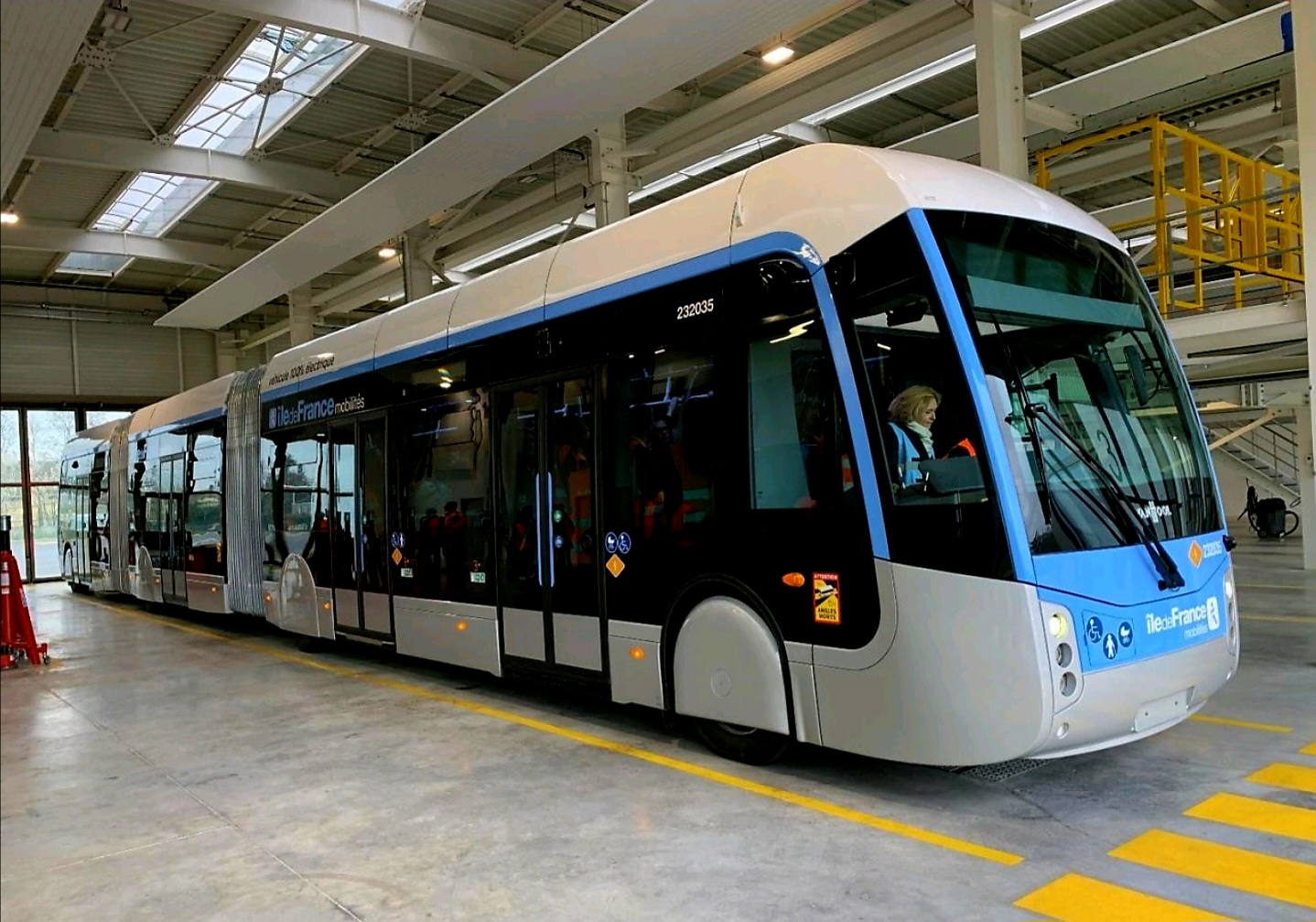
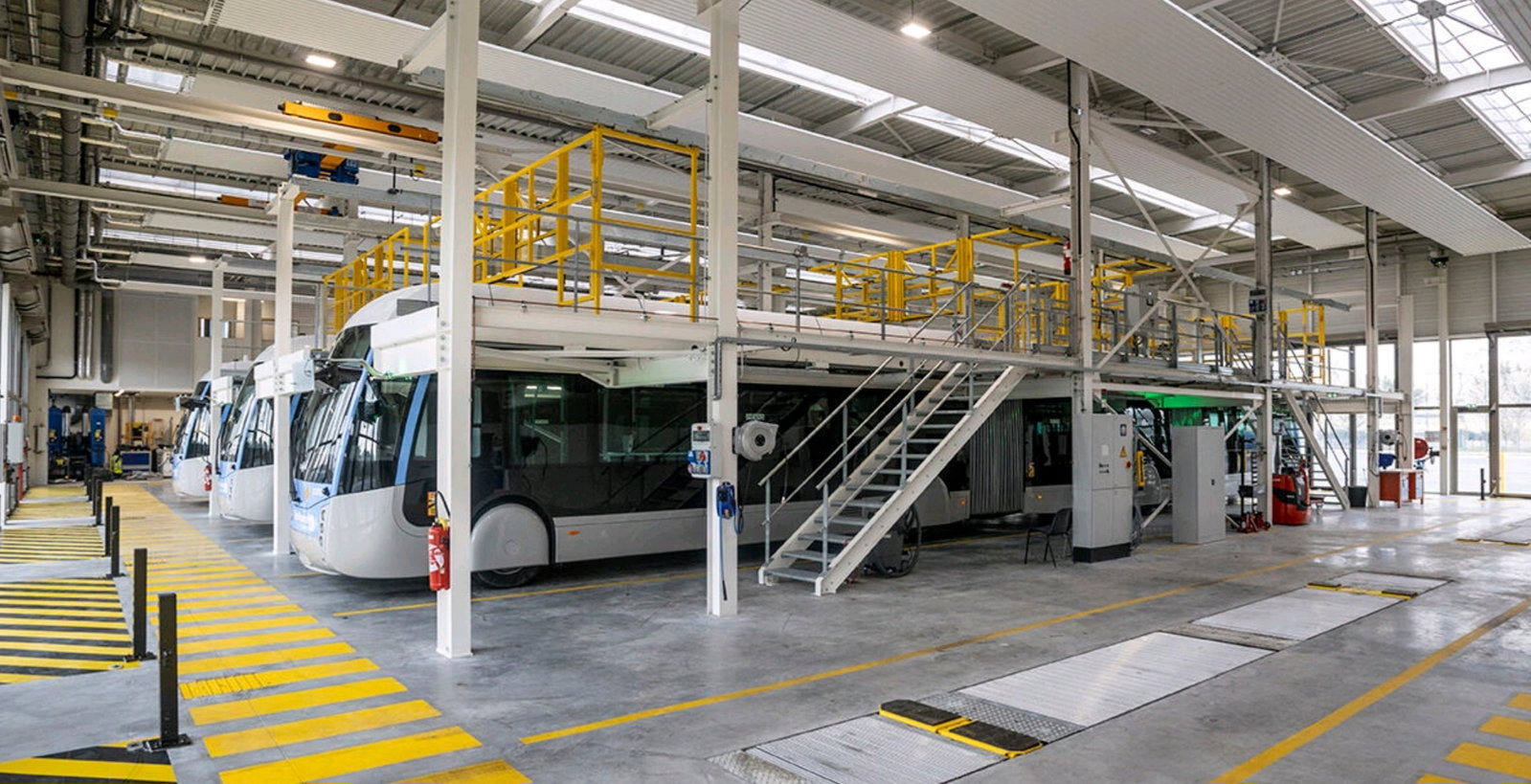
After a long period of complete uncertainty, the practical implementation of the project is now within tangible reach. As Île-de-France Mobilités informed us, almost half of the vehicles have already been received and have arrived at the new garage named COB de Corbeil Essonnes, established specifically for this fleet by the French transport organizer. The first trial runs are expected to begin in July, with the transport organizer aiming for all buses to be operational by autumn at the latest. Following this, a timetable trial operation without passengers will commence for the entire fleet, with the current schedule planning for the new vehicles to enter service on the T Zen 4 line in early 2026.
The T Zen 4 route, spanning 14.8 kilometers between Viry-Châtillon and Corbeil-Essonnes, replaces the former local bus line 402. The new BRT system line will have dedicated bus lanes for most of its route, with intelligent traffic light priority at intersections to facilitate vehicle movement. A unique aspect of the investment is the first urban application of Alstom’s SRS ground-integrated rapid charging system on this route, playing a crucial role in the everyday operation of the flash-charging-optimized bi-articulated electric buses.