![Magyarbusz [Info] International](https://bunny-wp-pullzone-thjj7ocpga.b-cdn.net/wp-content/uploads/2025/06/cropped-cropped-mbi_sby_v1-scaled-1.png)

This article has been translated using AI-powered tools. While we strive for perfect accuracy, some nuances may differ from the original Hungarian version.
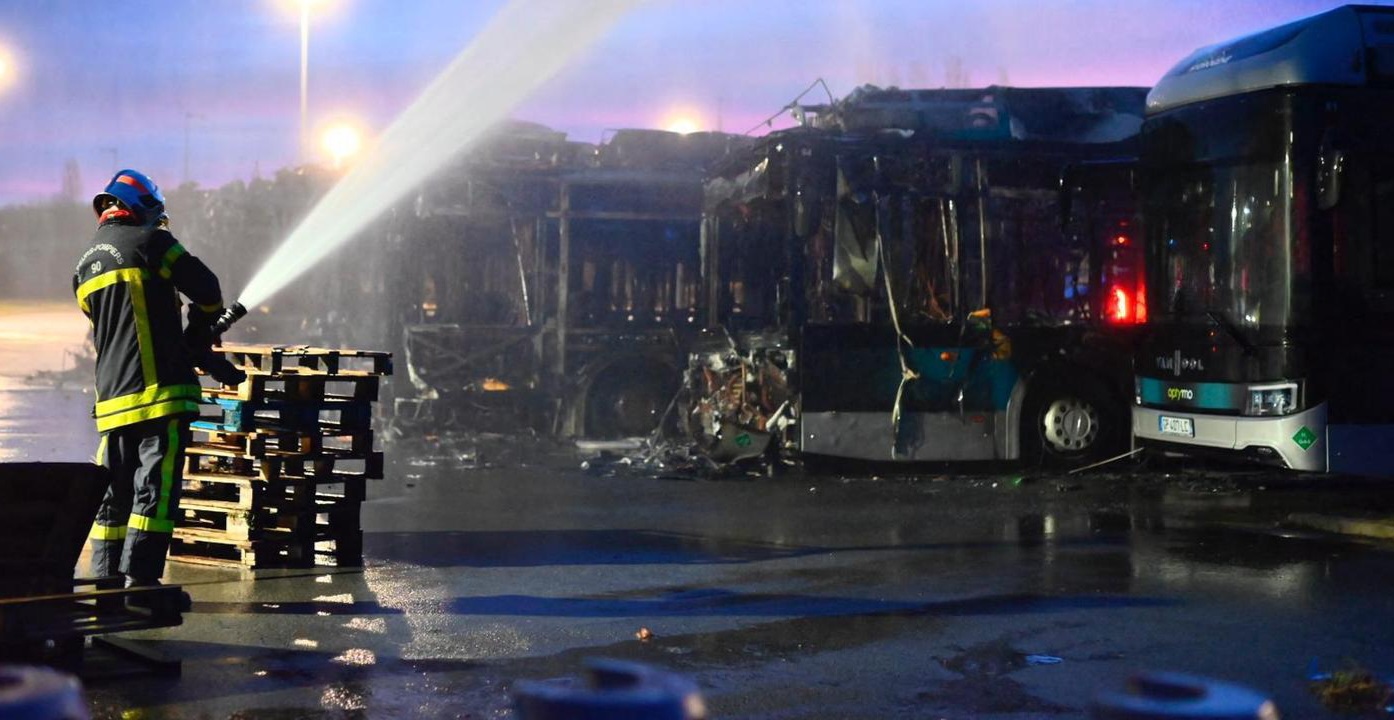
The year 2025 began on a somber note for Belfort, a French city committed to hydrogen propulsion. On January 2nd, a fire at a vehicle depot led to the loss of its entire fleet of seven Van Hool hydrogen buses. The incident sparked negative criticism questioning the safety of hydrogen propulsion. However, the prevention of a more serious disaster was not due to luck, but rather the industry standards, regulations, and technological advancements that ensure the safety of modern hydrogen-powered vehicles.
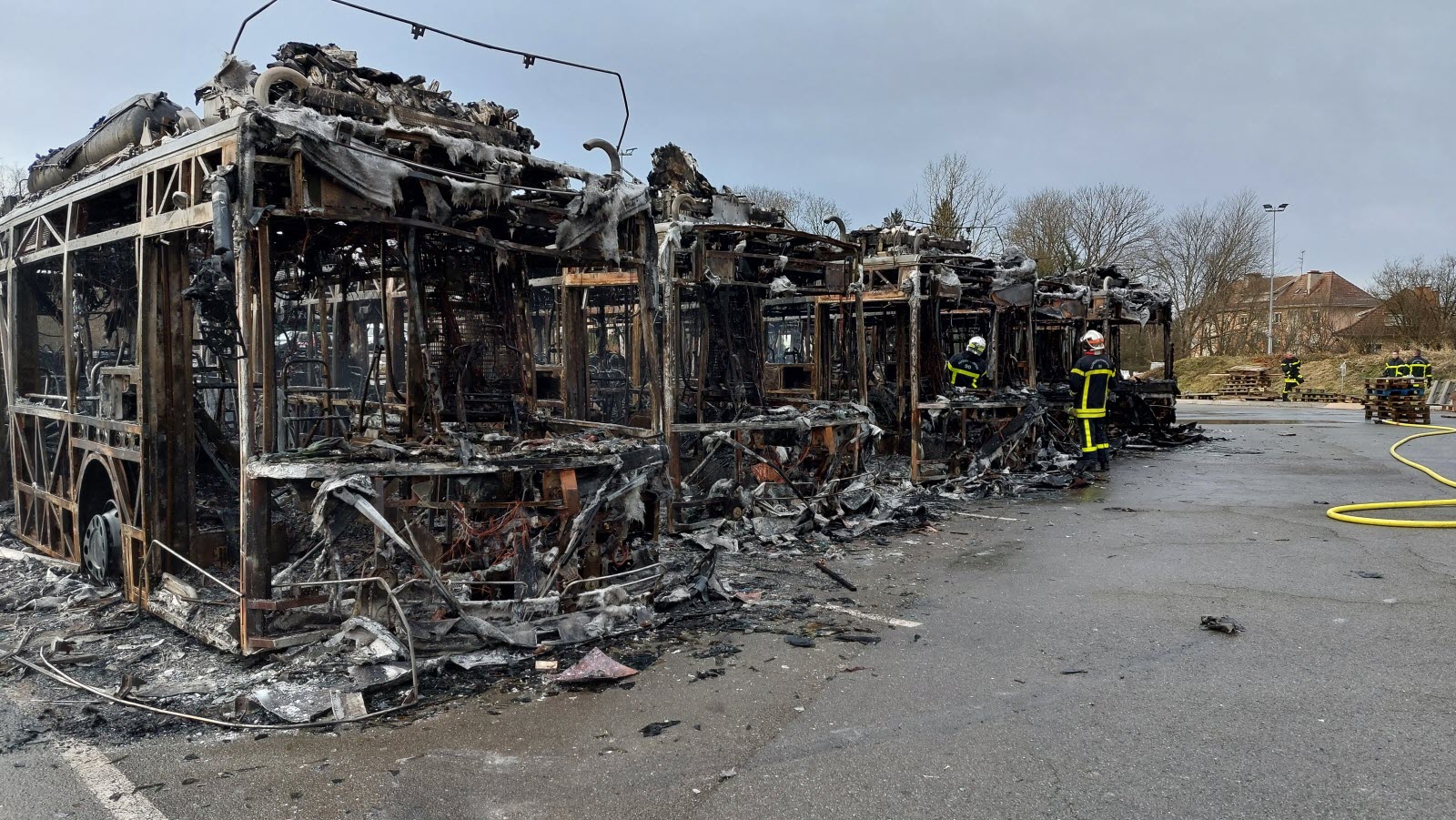
Although the investigation into the Belfort fire is far from complete, security camera footage suggests that an electrical fault likely caused the destruction of the vehicles. Authorities believe this because footage shows a flash and subsequent smoldering in the driver’s area of the second bus in line, where a 36 kWh high-voltage battery module is located on the roof. This led to a chain reaction, spreading the fire to the other buses. Only one vehicle avoided complete destruction, though it was severely damaged. Since the Belgian manufacturer Van Hool has since gone bankrupt, there is little chance of restoring it. The damage, exceeding 4 million euros, will be covered by AXA insurance.
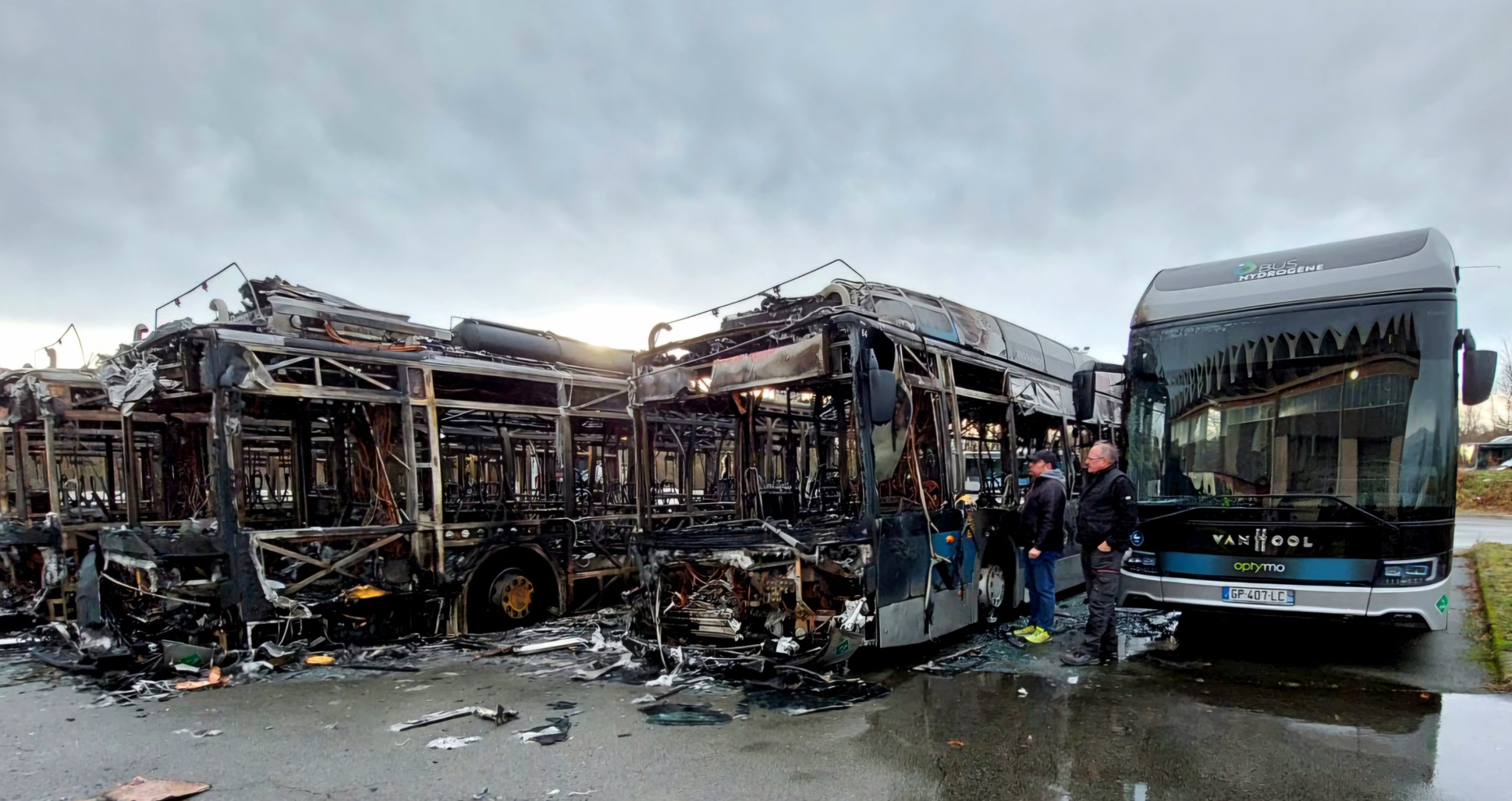
Following the incident, there was increased skepticism about the safety of hydrogen propulsion. However, preliminary investigations already suggest that the propulsion system did not cause the fleet’s destruction. On the contrary, the safety features of the hydrogen buses prevented the hydrogen tanks, which store gas at an operating pressure of 350 bar (each Van Hool A12 FC in the Belfort incident had five tanks with a capacity of 322 liters each), from becoming ticking bombs and potentially causing fatalities.
In Europe, the safety approval of hydrogen-powered M or N category vehicles (including cars, buses, and trucks) and their components is governed by UN ECE Regulation 134. This relatively new set of rules had its first major revision last fall. In addition to pressure tests under various extreme conditions, it sets strict requirements for collision and fire protection. If a vehicle type that a manufacturer wishes to homologate fails these tests, it cannot obtain a type certificate, meaning it cannot be registered or put on the road. This should offer some reassurance to those wary of hydrogen propulsion, knowing that hydrogen-powered vehicles on public roads have undergone numerous rigorous tests and are considered safe even in the event of an accident.
Given hydrogen’s highly reactive nature, hydrogen-powered buses are equipped with numerous hydrogen leak detectors to prevent accidents. These sensors are mandatory in any enclosed or semi-enclosed space where leaking hydrogen gas could accumulate, such as passenger and cargo areas. The onboard system sends an alert to the driver if even a small amount of hydrogen is detected in the passenger compartment, and it shuts off the main valve if the concentration exceeds 4.0% by volume, isolating the hydrogen tanks and stopping the vehicle. In the specific buses involved in the Belfort fire, one sensor is located in front of and one behind the roof-mounted hydrogen tank unit, with two more around the Ballard Power Systems fuel cell. For maximum safety, each tank is fitted with a series of safety features: leak-proof valves and thermal pressure relief devices (TPRDs). Each tank has three TPRDs—one in the middle and one at each end, with the one near the filling connector often integrated with the valve module for filling, operational emptying, and sealing. Safety valves prevent hydrogen from reaching the fuel cell in case of leaks and ensure that cells are ventilated in the event of an accident. TPRD valves release hydrogen gas vertically in a controlled manner at high temperatures (upwards for roof-mounted tanks, downwards for underfloor installations, such as those in some long-distance hydrogen buses and cars). Sensors monitor the tanks, and in case of damage, the system automatically releases the stored hydrogen into the open air.
To outsiders, the idea of a burning vehicle potentially releasing flammable hydrogen gas may sound alarming. However, this strategy is designed to prevent a larger disaster—an explosion. Controlled release of fuel (a well-known property to firefighters and operators) poses far less risk than having tanks burst from the pressure generated by high heat. Such an event would be extremely dangerous not only because of its unpredictability and force but also because the explosion could propel mechanical components or parts of the vehicle’s structure, causing severe injuries even to those standing away from the fire, not to mention firefighters working close to the flames.
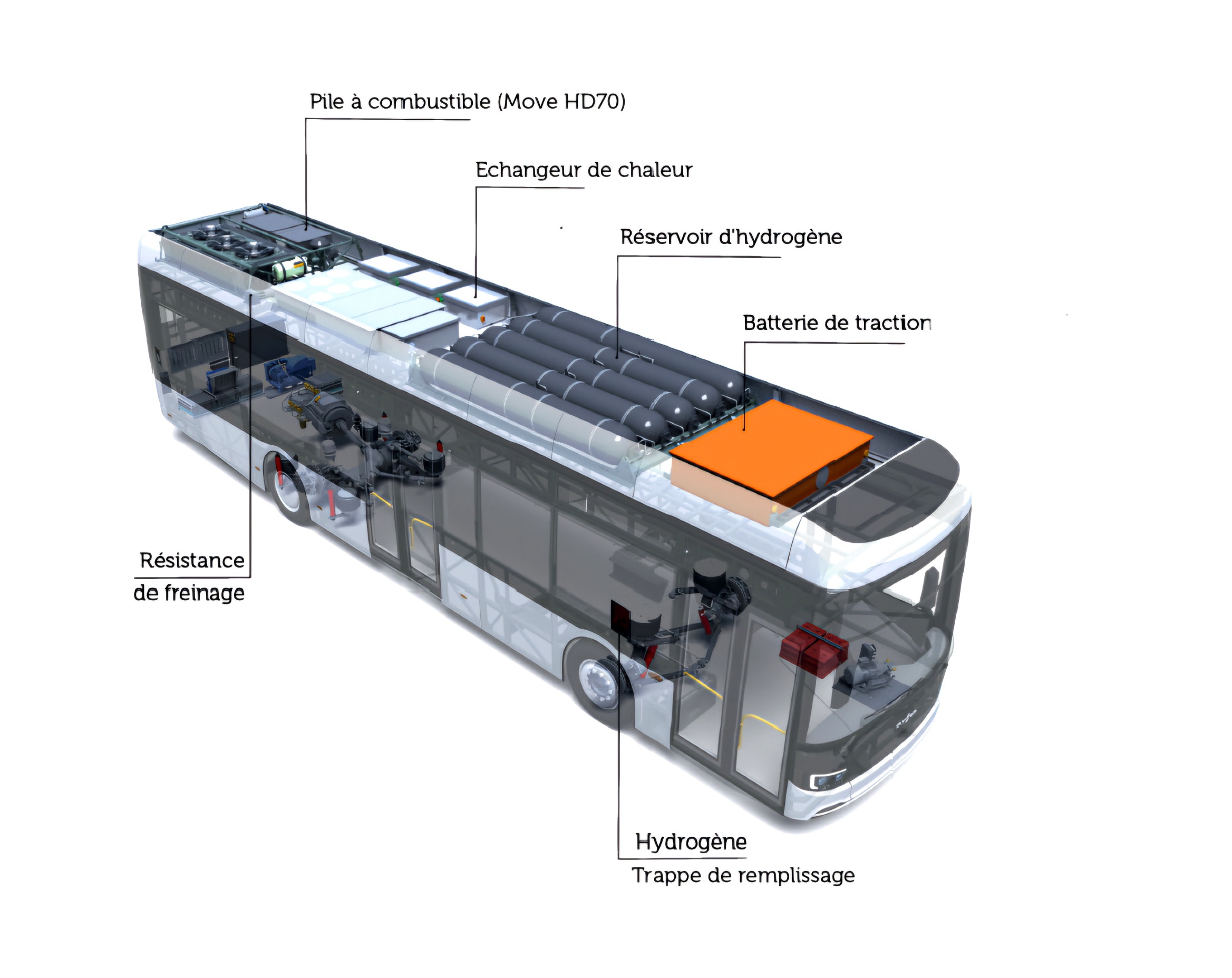
The TPRDs on the hydrogen tanks have a relief temperature of 110°C, meaning that when the surrounding temperature reaches this level, the glass ampoule inside the valves breaks before the intense heat can damage the heat-resistant composite tanks. At that point, hydrogen exits the tank rapidly, either through the TPRDs or a safety vent. If the gas ignites during this process, a vertical flame column forms but does not spread, keeping the process controlled. If it does not ignite, the hydrogen molecules disperse quickly in the air, preventing the formation of explosive gas or subsequent explosions. This is what happened with the Belfort Van Hool fleet: the TPRDs functioned as intended, preventing an explosion, and photos of the wreckage show the hydrogen tanks largely intact. Since the buses were parked outdoors, the release of hydrogen gas did not pose additional safety risks.
Preliminary analyses suggest that the hydrogen system was not responsible for starting the fire. Investigations are instead focusing on the Actia lithium-titanate-oxide (LTO) buffer batteries found in the buses. Like most high-voltage traction batteries, these 36 kWh capacity units, which support continuous power supply, can pose significant risks if they overheat or catch fire. Fires from such batteries are extremely intense and difficult to control, generating enough heat to ignite nearby vehicles.
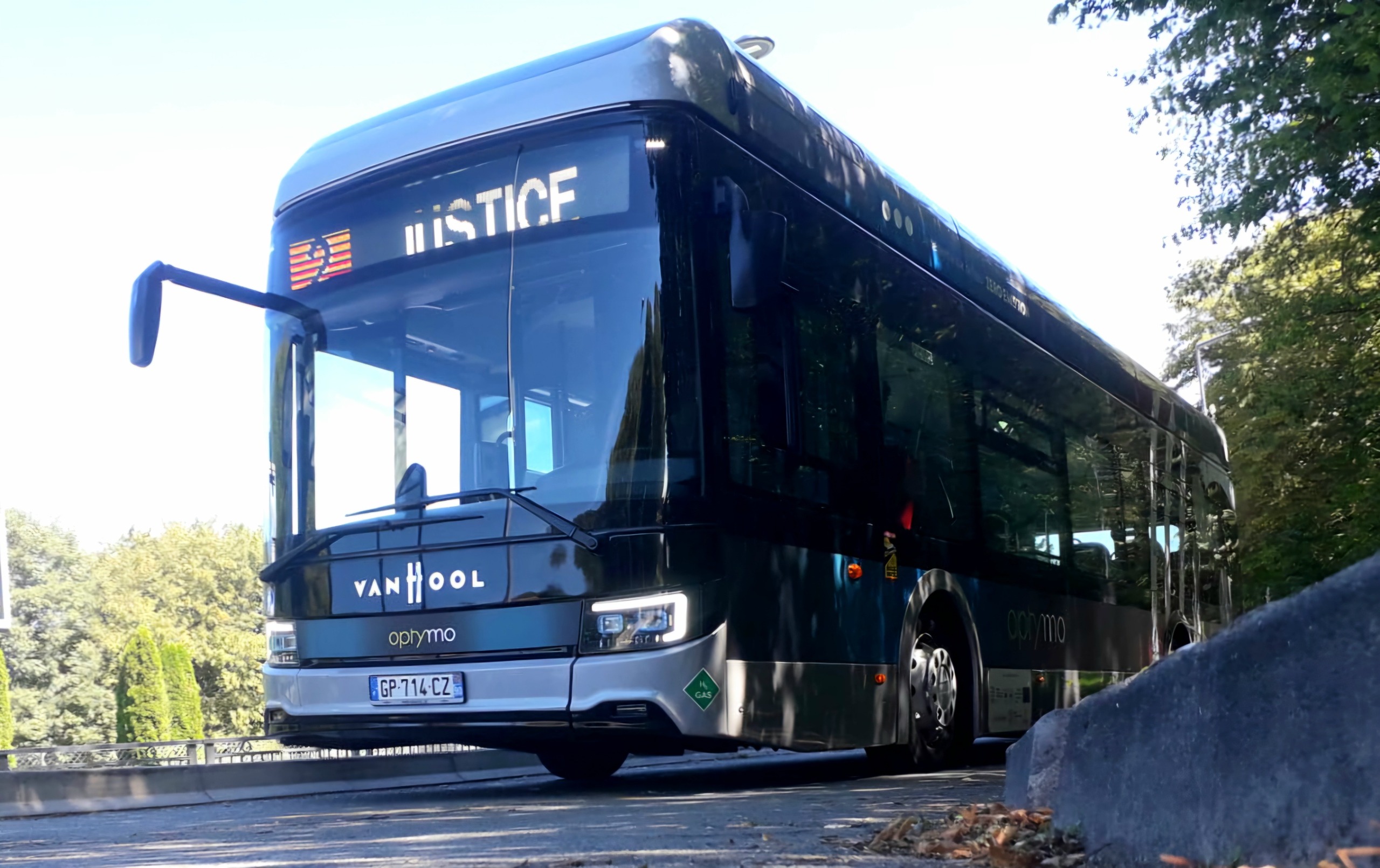
This unfortunate fire incident highlights that all energy systems carry risks, whether hydrogen, batteries, compressed natural gas (CNG), or traditional internal combustion engines using diesel, gasoline, or autogas. However, the safety of hydrogen-powered vehicles is based on strict regulations and tested safety systems, which have now proven effective under real-world conditions. Therefore, instead of drawing hasty conclusions or comparing the incident to events like the Hindenburg disaster or other myths, it should be evaluated based on these findings.
This article has been translated using AI-powered tools. While we strive for perfect accuracy, some nuances may differ from the original Hungarian version.
 Related Articles


