![Magyarbusz [Info]](/mbi/header-logo.png)
CATP prepares unprecedented framework agreement for bi-articulated electric buses
 Ludányi József
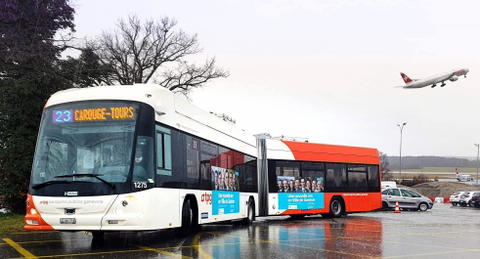
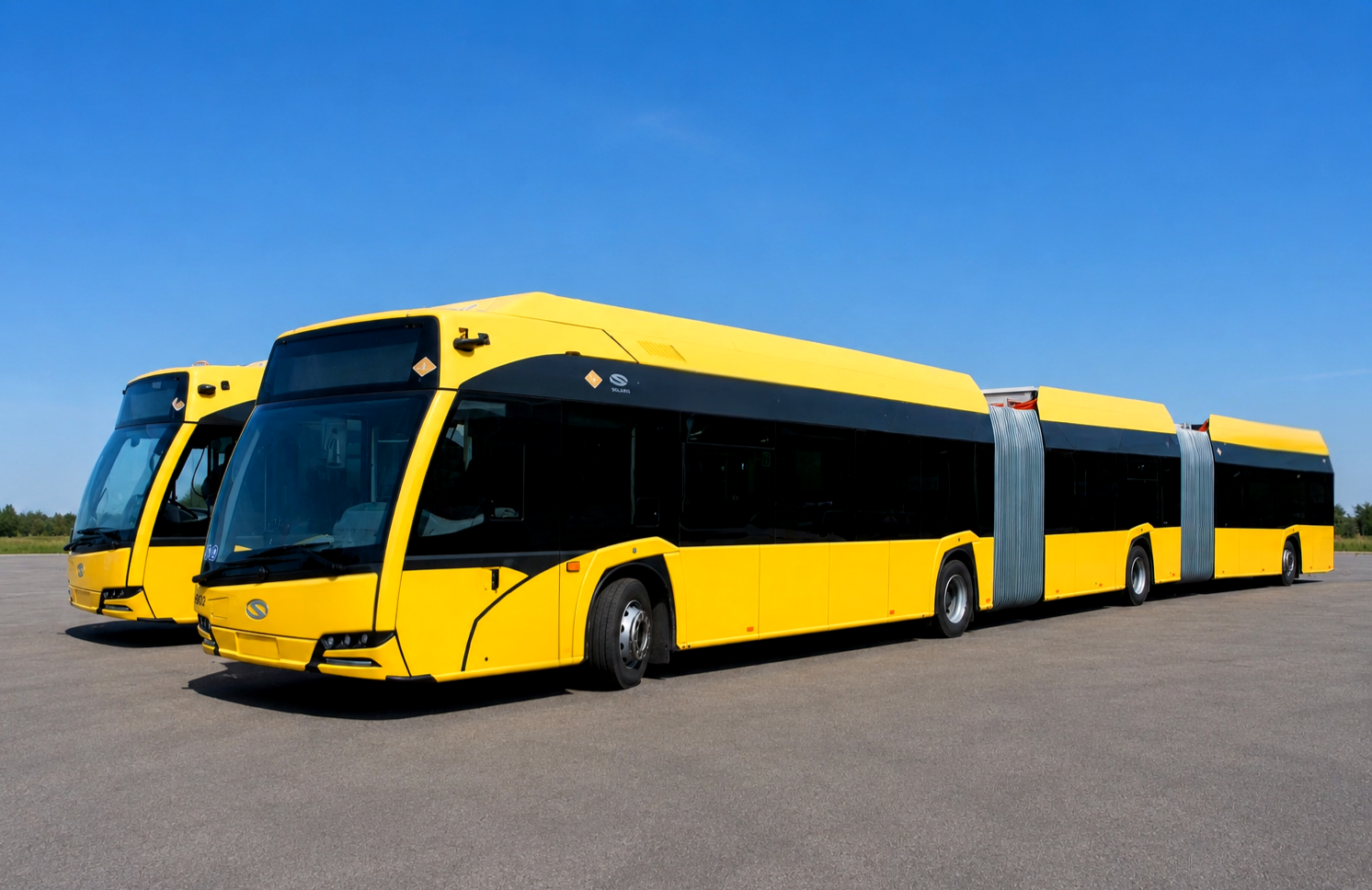
The French Centrale d’Achat du Transport Public (CATP) is preparing to establish a framework agreement of unprecedented scale in the European market for bi-articulated electric buses: the organisation has launched a public procurement procedure for two framework agreements covering new battery-electric vehicles, with a combined estimated value of €2.496 billion excluding VAT. The first lot, estimated at €1.056 billion, concerns vehicles to be procured without a charging system, while the second, worth €1.44 billion, covers versions supplied together with an on-route “flash” fast-charging system. The framework agreements may remain in force for up to eight years: the initial term is two years, which may be extended by one year at a time on up to six occasions.
CATP is the central purchasing body for France’s public transport sector, enabling eligible local authorities and transport stakeholders to purchase vehicles, equipment and services without launching their own full procurement procedures, through tenders carried out in advance and the framework agreements resulting from them. Organisations classified as contracting authorities – including local authorities, transport authorities and certain public transport operators – may join CATP; membership is free of charge and does not in itself entail any obligation to purchase. Beneficiaries can then access the framework agreements previously tendered by CATP and, under their terms and pre-established conditions, order buses among other items.
In addition to urban, suburban, interurban and long-distance vehicle categories, the system covers virtually all propulsion types commonly found on the European bus market: from conventional diesel models to natural gas- and biogas-powered, hybrid, battery-electric and hydrogen fuel-cell buses, all the way to trolleybuses. The arrangement reduces both the administrative burden and the time required for individual procurements, while the aggregation of potential demand from multiple customers can create significant purchasing volumes. At the same time, it is important to note that CATP does not replace conventional public procurements in every case even in France, and use of the system is subject to the conditions set out in the relevant framework agreement.
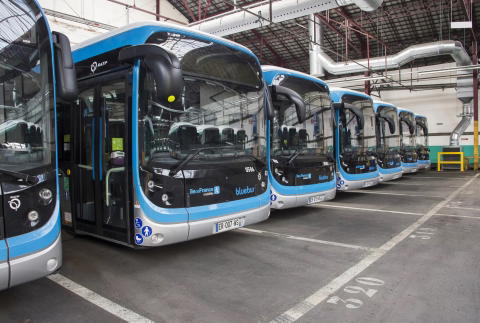
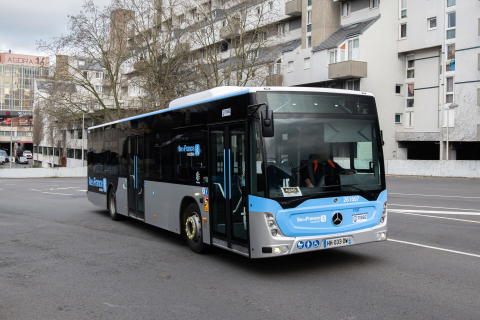
From the manufacturers’ side, however, gaining entry to the system is by no means straightforward, as CATP selects suppliers for each vehicle category and propulsion type through public procurement procedures, meaning that manufacturers must first perform successfully in these tenders to be included in the catalogue. Accordingly, the range includes numerous leading European manufacturers and manufacturers active in Europe, among them Solaris, MAN, Daimler Buses, Iveco Bus, Irizar, Hess, Volvo Buses, Scania, Otokar, Isuzu, Karsan, CaetanoBus, Safra and Bluebus.
The current procedure, announced by CATP earlier this year at the end of January, fits into this system, but is unusually large in scale even by the significant volumes handled by the organisation. Although the €2.496 billion figure stated in the notice is only an estimated value and does not represent a guaranteed order of that amount, the scale is well illustrated by the fact that a 24–25-metre battery-electric bi-articulated bus currently costs roughly €1.3–2.2 million, depending on equipment level and technical configuration. In other words, even taking into account the multi-year framework nature of the agreement and the uncertainty surrounding actual call-offs, the volume in question goes far beyond a few individual urban fleet renewals.
The procurement itself is being conducted as a negotiated procedure and consists of two successive stages. First, CATP assesses the suitability of the applicant manufacturers, after which those that pass this stage may submit their bids, potentially followed by a negotiation round if necessary. The deadline for submitting requests to participate expired on 9 February, so the procedure has already moved beyond the public application phase. A bidder was able to apply for both lots and may even win both framework agreements.
The first lot specifically covers battery-electric bi-articulated buses, without the procurement of the associated charging infrastructure. Its estimated value is €1.056 billion excluding VAT. By contrast, the second lot includes not only the vehicles themselves but also the corresponding on-route “flash” fast-charging system; CATP has estimated this at €1.44 billion excluding VAT. Each lot is a single-supplier framework agreement, from which CATP’s eligible beneficiaries may call off vehicles throughout the entire duration of the agreement – and, in the case of the second lot, the associated charging system as well – without a further competition.
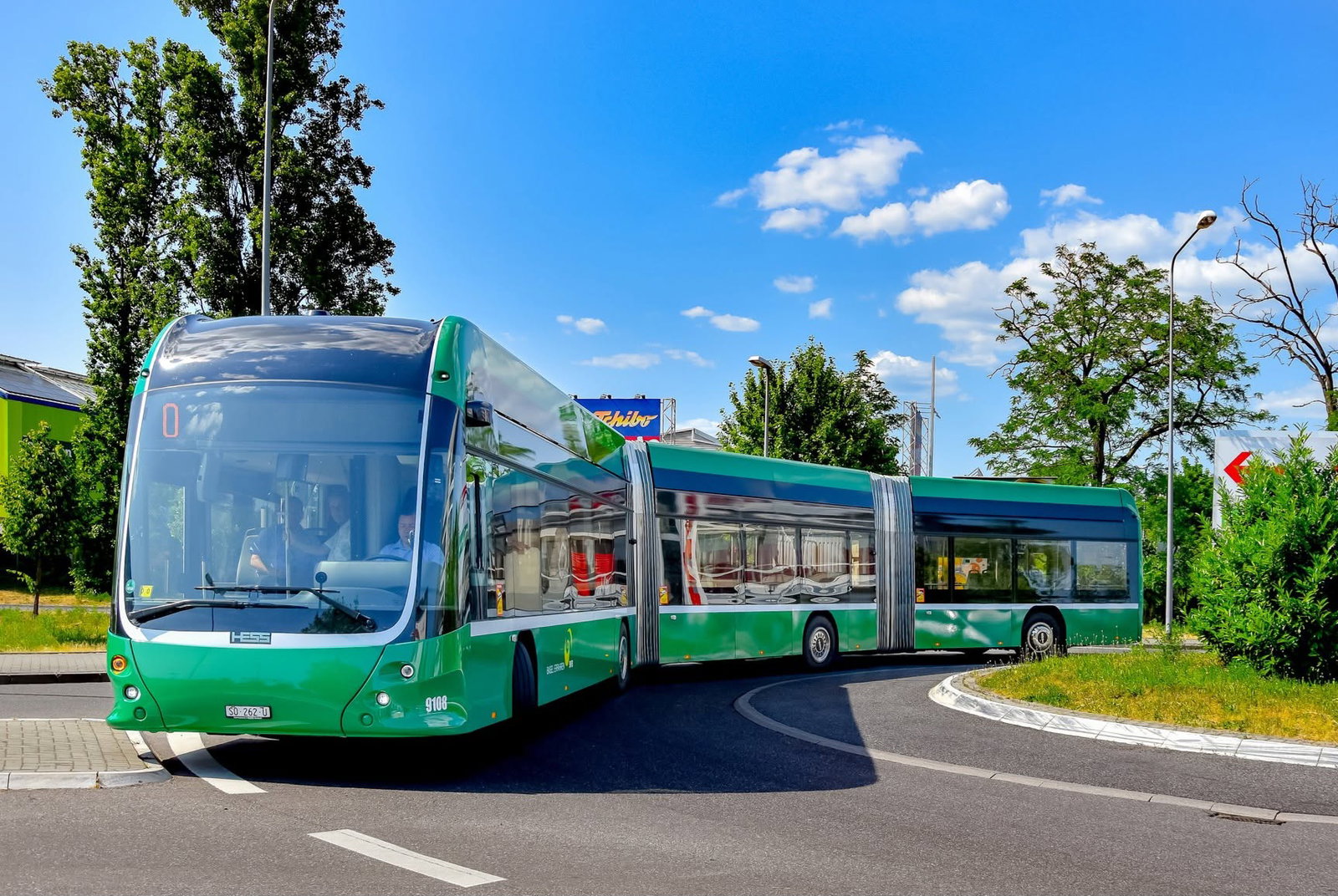
For the time being, however, the pool of potential suppliers is rather limited. With Van Hool’s collapse in 2024, practically only Solaris and Hess currently have active product programmes and references in Europe that can realistically be considered in this vehicle category. In the longer term, it is not so much the emergence of further European manufacturers that appears likely, but rather the arrival of Chinese players. One reason for this is that the bi-articulated bus remains a niche product: developing a completely new model requires significant cost and engineering capacity, while the available order volume is far smaller than for conventional solo and articulated models. From a production perspective, the category is not necessarily attractive either, as assembling a 24–25-metre vehicle on the production line can tie up capacity that would otherwise be sufficient to build several solo buses.
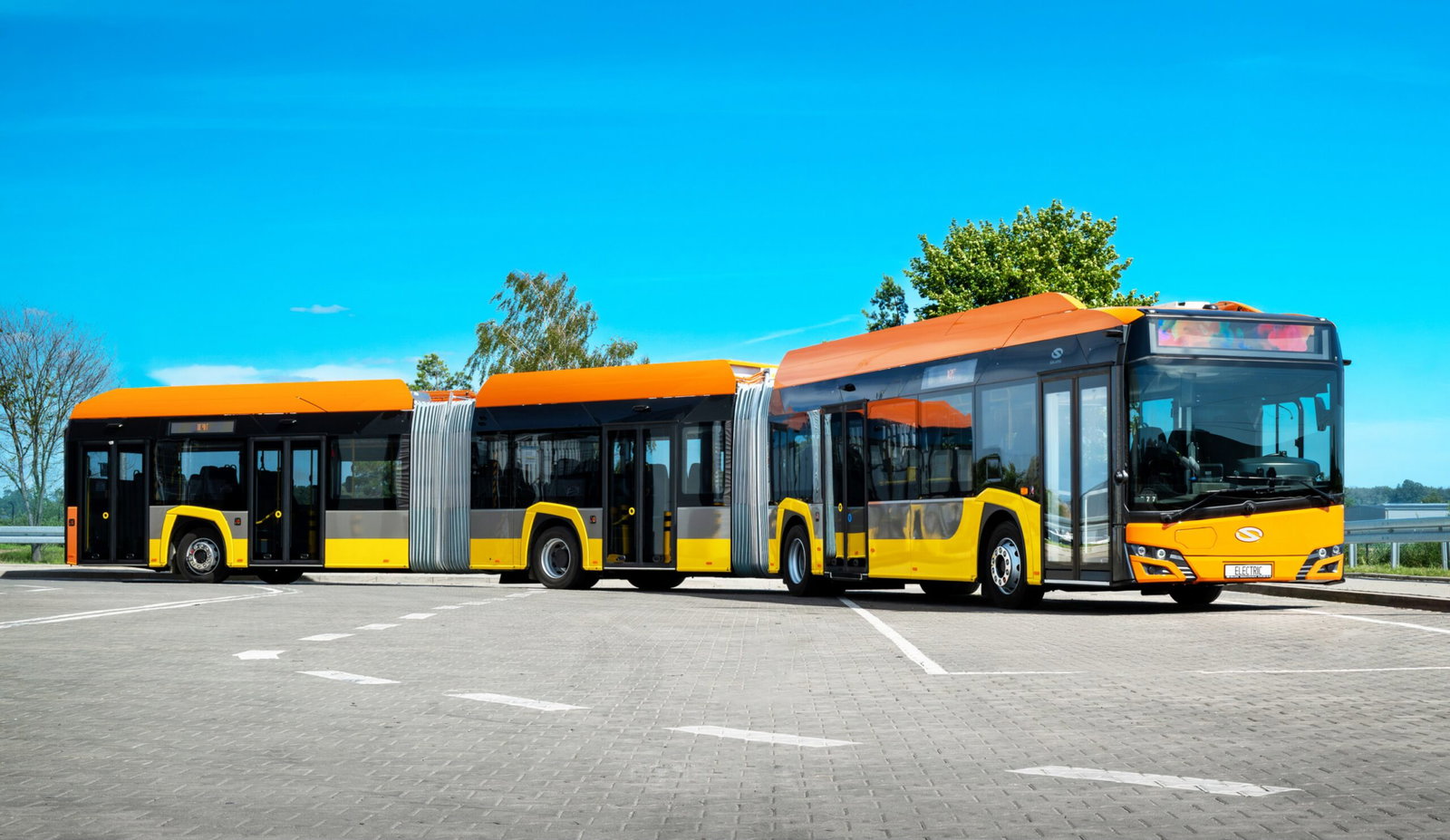
At the same time, Chinese manufacturers are already showing interest in this size category. In their case, the economic risk of developing such a niche product can be interpreted differently, as the substantial domestic market, high production volumes and the state industrial policy that has long supported China’s vehicle industry may provide greater room for manoeuvre in financing new models and market segments. Higer already has a bi-articulated city bus, while Yutong’s entry also increasingly appears to be a realistic possibility. The latter has won a framework agreement in Zurich that, in addition to solo and articulated trolleybuses, also optionally allows bi-articulated vehicles to be called off. All this suggests that in the 24–25-metre segment, which is still currently covered predominantly by European manufacturers, the emergence of Chinese players will have to be taken increasingly seriously in the coming years.
The unprecedented scale of the framework agreement may be partly explained by its unusually broad geographical scope. Although several high-capacity BRT developments and bi-articulated vehicle procurements are on the agenda in the French market, the currently known French requirements alone would hardly justify a framework providing financial cover for several hundred vehicles. Indeed, for both lots, the notice does not identify only France as the place of performance: in addition to mainland France, the overseas departments and regions, the overseas collectivities and New Caledonia, the list also includes Switzerland, Belgium, Luxembourg, Monaco, Andorra, Italy, Spain, the Netherlands, Germany and Austria.
This is all the more noteworthy because CATP is fundamentally a French central purchasing body, which, according to its own presentation, has more than 600 beneficiaries, including France’s 20 largest urban areas. The appearance of a foreign customer would not, however, be without precedent in the organisation’s history: CATP carried out its first procurement outside France in 2020, when Switzerland’s Transports de la région Morges Bière Cossonay (MBC) purchased Lumiplan Heurès transport planning and operations management software through it. According to the information provided at the time, this was made possible by the fact that the products and services in CATP’s offering may be accessible not only to contracting authorities in European Union member states, but also to those in countries that have acceded to the World Trade Organization’s Government Procurement Agreement (GPA/AMP). Switzerland is such a country, so MBC was also able to use the arrangement previously tendered by CATP.
The geographical reach of the current procedure and its estimated value of almost €2.5 billion therefore raise the possibility that the framework was sized from the outset with a potential customer base broader than French demand in mind. The procurement notice, however, does not provide a clear explanation for this, and the list of countries alone does not, of course, mean that actual orders will arrive from them.