![Magyarbusz [Info]](/mbi/header-logo.png)
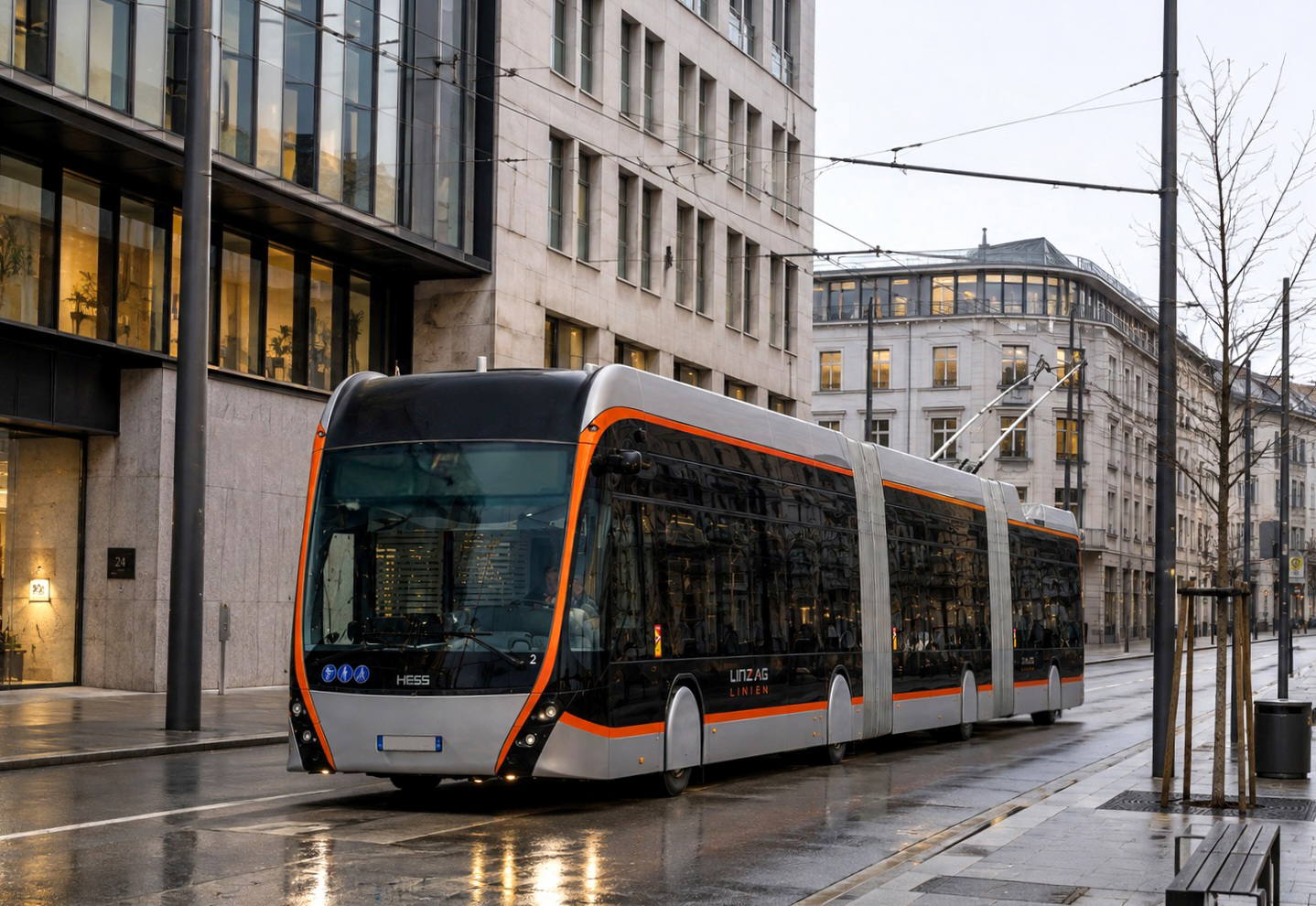
Linz bi-articulated trolleybus tender decided – Hess may be the mysterious winner
 Ludányi József
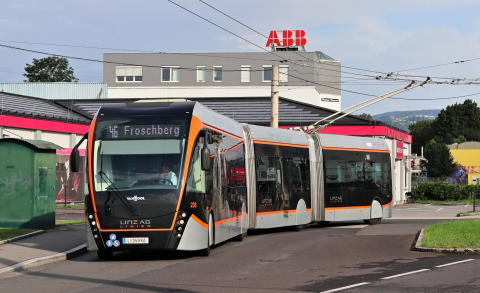
A result has been reached in the public procurement procedure launched last spring by Linz Linien for the purchase of new 24-metre bi-articulated trolleybuses. The Upper Austrian transport operator was forced to look for a new supplier following Van Hool’s bankruptcy in 2024, after the Belgian manufacturer’s exit made it impossible to proceed with the previously planned expansion of the current 20-strong Exqui.City 24T fleet. The first phase of the procurement allows for the purchase of 12 vehicles. The new vehicles will be needed, among other things, for the planned expansion of the Linz trolleybus network, above all to serve the new line 48.
In addition to the delivery of the vehicles, the procurement also covers their long-term maintenance over 16 years, applying the so-called “Linzer-Modell” already proven in Linz, meaning that Linz Linien would take part in the operation of the vehicles as a subcontractor. In its first phase, the framework agreement provides for the procurement of 12 new bi-articulated trolleybuses, while also allowing for the optional call-off of a further 27 vehicles. If all options are exercised, Linz Linien could expand its fleet by a total of up to 39 new trolleybuses measuring 24–25 metres in length. According to the plans, the first new trolleybuses could arrive in Linz in the third quarter of 2027.
According to details recently made public, only a single bid was submitted in response to the call, with a value of €47,885,266.25. The operator selected the winner as early as 29 August 2025, and the contract was signed on 3 November. At the same time, it has still not been disclosed which manufacturer was awarded the contract. Instead of naming the winning company, the contract award notice identifies it only as “Rahmenvereinbarungspartner 1”, or “framework agreement partner 1”. What is therefore certain is that Linz Linien has already selected the supplier of its new bi-articulated trolleybuses and has also signed a contract with it, but the manufacturer’s identity is not yet officially known. Our editorial team also contacted Linz Linien on the matter, but the transport company has so far declined to provide further details on the identity of the winner.
According to our industry sources, however, it can now be considered almost certain that the winner of the tender is Switzerland’s Carrosserie Hess AG. This in itself would not be particularly surprising, as the European market for bi-articulated trolleybuses of around 24 metres is extremely narrow: at present, essentially two manufacturers, Hess and Solaris, have marketable products in this category. Until the winner’s identity is officially confirmed, however, this should of course be treated as information from sources.
An interesting detail is that Hess has meanwhile also come into direct contact with Van Hool’s former bi-articulated urban model. Following the Belgian manufacturer’s bankruptcy, a significant part of the company’s bus business was acquired by VDL, but the Dutch group did not continue production of city buses, nor did it take over the related orders that were still in progress. Hess ultimately took on a role in completing the bi-articulated electric buses left in a semi-finished state for Île-de-France Mobilités: specialists from the Swiss manufacturer worked together with former Van Hool employees to make the vehicles ready for delivery.
The new bi-articulated trolleybuses will primarily be deployed on line 48, which represents the next major expansion of the Linz network. The new trolleybus corridor will run from Karlhof via the Eisenbahnbrücke towards the eastern part of the city, with its terminus in the WIFI/Linz AG area. One of the most important aims of the project is to relieve tram lines 1 and 2, as well as the area around the main railway station, while creating a new direct link between the northern and eastern parts of the city.
The high-capacity vehicles will also be needed because of the expected passenger volumes: according to preliminary calculations, route 48 could carry as many as 20,000 passengers per day. Under the plans, trolleybuses will operate at 7.5-minute headways during the day and every 15 minutes in the evening, meaning the new link could become one of the most important and busiest corridors in the Linz network.
The implementation of line 48 will also represent one of the most significant developments of the Linz trolleybus network for a long time. The start of infrastructure construction has been scheduled for autumn 2026, while the new line is planned to enter service by the end of 2027. This will add a new high-capacity north–east connection to the Linz trolleybus system, which currently consists of five routes.