![Magyarbusz [Info]](/mbi/header-logo.png)
First half sets a record: urban e-bus market share reaches historic high in Europe
 Ludányi József
The rise of electric buses in Europe gathered momentum again in the first half of 2026, as several market indicators reached new records after last year’s slowdown. According to the latest market analysis by the International Council on Clean Transportation (ICCT), 22,600 new buses and coaches were registered in the European Union between January and June, of which 6,425 were zero-emission vehicles. A year earlier, in the same period, 4,295 of the 18,900 new urban, suburban, regional and long-distance buses and coaches registered fell into this category, meaning the market share of zero-emission vehicles rose from 22.7% to 28.6% in one year. The figures published by the ICCT are broadly in line with ACEA’s first-half report on the European bus and coach market, although the ICCT focuses exclusively on zero-emission buses and coaches – battery-electric and hydrogen fuel cell vehicles – so minor differences can be observed in certain categories.
The most striking change came in the city bus market, where the slowdown that began last year was reversed. The market share of zero-emission city buses had declined for four consecutive quarters, before returning to growth in the second quarter of 2026 and exceeding 60% for the first time, reaching 61%. This represents the highest market share ever recorded.

At the same time, the share of diesel city buses fell to 30%, while natural gas vehicles accounted for 8%. Hydrogen fuel cell buses – as in the past five years – continue to play only a marginal role in the European market, with their share barely visible even in the statistics.

In the interurban bus and coach segments, however, the transition is progressing much more slowly. Diesel vehicles still account for 87% of new registrations, while battery-electric models currently have a 5% share. The remainder is made up mainly of natural gas buses. The picture is somewhat more favourable in the midibus market: electric drivetrains account for 13%, diesel for 85%, and natural gas models for 2%. The data clearly show that electrification continues to advance fastest primarily in urban transport.

One of the report’s most interesting findings is that Italy was clearly the engine behind this year’s growth. While 427 zero-emission buses and coaches were registered in the country in the first half of 2025, representing a market share of 16.6%, this figure rose to 1,792 in the first six months of 2026, lifting their share to 45.4%. Italy has thus become by far the largest zero-emission bus and coach market in the European Union, ahead of second-placed Poland (668 units), Romania (622 units), Germany (567 units), the Netherlands (531 units), Portugal (448 units) and France (421 units). According to the ICCT, funding from the European Union’s Recovery and Resilience Facility (RRF) plays a decisive role in this. Italy has earmarked €34.5 billion for the development of sustainable mobility, which must be used by August 2026. The programme supports not only the procurement of zero-emission – battery-electric and hydrogen fuel cell – city buses, but also the deployment of associated charging and hydrogen refuelling infrastructure, the modernisation of bus depots and operating sites, and the development of rail and other fixed-track transport, cycling infrastructure and intelligent transport systems. This comprehensive investment programme has significantly accelerated the procurement of electric buses and played a key role in putting the EU zero-emission bus market back on a strong growth trajectory this year.

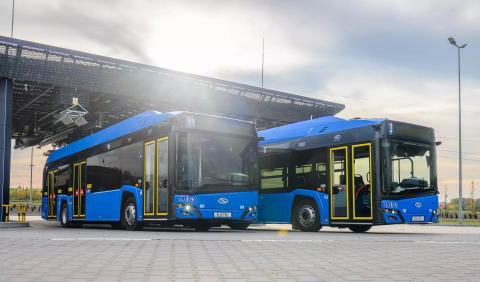
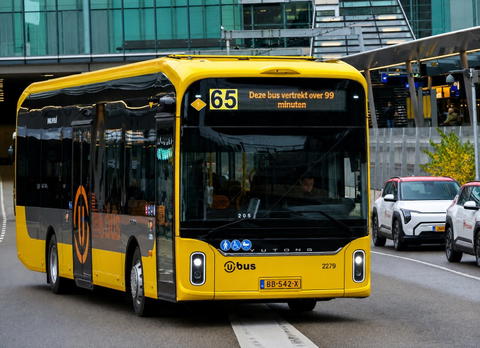
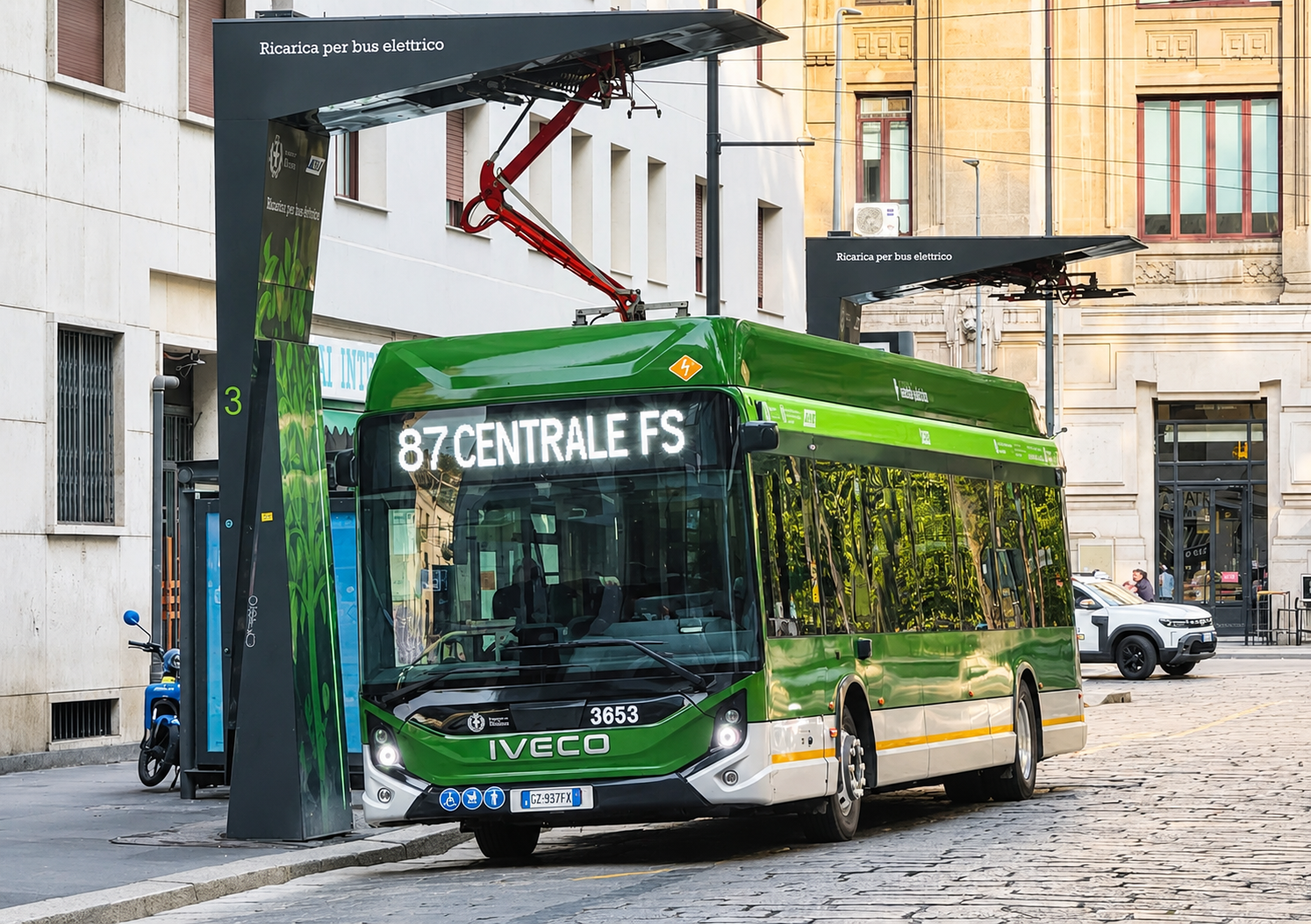
The balance of power among manufacturers also shifted significantly in the first half of 2026. According to ICCT data, Iveco Bus became the European Union’s largest zero-emission bus manufacturer, overtaking the former market leaders. The Italian manufacturer’s advance is closely linked to the exceptional expansion of its domestic market; in the second quarter of 2026 alone, it sold around 700 electric buses in Italy, nearly ten times the volume recorded a year earlier. Behind Iveco Bus, the leading group in the manufacturer ranking consists of Solaris, Yutong, MAN, BYD, Mercedes-Benz, Karsan and VDL.

At the same time, the report also points out that the performance of individual member states continues to be strongly influenced by targeted subsidy schemes and EU funding, which play a key role in the spread of zero-emission buses. The results for the first half of this year clearly show that market developments are still being shaped primarily by public policy incentives: in countries where substantial state or EU funding is available, the uptake of electric buses accelerates markedly, while in the absence of support, the pace of transition is considerably slower. All this suggests that the development of Europe’s zero-emission bus market cannot yet be separated from state involvement and public funding, which are expected to continue playing a decisive role in determining the pace of electrification in the coming years.