![Magyarbusz [Info]](/mbi/header-logo.png)
“Ground Force One”: armored motorcoaches in the logistics of U.S. presidential transport
 Ludányi József
U.S. presidential and vice-presidential transport is not based solely on aircraft and official motorcades, but forms part of a far more complex logistics system integrating several types of vehicles. Part of the less visible, yet operationally crucial, background to this system is provided by the special road vehicles that the United States Secret Service has maintained in service for decades. The two presidential motorcoaches based on the Prevost X3-45, built in 2010 during Barack Obama’s first presidential term by Canada’s Prevost, a subsidiary of Volvo Buses, fit into this system. Known as “Stagecoach” when the U.S. president is on board, and colloquially referred to as “Ground Force One”, they form part of the fleet developed to support presidential road transport, even though their role in presidential travel has been less prominent in recent years. The two vehicles had a combined purchase price of $2.2 million, which, adjusted for inflation, corresponds today to around $3.2 million, or more than one billion Hungarian forints.
The “Ground Force One” buses, which entered service in 2011, were acquired by the Secret Service partly because conventional limousines and other vehicles could not meet all the necessary protection and logistics requirements when transporting the president, particularly on longer journeys. Before the two Prevosts were purchased, the Secret Service rented a new bus whenever the president needed one, then retrofitted it with armor and other security features.
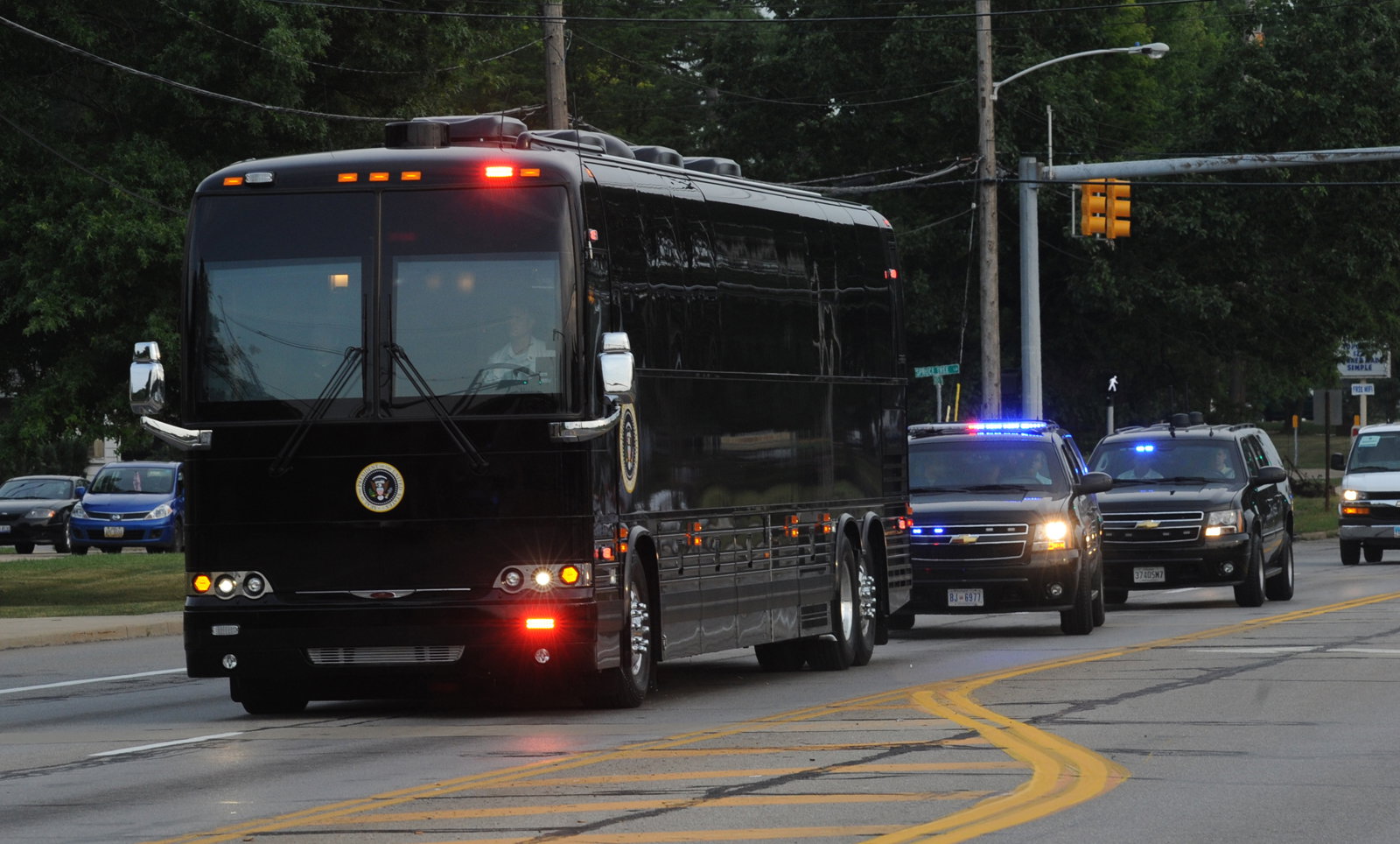
Photo: Steve Manheim
The acquisition of two permanent, government-owned buses during the Obama administration, however, sparked political and public debate. The criticism was aimed not primarily at the vehicles’ technical specification or their actual security role, but at the fact that the purchase took place during a period marked by economic austerity, and in the years leading up to the president’s re-election campaign. For part of the public, the armored buses became a symbol of the use of public funds for prestige purposes, especially as the name “Ground Force One” spread in the media, consciously or otherwise drawing a parallel with the presidential aircraft.
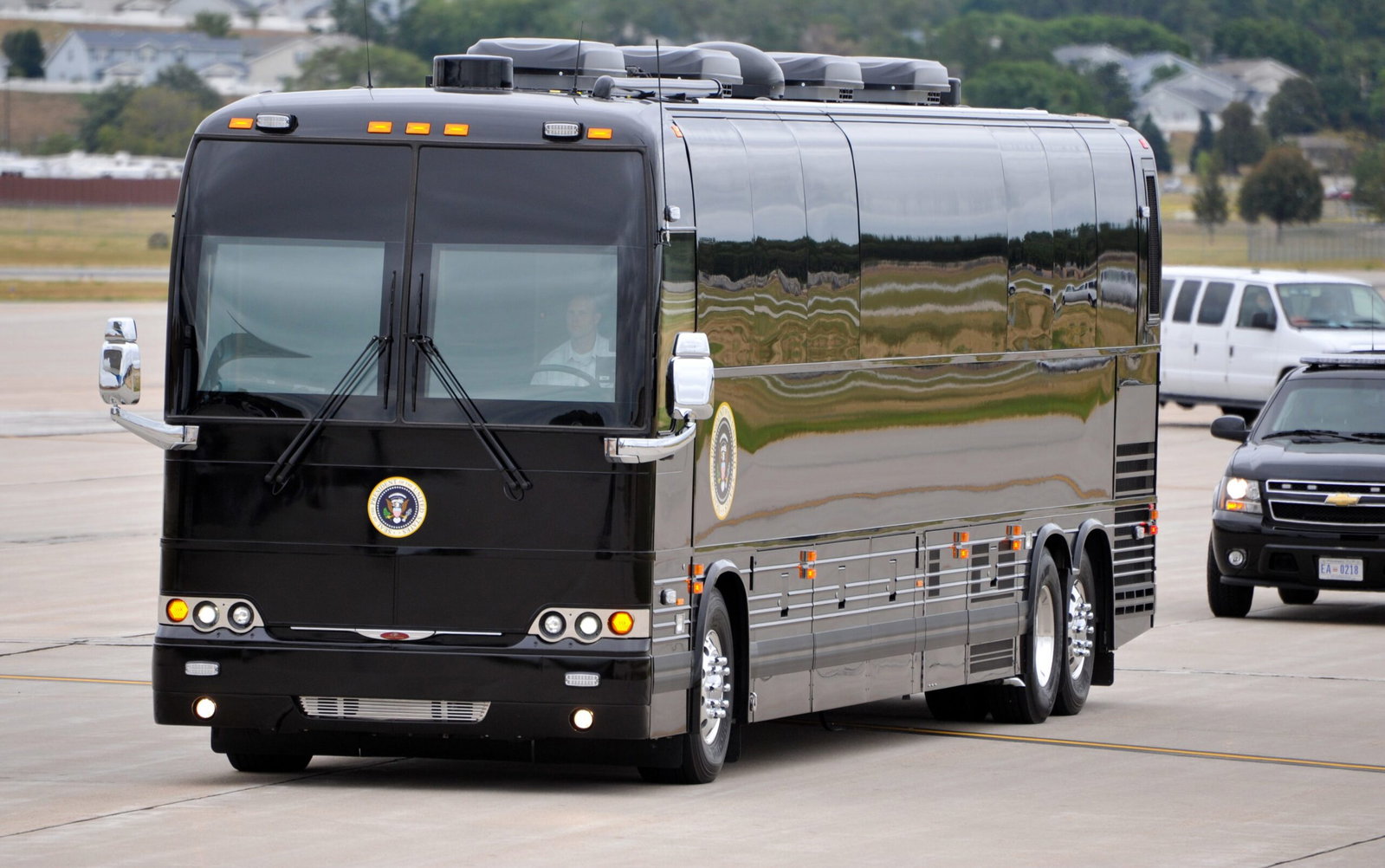
The criticism was also fueled by the fact that the vehicles’ first high-profile appearances took place in a campaign setting, which in the eyes of many blurred the line between government and political appearances. At the same time, little attention was paid publicly to the fact that the buses in fact replaced a long-standing Secret Service practice that had previously been handled on an ad hoc basis: with their purchase, the temporary, case-by-case conversion of rented vehicles was replaced by a permanent, high-security road asset ready for immediate deployment.
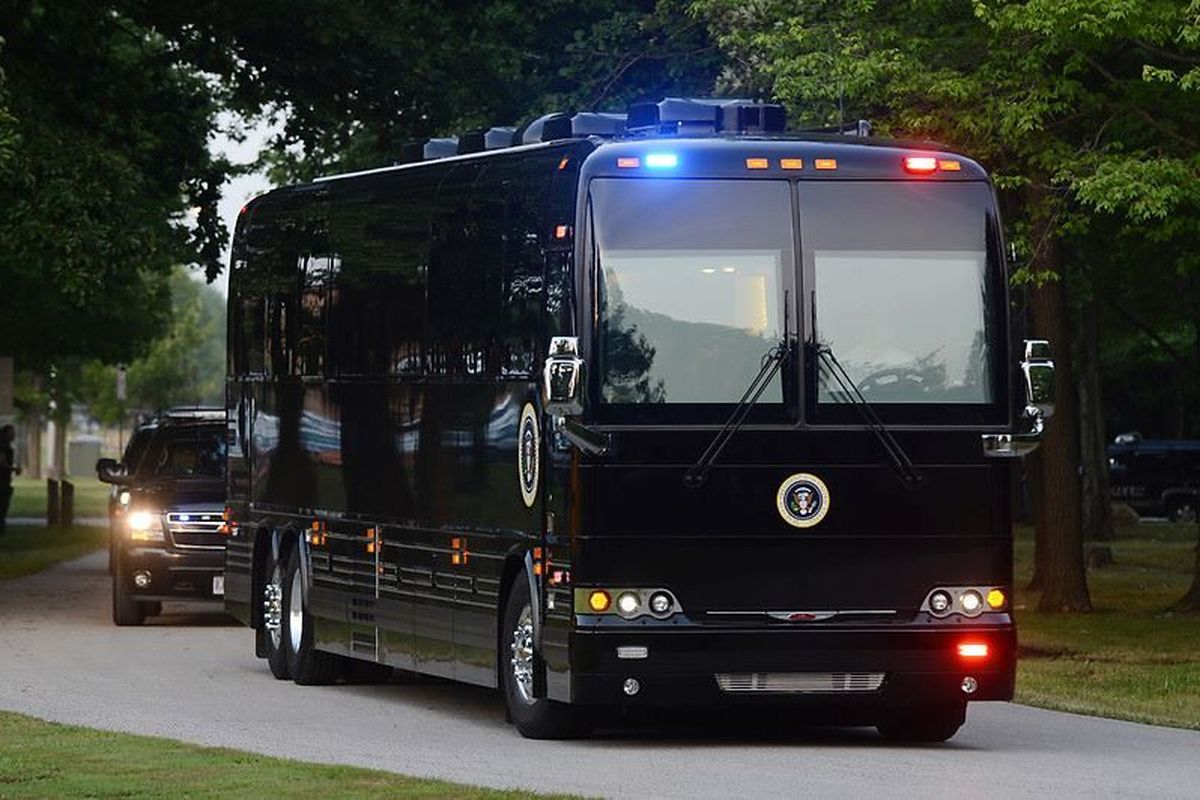
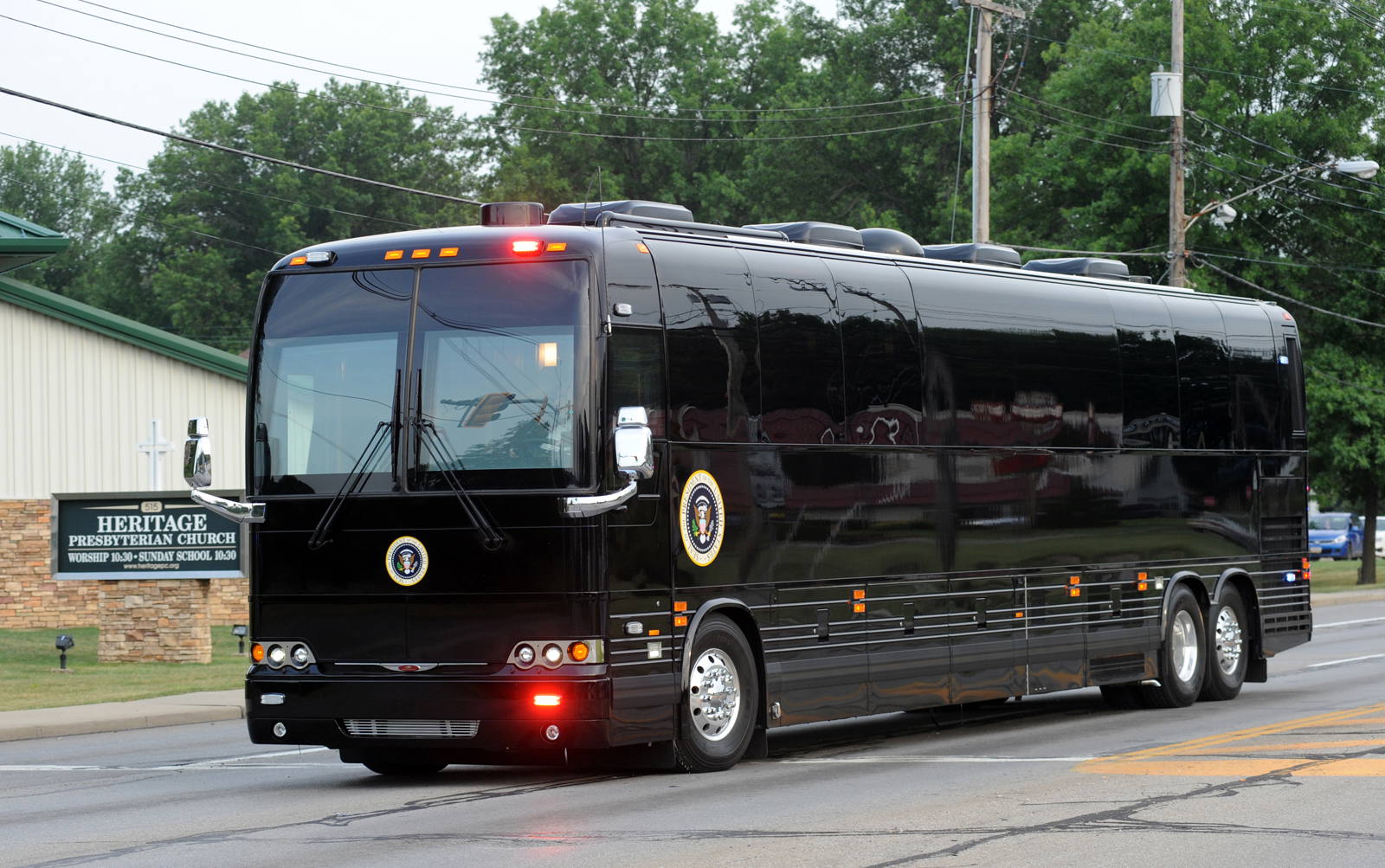
The presidential buses received a uniform jet-black paint finish and carry no campaign or White House-related logos, as they officially form part of the U.S. federal vehicle fleet. The vehicles were built in Canada specifically to the designs and requirements of the U.S. Secret Service, and were then subjected to special modifications with the involvement of Hemphill Brothers Coach Company. Based in Nashville, Tennessee, and specializing primarily in Prevost models, the company has provided services not only to the Secret Service but also to such well-known clients as Beyoncé, Tom Hanks, Jennifer Lopez, Madonna and Pope Benedict XVI.

Details of the modifications are understandably not public, but it is known that the three-axle presidential motorcoaches, with the 45-foot – or 13.72-meter – length considered standard in the United States and Canada, have an exceptionally high level of security equipment. The vehicles are armored – in theory, resistant even to the effects of man-portable anti-armor weapons – and are also fitted with bullet-resistant glazing, a reinforced main door, run-flat tires, an onboard fire-suppression system, and red-and-blue emergency warning lights mounted on the front and rear panels.

Oxygen tanks are also installed on board the buses, ensuring breathable air in the event of a chemical attack. In addition, the vehicles carry an extra supply of blood matching the president’s blood type in case the president is injured and requires an urgent transfusion. Their interiors are configured to function as mobile offices, while also providing protection against chemical or biological attacks.
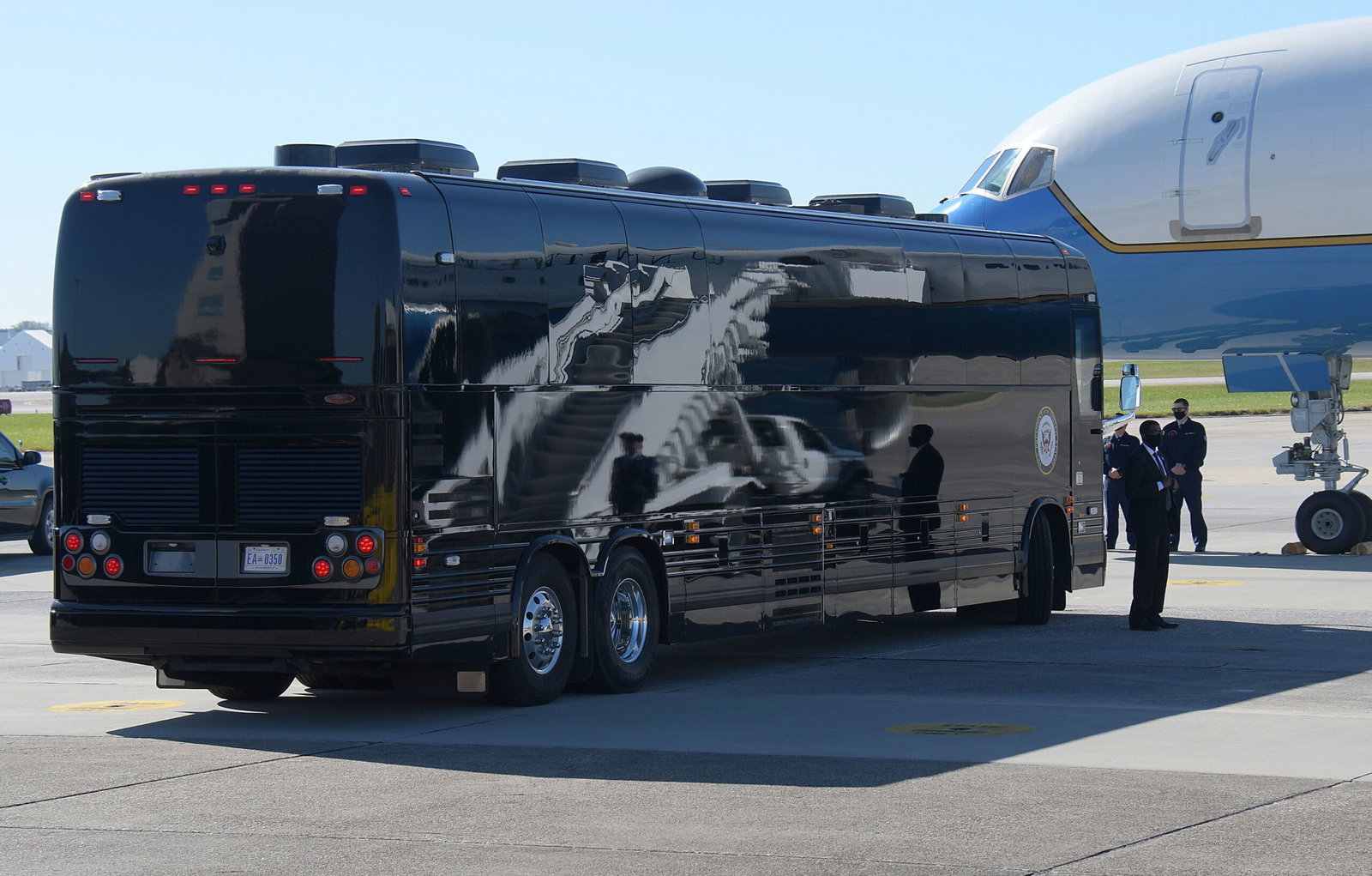
The two Prevost X3-45s are equipped with high-security communications systems that can be functionally compared with the solutions used in the presidential limousine known as “The Beast”. This allows the president or vice president to remain in continuous, secure contact from the vehicle with the government and security decision-making chain, even in a crisis. Publicly available images also clearly show that the buses’ roof-mounted antenna configuration has changed several times over the years, in line with the continuous technological development that also characterizes the satellite and encrypted communications systems used in Secret Service vehicles. All this suggests that the communications package is not static, but is a regularly updated element of the presidential vehicle fleet, adapted to current technical and security requirements. Also carried on board are the identification and authentication tools associated with decision-making and execution procedures related to the United States’ nuclear arsenal.

The buses have an unladen weight of close to 20 tonnes, clearly demonstrating the considerable weight penalty resulting from the armor and special onboard systems, since the basic version of this generation of the Prevost X3-45, with standard seating, has an unladen weight of just 16.3 tonnes. The vehicles’ exact technical specifications are not public, however, so it cannot be determined with certainty whether Prevost installed the Detroit Diesel S60 or the Volvo D13 diesel engine – both power units offered for the model at the time – in the rear of the vehicles. The latter appears more likely, as Detroit Diesel announced in early 2010 that it would stop selling its engines to companies outside the Daimler Group, and although this decision was later reversed, Prevost has since fitted its models exclusively with Volvo powertrains. Government buses may normally operate only without decorative branding, but during presidential and vice-presidential campaigns they may also receive campaign branding if the candidates cover the costs. This has happened twice so far: during the 2020 campaign of Donald Trump and Mike Pence, and during the 2024 campaign of Democratic presidential candidate Kamala Harris and vice-presidential candidate Tim Walz.
When the two vehicles were acquired, the Secret Service planned for a service life of around ten years, which the buses, now nearly fifteen years old, have already exceeded. At present, however, there is no known public decision on their replacement or renewal, so they are expected to remain in service at least through the next presidential campaign cycle in 2028.
Cover photo: Steve Manheim