![Magyarbusz [Info] International](https://bunny-wp-pullzone-9e1je37kud.b-cdn.net/wp-content/uploads/2025/06/cropped-cropped-mbi_sby_v1-scaled-1.png)

As previously reported, Castrosua is expanding its portfolio of electric city buses, as the 18-meter-long articulated version of the NELEC series, built on the self-propelled chassis supplied by BYD, has been completed. This novelty belongs to the evolution of the Spanish bodybuilder’s 12-meter NELEC model, originally introduced on Scania bases in 2021, and is closely related to the BYD chassis version launched in 2023. Although the official premiere of the articulated version is still pending, the prototype has already been tested in several Spanish cities and is currently being tested with the involvement of various transport service providers.
The new articulated version carries forward the technical and design solutions of the solo NELEC version, entirely based on the developments of Castrosua’s own engineering team. The body, made of corrosion-resistant steel and composite materials, was designed according to the requirements of the M3/I vehicle class (urban category). Although not mandatory for city buses, the type complies with the UN-ECE Regulation No. 66, which sets out the rollover safety requirements for the body structure. In addition, the vehicle meets the UN-ECE 100 regulations for electrical safety, the UN-ECE 118 for the fire resistance, smoke emission, and toxicity of materials used, and the UN-ECE 138 for acoustic warning systems of electric vehicles.
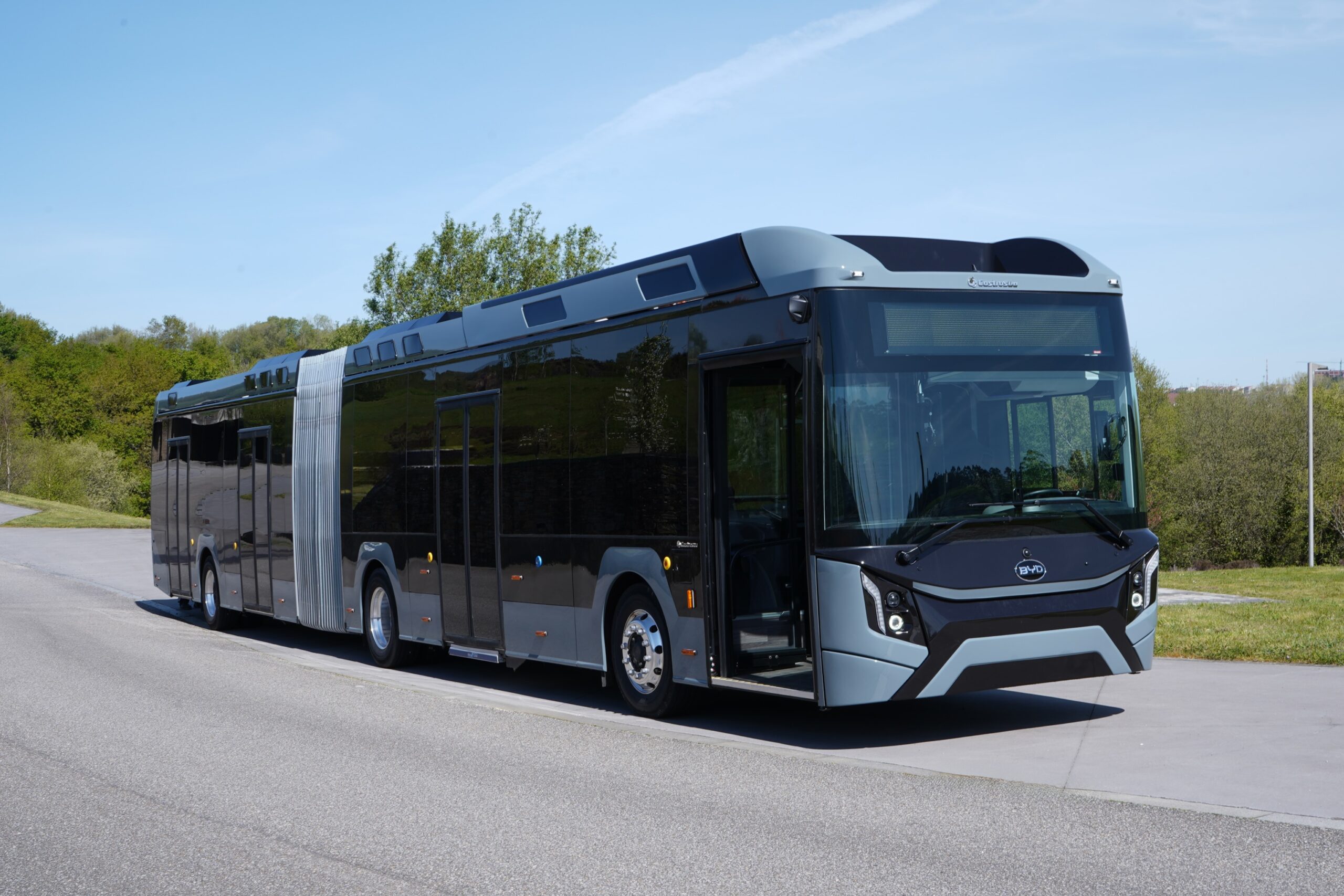
The 18.18-meter-long prototype, equipped with four passenger doors, was specifically designed for high passenger traffic urban routes. The propulsion is provided by two 150 kW hub motors with hairpin winding, integrated into the BYD’s own EQ13 portal axle in the rear section, making the vehicle a pusher-type articulated bus. The articulation bellows are supplied by the Italian company PEI Mobility. Energy storage is provided by a 511 kWh capacity lithium iron phosphate (LFP) battery pack, and several operators are currently testing the real-world range achievable with it. As the vehicle uses the same propulsion system as BYD’s own 18.1-meter-long eBus B18 type, its expected range with this battery configuration could reach up to 400 kilometers according to BYD’s factory data, based on the UITP SORT 2 (urban-suburban mixed) measurement cycle. The bus will be rechargeable in its basic version with a CCS Combo 2 plug-in socket, but conventional or inverse pantograph fast charging will also be available as an option.
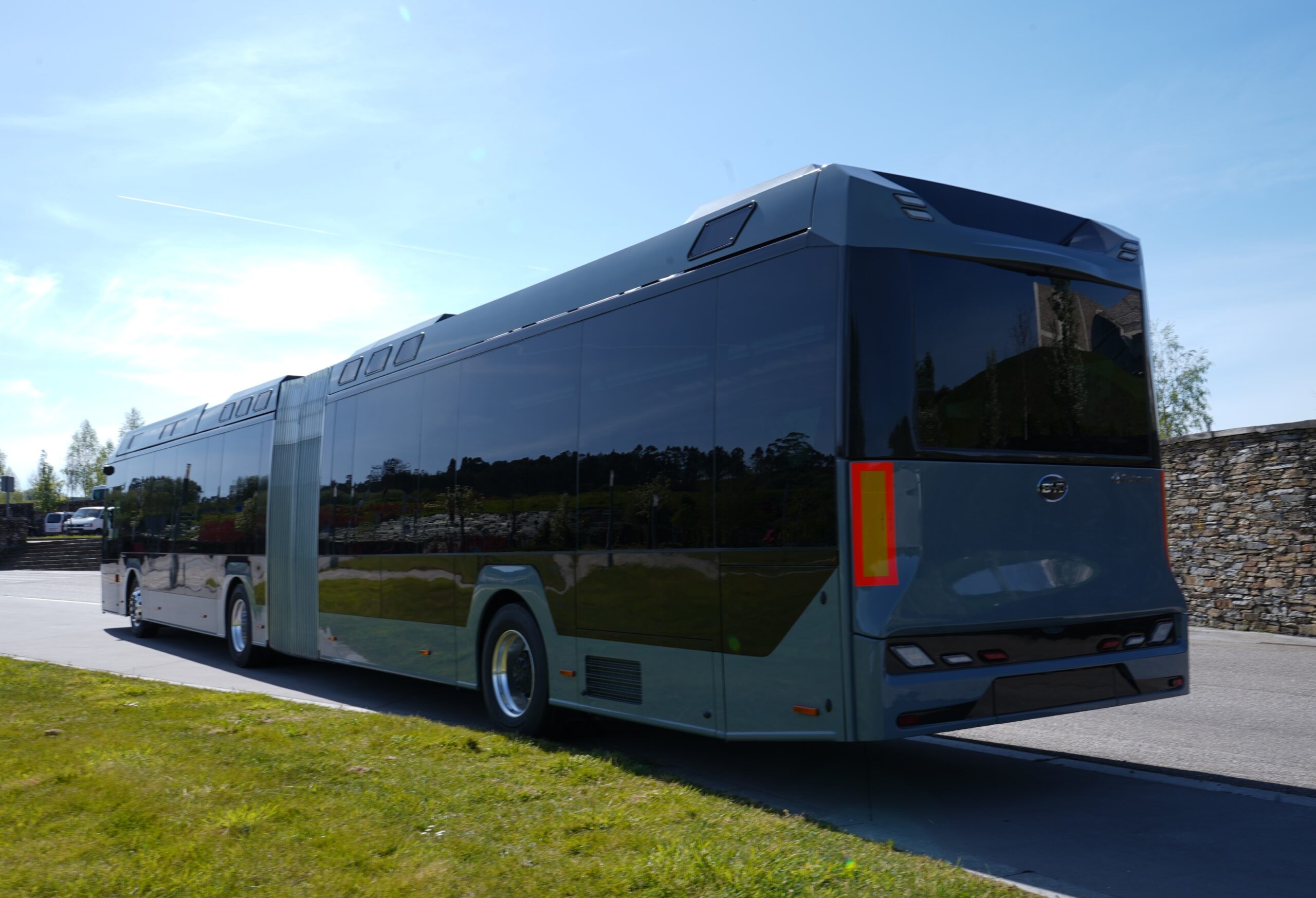
In terms of driver assistance systems, the articulated NELEC version employs the most advanced solutions. Improving traffic safety, with a particular focus on the protection of pedestrians and cyclists, was a key consideration during development. The advanced ADAS system includes a blind spot monitoring system, lane departure warning, and a reversing camera, which significantly support the driver’s work, especially in adverse weather conditions such as fog or rain. Traditional exterior mirrors are replaced by a camera-based system, which significantly improves visibility and reduces the driver’s workload.

Safety in the passenger compartment is enhanced by cameras placed at each door and the associated monitoring displays, making boarding and alighting control more efficient. The driver’s cab design aims to maximize all-round visibility, which excellently aids maneuverability despite the vehicle’s large size and capacity – a feature highlighted by several operators during test runs.

The full-length low-floor passenger compartment is equipped with indirect LED lighting, separate climate zones, an electrically operated wheelchair ramp, and two spaces reserved for passengers with reduced mobility, ensuring travel comfort and equal opportunities. The aforementioned four-door layout allows for quick passenger exchange, which provides an operational advantage, especially on high-traffic urban routes during peak hours. The prototype featured in the images provided by the manufacturer is equipped with Fainsa e-Metropolis passenger seats, brushed handrails, and parquet-effect flooring.

According to Castrosua, the articulated NELEC version is already available for order. The type has received favorable feedback from the traffic tests conducted in Spanish cities, with operators highlighting the test bus’s range, maneuverability, and load capacity. The creation of the NELEC series is a strategically significant milestone for the manufacturer, strengthening Castrosua’s commitment to innovation, sustainable mobility, and the development of propulsion solutions that replace fossil fuels – contributing to the value-creating transformation of the present and future of public transport.
__
 Related Articles


