![Magyarbusz [Info]](/mbi/header-logo.png)
Test drive in Ankara: MAN unveils prototype electric coach
 Patthy Gellért
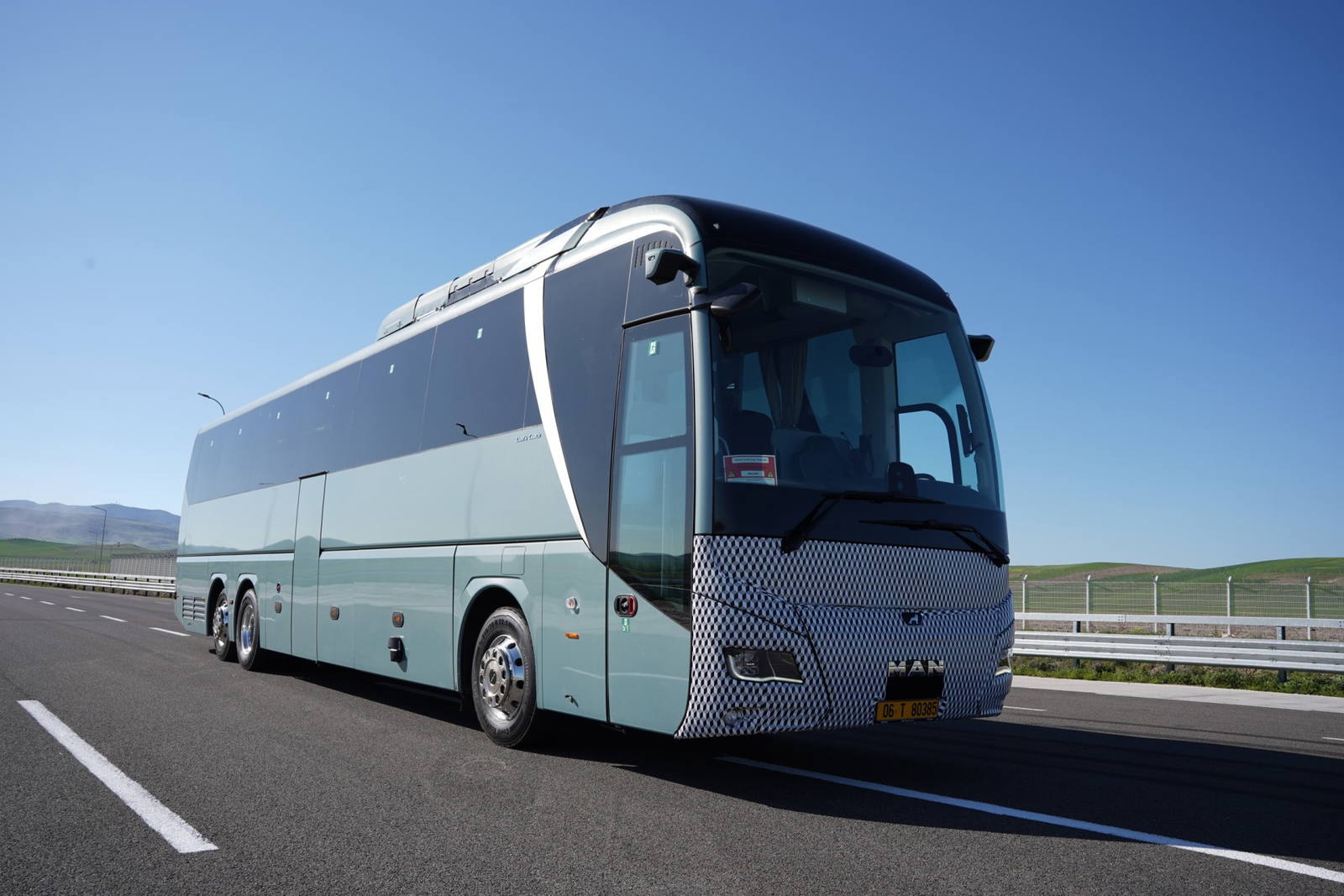
MAN is on the brink of a significant step, as this autumn it will become the first among leading European manufacturers to unveil a fully electric long-distance coach. The first prototypes of the zero-emission version of the MAN Lion’s Coach were presented for a preview, even before the official premiere, at the manufacturer’s development center in Ankara – built over four years with an investment of approximately 41 million euros, and home to 871 engineers working on the latest models of the lion-branded company.
As was the case with city buses a few years ago, leading European manufacturers are not rushing the development of long-distance electric coaches, even as Chinese competitors have long been present in this segment – and several companies are already offering such vehicles in North America to customers open to electromobility. The only exception so far has been Van Hool, which offers both single and double-decker long-distance electric buses overseas, though in Europe they too have stuck with conventional diesel engines. This makes the introduction of MAN’s new model a truly significant milestone. However, widespread adoption of the type will still take time: the first customer units destined for key markets are expected to be delivered by mid-2026, while full-scale production at MAN’s Ankara plant will only begin at the end of 2026.
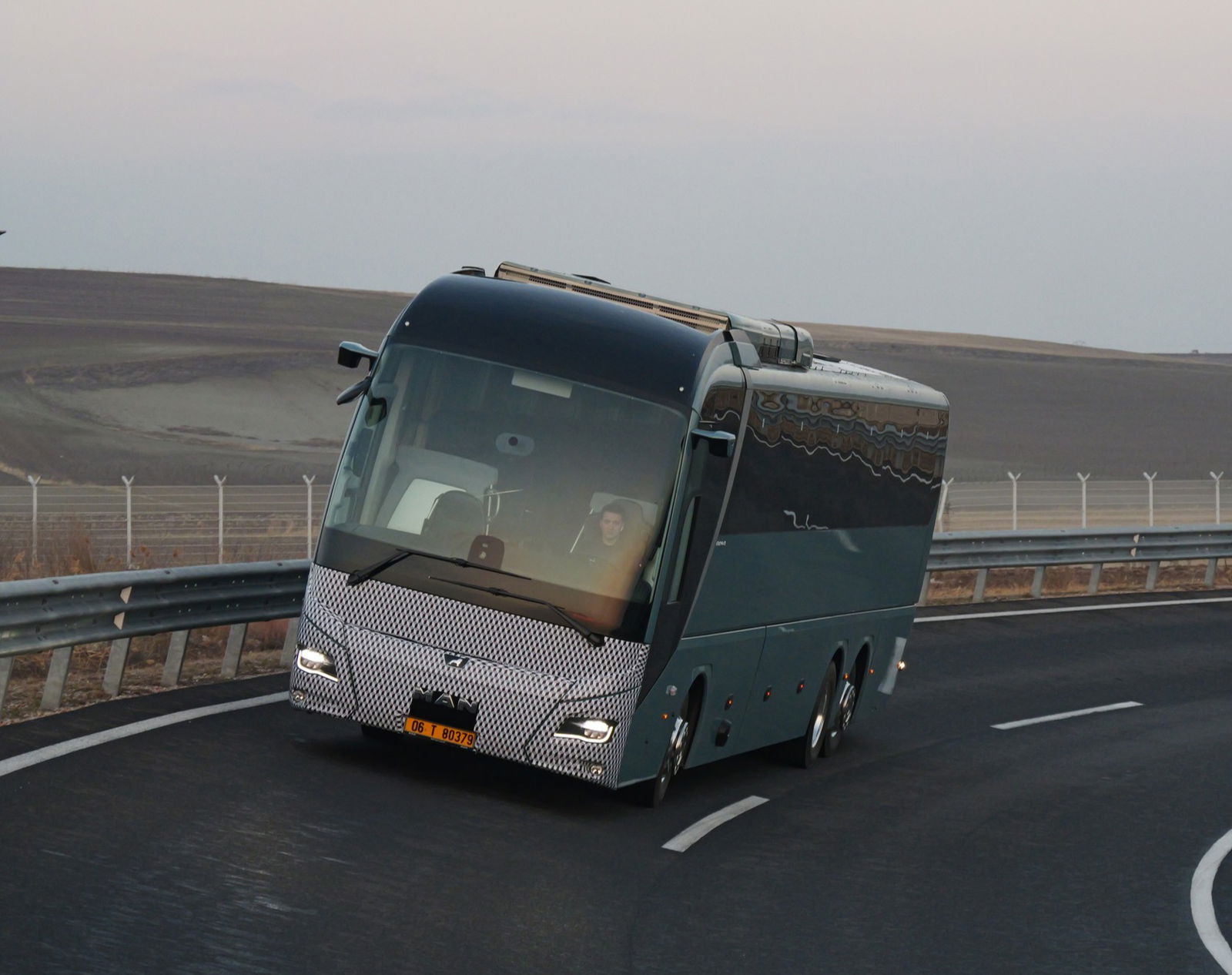
The brand’s first fully electric long-distance coach will be named MAN Lion’s Coach 14 E – as indicated by the type designation, it will first debut in the extended three-axle version. This is because two-axle configurations would pose greater challenges in adhering to mass limits and axle loads, and MAN does not intend to make compromises in these areas. Later on, a two-axle version may be introduced, and even a self-driving chassis is conceivable, though the manufacturer refrained from making any promises regarding timing.
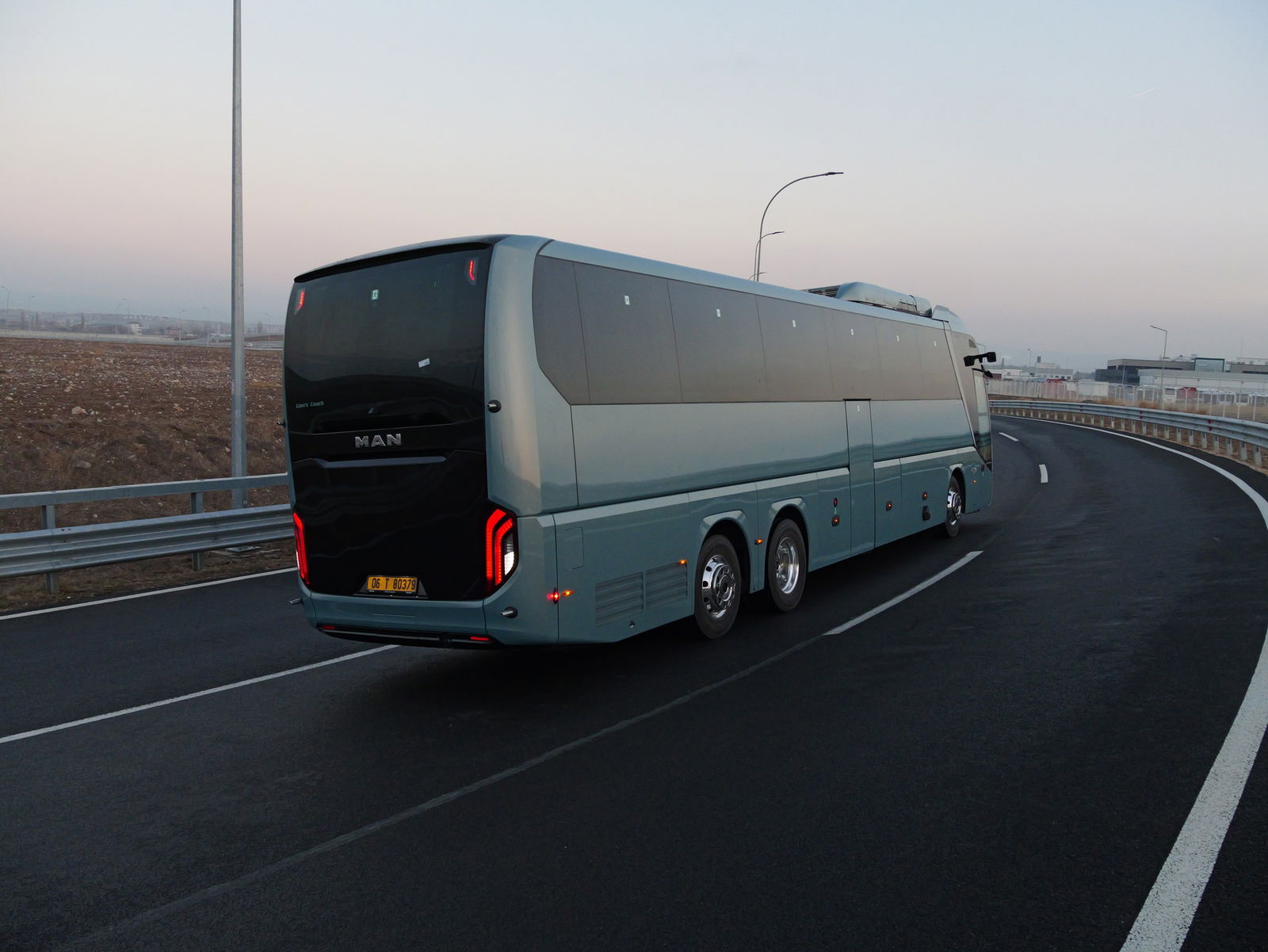
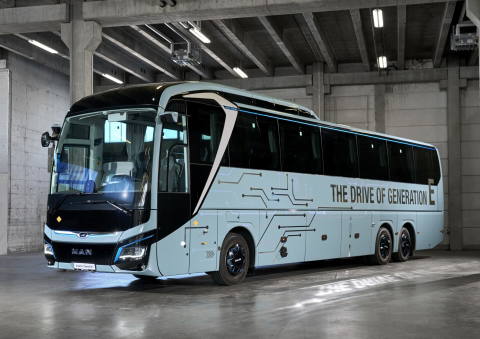
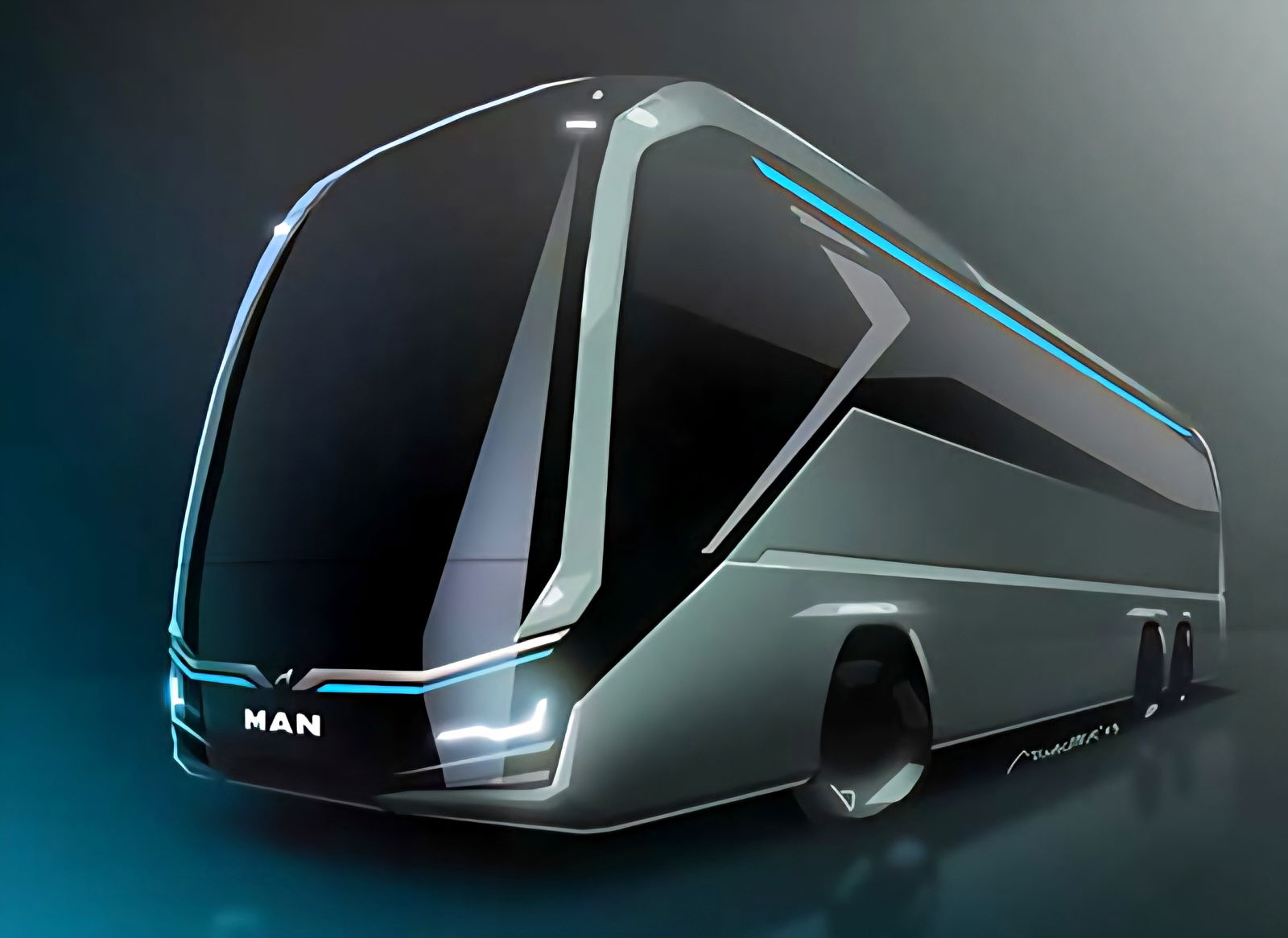
It is important to note that the event in Ankara was not the official world premiere – that will take place in October at the Busworld Europe 2025 exhibition in Brussels – but rather served the purpose of giving the bus industry press insight into MAN’s current development direction and plans. Our hosts repeatedly emphasized that what we saw was not the final version. Accordingly, the prototype’s front fascia was still covered in camouflage foil, indicating that the design would differ somewhat from the diesel version – resembling more the Lion’s City E city bus series, with more glossy black surfaces and ribbon-like blue decorative strips. The visual B-pillar will also be redesigned, and the rear panel will be updated for significantly better aerodynamics – although this was based on the manufacturer’s statements, since the unit tested in Ankara, being an early prototype, still featured the rear panels of the diesel variant. According to the designers, the electric version will offer both a dynamic appearance and aerodynamic efficiency: while no exact figure was provided, preliminary calculations suggest the Lion’s Coach E will have the lowest drag coefficient in its class.
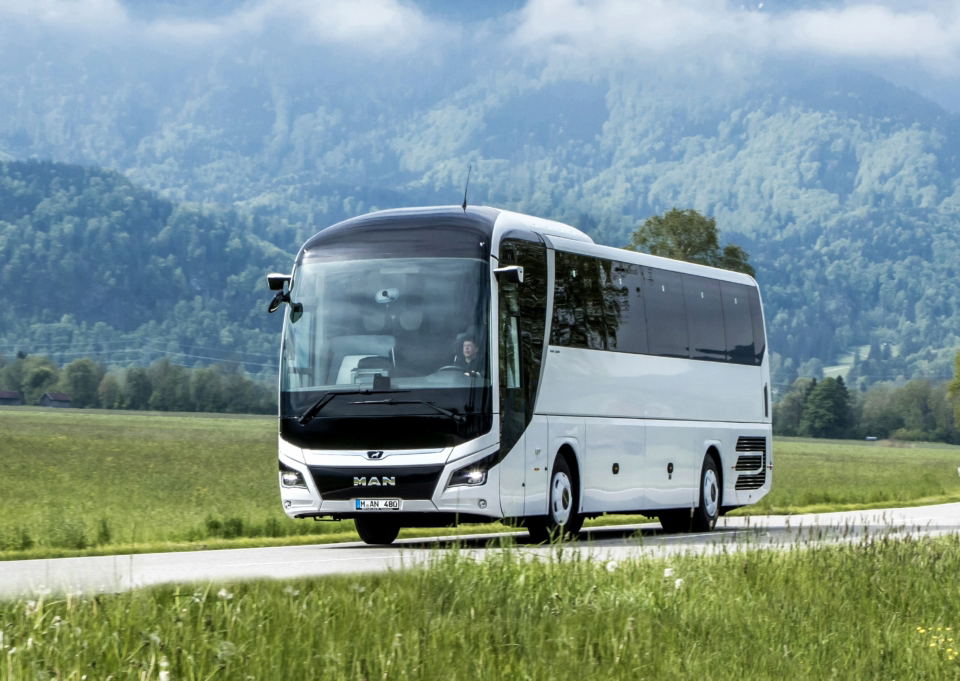
The new vehicle is primarily recommended for short and medium-range scheduled or charter services, as well as shuttle operations. According to MAN, true long-distance usage is still not feasible with current technology. This also explains why the Lion’s Coach range will continue to include diesel powertrains for the long term – in fact, it will be the only product line (along with Neoplan models) to introduce Euro 7-compliant engines. In contrast, the company will gradually phase out internal combustion engine models in the city and intercity segments, not for market reasons but due to political mandates: by 2030, 90% of city buses sold in the EU must be locally emission-free, and by 2035, 100%. Similar restrictions are expected for suburban/interurban (Class M3/II) buses, and the remaining small volume is not considered worth developing for. Among zero-emission technologies, MAN supports battery-electric solutions over hydrogen, citing that hydrogen (including its production, compression, and transport) requires three times more energy for the same distance.
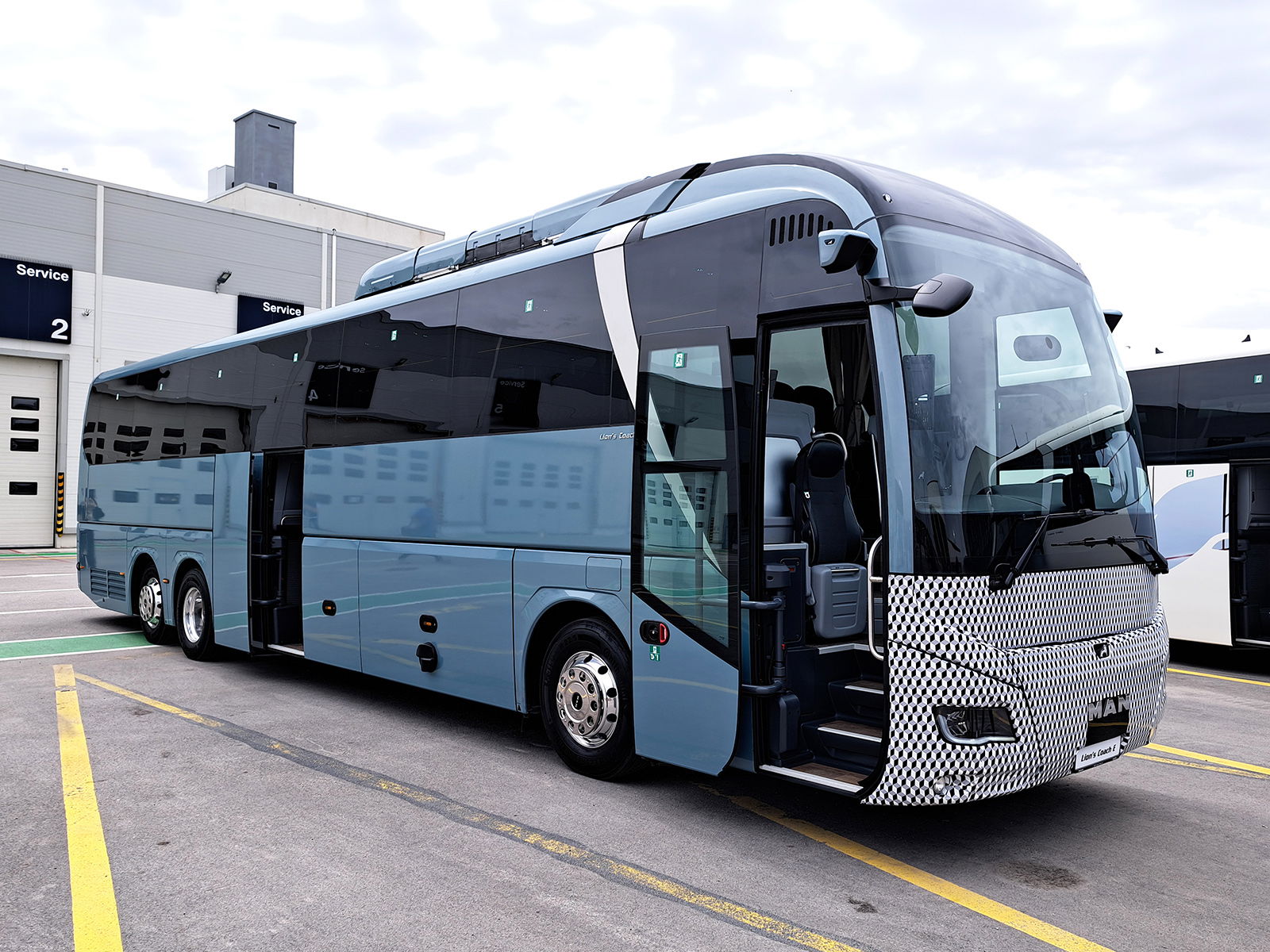
Structurally, the new long-distance electric bus is based on the well-known diesel-powered Lion’s Coach, whose current generation debuted in 2017. MAN’s development engineers have recently prioritized maximizing synergies within the Traton Group. As a result, we can expect to see Scania components in MAN vehicles soon and vice versa. Not surprisingly, then, the Lion’s Coach E’s traction batteries also come from within the group – specifically from the MAN eTGX electric tractor unit.
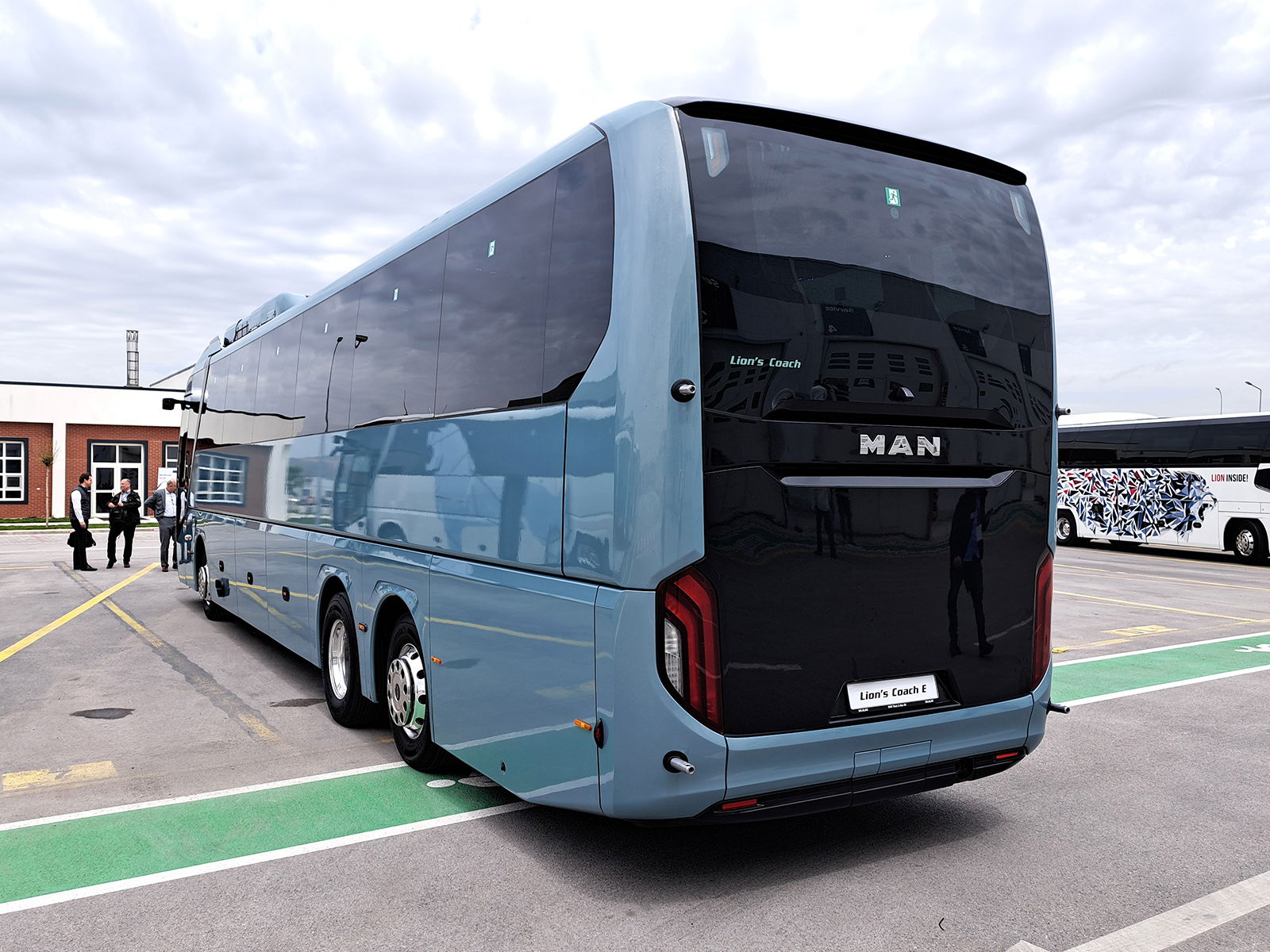
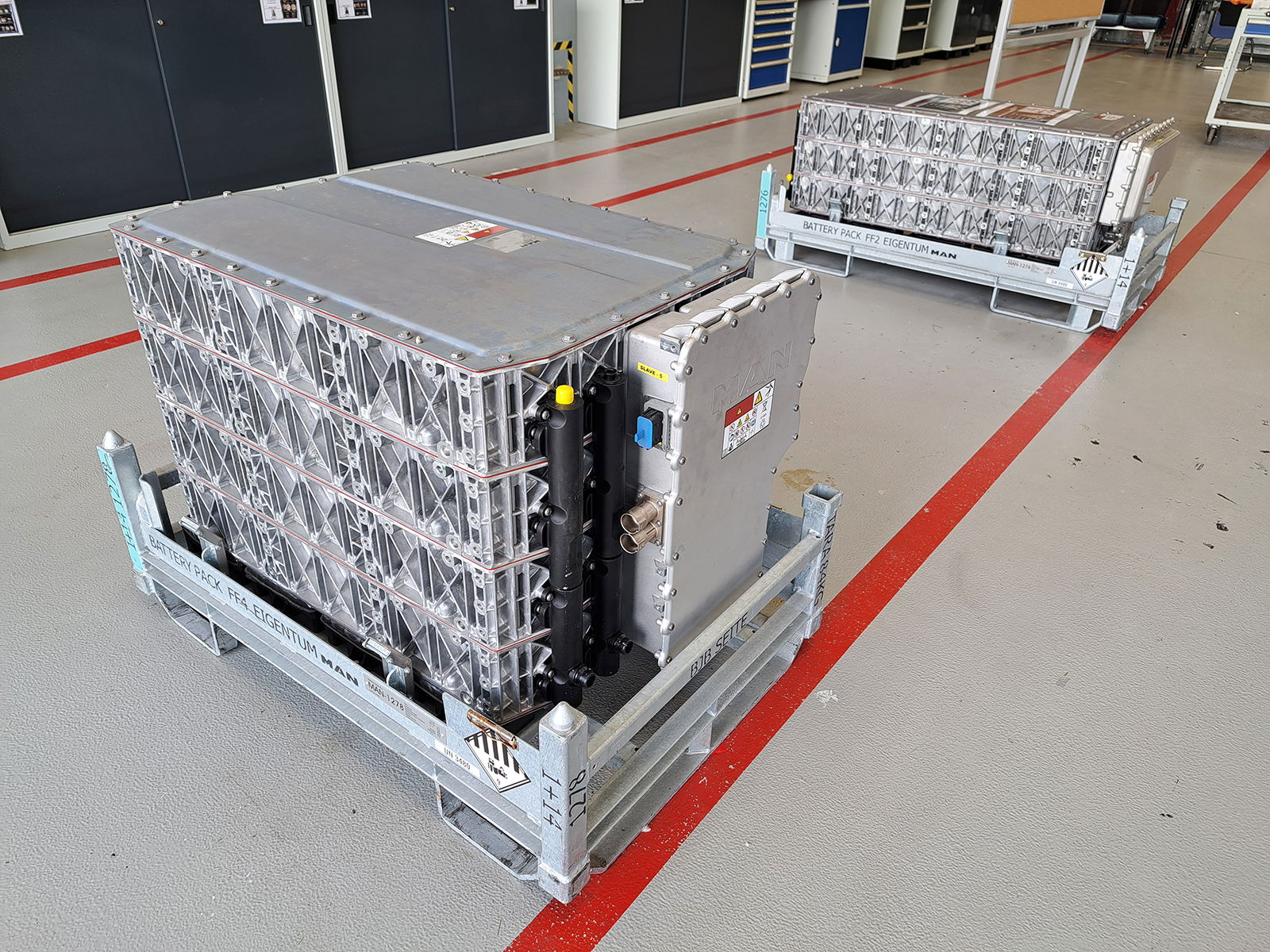
The battery modules, designed in-house and assembled at MAN’s recently opened factory in Nuremberg, operate at a nominal voltage of 673 V. Each lithium-nickel-manganese-cobalt oxide (NMC) module has a nominal storage capacity of 89 kWh. The bus can be fitted with a minimum of four and up to six modules, providing total capacities of 356, 445, or 534 kWh, respectively – with the latter potentially offering a range of up to 650 km, depending on operating conditions. The standard configuration places batteries in the former engine bay, while the two additional modules (optional) are installed in place of the sleeper compartment. Two types of modules are used, differing in dimensions and weight but not in capacity: the elongated FF2 module for the engine bay weighs 605 kg, while the taller FF4 module weighs 630 kg. The battery cells are produced in China by CATL according to MAN’s design and differ from previous MAN EV batteries in having a cathode composition with less nickel and more manganese and cobalt. This results in slightly lower energy density but longer service life – MAN estimates over 1 million kilometers or a minimum of 12 years.
Regarding the bus’s curb weight, MAN’s engineers refrained from specifying exact figures, as development is ongoing. They did note, however, that the maximum allowable gross weight under European regulations is 27.3 tons, of which approximately 3.7 tons come from the traction batteries.
Propulsion is provided by a centrally mounted permanent magnet synchronous motor from the Traton Group, with a continuous output of 330 kW – the same unit used in the group’s electric trucks. The compact power unit, called MAN eCD330, integrates the inverter and drivetrain, and transmits torque to the driven B axle via a four-speed MAN TipMatic 4 automated transmission. This is necessary because long-distance buses operate across a much wider speed range than city buses, and it’s important for the motor to remain efficient even at top speed. The driveshaft and differential are taken from the diesel-powered Lion’s Coach, while the electrohydraulically steered C axle is new. The load on this axle can be manually or automatically reduced at low speeds, with the system adjusting based on weather, road conditions, tire grip, and vehicle load.
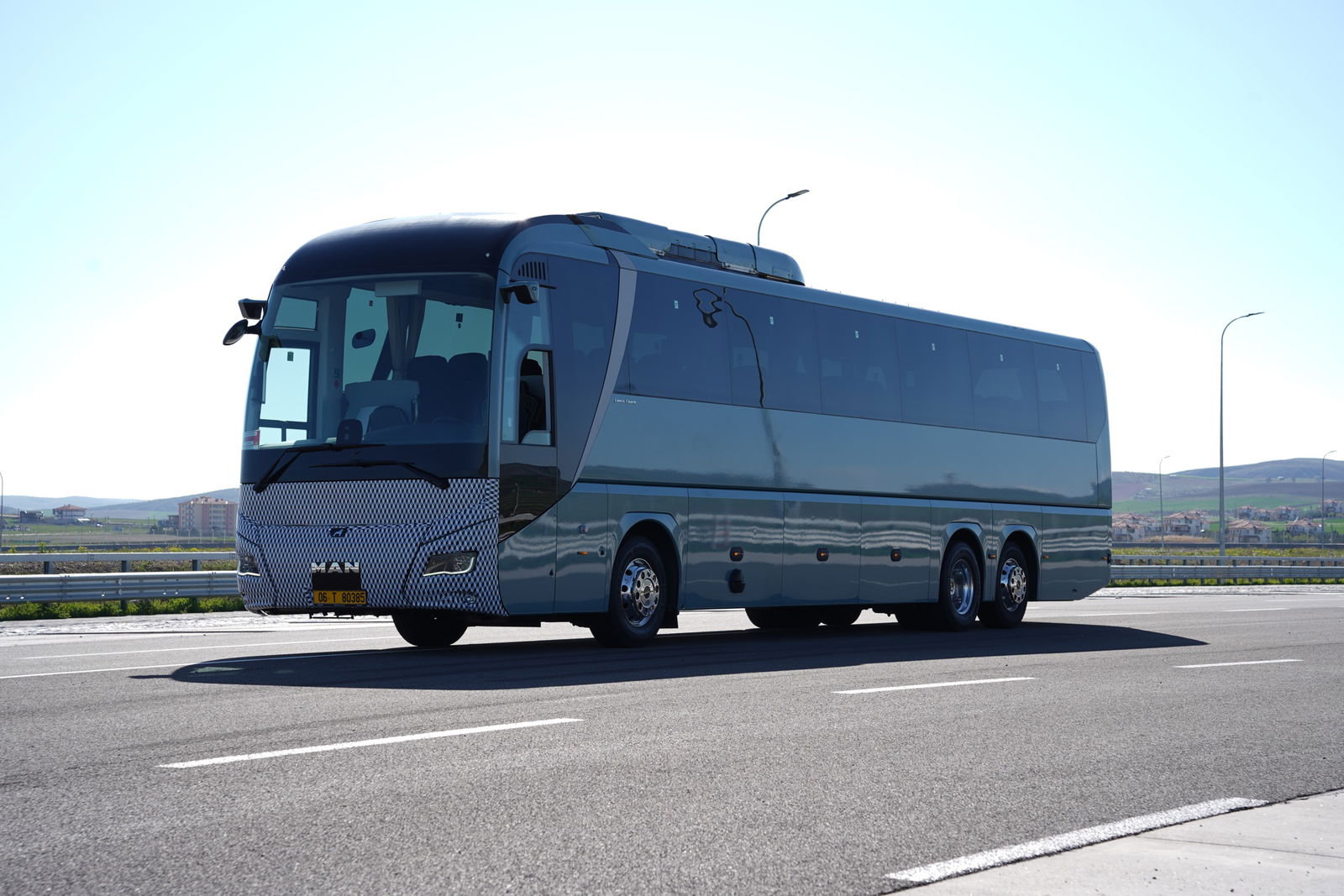
Fast charging is crucial for long-distance coaches that may complete several long trips per day. MAN therefore offers 375 kW plug-in charging as standard (this will also become available for upgraded versions of the Lion’s City E series), which can reduce full charging time to as little as 1.5 hours. According to the manufacturer, the Lion’s Coach E can almost replicate a diesel coach’s daily operating pattern and thus serve as a one-to-one replacement. With an eye toward future needs, the vehicle is also prepared for MCS (Megawatt Charging System) fast charging, allowing up to 750 kW charging power, planned to be available shortly after launch. (The main barrier here remains the current lack of infrastructure.) The standard charging port is a CCS Combo 2 plug located on the right side above the front axle. Optional additional charging ports can be installed at the rear right or front left, the latter even supporting MCS. A maximum of two ports can be installed per vehicle.
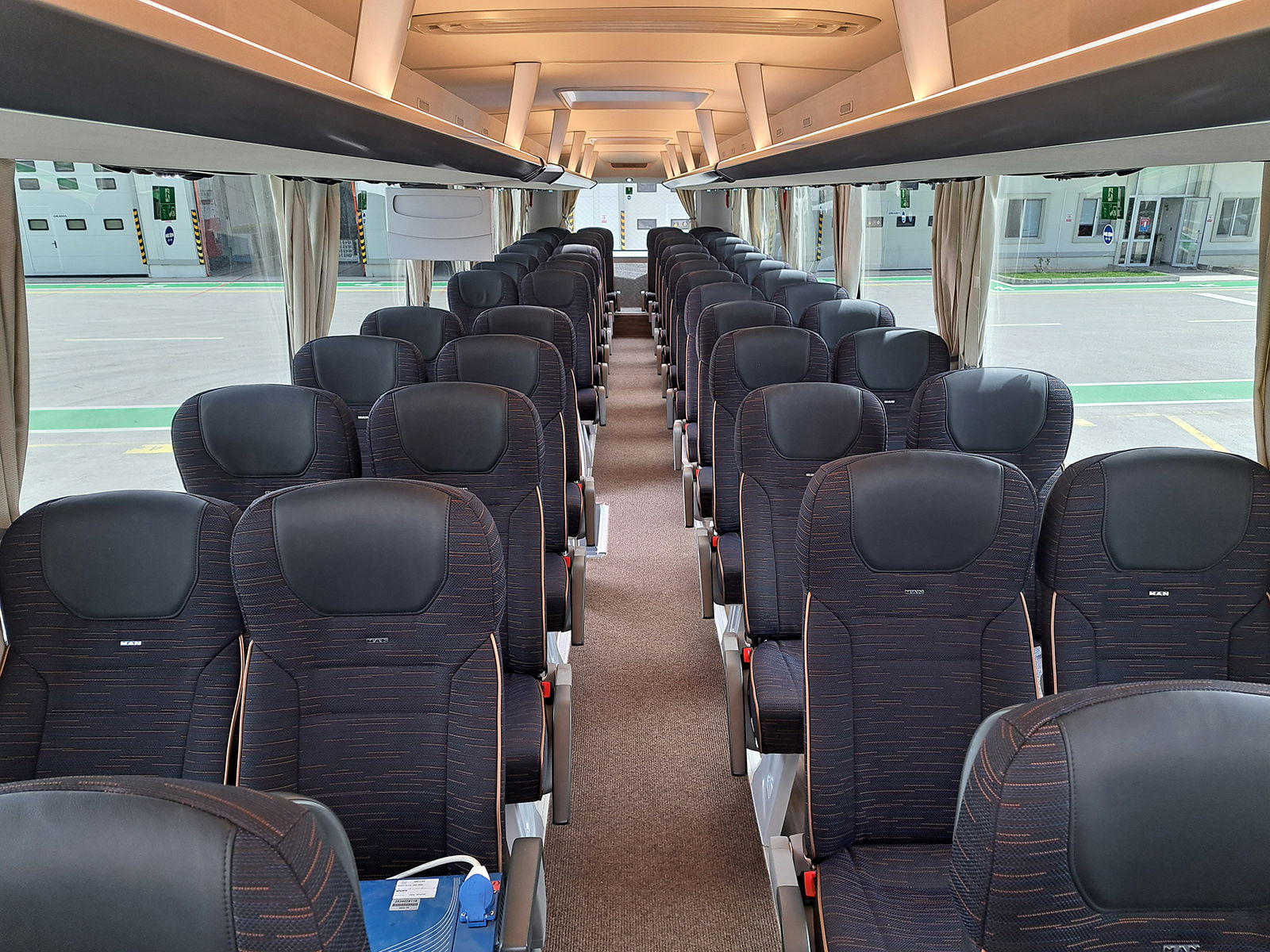
Throughout the development process, a key customer expectation was to maintain passenger and luggage capacity even with the maximum number of battery modules. The 13.9-meter-long three-axle coach can accommodate up to 61+1+1 seats. Depending on configuration, luggage space ranges from 11 to 13 m³ thanks to smart battery placement, ensuring no compromises in practicality. Cabin climate is regulated by a new R744 (CO₂ refrigerant) heat pump air conditioning system – a category-first innovation. Produced by Eberspächer, it debuts on the MAN Lion’s Coach E. The currently exposed rooftop unit will be concealed in the final production version. Heating is provided by three high-voltage electric heaters, with optional diesel or HVO auxiliary heaters available. A wheelchair lift can also be fitted.
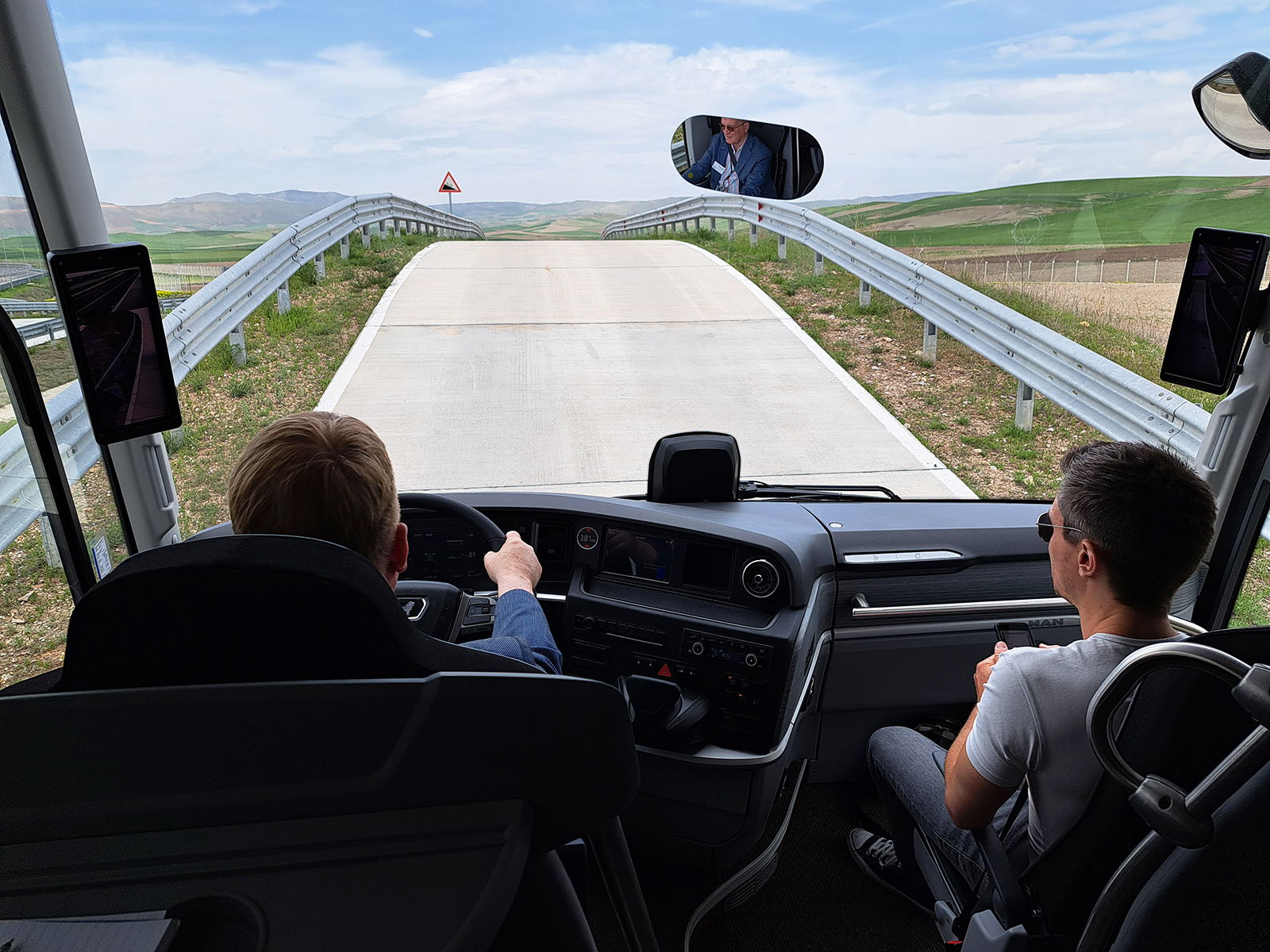
We were able to test the first prototype on MAN’s own 1.4-kilometer test track, which features banked curves and gradients ranging from 5% to 18% (inclines) and 6% to 12% (descents). The prototype performed convincingly during the short test drive. We also compared it to a diesel demo unit of the Lion’s Coach, and found that cabin vibration was noticeably lower. However, noise levels were somewhat high for an electric drivetrain – an area likely to be refined before market launch. The 12” digital instrument cluster is attractive and informative, serving as the primary interface between the driver and the bus alongside the steering wheel. We covered more of MAN’s recent driver-friendly innovations in this article.
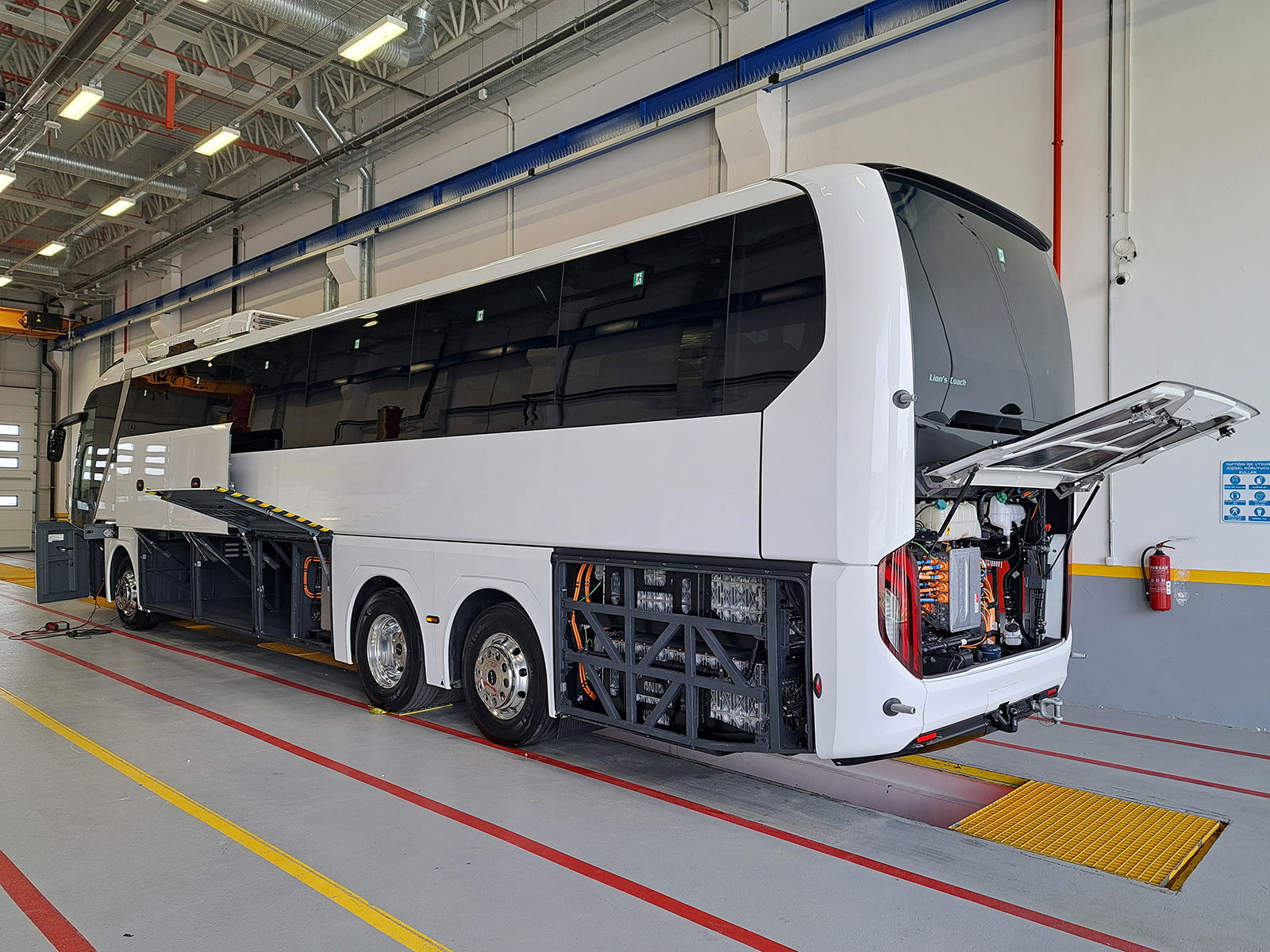
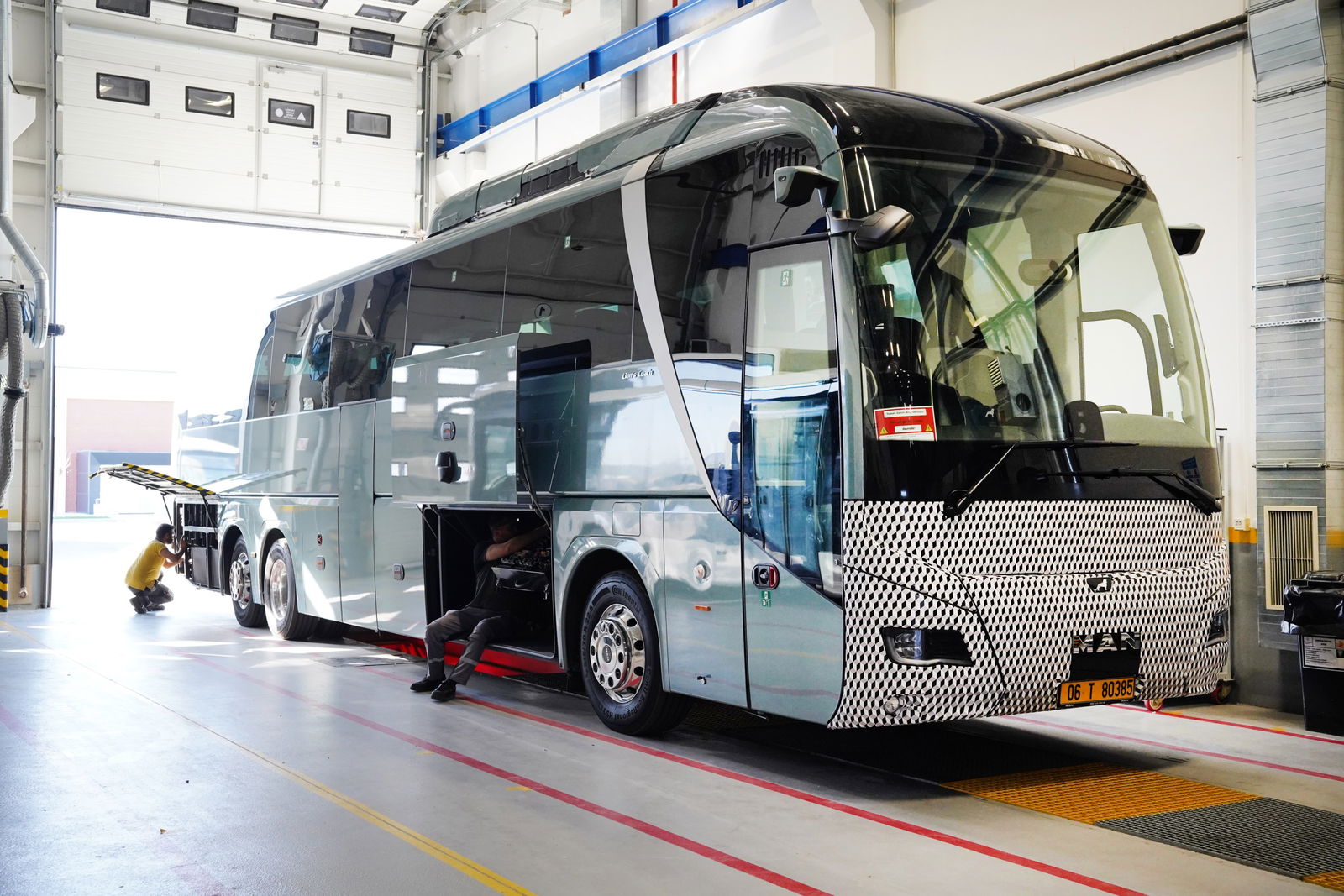
In addition to the steel-blue functional prototype, MAN also has a second prototype in white, which was used to demonstrate the layout of mechanical components. This vehicle featured the six-module configuration, allowing us to observe the battery units placed in the former sleeper compartment. The rear-mounted batteries are protected from side impacts by reinforced frame elements. The Lion’s Coach E features three independent cooling and heating circuits – for the batteries, the electric components (motor, onboard charger), and the passenger/driver area. New additions include an electric air compressor and a low-voltage electric servo pump.
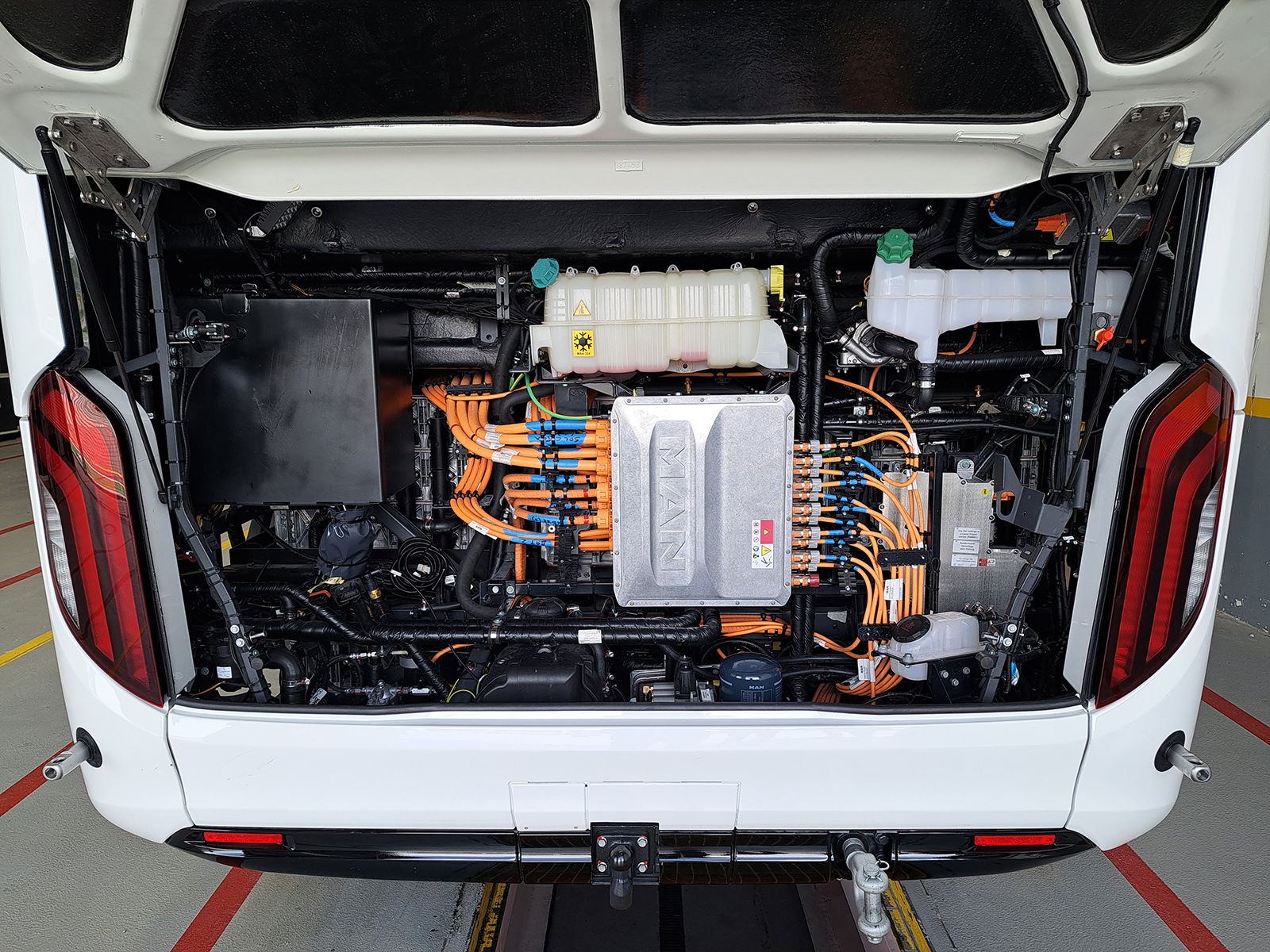
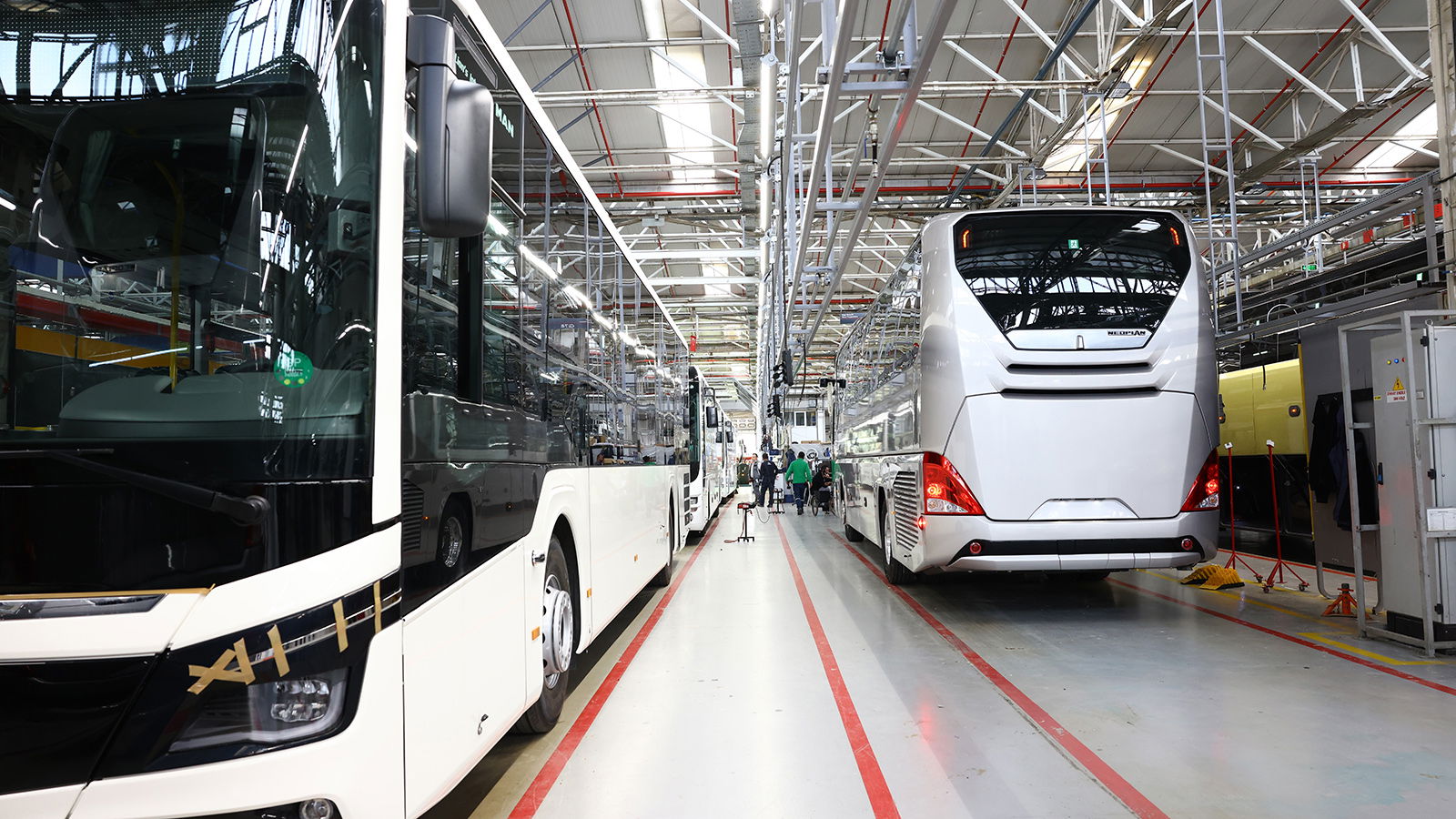
To conclude the program, we visited MAN’s Ankara plant, located about a half-hour drive from the development center. For years, only long-distance models were produced here – in fact, since 2015, all MAN and Neoplan coaches have been manufactured exclusively at this facility. Today, nearly the entire European product portfolio is built here, including the Lion’s City family. The welded frame structures are made of high-strength steel, with cathodic dip painting (KTL bath) providing corrosion protection. The fully automated 11-tank system – each 16 meters long, 3 meters wide, and 3.8 meters deep – includes degreasing, priming, rinsing, and other stages. Each frame spends around 2.5 hours in the system. All bus types are built on a single production line – from the Lion’s City to the Lion’s Intercity (both high-floor and low-entry) and even the Neoplan Skyliner double-decker luxury coach.
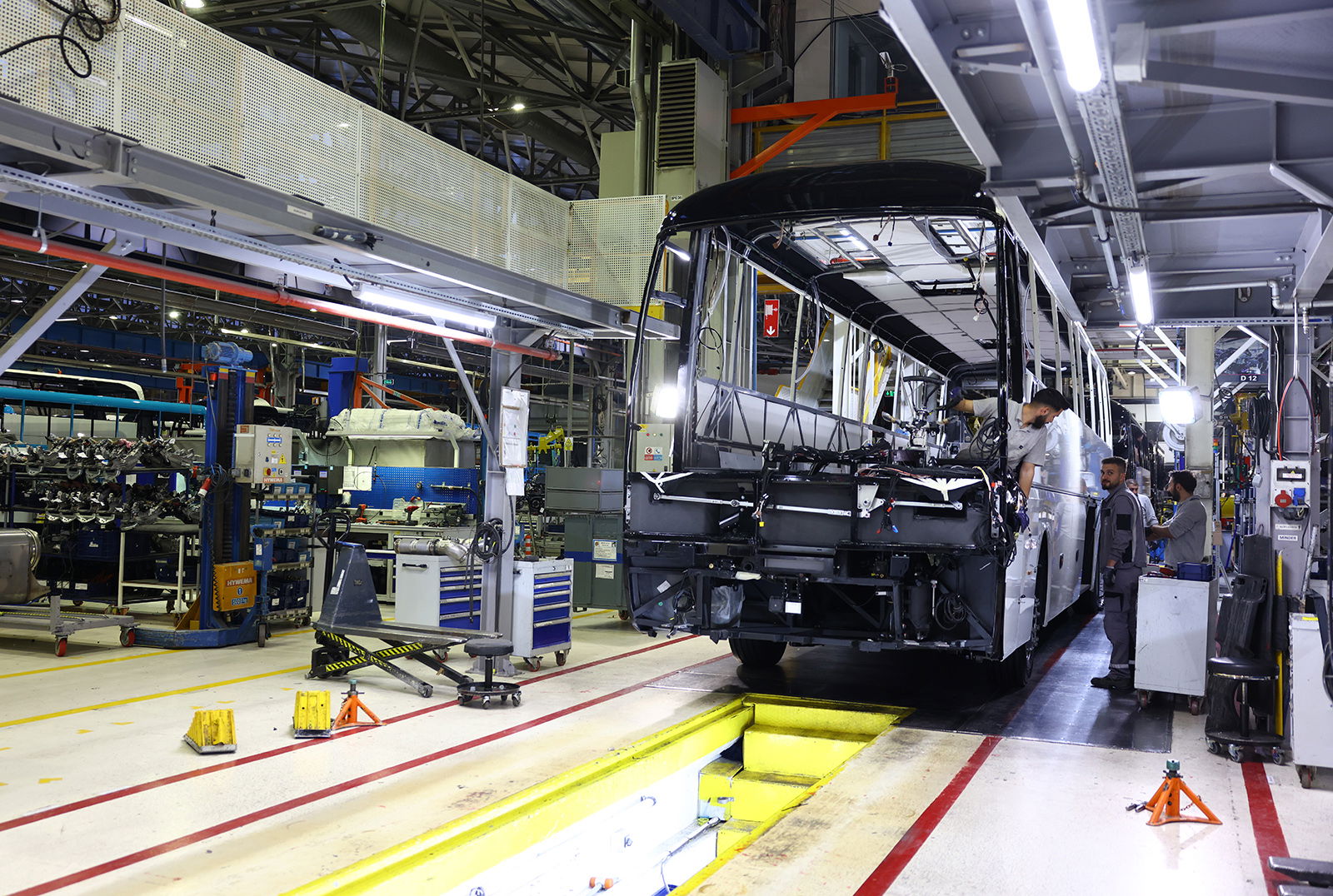
Covering 317,000 m² and employing approximately 4,475 workers, MAN’s Ankara plant is the company’s largest bus factory. It currently operates in two shifts, producing 16 buses per day – set to increase to 18 starting next week. Depending on type and configuration, each vehicle takes 21–25 days to complete. Last year, the plant produced about 3,000 vehicles, with a 2025 target of 2,953 units. The next major milestone in the plant’s history – which dates back to 1966 – will be the start of series production of fully electric models: city buses of the Lion’s City E range will begin assembly later this year, to be followed by electric intercity models and, from late 2026, the new Lion’s Coach E.