![Magyarbusz [Info]](/mbi/header-logo.png)
The bus that made the EU rewrite its rules
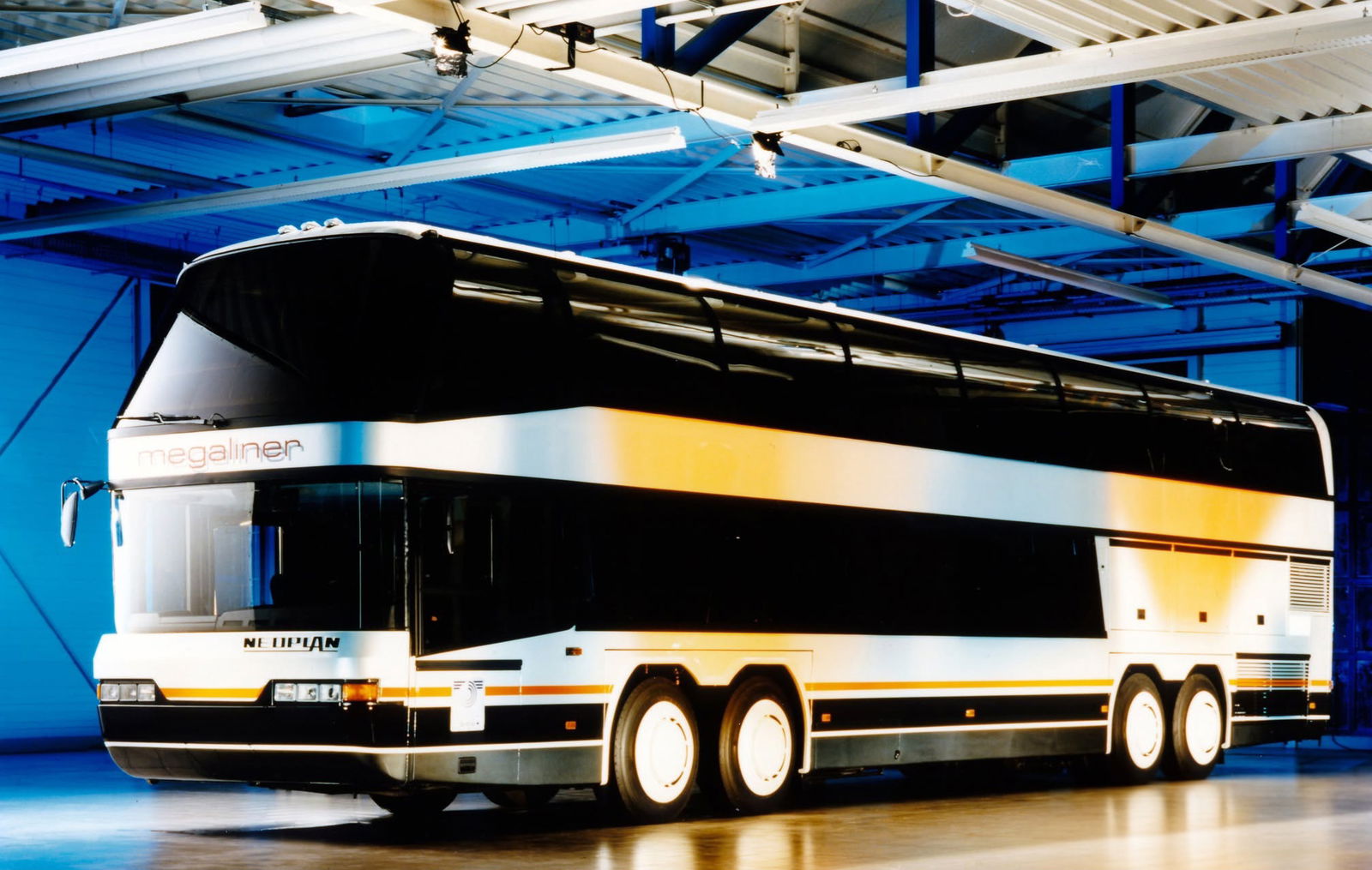
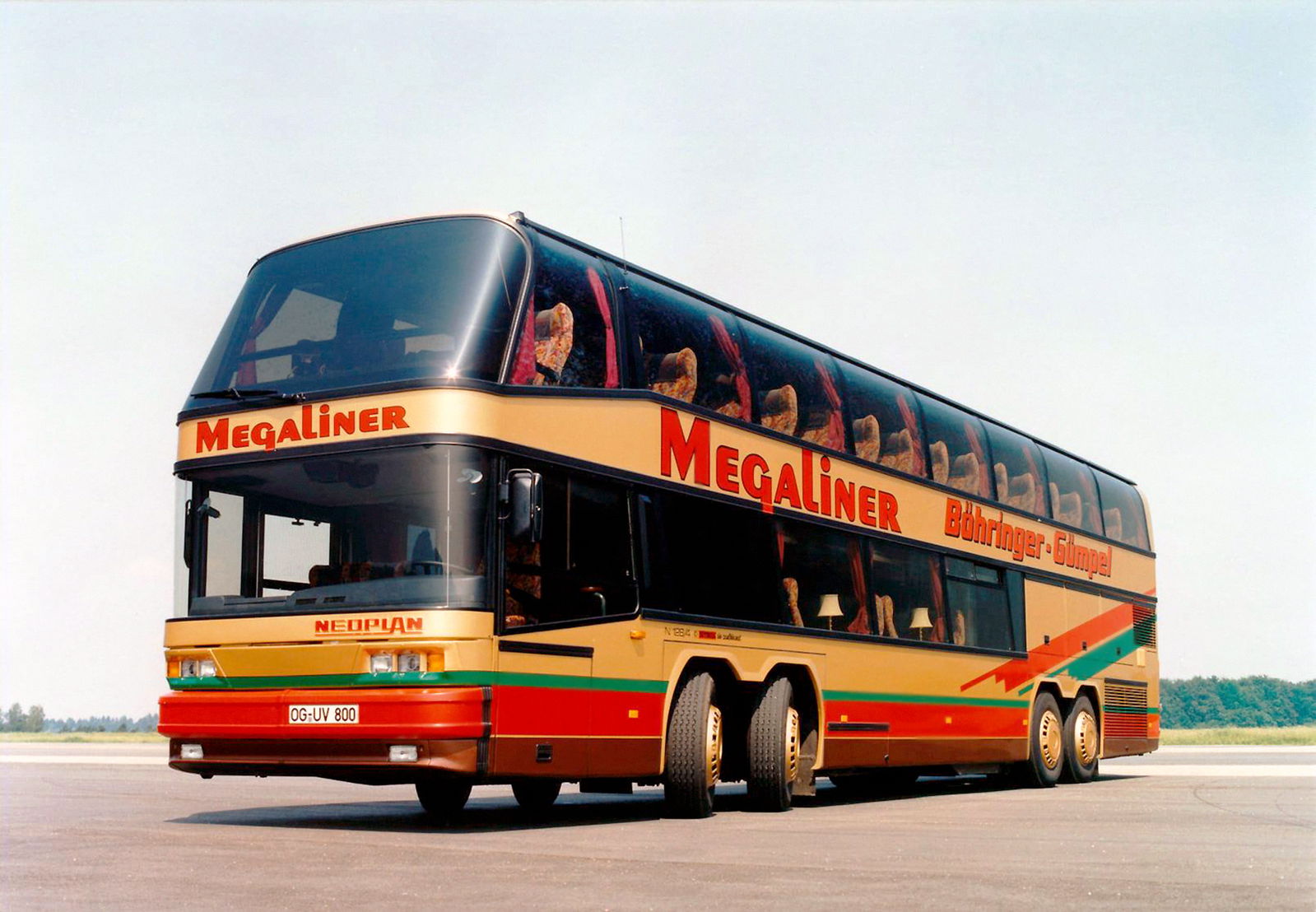
The German bus manufacturer, which has operated as MAN’s prestige brand since 2001, unveiled the Skyliner, the world’s first double-decker coach, 55 years ago — a model that has had a fascinating history over the decades. The realised thesis project of the young Konrad Auwärter caused a huge surprise in the bus world of the 1960s: very few believed that the 12-metre-long double-decker concept he had envisioned could be usable at all in everyday operation. The type’s intellectual father, however, firmly believed in his idea and ultimately brought the model to success — as is best proven by the fact that more than 5,000 examples of the founder of the double-decker coach category, now in its seventh generation, have found owners from South America to Saudi Arabia. The type has been produced in countless versions over more than half a century, but perhaps one of the most noteworthy was its four-axle variant, the Megaliner, which was a landmark model on the European bus market in the 1990s and, in addition to its primary target markets in Western Europe, was even delivered to Japan in right-hand-drive form.
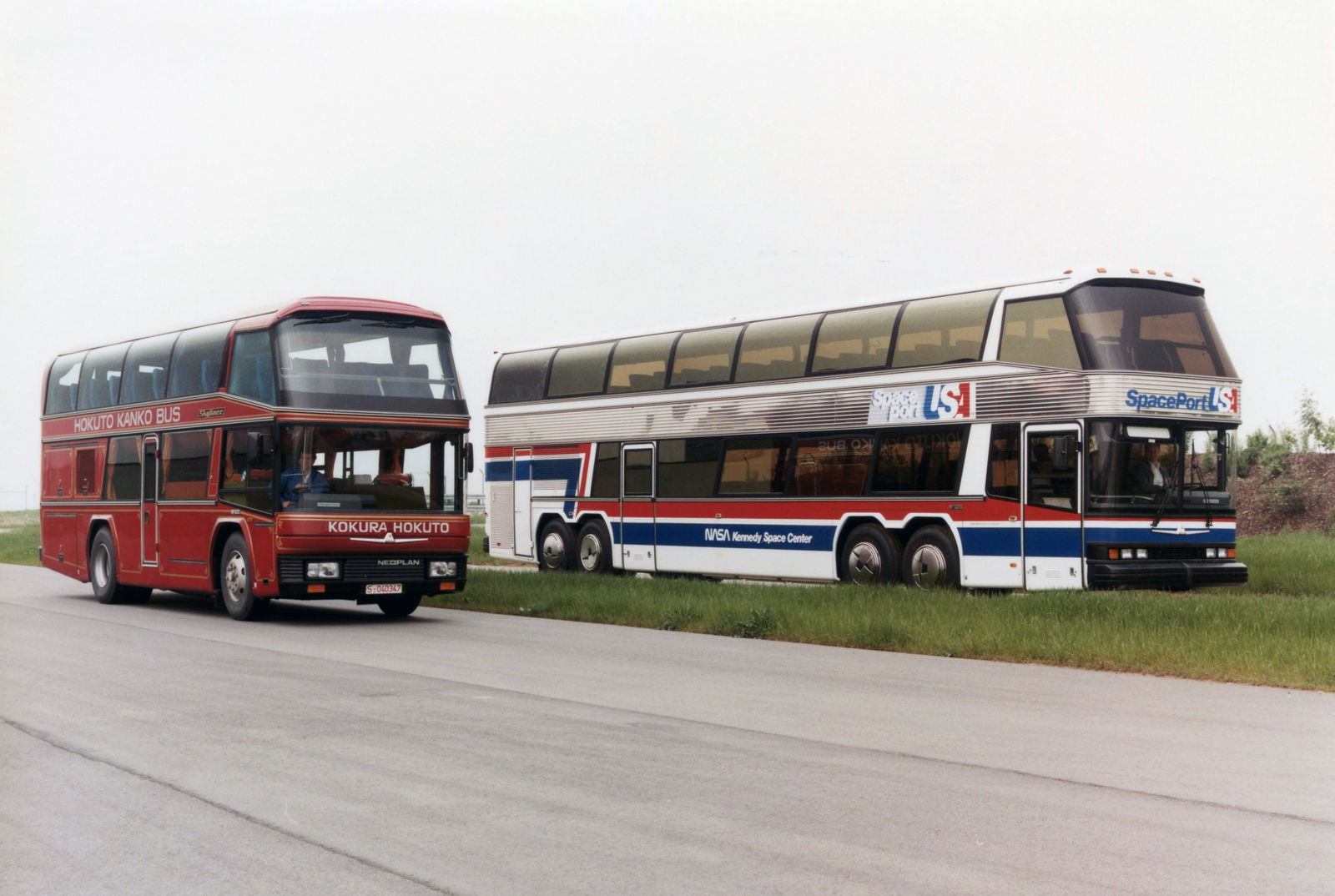
In its heyday, Neoplan was known as one of the great innovators of bus manufacturing. It always strove for innovation, was not afraid to push the limits — including those of size — and Konrad Auwärter, the creator of the Skyliner, would not have been himself had he not continued to come up with concepts that seemed impossible to realise. Auwärter, the son of Neoplan’s founder, began work in the 1970s on a four-axle, high-capacity, 15-metre double-decker long-distance coach, which the manufacturer intended for the North and South American markets, where there was particularly strong demand for vehicles of this kind designed for high-capacity, long-distance services. The first example of the 15-metre giant, built by Neoplan for a Chilean customer, was completed by 1975, but the type continued to be delivered until the late 1980s to Argentina, Brazil, Peru, Libya, the Cape Canaveral Space Center, the fleet of a Philadelphia casino, Saudi Arabia and Sweden, which at the time was the only country in Europe where vehicles of this size could be put into service.
Until the early 1990s, Neoplan was unable to register its four-axle model in its home country or elsewhere in Europe because of the narrow constraints of road-traffic type-approval regulations, even though that had been its intention from the very first moment with the model created in the 1970s. In most European countries at the time, the length of rigid buses could not exceed 12 metres, and the maximum permitted turning-circle diameter could not be more than 25 metres. Neoplan, however, was determined to force the type into the German and European markets.
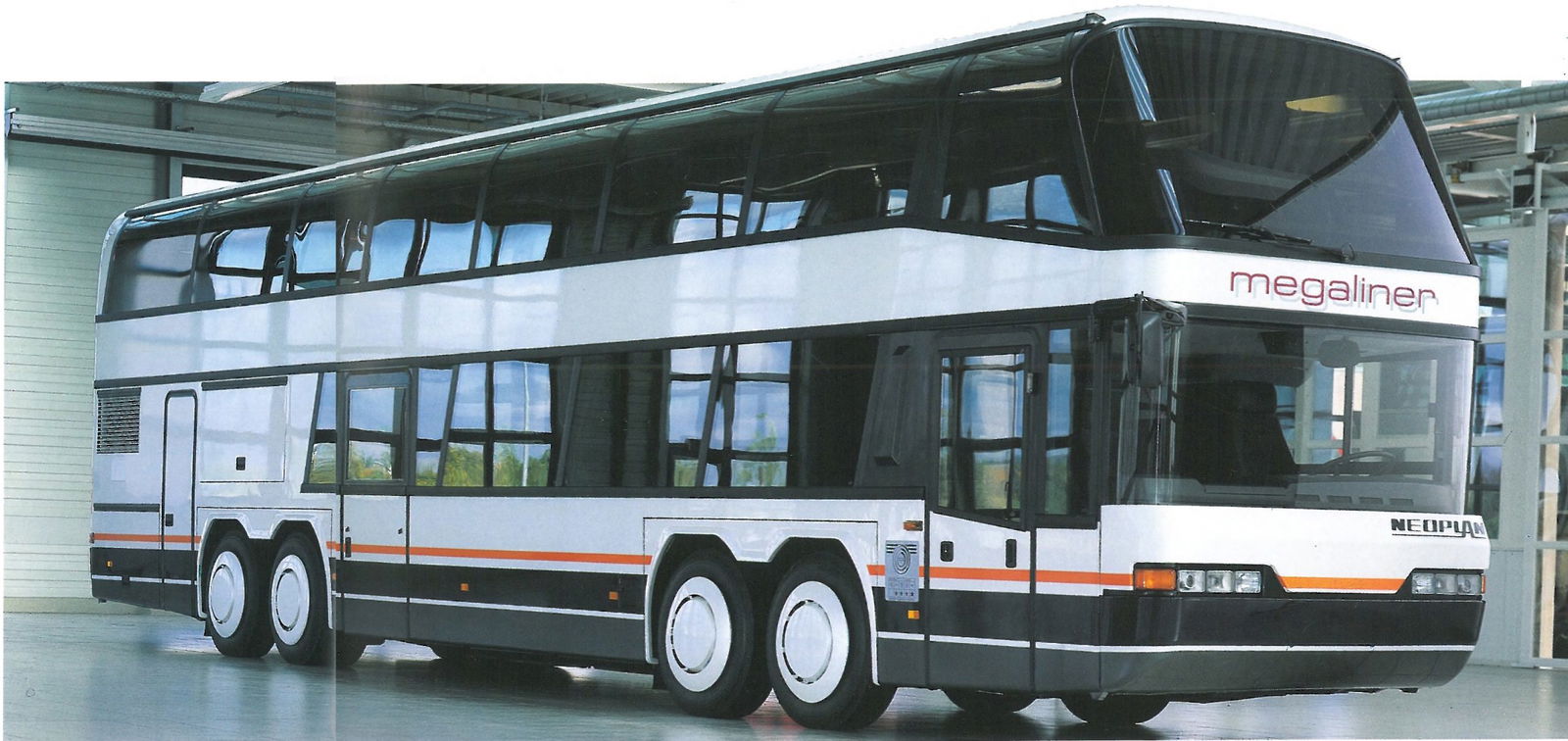
Neoplan eventually built the version of the four-axle Skyliner intended for the Old Continent, the Megaliner (N128/4), in 1990, with a maximum permissible gross weight of 30 tonnes. This was part of a strategy to use the vehicle to lobby German and European Union officials for the 12-metre limit on rigid buses to be extended to 15 metres. At the same time, in order to demonstrate the Megaliner’s maturity and safe operability, the company offered the type — which could only be operated on a limited basis even with special permits — to several operators in Europe at unrealistically favourable prices, thereby also putting pressure on the approval authorities. The next step was to overcome the German and European approval hurdles, which, as with any bureaucratic route, took some time. Neoplan’s initiative finally achieved its goal in 1993, when both Germany and the EU approved an exemption regulation under which buses longer than 12 metres but no more than 15 metres could be registered in the European Union and Germany, albeit only subject to specific requirements and certain conditions. These included, for example, the presence of four steered axles, as well as a minimum axle spacing of 4,000 mm between the B and C axles.
During the procedure, Neoplan had to prove with calculations accurate to the millimetre, tests and facts that the vehicle really did comply with the applicable cornering requirements, that the outer radius of its turning circle fit within the maximum of 12,500 mm and its inner radius within the minimum permitted running value of 5,300 mm, and that its tail swing did not exceed 800 mm from a standstill or 600 mm when travelling straight ahead.
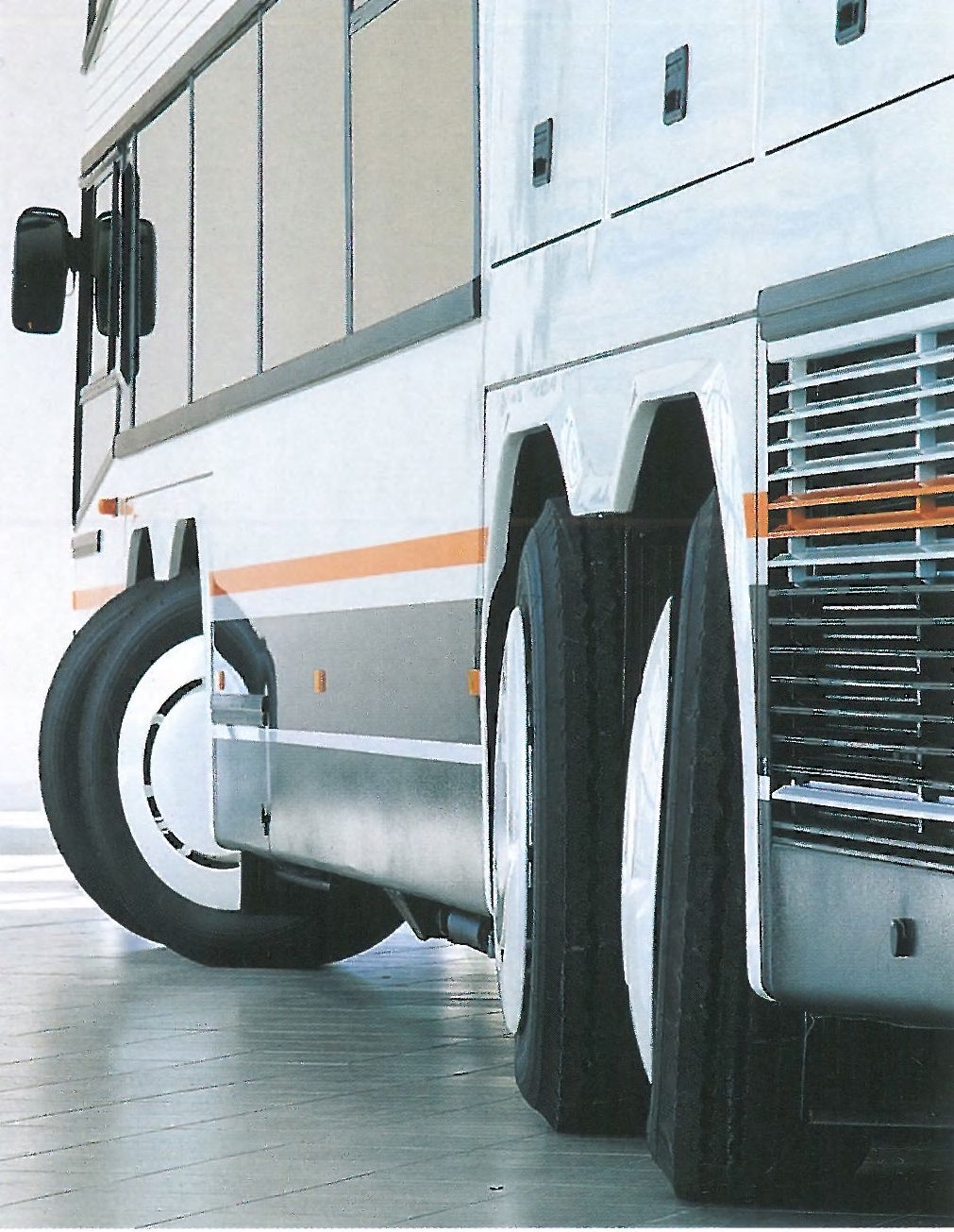
Unlike the four-axle models it had previously exported, whose front tandem axle alone was steered, the German manufacturer had to equip the versions intended for the European market with four steered axles, and it also had to reduce the front and rear overhangs as well as the wheelbases. In order for the type to meet the requirements concerning the turning circle, Neoplan had to improve the steering lock angle of the front twin axles and make both the driven C axle and the D trailing axle positively steered.
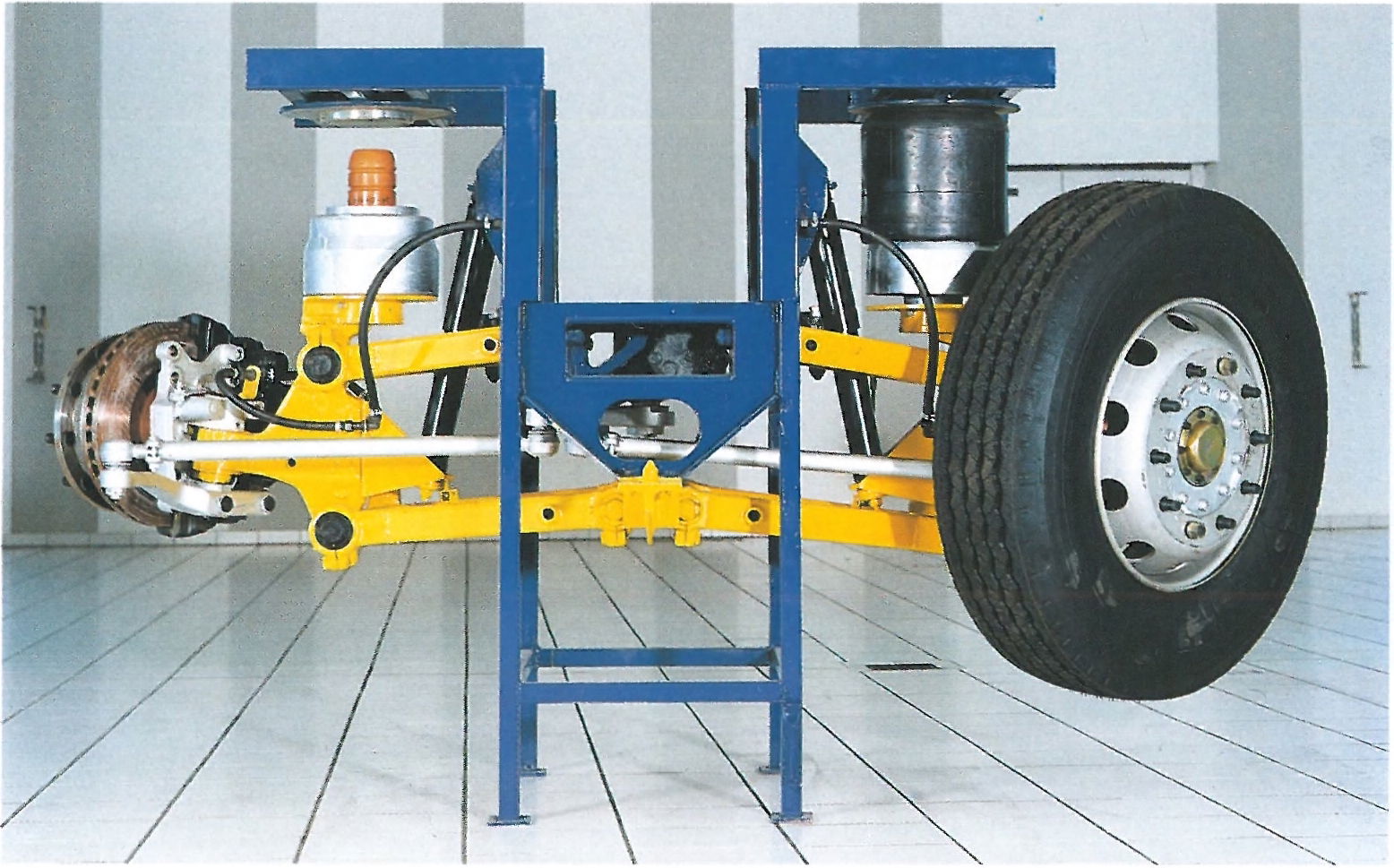
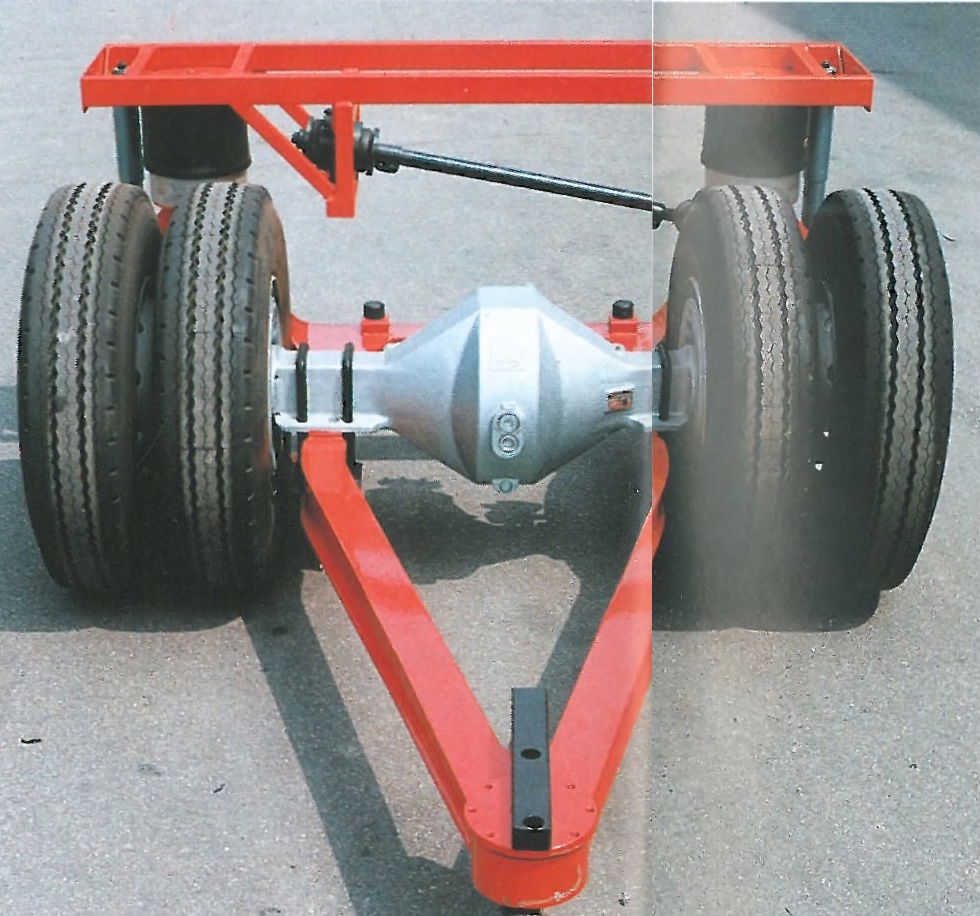
The front axles with double wishbones could be steered to 55°, while in the case of the rigid driven axle with hypoid final drive, a 4° movement became possible by placing the axle on a triangular subframe, which was connected to the body at three mounting points with maintenance-free bearings. After the redesign, the Megaliner was able to turn within a swept path with an outer radius of 12,490 mm and an inner radius of 5,320 mm, while its tail swing also remained well below the prescribed 800 mm value (433 mm). The wheelbase and overhang dimensions of the exactly 15,000 mm-long vehicle were as follows: 3065/1230/6100/1300/3305.
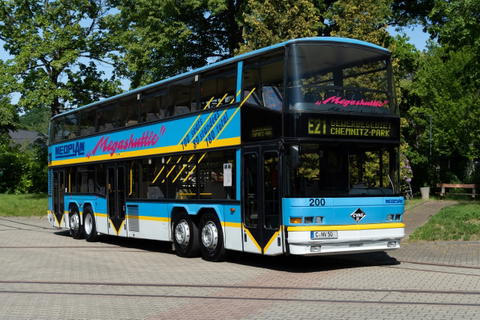
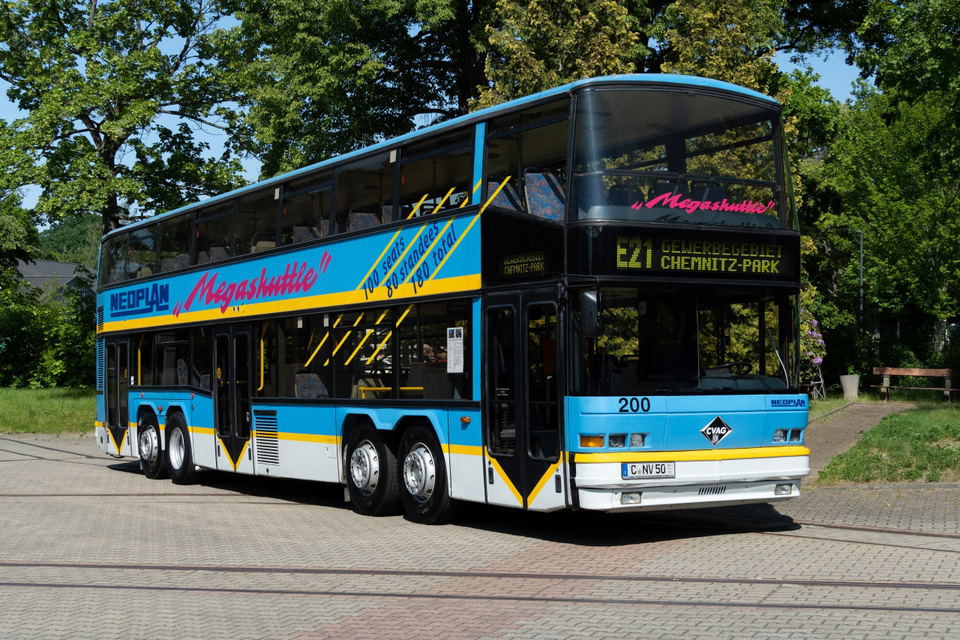
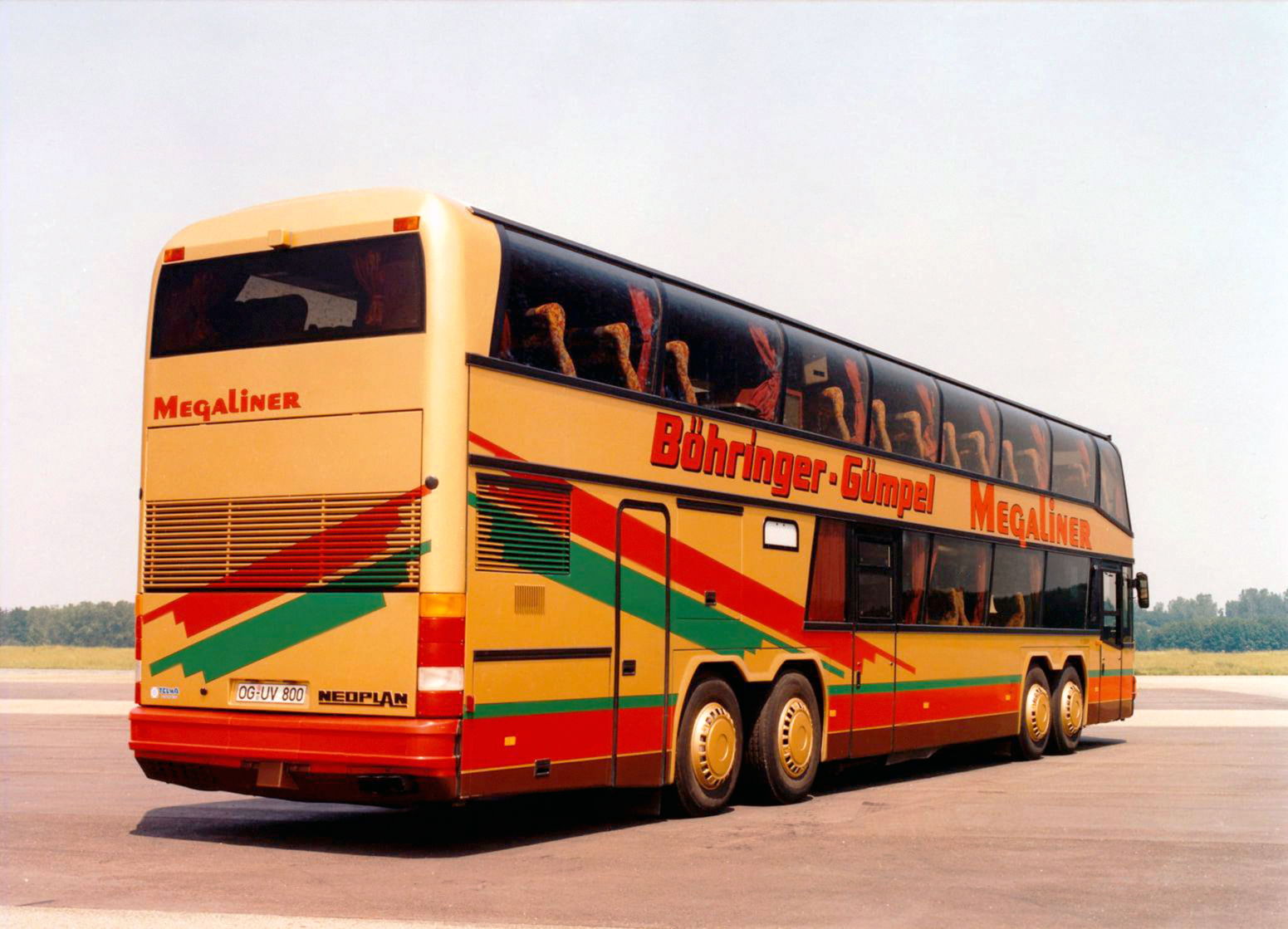
The Megaliner, capable of accommodating up to 100 passengers, remained in Neoplan’s range between 1990 and 2000, and in addition to the primarily targeted Western European markets, it was also delivered to Turkey and, in right-hand-drive form, even to Japan. After launching the Megaliner, Neoplan introduced two further versions: one was the Megashuttle, intended specifically for urban operation, while the other was the Megaspace, which differed little from the Megaliner and whose lower deck was converted into a kitchen and lounge. In its standard version, the model was offered by the manufacturer with a 14.6-litre, 500 hp Mercedes-Benz engine, but it could also be ordered with MAN, DAF, Detroit Diesel, Deutz, Gardner and Steyr drivetrains.
On paper, the type was removed from Neoplan’s product portfolio at the turn of the millennium. This was justified partly by declining sales, as EU regulations for buses after the turn of the millennium also made it possible to put three-axle, 15-metre buses into service, provided they complied with axle-load requirements. On the other hand, the manufacturer, which was in a deteriorating financial position, was acquired by MAN in the early 2000s, and during the restructuring Neoplan’s manufacturing activities were significantly rationalised. Along with several other interesting Neoplan types, the Megaliner also fell victim to this streamlining. The manufacturer discontinued sales of the model in 2000, but a few examples were still built in 2003, ordered by one of Neoplan’s returning customers, the Japanese state railway company. These vehicles and their earlier exported counterparts were withdrawn from service in 2008 in connection with two previous fires involving the type.